
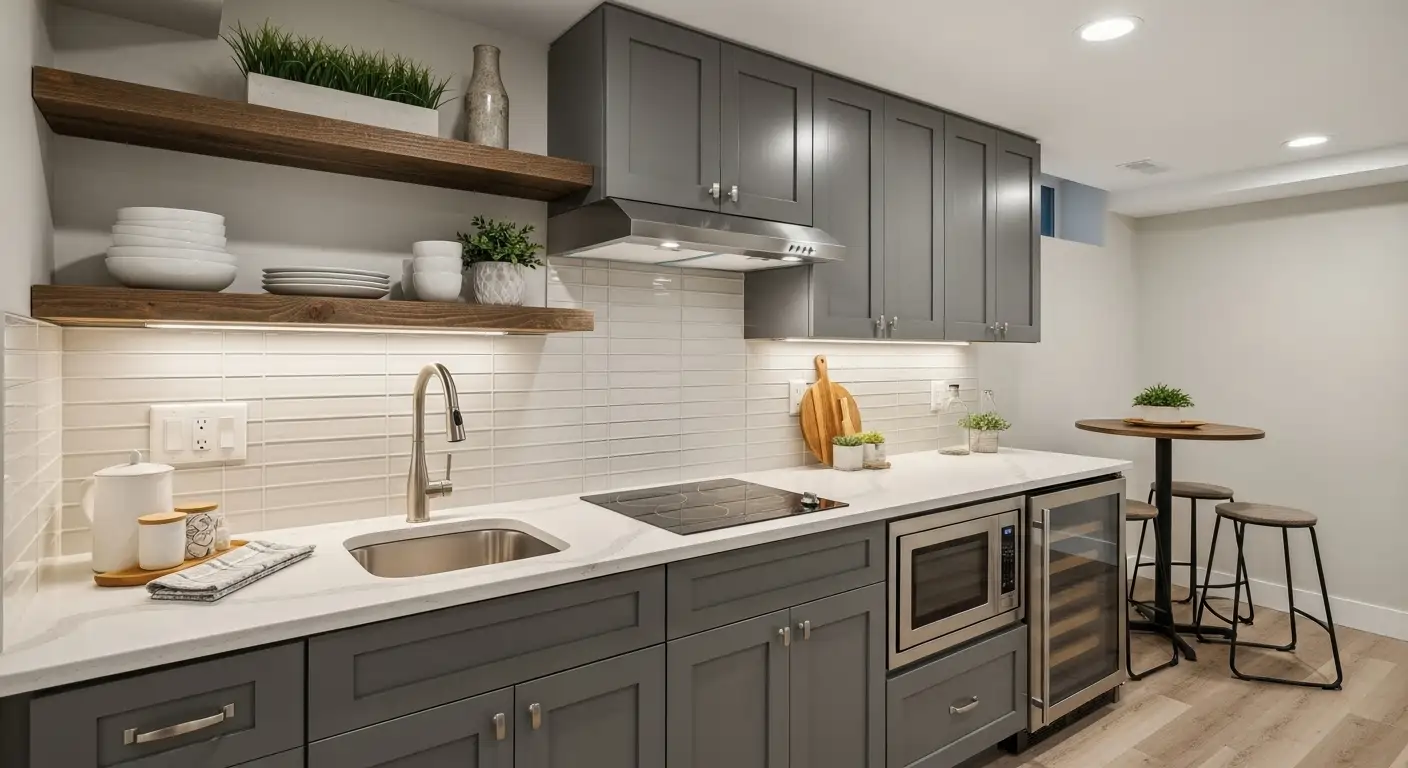
Even small basements can feel inviting with the right layout. With these tips, you can transform an underused corner into a cozy kitchenette perfect for everyday use.
Our basement had always been a forgotten part of the house, dim and underutilized.
I pictured a small kitchenette tucked into the corner, perfect for morning coffee or weekend snack prep.
Adding the right lighting, cabinetry, and countertop solutions transformed it from cold storage to a welcoming spot.
It’s amazing how small design choices, like open shelving or a mini island, can change the entire feel of a basement.
Here, I’ll walk you through 25 basement kitchenette design ideas to inspire your own transformation.
Why a Basement Kitchenette Design is Worth Considering
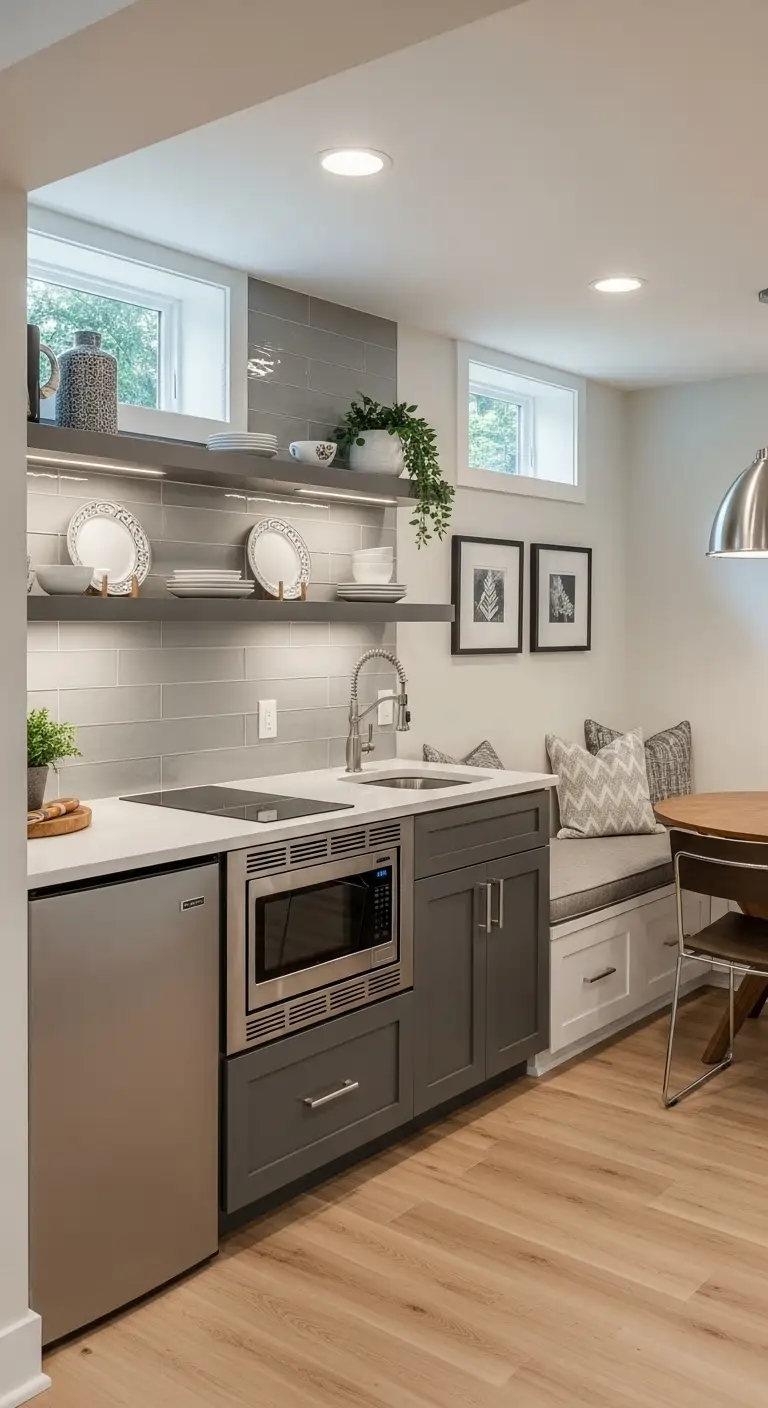
Basements offer a quiet and private space, making them ideal for a secondary kitchen or a guest-friendly kitchenette.
Adding a basement kitchenette design increases your home’s functionality and can potentially boost its overall value.
Using smart layouts, creative storage, and aesthetic finishes, even a small basement corner can become a fully usable kitchen.
Appliances, cabinetry, and lighting choices play a vital role in making the space feel open, inviting, and practical for daily use.
With careful planning, a basement kitchenette can seamlessly integrate with the home while providing a unique, cozy environment.
Key Considerations Before Designing Your Basement Kitchenette
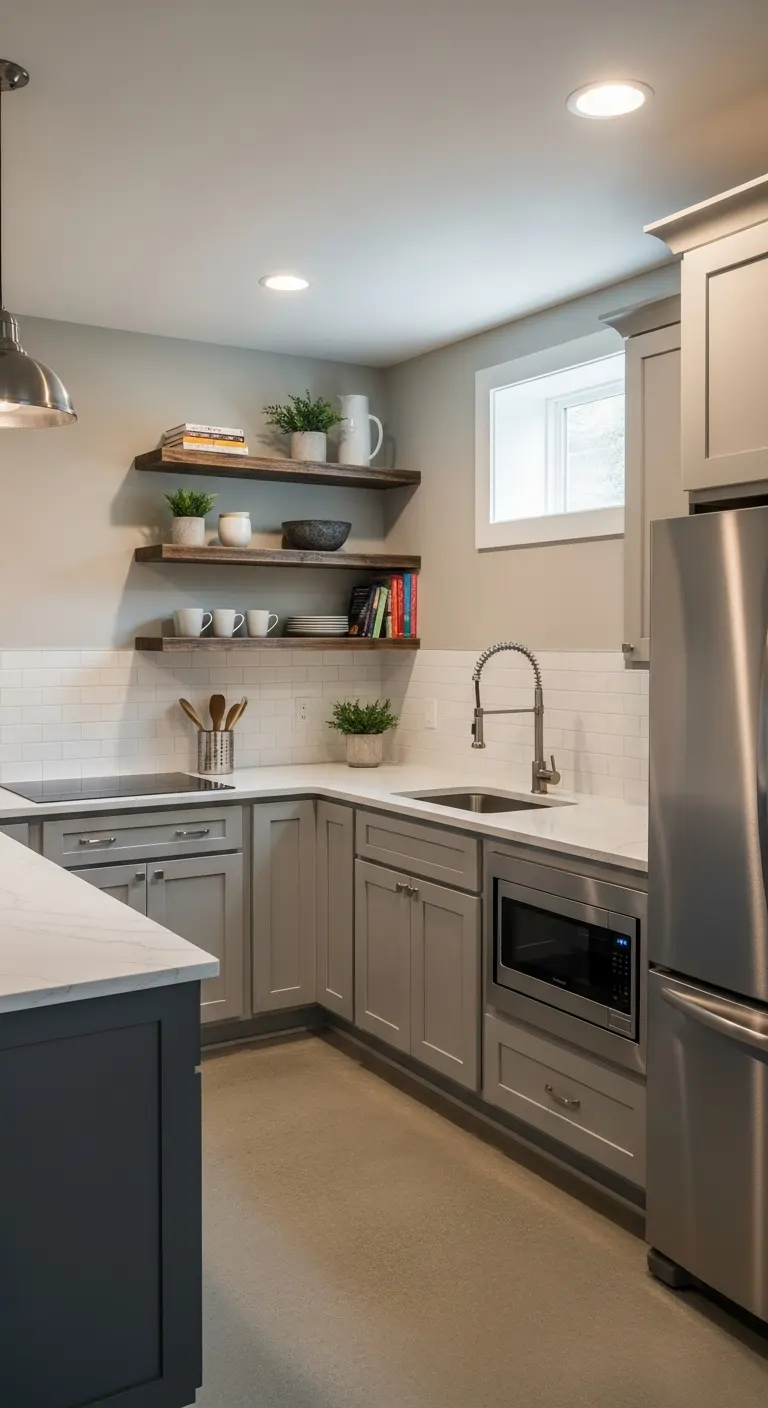
Start by assessing your basement’s dimensions, ceiling height, and available utilities to determine feasible design options.
Ensure ventilation, plumbing, and electrical setup accommodate stoves, microwaves, or under-counter refrigerators without costly retrofitting.
Lighting is essential, combining overhead fixtures with under-cabinet lights to brighten often dim basement areas.
Consider moisture-resistant finishes, durable flooring, and cabinets to prevent damage from basement humidity or temperature fluctuations.
Maximizing vertical space with shelves, cabinets, and multi-functional furniture ensures a clean, organized, and efficient kitchenette.
25 Basement Kitchenette Design Ideas
1. Compact L-Shaped Layouts
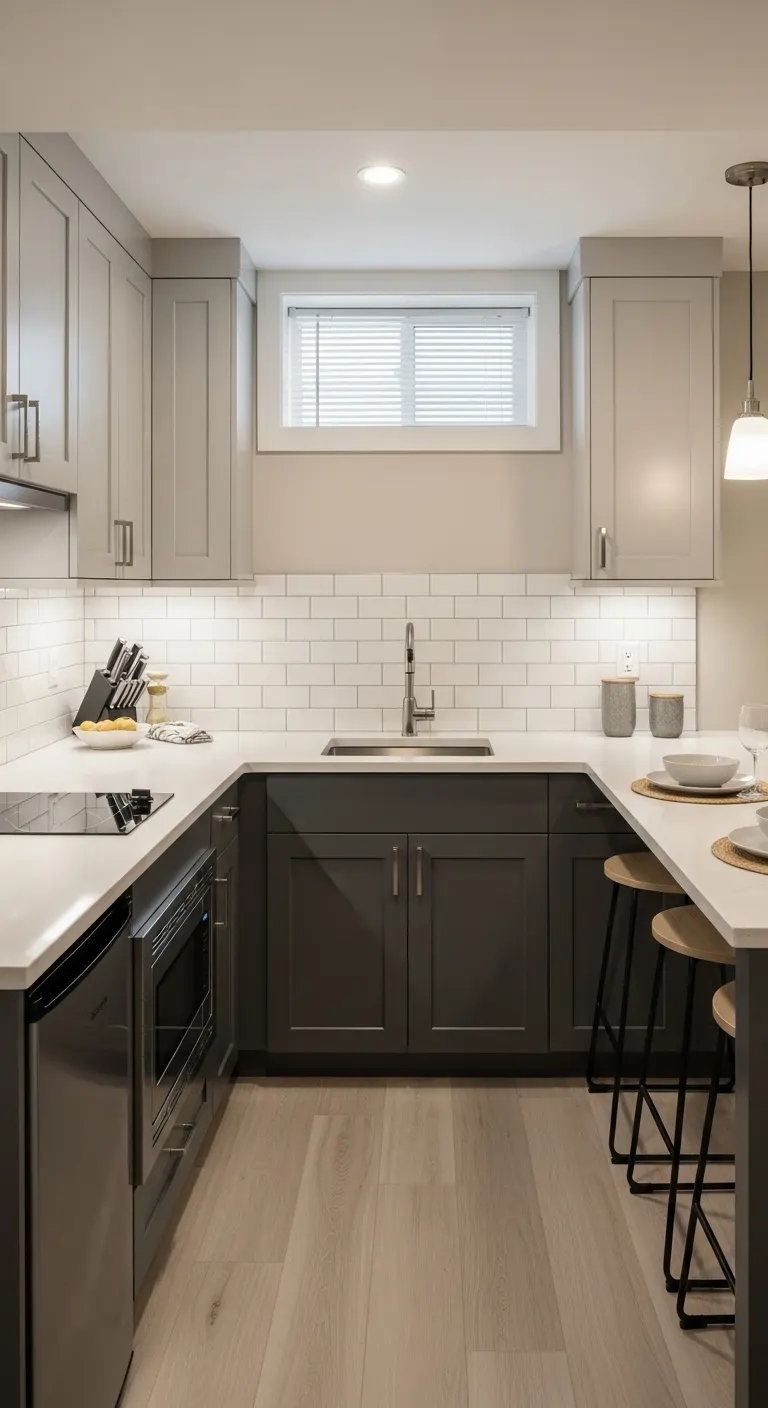
L-shaped layouts make excellent use of corner spaces while keeping the cooking triangle efficient and accessible.
This design allows room for a small dining area or additional storage without overcrowding the basement.
Shallow upper cabinets prevent low ceilings from feeling oppressive and maintain a sense of openness.
Adding open shelving enhances visual depth and provides quick access to frequently used kitchen tools.
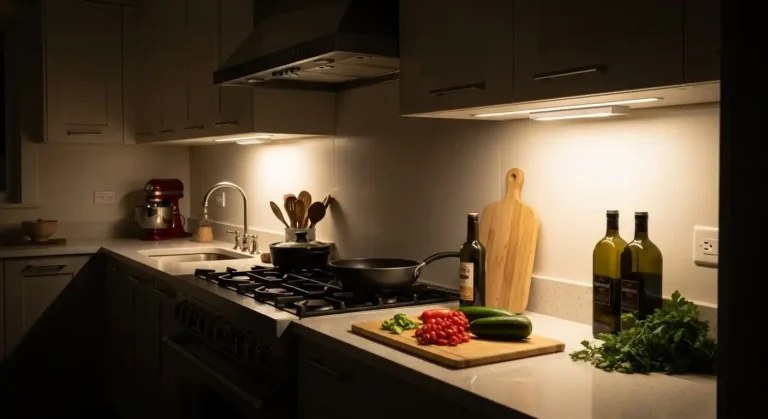
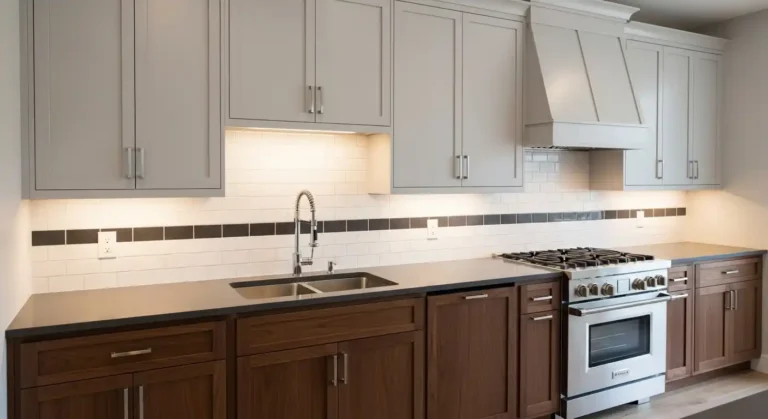
Under-cabinet lighting illuminates work surfaces while making the space appear brighter and larger.
2. Minimalist Modern Style
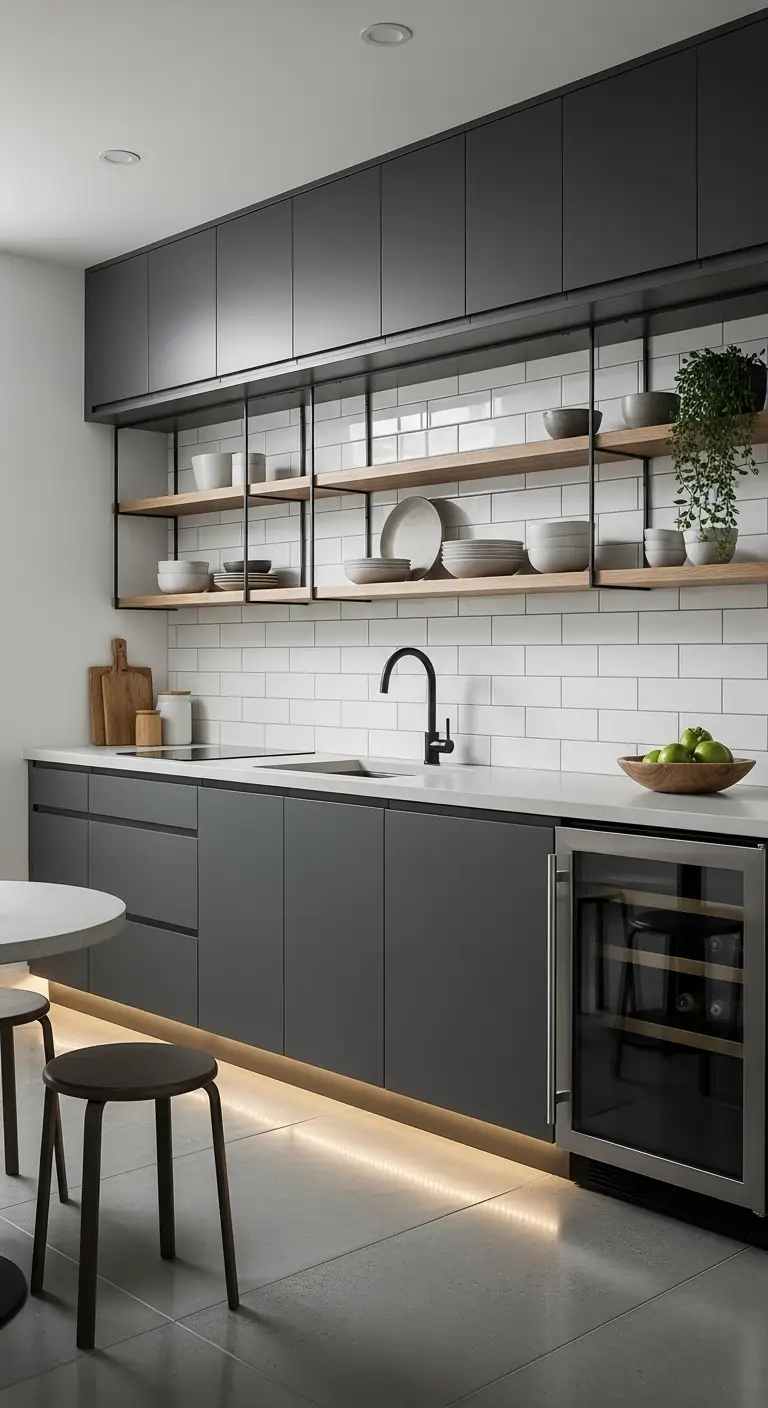
Minimalist basement kitchenettes focus on clean lines, uncluttered counters, and neutral color palettes for an airy feel.
Floating cabinets and sleek countertops reduce visual weight, making a small space appear larger and more open.
Integrated appliances preserve the streamlined appearance and free up counter space for cooking and prep.
Matte finishes and simple hardware provide a modern aesthetic while keeping maintenance low and straightforward.
Minimalism in compact basements balances functionality and elegance without overwhelming the space.
3. Open Shelving Concept
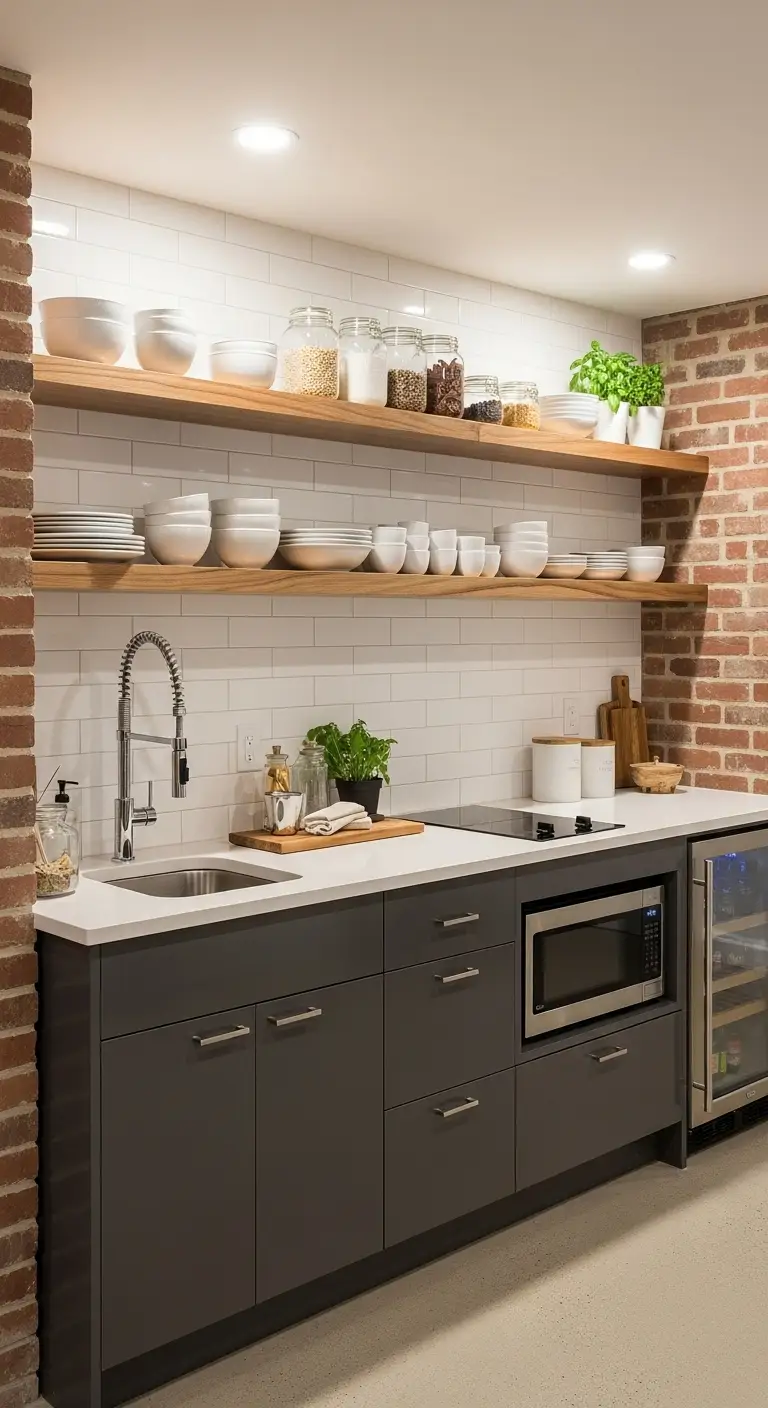
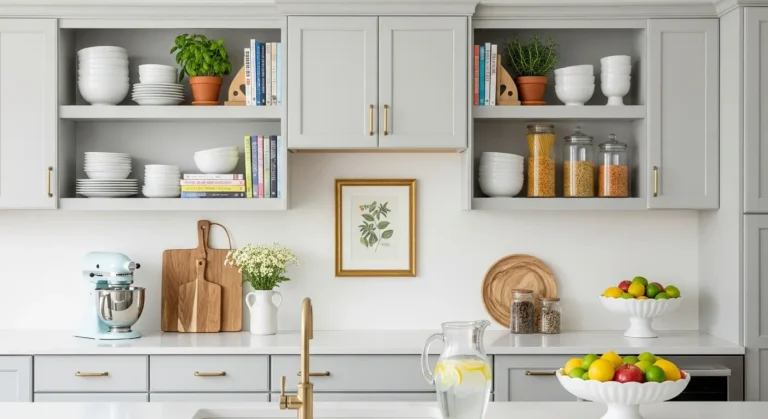
Open shelving brings personality to a basement kitchenette by displaying dishware, glassware, and decorative items.
This approach creates visual openness, making the area feel larger than it actually is.
Using baskets or containers keeps smaller items organized and prevents the shelves from looking cluttered.
A mix of textures, like wood and metal, adds warmth and industrial charm simultaneously.
Open shelves ensure items are accessible and cooking becomes faster and more enjoyable.
4. Galley Kitchen Approach
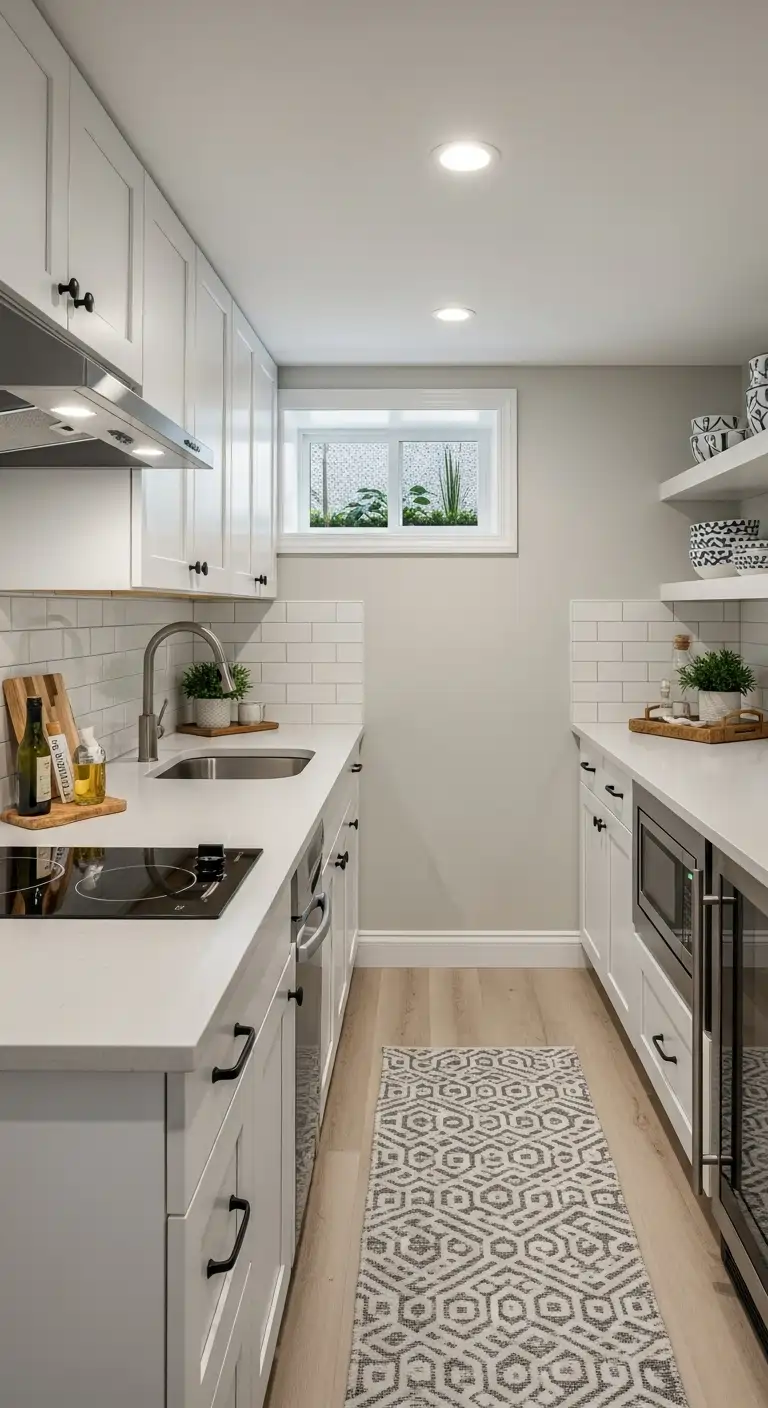
Galley layouts make efficient use of narrow basement spaces, with counters running parallel for maximum workflow.
Slimline appliances fit seamlessly, maintaining open walkways and preventing the space from feeling cramped.
Drawer organizers and wall-mounted racks optimize storage for utensils, spices, and cookware.
Lighting is essential, with track or recessed lights brightening the length of the kitchen efficiently.
Galley kitchen designs are highly practical, providing all necessary functions within a compact footprint.
5. Cozy Rustic Vibe
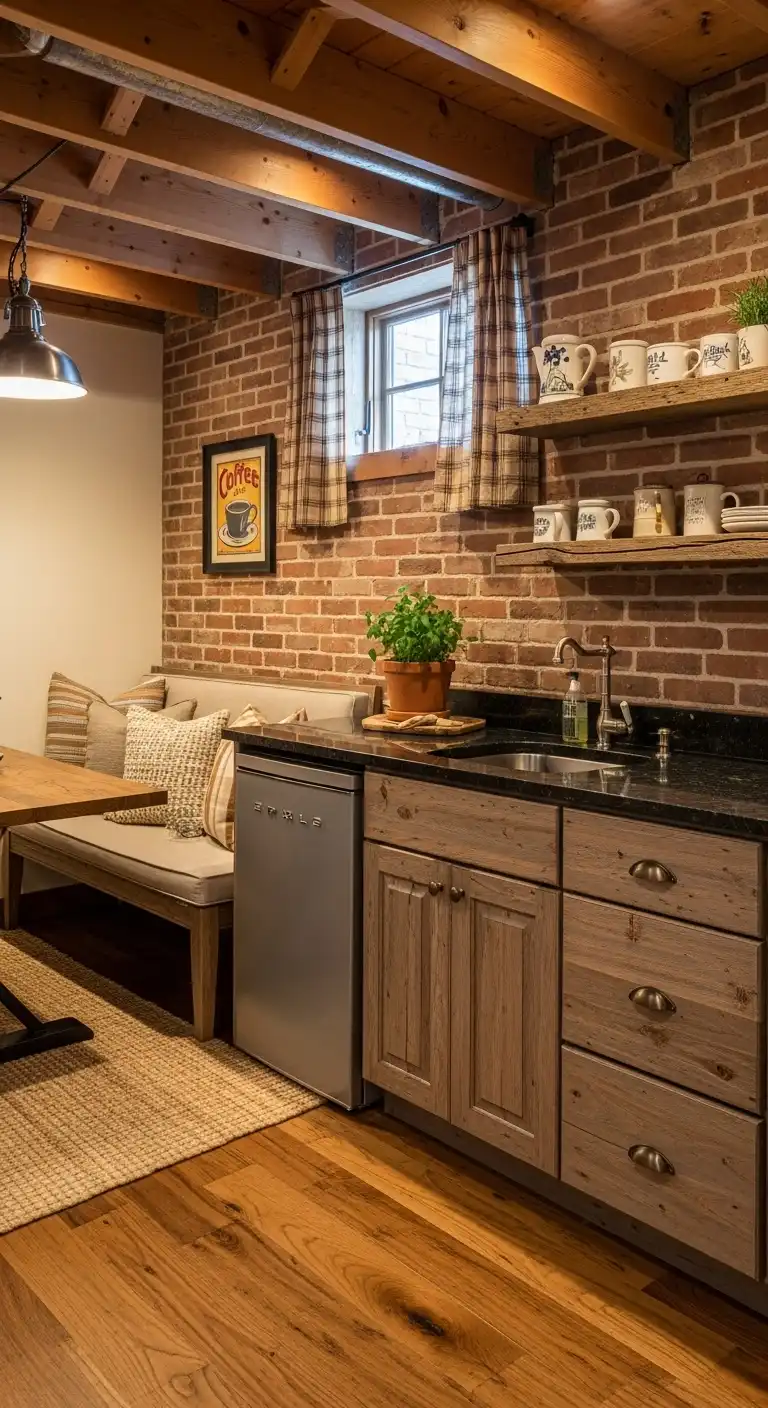
Rustic basement kitchenettes use wood, warm tones, and vintage accents to create a welcoming atmosphere.
Wooden cabinets, stone countertops, and open shelving enhance the cozy, inviting aesthetic.
Soft, ambient lighting and textured backsplashes elevate the charm without overwhelming the space.
Reclaimed or vintage materials provide character while keeping costs manageable and eco-friendly.
Rustic designs balance comfort, functionality, and visual appeal, transforming basements into cozy culinary spaces.
6. Sleek Industrial Touch
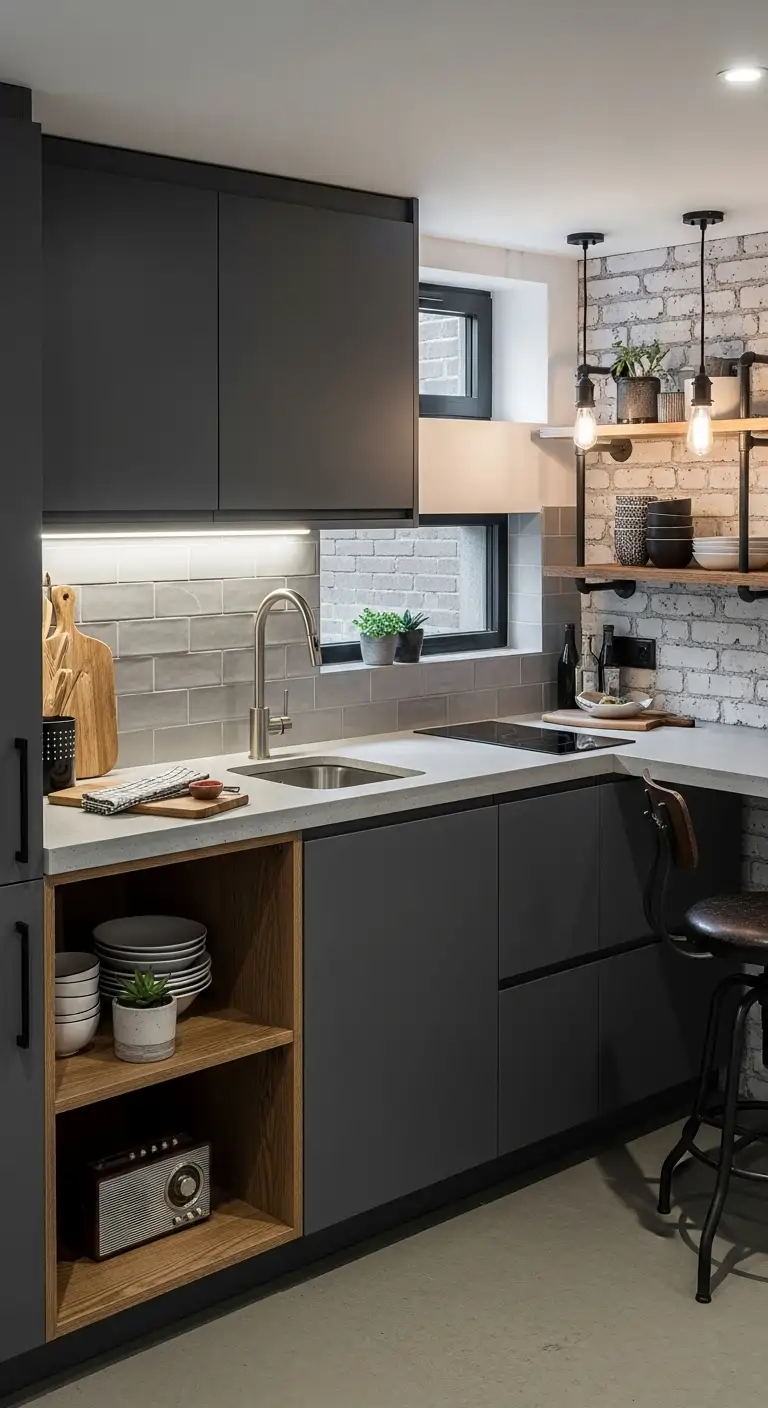
Industrial styles emphasize metal, concrete, and exposed elements to create an edgy, modern basement kitchenette.
Metal shelving, brick walls, and open layouts combine practicality with a contemporary look.
Neutral tones with strategic color accents prevent the space from feeling cold or unwelcoming.
Industrial lighting fixtures highlight countertops and add a stylish focal point to the area.
Pairing warm wood with metal elements softens the design while keeping the kitchen modern and functional.
7. Multi-Functional Island
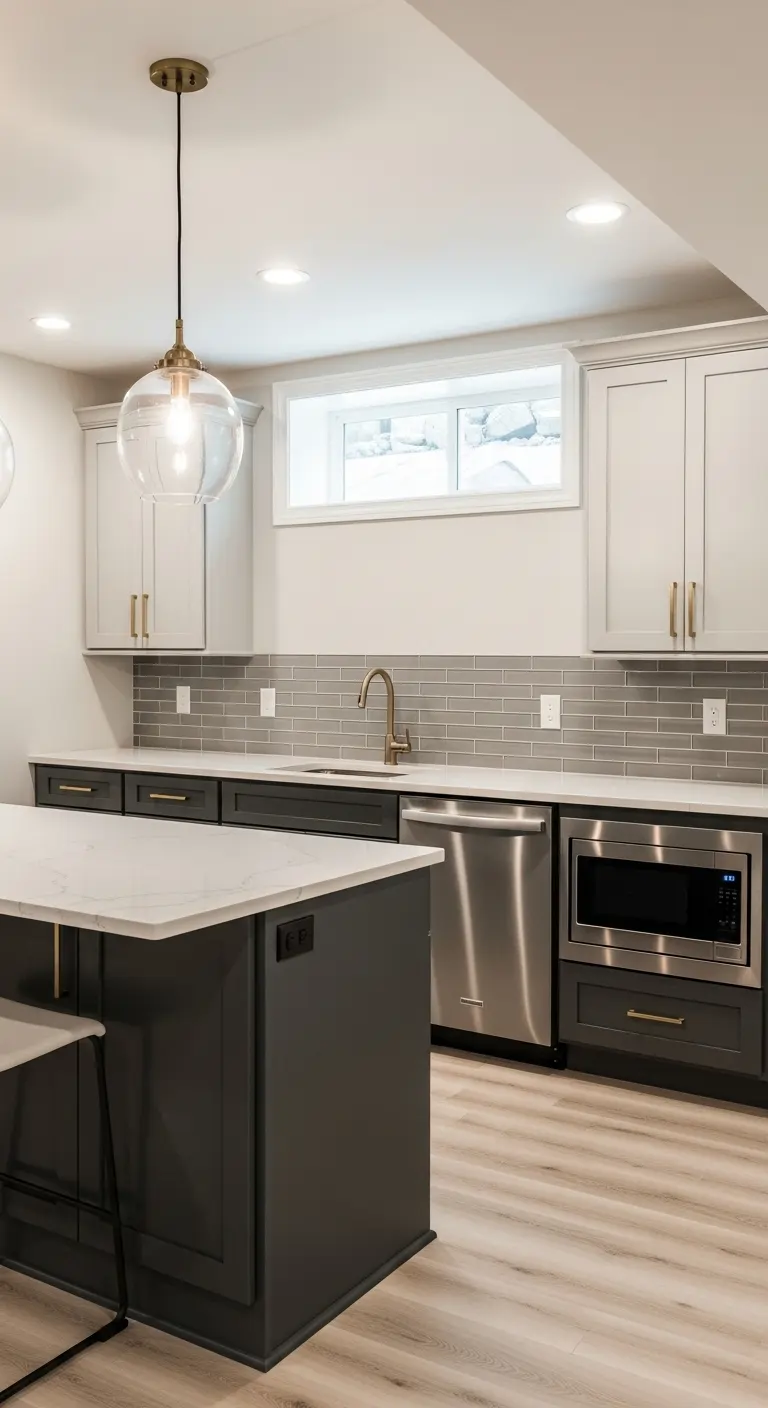
A compact island increases counter space and doubles as a dining or storage area in basement kitchenettes.
Movable or fixed islands provide flexibility, depending on available floor space and layout preferences.
Built-in drawers or cabinets maximize storage while maintaining a clean, organized environment.
Counter-height stools create an inviting seating area without encroaching on the room’s openness.
The island serves as a central hub, enhancing workflow and social interaction in the basement kitchen.
8. Two-Tone Cabinet Design
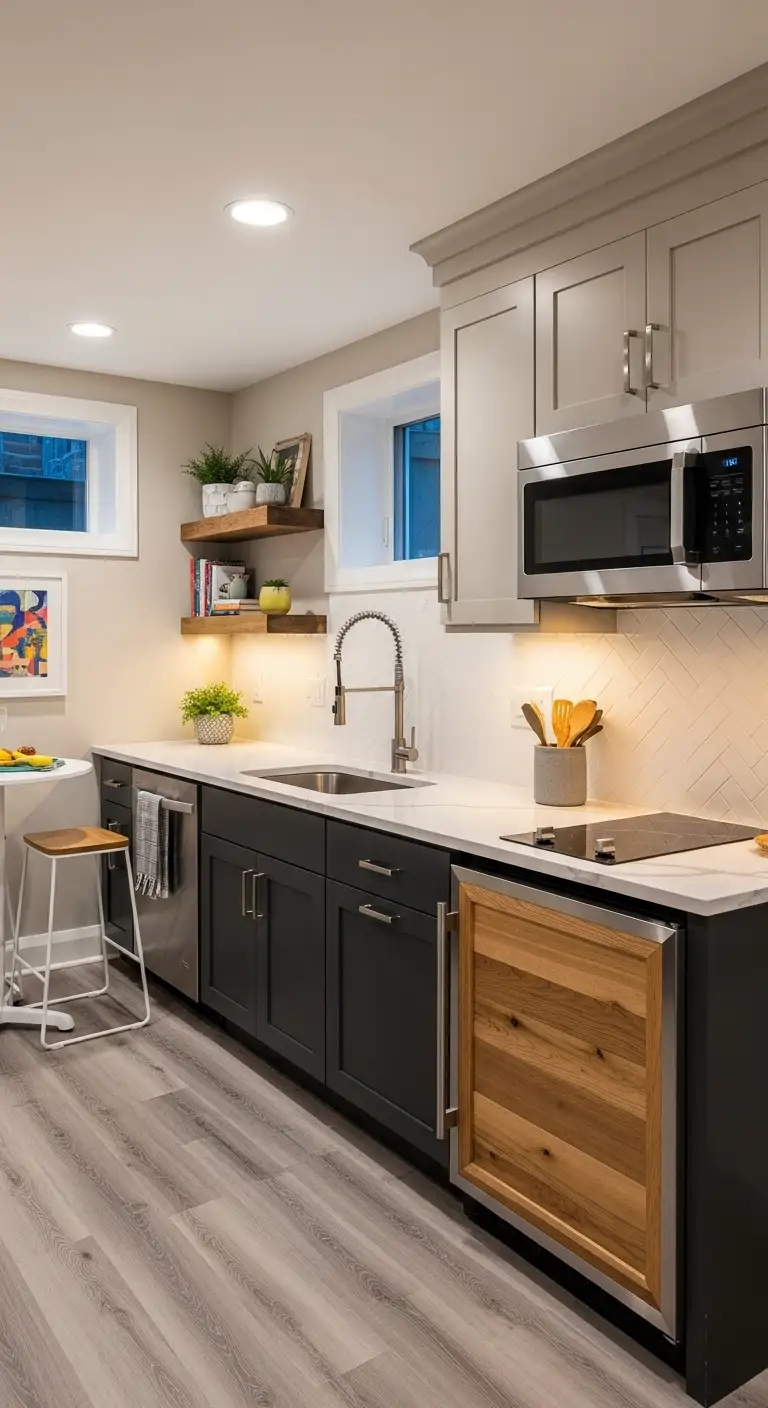
Two-tone cabinets create depth and visual interest while complementing a basement kitchenette’s compact layout.
Lighter upper cabinets and darker lower units make the ceiling feel higher and the room more spacious.
Contrasting hardware emphasizes different sections, adding subtle sophistication without overwhelming the space.
Pairing colors with natural materials like wood or stone softens the visual contrast and adds warmth.
This approach modernizes the basement while remaining practical and stylish for everyday use.
9. Wall-Mounted Appliances
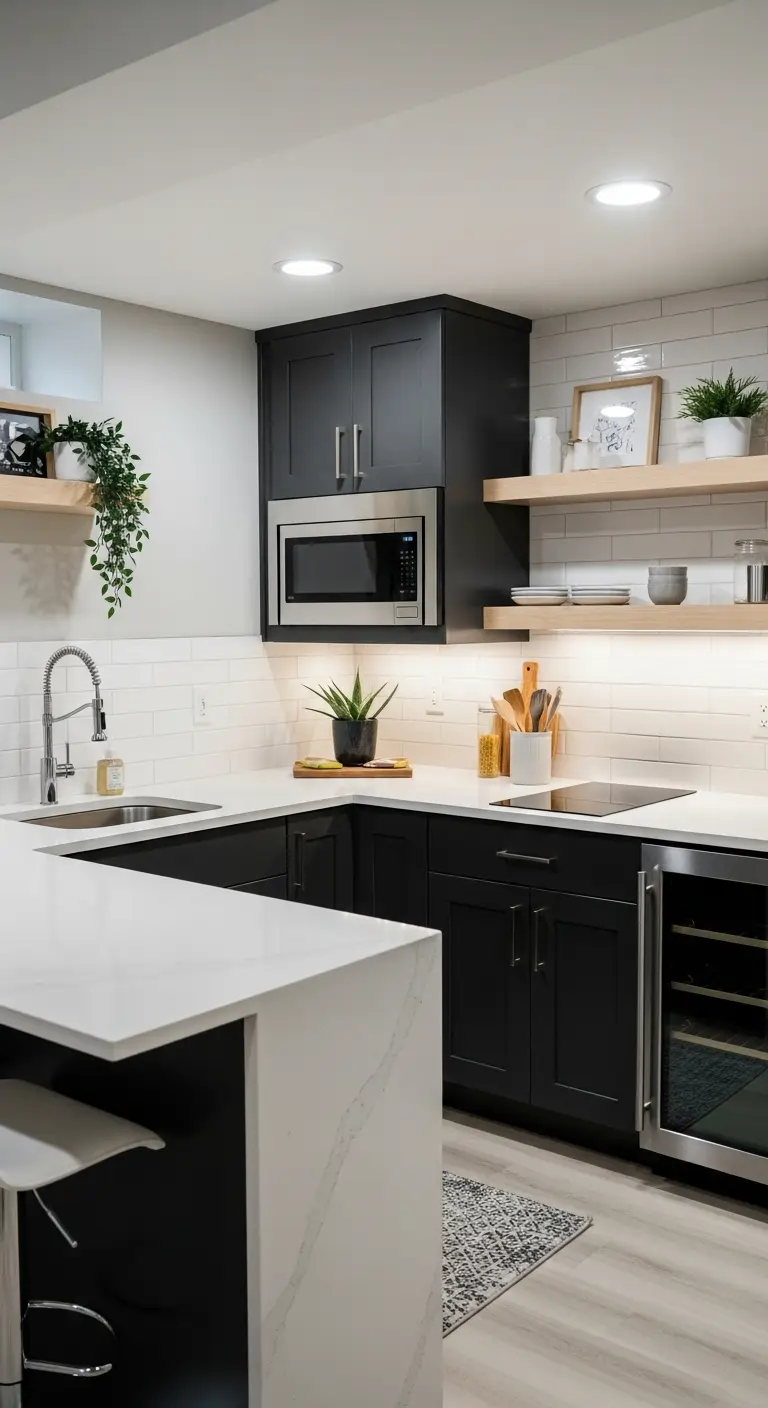
Wall-mounted microwaves or ovens free counter space while keeping cooking appliances easily accessible.
Eye-level placement improves ergonomics, reducing strain during meal preparation and cleanup.
Vertical arrangements allow more storage below and maintain a clean, streamlined appearance.
Combining with open shelving enhances accessibility and keeps counters organized.
Wall-mounted appliances provide functionality, efficiency, and a modern aesthetic in compact basements.
10. Hidden Storage Solutions
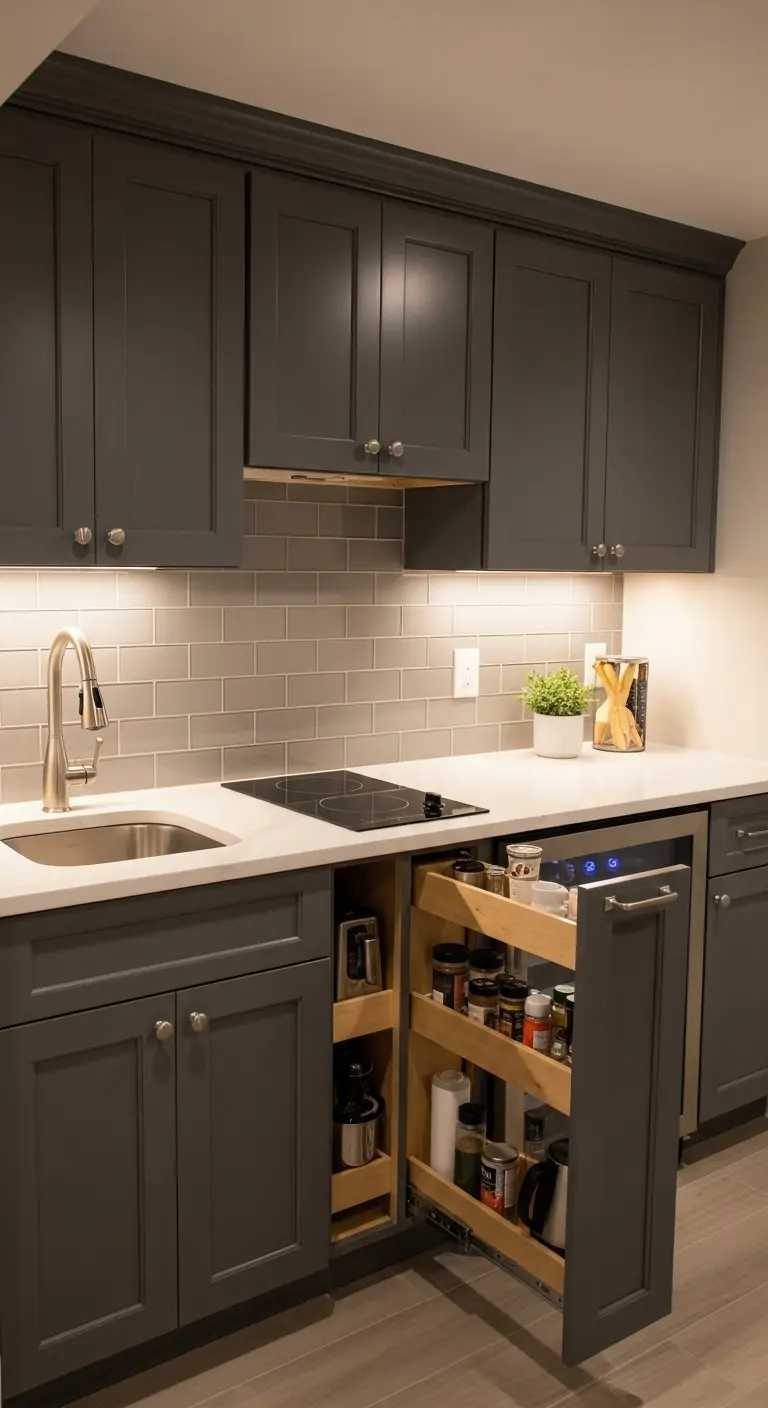
Hidden storage maintains a clutter-free look while maximizing small basement kitchenette spaces.
Pull-out cabinets, sliding shelves, and corner solutions make underutilized areas functional and accessible.
Blending cabinetry with walls ensures a seamless design that visually expands the space.
Closed storage hides utensils, appliances, and pantry items while open shelving highlights décor and kitchenware.
Hidden storage supports both practical organization and aesthetic appeal in small kitchenettes.
11. Bright Color Accents
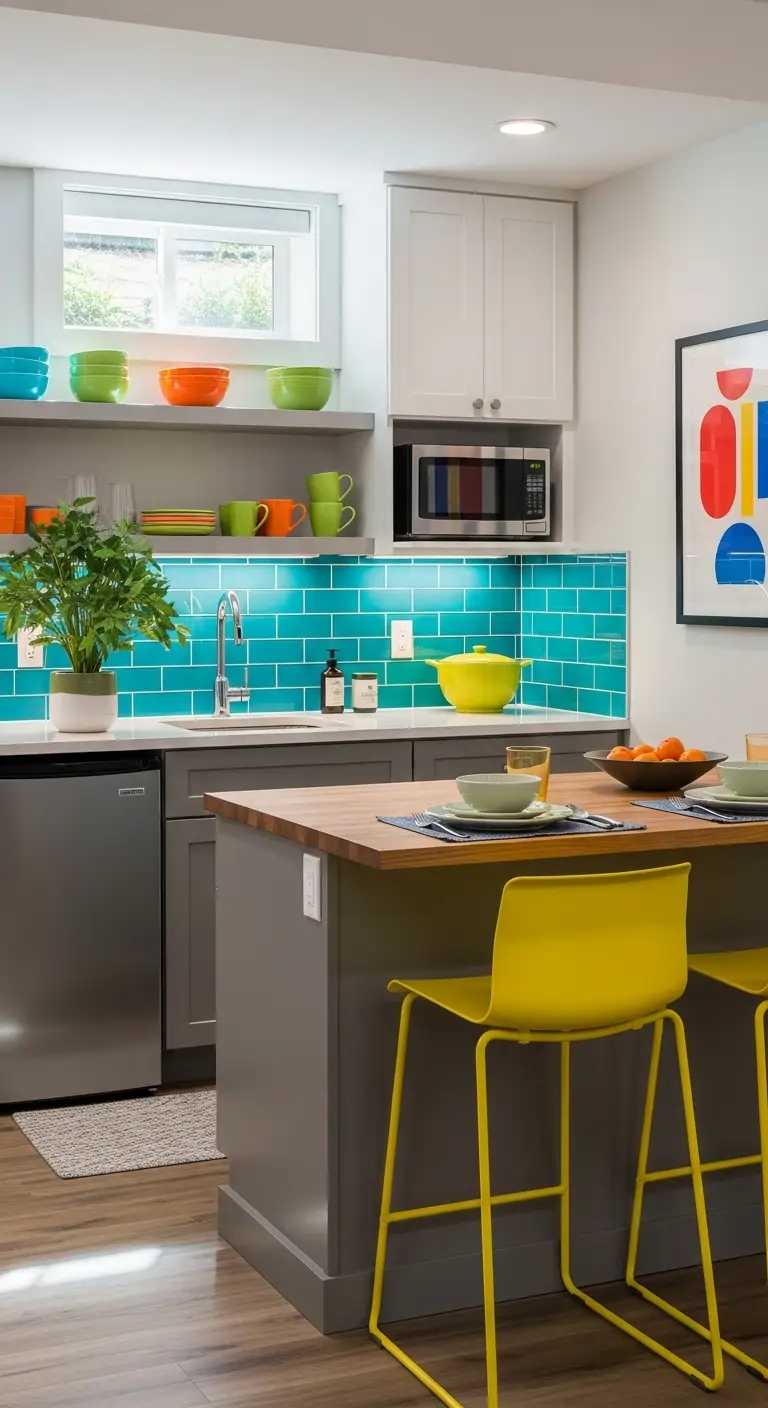
Adding bright color accents instantly livens up a basement kitchenette, making it feel cheerful and inviting.
A vibrant backsplash, colorful cabinet fronts, or patterned floor tiles create focal points without overwhelming the space.
Small appliances in bold colors complement the overall theme while keeping the kitchen functional.
Balancing bright accents with neutral cabinetry and countertops prevents visual clutter and maintains a sense of spaciousness.
Strategic pops of color bring energy and personality, transforming a dim basement into a lively culinary retreat.
12. Glass-Front Cabinets
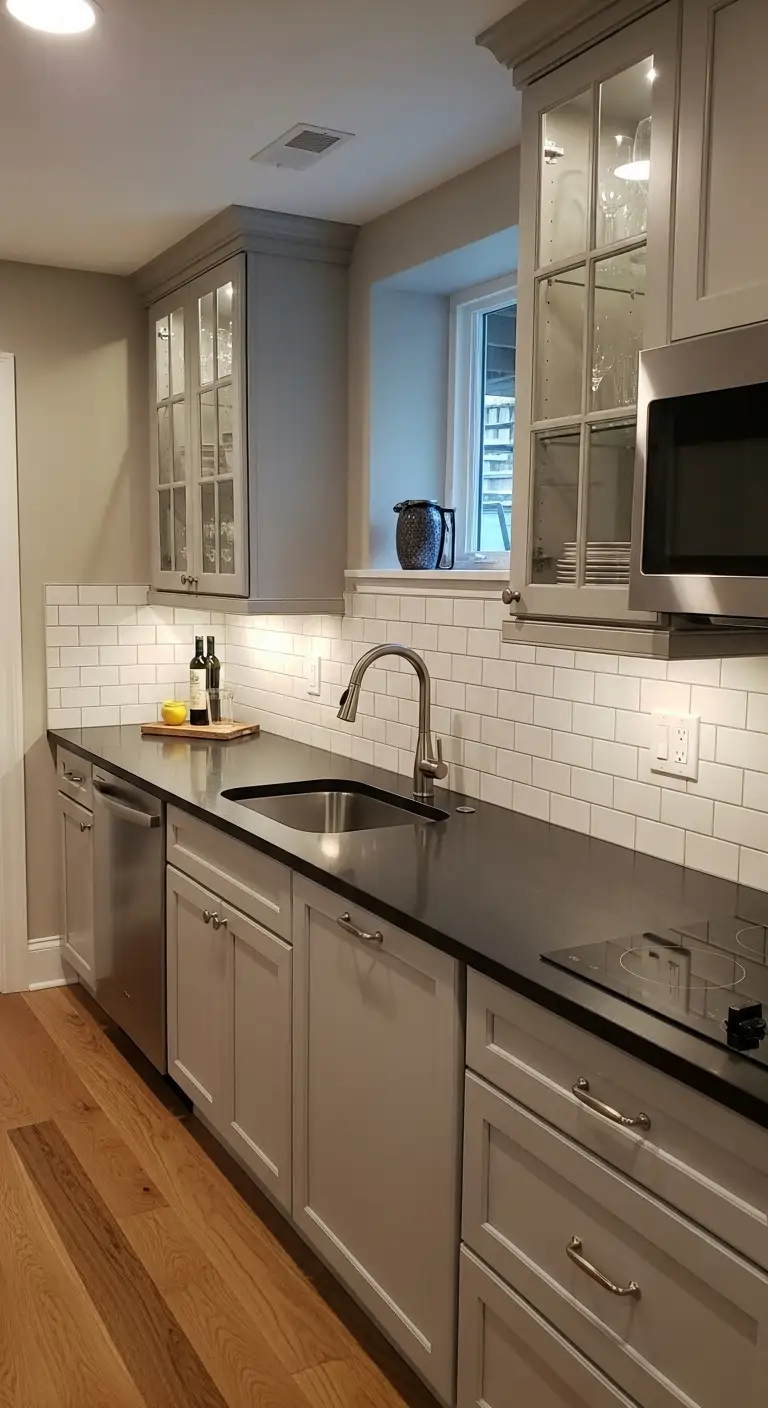
Glass-front cabinets visually expand the space while showcasing beautiful dishware and decorative items.
They provide an elegant touch, allowing light to reflect and enhance the basement’s brightness naturally.
Using frosted or tinted glass balances display and privacy for everyday items.
Pairing glass fronts with under-cabinet lighting emphasizes the visual appeal and highlights organization.
Glass-front cabinets combine functionality with style, elevating a compact basement kitchenette without sacrificing storage.
13. Smart Lighting Layers
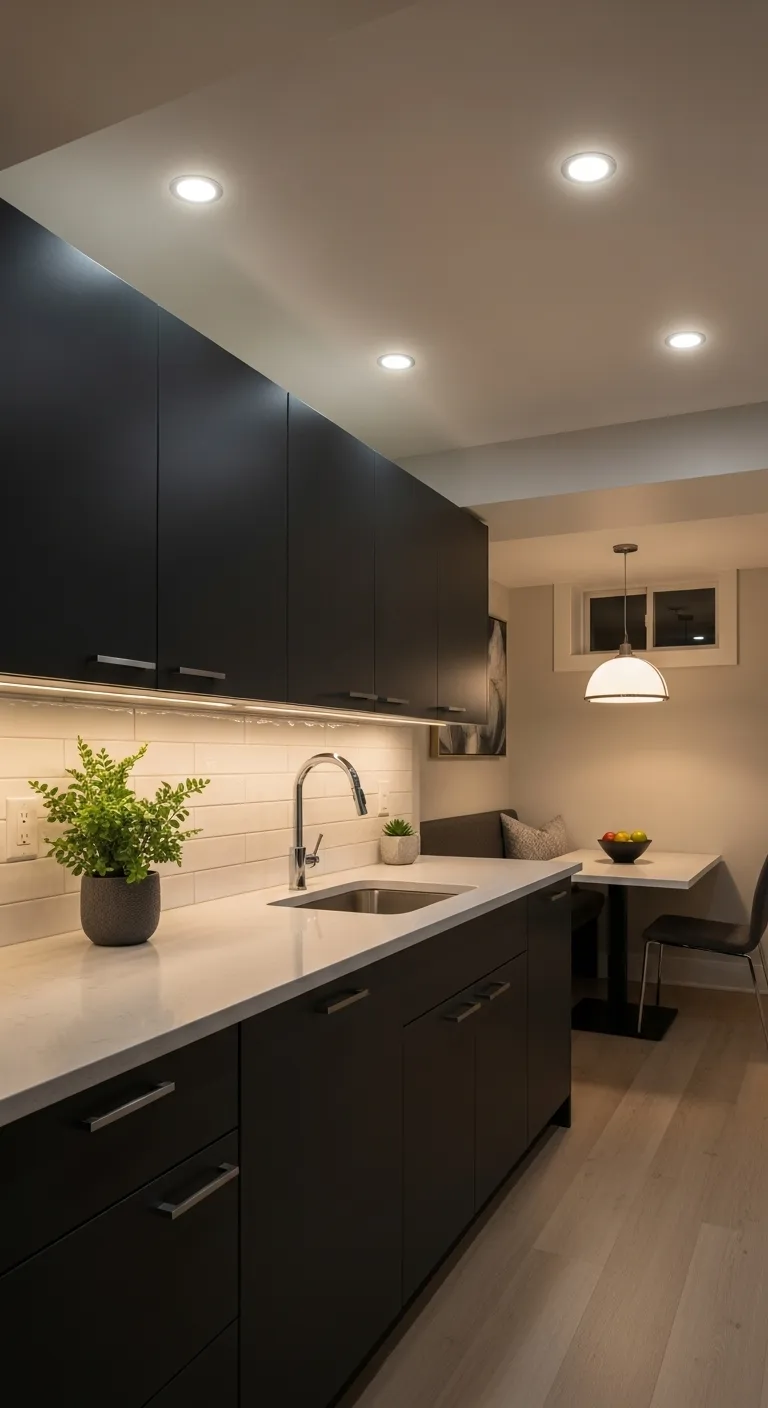
Layered lighting improves both functionality and ambiance in basement kitchenettes that often lack natural light.
Recessed lights provide general illumination, while under-cabinet fixtures focus on work surfaces efficiently.
Pendant lights above a small island or bar area create a cozy, stylish focal point.
Dimmer switches allow flexible lighting for cooking, dining, or entertaining without overcrowding the ceiling.
Proper lighting layers prevent the basement from feeling dark or cramped while enhancing overall aesthetic appeal.
14. Foldable or Pull-Out Counters
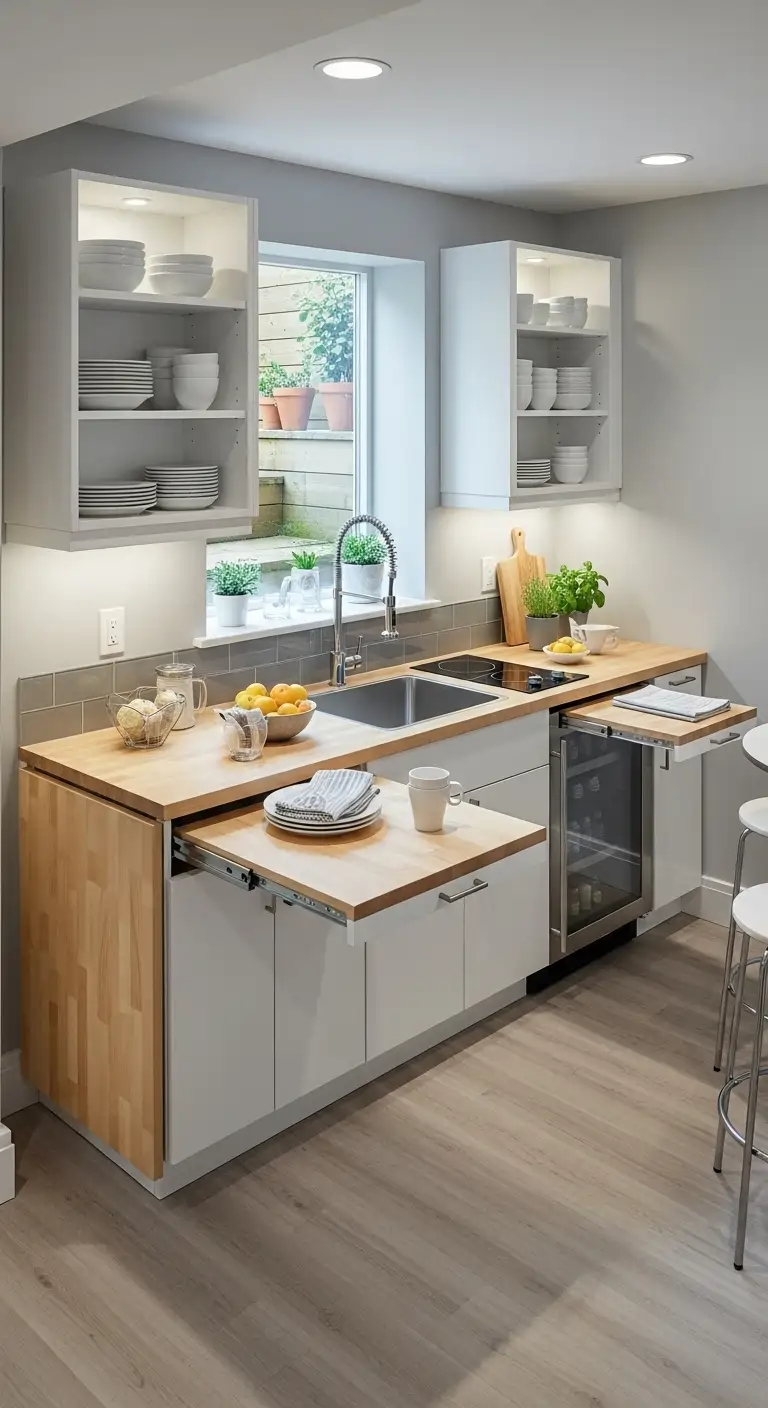
Foldable or pull-out counters maximize workspace in compact basement kitchenettes while saving floor space.
These counters provide additional prep areas when needed and fold away when not in use.
They are especially practical in narrow layouts or L-shaped designs where permanent surfaces may feel overwhelming.
Durable materials like laminate, wood, or quartz ensure longevity and easy cleaning.
Flexible counters enhance efficiency and functionality without compromising the basement’s cozy and organized feel.
15. Minimal Hardware Look
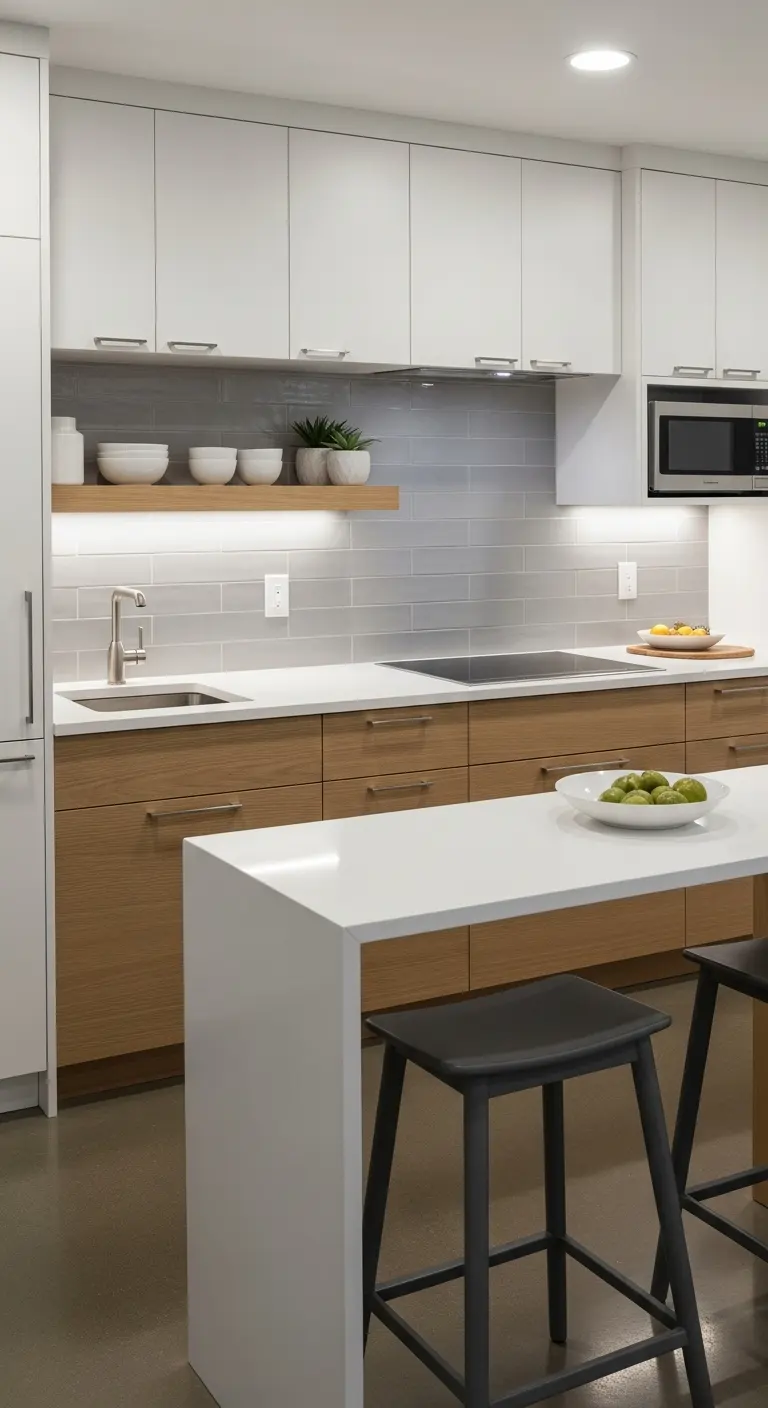
Minimal hardware cabinets streamline the look, creating a sleek and modern basement kitchenette.
Push-to-open doors or integrated handles reduce visual clutter and maintain a clean aesthetic.
Pairing minimal hardware with light-colored finishes makes the space appear larger and more inviting.
This approach is easy to maintain while providing effortless access to drawers and cabinets.
A minimalist hardware strategy blends style, function, and modern design for compact basement kitchens.
16. Cozy Breakfast Nook
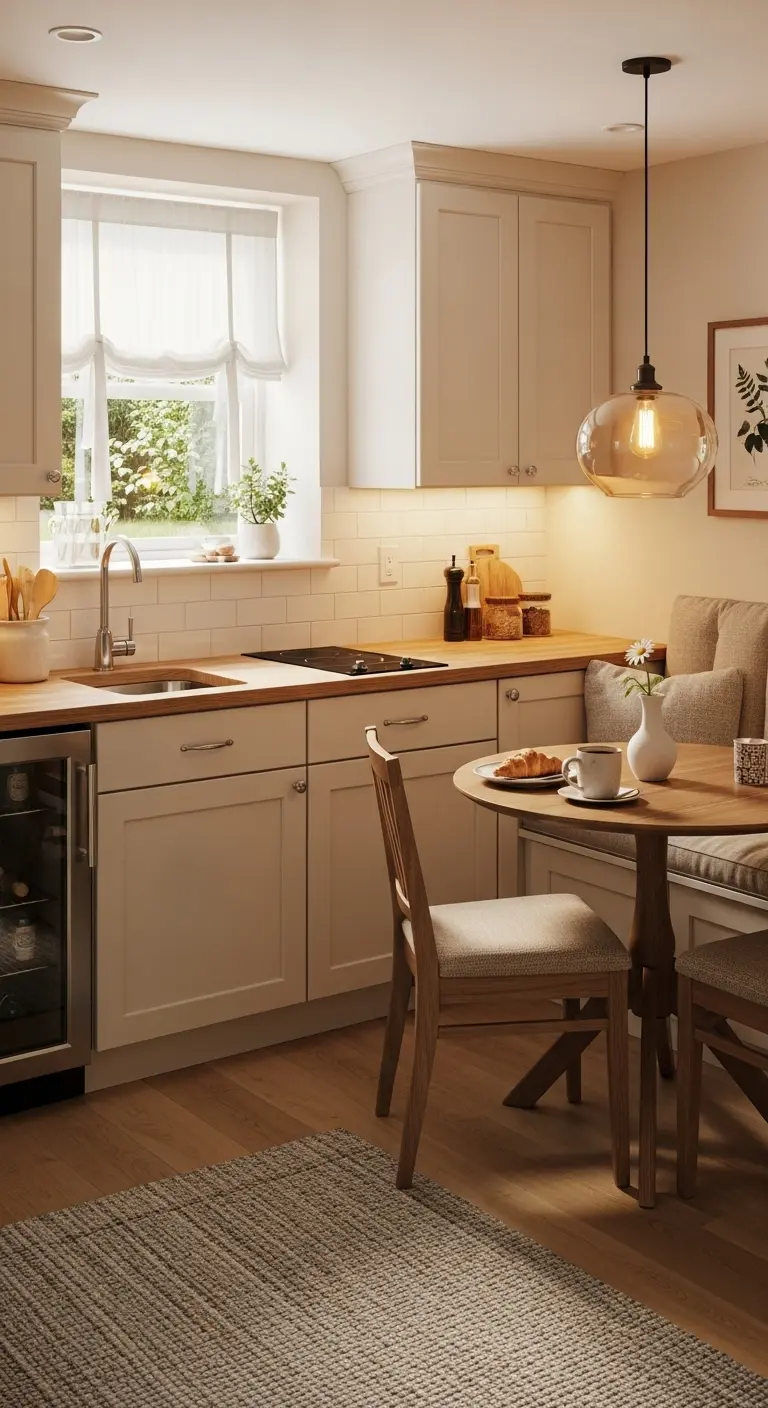
A small breakfast nook adds warmth and functionality to a basement kitchenette without crowding the space.
Built-in benches with storage beneath optimize seating and make use of otherwise unused corners.
Compact tables and soft cushions enhance comfort while complementing cabinetry and flooring choices.
Decorative touches like pendant lighting or artwork create a personal, welcoming feel.
A breakfast nook fosters casual dining, conversation, and a cozy atmosphere within limited basement space.
17. Sleek Stainless Steel Accents
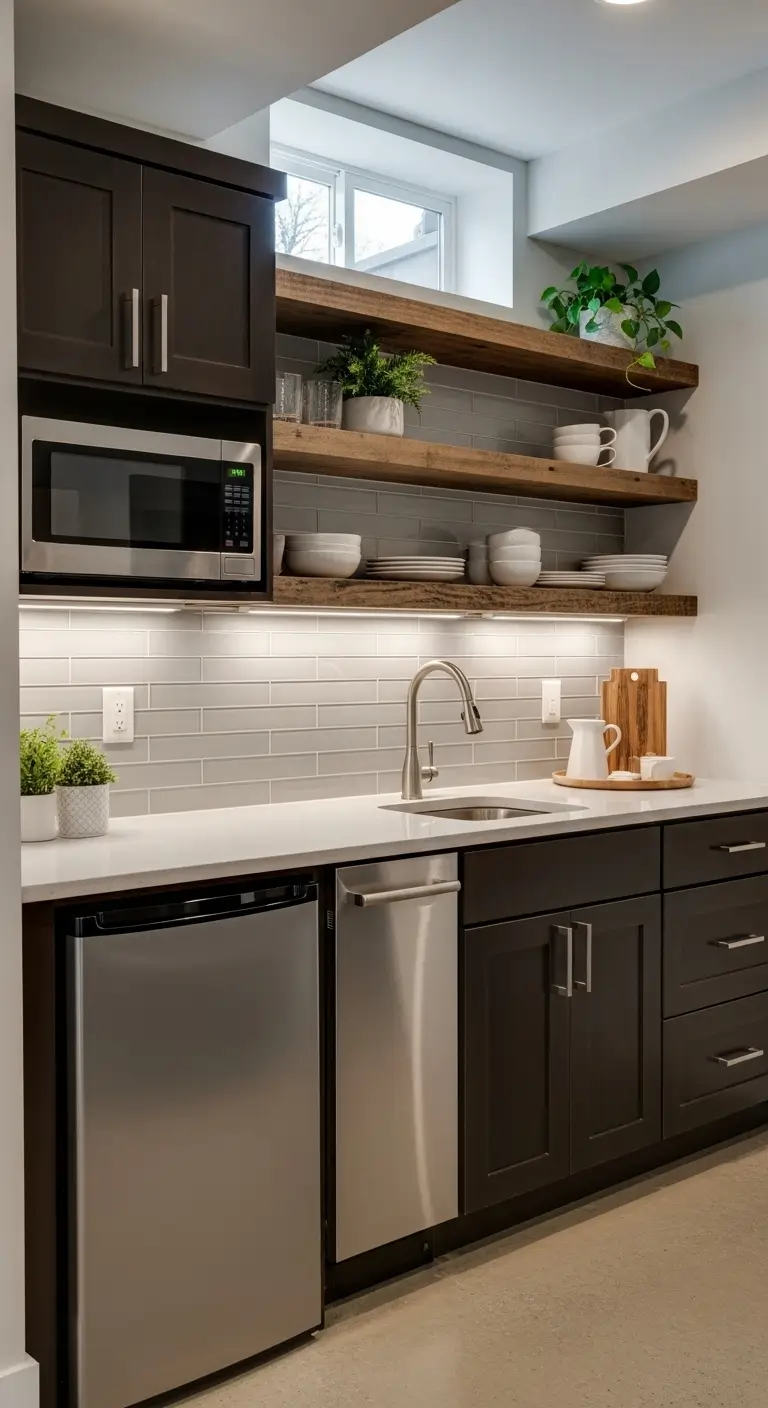
Stainless steel appliances and finishes create a modern, professional look in basement kitchenettes.
They are durable, easy to clean, and complement various design styles from minimalist to industrial.
Pairing stainless steel with wood or colorful accents softens the space while retaining a contemporary feel.
Brushed finishes minimize fingerprints, keeping the kitchen neat even with frequent use.
Stainless steel accents add elegance, functionality, and longevity, perfect for a stylish basement kitchenette.
18. Vertical Storage Walls
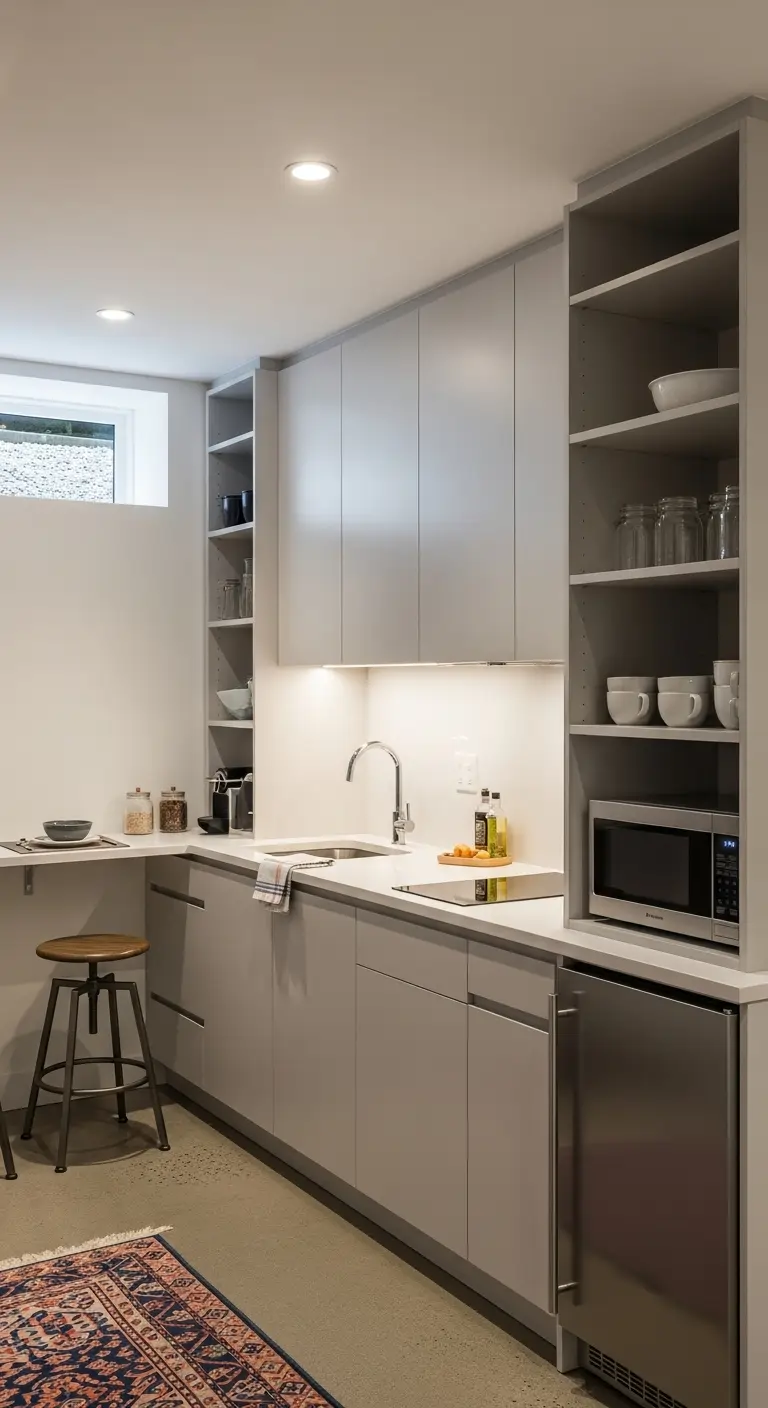
Vertical storage walls maximize every inch of a basement kitchenette, keeping items organized and accessible.
Tall shelving units, hanging racks, or magnetic strips make use of vertical space efficiently.
This approach frees up counters and preserves a sense of openness in a small kitchen.
Customizable vertical solutions accommodate spices, utensils, pots, or even decorative items.
Vertical storage transforms a basement kitchenette into a highly functional area while maintaining visual appeal.
19. Compact Appliances Integration
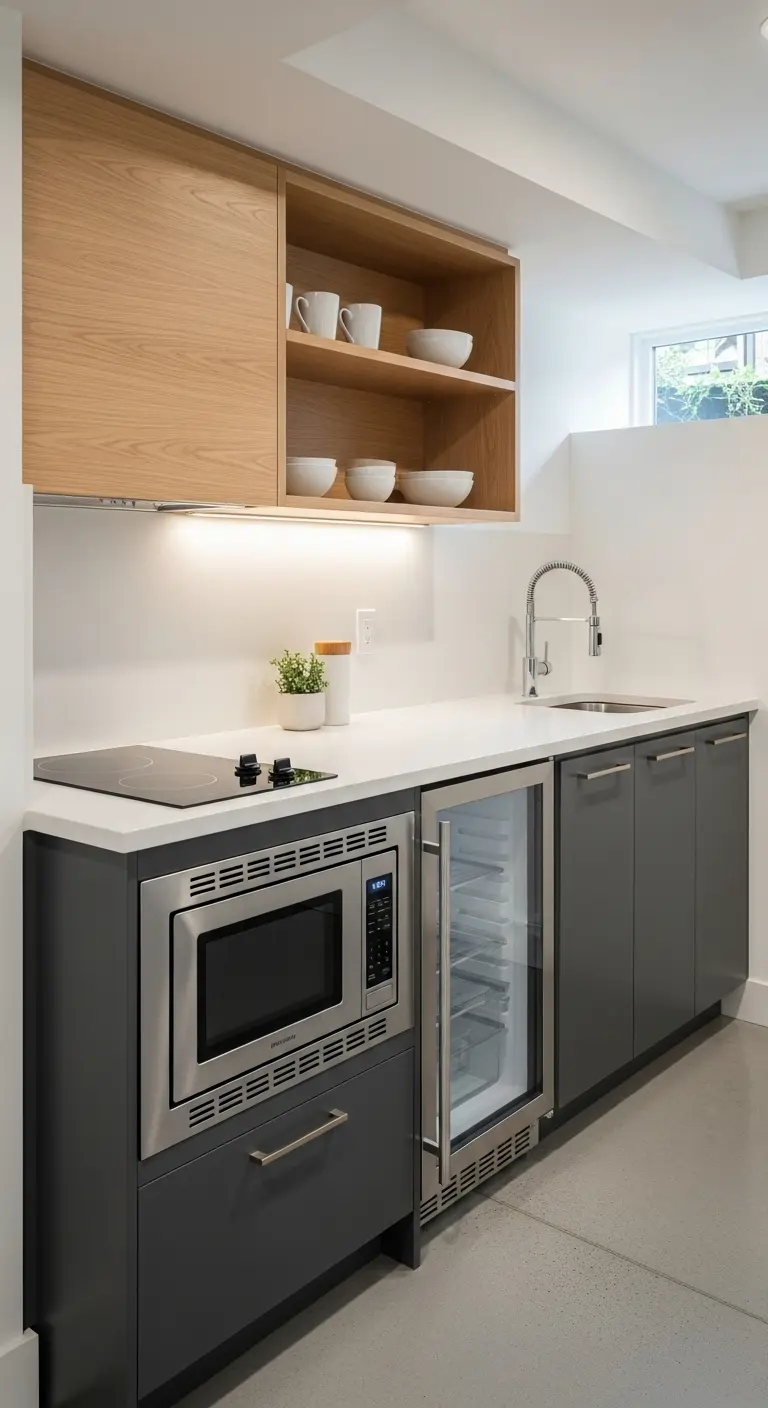
Integrating compact appliances ensures functionality without overcrowding a basement kitchenette layout.
Slim refrigerators, narrow dishwashers, or small ovens provide all essential functions within a limited footprint.
Built-in microwaves or cooktops optimize workflow and save counter space simultaneously.
Choosing appliances that match cabinetry enhances a cohesive design and keeps the kitchen looking polished.
Compact appliances make cooking and entertaining easy in basement spaces, balancing efficiency with style.
20. Monochromatic Palette
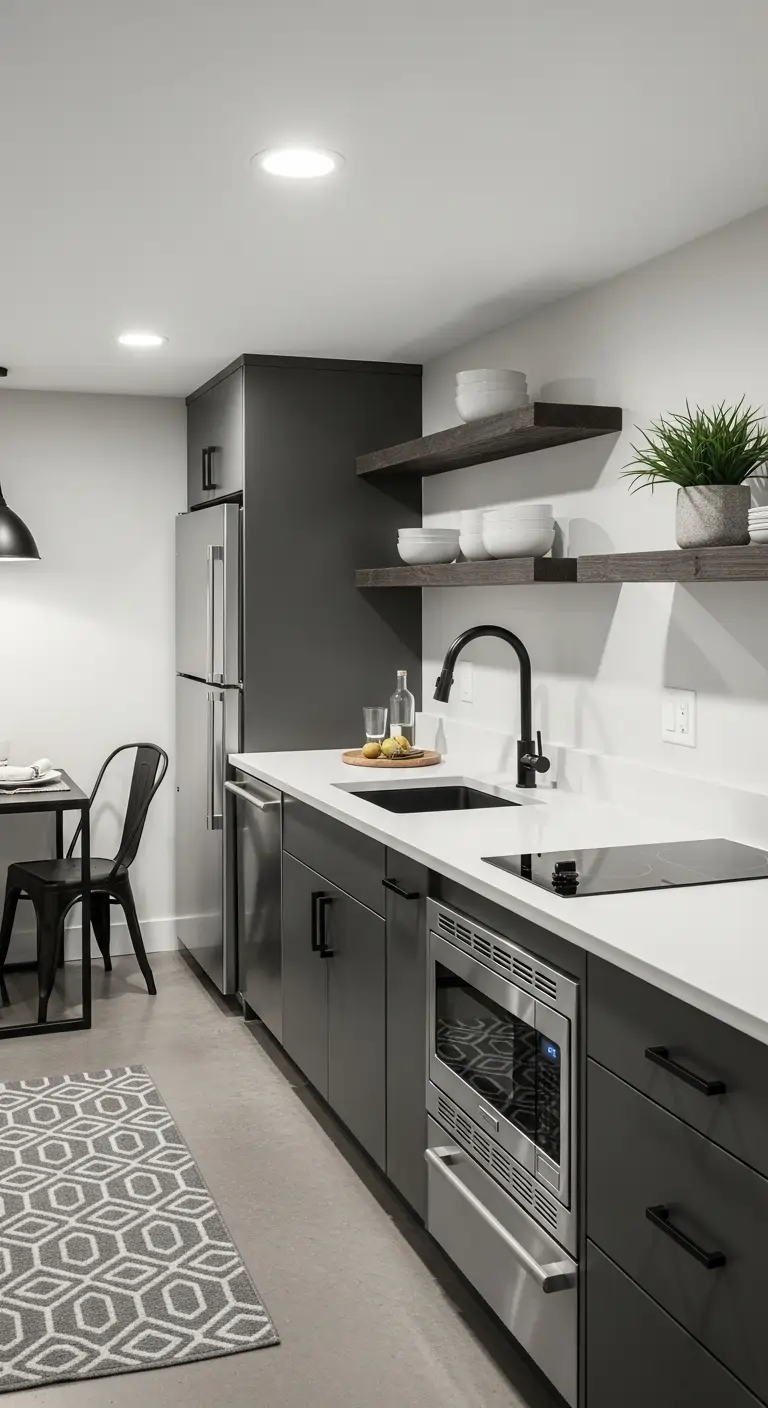
A monochromatic color palette creates a unified, elegant look that visually enlarges basement kitchenettes.
Using varying shades of a single color adds depth while maintaining a clean and cohesive aesthetic.
Light tones make ceilings appear higher, while darker accents provide contrast and sophistication.
Textured materials like wood, stone, or patterned tiles prevent monotony within a single color theme.
Monochromatic designs simplify décor choices while delivering a modern, polished, and visually appealing basement kitchen.
21. Open Shelving Display
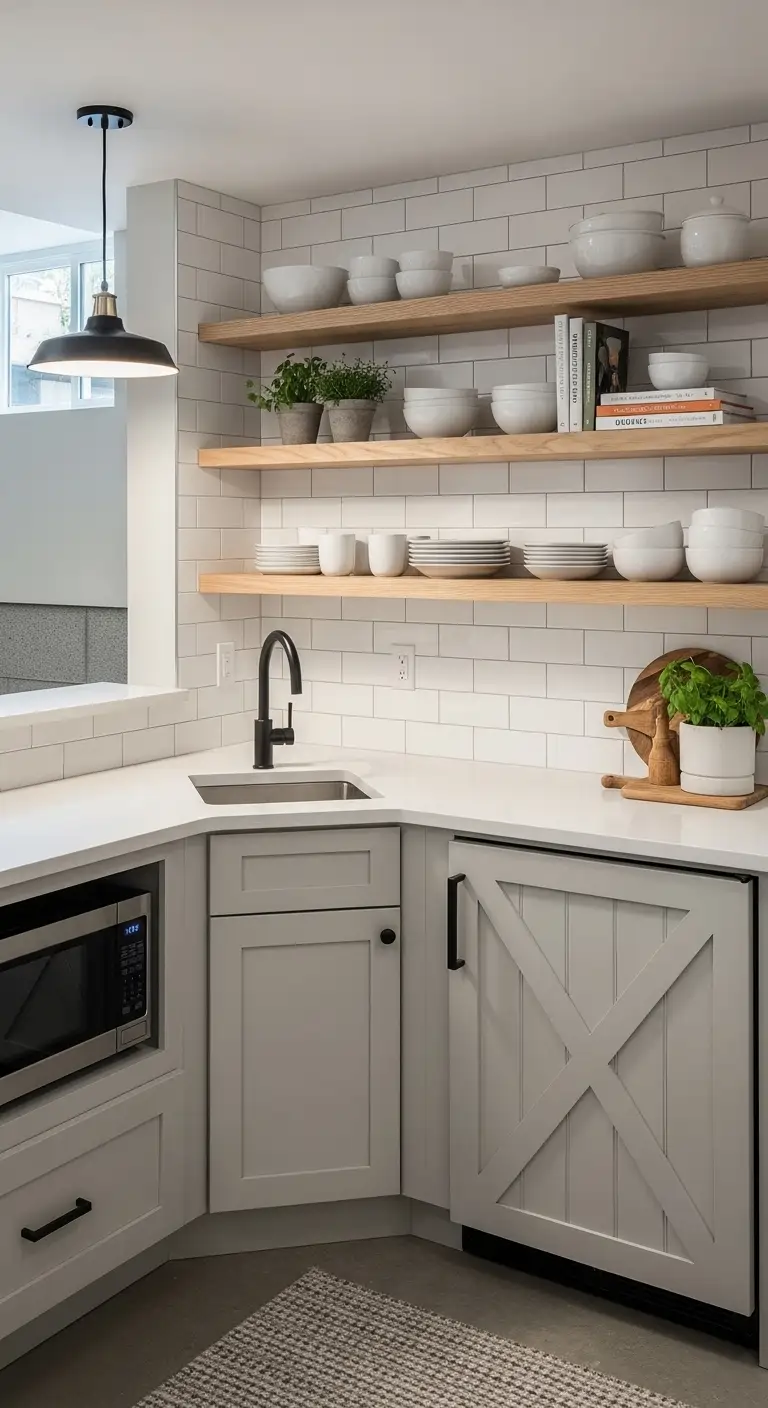
Open shelving in a basement kitchenette adds charm while keeping essentials within easy reach.
It allows you to showcase attractive dishware, glassware, or cookbooks as part of your décor.
Pair shelves with matching wall colors or subtle lighting to prevent a cluttered appearance.
Open shelving encourages organization and gives the kitchen an airy, more spacious feel.
This design choice combines functionality with aesthetic appeal, making small basements feel inviting and curated.
22. Multi-Functional Island
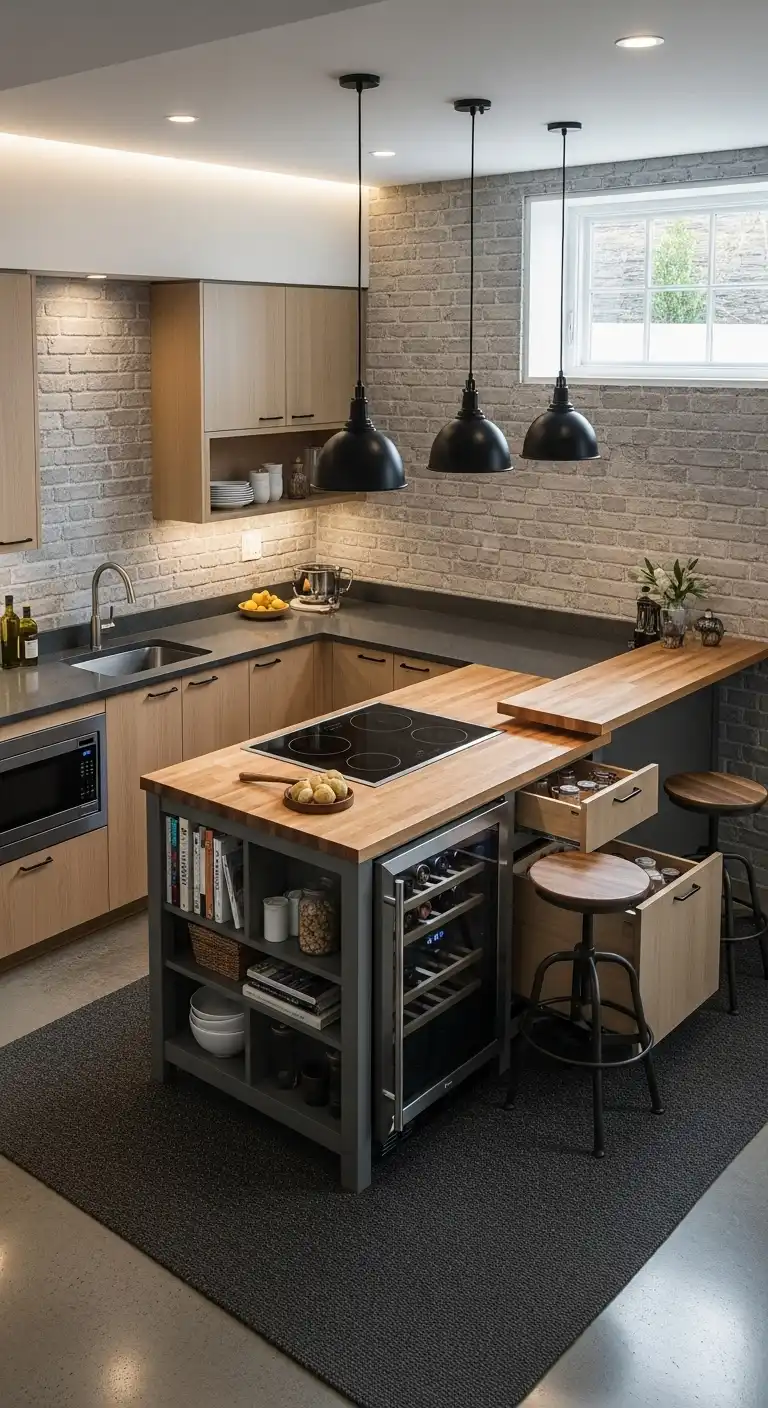
A multi-functional island adds storage, prep space, and a casual dining area in one compact unit.
Choosing a slim or movable island works best for narrow basement layouts without obstructing movement.
Incorporate drawers, shelves, or pull-out tables to maximize versatility while maintaining a clean look.
Counter-height seating invites friends or family for quick meals or coffee while cooking.
A multi-functional island becomes the heart of a basement kitchenette, balancing practicality and social interaction.
23. Warm Wood Tones
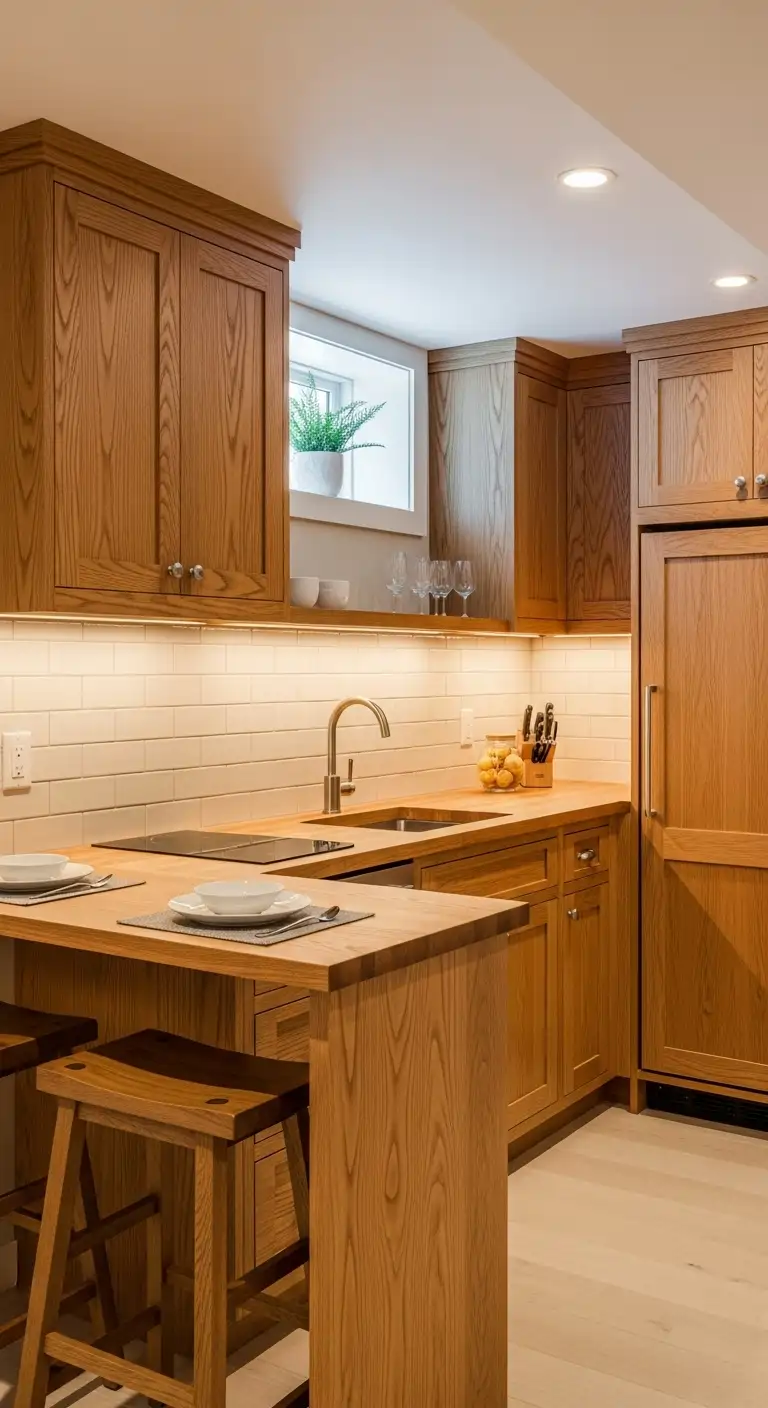
Incorporating warm wood tones adds comfort and a natural touch to basement kitchenettes.
Wood cabinets, shelving, or flooring provide texture and balance against cooler materials like metal or stone.
Pair light wood with neutral walls to create a spacious, welcoming atmosphere.
Using wood accents strategically enhances coziness while avoiding an overly dark or heavy feel.
Warm wood tones make the basement kitchen feel less sterile, inviting, and more like a central gathering spot.
24. Compact Dining Corner
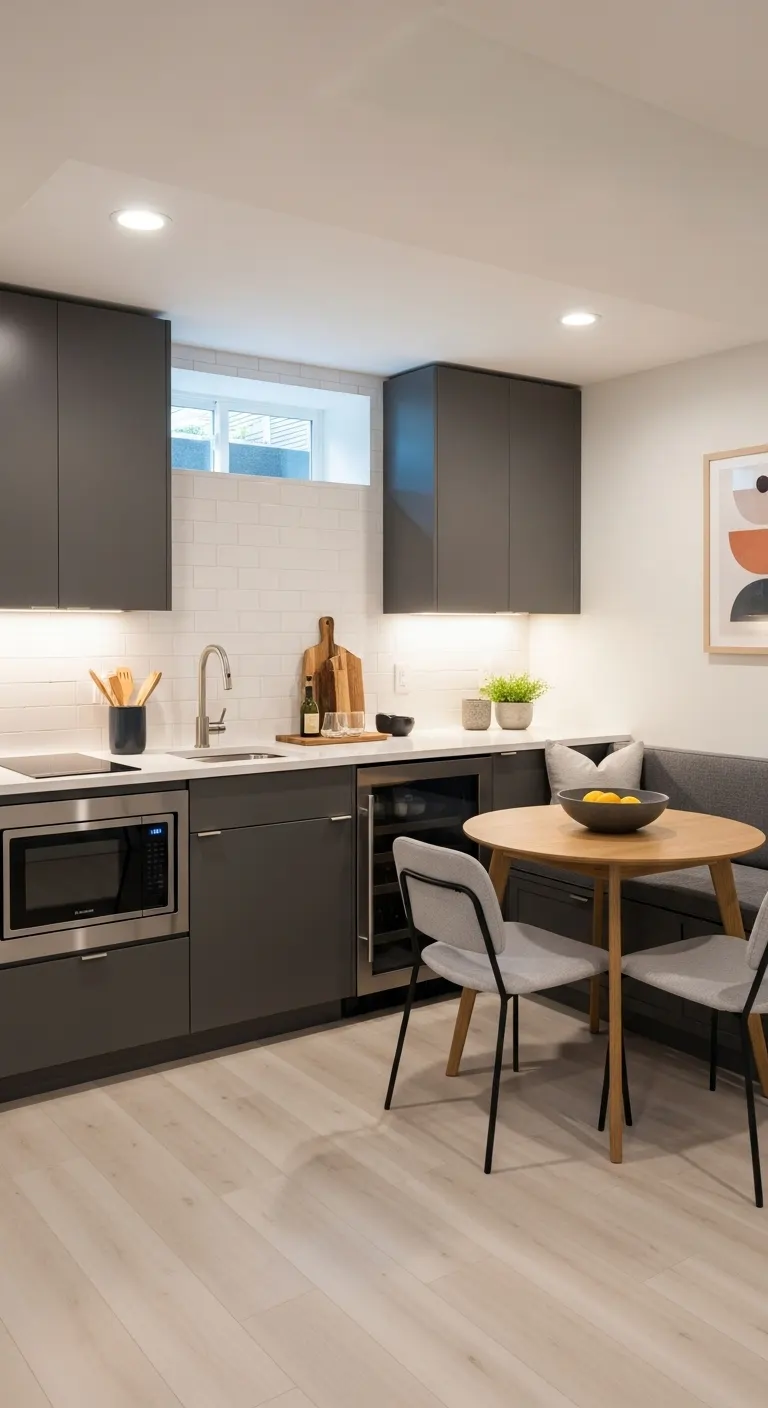
A compact dining corner provides a dedicated eating area without sacrificing essential kitchen space.
Small tables, foldable chairs, or built-in bench seating optimize limited square footage efficiently.
Decorative touches like pendant lighting or a wall mirror amplify light and add style.
This corner encourages family meals or casual coffee breaks, making the basement kitchen multi-functional.
A thoughtfully designed dining area elevates both convenience and the overall visual appeal of the space.
25. Smart Ventilation Solutions
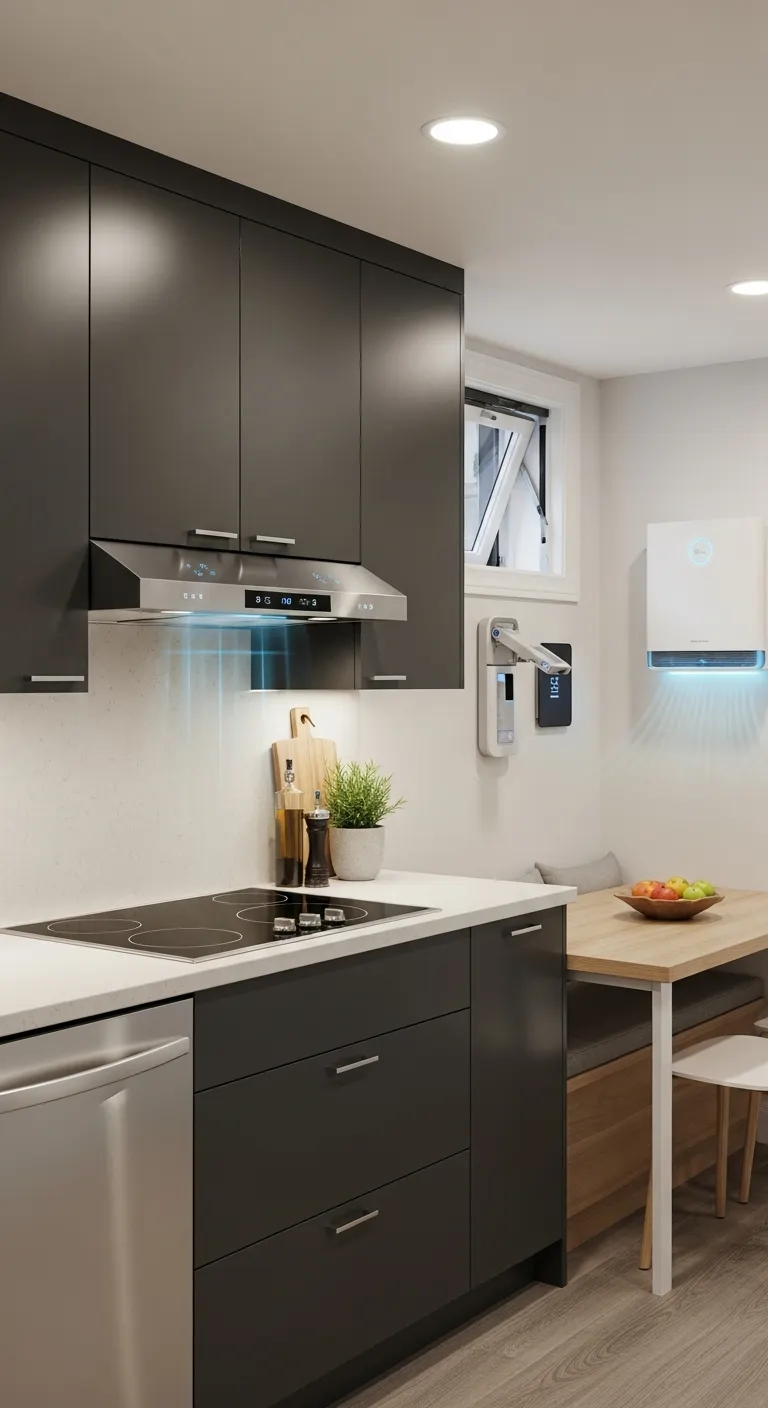
Proper ventilation is crucial in basement kitchenettes to prevent odors and moisture buildup.
Installing a range hood, exhaust fan, or vented microwave ensures effective airflow while cooking.
Compact ductless or recirculating units work well when basement layouts limit external venting options.
Good ventilation maintains a fresh, healthy environment, protecting cabinets, walls, and ceilings from dampness.
A well-ventilated basement kitchenette becomes a comfortable, functional, and enjoyable cooking space for daily use.
Additional Tips for a Functional Basement Kitchenette
Maximizing storage is essential in a basement kitchenette since space is often limited and compact layouts are common.
Consider pull-out pantry shelves, under-island drawers, or wall-mounted racks to keep items organized efficiently.
Lighting should be layered to brighten the basement naturally, combining overhead, task, and accent lighting strategically.
Use reflective surfaces such as glossy backsplashes, glass cabinets, or mirrors to enhance the perception of space.
Incorporating flexible, modular furniture allows you to adjust the layout for entertaining, meal prep, or casual dining.
Material Choices for Durability and Style
Selecting durable, moisture-resistant materials is vital for basement kitchenettes prone to dampness or humidity.
Luxury vinyl or engineered wood flooring withstands spills and heavy foot traffic while looking stylish.
Quartz or solid surface countertops are resilient against scratches, stains, and heat, perfect for small kitchens.
Cabinet finishes should resist warping and maintain a polished appearance over time.
Durable, stylish materials balance aesthetics and practicality, ensuring a basement kitchenette remains functional and beautiful for years.
Final Wrap-Up
Basement kitchenettes can be compact yet highly functional, stylish, and welcoming with thoughtful design choices.
Incorporating bright accents, clever storage, and layered lighting transforms the basement into a practical culinary space.
Multi-functional islands, warm wood tones, and open shelving enhance both usability and aesthetic appeal effectively.
Attention to materials, ventilation, and layout ensures your basement kitchen remains comfortable, organized, and enjoyable for daily life.
With creativity and planning, even small basement kitchenettes with limited space can become the heart of your home.