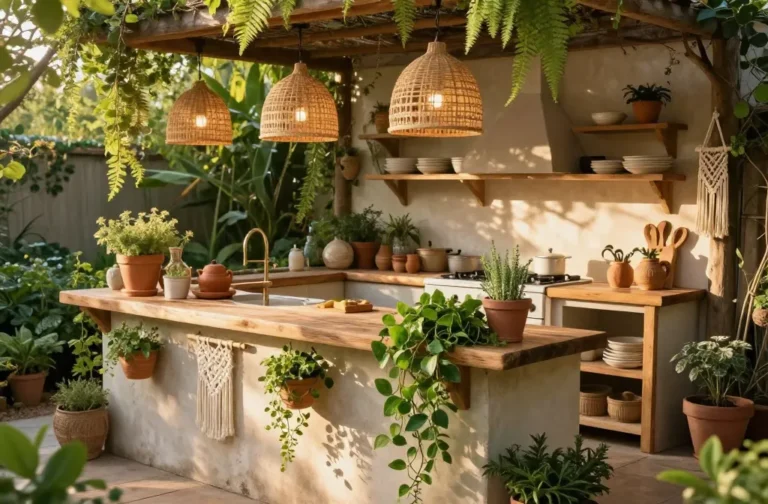

The kitchen is no longer just a space dedicated to cooking; it has evolved into the definitive lifestyle hub, the primary social center, and one of the single greatest investments in any home.
It is where life happens—from hurried morning coffees to large holiday gatherings. Because of its pivotal role, designing a kitchen requires far more than picking attractive finishes; it demands a guiding blueprint.
This blueprint is your Kitchen Design Philosophy (KDP). We define KDP as the intentional set of principles that expertly balances enduring aesthetics, peak functionality, and the unique flow of your household.
A true design philosophy ensures your kitchen doesn’t just look good, but actively supports your life.
Our exploration will focus on the three core pillars of modern KDP: Function, Form, and Flow. By mastering these, you ensure your next kitchen is a lasting success, not a temporary trend.
The Non-Negotiable Core: Functionality and Flow
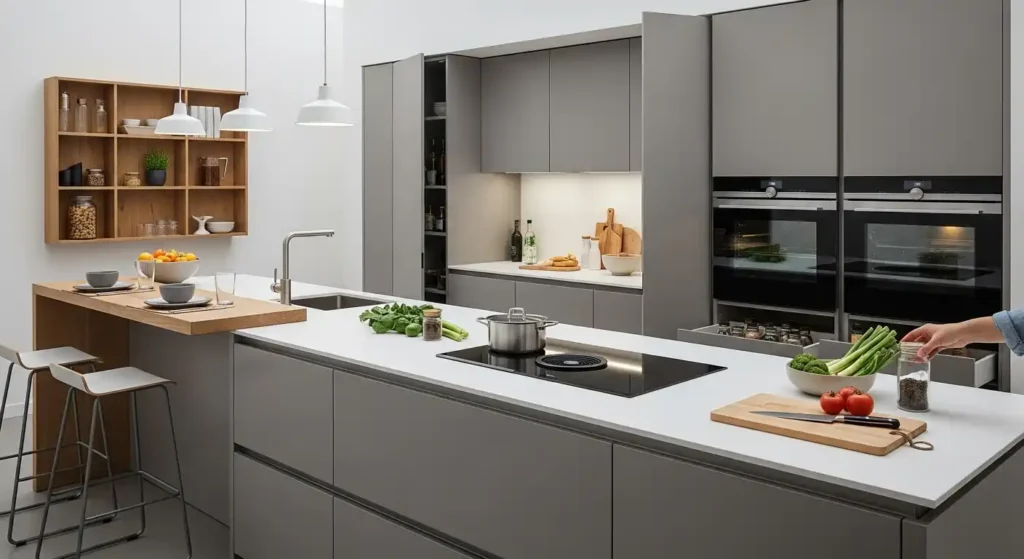
A successful kitchen is one that disappears when you’re working—it operates instinctively, reducing strain and maximizing efficiency. This is where fundamental design principles meet Kitchen Ergonomics.
The Golden Rule: Mastering the Kitchen Work Triangle
The Kitchen Work Triangle is the bedrock of efficient design, originally developed in the 1940s to minimize walking distances during meal preparation. It connects the three primary task stations:
- The Sink (Cleaning Station): The most frequently used area, vital for prep and cleanup.
- The Refrigerator (Storage Station): Used for initial retrieval and putting away groceries.
- The Cooktop/Oven (Cooking Station): The focal point for heat application.
The philosophy dictates that the perimeter of this triangle should ideally be between 12 and 26 feet in total, with no single leg being shorter than 4 feet or longer than 9 feet. The goal is clear: ensure proximity and maintain clear, unobstructed pathways.
Modern Adaptations: Transitioning to Work Zones
For larger, open-plan kitchens, strictly adhering to the triangle can be impossible or inefficient. Here, the KDP evolves into Work Zones, a more flexible concept that caters to specialized tasks:
- Prep Zone: Near the sink, dedicated space for chopping, mixing, and preparing.
- Cooking Zone: Near the range/cooktop, housing spices, oils, and cooking utensils.
- Storage Zone: Centered around the pantry and refrigerator for dry goods and cold items.
- Baking Zone (Optional): Dedicated area with specialized appliance storage and a lower counter height for leverage.
- Beverage/Snack Zone: Often located away from the main triangle/zones to allow guests or children to access drinks without interrupting the primary chef’s flow.
Integrating these zones, along with the correct Kitchen Work Triangle, fundamentally solves the flow issues inherent in busy, multi-user kitchens.
Kitchen Ergonomics: Designing for the Human Body
Kitchen Ergonomics ensures that the space is designed for comfort, safety, and reduced physical strain.
This goes beyond the general layout and focuses on the minute details of daily interaction.
Height and Reach:
While standard counter height is 36 inches, incorporating varied heights can be a huge benefit.
A counter lowered to 30 inches can serve as an ideal baking station or be more comfortable for sitting, while a counter raised to 42 inches can provide a visual break or a comfortable bar-height eating area.
Appliance placement is equally critical: place frequently used appliances like microwave drawers or wall ovens at chest or eye level to eliminate bending.
Storage Solutions:
The modern KDP rejects deep, dark base cabinets where items are lost. The focus shifts to superior access:
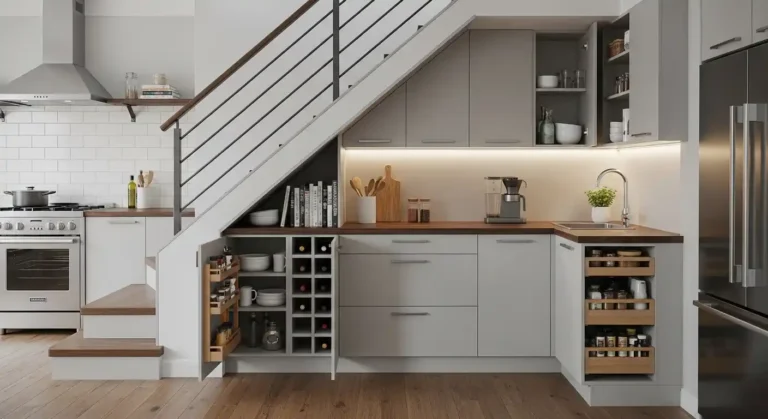
- Deep Drawers: Ideal for storing pots, pans, and small appliances, offering full visibility and access from above.
- Pull-out Pantries: Utilizing vertical space effectively for dry goods storage.
- Corner Solutions: Specialized fittings (like LeMans units or blind corner pull-outs) that bring items stored deep within corner cabinets out to the user.
Accessible Kitchen Design:
Consider the future. Universal design principles, such as wide walkways (minimum 42 inches), handles instead of knobs (easier to grasp), and under-counter pull-out trays, ensure the kitchen remains usable for all ages and abilities.
The Art of Form: Aesthetic Principles and Materiality

The second pillar of KDP, Form, is about how the kitchen visually presents itself and the emotional connection it fosters. It is a dialogue between enduring style and practical durability.
Aesthetic Philosophies: Matching Style to Lifestyle
Your design philosophy should mirror your desired atmosphere:
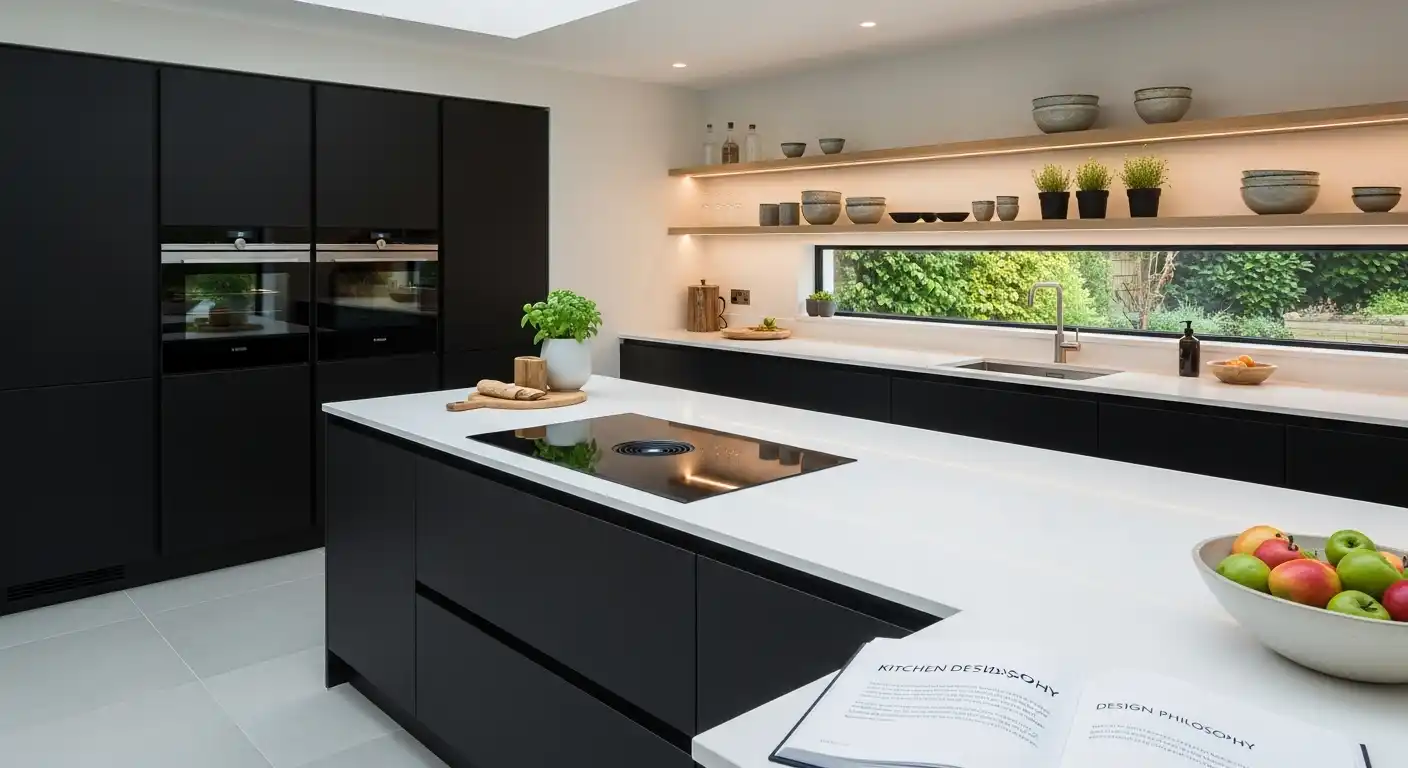
- Minimalist/Modern KDP: This style champions simplicity. It uses clean, handleless cabinetry (often push-to-open), monochromatic or neutral palettes, and relies on hidden storage to maintain an uncluttered visual landscape. The Kitchen Design Philosophy here is less is more.
- Industrial/Urban KDP: Emphasis is on honesty in materials. Expect exposed ductwork, raw metals (stainless steel, black iron), concrete countertops, and perhaps an exposed brick wall. This style is rugged, durable, and low-maintenance.
- Traditional/Farmhouse KDP: Characterized by warmth, texture, and organic materials. Think Shaker-style cabinets, natural wood tones, apron-front sinks, and muted, inviting color schemes. The focus is on heritage and comfort.
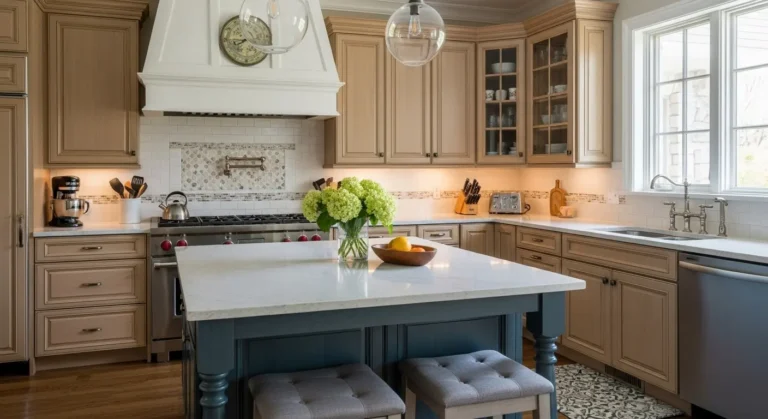
- Transitional: Arguably the most popular choice, Transitional KDP is the strategic blend of modern and traditional elements. It offers the clean lines of modern design but softens them with the texture and warmth of traditional materials, achieving a timeless balance that resists fleeting trends.
Material Selection: Where Form Meets Durability
Choosing materials is a philosophical decision about where you prioritize maintenance, cost, and longevity. This directly addresses the Aesthetics vs Functionality debate.
Countertop Philosophy:
- Quartz: Highly durable, non-porous, and requires virtually no maintenance, making it a functionalist’s dream.
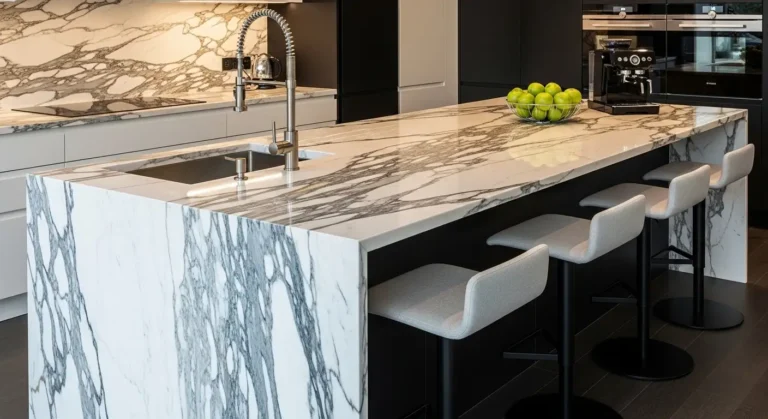
- Natural Stone (Granite/Marble): Offers unique beauty, but marble is porous, requiring regular sealing—a clear trade-off of form over function. Granite offers better durability.
- Wood/Butcher Block: Provides unparalleled warmth and texture but demands consistent oiling and is susceptible to scratches and water damage.
Cabinetry and Finish:
The finish fundamentally changes the perceived space:
- Matte Finishes: Offer a sophisticated, contemporary look but absorb light, making them best suited for well-lit, larger spaces. They hide fingerprints well.
- Gloss/High-Shine Finishes: Excellent for smaller kitchens as they reflect light, creating a sense of depth and space. They are also easily wiped down but may show streaks and smudges more readily.
Backsplash as Art:
The backsplash provides the opportunity for personality. Opting for large-format tiles minimizes grout lines (function) while allowing for stunning visual texture (form).
Lifestyle Integration: The “Why” Behind the Design
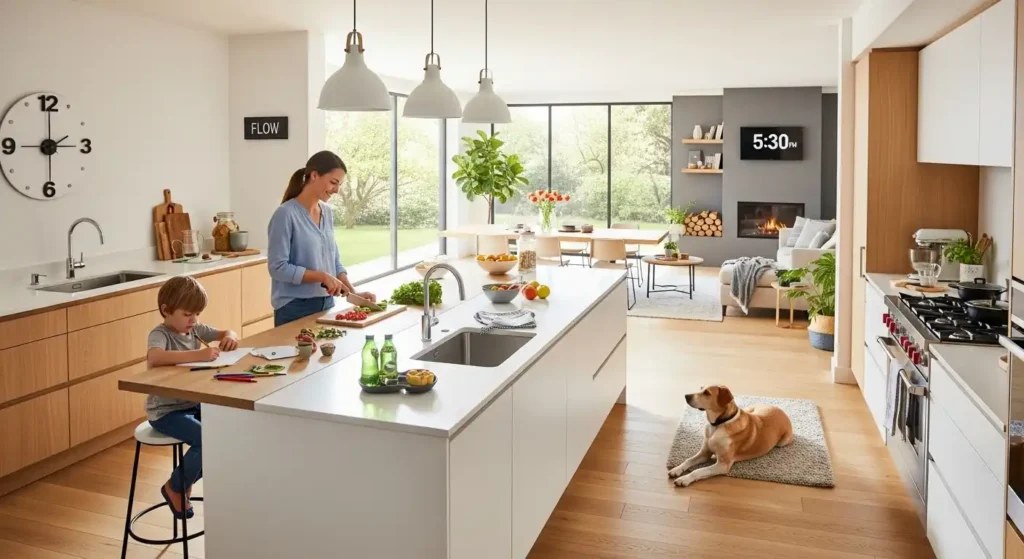
The third pillar, Flow, centers on how the kitchen integrates with the rest of your home and, most importantly, how it supports your unique culinary routine.
Culinary Habits and Activity Analysis
The size of the range is less important than how your appliances and layout support you.
The Serious Cook vs. The Entertainer:
A serious cook prioritizing function needs commercial-grade appliances, dedicated pot fillers at the range, and a heavy-duty exhaust system.
An entertainer, however, might prioritize a large, open Kitchen Island Design for buffet service, a secondary prep sink for bartenders, and a dedicated beverage fridge, shifting the focus from high-heat cooking to presentation and social flow.
Social Kitchens and Open Plan Kitchens:
The rise of the Open Plan Kitchen means the kitchen is now continuously visible.
The design philosophy must account for this by integrating elements that manage visual clutter:
- The Island: Design it to be multi-purpose. One side can be dedicated seating (social flow), while the other side contains the primary prep area or a second sink (functional flow).
- Open Shelving: Use open shelving sparingly for decorative items only; reserve closed cabinetry for everyday functional clutter.
Lighting Philosophy: Setting the Mood and Task Focus
A layered lighting plan is crucial for both function and mood. Relying solely on a single overhead light is a failure of modern KDP.
Task Lighting:
This is purely functional. Essential under-cabinet lighting (LED strips or puck lights) must be installed to illuminate countertops, eliminating shadows cast by the cook’s body—a safety necessity for chopping and preparation.
Ambient Lighting:
General, diffused overhead lighting (e.g., recessed cans) provides overall light and comfort. This should be dimmer-controlled to set the mood for dining or relaxing.
Accent Lighting:
These are the visual elements, such as Pendants and Island Fixtures. These should be positioned to add sculptural interest without obstructing sightlines or casting poor shadows on the work area.
Future-Proofing and Ethical Design
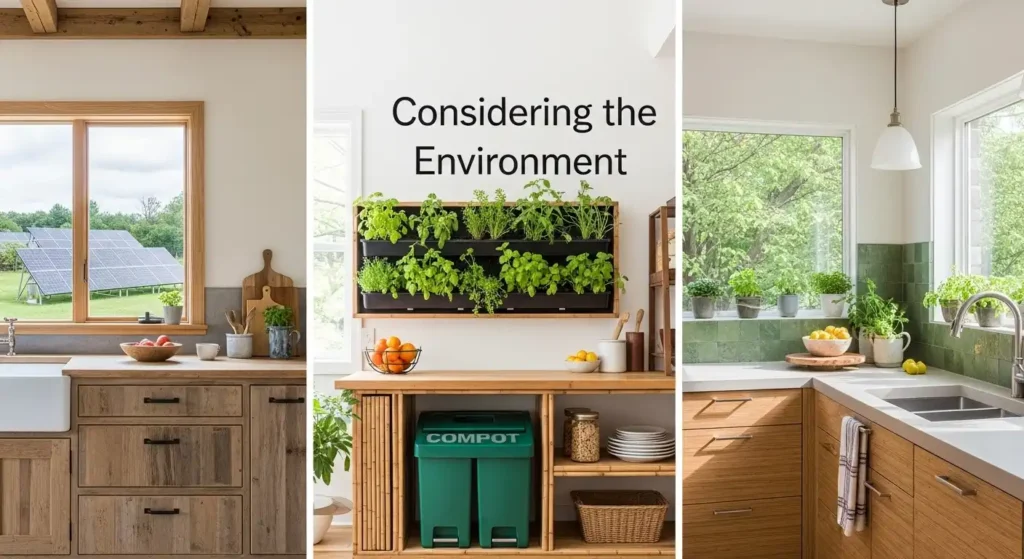
A truly holistic Kitchen Design Philosophy looks beyond the present day, considering the environment and technological evolution.
Sustainable Kitchen Design (Eco-KDP)
Choosing materials based on ethical sourcing and long-term impact is increasingly central to modern design.
Materials:
Embrace Sustainable Kitchen Design by selecting low-VOC (Volatile Organic Compounds) paint and adhesives to improve indoor air quality.
Consider reclaimed wood, bamboo, or cabinets made from rapidly renewable resources.
For flooring and counters, investigate durable, recycled content like glass or paper composites.
Appliance Efficiency:
Prioritize Energy Star-rated appliances.
Investing in high-efficiency induction cooktops, dishwashers, and low-flow faucets significantly reduces utility costs and environmental impact over the kitchen’s lifespan.
This is where sustainability becomes synonymous with long-term cost savings.
Technology Integration (Smart KDP)
Technology in the kitchen should be an invisible assistant, not a visual distraction.
- Subtle Integration: Design dedicated and hidden charging stations (often inside drawers or cabinets). Integrate voice-activated lighting and ventilation systems that operate hands-free. Smart technology is best used when it enhances function seamlessly.
- Long-Term Value: The KDP must ensure longevity. Avoid permanently built-in tech that will be obsolete in three years. Instead, build flexible infrastructure—extra conduits for future wiring, and easily accessible power outlets that can adapt to changing technology without requiring major destructive remodeling.
Conclusion
A successful Kitchen Design Philosophy is a deeply personal one.
It is a harmonious interplay of Function, Form, and Flow—a space that is a pleasure to look at, easy to work in, and perfectly suited to the life lived around it.
We’ve covered everything from optimizing your Kitchen Work Triangle and applying crucial Kitchen Ergonomics to making vital choices on Sustainable Kitchen Design and material durability.
Ultimately, the best design is the one that authentically reflects your family’s needs and values. Do not be swayed by fleeting trends.
By prioritizing your lifestyle needs over temporary fads, you will create a kitchen that is not just a room, but the enduring heart of your home.
Start your project by taking an honest assessment of your current workflow and needs. What bothers you the most? That frustration is your starting point for a better design.