
Planning a kitchen renovation can feel overwhelming. Designers and contractors often throw around technical terms you’ve never heard before.
From cabinet lingo to appliance specs, kitchen design has its own language. Homeowners can end up feeling lost and unprepared for big decisions.
Understanding key kitchen design terms gives you the power to communicate with pros, make smart choices, and get the kitchen you really want.
Whether you’re working with a designer or going DIY, knowing these words helps you compare products and avoid expensive mistakes.
I’ve pulled together the most important kitchen design terminology to know before you start. These cover basics like cabinets and more advanced ideas, so you can talk about your vision and actually understand what the experts are saying.
Key Takeaways
- Kitchen design terms cover parts, materials, appliances, and layouts that affect how your kitchen works and what it costs.
- Learning this vocabulary helps you talk clearly with contractors and make better decisions.
- Knowing the lingo keeps things from getting confusing and helps your kitchen turn out the way you want.
Essential Kitchen Design Terms and Concepts
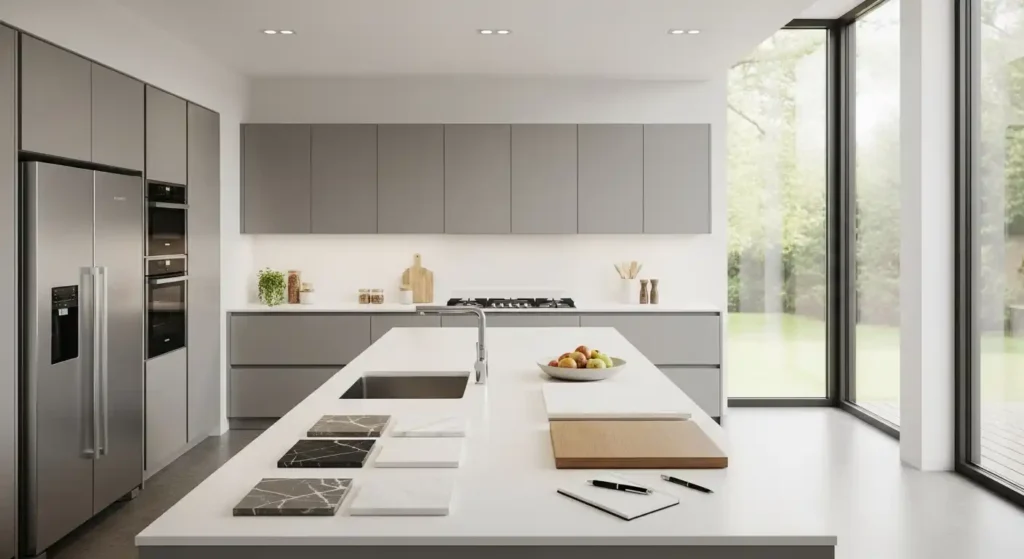
The work triangle, layout options, and surface materials are all key ideas. Understanding these helps you talk to designers and make choices that fit your needs.
Kitchen Work Triangle
The work triangle links your sink, stove, and fridge in an imaginary triangle. This setup makes cooking more efficient.
Each side should be between 4 and 9 feet. The total perimeter shouldn’t go over 26 feet.
- Reduces extra steps when cooking
- Keeps traffic moving in busy kitchens
- Creates clear prep zones
Try to keep the triangle clear of things like islands or tables. It works best in classic kitchen layouts, but you might need to tweak it for open-concept spaces.
Types of Kitchen Layouts
Different kitchen layouts fit different spaces and cooking habits. Each layout brings its own strengths.
Galley Kitchen: Two parallel counters create a corridor. It’s efficient in small spaces and naturally supports the work triangle.
U-Shaped Kitchen: Cabinets wrap around three walls. You get tons of storage and counter space, with everything close by.
L-Shaped Kitchen: Cabinets run along two walls that meet at a corner. This works well in open plans and leaves room for an island.
Island Kitchen: Any layout can have a freestanding island. Islands add workspace, storage, and a spot to sit or hang out.
Countertops and Backsplashes
Countertops and backsplashes do double duty—they’re both practical and stylish. They really set the tone for your kitchen.
- Quartz: Engineered stone that resists stains and barely needs upkeep.
- Granite: Natural stone with unique patterns and great durability.
- Solid surface: Non-porous, so you get a seamless look.
Your backsplash keeps water and grease off the walls. Subway tile is a classic—simple rectangles in a brick pattern.
Pick materials that match your cooking style. If you bake a lot, butcher block might be perfect. If you want easy care, quartz is hard to beat.
Kitchen Cabinetry and Components Explained
Kitchen cabinets are the backbone of your kitchen’s storage and style. The door style you pick changes both the look and how your kitchen works day to day.
Cabinets and Cabinetry Basics
Every cabinet is built from a box and a face frame. The face frame attaches to the front and holds the doors and drawers.
Before you decide, get familiar with cabinet construction terms. The face frame gives traditional cabinets their signature look and adds strength.
- Cabinet box: The main structure holding everything together.
- Face frame: The front border hiding the box edges.
- End panels: The finished sides you see in your kitchen.
- Fillers: Narrow strips that fill gaps between cabinets and walls.
Pilasters are vertical supports inside cabinets. They keep wide cabinets from sagging over time.
Frameless cabinets skip the face frame. You get more interior space and a modern, smooth look.
Cabinet Door Styles
Cabinet doors really set the vibe for your kitchen. Door construction styles vary, but three main types show up most often.
Raised panel doors have a center panel that sticks out from the frame. They look great in classic kitchens and add depth.
Recessed panel doors have a center panel that sits lower than the frame. Shaker-style doors are the most popular version of this.
| Door Style | Best For | Visual Impact |
|---|---|---|
| Raised Panel | Traditional kitchens | High detail, shadows |
| Recessed Panel | Any style kitchen | Clean, versatile |
| Slab/Flat | Modern kitchens | Minimal, sleek |
The center panel draws the eye in most door styles. It can be flat, raised, or recessed, depending on what you like.
Slab doors are the simplest—no frames, no panels, just a flat surface. They’re perfect if you love a modern, uncluttered look.
Drawer Fronts and Accessories
Drawer fronts should match your cabinet doors for a unified look. The drawer front is what you see, covering the drawer box behind it.
Quality drawers usually use dovetail joints for strength. Drawer glides and hardware decide how smoothly your drawers open and close.
- Soft-close stops drawers from slamming shut.
- Full-extension glides let you reach the back of the drawer.
- Under-mount glides hide hardware for a cleaner look.
Honestly, soft-close glides are worth it. They make your kitchen feel a bit more luxe and prevent damage from slamming drawers.
Drawer organizers—like cutlery trays, spice racks, and dividers—help keep things neat and easy to find.
Make sure your drawer fronts are as thick as your cabinet doors. It keeps everything looking consistent.
Materials, Finishes, and Hardware
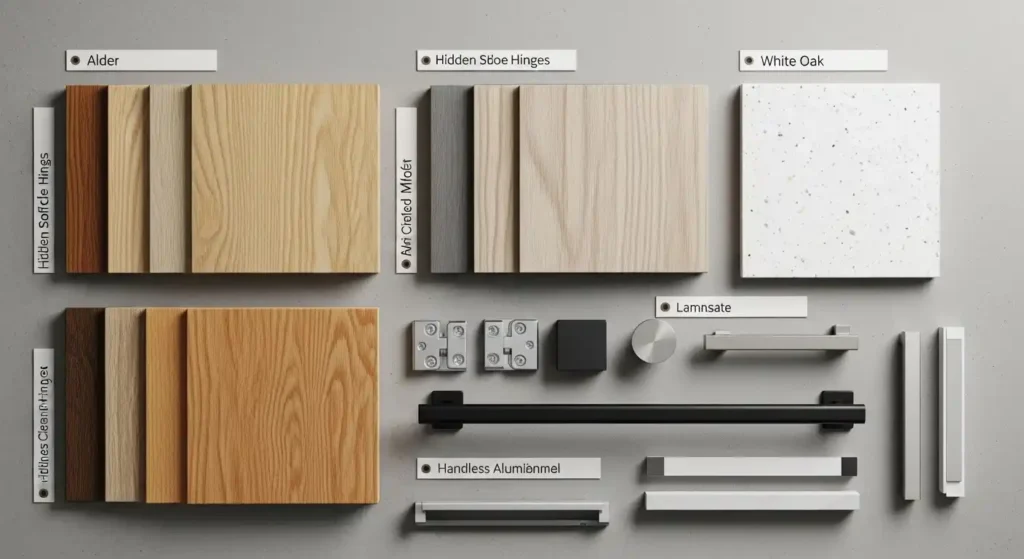
Cabinets rely on three big things—material, finish, and hardware. Wood species like alder look beautiful, while engineered materials offer steady performance. Protective finishes fight off wear, and hidden hinges keep things looking sleek.
Wood Species and Engineered Materials
Solid wood has a timeless look and lasts ages. Alder is a favorite for painted cabinets because it takes paint really well.
- Maple: Hard, durable, stains evenly.
- Cherry: Rich color that gets deeper over time.
- Oak: Strong grain, super tough.
- Alder: Great for painted finishes.
Engineered materials like MDF make cabinet modules strong and are budget-friendly. MDF gives a smooth surface for paint.
Plywood is a top pick for cabinet boxes—it’s strong and stable. For base cabinets, BWP (Boiling Waterproof) plywood stands up to moisture.
HDMR boards use wood fibers and waste to make tough panels. These cost less than solid wood but are reliable and steady.
Painted and Protective Finishes
Painted cabinets need the right base and good prep. I always put primer on raw wood before the final coat.
- Lacquer: Super durable and stain-resistant.
- Acrylic: High-gloss, usually cheaper than lacquer.
- Laminate: Tons of colors and patterns.
- Veneer: Thin real wood sheets for a natural look.
Laminates come in all kinds of colors and textures—matte, soft, textured, or shiny. There’s something for every style.
Protective finishes guard against heat, moisture, and daily abuse. Lacquer holds up best, keeping its look for years without fading.
Hinges and Concealed Hardware
Concealed hinges hide inside the cabinet when the door is shut. You get a clean look with no hardware showing.
- Soft-close: Stops doors from banging.
- Adjustability: Lets you tweak door alignment.
- Weight capacity: Handles heavy doors easily.
- Overlay type: Decides how much frame the door covers.
I usually go for full-overlay hinges in modern kitchens—they cover the frame entirely. Partial-overlay works if you want some frame to show.
If you’re adding under-cabinet lighting, plan your hinges so they don’t mess with your LED strips or outlets.
Good hinges last over 20 years if you install them right. Cabinet hardware matters for both function and looks, so I always pick concealed options made for kitchens.
Integrated Appliances and Kitchen Fixtures
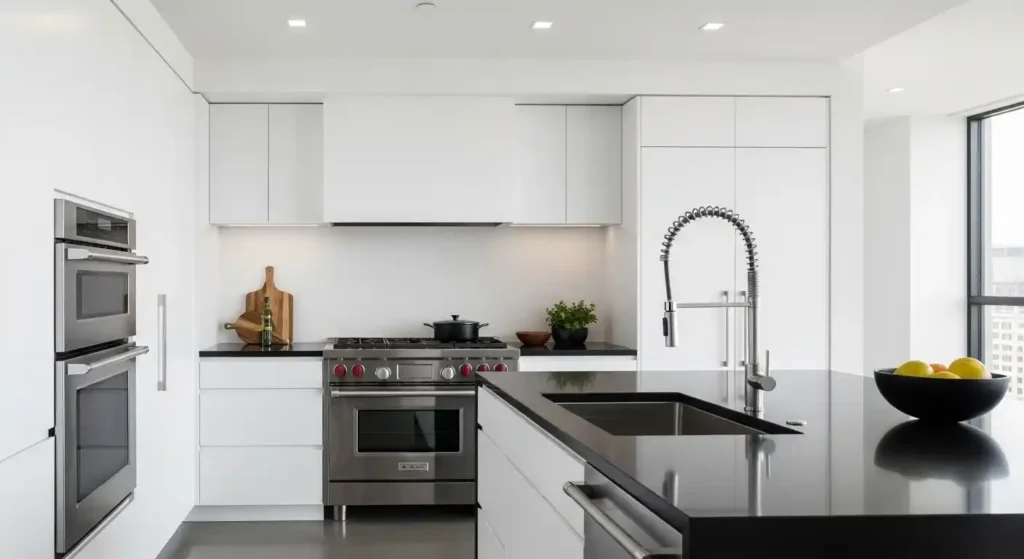
Modern kitchens really do blend function with design. Integrated appliances hide behind matching cabinet panels, while specialized sink setups and built-in features like warming drawers keep cabinetry lines clean.
Integrated Appliances in Kitchen Design
Integrated appliances sit flush with your cabinetry at exactly 24 inches deep. That seamless look matters, especially in smaller spaces where every inch counts.
Common integrated appliances include:
- Refrigerators and freezers with panel-ready doors
- Dishwashers concealed behind matching cabinet faces
- Microwave drawers that pull out instead of swing open
- Wine coolers and beverage centers
Integrated refrigerators usually stand about 7 feet tall. The extra height keeps storage capacity up without losing that built-in vibe.
An appliance garage hides small countertop items when you’re not using them. I like using tambour doors or lift-up panels to keep coffee makers, toasters, and blenders out of sight but easy to grab.
Panel-ready appliances need custom cabinet doors to match your kitchen’s finish. This way, appliances kind of vanish into the cabinetry.
Sink Styles and Pot Fillers
Kitchen sinks come in three main installation styles. Undermount sinks attach beneath the countertop for easy cleanup and a modern look.
Drop-in sinks sit on top of the counter with a visible rim. Farmhouse sinks extend past the cabinet face, showing off their exposed front panel.
Material choices really impact durability:
| Material | Benefits | Considerations |
|---|---|---|
| Stainless Steel | Heat resistant, affordable | Shows water spots |
| Granite Composite | Scratch resistant, quiet | Limited color options |
| Fireclay | Classic look, durable | Heavy, requires support |
A pot filler mounts above the stove to fill big pots without lugging them from the sink. I usually install these about 12-15 inches above the cooktop, with both hot and cold water lines if possible.
Wall-mounted pot fillers can swing out of the way when you don’t need them. Some models add a shut-off valve right by the faucet for a little extra safety and convenience.
Warming Drawers and Dishwashers
Warming drawers keep food warm without drying it out. I typically install them below wall ovens or in kitchen islands, setting most units between 80-200°F.
They’re great for warming plates, proving bread dough, or keeping sides hot while you finish the main dish. Most warming drawers come in standard sizes from 24 to 30 inches wide.
Modern dishwashers offer more installation options than ever. Drawer dishwashers can go in pairs or singles, perfect for smaller households or a second prep area.
Panel-ready dishwashers take custom cabinet doors to blend in. I lean toward models with hidden controls on the top edge for the cleanest look.
Key dishwasher features I prioritize:
- Third rack for utensils and small items
- Adjustable tines for odd-shaped cookware
- Quiet operation below 44 decibels
- Energy Star certification for efficiency
Counter-depth installation helps dishwashers line up with the cabinets, so they don’t stick out into the walkway.
Specialty Design Features and Accessibility
Modern kitchens need features that boost both function and inclusion. These range from accessible storage solutions to smart lighting placement and finishing touches that pull the look together.
Accessible Design Elements
I always try to design kitchens for everyone, no matter their physical abilities or mobility needs. Height-adjustable worktops are one of the most important accessible features out there.
Key Accessible Features:
- Pull-down cabinet baskets for easy reach
- Front-access taps positioned near sink edges
- Reduced-depth sinks to minimize leaning
- Pull-out shelving in base cabinets
- D-shaped cabinet handles for easy gripping
Multi-level worktops let people work comfortably at different heights. I usually leave about 1500mm of clearance between kitchen units for wheelchair access.
Safety matters, too. Waterfall-edge countertops help stop spills from hitting the floor, and induction cooktops with touch controls offer safer cooking than gas burners.
Lighting and Electrical Planning
I plan electrical systems around both what you need to do and how you want the space to feel. Pendant lights work as task lighting and add a decorative focal point over islands or peninsulas.
Essential Lighting Types:
- Under-cabinet LED strips for counter illumination
- Pendant lights positioned 30-36 inches above work surfaces
- Recessed ceiling lights for general room lighting
- Interior cabinet lighting for easy visibility
Electrical planning requires GFCI outlets every four feet along countertops. I keep outlets away from sinks and try to coordinate them with the backsplash pattern.
Switch placement makes a difference for accessibility. I usually install light switches 42-48 inches from the floor, making sure they’re easy to reach from main walkways.
Toe Kicks, Edge Profiles, and Wainscoting
Toe kick spaces under base cabinets usually measure 4 inches high and 3 inches deep. If someone needs more foot clearance, I’ll bump the depth up to 6 inches.
Edge profile choices change both the look and safety of your counters:
- Bullnose edges give you rounded, safe corners
- Straight edges look clean and modern
- Ogee profiles add a bit of traditional flair
- Beveled edges create soft shadow lines
Wainscoting brings visual interest to kitchen walls and protects from splashes. I usually install it 32-36 inches high, stopping just below window sills.
Panel wainscoting feels right in traditional kitchens. Beadboard styles fit cottage or farmhouse looks. I try to match wainscoting profiles with cabinet doors for a sense of consistency.
Design Tools, Planning, and Traditional Styles

Computer-aided design software lets me create precise kitchen layouts and see the space before construction even starts. Traditional kitchen styles lean on classic elements like ornate cabinetry and warm materials for that timeless feel.
Using CAD and Computer-Aided Design
I use CAD software for kitchen floor plan layouts to make detailed drawings and 3D models. These tools help me measure spaces accurately and try out different layouts before making any big changes.
With computer-aided design programs, I can see how cabinets, appliances, and countertops will look together. I tweak cabinet heights, swap out finishes, and move appliances around with just a few clicks.
Most CAD programs have libraries of kitchen components. I just drag and drop refrigerators, sinks, and ranges into my designs, which saves a ton of time and keeps measurements on point.
The software also figures out material quantities automatically. I know exactly how much flooring, paint, or tile I’ll need for each project. That makes cost estimates a whole lot easier.
Traditional Kitchens and Design Details
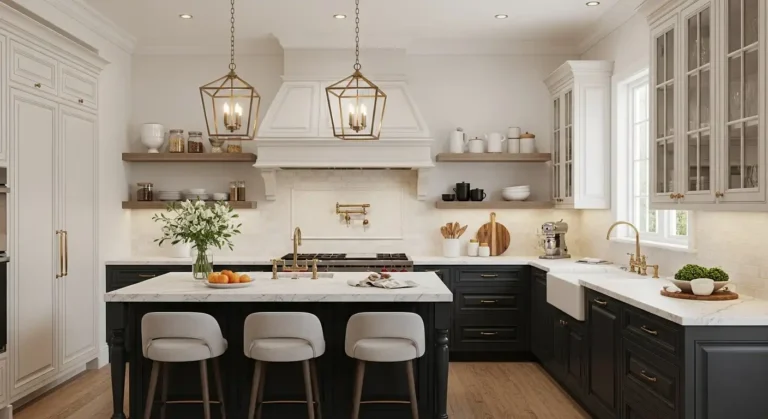
Traditional kitchen design focuses on quality craftsmanship and natural materials. I use raised panel cabinet doors, decorative moldings, and classic hardware finishes like brushed brass or oil-rubbed bronze.
Key traditional elements include:
- Crown molding and trim details
- Natural stone countertops like granite or marble
- Wood flooring in warm tones
- Classic color palettes with whites, creams, and earth tones
I often include farmhouse sinks and traditional faucet styles in these kitchens. Cabinetry terminology helps me specify details like door profiles and hardware placement.
Built-in storage solutions are a staple here. I design pantries with adjustable shelves and deep drawers for pots and pans, so you get that classic look but with modern organization.
Modern vs. Classic Kitchen Elements
Modern kitchens lean into clean lines and skip the frills. I like to use flat-panel cabinet doors or sleek hardware—maybe both.
Contemporary materials like quartz countertops or stainless steel appliances feel right at home in these spaces.
Classic kitchens? Those show off more decorative touches. I often pick detailed cabinet door styles and ornate light fixtures.
Traditional materials, like butcher block countertops or ceramic tile backsplashes, add warmth and a bit of nostalgia.
Modern elements:
- Handleless cabinets
- Integrated appliances
- Neutral color schemes
Classic elements:
- Decorative cabinet hardware
- Traditional lighting fixtures
- Warm color palettes
Choosing between modern and classic styles shapes every part of the kitchen. Modern kitchens push for efficiency and function above all else.
Classic designs? They mix practicality with decorative charm, aiming for something that just feels timeless.