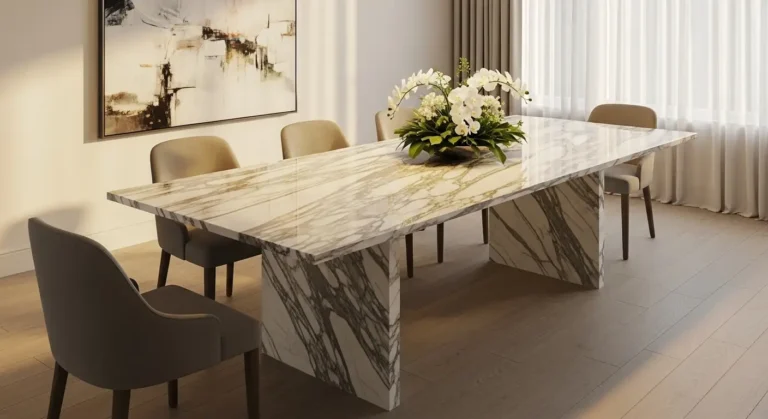

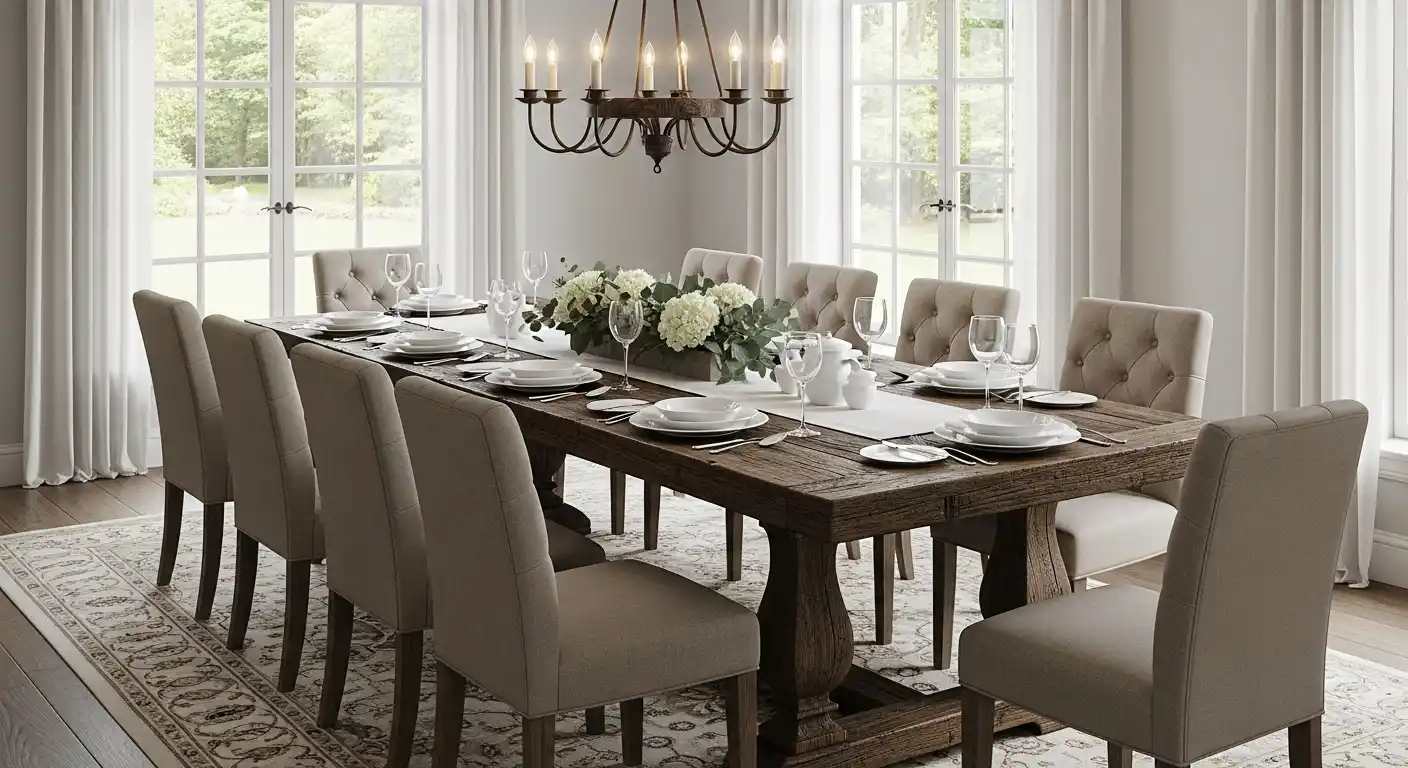
Picking the right dining table size can totally change your dining room. It can take a space from feeling cramped to actually inviting people to linger.
So many folks get stuck on the table’s look and forget about practical things. Think seating, how you’ll move around, and whether you can actually squeeze by when everyone’s seated.
Here’s the trick: measure your room, figure out how many people you want to seat most days, and leave at least 36 inches of space all around the table.
That’s the magic number for comfortable movement—seriously, it saves you from so many headaches.
This guide covers standard dining table measurements, basic dimensions, and how to match table shapes to your room. You’ll get tips that real furniture pros use, plus a few things I’ve learned the hard way.
Key Takeaways
- Subtract 6 feet from your room’s length and width to find your maximum table size
- Each person needs 24-30 inches of table width for comfortable dining
- Round tables work best in square rooms while rectangular tables suit longer spaces
Dining Table Size Fundamentals
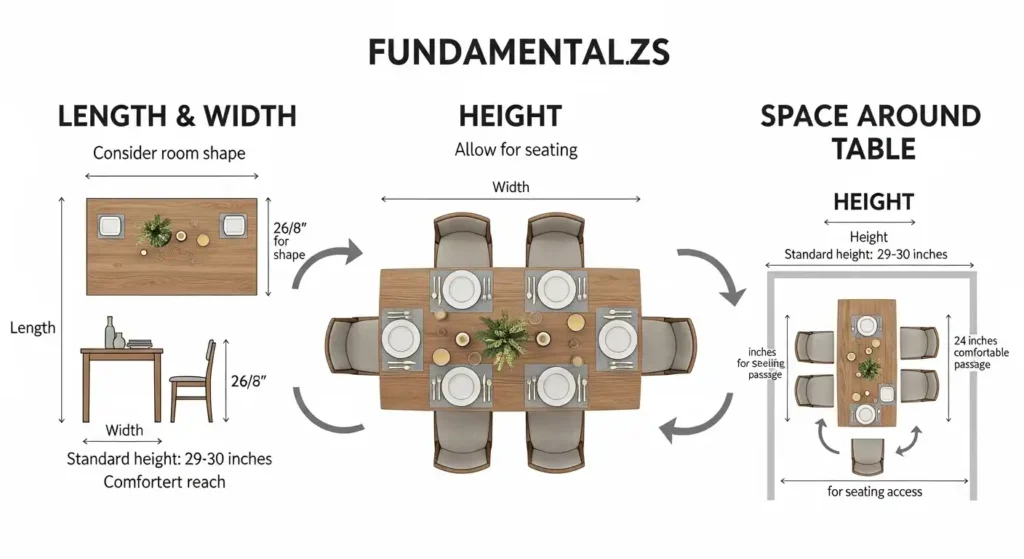
Getting the right dining table size boils down to three things. Length and width of the table, the right height, and how much space you’ll have around the table.
Standard Dining Table Dimensions
Most dining tables stick to pretty standard sizes, based on how many people they’re meant to seat. Rectangular tables go from 48 inches (for 4 people) up to 120 inches (for 12 people).
Plan on 24 to 30 inches of width per person. Depth should be at least 12 inches for each seat.
Rectangular Table Sizes:
- 48″ x 30″ seats 4 people
- 60″ x 36″ seats 6 people
- 72″ x 36″ seats 6-8 people
- 96″ x 40″ seats 8-10 people
Round tables are a bit different. A 36-inch round table fits 4 people. Bump up to 60 inches and you can seat 6-8.
Square tables are less common, but the same logic applies. A 48″ x 48″ square table usually seats 4-6 people comfortably.
Table Height and Legroom
Standard dining tables are 28 to 30 inches tall. This height works with most chairs that are 17-19 inches high at the seat.
Counter-height tables are taller—34-36 inches—and need counter stools, not regular chairs.
Always check under the table. You’ll want at least 12 inches of legroom between the seat and any table supports or crossbars.
The height really matters for comfort. If the table’s too high, your shoulders scrunch up. Too low, and you’re leaning forward like you’re eating off a coffee table.
Dining Table Size vs. Room Size
Your room size sets the limit for your table. Subtract 72 inches from both your room length and width to get your max table size.
You’ll need at least 36 inches of space around your table so people can walk by. If you can swing it, 42-48 inches feels even better.
Room Size Guidelines:
- 8′ x 8′ room: 42″ round table maximum
- 10′ x 12′ room: 72″ x 36″ rectangular table maximum
- 12′ x 14′ room: 96″ x 40″ rectangular table maximum
Don’t forget about the chairs. They need 18-24 inches to pull out from the table, but that’s already built into the 72-inch rule above.
Matching Dining Table Size to Seating Capacity
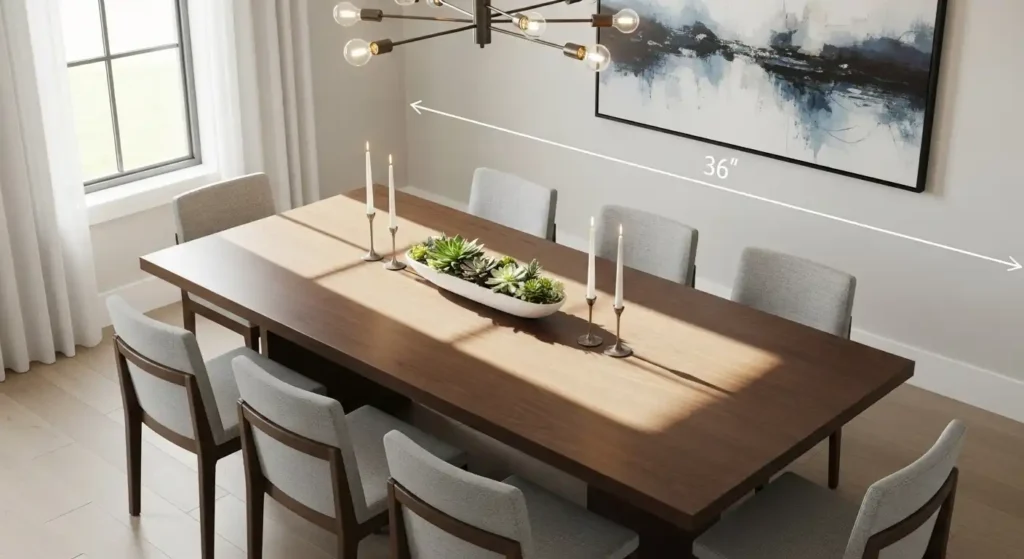
The right table size depends on how many people you want to seat and how much elbow room you want to give them. Most tables need 24 inches of width per person, plus at least 36 inches of clearance all around.
Seating Guidelines by Table Size
Stick to standard table dimensions for proper seating. Rectangular tables are usually the most flexible.
Rectangular Tables:
- 60-72 inches long: seats 6 people comfortably
- 72-84 inches long: accommodates 6-8 people
- 84-96 inches long: fits 8-10 people
- 96-120 inches long: seats 10-12 people
Round Tables:
- 36-48 inch diameter: seats 4 people
- 54-60 inch diameter: accommodates 6 people
- 72 inch diameter: fits 8 people
I always plan for 24 inches of width per person. That gives everyone enough space to eat without bumping elbows.
Square tables are great for smaller groups. A 36-44 inch square table fits 4 people nicely.
Clearance and Comfort Around the Table
I need at least 36 inches of clearance around my dining table so people can walk behind chairs. This space lets you pull out chairs without smacking into the wall or other furniture.
If you’re really tight on space, 30 inches can work, but it feels cramped. I’d go for 42-48 inches if you can—dining just feels easier that way.
Height matters, too. Standard tables are 28-30 inches tall, and I use chairs that are 17-19 inches high. That combo just works.
Wide tables need extra thought. Anything wider than 42 inches makes it tough to pass dishes across the table. I try to stick with 36-42 inches for rectangular tables.
Extendable and Custom Table Options
Extendable tables are a lifesaver if your group size changes. I use mine for six people most days, but I can open it up to seat 10-12 for holidays.
Custom sizes are worth it when nothing standard fits. Some furniture makers will build tables in 2-inch increments between 72 and 120 inches long.
Butterfly leaf extensions hide right inside the table. Drop-leaf tables are perfect for small rooms—they fold down when not in use.
Think about your dining habits. If you host big groups only a few times a year, an extendable table makes way more sense than a giant table that sits empty most days.
Custom shapes like ovals are interesting. They seat more people than round tables but still feel cozier than a long rectangle. Kind of the best of both worlds, if you ask me.
Choosing the Right Table Shape
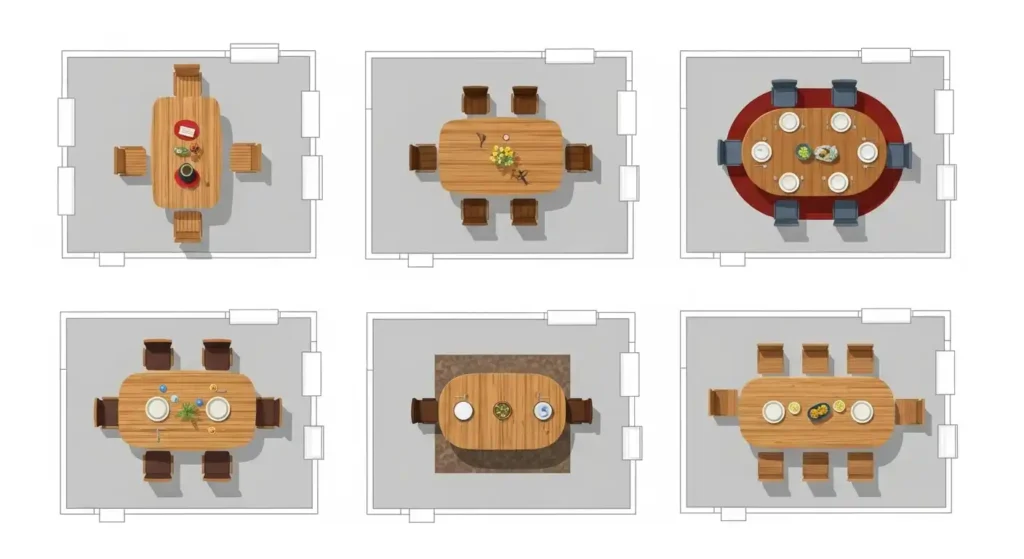
The shape of your dining table changes how many people you can seat and how it looks in your room. Rectangular tables are best for longer rooms. Round tables make conversation easier in square spaces.
Rectangular Dining Table Recommendations
Rectangular tables are the go-to for most people. They fit almost anywhere and work especially well in long or narrow rooms.
If you need to seat more folks on a regular basis, rectangular tables are your best bet. A 72-inch table handles 6-8 people; a 96-inch table is great for 8-10.
Best room dimensions for rectangular tables:
- 10 feet x 12 feet or larger
- Long, narrow rooms
- Open floor plans
The big plus here? You can fit more chairs along the sides than with other shapes.
But there’s a downside. People at opposite ends might not hear each other well, and the person at the head of the table usually ends up leading the conversation.
Round Dining Table Advantages
Round tables are awesome for conversation. Everyone faces the center, so nobody’s left out or stuck at a weird angle.
I like round tables best in square rooms. They just look right and make small spaces feel more open.
Round table seating guide:
- 48-inch diameter: seats 4-5 people
- 54-inch diameter: seats 5-6 people
- 60-inch diameter: seats 6-8 people
Don’t underestimate how much space you’ll need. A 60-inch round table actually takes up more width than a 72-inch rectangular one.
But seating capacity is limited. Big round tables get awkward—hard to reach across, and conversation can get tricky.
Square Dining Table Considerations
Square dining tables work well for small families or couples who want a balanced look. They fit nicely in square rooms where rectangles just look off.
I’d go for a square table if you usually seat 2-4 people but sometimes need space for 6. A 48-inch square table does the job.
Square table sizing:
- 36 x 36 inches: seats 2-4 people
- 48 x 48 inches: seats 4-6 people
- 60 x 60 inches: seats 6-8 people
Everyone’s the same distance apart, so passing dishes and chatting is easy.
The catch? Square tables can look awkward in rectangular rooms and sometimes mess with traffic flow.
And if the table is bigger than 48 inches per side, it gets tough to reach the middle. Passing dishes turns into a bit of a circus act.
Adapting Table Size to Different Room Types
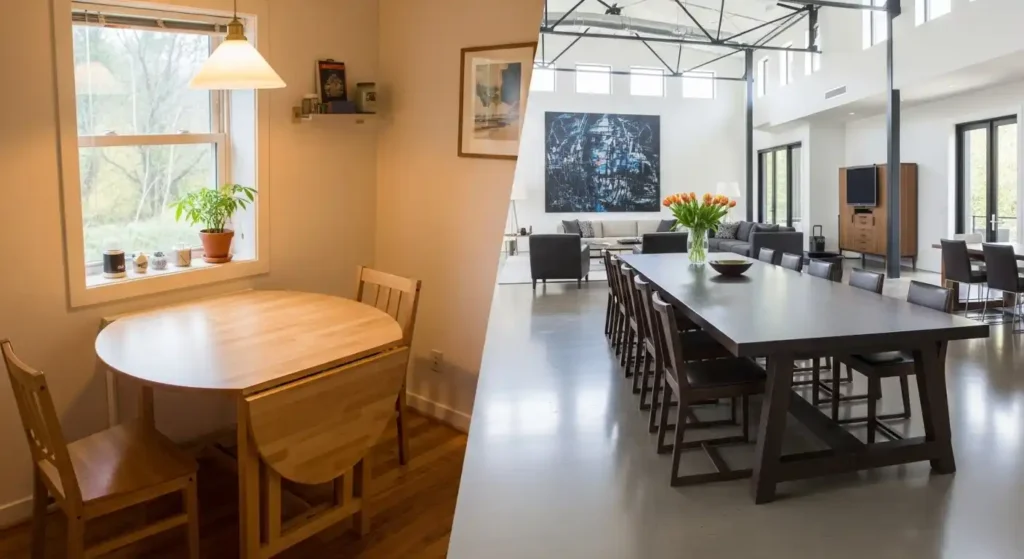
Each room calls for a different approach to table size. Small rooms need clever solutions, while big open spaces need tables that don’t get swallowed up.
Small Dining Room Solutions
Measure your room first—seriously, don’t skip this step. Small dining rooms need at least 36 inches from the table edge to the wall or furniture.
Round tables are usually best in tight spots. A 48-inch round table seats four and doesn’t take up much visual space.
For narrow rooms, oval tables are a solid pick. They give you more seats than a round table but flow better than rectangles with sharp corners.
Space-saving tips:
- Pedestal bases instead of four legs
- Benches on one side to save space
- Tables with leaves that store inside
- Wall-mounted drop-leaf tables
A 60×36-inch rectangular table fits most small dining rooms. It’ll seat four without feeling crowded.
Large Open Plan Dining Areas
Big spaces need bigger tables to look balanced. I usually go for tables that are 72 inches or longer in large dining areas.
Rectangular tables really shine in open floor plans. An 84×40-inch table seats six to eight people and grabs attention as a strong focal point.
Got a truly massive room? Try tables between 96 and 120 inches long. These entertaining-sized tables seat 8-12 people and actually fill the space properly.
Large room strategies:
- Use area rugs to define the dining zone
- Add 24 inches beyond the table on all rug sides
- Consider trestle bases for long tables
- Plan for 42-48 inches of clearance in open areas
Round tables, especially 60-72 inches wide, can work nicely in big rooms too. They make conversation easy and somehow keep things feeling cozy even in a huge space.
Integrating Dining Chairs and Additional Furniture
It’s important to plan for chair clearance and storage furniture placement if you want a dining space that actually works. The trick is finding that sweet spot between comfy seating and easy movement, which means paying attention to measurements and where you put things.
Planning Space for Dining Chairs
I always measure 24 inches of space behind each chair. That way, people can pull out their chairs and sit down without bumping into walls or other furniture. No one likes feeling squeezed in.
For walkways, I stick with at least 36 inches around the table. That gives everyone enough room to move around guests who are already seated. If the area is extra busy—say, between the kitchen and dining room—I prefer 42 to 48 inches of clearance.
Chair height matters a lot when you’re planning your space. Most dining chairs are 17 to 19 inches from floor to seat. I always check that the chairs slide all the way under the table when they’re not in use.
Key measurements I use:
- Behind chairs: 24 inches minimum
- Walkway clearance: 36-48 inches
- Chair seat height: 17-19 inches
- Table to chair gap: 10-12 inches
Armchairs need a bit more space—figure on 6 to 8 extra inches of width per seat compared to armless chairs. It’s something people often overlook, but it definitely makes a difference.
Considering Buffets and Sideboards
I like to keep buffets and sideboards about 36 inches from the dining table. That way, cabinet doors and drawers can open all the way, and folks can still sit comfortably at the table.
For height, I aim for 34 to 36 inches. Matching the buffet to my dining chairs just feels right—it keeps everything balanced visually.
If the buffet sits too high or low, the whole room looks a bit off. It’s one of those details that’s easy to overlook, but it matters.
I always measure my room before picking out storage furniture. In smaller dining rooms, anything under 10×12 feet, I go with narrow pieces—usually around 12 to 15 inches deep.
Bigger spaces can handle standard sideboards, which run about 18 to 20 inches deep. No sense crowding the room if you don’t have to.
Storage furniture guidelines:
- Distance from table: 36 inches minimum
- Standard height: 34-36 inches
- Small room depth: 12-15 inches
- Large room depth: 18-20 inches
I usually put these pieces along walls that won’t block natural traffic patterns. Corners can work nicely too, especially if I’m trying to free up floor space and still want easy access to storage.