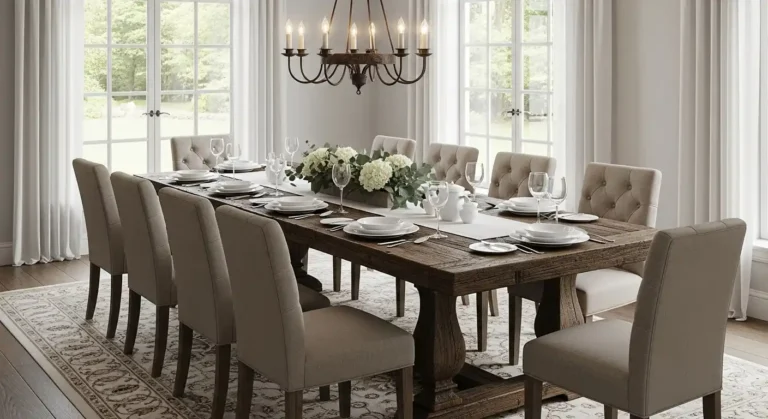


Your dining room flooring sets the stage for family meals, dinner parties, and all those little celebrations that matter. You want a floor that stands up to spilled wine, chair scrapes, and plenty of foot traffic, but still looks good over the years.
The best dining room floors balance durability with style. Engineered hardwood, luxury vinyl plank, and porcelain tile usually top the list for most homes.
Each material brings something different, depending on your lifestyle, budget, and how you want your dining space to feel. I’ve dug into the latest flooring trends for 2025 and the practical stuff most people forget about.
From waterproof picks to eco-friendly choices, there are more options than ever for making your dining room feel just right.
Key Takeaways
- Dining room flooring needs to handle scratches, stains, and moisture—plus look good after years of use.
- Engineered wood, luxury vinyl, and tile usually give you the best mix of durability, style, and easy cleaning.
- Modern flooring comes in sustainable materials and designs that work with both classic and contemporary dining rooms.
Key Considerations for Dining Room Flooring
Choosing dining room flooring means weighing practical needs against your design taste. Durability matters for daily wear, and comfort matters for those long, lingering meals.
Durability and Maintenance Requirements
I always tell people to focus on scratch and stain resistance first. Dining rooms get constant chair movement, dropped forks, and plenty of spills.
High-Durability Options:
- Luxury vinyl tile (LVT): waterproof, scratch-resistant
- Porcelain tile: tough against stains and moisture
- Engineered wood: more stable than solid hardwood
Maintenance Levels by Material:
| Flooring Type | Daily Care | Deep Cleaning | Professional Service |
|---|---|---|---|
| LVT | Sweep/mop | Monthly | Never |
| Tile | Sweep/mop | Grout cleaning | Yearly |
| Hardwood | Sweep only | Refinishing | Every 5-10 years |
I find laminate and LVT need the least upkeep. They’re great for busy homes. Hardwood takes more effort, but with care, it can outlast trends.
Comfort and Underfoot Feel
Comfort matters, especially if you host long dinners or like to stand around chatting. Hard surfaces like tile and hardwood can tire your feet after a while.
Comfort Rankings:
- Luxury vinyl: softer than tile, warmer than hardwood
- Engineered wood: has a bit of give and natural warmth
- Laminate: decent comfort with underlayment
- Tile: hardest and coldest underfoot
If comfort is a big deal, I suggest looking into underfloor heating. Tile works best with radiant heat, but solid hardwood just doesn’t play well with it.
Temperature makes a difference too. Tile and stone get chilly in winter but stay cool in summer, while wood floors usually feel moderate year-round.
Aesthetic Impact on Dining Space
Your floor sets the mood for the whole room. Lighter colors can make a small dining area feel bigger, while dark floors feel intimate and cozy—but they do show dust.
Color Psychology Effects:
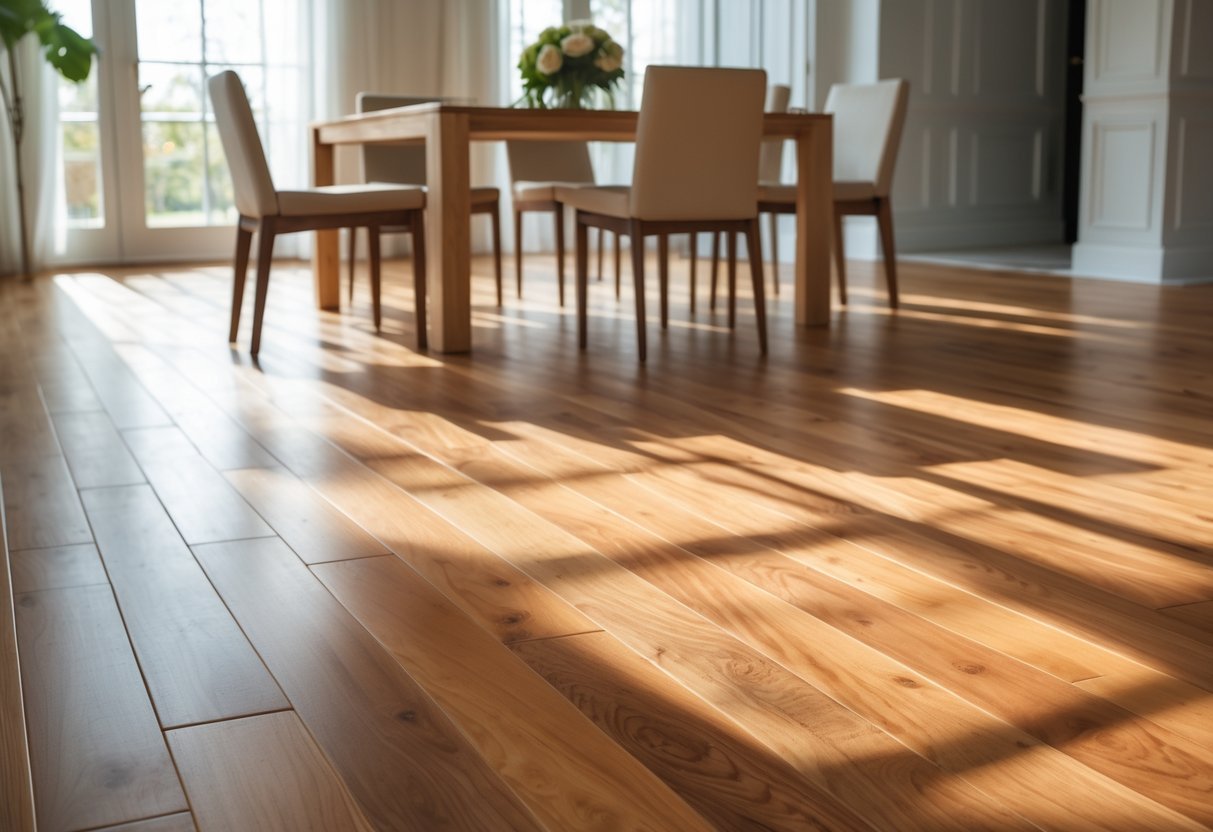
- Light oak/ash: opens up space, bounces light around
- Medium browns: hides small scratches, goes with almost anything
- Dark walnut/mahogany: dramatic, but needs more cleaning
I recommend thinking about how your dining room flooring connects to other rooms. Open floor plans usually look best with the same flooring flowing through.
Popular Style Combinations:
- Traditional: Hardwood with area rugs
- Modern: Large format tiles or wide-plank vinyl
- Farmhouse: Distressed wood or wood-look tile
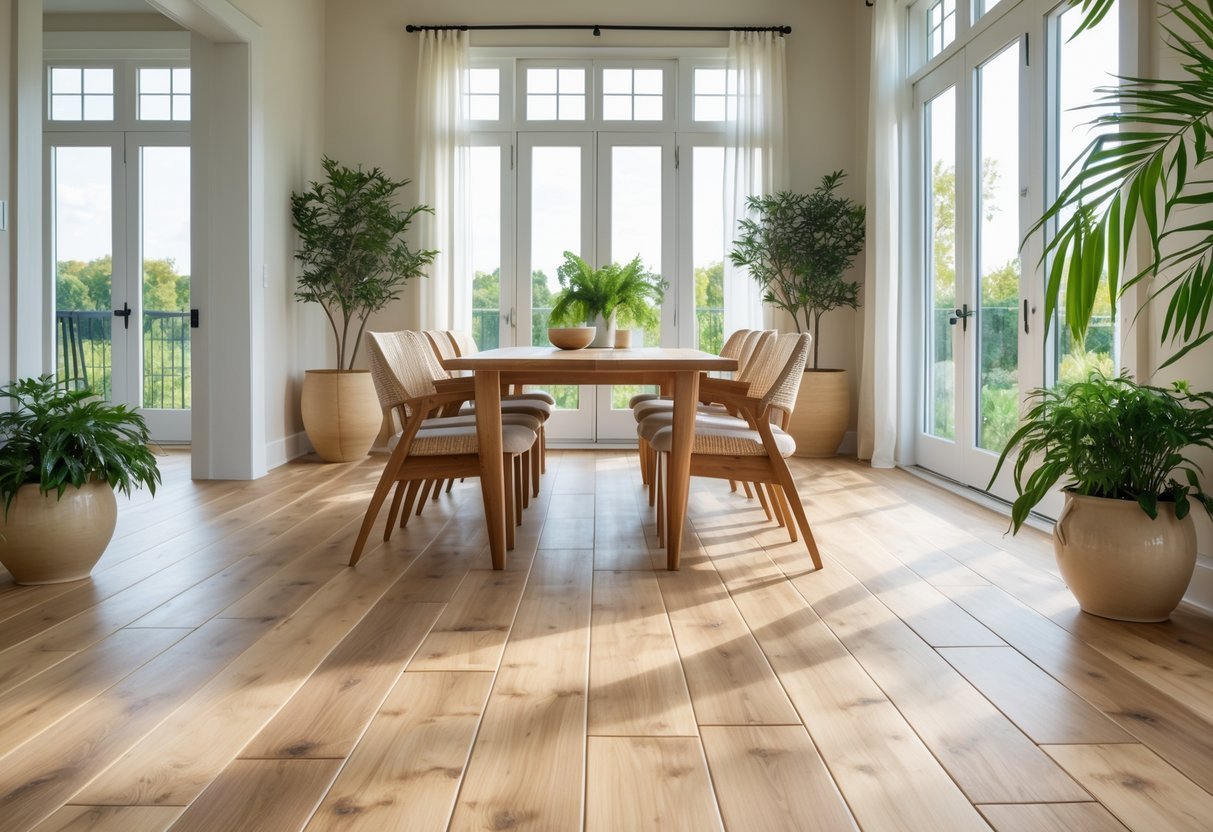
Pattern and plank size matter too. Wide planks make a room feel bigger, while narrow strips can work in tighter spaces.
Cost and Installation Factors
Budget isn’t just about the sticker price. I always look at total costs—installation, maintenance, and how long it’ll last before you need to replace it.
Price Ranges per Square Foot:
- Laminate: $2-6 installed
- LVT: $3-8 installed
- Engineered wood: $5-12 installed
- Hardwood: $8-15 installed
- Tile: $4-10 installed
Installation Complexity:
- DIY-friendly: Laminate, click-lock LVT
- Moderate skill: Floating engineered wood
- Professional required: Hardwood, tile, sheet vinyl
I factor in long-term costs when comparing options. Hardwood needs refinishing now and then but can last half a century. LVT is cheaper up front but probably needs replacing after 15-20 years.
Don’t forget prep work. Concrete subfloors might need leveling, and wooden ones sometimes need reinforcement for heavy tiles.
Popular Dining Room Flooring Options
Each flooring type has its own perks for dining rooms. The natural beauty of hardwood, the water resistance of luxury vinyl plank—there’s a lot to consider.
The best choice depends on your budget, style, and how much action your dining room gets.
Hardwood Flooring Choices
Hardwood floors bring a classic, timeless feel to dining rooms. Solid hardwood shows off real wood grain and can get refinished over and over—great for longevity.
Engineered hardwood handles moisture better than solid wood. It stands up to temperature swings, which is handy in dining areas.
Popular hardwood species include:
- Oak (tough and versatile)
- Maple (light, hard surface)
- Cherry (rich red tones)
- Walnut (dark, luxe vibe)
Hardwood flooring needs regular care to avoid water damage. Wipe up spills fast and use pads under chairs—trust me, it makes a difference.
Costs run from $3-12 per square foot installed. Prefinished wood saves time and usually looks more uniform.
Laminate Flooring Advantages
Laminate flooring gives you the hardwood look for less. Modern laminate uses detailed photos to copy wood grain pretty convincingly.
The durability comes from a tough top layer. It stands up to chair scrapes and everyday wear.
Key laminate benefits:
- Cost-effective (usually $1-5 per square foot)
- Easy installation with click-lock systems
- Low maintenance—just sweep regularly
- Stain resistant for most spills
Most laminate isn’t waterproof. If water gets between planks, it can swell—so clean up spills quickly.
The floating install method means no nails or glue, which makes it a solid DIY pick.
Porcelain Tile and Ceramic Tile Benefits
Porcelain tile is easy to maintain and handles heavy use well. It’s denser and less porous than ceramic tile.
Ceramic tiles are durable and simple to clean, plus you get tons of design options. Both hold up against spills and scratches.
Tile advantages include:
- 100% waterproof
- Stain and scratch resistant
- Lots of colors and patterns
- Long lifespan if installed well
Large tiles (12×24 inches or more) mean fewer grout lines, so less cleaning and a sleeker look. The main drawback? Tile feels hard and cold, especially compared to wood or vinyl.
Professional installation is best for tile. DIY tile jobs often end up with cracks or uneven spots—I’ve seen it too many times.
Luxury Vinyl Plank and Vinyl Flooring
Luxury vinyl plank (LVP) gives you the hardwood look but with way less worry. Rigid core flooring shrugs off scratches and stains, and it’s totally waterproof.
LVP features:
- Waterproof core protects from spills
- Scratch resistant for all those chair moves
- Realistic textures—some are shockingly convincing
- Feels better underfoot than tile
Vinyl tile has similar perks, just in square shapes. Both types usually click together and can go over most old floors.
Thickness matters for durability. I look for planks at least 4-6mm thick, with a 12-mil wear layer or more.
Quality varies a lot between brands. Premium LVP costs $3-7 per square foot but looks and lasts better than bargain options.
Vinyl works great if your dining room connects to the kitchen. It doesn’t mind moisture or food messes.
Alternative and Eco-Friendly Flooring Materials
Modern dining rooms can really benefit from sustainable flooring. These materials reduce environmental impact but still give you durability and style.
You’ll find options that use renewable sources, recycled content, or greener manufacturing processes. It’s worth considering if you want your space to feel good in every sense.
Engineered Hardwood and Its Uses
Engineered hardwood gives you the beauty of solid wood but uses fewer natural resources. This flooring has a thin hardwood veneer over a plywood or composite core.
I find engineered hardwood especially practical for dining rooms. It resists moisture better than solid wood and is less likely to warp from humidity near kitchens.
Key Benefits:
- Uses 30-50% less hardwood than solid planks
- Handles temperature swings without much fuss
- Installs over concrete subfloors
- Comes in wide plank formats
The manufacturing process creates sustainable bamboo and wood options that hold up well. Most engineered products can be refinished once or twice, which gives them a longer life.
Installation costs usually run 20-30% less than solid hardwood. Click-lock systems let you float the floor—no glue or nails needed.
Bamboo and Strand-Woven Bamboo Flooring
Bamboo flooring stands out for sustainability since bamboo matures in about five years. Hardwood trees need 20 years or more, so it’s a big difference.
The grass regenerates from its roots without replanting. Traditional bamboo planks work for low-traffic dining rooms, but I’d pick strand-woven bamboo for busy spaces.
Strand-Woven Construction:
- Bamboo fibers get shredded and compressed with resin
- Ends up as dense as oak hardwood
- Three times harder than regular bamboo planks
- Better scratch and dent resistance
Bamboo flooring naturally shrugs off bacteria and moisture. It grows without pesticides or fertilizers, making it super sustainable.
Color choices go from natural blonde to carbonized brown. Darker shades use heat treatment, which can make them a bit softer.
Cork Flooring Advantages
Cork flooring comes from the bark of cork oak trees. The bark regenerates every 9-12 years, so harvesting doesn’t hurt the tree.
This makes cork a totally renewable choice. The material has unique perks for dining rooms, too.
Cork’s cellular structure adds natural cushioning, which reduces fatigue during long dinner parties. I’ll admit, I appreciate that comfort after a while.
Cork Properties:
- Antimicrobial: Fights off bacteria and mold on its own
- Sound absorption: Cuts noise by half
- Thermal insulation: Keeps floors comfy underfoot
- Fire resistance: Won’t burn easily
Cork bounces back from compression, so dropped dishes or heavy furniture rarely leave lasting marks. It does need sealing every 3-5 years to stay water-resistant.
The natural material also keeps insects and allergens away. Installation comes as glue-down tiles or floating planks, and floating works well over concrete subfloors.
Natural Stone and Terrazzo Flooring
Natural stone flooring lasts for centuries if you care for it. Limestone, travertine, and slate each have patterns you just can’t fake.
Stone works great in dining rooms. It resists stains and scratches from moving chairs, and the thermal mass helps regulate temperature.
Popular Stone Options:
| Stone Type | Durability | Maintenance | Cost Level |
|---|---|---|---|
| Limestone | High | Medium | Moderate |
| Travertine | High | Medium | Moderate |
| Slate | Very High | Low | High |
Terrazzo flooring mixes stone chips with cement or resin. Modern terrazzo often uses recycled glass and stone waste, so it’s a sustainable pick.
I find terrazzo especially good for dining areas because it barely needs maintenance. The seamless surface keeps bacteria out of grout lines.
Both stone and terrazzo can work with radiant heating systems. That combo gives you comfort and keeps the look classic for years.
Design Trends and Layouts for Dining Room Floors
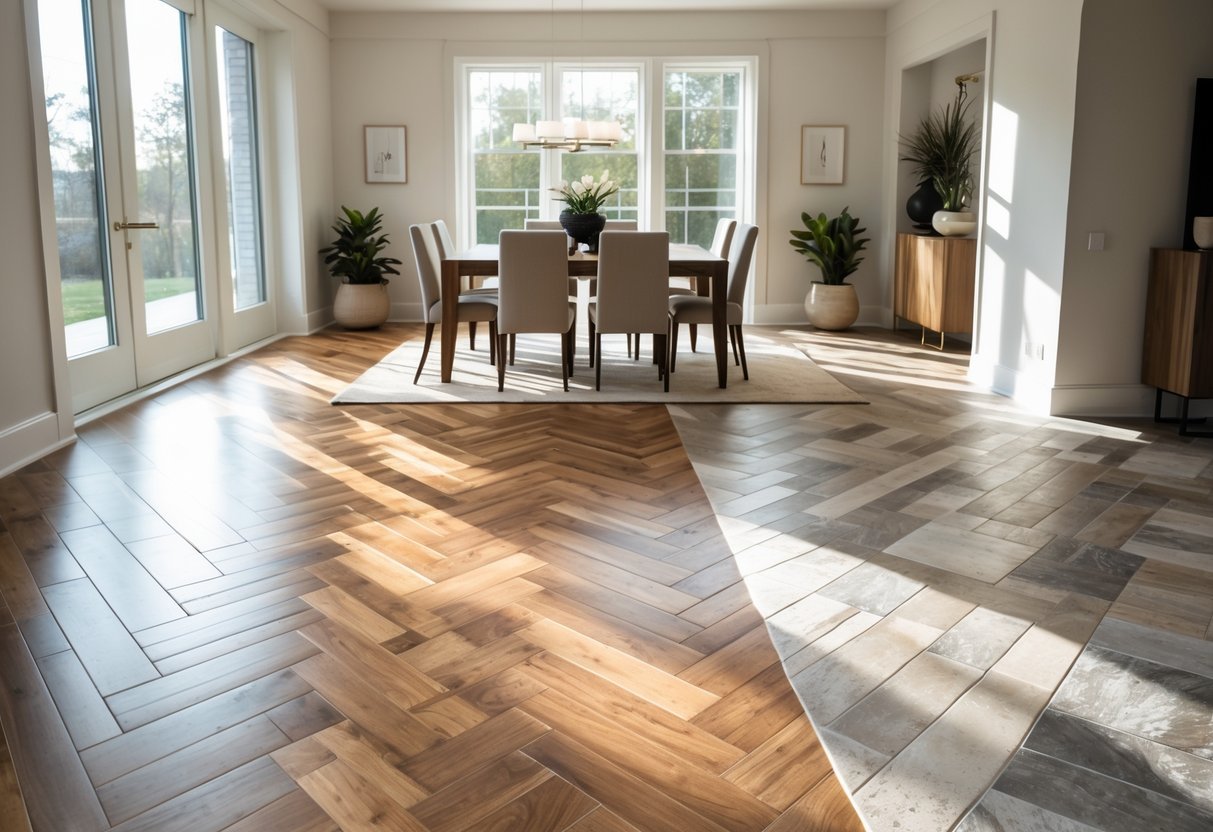
Modern dining room floors lean into bleached wood and large format tiles for a bold look. Patterned layouts like herringbone add a touch of class, while stained concrete gives off that industrial vibe.
Current Dining Room Flooring Ideas
Bleached wood is everywhere in 2025’s dining rooms. This soft, whitewashed look just makes the space feel calm and open.
Engineered wood pulls off the bleached style with better water resistance than solid wood. Porcelain tiles with a bleached-wood look give you toughness and style at once.
Large format tiles are big right now. I’d go with 12×24 inches or even bigger for serious impact.
Stone-look porcelain tiles hold up in high-traffic dining spaces. They resist scratches from chairs and clean up fast after meals.
Popular color schemes:
- Light gray with white veining
- Warm beige tones
- Cool white with just a bit of texture
- Natural stone looks
Luxury vinyl flooring makes sense for families. It mimics natural materials but stands up to daily messes and foot traffic.
Multi-colored tile patterns bring some fun to the floor. I’ve seen hexagon shapes break up plain designs in a really cool way.
Herringbone Pattern and Decorative Layouts
Herringbone patterns instantly dress up any dining room floor. I like to use them in both wood and tile for that timeless effect.
Traditional herringbone uses rectangular planks in a zigzag. The 45-degree angles create movement and texture across the room.
Chevron patterns give a modern spin to herringbone. The planks meet at perfect points instead of overlapping.
Mixing multi-colored wood in zigzag layouts makes a dramatic focal point. I’ll use contrasting wood tones to make the geometry pop.
Installation tips:
- Plan for 10-15% extra material for cuts
- It takes longer to install than straight planks
- Works best in rectangular rooms
- Makes the space look wider
Tile herringbone patterns look great with subway tiles, wood-look porcelain, or stone. I prefer 3×6 inch tiles for that classic feel.
Basket weave and parquet patterns are solid alternatives. They fit well in formal dining spaces if you want something a little different.
Stained Concrete and Modern Finishes
Stained concrete brings that industrial edge to dining rooms. This trend’s picking up speed because you get tons of color options and it’s tough as nails.
Acid stains make natural-looking color shifts. The chemical reaction gives you patterns that look like old stone or marble—pretty unique, honestly.
Water-based stains give even color across the floor. I reach for these when someone wants a solid, uniform look.
Popular concrete finishes:
- Polished for a high-gloss shine
- Matte for understated elegance
- Textured for slip resistance
- Saw cuts for a decorative touch
Epoxy overlays update old concrete floors fast. You can go metallic, solid, or add decorative flakes for some flair.
Concrete floors need sealing to keep out stains from food and drinks. I always use a food-safe sealer in dining areas—no shortcuts there.
Maintenance perks:
- Easy to mop clean
- Resists scratches and dents
- No grout lines to trap dirt
- Can last for decades with a little care
Radiant heating works well under concrete floors. That combo keeps dining rooms cozy in winter—definitely a plus.
Enhancements and Practical Tips for Dining Room Floors
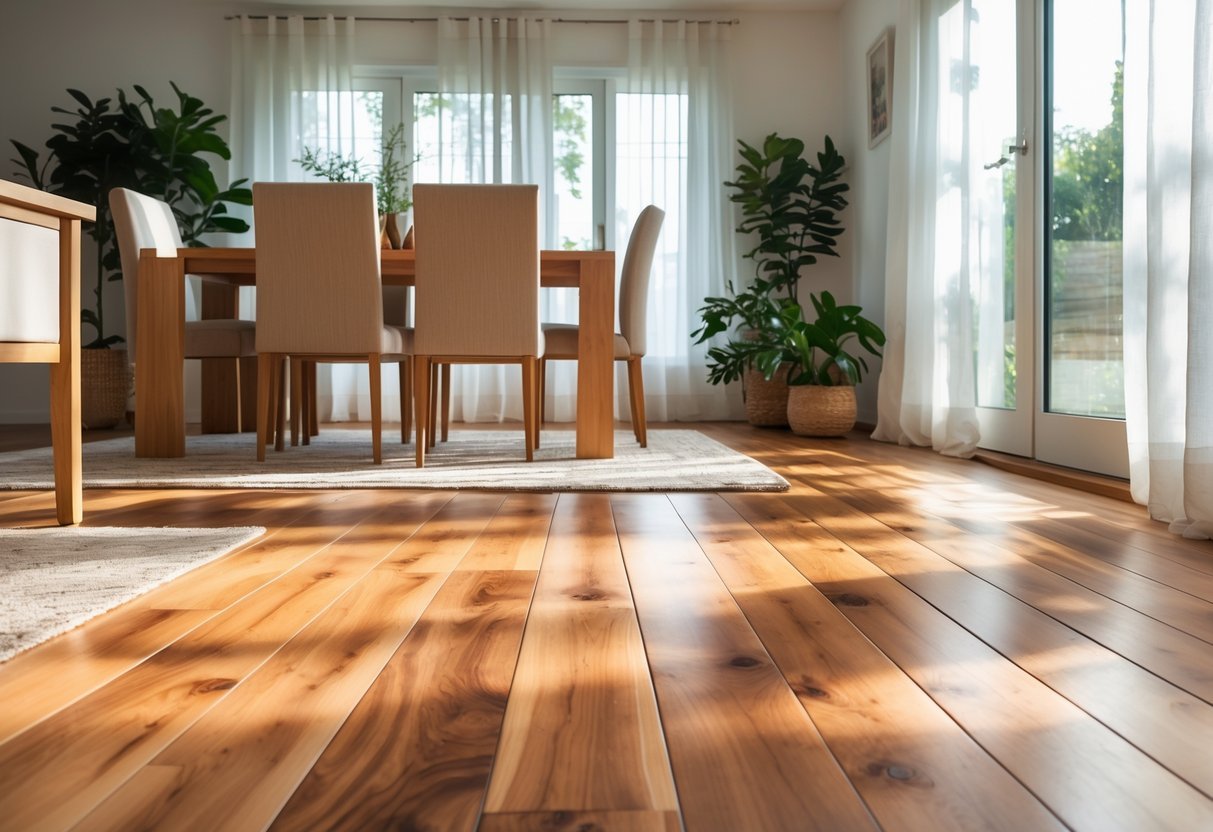
Smart floor enhancements can make your dining room more comfortable and help the floor last longer. Think about heating compatibility, where you put rugs, and simple routines to keep your floors looking good.
Underfloor Heating Compatibility
Underfloor heating turns dining rooms into year-round comfort zones. Before you install, check if your flooring can handle the heat—some just can’t take it.
Stone and ceramic tiles work perfectly with radiant heating. They spread heat evenly and don’t warp or crack with temperature swings.
Engineered hardwood handles heated floors better than solid wood. The layers keep it from expanding or contracting too much.
Luxury vinyl and laminate designed for underfloor heating give good heat transfer. Always double-check the manufacturer’s specs before you start.
It’s smart to hire a pro who knows about thermal expansion. Good subfloor prep now saves you headaches later.
Keep surface temps between 80-85°F. Anything hotter risks damaging the floor or making it uncomfortable.
Using Area Rugs for Comfort and Style
Area rugs are a practical fix for hard dining room floors. They add comfort and protect against chair scratches.
I suggest rugs that run at least 24 inches past your table on all sides. That way, chairs stay on the rug even when you pull them out.
Material choices matter:
- Wool rugs resist stains and wear well
- Synthetic fibers are easy to clean and budget-friendly
- Natural jute feels textured but shows stains easily
Place rugs to mark off your dining zone from living areas. Low-pile rugs are easier to vacuum and don’t trap crumbs, which is a real bonus in dining spaces.
Long-Term Care and Cleaning Recommendations
Daily maintenance can save you from expensive repairs down the road. I stick to simple routines that really help protect different types of flooring.
Immediate spill cleanup matters more than most folks think. Blot up liquids fast—don’t wipe, since that just spreads stains around.
Regular sweeping pulls up gritty dirt that would otherwise scratch your floors. I like microfiber dust mops for smooth surfaces; they just work better.
Weekly deep cleaning depends on the floor material:
| Floor Type | Cleaning Method | Frequency |
|---|---|---|
| Hardwood | Damp mop with wood cleaner | Weekly |
| Tile | Mop with pH-neutral cleaner | 2-3 times weekly |
| Luxury vinyl | Vacuum and damp mop | Weekly |
Protective measures make a real difference for floor longevity. I always put felt pads under chair legs and use placemats under dishes to help avoid scratches.
Professional maintenance really depends on how much you use the space. Hardwood floors usually need refinishing every 3-5 years, and tile floors benefit from occasional grout cleaning and sealing.