
Choosing the perfect countertop material is one of the most critical decisions you’ll make during a kitchen renovation.
The countertop serves as both the visual centerpiece and functional workhorse of your kitchen, and selecting the right material can significantly impact your daily life, home value, and long-term satisfaction.
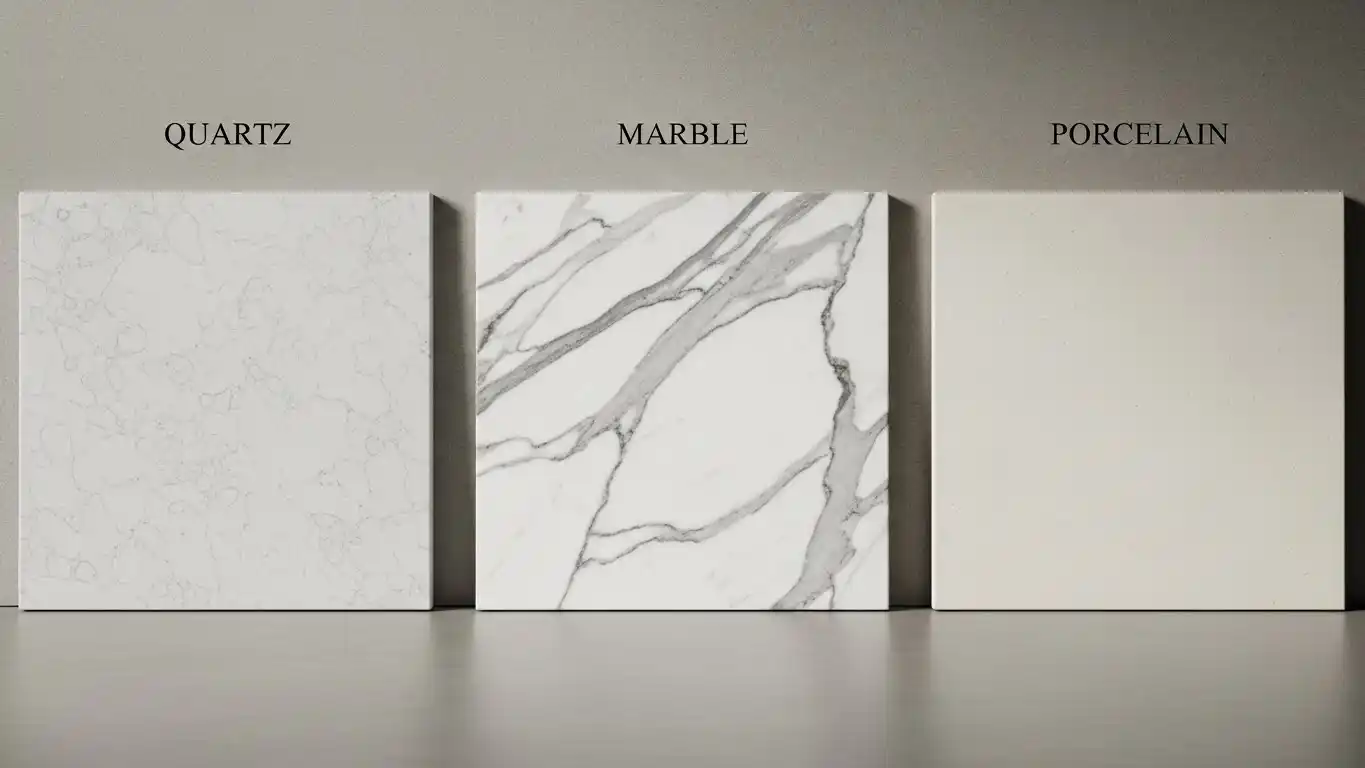
In 2025, three materials dominate the luxury countertop market: quartz, marble, and porcelain.
Each offers distinct advantages and challenges, making it essential to understand their differences before making this substantial investment.
Understanding the Three Contenders
Before diving into comparisons, let’s clarify what these materials actually are.
Marble
Marble is a natural stone formed from limestone that has undergone intense heat and pressure over millions of years.
Its signature veining and luxurious appearance have made it a symbol of elegance for centuries.
Each marble slab is completely unique, offering one-of-a-kind patterns that cannot be replicated.
Quartz Countertops
Quartz countertops are engineered surfaces made from approximately 90-95% ground natural quartz crystals combined with polymer resins and pigments.
This manufacturing process creates a non-porous, highly durable surface that combines natural beauty with modern engineering (source: Countertops and More).
Porcelain Countertops
Porcelain countertops are also engineered surfaces, created by firing refined clay and minerals at extremely high temperatures.
This process produces an incredibly dense, hard surface that rivals natural stone in appearance while offering superior performance characteristics (source: Granite Selection).
Durability: Built to Last or Handle with Care?
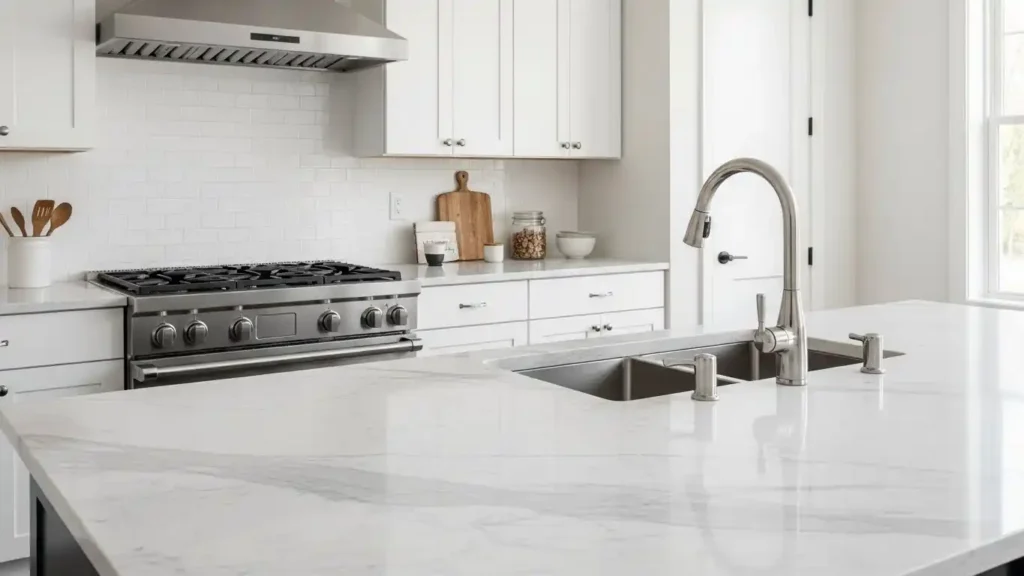
When it comes to durability, porcelain and quartz lead the pack.
Porcelain countertops are exceptionally resistant to scratches, chips, and impacts due to their ultra-dense composition.
They can withstand heavy use in busy kitchens without showing significant wear.
Quartz follows closely behind, offering excellent scratch resistance and durability that makes it ideal for families and active households.
Marble, while undeniably beautiful, is the most delicate of the three materials.
As a natural stone with a Mohs hardness rating of 3-4, marble is susceptible to scratching, etching from acidic substances like lemon juice or vinegar, and staining.
This doesn’t mean marble isn’t a viable option—it simply requires more careful handling and maintenance to preserve its beauty over time.
Heat Resistance: A Critical Kitchen Consideration
Heat resistance varies significantly among these three materials.
Porcelain excels in this category, capable of withstanding extreme temperatures without damage.
You can place hot pots and pans directly on porcelain surfaces without worry, making it an excellent choice for serious home cooks (source: Natural Stone City).
Marble also handles heat well as a natural stone, though sudden temperature changes can potentially cause cracks over time.
However, quartz has a notable limitation: the resin binders used in its manufacturing can be damaged by high heat.
Hot cookware should never be placed directly on quartz surfaces, and heat trivets or pads are essential accessories for quartz countertop owners.
Maintenance Requirements: How Much Work Are You Willing to Do?
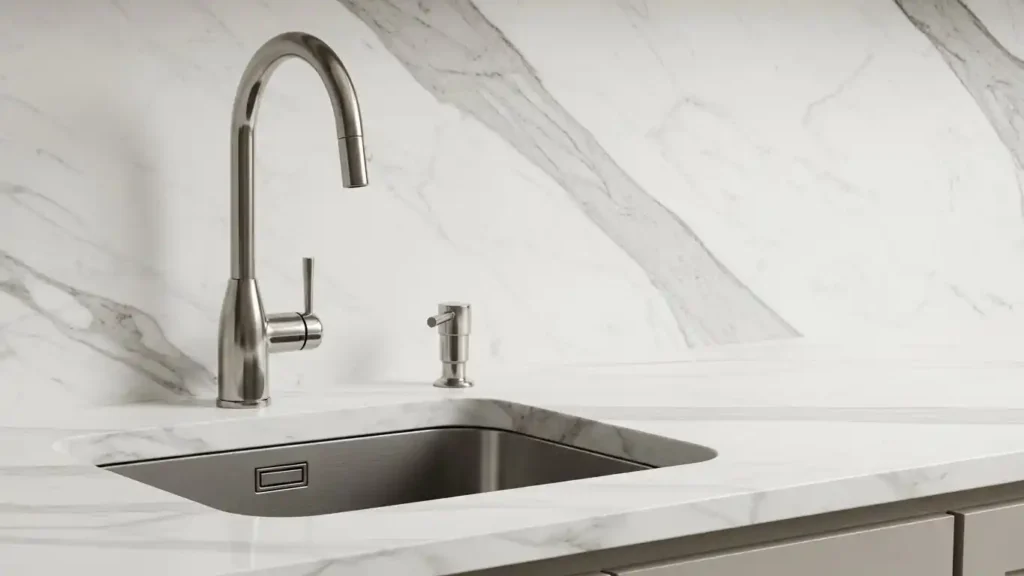
Maintenance is where engineered surfaces truly shine. Both quartz and porcelain are non-porous, meaning they don’t require sealing and resist staining naturally.
Daily cleaning with mild soap and water is typically all that’s needed to keep these surfaces looking pristine.
Spills can be left for hours without causing permanent damage, making them forgiving choices for busy households (source: Fairfax Marble).
Marble demands significantly more attention. It must be sealed regularly—typically every 6-12 months—to protect against staining.
Acidic substances must be cleaned immediately to prevent etching, and certain cleaning products can damage the surface.
For many homeowners, this maintenance routine is a labor of love that preserves marble’s timeless beauty, but it’s not the right choice for everyone (source: Country Living).
Cost Comparison: Investment and Value
Cost is often a deciding factor, and there’s significant variation among these materials.
Marble typically ranges from $50-$250 per square foot installed, with premium varieties like Calacatta commanding the highest prices.
The wide range reflects differences in rarity, origin, and quality.
Quartz generally falls in the $60-$150 per square foot range installed, positioning it as a mid-to-high-end option.
The consistency of engineered quartz means less price variation compared to natural stone.
Porcelain countertops typically cost $55-$120 per square foot installed, though prices can vary based on thickness, finish, and brand.
While porcelain may appear cost-competitive initially, installation complexity can increase labor costs, as the material requires specialized cutting tools and expertise.
It’s important to consider long-term value beyond initial investment.
Quartz and porcelain’s minimal maintenance requirements translate to lower lifetime costs, while marble’s regular sealing and potential repair needs can add up over the years.
Aesthetic Appeal: Beauty in Different Forms
Aesthetics are highly personal, but each material offers distinct visual characteristics.
Marble remains the gold standard for classical elegance, with its natural veining, depth, and luminosity creating an unmistakable luxury appeal.
No two marble slabs are identical, ensuring your countertop is truly unique (source: Opplehouse).
Quartz offers incredible variety in colors and patterns, including options that mimic natural stone.
Modern manufacturing techniques can create consistent patterns or varied looks, giving you control over the final appearance.
However, some purists argue that quartz lacks the depth and authenticity of natural stone.
Porcelain has made tremendous strides in replicating natural stone appearances, including marble and granite looks.
Advanced printing technology creates remarkably realistic patterns, and porcelain slabs can be produced in large formats with minimal seaming.
The surface can be finished in various textures, from polished to matte.
Environmental Considerations
Eco-consciousness is increasingly important to homeowners. Marble is a natural material, but quarrying has environmental impacts, and the stone’s weight increases transportation emissions.
Quartz combines natural materials with resins, and some manufacturers prioritize recycled content and sustainable practices.
Porcelain can incorporate recycled materials and typically has a smaller carbon footprint due to efficient manufacturing processes.
Making Your Decision
The definitive guide to luxury kitchen countertop longevity and cost ultimately leads to a personalized decision.
Choose marble if you value natural beauty above all else and are committed to proper maintenance.
Select quartz for a balance of durability, low maintenance, and design versatility in a family-friendly surface.
Opt for porcelain if you want maximum durability, heat resistance, and modern aesthetics with minimal upkeep.
Consider your cooking habits, household traffic, maintenance willingness, and budget.
Visit showrooms to see full slabs, as small samples don’t capture the true character of these materials.
The right countertop will serve you beautifully for decades, making this investment well worth careful consideration.