
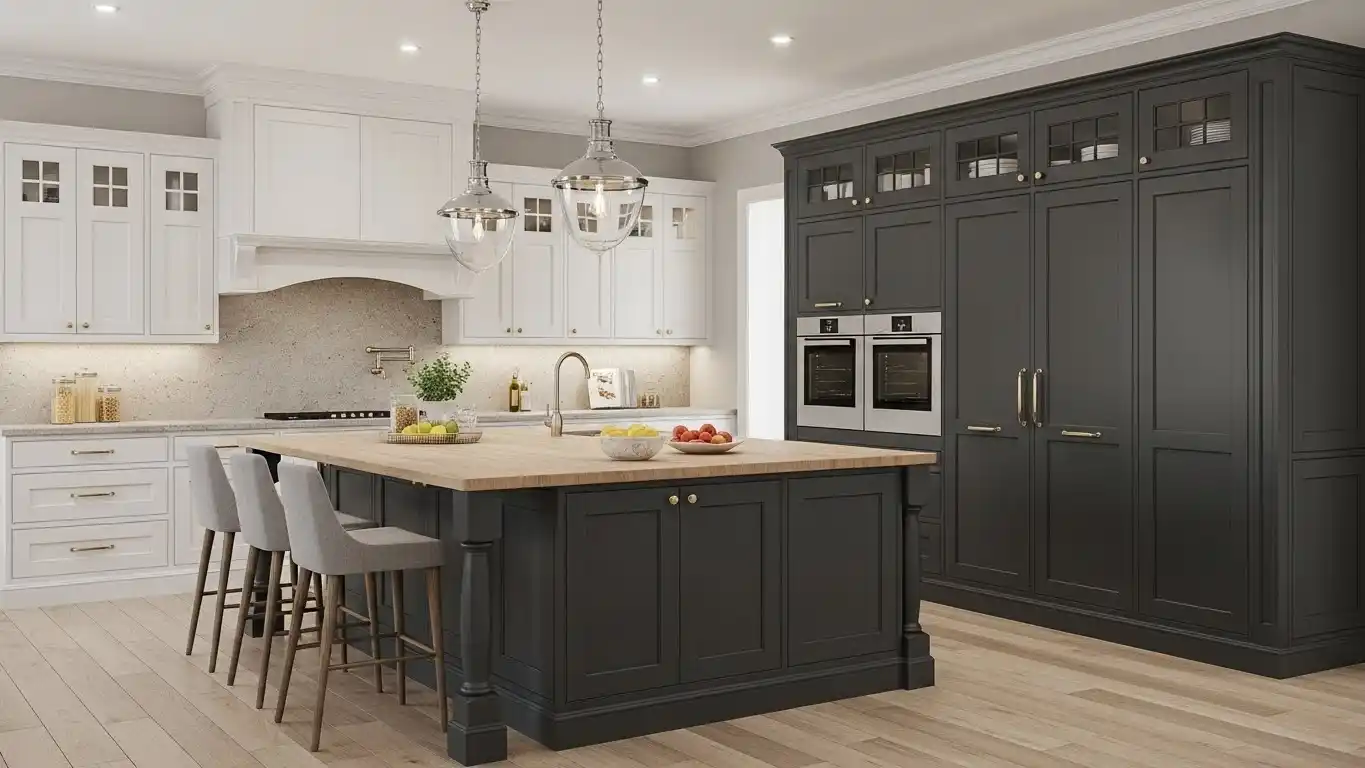
How many kitchen cabinets do I need? The number of kitchen cabinets you need depends on your kitchen size, layout, and storage requirements, typically ranging from 10 to 25 cabinets in most homes. A common guideline is to plan cabinets based on linear wall space, with upper and lower units spaced every 12–36 inches for functionality and balance.
This isn’t just about aesthetics—it’s about creating a functional space that meets your storage needs while fitting your budget and kitchen layout.
Getting the cabinet count right prevents costly mistakes like ordering too few cabinets and facing storage shortages, or over-purchasing and wasting money on unnecessary units.
The good news is that with proper planning and measurement, you can determine the ideal number of cabinets for your specific kitchen.
The Basics: What Affects Cabinet Quantity?
The number of cabinets you need isn’t a one-size-fits-all answer.
Several factors influence this decision, and understanding them helps you make informed choices for your kitchen renovation planning.
Kitchen Size
Kitchen size is the most obvious factor. A compact 80-square-foot kitchen will naturally accommodate fewer cabinets than a spacious 200-square-foot culinary paradise.
However, size alone doesn’t tell the whole story.
Your Cooking Habits
Your cooking habits play a significant role. Do you cook elaborate meals daily with specialized equipment, or do you primarily reheat takeout?
Someone who bakes regularly needs space for mixers, baking sheets, and specialty pans, while a minimalist cook might need far less storage.
Household Size
Household size matters too. A family of five requires more dish storage, food storage, and cooking equipment than a single person or couple.
Consider not just your current needs but potential future changes as well.
Kitchen Layout
Kitchen layout dramatically impacts cabinet placement and quantity.
An L-shaped kitchen offers different opportunities than a galley kitchen, while a U-shaped or island kitchen provides even more cabinet potential.
Storage Calculator
Starting Point: General Guidelines

While every kitchen is unique, general guidelines provide a helpful starting point.
For an average-sized kitchen (roughly 150-200 square feet), aim for approximately 20 linear feet of base cabinets and 10 linear feet of wall cabinets.
This ratio provides balanced storage between upper and lower areas.
However, these are just baselines. Modern kitchen trends are shifting away from the traditional abundance of wall cabinets.
Many homeowners now prefer more open shelving, fewer upper cabinets for an airier feel, or larger windows that limit wall cabinet space.
If you’re going this route, you’ll need to compensate with additional base cabinets, a pantry, or tall cabinet units.
Measuring Your Space: The Critical First Step
Before you can determine cabinet quantity, you need accurate measurements.
This isn’t the time to eyeball it—precision matters when you’re investing thousands of dollars in cabinetry.
Measure your kitchen’s length and width, noting the location of doors, windows, and appliances.
Document everything on graph paper or use a digital kitchen planning tool. Don’t forget to measure ceiling height, as this affects wall cabinet size options.
Identify spaces where cabinets cannot go: around your refrigerator (leaving clearance for door swing), your range or cooktop area (where you’ll need a hood or open space).
Your sink area (where plumbing constrains options), and any architectural features like radiators or unusual corners.
Understanding Standard Cabinet Dimensions
Kitchen cabinets come in standard sizes, which affects how many will fit in your space. Understanding these dimensions helps you calculate quantities accurately.
- Base cabinets typically measure 24 inches deep and 34.5 inches high (36 inches with countertop). Widths vary from 9 to 48 inches, with 12, 15, 18, 24, 30, and 36 inches being most common.
- Wall cabinets are usually 12 inches deep with heights ranging from 30 to 42 inches. Widths mirror base cabinet options, typically ranging from 12 to 36 inches.
- Tall cabinets (pantry or utility) are generally 84 to 96 inches high and 12 to 24 inches deep, providing significant storage in a small footprint.
Calculating Cabinet Needs by Kitchen Layout
Different kitchen layouts require different approaches to cabinet planning.
Galley kitchens feature two parallel walls of cabinets. For a typical 8-foot by 12-foot galley kitchen, you might need 6-8 base cabinets (3-4 per side) and 8-10 wall cabinets, depending on appliance placement and window locations.
L-shaped kitchens wrap around two adjacent walls. A standard L-shaped layout might accommodate 10-12 base cabinets and 12-15 wall cabinets, with corner units requiring special attention for accessibility.
U-shaped kitchens maximize storage with cabinets on three walls. These layouts can easily accommodate 15-18 base cabinets and 18-22 wall cabinets, offering abundant storage for serious cooks.
Island kitchens add extra cabinet opportunities. A standard 4-foot by 6-foot island can add 4-6 additional base cabinets to your total count.
Determining Your Cabinet Needs
Space & Dimensions
Measuring your space is the critical first step. Understand standard cabinet heights and depths to see exactly what physical footprint your kitchen can accommodate.
Kitchen Layout Flow
Calculating needs relies heavily on your kitchen layout (U-shape, L-shape, or Galley). This structural footprint dictates the balance between base cabinets and wall units.
Assessing Storage Habits
Your cooking habits and household size determine if you need specialized types like deep pot drawers, tall pantry pull-outs, or minimalist open shelving.
Budget & Pro Perspectives
Working with your budget means prioritizing function over form where it counts. Seek a professional perspective to optimize blind corners and avoid costly filler pieces.
Assessing Your Storage Needs
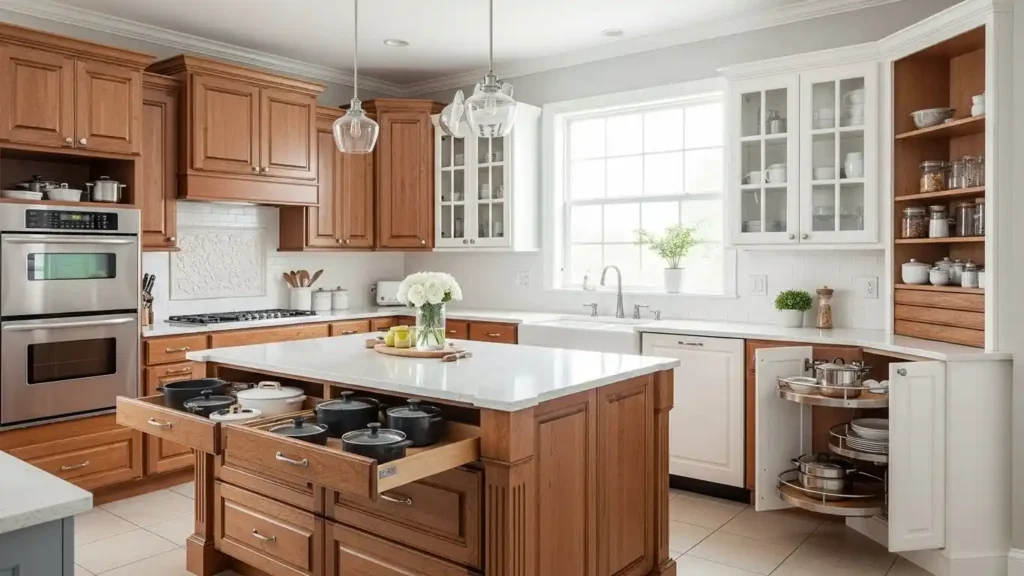
Beyond measurements, honestly evaluate what you need to store.
Make an inventory of your kitchen items: dishes, glassware, cookware, small appliances, pantry items, cleaning supplies, and specialty items.
Group items by frequency of use. Everyday dishes and cooking essentials need prime real estate in easy-to-reach cabinets.
Seasonal items like holiday platters or that bread maker you use twice a year can go in less accessible upper cabinets or corner units.
Consider whether you need a dedicated pantry cabinet.
Tall pantry units provide tremendous storage value and can reduce the number of standard cabinets you need for food storage.
Special Considerations and Cabinet Types
Don’t forget specialty cabinets that enhance functionality without necessarily adding to your total count but might replace standard units:
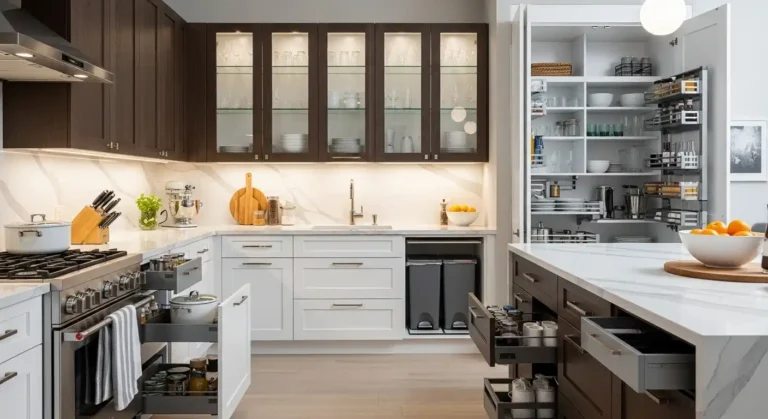
Corner cabinets with lazy susans or pull-out shelves maximize awkward corner spaces.
Drawer base cabinets offer better accessibility than traditional door-and-shelf base cabinets and are increasingly popular.
Appliance garages keep countertops clutter-free by hiding small appliances.
Pull-out trash and recycling centers keep waste management organized and hidden.
Working with Your Budget
Cabinet costs vary enormously based on quality, materials, and customization.
Stock cabinets from big-box stores cost significantly less than semi-custom or fully custom options.
Determine your budget early and use it to guide decisions about cabinet quantity and quality.
Sometimes fewer high-quality cabinets with smart organizational features provide better value than numerous basic units.
Consider where you can use open shelving or a freestanding piece to reduce cabinet needs while adding character.
The Professional Perspective
While you can certainly plan your cabinet needs independently, kitchen designers bring valuable expertise.
They understand how to maximize storage in challenging spaces, know which cabinet configurations work best for different needs, and can help you avoid expensive mistakes.
Many cabinet retailers offer free design services when you purchase from them, making professional input more accessible than you might think.
Conclusion
So, how many kitchen cabinets do I need? The answer depends on your kitchen size, layout, storage needs, and lifestyle.
By carefully measuring your space, assessing your storage requirements, understanding standard cabinet dimensions, and considering your kitchen’s layout, you can determine the right number of cabinets for your specific situation.
Remember, successful kitchen planning balances functionality with aesthetics. Take time to plan thoughtfully, and you’ll create a kitchen that not only looks beautiful but works perfectly for your daily needs.