

Scandinavian design has become synonymous with simplicity, functionality, and timeless elegance.
If you’ve ever wondered what does a Scandinavian kitchen look like, you’re not alone.
This iconic style has captivated homeowners and designers worldwide for its clean lines, natural materials, and bright, airy spaces.
In this blog post, we’ll explore the defining features of a Scandinavian kitchen, the design principles behind it, and how you can incorporate this aesthetic into your own home.
The Core Philosophy of Scandinavian Kitchen Design
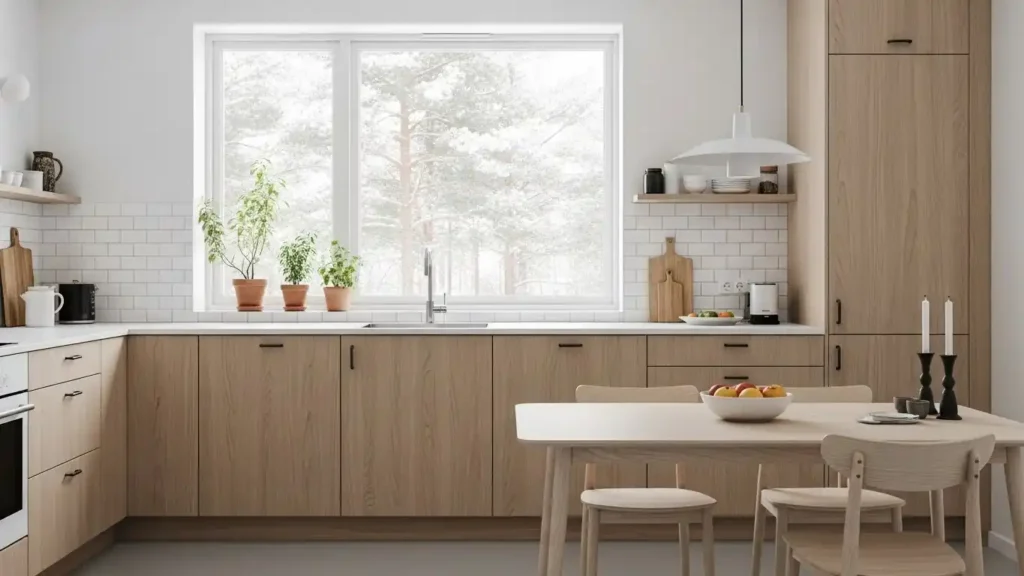
To understand what does a Scandinavian kitchen look like, it’s important to first grasp the philosophy behind Scandinavian design. Rooted in the Nordic countries of Denmark, Sweden, Norway, and Finland, this style emphasizes:
- Simplicity and minimalism: Clutter-free spaces with clean lines and understated elegance.
- Functionality: Every element serves a purpose, blending practicality with beauty.
- Natural light: Maximizing daylight to create bright, inviting interiors.
- Natural materials: Wood, stone, and organic textures bring warmth and authenticity.
- Neutral color palettes: Whites, grays, and soft hues create a serene backdrop.
These principles combine to create kitchens that are not only visually appealing but also comfortable and efficient.
Key Features: What Does a Scandinavian Kitchen Look Like?
1. Bright and Airy Spaces
One of the most recognizable characteristics of a Scandinavian kitchen is its bright and airy feel.
Nordic countries experience long, dark winters, so designers prioritize maximizing natural light.
This is achieved through large windows, light-colored walls, and reflective surfaces that bounce light around the room.
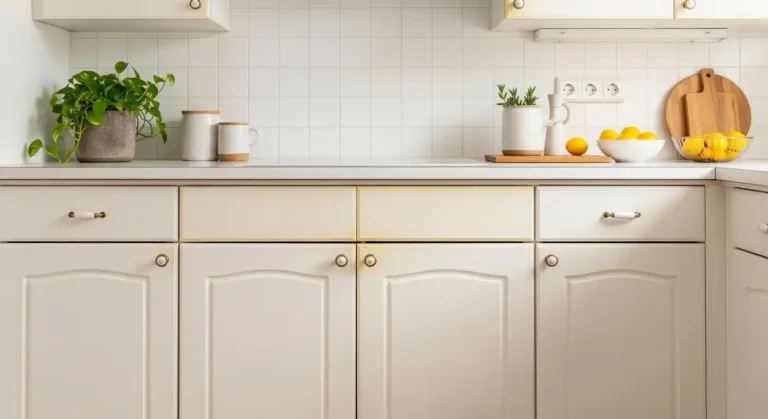
Walls and cabinetry are often painted in shades of white or light gray to keep the space feeling open and fresh.
This brightness creates a welcoming environment that feels both modern and cozy.
2. Clean Lines and Minimalist Cabinetry
Scandinavian kitchens favor simple, sleek cabinetry with flat fronts or subtle detailing.
The design avoids ornate moldings or excessive hardware. Instead, handles are often minimalist or integrated into the cabinetry for a seamless look.
The cabinetry layout is highly functional, designed to maximize storage while maintaining uncluttered surfaces.
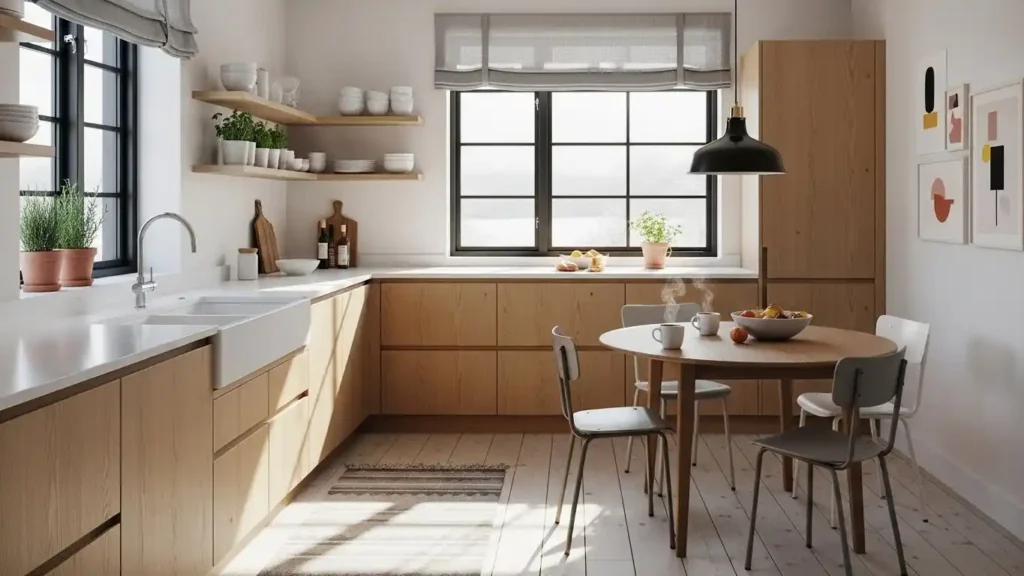
Open shelving may be used sparingly to display carefully curated items, adding personality without sacrificing tidiness.
3. Natural Wood Elements
Wood is a cornerstone of Scandinavian design, bringing warmth and texture to the clean, white spaces.
Often, light woods like birch, pine, or oak are used for flooring, countertops, or cabinetry accents.
Butcher block countertops or wooden kitchen islands are common features that add organic character and contrast beautifully with white cabinets.
The natural grain and tones of wood soften the minimalist aesthetic and create a balanced atmosphere.
4. Functional Layouts with Smart Storage
Functionality is paramount in Scandinavian kitchens.
The layout is designed for efficiency and ease of use, often following the classic work triangle (sink, stove, refrigerator) to streamline cooking tasks.
Storage solutions are cleverly integrated to keep countertops clear.
Pull-out drawers, built-in organizers, and hidden compartments help maintain the minimalist look while providing ample space for kitchen essentials.
5. Subtle Color Accents
While the base palette tends to be neutral, Scandinavian kitchens often incorporate subtle color accents to add interest without overwhelming the space.
Soft blues, muted greens, or gentle pastels may appear in backsplashes, dishware, or textiles.
These touches of color maintain the calm, serene vibe while giving the kitchen a personalized, inviting feel.
6. Natural and Textured Materials
Beyond wood, Scandinavian kitchens embrace other natural materials like stone, ceramics, and linen.
Stone countertops, such as marble or granite, add durability and understated elegance.
Textiles like woven rugs, linen curtains, or cozy seat cushions introduce texture and warmth, enhancing the kitchen’s inviting atmosphere.
7. Simple and Stylish Lighting
Lighting in Scandinavian kitchens is both practical and decorative.
Pendant lights with clean designs often hang over kitchen islands or dining tables, providing focused illumination.
Additionally, recessed lighting and under-cabinet lights ensure the workspace is well-lit without detracting from the minimalist aesthetic.
Materials like matte metals or natural fibers are common in fixtures, complementing the overall design.
Popular Scandinavian Kitchen Styles
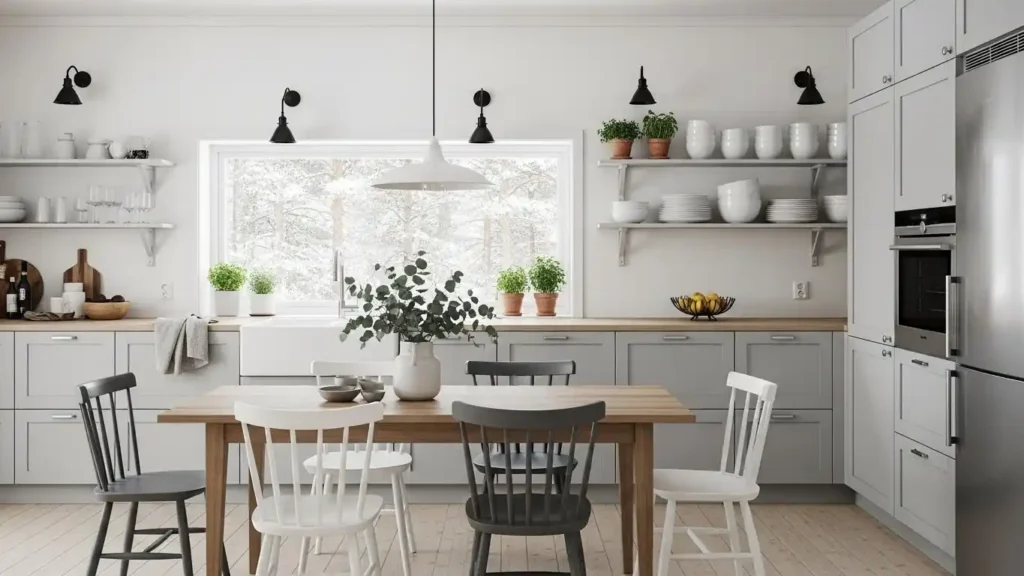
Scandinavian kitchen design spans several sub-styles, each with unique characteristics:
Modern Scandinavian
This style embraces ultra-clean lines, minimal ornamentation, and a predominantly white palette.
It often features handleless cabinets and integrated appliances for a sleek, futuristic look.
Rustic Scandinavian
Rustic kitchens highlight raw, natural wood and stone elements, emphasizing craftsmanship and authenticity.
Exposed beams, distressed finishes, and vintage accessories create a cozy, lived-in vibe.
Japandi-Inspired
A fusion of Japanese and Scandinavian aesthetics, Japandi kitchens combine the simplicity and natural materials of both traditions.
Expect warm wood tones, muted colors, and a strong focus on harmony and balance.
How to Incorporate Scandinavian Kitchen Design in Your Home
If you’re inspired by the question what does a Scandinavian kitchen look like and want to bring this style into your home, here are some practical tips:
1. Start with a Neutral Base
Paint walls and cabinetry in white or soft gray to create a bright, neutral foundation. This allows natural light to reflect and makes the space feel larger and more open.
2. Choose Light Wood Finishes
Incorporate light wood elements through flooring, countertops, or open shelving. The natural grain adds warmth without overpowering the minimalist look.
3. Opt for Minimalist Cabinetry
Select cabinets with flat fronts and simple hardware or no visible handles. Keep the design clean and functional.
4. Maximize Natural Light
If possible, enhance windows or add skylights to brighten the space. Use sheer curtains or none at all to avoid blocking light.
5. Add Subtle Color Accents
Introduce muted blues, greens, or pastels through accessories like dishware, rugs, or plants. Keep these accents soft to maintain serenity.
6. Use Natural Textures
Incorporate stone countertops, ceramic dishes, and linen textiles to add tactile interest and depth.
7. Invest in Thoughtful Lighting
Choose pendant lights and task lighting that complement the minimalist style and provide ample illumination.
Why Scandinavian Kitchens Are So Popular
The appeal of Scandinavian kitchens goes beyond aesthetics. Their timeless design promotes calm and order in a space often associated with chaos and mess.
The focus on natural materials and light creates a healthy, inviting environment.
Moreover, the emphasis on functionality means these kitchens work well for everyday living, making them practical for families and individuals alike.
Final Thoughts: What Does a Scandinavian Kitchen Look Like?
To answer what does a Scandinavian kitchen look like in a nutshell: it’s a bright, minimalist space defined by clean lines, natural materials, and a calming neutral palette.
It balances beauty and practicality, creating a kitchen that feels modern yet warm, simple yet inviting.
Whether you prefer a sleek modern look or a cozy rustic vibe, Scandinavian kitchen design offers versatile inspiration that can fit many lifestyles and tastes.
By focusing on light, function, and natural beauty, you can create a kitchen that not only looks stunning but also enhances your daily life.