
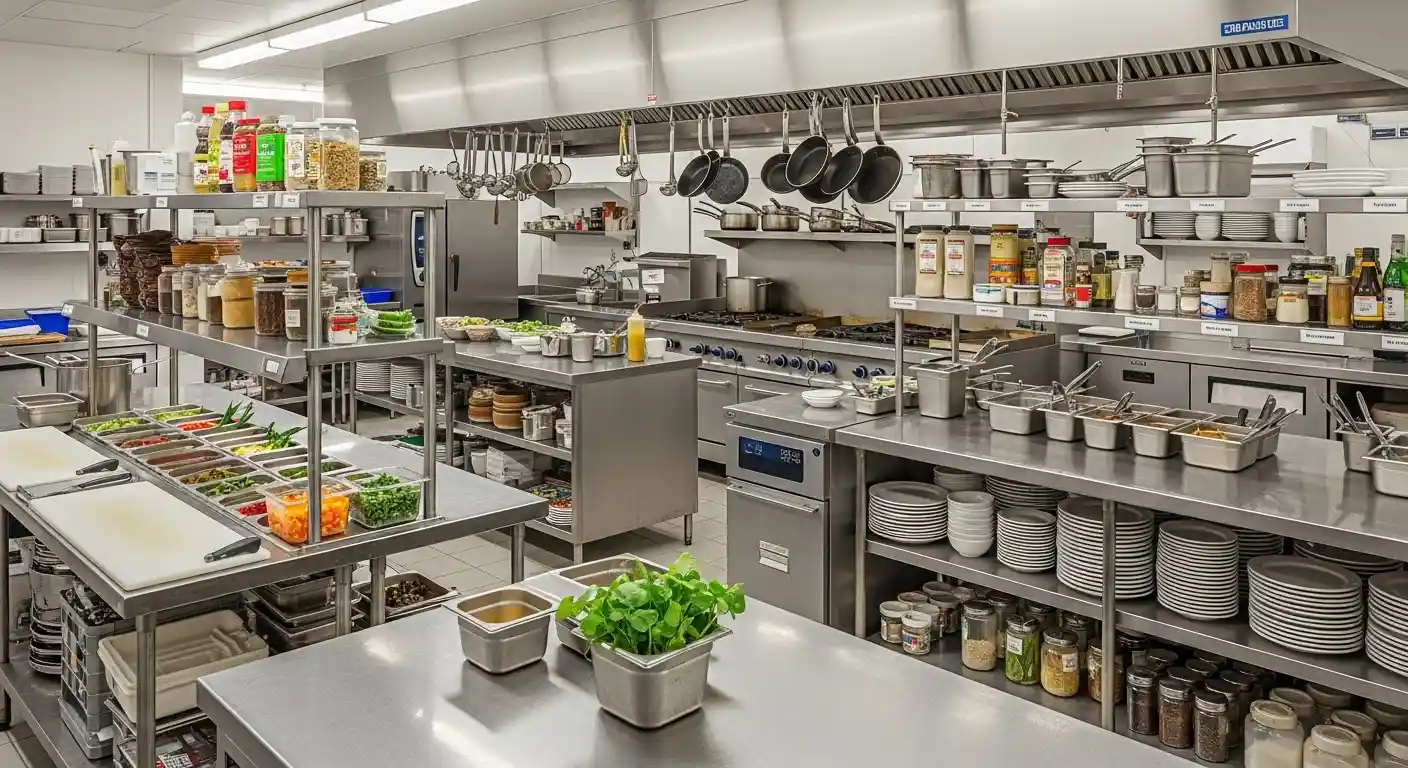
Looking to boost efficiency and cut the clutter? These Commercial Kitchen Organization tips will help you create a cleaner, smarter, and more productive kitchen.
Running a busy commercial kitchen can feel chaotic, especially when every surface is stacked and every tool seems just out of reach.
I remember walking into a new client’s kitchen and noticing piles of utensils, mismatched containers, and a fridge that barely closed because it was overloaded.
It was clear that without a solid organization system, the kitchen would struggle during rush hours, leading to stress and wasted time.
We started small, grouping ingredients by frequency of use, labeling every shelf, and assigning dedicated zones for prep, cooking, and plating.
Within days, the space transformed. Staff moved smoothly, orders came out faster, and the kitchen felt calmer yet more productive.
Commercial kitchen organization isn’t just about neatness—it directly impacts efficiency, safety, and the overall flow of operations.
Why Commercial Kitchen Organization Matters
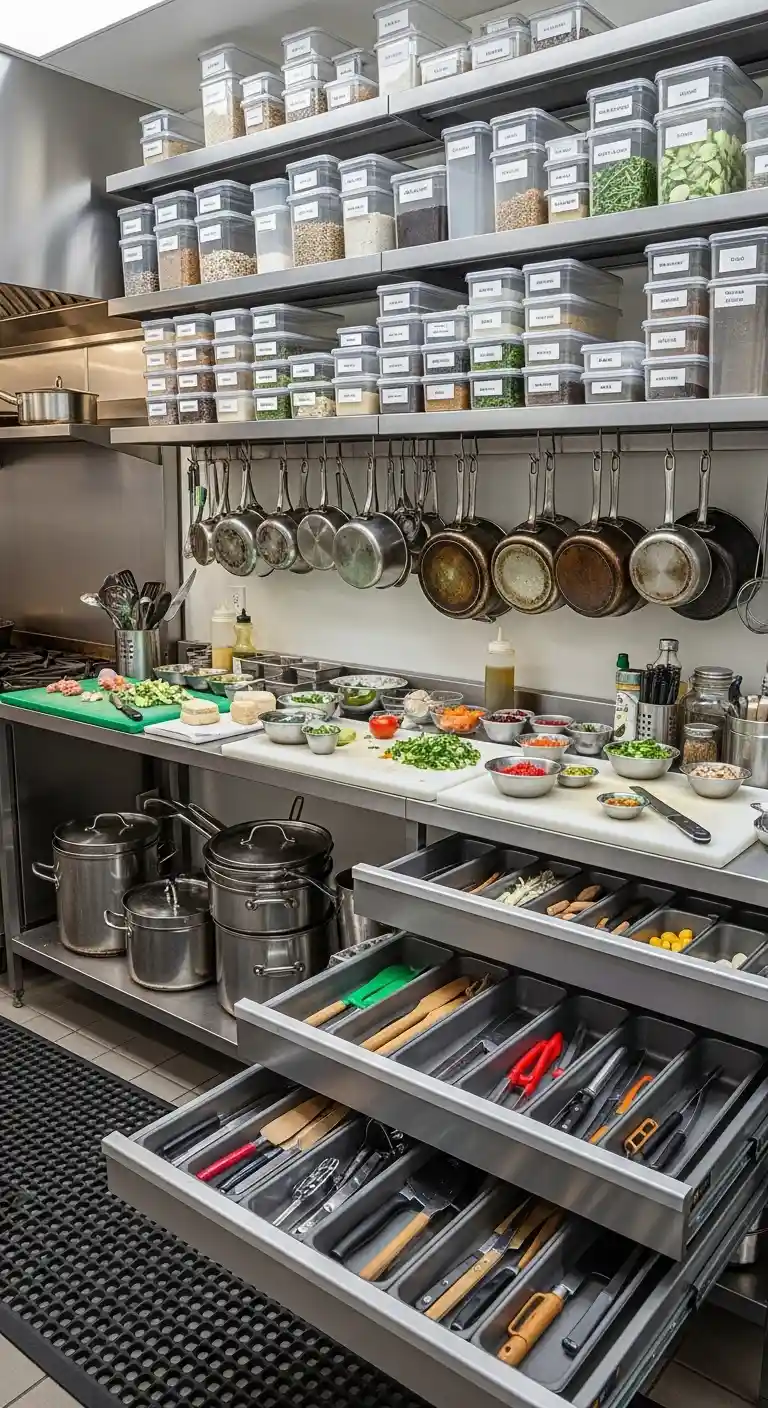
A well-organized commercial kitchen ensures smooth workflow and reduces errors during high-pressure service hours.
It improves safety by preventing slips, spills, and accidents caused by cluttered floors or misplaced tools.
Proper organization enhances efficiency, allowing staff to locate ingredients, utensils, and equipment quickly without interrupting food preparation.
It also supports hygiene and sanitation standards, minimizing the risk of contamination and maintaining a professional kitchen reputation.
Investing time and effort into thoughtful kitchen organization pays off in productivity, employee satisfaction, and customer experience.
Key Principles of Commercial Kitchen Organization
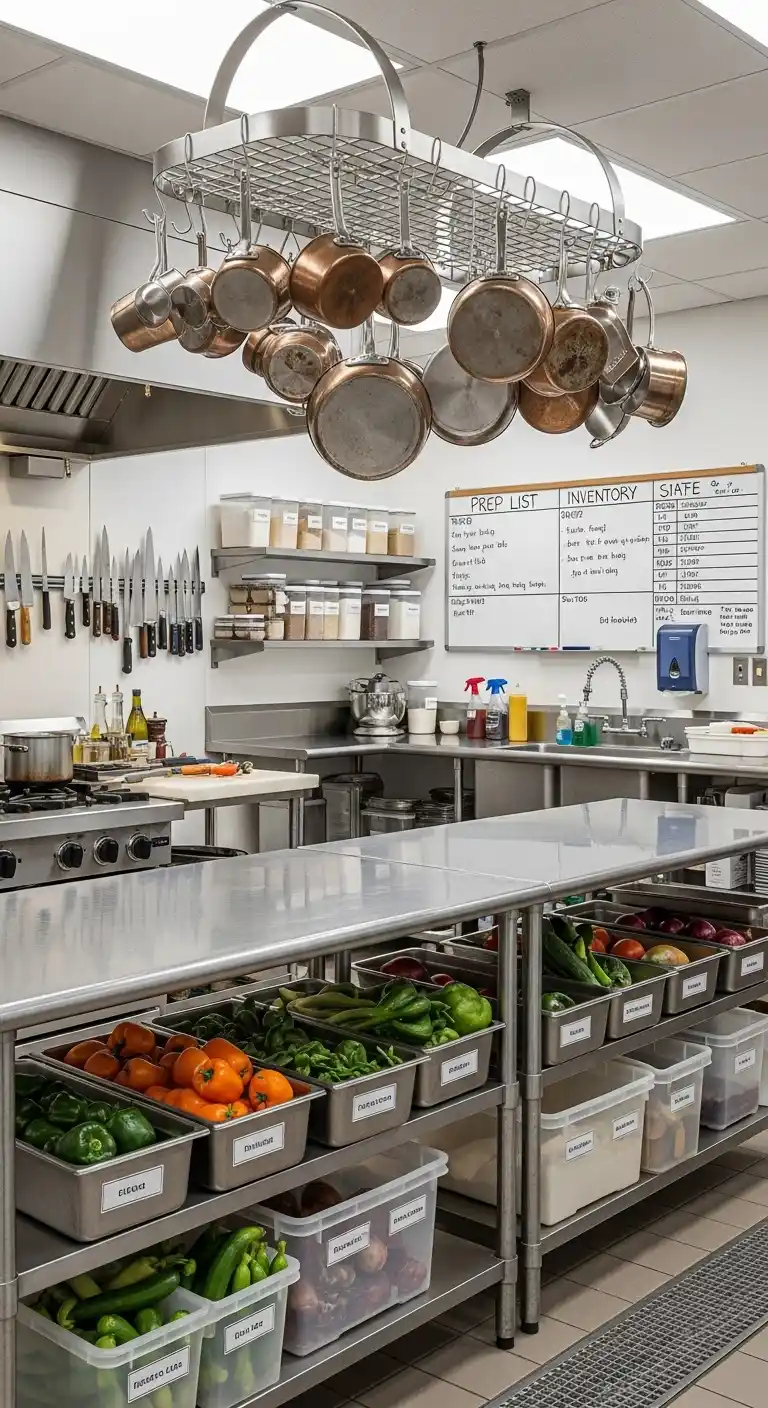
Start by assessing workflow patterns to understand where bottlenecks and inefficiencies occur during daily operations.
Group similar tasks and equipment together to minimize movement and speed up preparation and cooking times.
Use vertical space wisely with shelving units, racks, and hanging storage to free up valuable counter and floor space.
Clearly label ingredients, tools, and storage zones to avoid confusion and maintain consistency across shifts.
Regularly review and adjust organizational systems to ensure they evolve with menu changes and kitchen growth.
27 Commercial Kitchen Organization Ideas
Install Adjustable Shelving Units
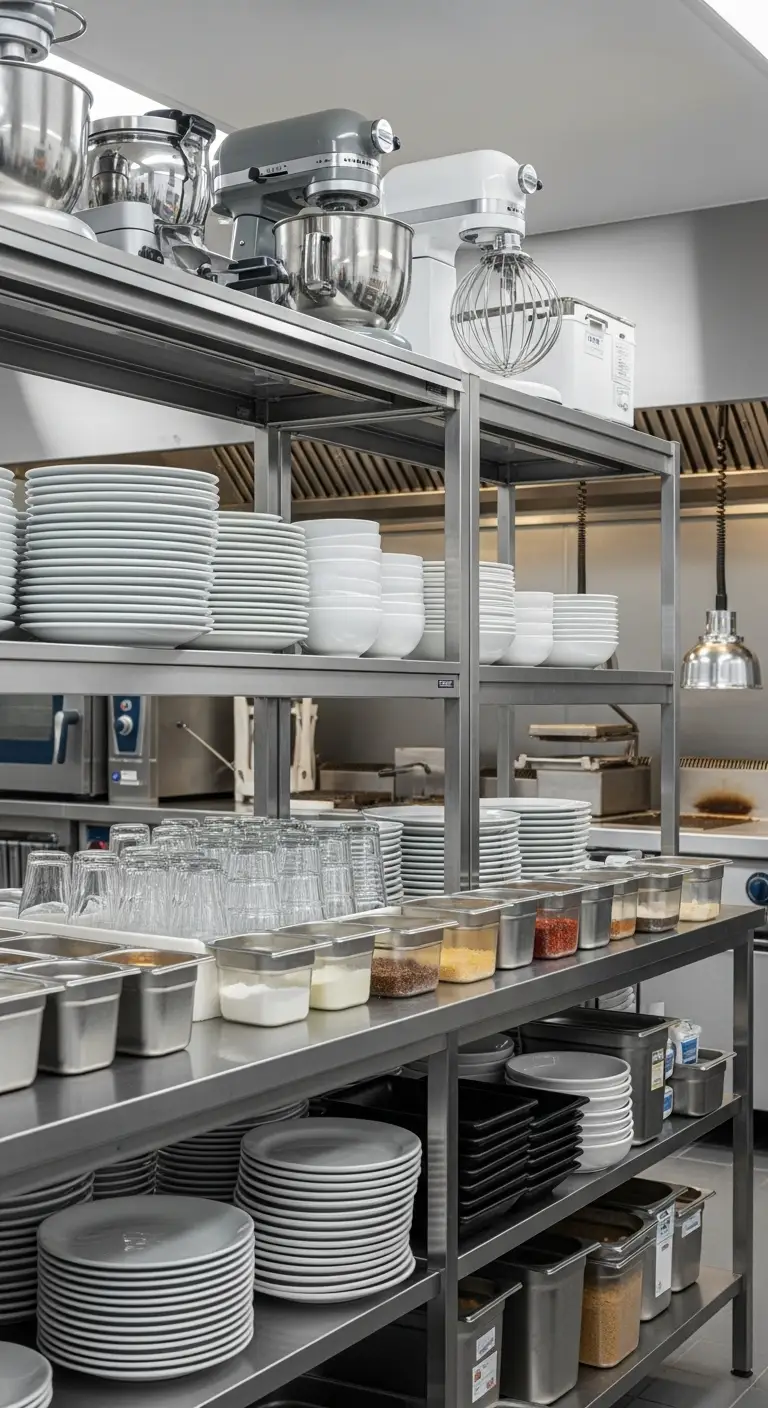
Adjustable shelving units allow you to customize storage heights according to varying kitchen needs and equipment sizes.
They maximize vertical space while keeping items visible and easily accessible, reducing time wasted searching for tools or ingredients.
Flexible shelving accommodates changing inventory, making it ideal for busy commercial kitchens with fluctuating supplies.
By investing in durable, easy-to-clean materials, you maintain hygiene standards while ensuring longevity and stability of storage.
This simple yet effective solution transforms underutilized wall areas into functional storage zones, enhancing overall kitchen workflow.
Use Wall-Mounted Pot Racks

Wall-mounted pot racks free up cabinet space while keeping cookware visible and accessible during peak cooking hours.
They reduce clutter on counters and in cupboards, creating a safer and more efficient cooking environment.
Hanging pots and pans vertically allows staff to grab what they need quickly without interrupting workflow.
These racks also add a professional and polished look to your kitchen, reflecting a well-organized operation.
Investing in sturdy, rust-resistant materials ensures safety, longevity, and easy maintenance in a busy kitchen setting.
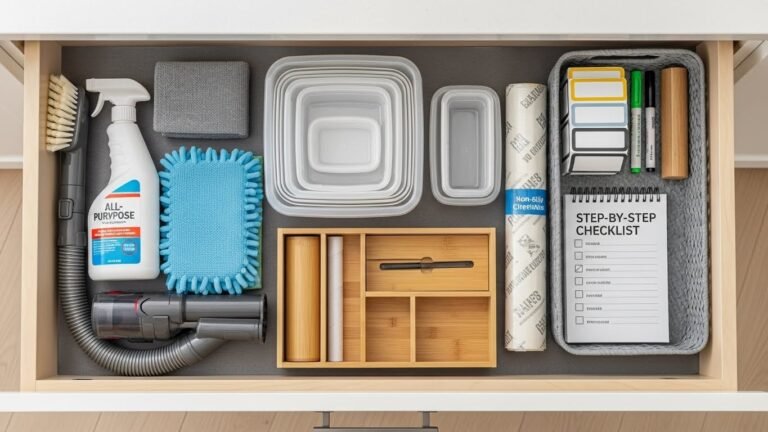
Implement Pull-Out Storage Drawers

Pull-out drawers for dry goods, utensils, and small appliances make accessing stored items easier and more efficient.
They reduce bending and lifting, preventing strain during long shifts while keeping everything organized and in reach.
Dividers inside the drawers allow for better categorization and separation of different ingredients or tools.
Pull-out storage ensures your kitchen maintains a clean, professional appearance while maximizing limited space.
It is particularly effective in high-volume kitchens where speed and accessibility are critical for smooth operations.
Use Clear Storage Containers
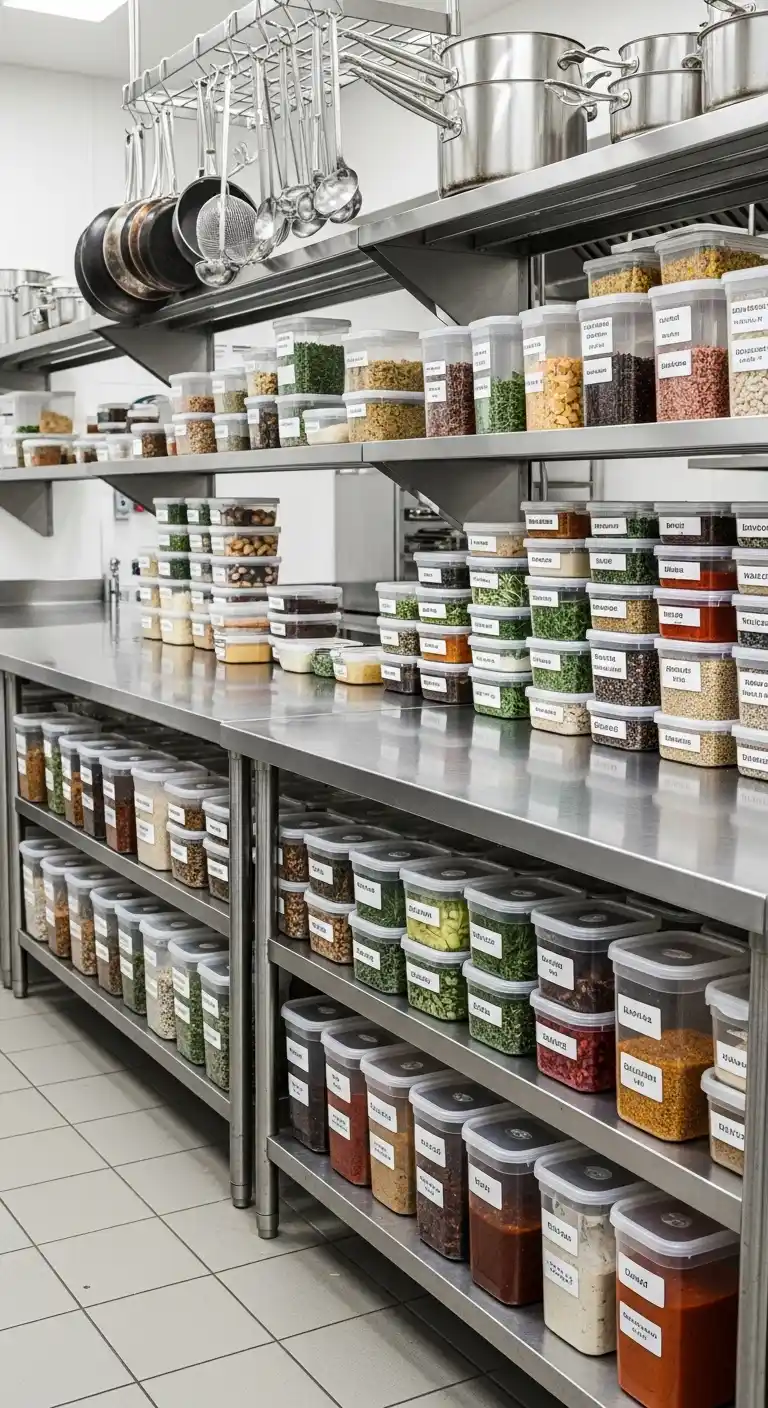
Transparent containers for ingredients, spices, and dry goods make it simple to see contents without opening each container.
They improve inventory management, reduce waste, and ensure freshness while maintaining a visually tidy storage area.
Labeling containers with expiration dates and contents adds another layer of efficiency for staff.
Clear containers also simplify compliance with hygiene standards and streamline prep time during busy service hours.
This small investment in visibility and organization greatly improves both efficiency and workflow in a commercial kitchen.
Label Everything Clearly
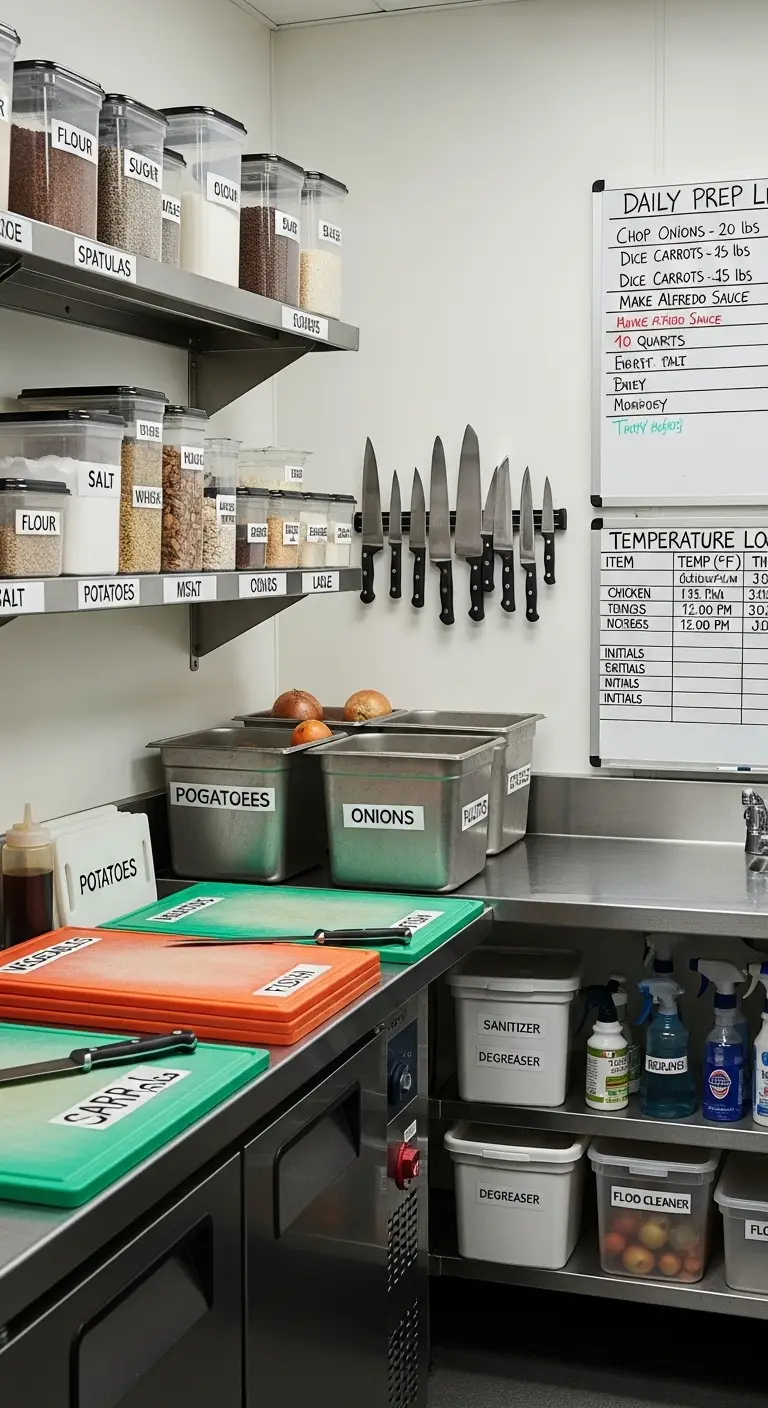
Proper labeling of shelves, bins, and containers eliminates confusion and reduces mistakes during food preparation.
Labels can include contents, expiration dates, or designated usage areas to maintain hygiene and organization standards.
Consistent labeling ensures every staff member knows exactly where items belong, improving operational consistency.
It also speeds up training for new employees by providing clear guidance on kitchen layout and storage.
A labeled kitchen creates a professional environment where efficiency, safety, and cleanliness are consistently maintained.
Optimize Walk-In Refrigerators
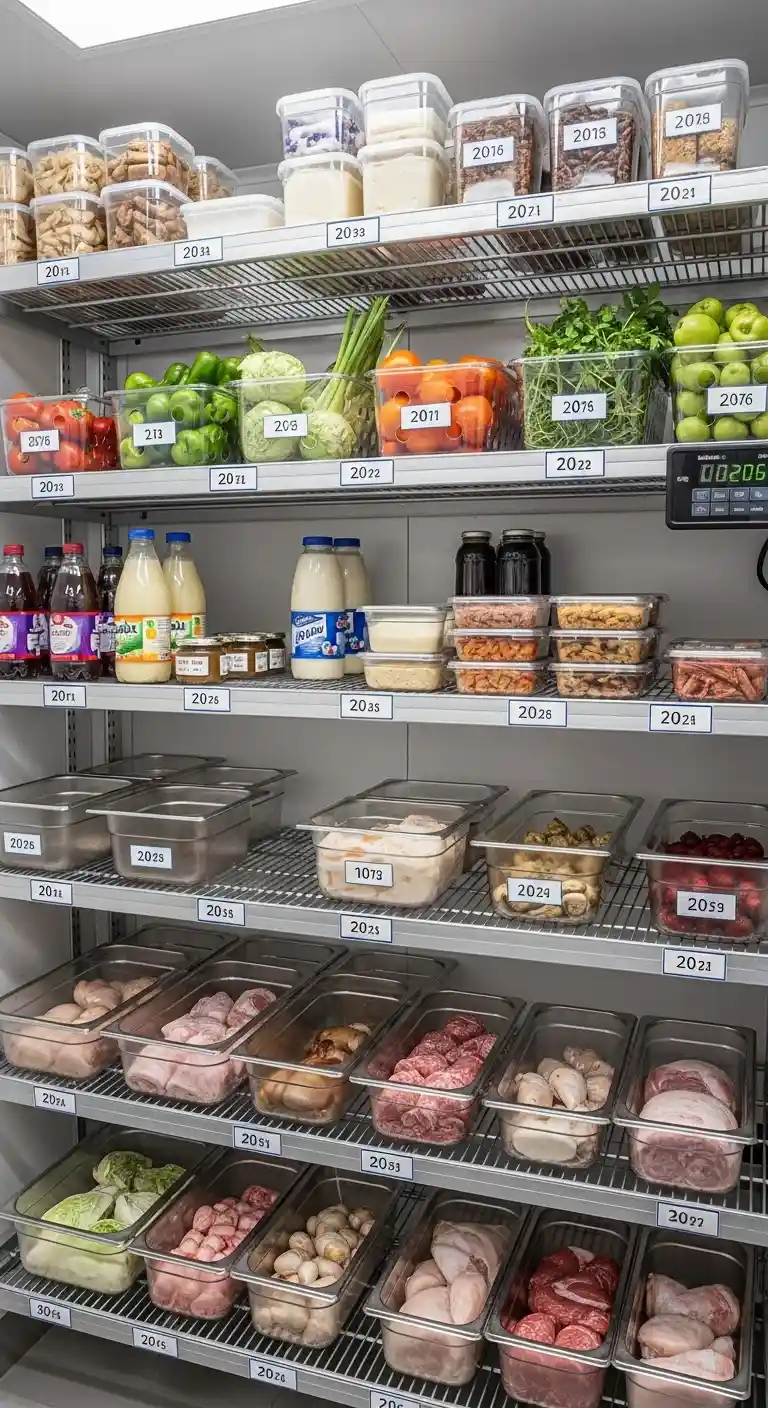
Organize walk-in fridges by grouping ingredients by type, frequency of use, and prep zones for easy access.
Install shelves or bins at varying heights to maximize vertical space while keeping items visible and reachable.
Regularly rotate stock and use the first-in, first-out method to reduce spoilage and waste.
Clearly labeling each section improves staff efficiency and reduces the risk of cross-contamination between ingredients.
A well-organized fridge saves time during prep and ensures ingredients are safe, fresh, and ready to use.
Install Overhead Racks
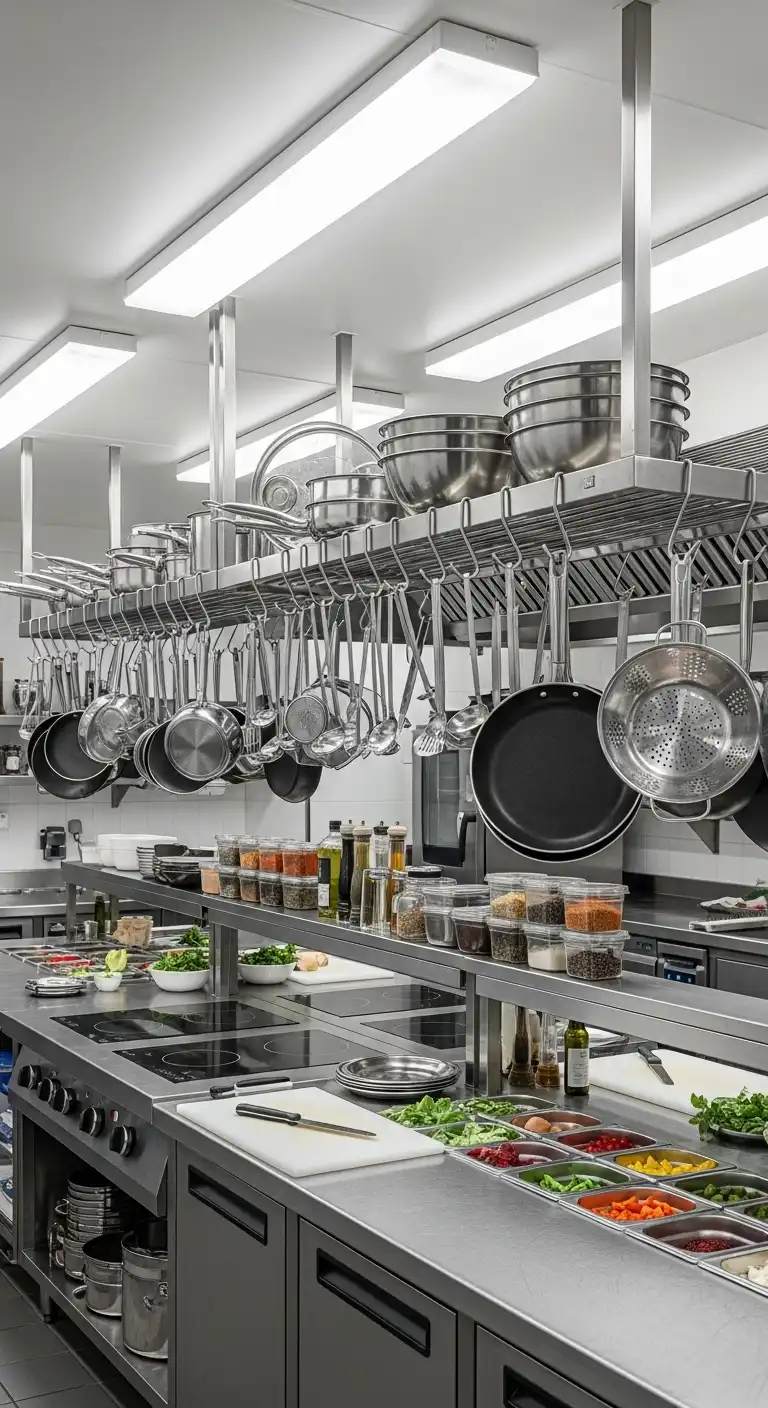
Overhead racks provide additional storage for frequently used tools, trays, or dry goods without taking up floor space.
They keep essential items within reach while maintaining a clean and open kitchen layout for safe movement.
Racks can be customized for weight, size, and accessibility to accommodate different kitchen needs.
They are particularly useful in high-volume kitchens where counter space is limited and workflow efficiency is critical.
Overhead racks contribute to a professional, visually tidy kitchen environment that supports smooth operations.
Use Mobile Prep Tables

Mobile prep tables allow flexibility in kitchen layout, creating temporary workstations wherever they are needed most.
They provide additional counter space while remaining easy to move for cleaning or rearranging during busy hours.
Tables with built-in shelves or drawers offer extra storage for utensils, cutting boards, and ingredients.
Mobility ensures staff can adapt to changing workflow demands, making kitchen operations more efficient.
These tables are ideal for small commercial kitchens that need versatile work areas without permanent renovations.
Implement Ingredient Bins
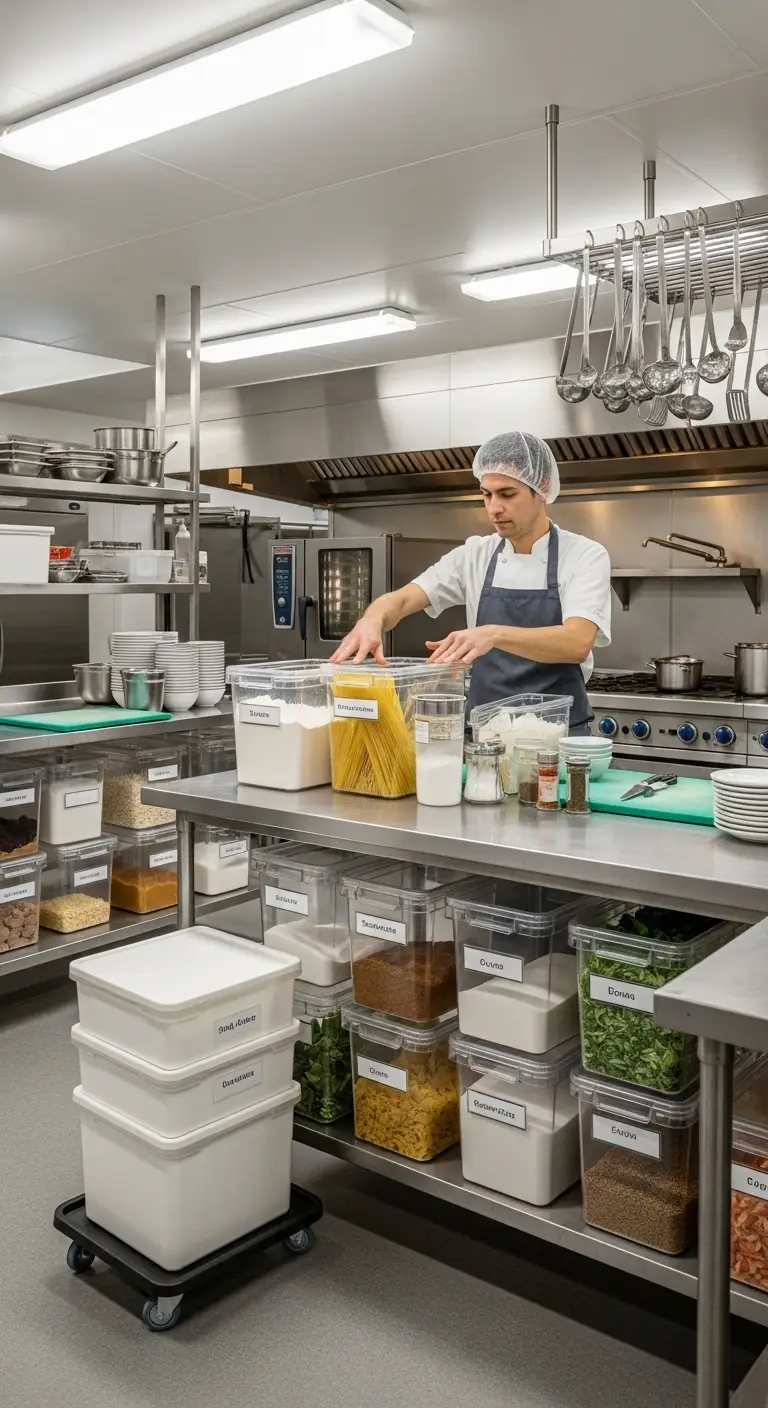
Dedicated bins for bulk ingredients, such as flour, sugar, or grains, make portioning and access fast and efficient.
Bins keep floors clear, reduce spills, and make measuring quantities easier during prep sessions.
Labeling bins ensures all staff know exactly what’s inside, preventing mix-ups or contamination.
Some bins come with lids or scoops for hygienic and easy access during busy service hours.
Proper ingredient storage saves time, reduces waste, and keeps the kitchen running smoothly.
Use Hanging Utensil Racks

Hanging racks for spatulas, ladles, and whisks keep frequently used utensils within arm’s reach.
They reduce clutter in drawers, improve accessibility, and maintain a clean workspace.
Racks can be installed near cooking stations for convenience during peak hours.
Regularly cleaned racks contribute to hygiene standards while promoting efficiency in prep and cooking.
This method ensures utensils are always ready, organized, and easy for staff to use during high-pressure shifts.
Create Zone-Based Storage
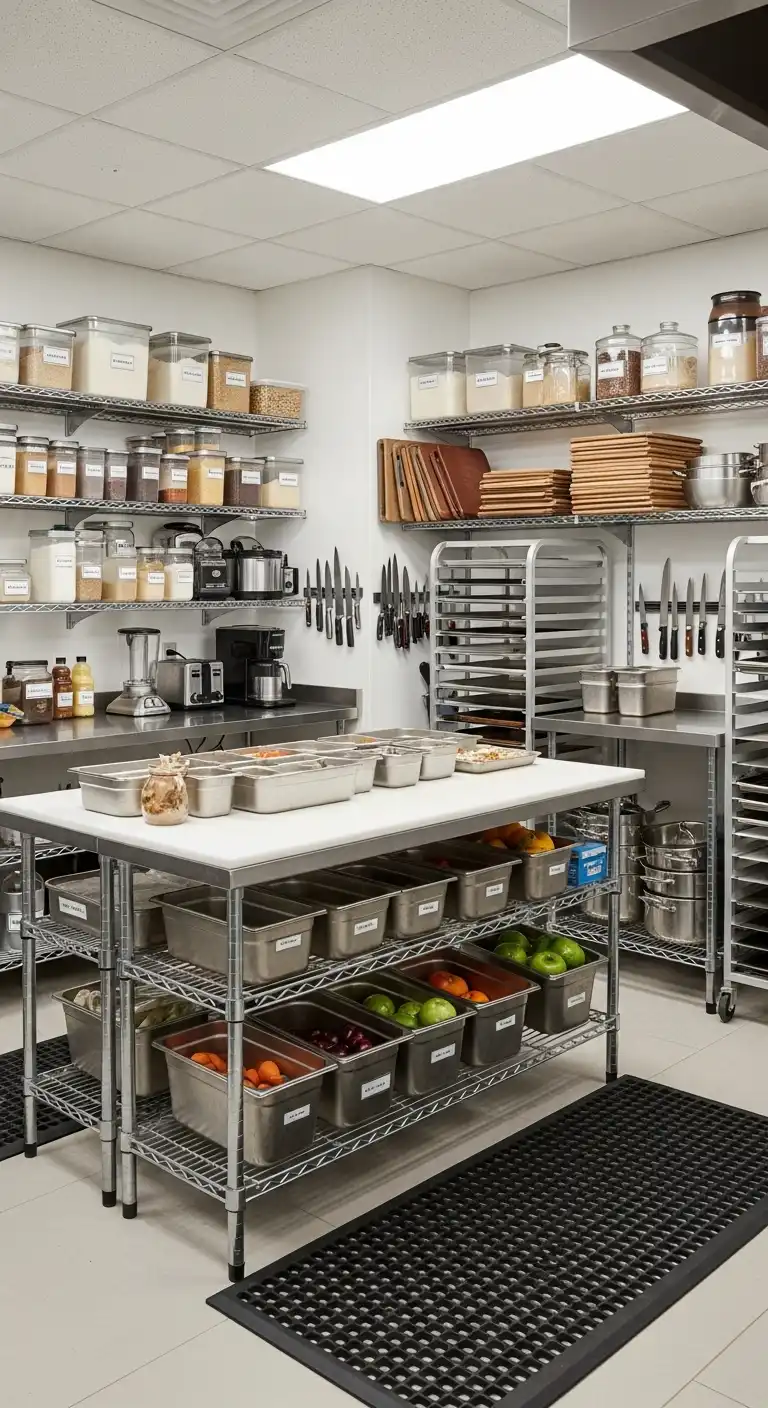
Designate specific zones for prep, cooking, plating, and cleaning to improve workflow efficiency.
Zone-based organization reduces unnecessary movement, allowing staff to focus on their assigned tasks without distractions.
Clearly marking areas with signage or color codes helps new employees adapt quickly and ensures consistency during busy hours.
Each zone should include all necessary tools, ingredients, and equipment, eliminating the need to move across the kitchen repeatedly.
A well-structured zoned kitchen maximizes productivity, reduces stress, and supports a smooth, professional service environment for the team.
Install Magnetic Knife Strips
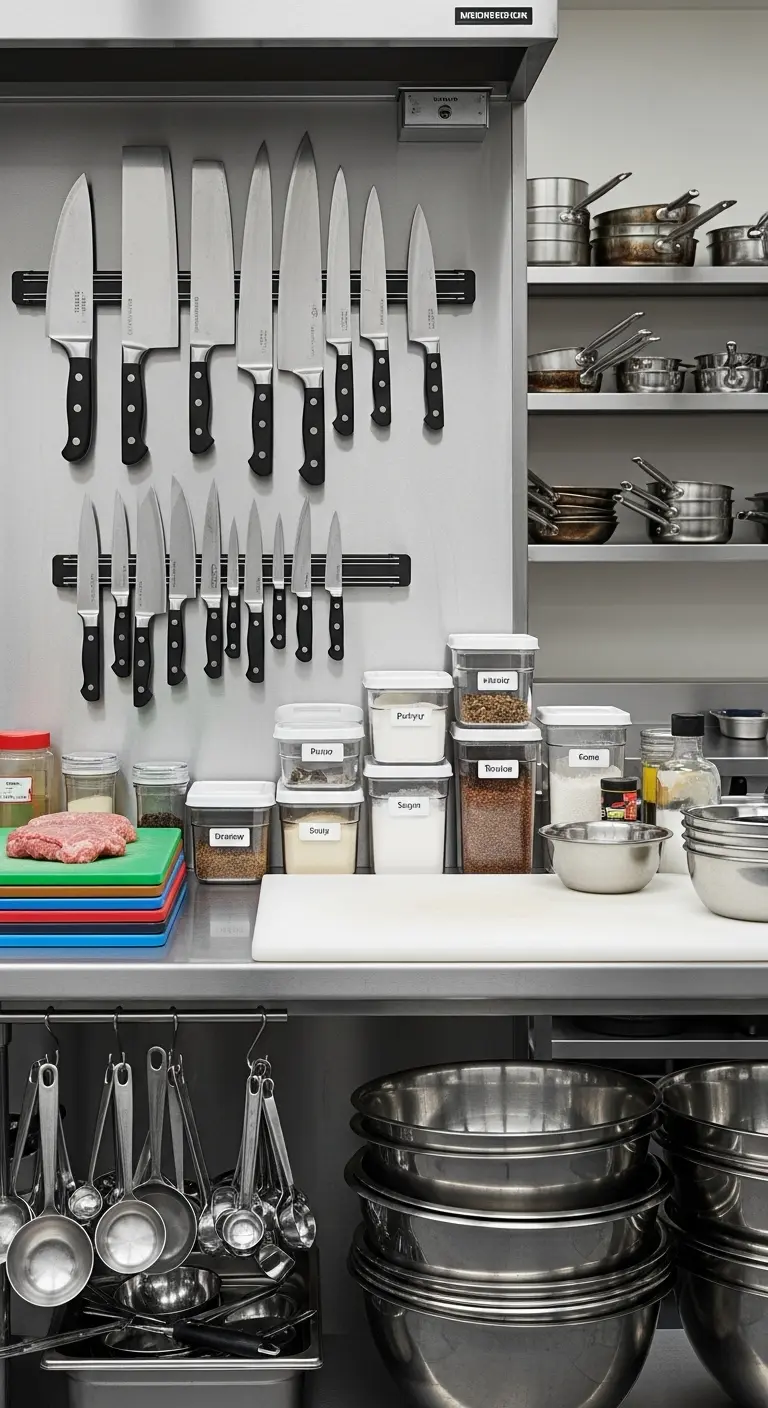
Magnetic knife strips keep knives visible, accessible, and safely stored above counters or near prep stations.
They prevent cluttered drawers while protecting blades from damage caused by stacking or jostling.
Staff can grab the right knife quickly without interrupting workflow, making prep faster and safer.
Regular cleaning of the magnetic strip maintains hygiene while extending the life of your knives.
This simple addition is ideal for busy kitchens where speed, safety, and organization are critical for smooth operations.
Use Stackable Storage Bins
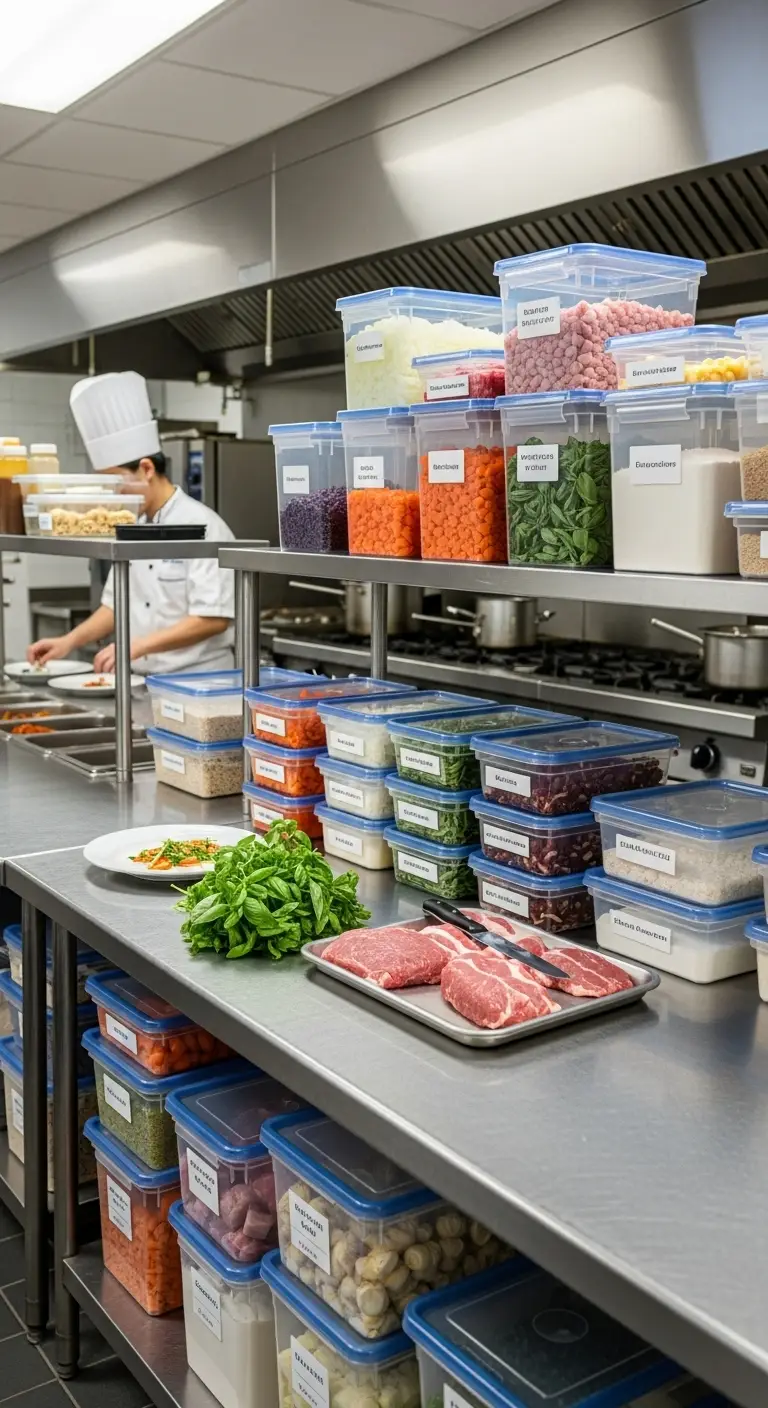
Stackable bins save valuable floor and shelf space while keeping ingredients, utensils, or small appliances organized.
Bins can be easily labeled, allowing staff to locate items quickly during busy prep or service times.
Durable, food-safe materials ensure hygiene and prevent contamination in high-volume kitchens.
Stackable systems are versatile, adapting to changing inventory needs and seasonal menu shifts.
This approach keeps storage neat, accessible, and efficient, transforming cluttered areas into highly functional zones.
Install Under-Shelf Hooks
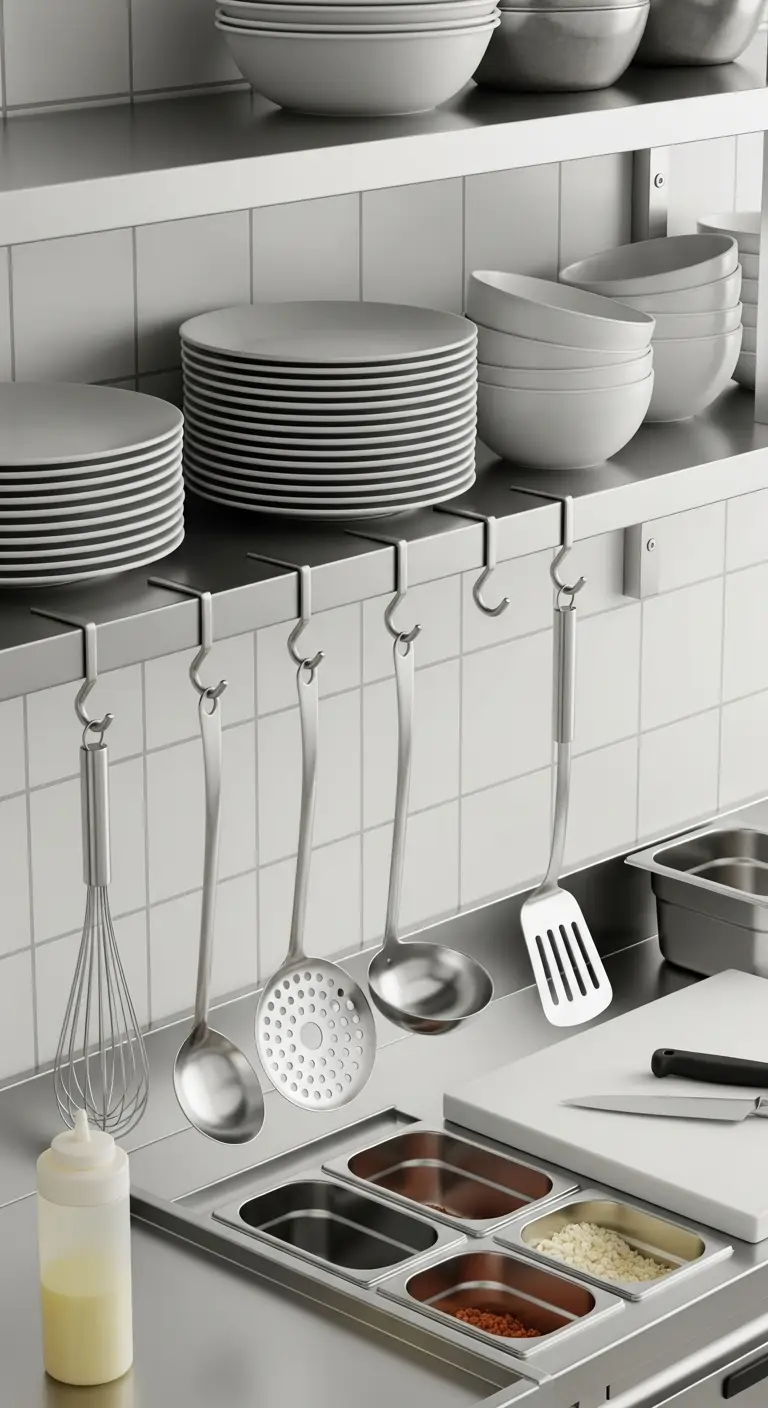
Under-shelf hooks provide hidden storage for mugs, utensils, or small tools without taking up counter space.
They make use of unused areas, freeing up surfaces for prep or plating activities.
Hooks are particularly effective in compact kitchens where maximizing every inch of space is crucial.
They can also be color-coded or labeled to maintain order and help staff quickly identify items.
This small adjustment adds a layer of efficiency, organization, and visual tidiness in any commercial kitchen.
Use Labelled Ingredient Baskets
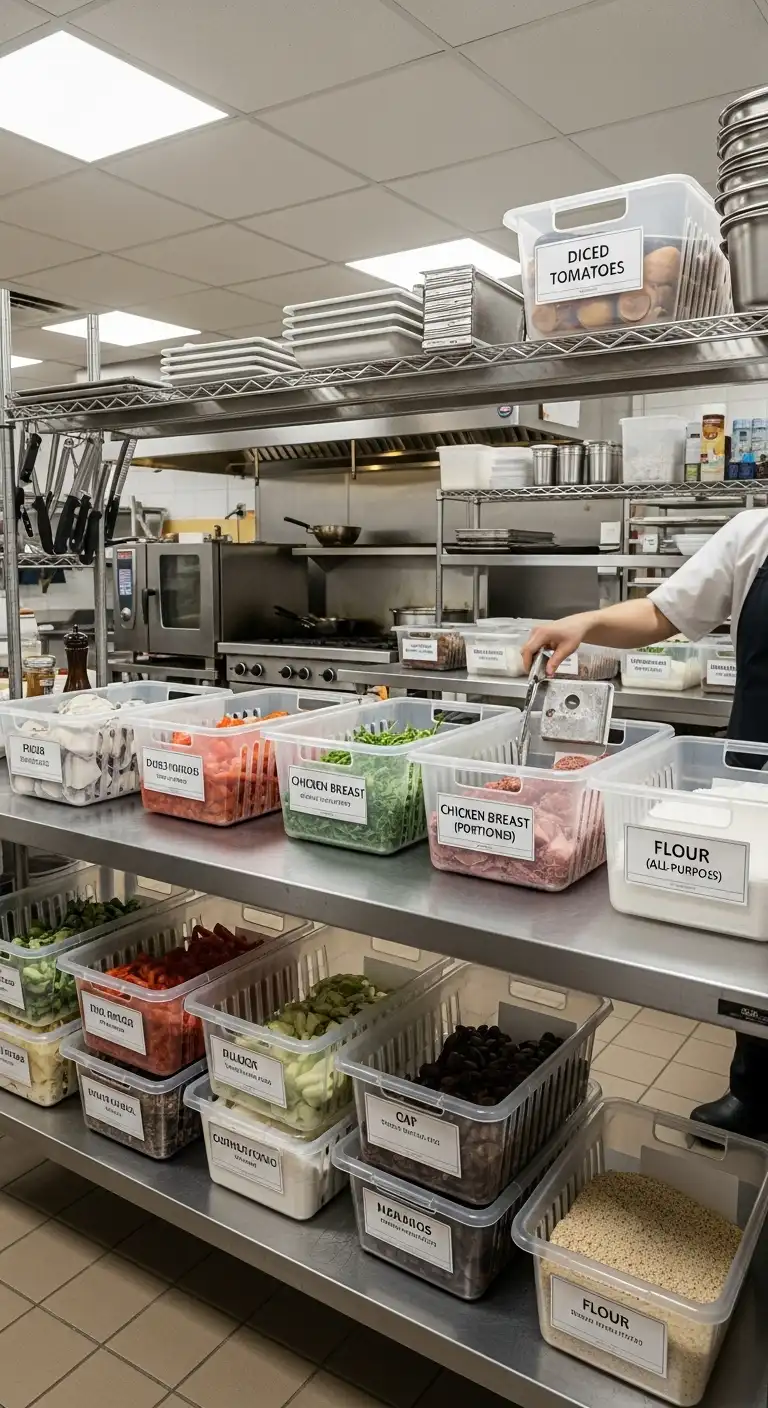
Assign baskets for specific ingredients like vegetables, proteins, or sauces to keep prep areas organized.
Labels ensure staff can quickly identify contents, reducing errors and speeding up workflow during peak hours.
Baskets can be stacked or placed on shelves near prep stations for easy access.
Regular cleaning and rotation maintain hygiene and freshness, preventing cross-contamination.
Organized ingredient baskets simplify prep, minimize clutter, and create a professional kitchen appearance for staff and visitors.
Implement Portion-Control Containers
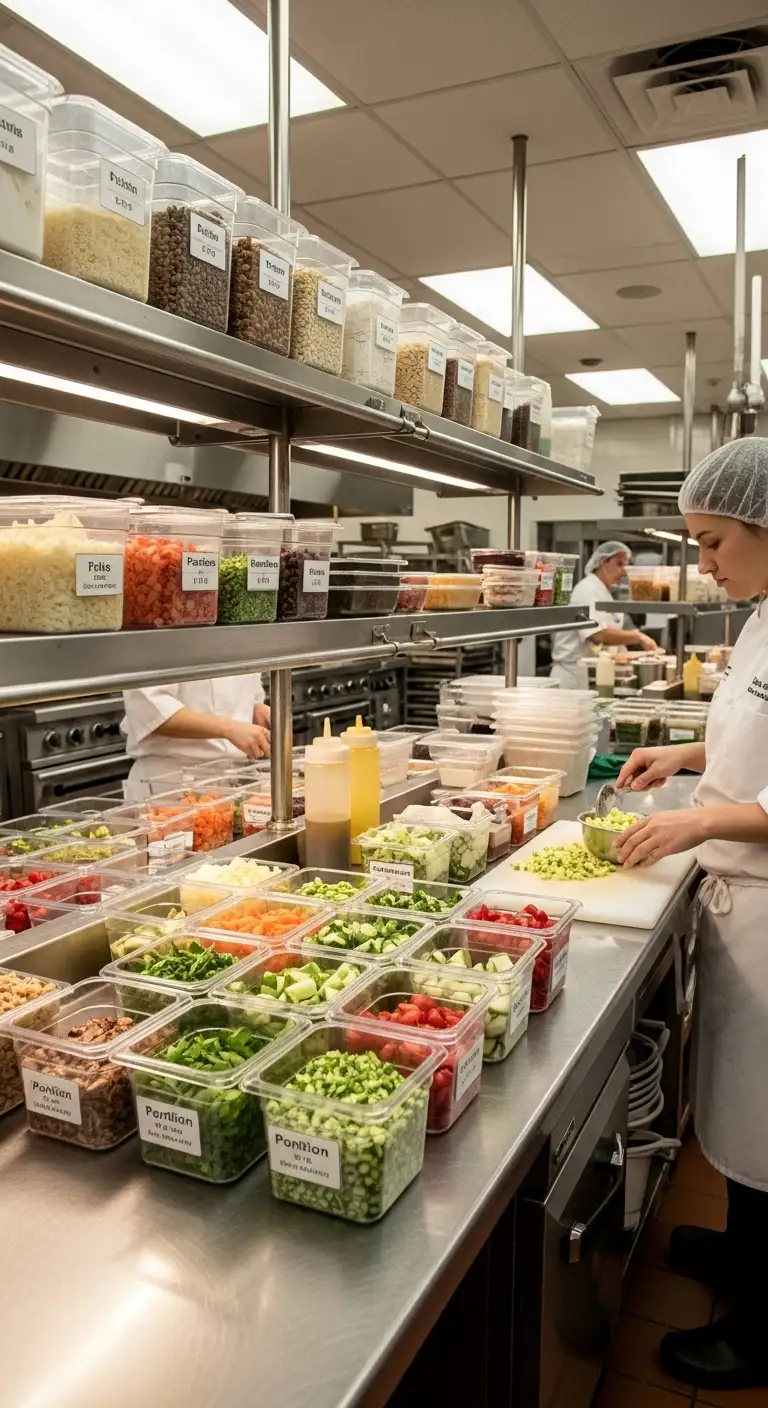
Portion-control containers standardize ingredient amounts, ensuring consistent taste and cost control.
They reduce food waste and speed up prep by providing pre-measured quantities for recipes.
Containers should be clearly labeled and stored in designated areas to streamline access during busy service hours.
Using portion control helps maintain quality, minimizes overuse, and ensures accurate inventory management.
This simple system supports efficiency, reduces errors, and contributes to a more professional, well-organized commercial kitchen.
Optimize Dry Storage Shelves
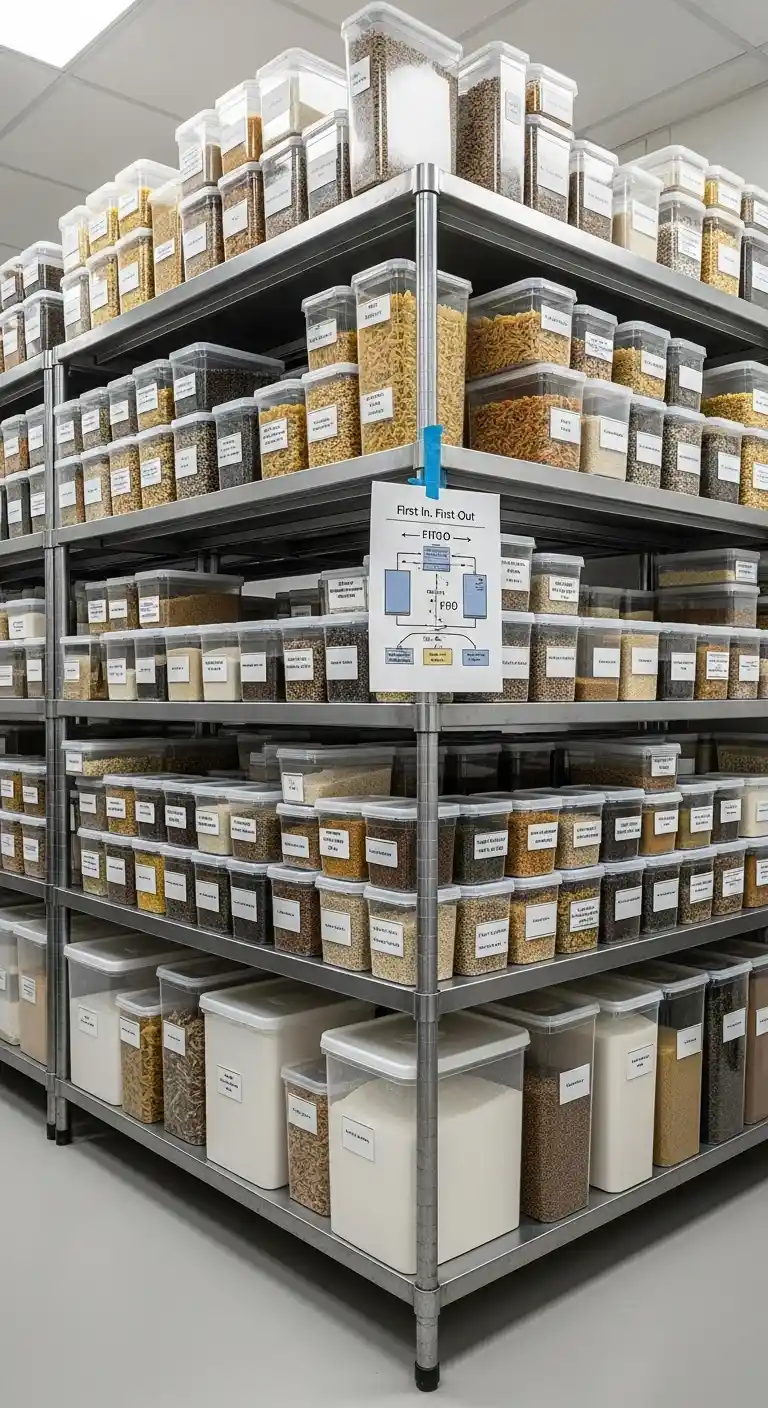
Dry storage shelves should be organized by ingredient type, frequency of use, and shelf height for accessibility.
Heavy items belong on lower shelves, while lighter, frequently accessed items are placed at eye level.
Label each shelf section to ensure staff know where everything belongs, improving efficiency and reducing errors.
Regularly rotate stock to maintain freshness and prevent expired items from cluttering space.
Optimized dry storage saves time, prevents mess, and supports a smooth, professional kitchen workflow.
Use Color-Coded Cutting Boards
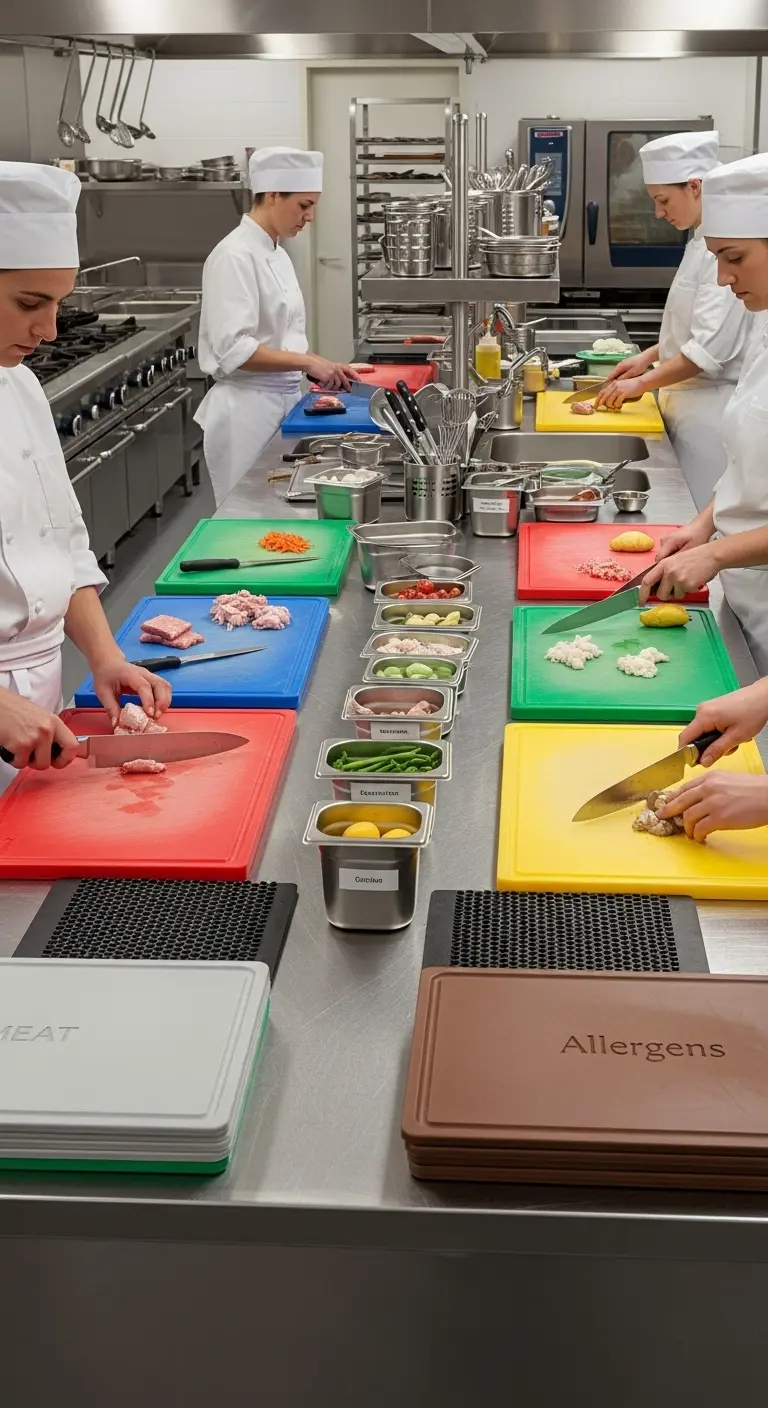
Assign color-coded cutting boards for meats, vegetables, and other food types to prevent cross-contamination.
They ensure staff follow hygiene standards while making prep safer and more efficient.
Color coding also helps train new employees quickly on proper food handling procedures.
Boards should be easy to clean, durable, and stored in accessible racks near prep stations.
This simple system improves workflow, reduces food safety risks, and creates a professional, organized kitchen environment.
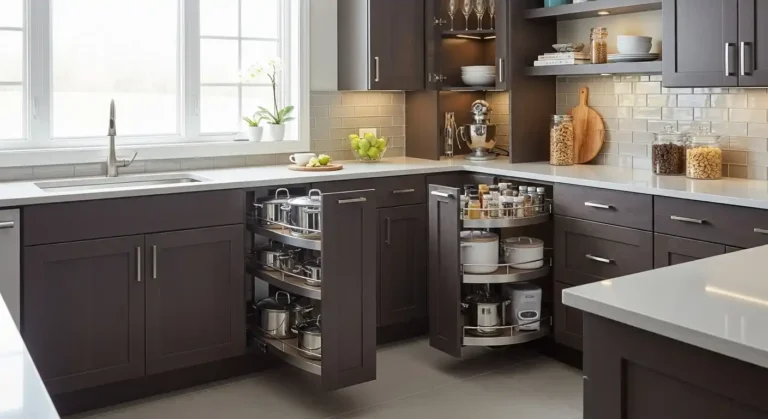
Install Sliding Pantry Shelves
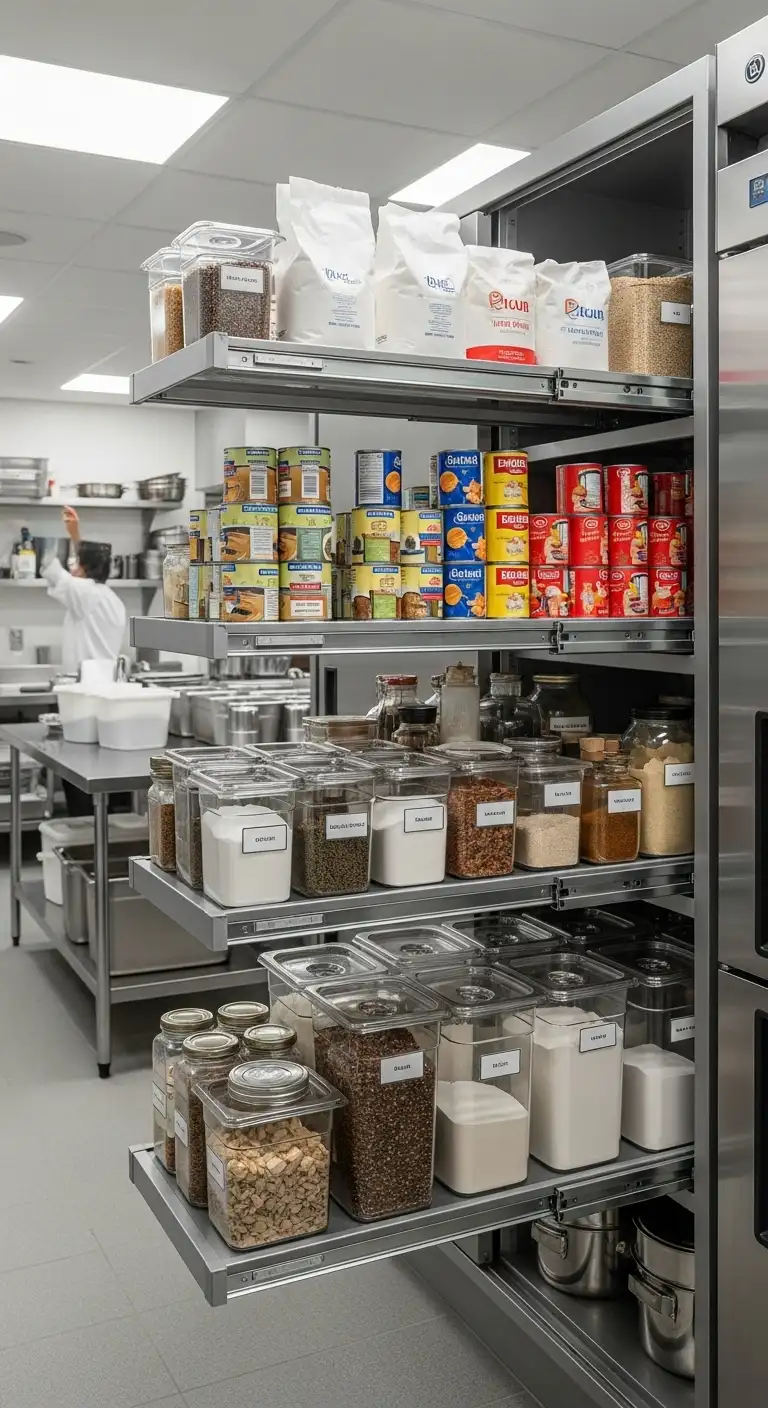
Sliding pantry shelves maximize storage space while keeping ingredients easily accessible.
They reduce the need to reach or bend, allowing staff to grab items efficiently during peak service hours.
Adjustable shelves accommodate varying container sizes, making them versatile for different pantry supplies.
Label each shelf section to maintain organization and streamline workflow across all staff shifts.
This system enhances both accessibility and cleanliness, transforming pantry areas into functional, professional storage zones.
Use Stackable Ingredient Bins
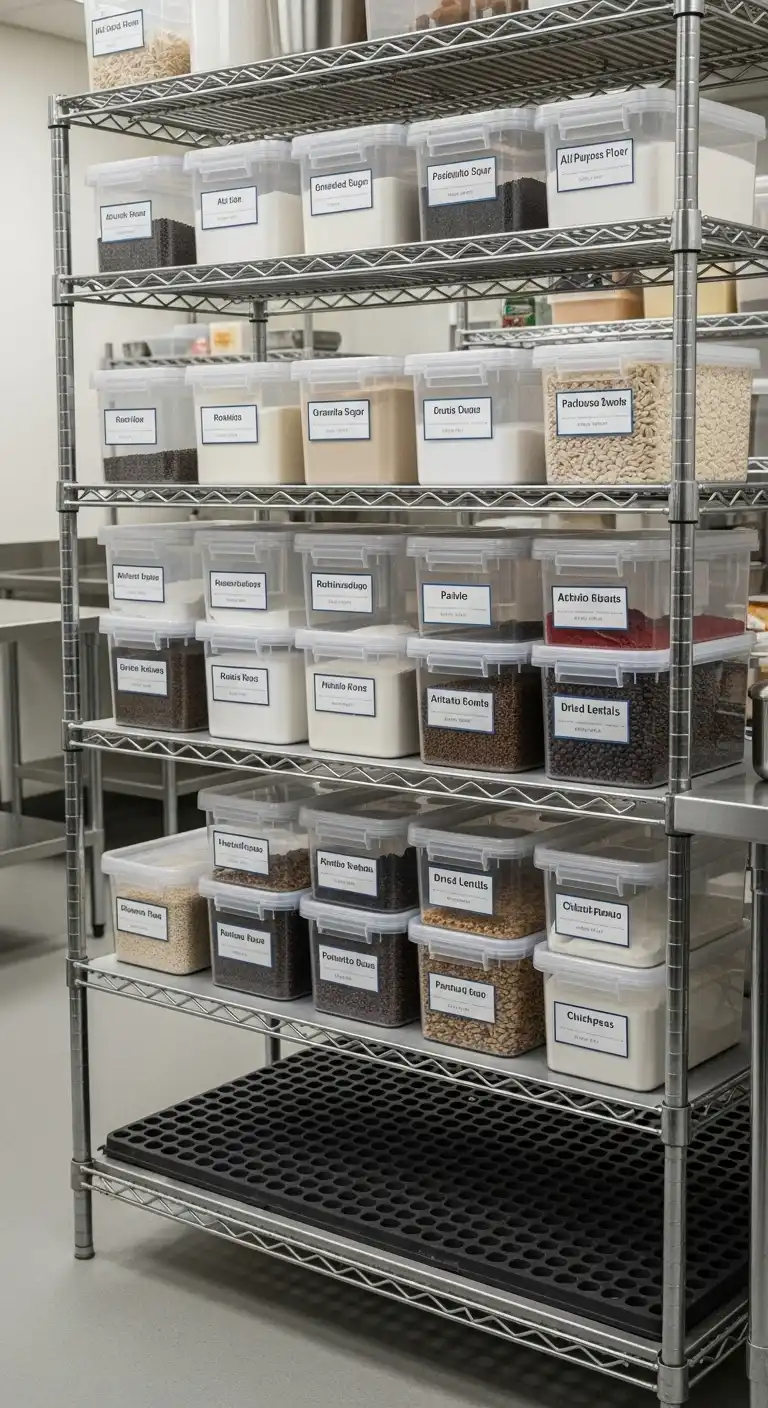
Stackable ingredient bins keep bulk items organized while saving floor and shelf space.
They allow staff to see contents quickly and reduce clutter during busy prep periods.
Bins with lids maintain freshness and hygiene while preventing cross-contamination between ingredients.
Labeling bins ensures accurate inventory management and speeds up prep times during service hours.
Stackable bins create a neat, efficient storage solution for any high-volume commercial kitchen.
Install Overhead Shelving
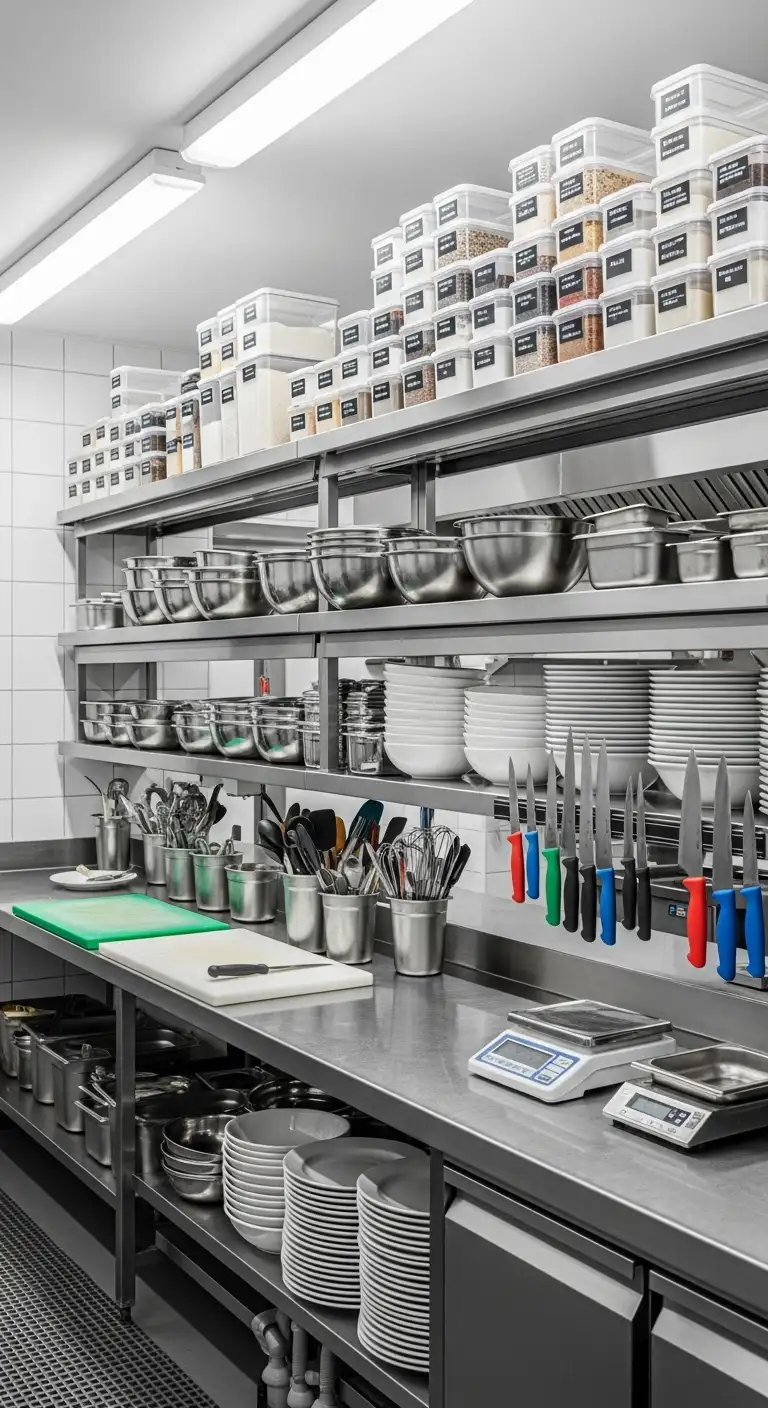
Overhead shelving utilizes unused vertical space for storing trays, cookware, and frequently used items.
It keeps counters clear, improves workflow efficiency, and prevents floor clutter that could cause accidents.
Shelving units should be strong, easy to clean, and positioned for easy staff access without disruption.
Adding labels or color codes ensures items are returned to the correct spot after use.
This practical storage solution enhances organization, safety, and overall kitchen functionality.
Use Prep Station Caddies
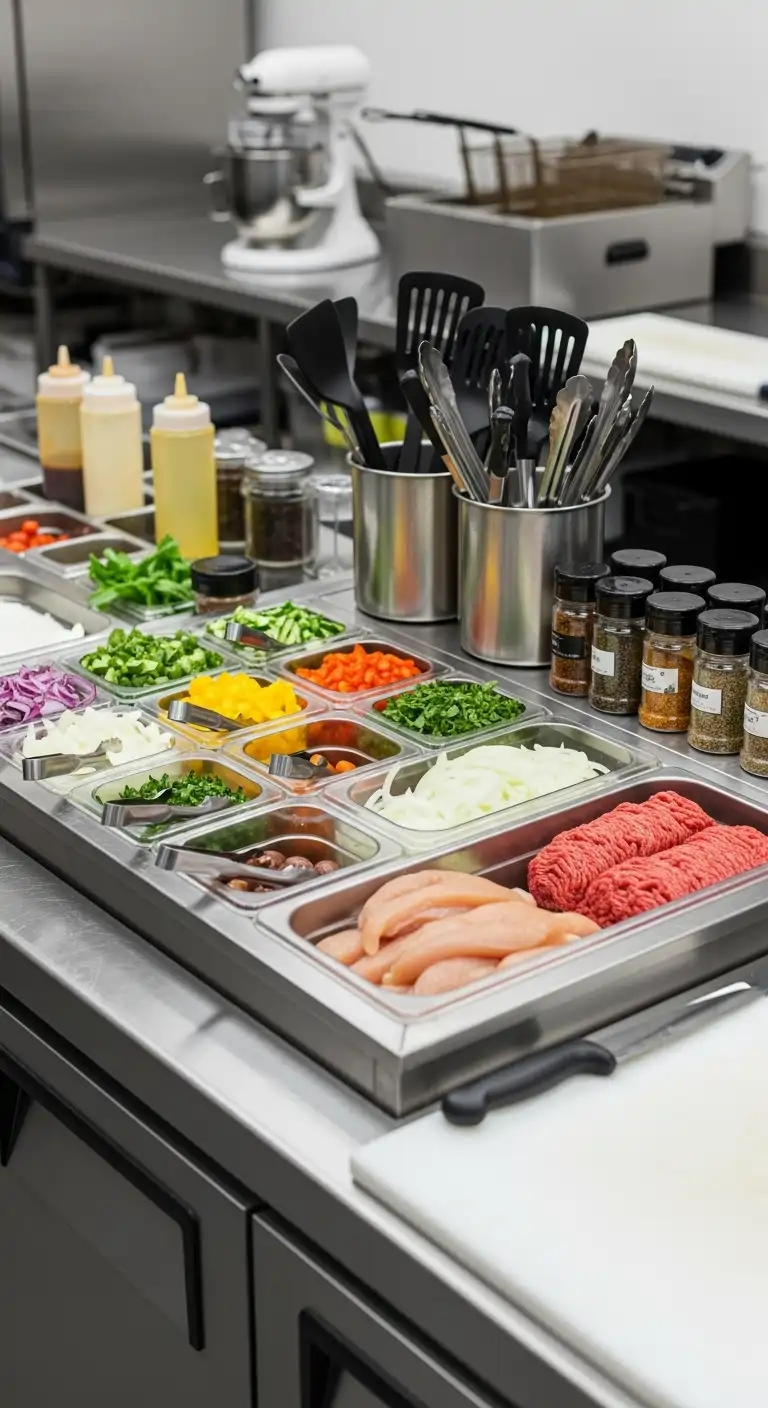
Prep station caddies keep essential utensils, knives, and small tools within easy reach for staff.
They reduce movement around the kitchen, speeding up prep work and maintaining workflow efficiency.
Caddies should be durable, easy to clean, and clearly labeled for specific stations or food types.
This simple organization tool is ideal for busy kitchens where efficiency and hygiene are critical.
Prep station caddies enhance productivity while keeping workspaces tidy and professional.
Label and Rotate Storage Trays
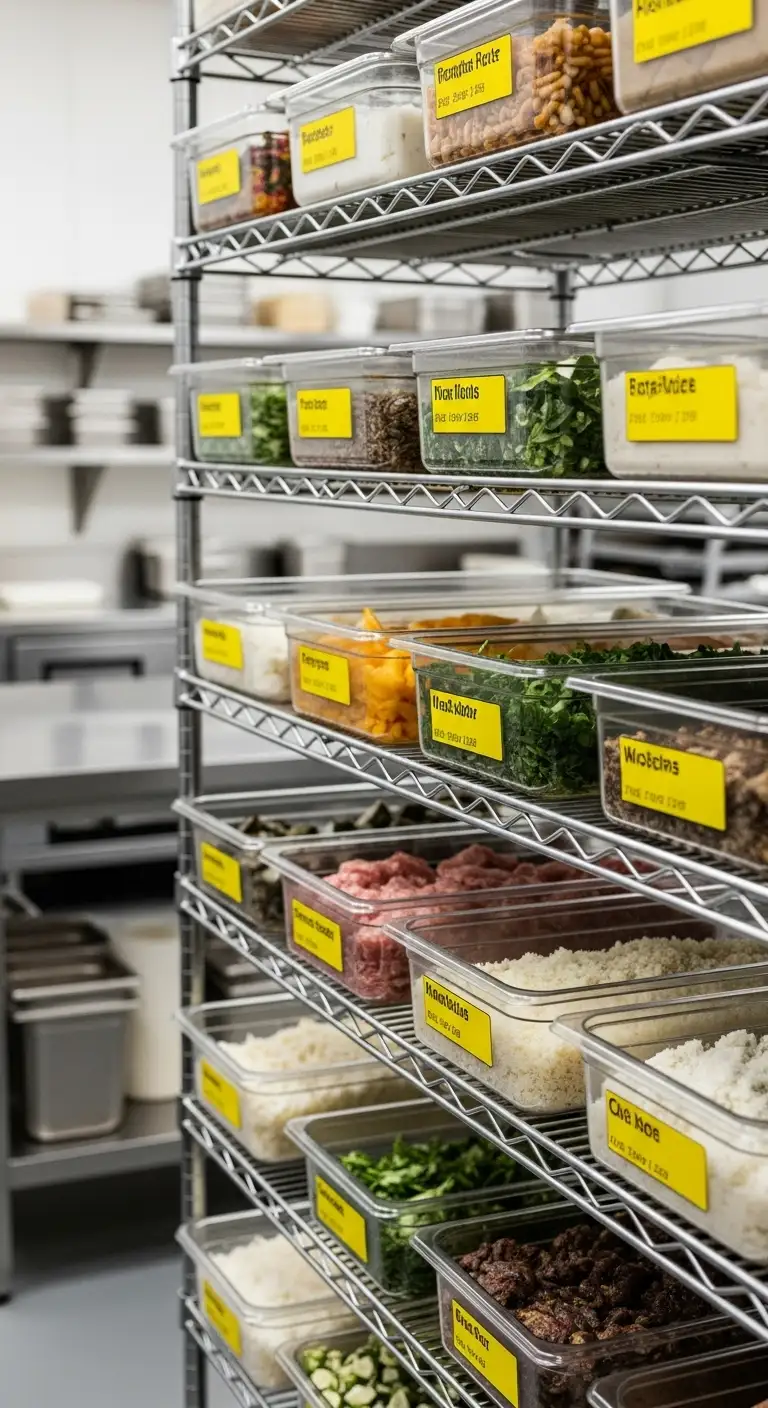
Labeling storage trays ensures ingredients, prepped items, and utensils are quickly identified and correctly placed.
Rotation prevents spoilage and maintains freshness, supporting quality and food safety standards.
Using color-coded trays for different food types adds an extra layer of organization and hygiene.
Tray rotation systems help streamline prep processes and reduce errors during peak service hours.
This small step improves efficiency, safety, and professional kitchen appearance.
Install Wall-Mounted Spice Racks

Wall-mounted spice racks make spices easily accessible while freeing up counter or shelf space.
Organizing spices by type or frequency of use streamlines cooking and reduces prep time.
Clear containers with labels improve visibility, helping staff identify spices at a glance.
These racks maintain a tidy, professional appearance while optimizing storage in small or busy kitchens.
Spice racks are a simple yet impactful solution for efficient commercial kitchen organization.
Use Mobile Ingredient Carts
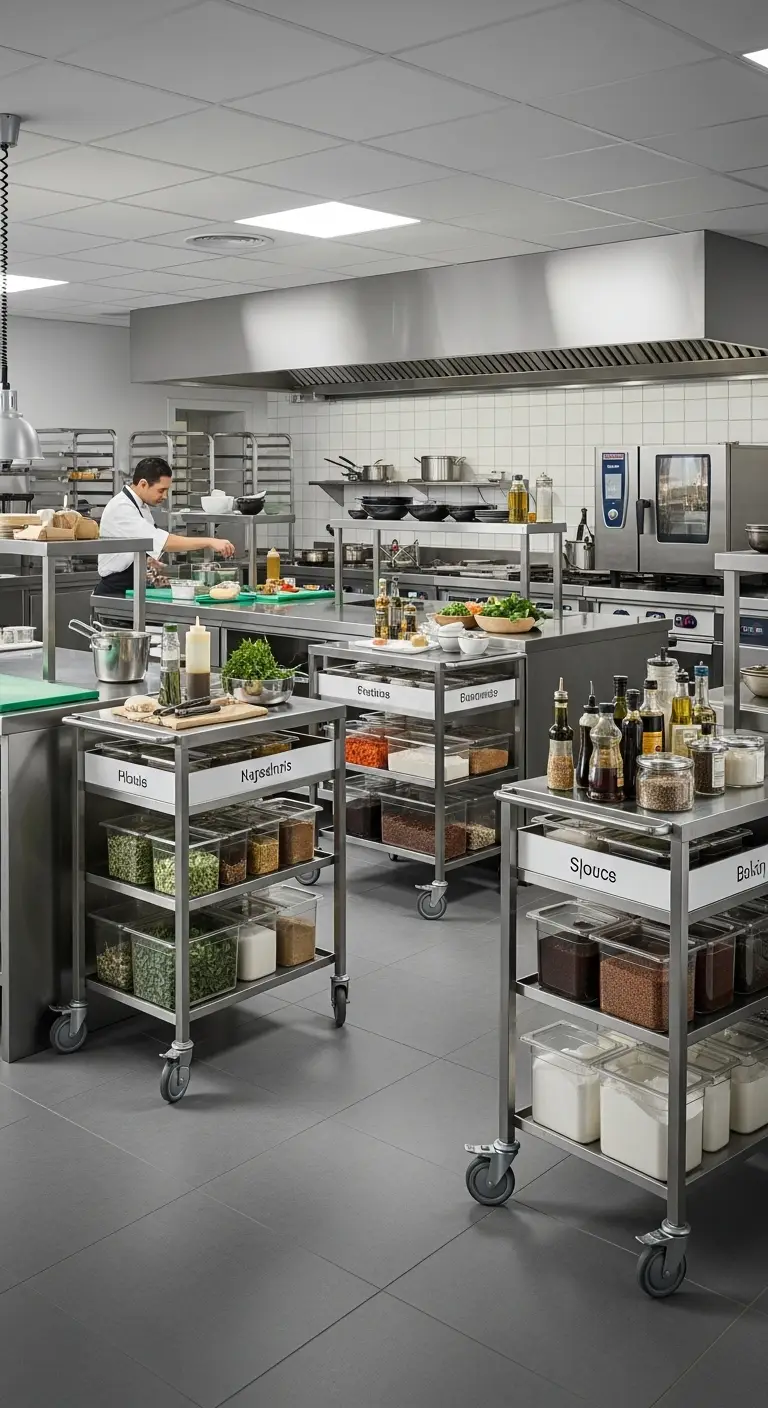
Mobile ingredient carts provide flexibility, allowing ingredients to be moved to prep stations as needed.
Carts reduce trips back and forth across the kitchen, improving efficiency and workflow during busy hours.
They can include shelves, drawers, or containers to store multiple ingredients safely and neatly.
Carts should be durable, easy to clean, and maneuverable for safe use in high-traffic areas.
This practical tool enhances accessibility, speeds up prep, and keeps the kitchen organized and professional.
Implement FIFO System
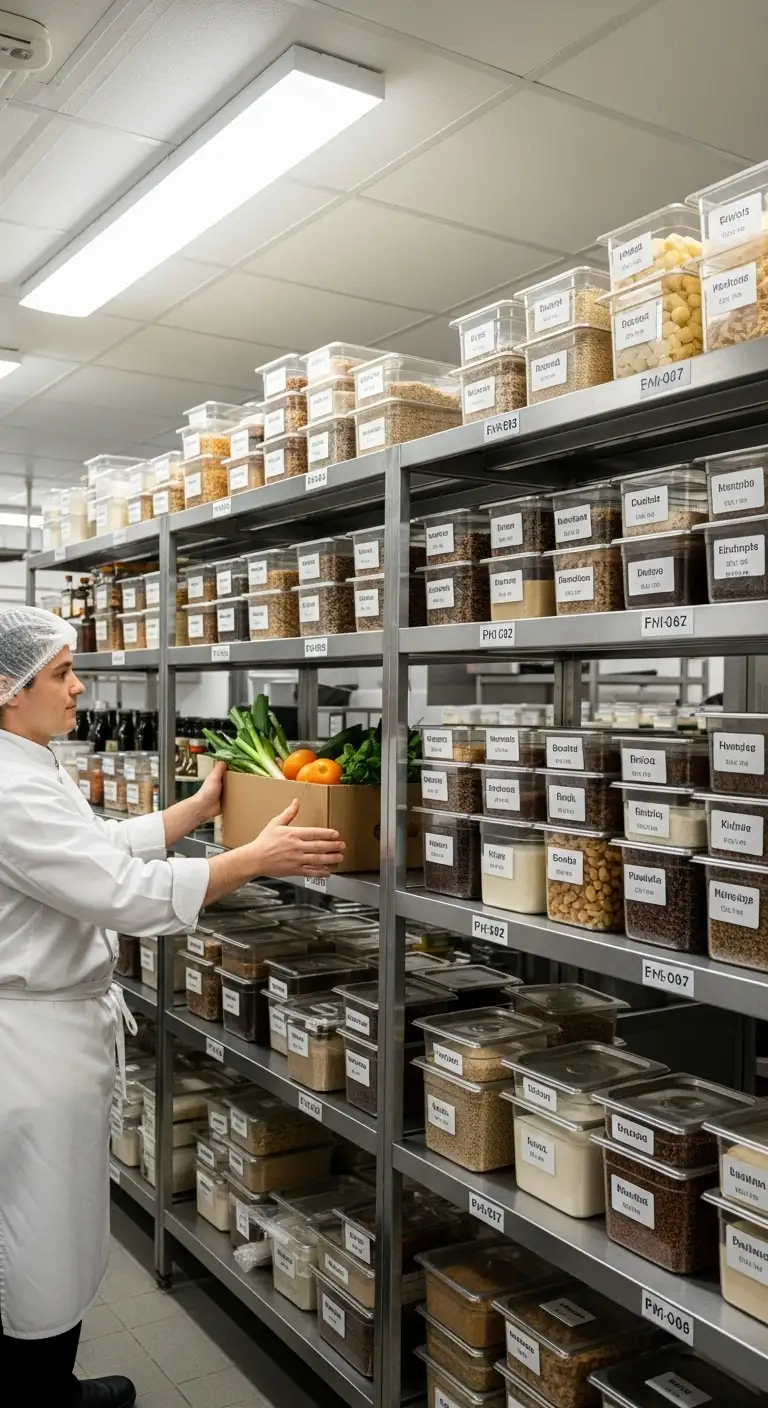
A First-In, First-Out (FIFO) system ensures older inventory is used before newer items, preventing spoilage.
Labeling products with dates and arranging shelves accordingly makes stock rotation effortless and efficient.
FIFO supports cost control, reduces waste, and maintains food safety standards in high-volume kitchens.
Staff can quickly identify which items to use, streamlining prep and cooking processes during busy periods.
Implementing FIFO creates a disciplined, organized kitchen that operates smoothly and safely.
Optimize Cleaning Stations
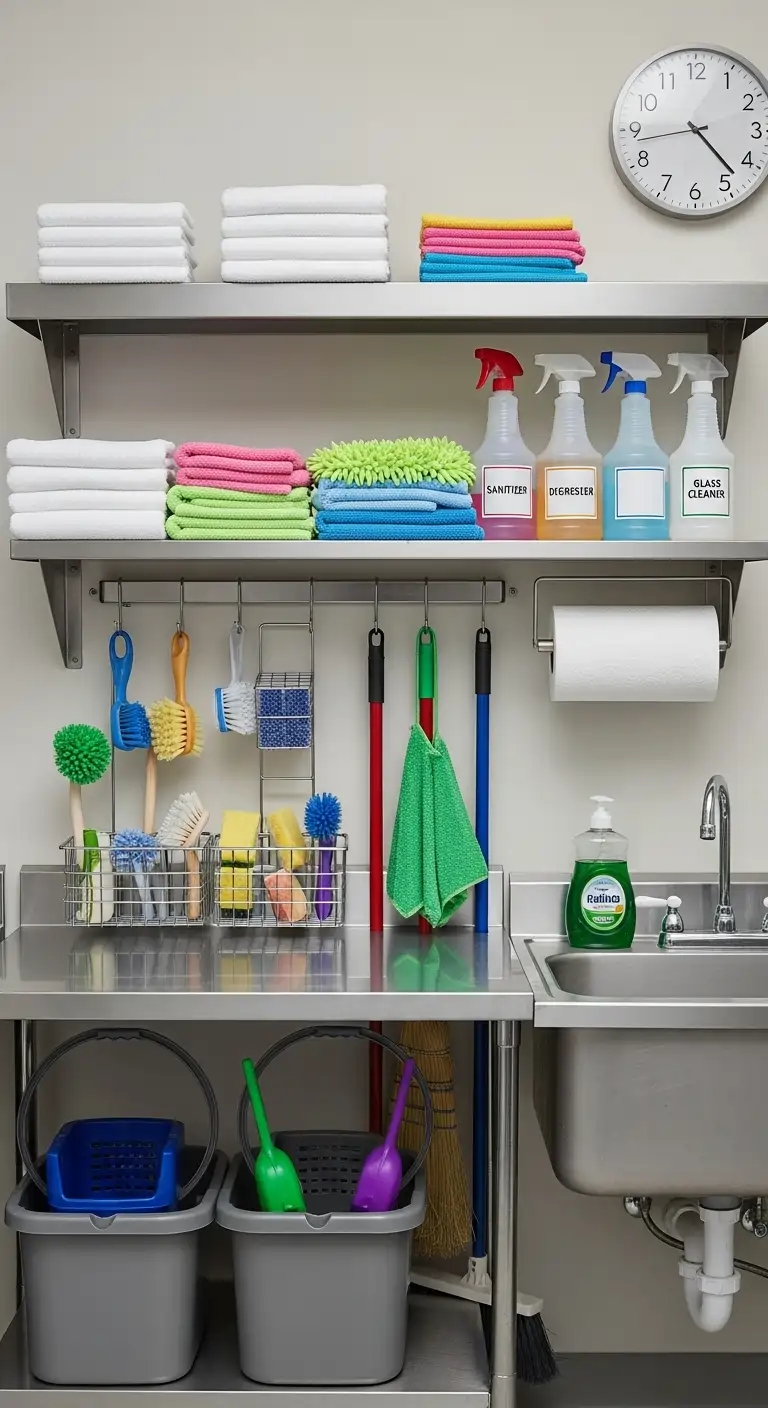
Designate dedicated cleaning stations for utensils, pots, pans, and prep areas to maintain hygiene.
Organize supplies such as detergents, brushes, and cloths for easy accessibility during service hours.
Clearly defined zones prevent cross-contamination and streamline dishwashing processes.
Regular checks and labeling help staff maintain organization and efficiency in the cleaning area.
Optimized cleaning stations support overall kitchen organization, safety, and professionalism.
Additional Tips for Commercial Kitchen Efficiency
Regularly audit kitchen layouts to identify inefficiencies and reorganize storage zones as needed.
Encourage staff to return items to designated spots to maintain a consistent workflow and reduce clutter.
Invest in durable, easy-to-clean storage solutions to support hygiene standards in a high-volume environment.
Training employees on organizational systems ensures everyone follows the same processes, improving efficiency and consistency.
Small improvements in organization can have a major impact on productivity, safety, and overall kitchen morale.
Final Wrap-Up
Effective commercial kitchen organization transforms chaotic spaces into highly functional, efficient, and professional environments.
From adjustable shelving to mobile ingredient carts, every solution improves workflow, safety, and staff satisfaction.
Maintaining a clean, well-organized kitchen ensures consistent food quality, reduces errors, and supports a positive dining experience.
Implementing these 27 strategies creates a disciplined system that adapts to evolving kitchen demands while maximizing efficiency.
Whether you manage a small cafe or a busy restaurant, thoughtful organization is the foundation of a successful commercial kitchen.