
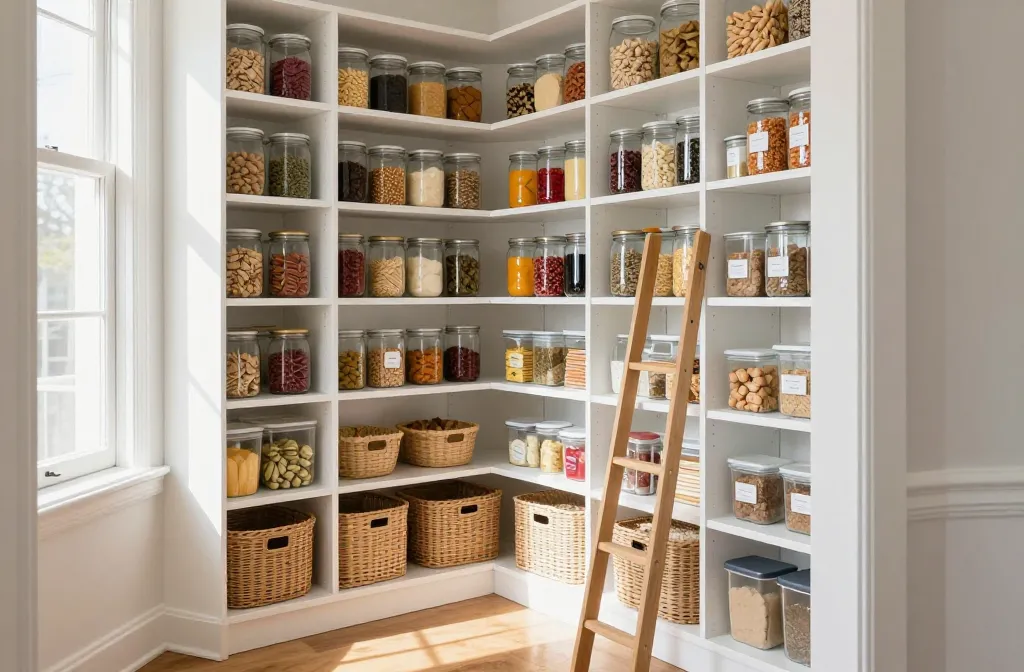
Organizing a walk-in pantry like a pro means grouping similar items together, using clear containers and labels, placing everyday staples at eye level, and storing rarely used items up high or down low.
Keep the space clutter-free by regularly checking expiry dates, using shelf risers and bins to maximize space, and maintaining a simple system everyone in the household can follow easily
Last spring, I finally tackled my walk-in pantry after months of ignoring the mess. Every time I opened that door, something would tumble out.
Canned goods were stacked in random corners, half-empty pasta boxes were hiding behind cereal, and I couldn’t find anything without pulling everything out first.
The funny thing is, I actually had a decent-sized pantry. The problem wasn’t space. It was organization.
Once I figured out a simple system, everything changed. Meal prep became faster, grocery shopping stopped feeling repetitive, and I stopped buying duplicates of things I already owned.
If your walk-in pantry feels more like a storage closet than a functional kitchen space, you’re in the right place.
In this guide, I’ll walk you through easy, practical steps to organize your walk-in pantry and keep it clutter-free for good.
How to Organize a Walk-In Pantry
A walk-in pantry is one of the best features a kitchen can have — but only when it’s organized. A cluttered pantry wastes food, wastes money, and wastes your time. This guide walks you through every step to get yours in perfect shape.
Step 1: Empty Everything Out First
Before you organize anything, take every single item out of your pantry. Yes, everything. Pile it on your kitchen counter or table. This gives you a clear view of what you actually have — and it’s usually a surprise.
- Pull out all food, containers, and random items stored in there.
- Check expiry dates and throw away anything expired or stale.
- Wipe down every shelf, corner, and the floor while it’s empty.
- Note any broken shelf brackets or lighting that needs fixing.
Quick tip: Group items into three piles as you take them out — Keep, Donate, and Toss. This makes the next steps much faster.
Step 2: Sort Items Into Categories
Once everything is out, sort it by category. This is the foundation of a good pantry system. Common pantry categories include:
- Grains and pasta (rice, oats, noodles, bread)
- Canned and jarred goods (tomatoes, beans, sauces, pickles)
- Baking supplies (flour, sugar, baking powder, cocoa)
- Snacks and crackers (chips, biscuits, nuts, dried fruit)
- Spices, herbs, and condiments
- Drinks (tea, coffee, juices, powders)
- Breakfast items (cereals, granola bars)
- Cooking oils and vinegars
- Kids’ items or lunchbox snacks (if relevant)
Step 3: Assign Zones by Shelf Height
The golden rule of pantry organization is simple — put things where they make sense for how often you use them. Use the shelf zones below as your guide.
Top Shelves — Rarely Used Items
Store bulk backups, special occasion items, and appliances you use only once or twice a year. Since these are hardest to reach, they should hold the things you need the least.
Eye Level — Daily Essentials
This is your prime real estate. Place the things you grab every single day here — cereals, pasta, snacks, coffee, and tea. Easy to see, easy to reach.
Lower Shelves — Heavy Items
Canned goods, jars, oils, vinegars, and heavy bags of flour or sugar belong here. Keeping heavy items low makes your pantry safer and easier to manage.
Floor Area — Bulky Storage
Use the floor for bulk buys, large water bottles, pet food, or cleaning supplies. Baskets and bins work well here to keep things from spreading out.
Kid-friendly tip: Put children’s snacks and lunchbox items at a lower, easy-to-reach shelf so they can help themselves without making a mess above.
Step 4: Choose the Right Storage Containers
Good containers transform a messy pantry into a clean, functional space. Here is a simple breakdown of what works best for different items.
| Item Type | Best Container | Why It Works |
|---|---|---|
| Flour, sugar, oats, rice | Airtight square or rectangular canisters | Stays fresh longer, stacks neatly, saves space |
| Pasta, grains, cereals | Clear glass or plastic jars | Easy to see quantity at a glance |
| Snacks, crackers, nuts | Small bins or open-top baskets | Easy to grab and go |
| Spices and small bottles | Tiered spice rack or lazy Susan | Stops them getting lost at the back |
| Canned goods | Can organizer or stepped shelf riser | Keeps cans visible and rotated |
| Bread and soft bakery items | Bread box or fabric-lined basket | Keeps air circulating, stays fresh |
| Kids’ snacks and packets | Small labeled bins | Fast to find, easy for kids to manage |
Budget tip: You do not need to buy matching containers all at once. Start with a few key items like flour, sugar, and pasta — the most common staples — then build your collection gradually.
Step 5: Label Everything Clearly
Labels are what make a pantry system actually last. Without them, containers become a guessing game and things end up in the wrong place.
- Use a label maker or simple chalkboard labels for a clean look.
- Label the container itself, not the lid — lids move around.
- Add a “restock date” or “best by” note on bulk dry goods.
- Label each shelf zone (Baking, Snacks, Breakfast, etc.) to help the whole family keep it tidy.
- For families with young children, add picture labels alongside the text ones.
Step 6: Follow the FIFO Rule for Food
FIFO stands for First In, First Out. It simply means: when you buy new food, put it behind the older stock. Always use the older items first. This one habit cuts food waste dramatically.
How to apply it: When restocking canned goods or dry goods, push the existing stock forward and place the new items at the back. Think of it like a supermarket shelf — the oldest items are always at the front ready to be used first.
Step 7: Use These Space-Saving Tricks
A few smart additions can double your usable pantry space without any major changes.
| Problem | Solution | Priority |
|---|---|---|
| Wasted vertical space between shelves | Add shelf risers or a second tier shelf insert | Must Have |
| Hard-to-reach corner of a shelf | Place a lazy Susan turntable there | Must Have |
| Spice bottles falling over or getting lost | Use a magnetic spice rack on the wall | Nice to Have |
| Wasted door space | Mount an over-door organizer for small items | Must Have |
| Bags and packets falling everywhere | Use a chip clip rail or hooks on a wall strip | Nice to Have |
| No clear visibility of what is in bins | Use clear containers with open tops | Must Have |
Step 8: Keep It Organized With a Simple Routine
Getting organized is the easy part. Staying organized is where most people struggle. The good news is you only need a small routine to keep things in order.
Weekly
After each grocery run, restock and rotate items. Return anything misplaced to its correct zone. This takes about five minutes and prevents small messes from building up.
Monthly
Do a quick 10-minute check. Look for items nearing their expiry date, refill containers that are running low, and wipe down shelves.
Every 3 to 6 Months
Do a full tidy. Empty one section at a time and reassess what is working and what is not. This is also a good time to buy any new containers or organizers you feel are missing.
Common Pantry Organization Mistakes to Avoid
Even with the best intentions, a few common mistakes can undo all your hard work. Watch out for these:
- Storing items you never use — this just steals space from things you do need.
- Using opaque containers for everything — you cannot see what is inside and things get forgotten.
- Grouping by brand or size instead of food type — it looks tidy but is harder to use in practice.
- Cramming too much into one zone — overpacking defeats the purpose of having zones at all.
- Skipping labels because you will remember — you will not, and neither will anyone else in the house.
- Buying loads of containers before sorting — first declutter, then buy exactly what you need.
Final Thoughts
A well-organized walk-in pantry saves you time every single day. It means no more forgotten food at the back of the shelf, no mystery containers, and no stress at 6pm when you are trying to figure out what is for dinner.
Take it one step at a time. Even spending just one afternoon on this will make a noticeable difference in how your kitchen feels to use. Start with the empty-and-sort step, get your zones in place, and the rest will follow naturally.