
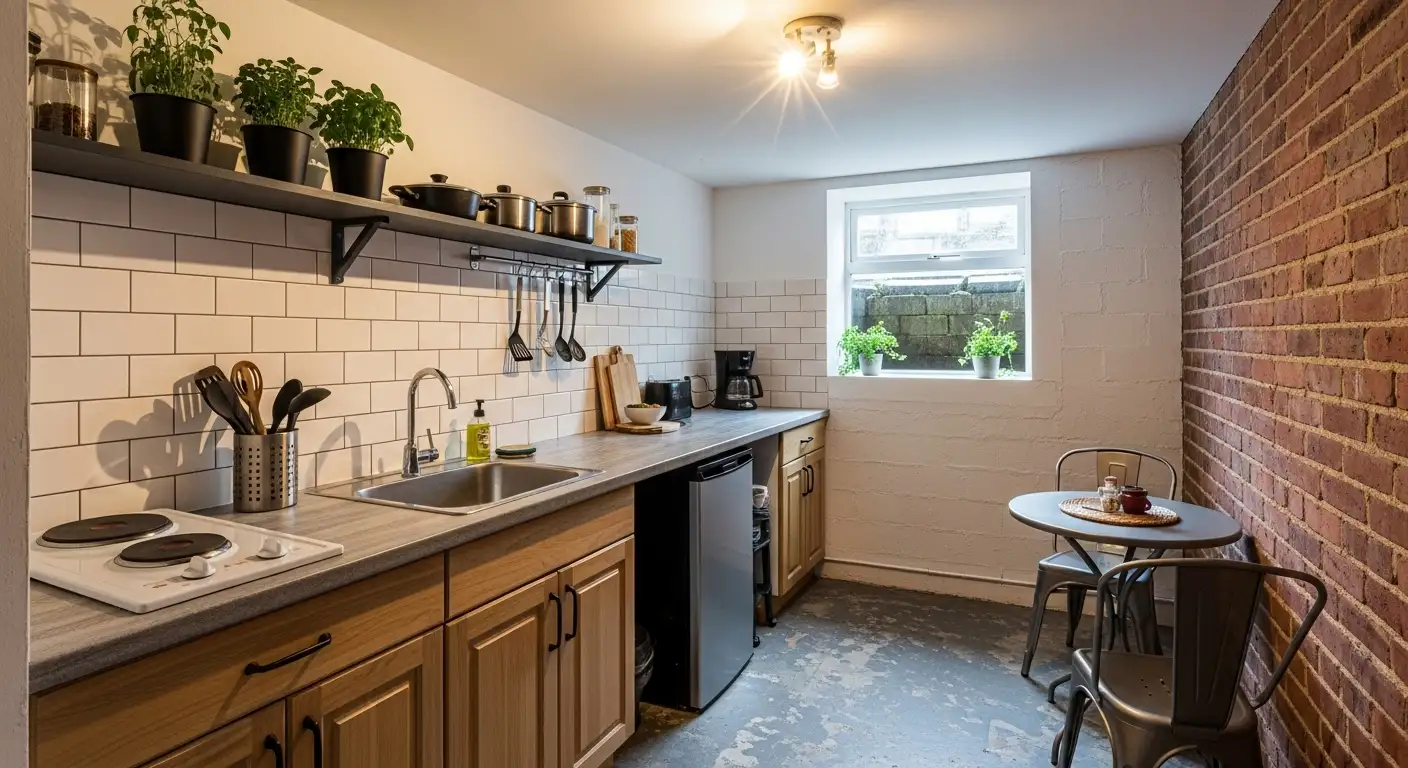
Don’t let your basement go to waste! With these curated kitchenette bar ideas, you can turn any corner into a welcoming and efficient mini kitchen space.
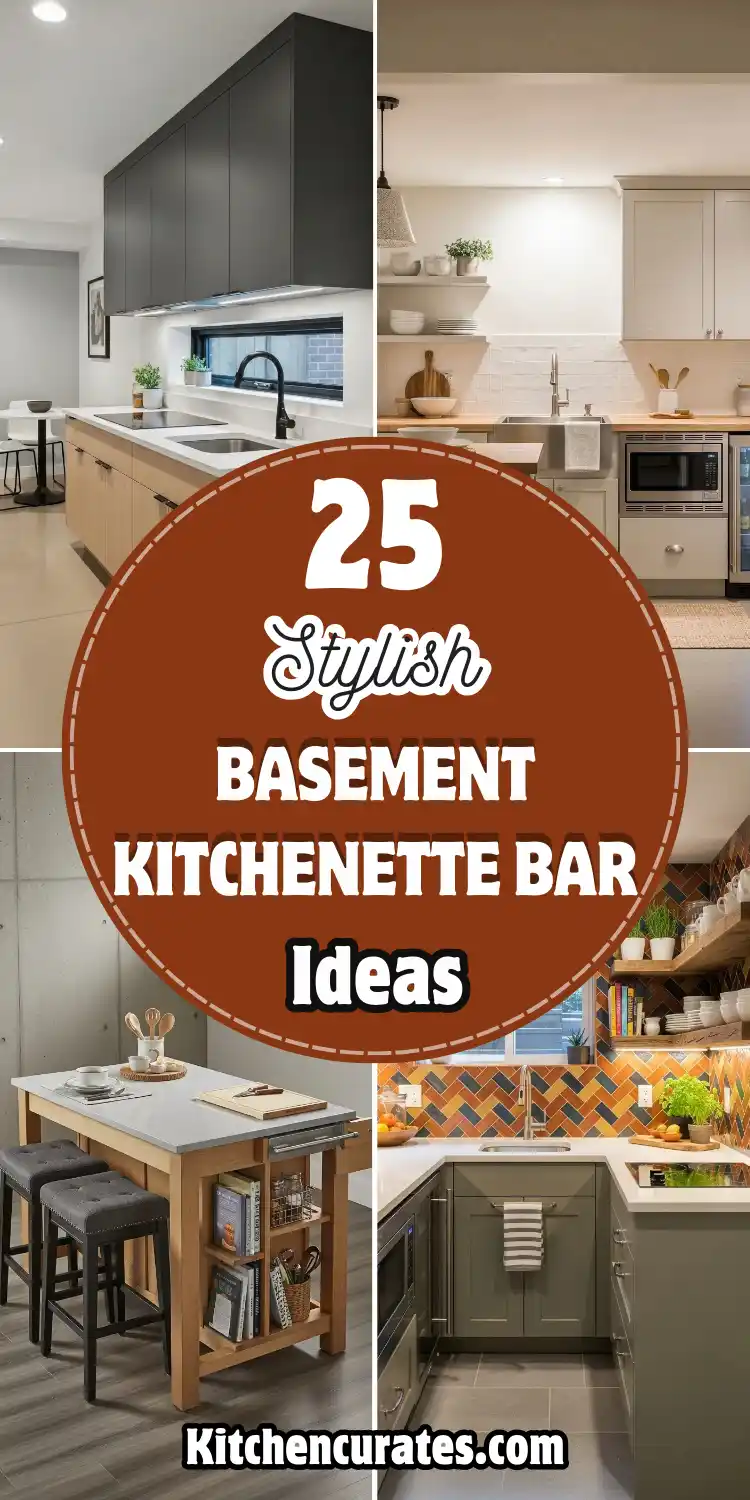
When we first moved in, our basement was purely functional: storage, laundry, and a dark hallway.
It had potential, but it didn’t feel like a space anyone wanted to spend time in.
That’s when I thought about creating a basement kitchenette bar—a small, practical, yet stylish area to enjoy drinks, snacks, or casual gatherings.
I explored layouts, compact appliances, and creative storage solutions to make it both functional and visually appealing.
Even tiny adjustments, like a floating shelf or smart counter design, made the space feel intentional and welcoming.
Now, our basement isn’t just a storage zone—it’s a versatile, cozy extension of our home.
In this article, I’m sharing 25 basement kitchenette bar ideas to help you create a space that’s practical, beautiful, and uniquely yours.
Contents
- Maximizing Functionality in a Basement Kitchenette Bar
- Smart Small-Space Design That Enhances Your Basement
- 25 Basement Kitchenette Bar Ideas
- Sleek Minimalist Layout With Clean Lines
- Modern Dark-Toned Cabinets for a Cozy Urban Look
- Light Wood Finishes for an Airy and Natural Vibe
- Open Shelving That Adds Character and Ease
- Compact L-Shaped Layout for Practical Movement
- Soft Neutral Palette for an Elevated Calm
- Statement Backsplash That Defines the Space
- Floating Cabinets for an Open and Airy Feel
- Compact Island for Multi-Purpose Convenience
- Vertical Storage Solutions That Boost Efficiency
- LED Under-Cabinet Lighting for Subtle Glow
- Mixed Material Countertops for Modern Contrast
- Small Seating Zone for Casual Comfort
- Brushed Metal Accents for Subtle Sophistication
- Bright White Finishes for a Crisp Look
- Extended Counter Runs for Easy Preparation
- Built-In Microwave Nook for Efficiency
- Soft Matte Finishes for a Contemporary Touch
- Hidden Storage Zones for an Organized Look
- Sleek Hardware-Free Cabinets for Modern Simplicity
- Textured Wall Panels That Add Warmth
- Integrated Open Display Niche for Style
- Compact Pantry Addition for Better Organization
- Light Reflective Surfaces to Brighten the Basement
- Cozy Corner Layout for Small Basement Spaces
- Maximizing Brightness and Airiness in Your Basement Kitchenette
- Personalizing Your Basement Kitchenette for Style and Function
- Final Wrap-Up
Maximizing Functionality in a Basement Kitchenette Bar
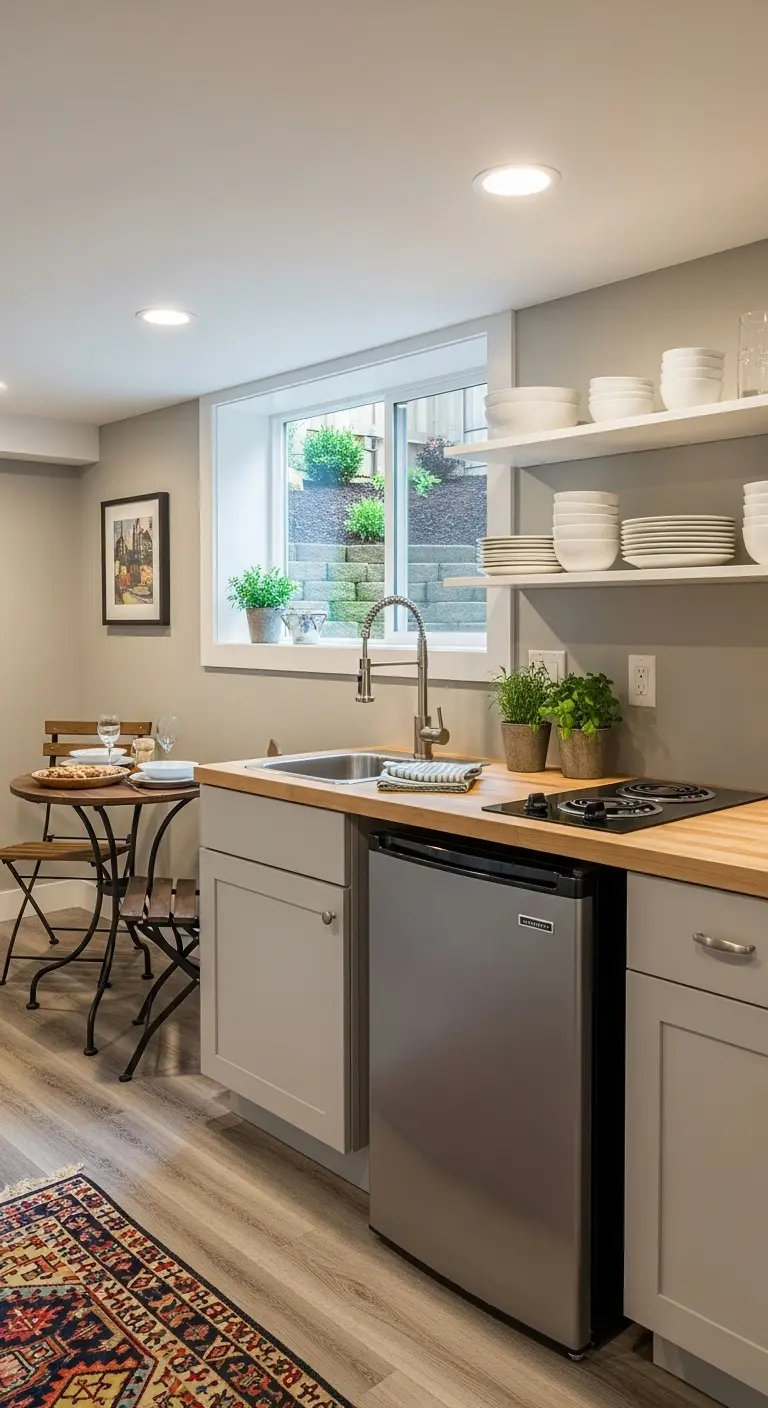
A functional basement kitchenette bar starts with smart planning that balances cabinet placement, countertop accessibility, and clear traffic flow throughout the space.
Including compact appliances and multi-use surfaces ensures everyday tasks are efficient while preserving a sense of openness.
Layered lighting, strategically placed shelving, and carefully selected hardware further enhance both usability and aesthetic appeal.
Investing in storage solutions like pull-out drawers or vertical shelving optimizes every inch, keeping the space tidy and practical.
When thoughtfully arranged, a basement kitchenette bar can feel as welcoming and effective as a full-scale kitchen.
Smart Small-Space Design That Enhances Your Basement
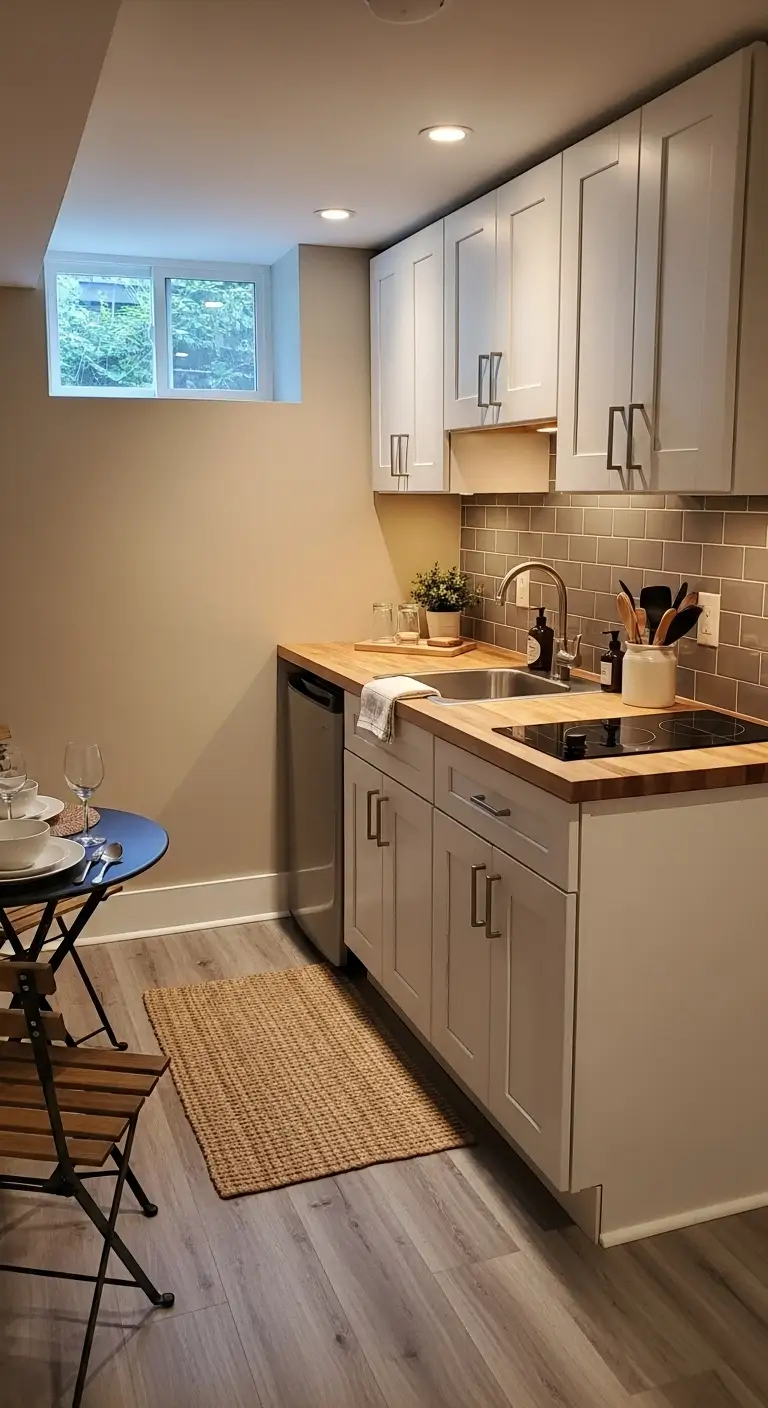
Small-space design in basements requires creative approaches to lighting, wall finishes, and visual depth to prevent cramped or shadowed appearances.
Using reflective surfaces, light tones, and strategic placement of furniture can visually expand the room while maintaining functionality.
Incorporating open shelving or floating cabinets adds an airy feel without compromising storage capacity or workspace efficiency.
By carefully layering textures, colors, and finishes, you can create a basement kitchenette bar that feels bright, comfortable, and stylish.
These design choices ensure the space is not only practical but also emotionally inviting for family and friends.
25 Basement Kitchenette Bar Ideas
Sleek Minimalist Layout With Clean Lines
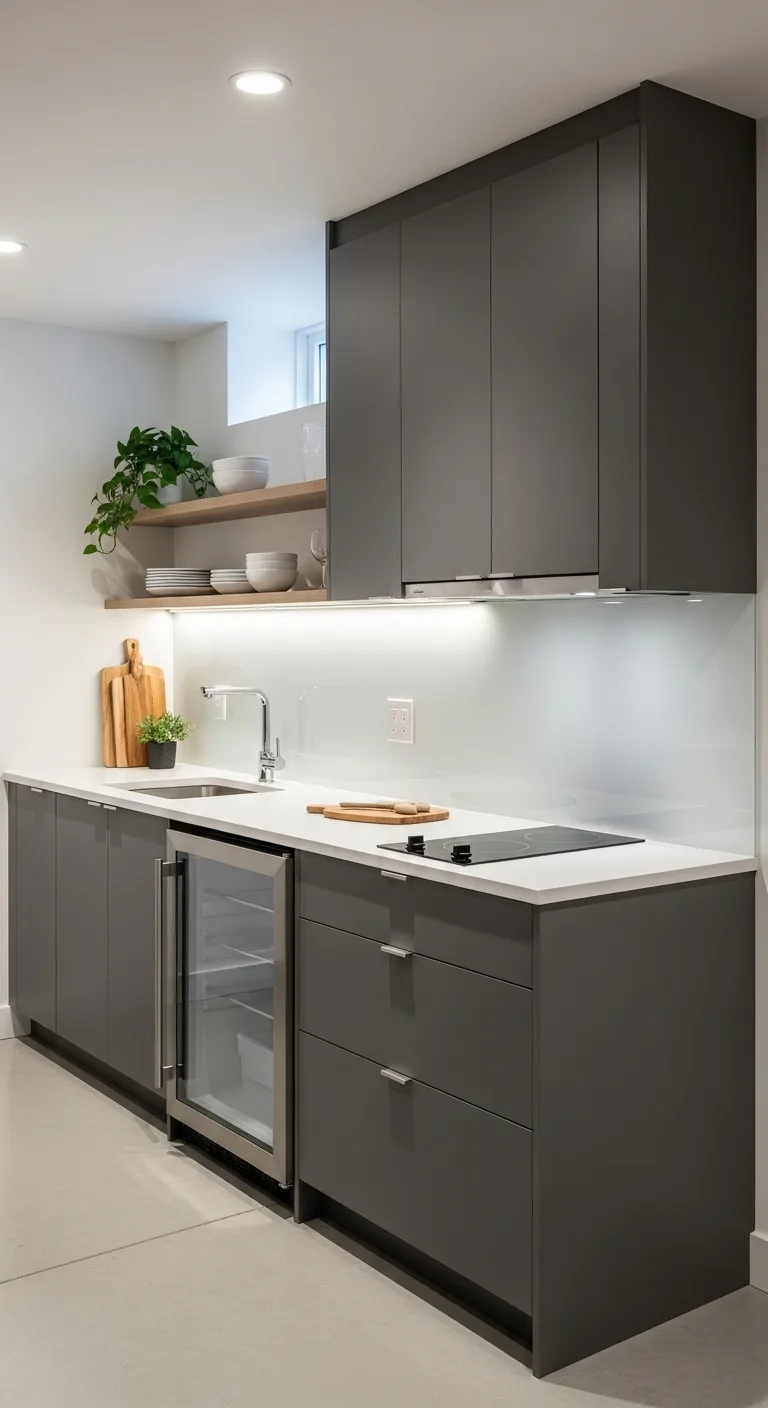
A minimalist basement kitchenette bar creates a serene and organized atmosphere by focusing on uncluttered surfaces, simple geometric cabinetry, and smooth finishes.
Keeping countertops free from unnecessary items emphasizes open space, allowing for both aesthetic appeal and practical usability.
Neutral colors like soft greys, creams, and muted whites help visually expand the basement while enhancing natural or artificial lighting.
Streamlined hardware and integrated appliances maintain a cohesive look, eliminating distractions and promoting a sense of calm efficiency.
Adding subtle lighting under cabinets or along shelving emphasizes clean lines while providing functional illumination for meal preparation or casual gatherings.
This approach works especially well in smaller basements, making the area feel spacious, airy, and welcoming without feeling cold or sterile.
A minimalist design simplifies daily routines and enhances the visual flow between the kitchenette and surrounding living space, encouraging frequent use and enjoyment.
Modern Dark-Toned Cabinets for a Cozy Urban Look

Dark-toned cabinetry in a basement kitchenette bar adds sophistication and a grounded feel while creating a strong visual focal point within the space.
Pairing deep espresso, charcoal, or navy cabinets with subtle metallic fixtures balances boldness with elegance, making the basement feel stylish yet comfortable.
Under-cabinet lighting brightens the workspace, preventing shadows and ensuring practical functionality for cooking, snacking, or casual hosting.
Dark finishes work well with neutral countertops or light wood accents, creating contrast that highlights design details without overwhelming the eye.
Open shelving or glass-fronted cabinets can lighten the aesthetic, adding depth and dimension while maintaining a modern, cohesive look throughout the basement.
This design encourages homeowners to embrace sophistication in small spaces while maximizing comfort, usability, and visual impact simultaneously.
It also pairs seamlessly with contemporary décor, soft furnishings, and accent lighting, making the basement inviting for family and guests alike.
Light Wood Finishes for an Airy and Natural Vibe

Using light wood finishes in cabinetry or countertops brightens a basement kitchenette bar, creating a warm and welcoming ambiance.
The natural grain introduces texture that adds subtle visual interest without overpowering other design elements in the room.
Pairing light wood with neutral walls or soft-colored backsplashes emphasizes spaciousness and allows natural and artificial light to reflect freely.
Open shelving can showcase decorative items, plants, or kitchen essentials, adding personality while maintaining an organized look.
Light wood tones complement minimalist furniture and simple décor, making the basement feel cozy, stylish, and connected to natural elements.
This approach works well in smaller basements where darker colors may feel heavy or confining, providing a refreshing, inviting environment for daily use.
Adding soft ambient lighting and small decorative accents reinforces the calm, natural vibe, making the kitchenette bar a central, appealing feature of the basement.
Open Shelving That Adds Character and Ease
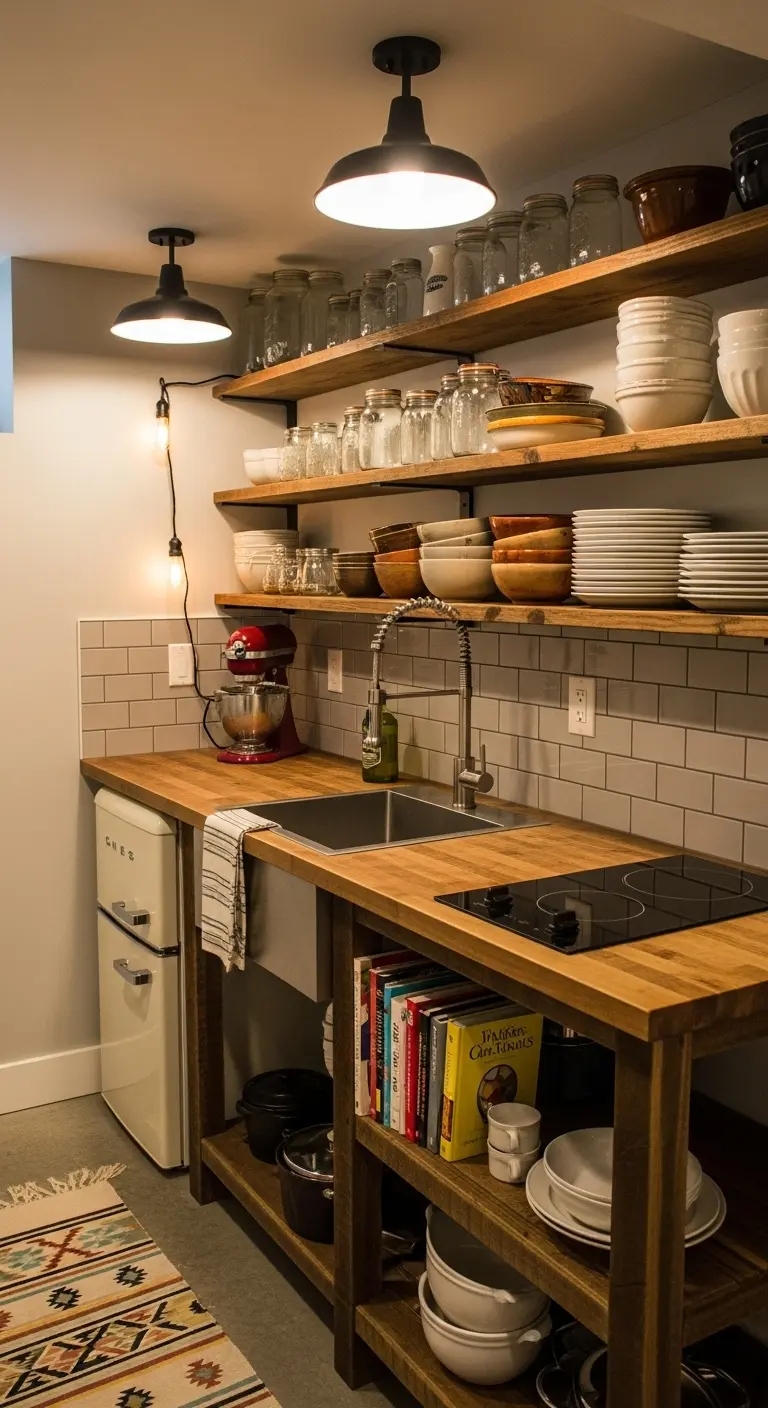
Open shelving in a basement kitchenette bar offers easy access to daily essentials while promoting a casual, welcoming aesthetic.
Displaying carefully curated dishes, glassware, or decorative pieces transforms the space into both a functional kitchen area and a visually interesting focal point.
Shelving can be combined with cabinets below to balance practicality with aesthetic appeal, keeping clutter out of sight while retaining easy accessibility.
Materials like wood, metal, or glass add texture and personality, creating contrast with cabinetry or wall finishes.
Open shelving encourages creativity in styling while allowing homeowners to change arrangements seasonally or according to personal taste.
This design element makes the basement feel larger and more open, providing a sense of airy comfort despite limited square footage.
By pairing open shelves with proper lighting, the basement kitchenette bar becomes a functional, visually engaging, and inviting space for daily activities.
Compact L-Shaped Layout for Practical Movement
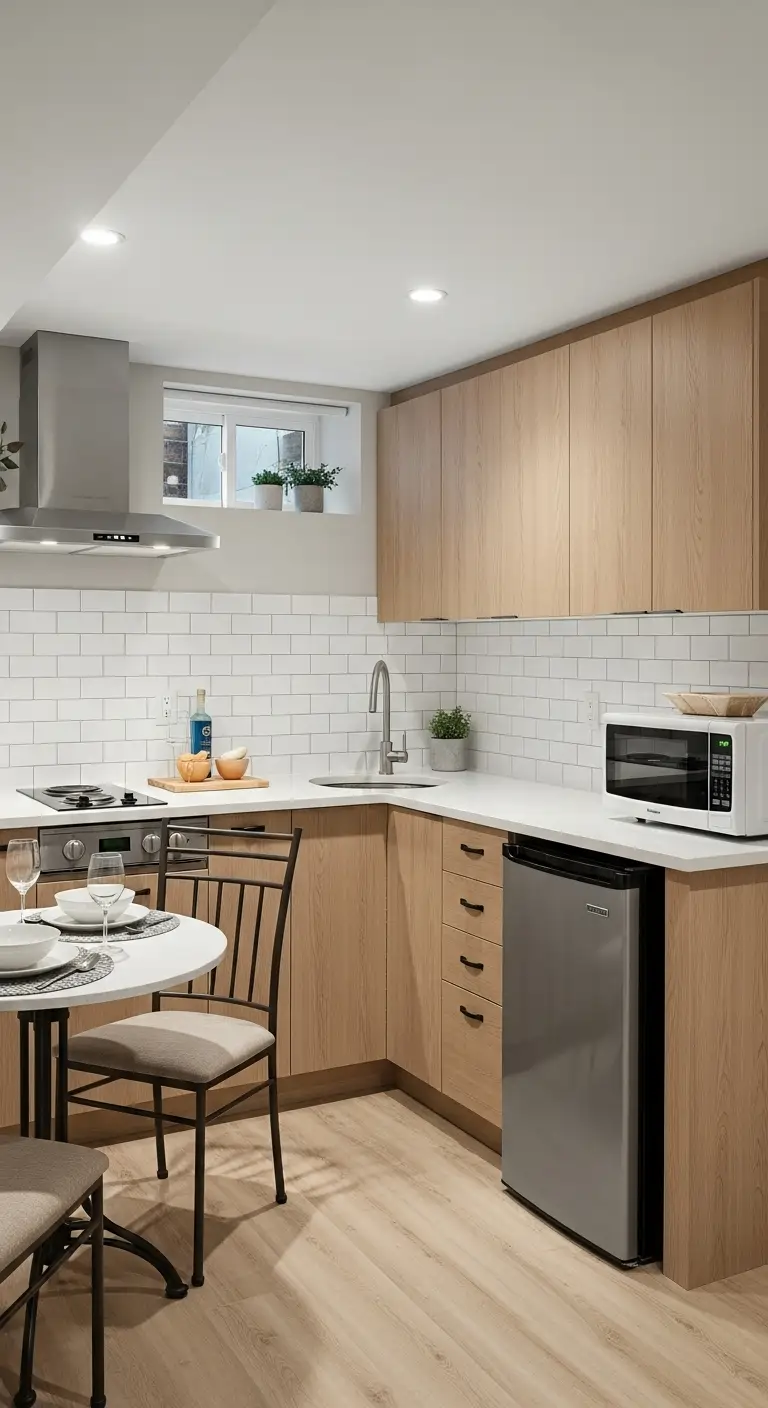
An L-shaped basement kitchenette bar efficiently uses corner space, maximizing storage and counter area while keeping pathways open for movement.
This layout keeps appliances and prep zones within easy reach, allowing for smooth workflow and convenient daily use.
Countertops on two adjoining walls provide ample surface area for small appliances, meal prep, or casual serving, making the space versatile and functional.
Upper and lower cabinets offer organized storage without encroaching on the overall floor plan, preserving open space for social interaction or additional seating.
The L-shaped design can easily accommodate lighting, shelving, and decorative accents while maintaining a cohesive, balanced look in the basement.
It is particularly suitable for narrow or mid-sized basements where space optimization is crucial, ensuring the kitchenette feels spacious and uncluttered.
This approach merges efficiency, visual appeal, and practical usability, supporting both everyday routines and occasional gatherings in the basement.
Soft Neutral Palette for an Elevated Calm
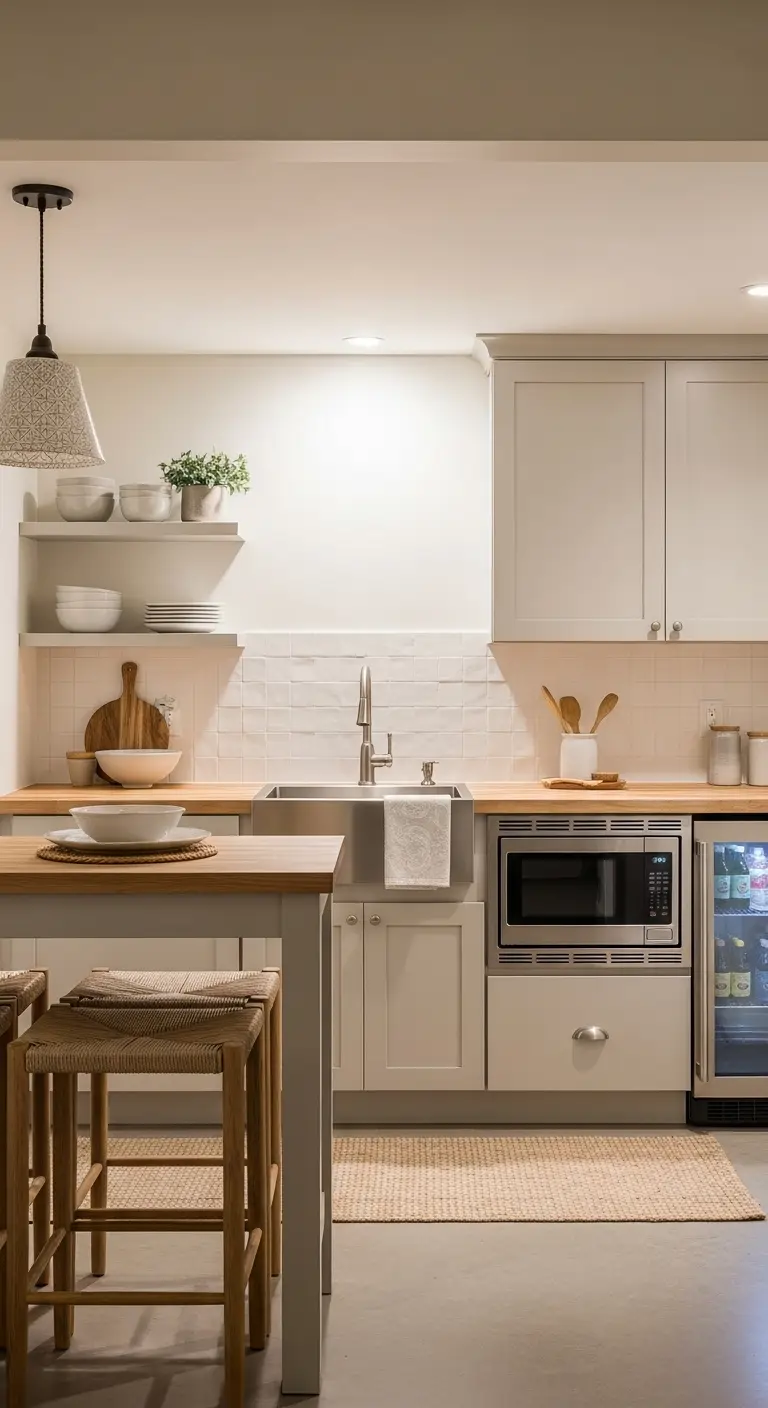
A soft neutral palette in a basement kitchenette bar creates a serene and balanced environment that feels bright, warm, and inviting.
Shades like cream, beige, taupe, or soft grey enhance light reflection and contribute to a sense of spaciousness, especially in basements with limited natural light.
Pairing neutral walls with complementary cabinetry, countertops, and backsplashes reinforces cohesion while providing subtle visual depth and interest.
Accents like metallic handles, soft wood textures, or gentle lighting further elevate the aesthetic without introducing clutter or contrast that feels harsh.
Neutrals provide a flexible backdrop that works with varying décor styles, furniture, and seasonal changes in accessories, allowing easy updates over time.
This design emphasizes comfort, clarity, and elegance, creating a basement kitchenette bar that feels simultaneously functional and emotionally appealing for family use.
Soft neutrals help unify the basement with surrounding rooms, fostering a seamless, welcoming flow throughout the home’s lower level.
Statement Backsplash That Defines the Space
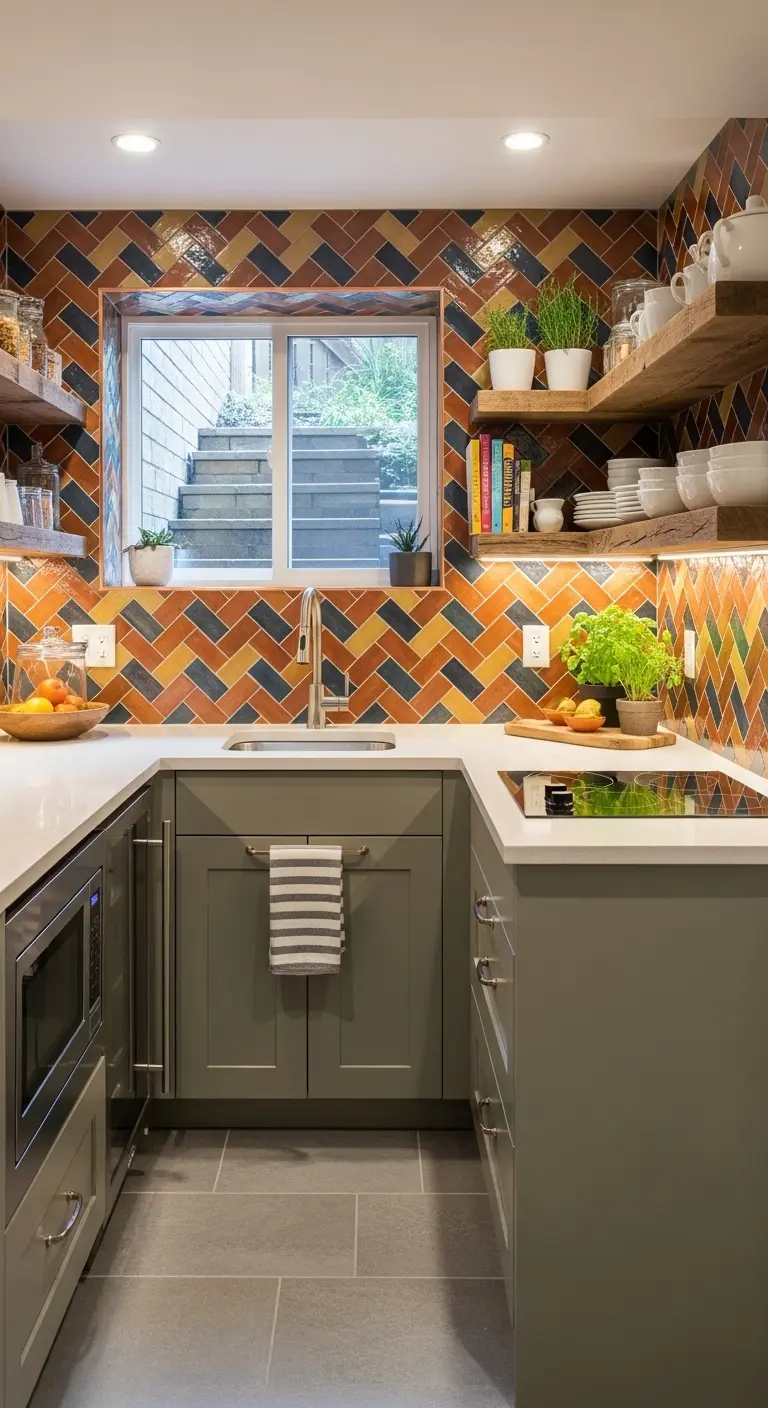
A statement backsplash in a basement kitchenette bar adds a visually striking focal point that highlights the cooking and preparation area beautifully.
Patterns, textures, or bold colors can define the space, adding character while reflecting the homeowner’s unique style and personality.
Materials like ceramic tile, glass, or stone offer both durability and easy maintenance, ensuring the backsplash remains functional as well as decorative.
Pairing a bold backsplash with neutral cabinetry and countertops allows the design to stand out without overwhelming the space visually.
Lighting above or below cabinets can accentuate the backsplash, creating dynamic reflections and highlighting the material’s texture and color richness.
A statement backsplash provides visual depth, energizes the basement, and elevates the overall aesthetic of a compact kitchenette area.
It also reinforces design cohesion when coordinated with other elements like shelving, hardware, or flooring finishes.
Floating Cabinets for an Open and Airy Feel
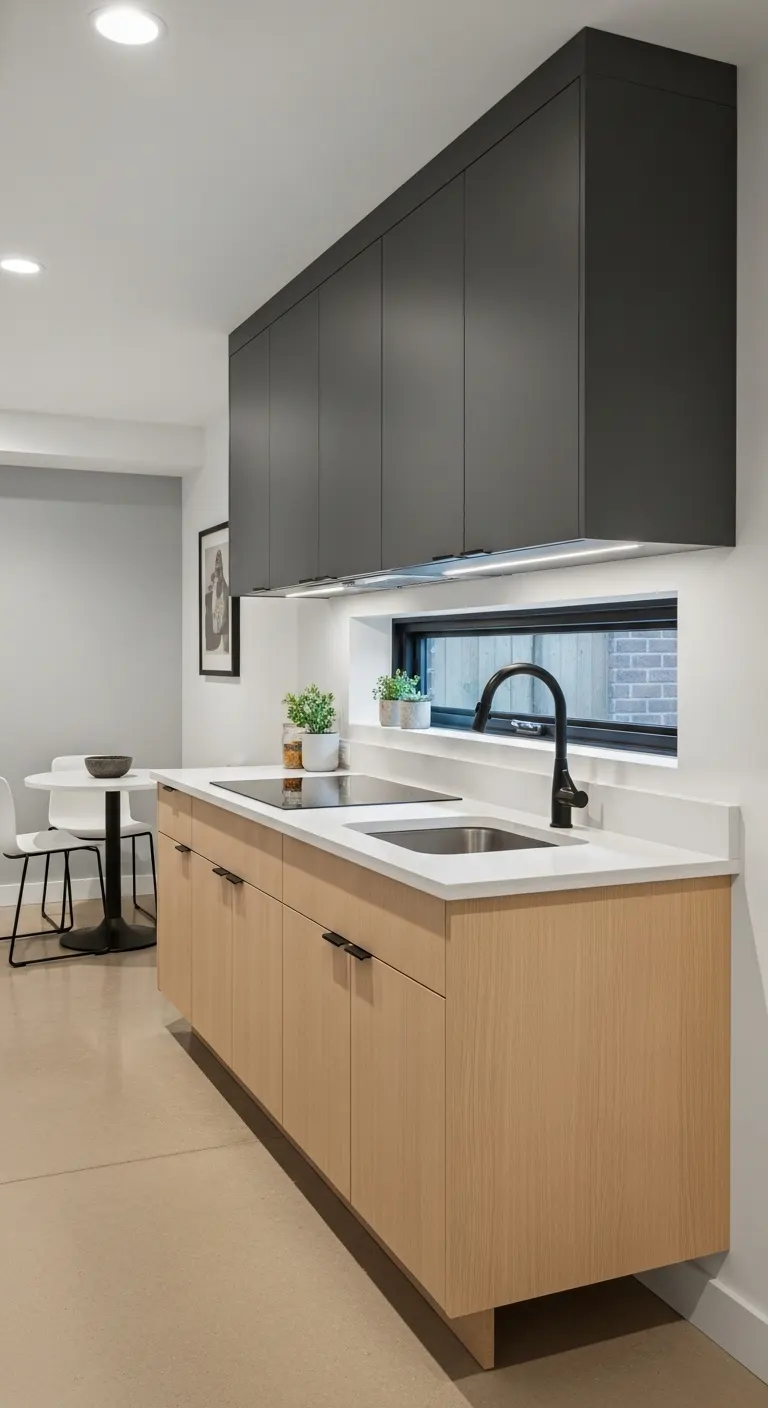
Floating cabinets in a basement kitchenette bar give the illusion of space while providing practical storage without cluttering the floor area.
By suspending cabinets above the floor, homeowners create visual lightness that can make lower-ceiling basements feel more open and comfortable.
This design allows for under-cabinet lighting, which adds functional brightness while enhancing ambiance for evening activities or casual meals.
Floating cabinetry pairs well with minimalist design, neutral finishes, or contrasting wall colors, reinforcing modern sophistication without sacrificing storage capacity.
It also enables easier cleaning beneath the cabinets, maintaining a tidy and organized environment in a small basement space.
Floating cabinets complement open shelving or decorative niches, balancing practicality with aesthetic appeal for a visually dynamic yet functional kitchenette bar.
This approach maximizes efficiency and contributes to an airy, welcoming atmosphere that invites frequent use and enjoyment.
Compact Island for Multi-Purpose Convenience
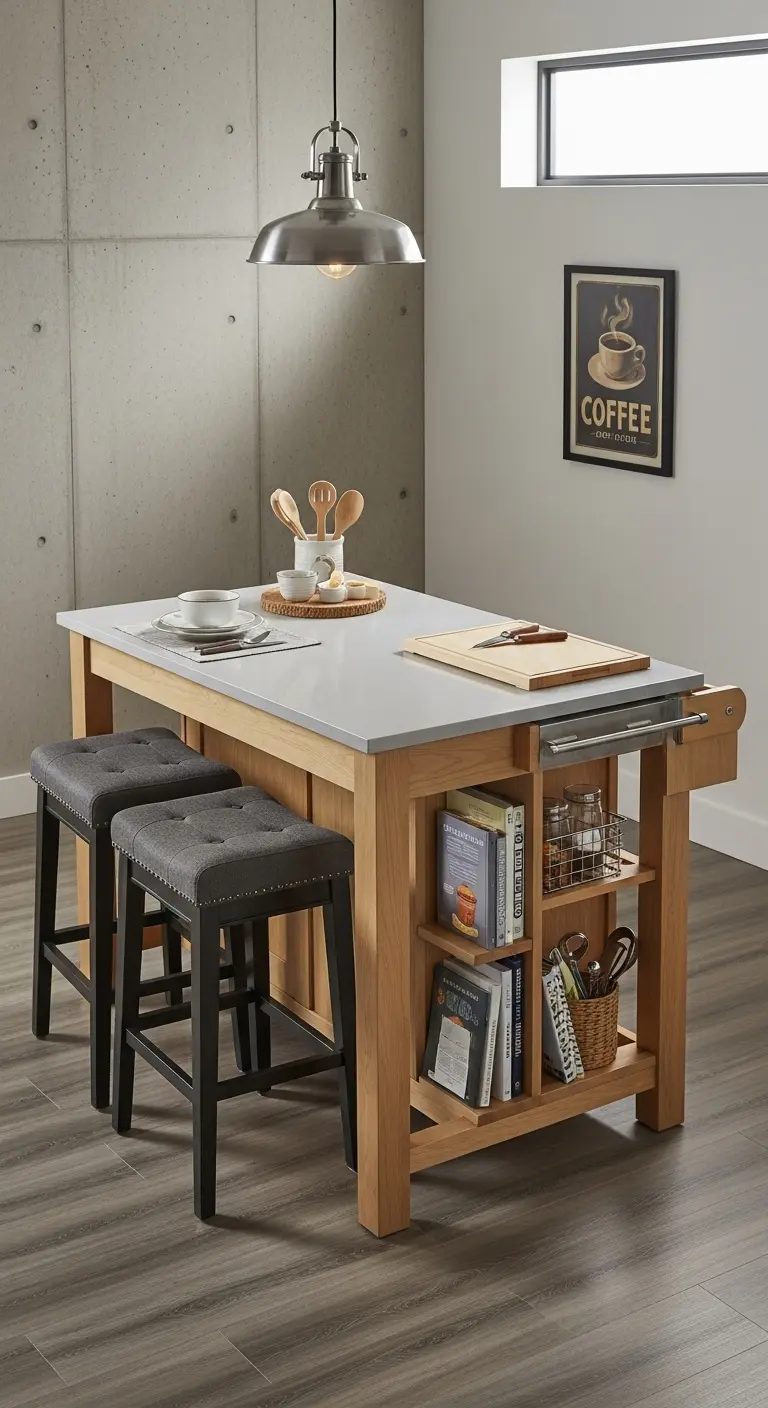
A small basement kitchenette island adds both utility and social space without overcrowding the overall area or disrupting traffic flow.
The island can serve as a prep surface, additional storage zone, casual seating area, or even a display space for decorative accents.
Choosing a compact footprint ensures the basement remains navigable, allowing family members or guests to move freely while using the kitchenette.
Integrated cabinets or drawers within the island optimize storage, keeping countertop surfaces clear for functional daily use.
Countertop materials like stone, quartz, or durable laminate balance aesthetic appeal with practical durability, maintaining a polished look over time.
Lighting above or near the island enhances its utility and draws focus, making it a central feature that elevates both form and function.
A well-designed island supports versatility, improving workflow, social interaction, and visual balance in the basement kitchenette bar area.
Vertical Storage Solutions That Boost Efficiency

Vertical storage maximizes limited basement space by utilizing wall height for cabinets, shelves, or hanging racks, keeping counters clear and functional.
Tall cabinets store kitchen essentials, dry goods, or small appliances without sacrificing floor area, maintaining an organized, streamlined environment.
Open shelving or cubbies at eye level provides quick access to frequently used items, reducing clutter and improving workflow efficiency.
Vertical racks for utensils, cutting boards, or small pots create easy accessibility while adding visual interest and texture to the space.
Combining closed storage with open displays balances functionality with aesthetic appeal, ensuring the basement kitchenette bar feels orderly yet inviting.
Proper lighting enhances vertical storage visibility, allowing homeowners to navigate shelves comfortably while maintaining a visually open layout in the basement.
This design approach creates maximum utility in a compact space, keeping essentials within reach and surfaces uncluttered for daily convenience.
LED Under-Cabinet Lighting for Subtle Glow

LED lighting beneath cabinets brightens the basement kitchenette bar, providing focused illumination for prep tasks and a soft ambient glow for evenings.
This type of lighting highlights countertops and backsplash details, improving functionality while enhancing overall aesthetic appeal.
LED strips are energy-efficient, long-lasting, and easy to install, making them a practical solution for small basement spaces.
Soft lighting under cabinets adds depth and dimension, creating warmth and visual comfort without overpowering other design elements in the room.
It can also emphasize textures, materials, and color schemes, reinforcing the style statement of the basement kitchenette bar.
Layered with overhead or accent lights, under-cabinet LEDs contribute to a welcoming and dynamic atmosphere for both casual use and entertaining guests.
This approach balances practicality and design, ensuring the basement remains functional, safe, and visually engaging.
Mixed Material Countertops for Modern Contrast

Mixing countertop materials in a basement kitchenette bar introduces contrast, texture, and visual interest while maintaining a modern, cohesive look.
Combining laminate, quartz, or stone surfaces creates a dynamic effect without overwhelming the space or complicating maintenance.
Contrasting materials can delineate prep zones, serving areas, or seating sections, improving workflow and adding subtle design clarity.
Pairing matte and glossy surfaces enhances texture perception, allowing light to reflect differently and create visual depth in a compact basement.
Mixed materials complement cabinetry, backsplash, and flooring choices, tying the design together and reinforcing modern sophistication in small spaces.
This approach keeps the basement kitchenette bar engaging, functional, and aesthetically balanced while allowing homeowners to express creativity with materials.
It encourages a tailored look, making the space feel thoughtfully designed and visually distinct.
Small Seating Zone for Casual Comfort
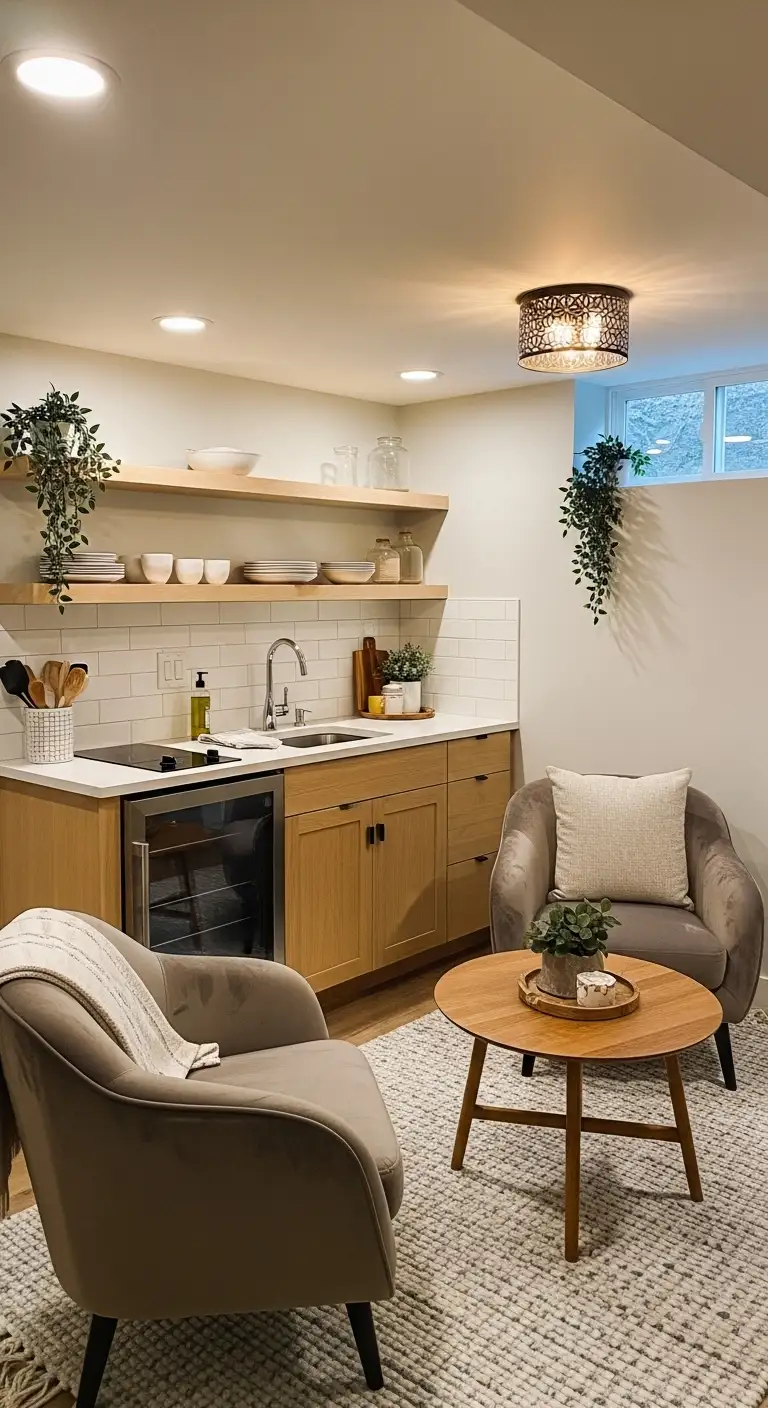
Adding a compact seating area to your basement kitchenette bar encourages relaxed conversations and makes the space more welcoming for family gatherings.
A pair of stools or a narrow bench provides comfort without overcrowding, maintaining a sense of openness in the basement.
Seating near the counter allows easy interaction during meal prep or casual snacking, creating a social hub in a limited space.
Choosing lightweight or movable furniture ensures flexibility, allowing rearrangement depending on the activity or occasion without disrupting workflow.
Textured cushions, subtle upholstery, or warm-toned seating can enhance visual interest while reinforcing the cozy and inviting atmosphere.
Even a small seating area signals that the basement is more than a utility space—it’s a functional extension of your home’s living areas.
Careful placement ensures smooth traffic flow and adds a sense of balance, combining functionality with a naturally social environment.
Brushed Metal Accents for Subtle Sophistication
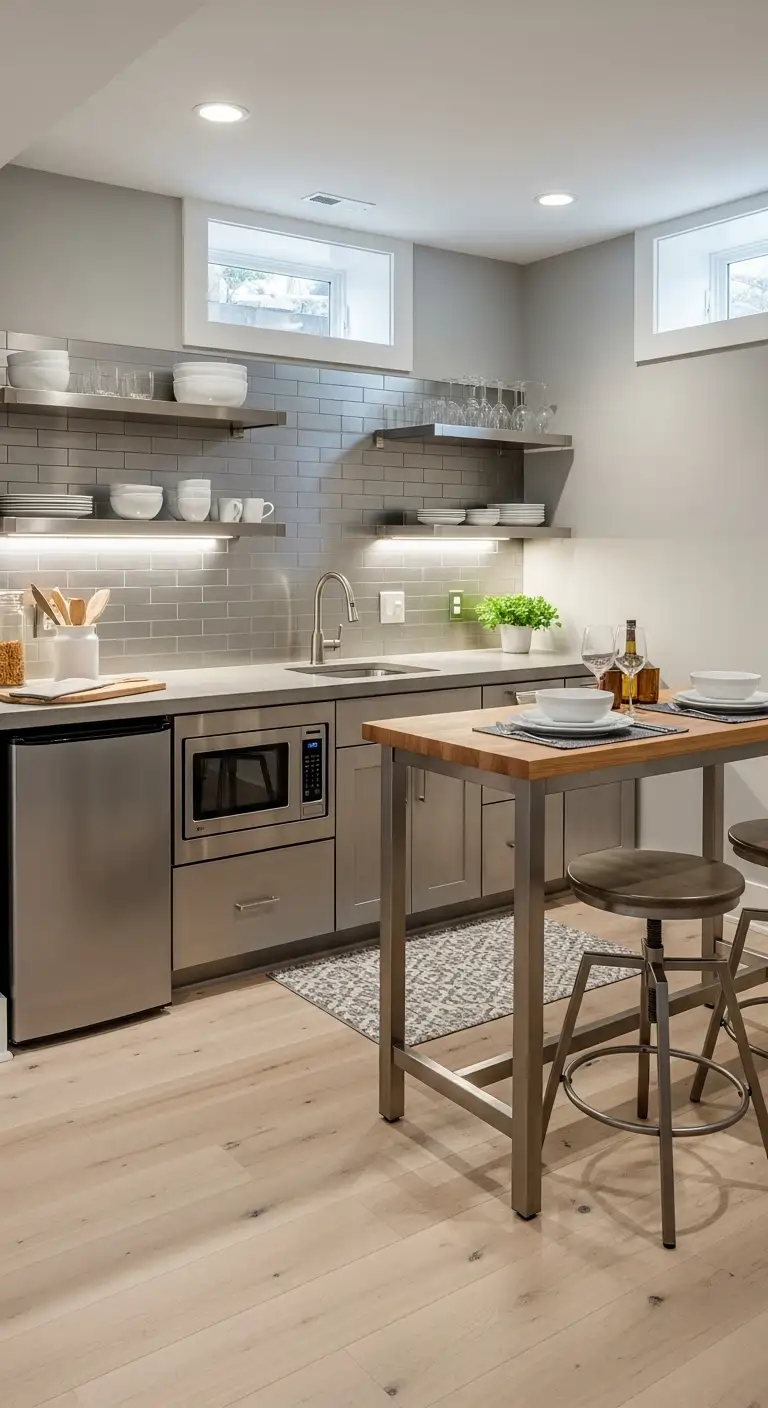
Incorporating brushed metal accents in handles, faucets, or fixtures elevates a basement kitchenette bar with refined elegance and modern appeal.
Metal finishes like brushed nickel, bronze, or copper introduce subtle shine without overwhelming the design or creating harsh reflections.
These accents pair beautifully with cabinetry, countertops, and lighting, adding texture and a sense of understated luxury to the space.
Brushed metals also offer durability and ease of cleaning, ensuring the functional and aesthetic value of your basement remains consistent over time.
Layering metallic elements alongside natural textures such as wood or stone creates depth and visual contrast, enhancing the overall atmosphere.
This approach reinforces a sophisticated yet approachable environment, making the kitchenette feel intentional and thoughtfully designed for everyday use.
Even subtle touches can transform the basement from ordinary to stylish, creating a lasting impression on visitors and residents alike.
Bright White Finishes for a Crisp Look
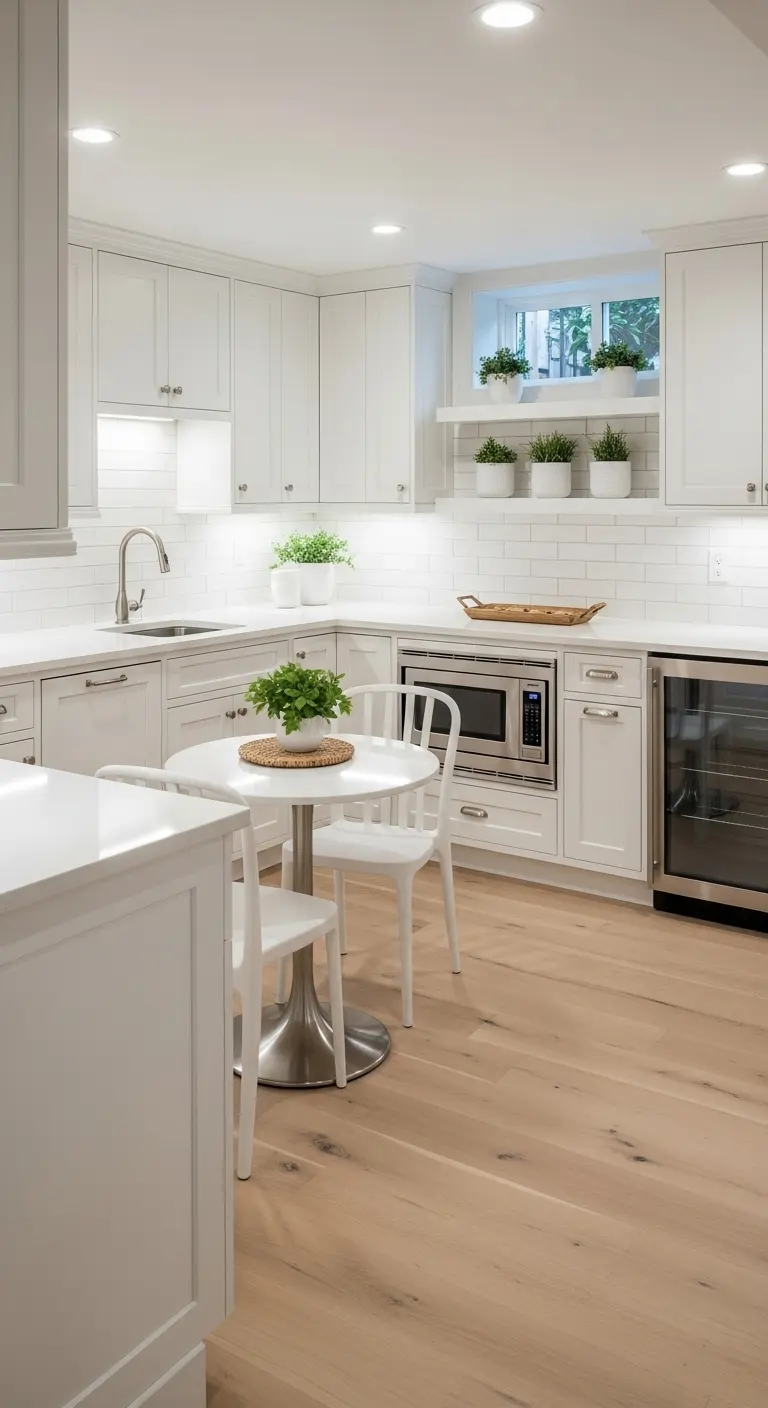
White cabinetry and light countertops in a basement kitchenette bar instantly brighten the space, creating a crisp and airy atmosphere.
Reflective surfaces enhance light distribution, making low-light basements feel more spacious and comfortable without needing major renovations.
White finishes pair seamlessly with natural wood, metal accents, or textured backsplashes, maintaining versatility for various interior styles.
This palette supports a minimalist or modern aesthetic while emphasizing cleanliness, simplicity, and effortless elegance throughout the basement.
Accents like soft-colored décor, plants, or subtle lighting create visual interest without compromising the overall crisp look.
White surfaces are easy to maintain, provide a timeless appeal, and allow for flexible updates through furniture, lighting, or decorative elements.
The result is a basement kitchenette bar that feels open, inviting, and perfectly balanced between function and style for daily use.
Extended Counter Runs for Easy Preparation

Long countertop runs in a basement kitchenette bar provide expansive workspace for prepping meals, serving snacks, or organizing small appliances.
Extended surfaces allow multiple people to use the area simultaneously without feeling crowded, enhancing usability and social interaction.
This layout supports small gatherings or casual home activities, offering convenience and efficiency in a compact environment.
Integrated storage underneath ensures the countertop remains clutter-free while maintaining visual clarity and design cohesion throughout the space.
Combining extended counters with layered lighting and well-chosen backsplash details elevates both aesthetics and functionality seamlessly.
A long, continuous countertop also allows for subtle design variations, such as material mixing or accent borders, adding visual interest without overwhelming the basement.
This practical idea balances usability, style, and comfort, turning your basement kitchenette bar into a highly functional, attractive feature of the home.
Built-In Microwave Nook for Efficiency

A dedicated microwave nook in the basement kitchenette bar keeps appliances organized, clearing valuable counter space for prep or display.
By placing the microwave at an ergonomic height, you reduce strain while ensuring easy access during cooking or casual use.
Integrating the nook within cabinetry preserves a clean and streamlined aesthetic, minimizing visual clutter and maintaining design flow.
This approach allows additional storage above or below for dishes, snacks, or small appliances, improving overall organization.
A well-designed nook enhances functionality while complementing surrounding finishes, colors, and textures without interrupting visual cohesion.
It contributes to an efficient, user-friendly workspace that encourages smooth daily routines and maximizes compact basement utility.
By combining practicality with style, the microwave nook becomes a small but impactful element that improves the overall kitchen experience.
Soft Matte Finishes for a Contemporary Touch
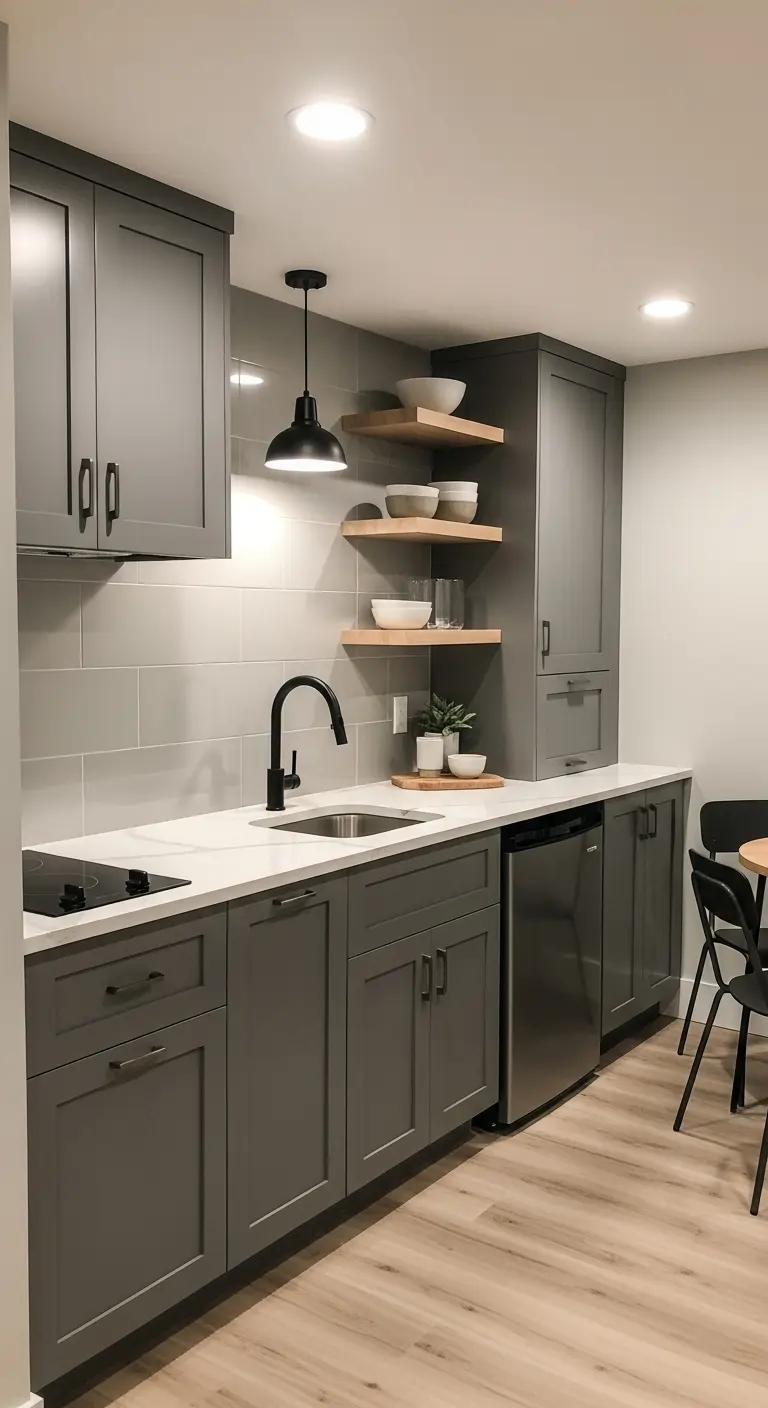
Matte finishes in cabinetry, countertops, or hardware add a soft, sophisticated feel to a basement kitchenette bar, reducing glare while maintaining elegance.
The subdued texture offers a modern and calming presence, perfect for low-light or smaller basement spaces that benefit from visual softness.
Matte surfaces pair beautifully with metallic accents, natural wood, or neutral tones, creating balanced contrast without overwhelming the eye.
They are less prone to showing fingerprints or smudges, maintaining a clean and polished look with minimal maintenance.
Soft finishes encourage layering of complementary materials, textures, and lighting, enhancing depth and subtle sophistication in the basement environment.
This choice creates a visually cohesive, contemporary design that feels approachable, functional, and aesthetically refined for everyday use.
Matte finishes allow flexibility in décor changes while reinforcing an understated elegance that elevates the entire basement kitchenette bar.
Hidden Storage Zones for an Organized Look
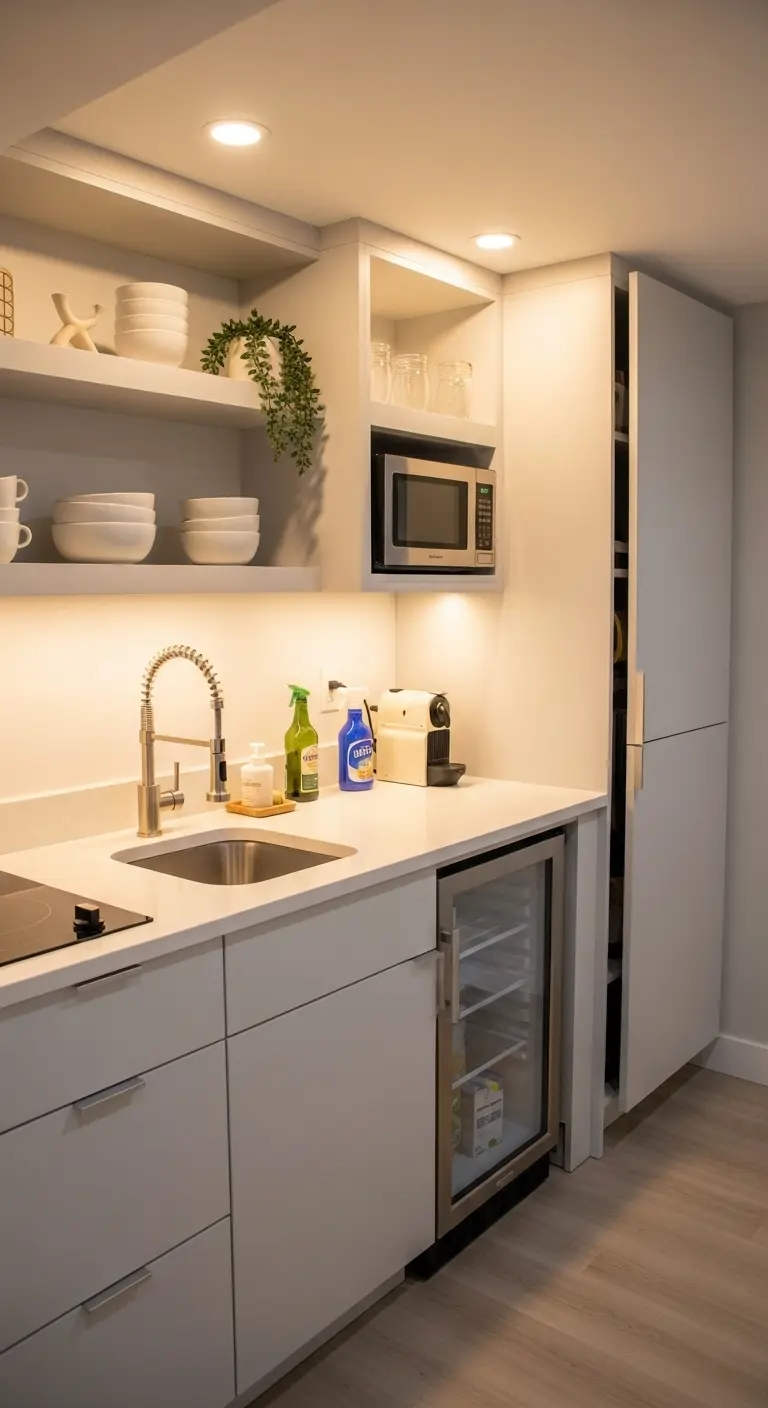
Hidden storage in the basement kitchenette bar keeps clutter out of sight while maintaining accessible functionality for small appliances and essentials.
Pull-out drawers, concealed cabinets, or sliding compartments allow quick access without disrupting the visual flow of the space.
This approach emphasizes clean lines and a minimalist aesthetic, creating a sense of calm and organization throughout the basement.
It maximizes available space by utilizing corners, under-counter areas, or vertical sections efficiently, enhancing overall usability.
By integrating hidden storage with open shelving or floating cabinets, the design remains functional, inviting, and visually appealing.
Proper organization reduces stress, improves daily workflow, and makes entertaining guests easier, especially in compact basement layouts.
Hidden storage combines clever design with practicality, transforming a small kitchenette bar into a seamless and enjoyable space to use.
Sleek Hardware-Free Cabinets for Modern Simplicity
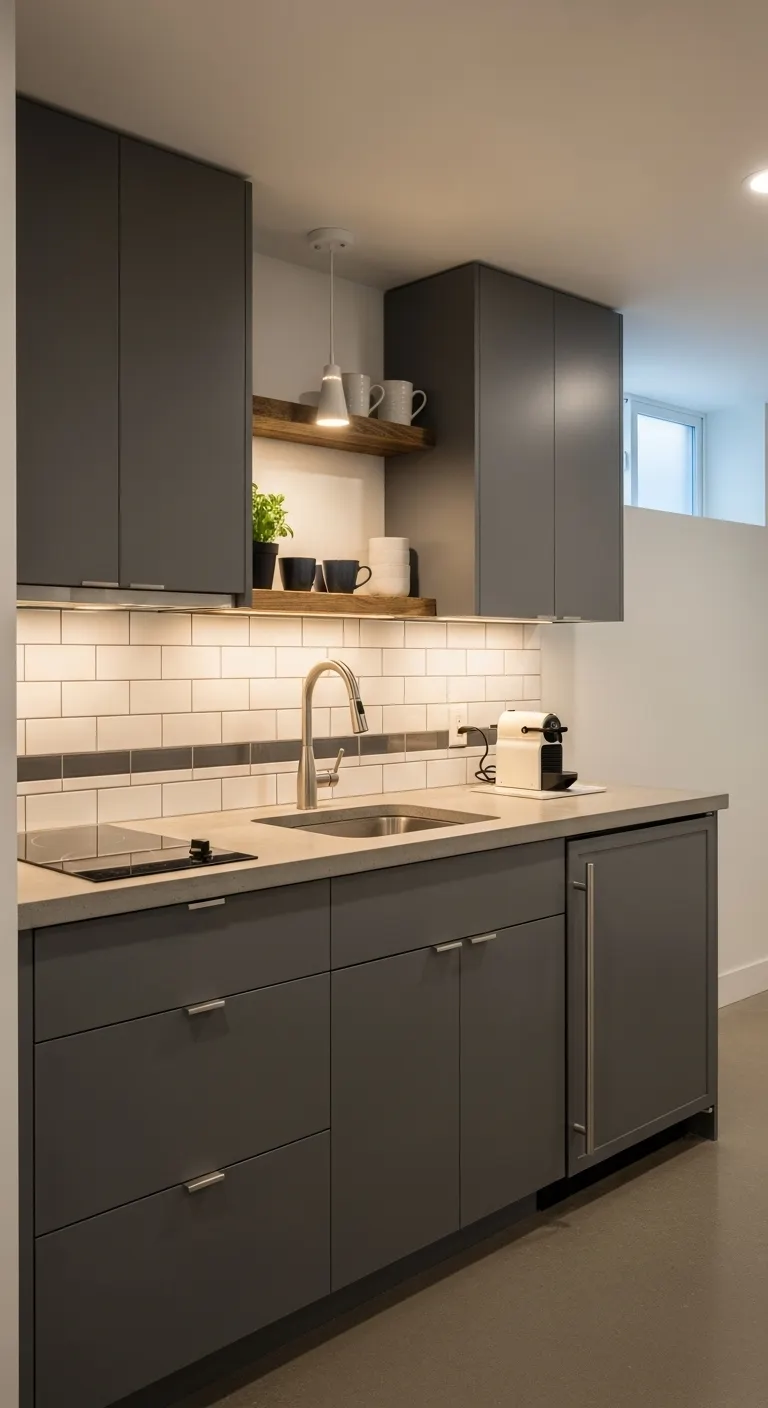
Handle-less cabinets in a basement kitchenette bar create uninterrupted lines, emphasizing a minimalist, modern design without visual interruptions.
Push-to-open or recessed hardware options maintain functionality while preserving the clean aesthetic and smooth surfaces.
This approach reduces visual clutter and enhances perception of space, especially in basements with lower ceilings or compact dimensions.
Pairing hardware-free cabinetry with subtle lighting, textured walls, or contrasting finishes adds dimension without sacrificing simplicity.
The result is a sleek, refined look that feels contemporary, functional, and comfortable for daily use or casual entertaining.
Maintaining uncluttered surfaces and integrated storage ensures the space remains efficient, organized, and visually coherent.
Hardware-free cabinets encourage a modern aesthetic that complements various design styles while keeping the basement inviting and practical.
Textured Wall Panels That Add Warmth
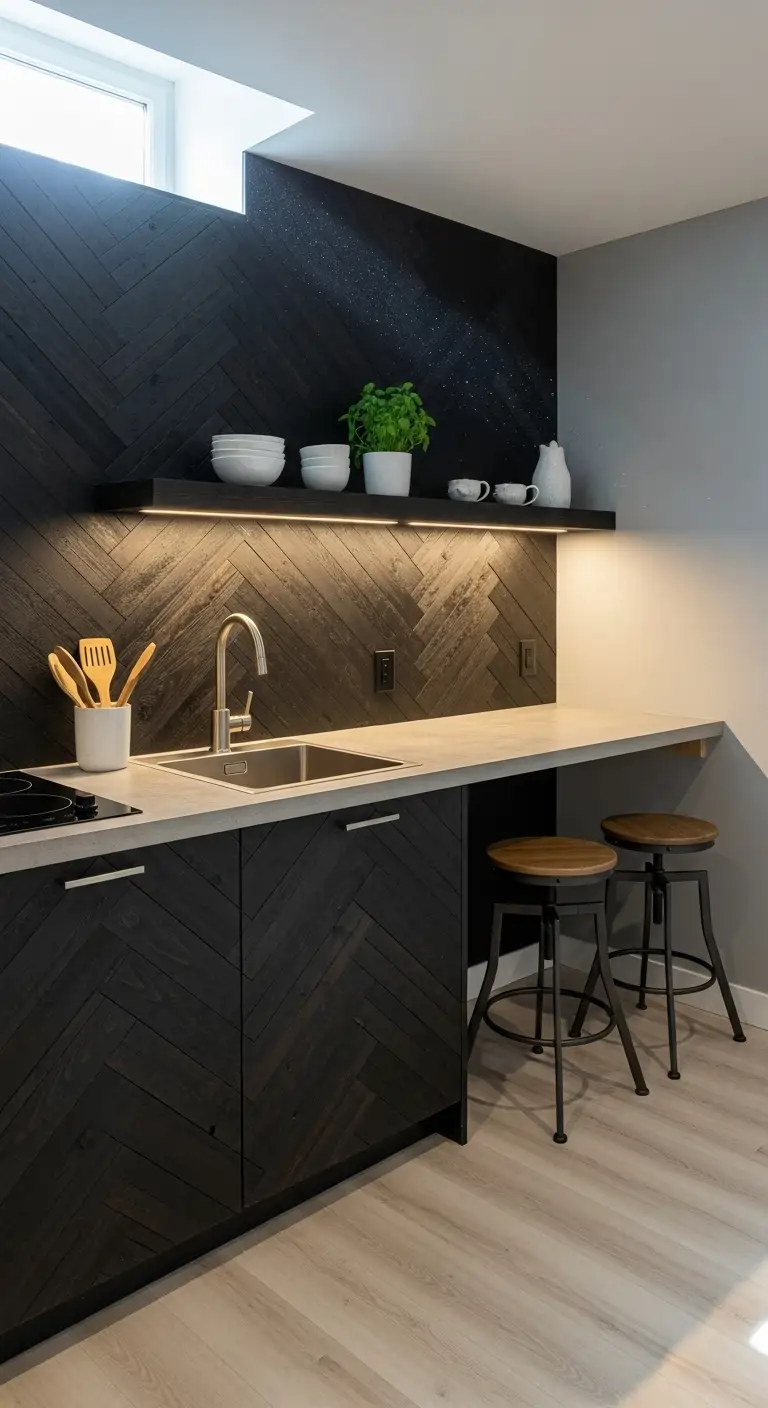
Textured wall panels in a basement kitchenette bar introduce depth, warmth, and tactile interest, creating a visually engaging environment.
Materials like ribbed wood, stone, or patterned composites add character without overwhelming the space, complementing cabinetry and counters naturally.
Panels can serve as accent features behind the bar, subtly highlighting focal areas and breaking monotony in neutral-toned basements.
Proper lighting enhances textures, casting soft shadows that provide dimension and enhance the cozy feel of the space.
Textured walls support layered décor elements such as shelves, greenery, or artwork, blending functionality with aesthetic appeal.
This design element balances warmth and modernity, making the basement kitchenette bar feel thoughtfully designed and emotionally inviting.
Textured panels contribute to a dynamic atmosphere without compromising openness or usability in a compact basement layout.
Integrated Open Display Niche for Style

An open display niche adds a stylish, functional focal point for decorative items, small appliances, or personal accents in the basement kitchenette bar.
This feature allows homeowners to showcase curated pieces while keeping frequently used items easily accessible and organized.
Positioning the niche strategically within cabinetry or walls emphasizes design hierarchy, creating a visually appealing break in uniform surfaces.
Materials, lighting, and color contrast can enhance the niche, drawing attention while maintaining harmony with the overall basement aesthetic.
The niche encourages personalization, making the basement feel more inviting, lived-in, and uniquely tied to the homeowner’s style.
It balances utility with creativity, providing both storage and decorative opportunities that enhance the overall visual flow of the kitchenette.
By blending open display with practical design, the niche becomes a charming and functional centerpiece in the basement space.
Compact Pantry Addition for Better Organization
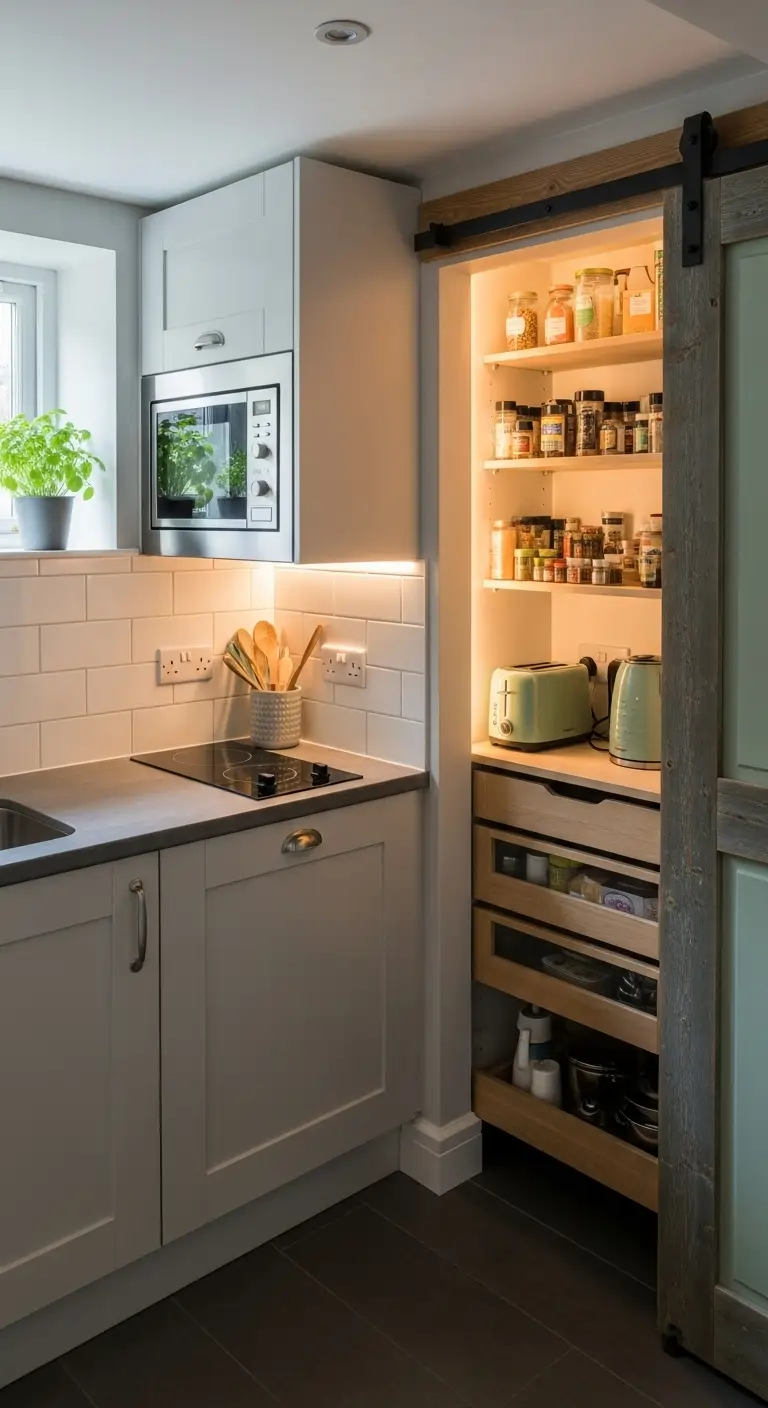
Adding a slim pantry cabinet in a basement kitchenette bar provides additional storage for dry goods, snacks, and small kitchen essentials.
The compact footprint ensures the pantry does not overcrowd the basement while maximizing vertical or underutilized wall space.
Pull-out shelving or adjustable compartments make organizing items simple, keeping everything within reach and easy to locate.
A well-designed pantry helps maintain uncluttered countertops, contributing to both visual clarity and practical functionality.
This addition supports meal prep, casual snacking, or small-scale entertaining by keeping supplies readily available without compromising the aesthetic.
Materials, finishes, and hardware can match existing cabinetry to maintain cohesion and reinforce the overall design theme.
A compact pantry enhances efficiency, usability, and organization while preserving the welcoming feel of the basement kitchenette bar.
Light Reflective Surfaces to Brighten the Basement

Using reflective surfaces such as glossy countertops, backsplashes, or cabinet finishes can make a basement kitchenette bar appear brighter and more open.
Light reflection amplifies existing illumination, compensating for limited natural light and improving the overall atmosphere of the space.
Reflective materials also enhance perception of depth, making small basements feel larger and more spacious without major renovations.
Combining these surfaces with layered lighting and neutral tones creates a balanced and welcoming environment for daily activities.
Careful placement ensures reflections are controlled, highlighting design elements rather than creating glare or visual discomfort.
This approach blends aesthetic appeal with practical benefits, transforming the basement into a comfortable, inviting, and visually dynamic area.
By enhancing brightness and openness, reflective surfaces improve both functionality and the emotional feel of the space.
Cozy Corner Layout for Small Basement Spaces

Positioning a basement kitchenette bar in a corner maximizes floor space while creating a dedicated, intimate zone for daily use.
This layout allows for efficient appliance and storage placement without disrupting circulation or making the area feel cramped.
Corner configurations provide natural boundaries, making the kitchenette feel like a defined, purposeful space within the basement.
Countertops, cabinets, and lighting can be arranged to enhance workflow, visual appeal, and accessibility for all household members.
Cozy corners encourage social interaction and functionality while preserving the openness of remaining basement areas for other activities.
This approach works especially well in smaller basements, balancing comfort, usability, and aesthetic harmony within the space.
Careful design ensures the corner layout integrates seamlessly with the overall basement style while remaining practical and inviting.
Maximizing Brightness and Airiness in Your Basement Kitchenette
Layered lighting, reflective surfaces, and strategically placed mirrors can make a basement kitchenette bar feel more spacious and inviting.
Soft wall colors, subtle accents, and thoughtful furniture placement further enhance openness while maintaining comfort and functionality.
Using these strategies reduces the typical heaviness of basements, improving both visual appeal and usability without major renovations.
Combining practical and aesthetic improvements ensures the space remains welcoming for everyday use or casual social activities.
These approaches allow homeowners to maintain a bright, airy atmosphere even in low-light or compact basement areas.
Small adjustments in color, texture, and lighting can have a significant impact on mood, perception of space, and daily convenience.
Personalizing Your Basement Kitchenette for Style and Function
Adding plants, decorative accents, and meaningful personal touches transforms the basement kitchenette bar into a warm, inviting environment.
Incorporating functional décor, such as stylish trays, organizers, or open displays, enhances both usability and aesthetic appeal.
Changing accessories seasonally or based on activity type keeps the space fresh and visually engaging over time.
Custom artwork, family photos, or curated collections add personality, making the kitchenette feel uniquely connected to the household.
Attention to detail in finishing touches elevates the overall experience, balancing practical needs with emotional resonance.
This strategy ensures the basement remains a space you genuinely enjoy, reflecting style, comfort, and daily functionality.
Final Wrap-Up
A thoughtfully designed basement kitchenette bar balances creativity, practicality, and comfort, transforming an overlooked area into a functional, inviting feature.
These 25 ideas offer inspiration for homeowners seeking stylish solutions that maximize small spaces without sacrificing usability or visual appeal.
By integrating smart layouts, layered lighting, storage solutions, and personal touches, the basement becomes a hub for daily routines and casual gatherings.
Careful attention to materials, finishes, and design details ensures the space remains practical, efficient, and aesthetically cohesive over time.
Whether opting for minimalist, modern, or cozy designs, these concepts help create a basement kitchenette bar that feels intentional, welcoming, and enjoyable.
Implementing even a few of these ideas can significantly elevate your basement’s style, functionality, and overall atmosphere, turning it into a space you genuinely love.