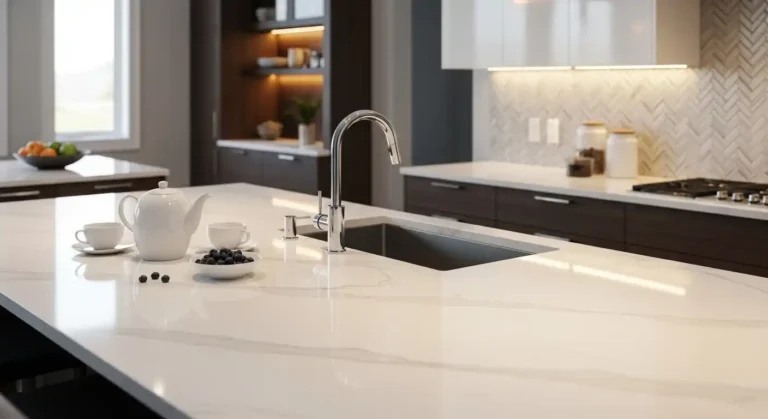

Porcelain countertops have become increasingly popular in modern kitchens, and for good reason. They’re elegant, durable, and offer a sleek aesthetic that complements virtually any kitchen design.
However, if you’re a new owner of porcelain counters or considering making the switch, you might wonder about their heat resistance. Specifically, can you put hot pans on porcelain countertops?
Yes, you can place hot pans directly on porcelain countertops because they are fired at extreme temperatures (over 2,000°F), making them nearly immune to heat damage and scorching.
Unlike quartz or laminate, porcelain will not burn or discolor, though using a trivet is still suggested for prolonged heat to prevent potential thermal shock.
Contents
Understanding Porcelain Countertop Composition
Before diving into heat resistance, it’s important to understand what porcelain countertops actually are. Porcelain is a ceramic material made from clay and other raw materials that are fired at extremely high temperatures.
This process creates a non-porous, incredibly hard surface that’s resistant to staining, scratching, and bacterial growth.
The density and hardness of porcelain are significantly greater than natural stone like granite or marble, which contributes to its durability and popularity among homeowners.
The manufacturing process gives porcelain countertops exceptional strength, but it also means they have specific limitations regarding heat exposure.
While porcelain is technically heat-resistant to a certain degree, it’s not the same as being heat-proof, which is an important distinction that many homeowners overlook.
The Heat Tolerance of Porcelain Countertops
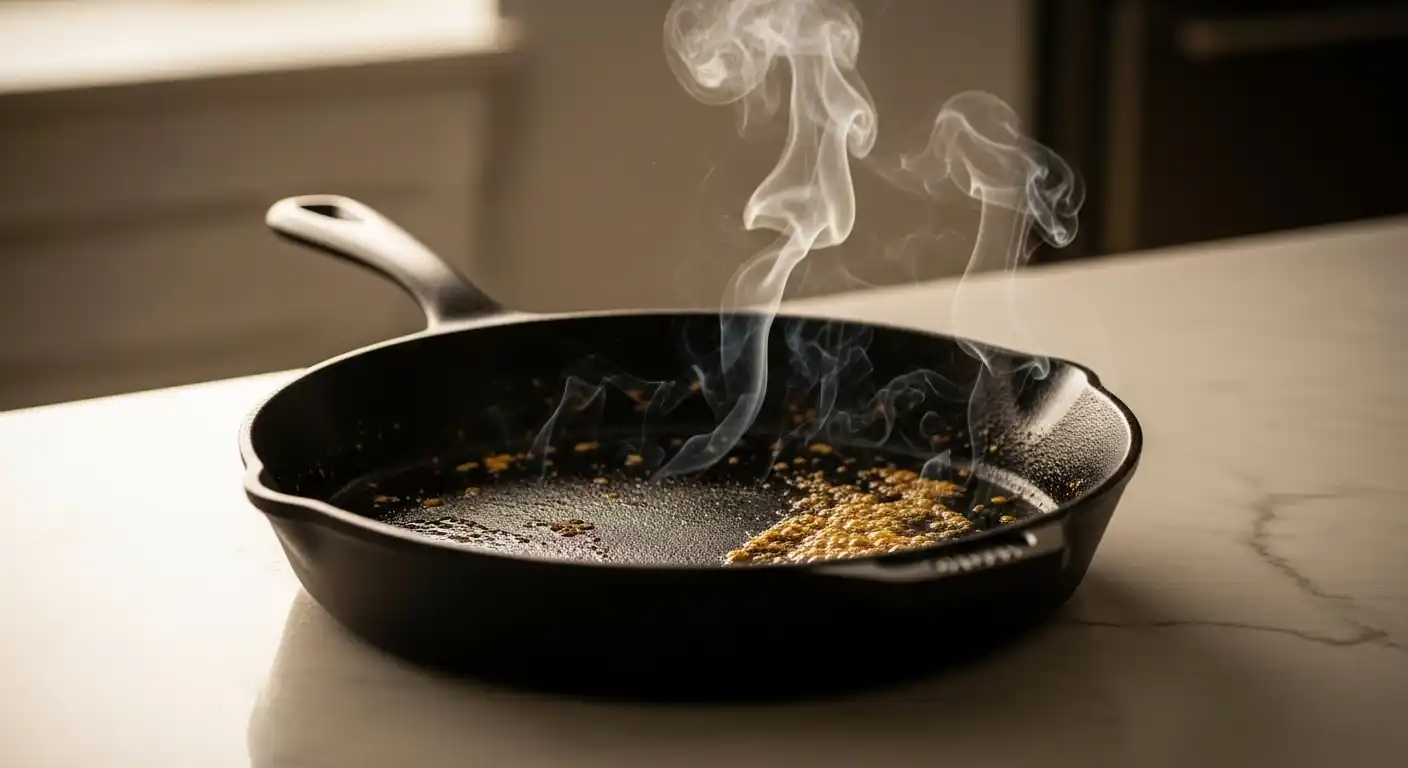
Here’s the straightforward answer to the question about hot pans on porcelain countertops: while porcelain can withstand moderate heat, it’s not recommended to place extremely hot cookware directly on the surface.
Most porcelain countertops can handle brief contact with temperatures up to around 300-400°F without damage.
However, consistently placing hot pans—especially those fresh off the stove at temperatures exceeding 400°F—directly on the surface can cause problems.
The primary concern isn’t that the porcelain will melt or immediately crack from the heat alone.
Rather, the issue stems from the thermal shock that occurs when extreme temperature differences affect the surface.
When you place a hot pan directly on a cool countertop, the sudden temperature change can cause the porcelain to expand and contract rapidly, potentially leading to small cracks, discoloration, or thermal stress that weakens the material over time.
Potential Risks of Placing Hot Pans on Porcelain
Understanding the risks associated with exposing porcelain countertops to extreme heat will help you make informed decisions in your kitchen.
First, thermal shock is the primary concern. If you consistently place pans that have been heating for extended periods directly on your porcelain surface, you may notice small cracks developing.
These aren’t usually immediately visible, but they can compromise the surface’s integrity over time.
Second, while porcelain is non-porous and won’t absorb stains like natural stone, repeated heat exposure can sometimes cause subtle discoloration or dulling of the finish in the affected area.
Additionally, if your porcelain countertop has a decorative glaze or special finish, extreme heat can potentially damage or change its appearance.
Third, heat can affect any resin or epoxy used in filling seams or securing the countertop installation.
These materials have lower heat tolerance than the porcelain itself, so positioning hot cookware directly over seams is particularly risky.
Best Practices for Using Hot Cookware on Porcelain
The good news is that with proper care and simple precautions, you can use hot pans on your porcelain countertops without worry.
The key is using protective barriers between your hot cookware and the surface.
Always Use Trivets or Hot Pads:
The most effective solution is to invest in quality trivets or hot pads specifically designed to protect countertops.
These come in various materials, including silicone, cork, bamboo, and metal, and they create an insulating layer between your hot pans and the porcelain surface.
Keep several trivets in easily accessible locations near your stove for convenient use.
Wooden Cutting Boards:
A wooden cutting board can serve double duty—both as a trivet and as a workspace. The wood’s insulating properties help protect your countertop from heat while still allowing you to work with your pans.
Let Pans Cool Slightly:
If possible, allow cookware to cool for just a minute or two on the stovetop before setting it on the counter. This simple practice significantly reduces thermal shock.
Avoid Extreme Temperature Changes:
Don’t place a hot pan on the counter and immediately pour cold water into it, as this can intensify thermal stress on both the cookware and the countertop surface.
Clean with Care:
When cleaning your porcelain countertops, use lukewarm water and mild soap rather than extremely hot water, as repeated exposure to high temperatures during cleaning can also contribute to surface degradation.
Maintaining Your Porcelain Countertops
Beyond managing heat exposure, maintaining your porcelain countertops involves several other practices.
Regular cleaning with appropriate cleaners will keep them looking beautiful and prevent damage.
Avoid using acidic cleaners on porcelain, as they can dull the finish over time. Instead, use pH-neutral or slightly alkaline cleaners specifically formulated for porcelain surfaces.
Protect your countertops from sharp objects and impacts, as well. While porcelain is harder than granite, it can still chip if subjected to significant force.
Use cutting boards for food preparation, and avoid sliding heavy objects directly across the surface.
Comparing Porcelain to Other Countertop Materials
If you’re weighing your options, it’s helpful to understand how porcelain’s heat resistance compares to other popular countertop materials.
Laminate countertops have relatively poor heat resistance and can warp or burn if exposed to hot pans.
Quartz countertops are engineered stone and can typically handle temperatures up to about 150°F without damage, making them less heat-resistant than porcelain.
Granite and marble, while natural stones, are generally more heat-resistant than porcelain but can still be damaged by thermal shock.
Stainless steel countertops are excellent with heat but less common in residential kitchens.
The Bottom Line
So, can you put hot pans on porcelain countertops? Technically, yes, but it’s best to use protective barriers like trivets or hot pads to prevent potential damage.
Porcelain countertops are durable and beautiful, but they deserve proper care and respect.
By following these guidelines and taking simple precautions, you can enjoy your porcelain countertops for decades while maintaining their stunning appearance.
Making small adjustments to your kitchen habits now will save you from costly repairs or replacement down the road.
Your porcelain countertops are an investment, and with mindful usage and maintenance, they’ll continue to be a beautiful centerpiece of your kitchen for years to come.