
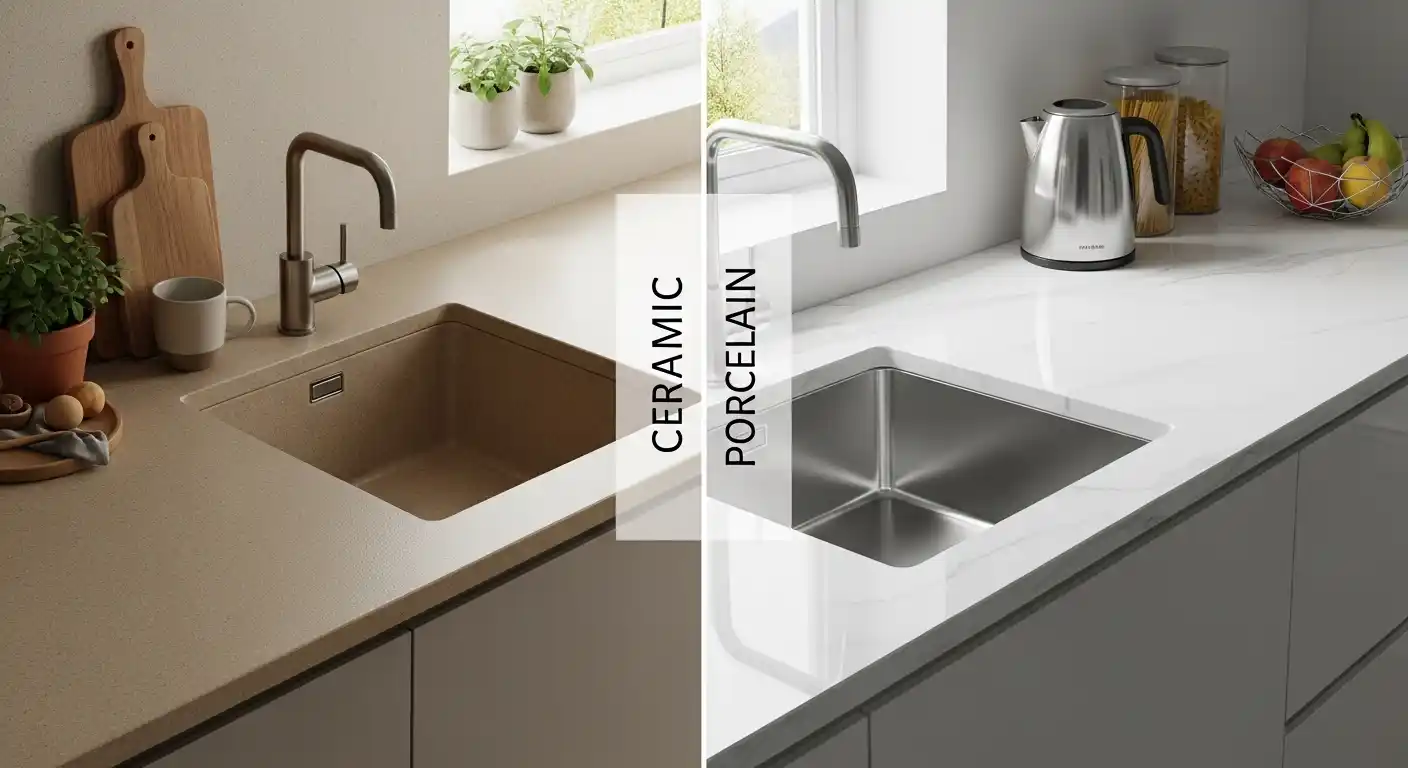
When selecting countertop materials for your kitchen or bathroom, you’ve likely encountered both ceramic and porcelain options.
While these materials may appear similar to the untrained eye, understanding the difference between ceramic and porcelain worktops is crucial for making an informed decision that aligns with your needs, lifestyle, and budget.
Both materials have distinct characteristics, advantages, and limitations that significantly impact their performance and suitability for different applications.
This comprehensive guide will help you understand these differences and determine which material best suits your home.
Contents
- Understanding the Basics
- Porosity: The Fundamental Difference
- Water and Moisture Resistance
- Stain Resistance and Durability
- Scratch and Chip Resistance
- Heat Resistance
- Aesthetic Variety and Design Options
- Cost Considerations
- Maintenance Requirements
- Longevity and Lifespan
- Installation Considerations
- Making Your Decision
- Conclusion
Understanding the Basics
Before exploring the differences, it’s important to understand what ceramic and porcelain actually are.
Both materials are fired clay products, but they’re manufactured using different processes and compositions, resulting in fundamentally different properties.
Ceramic is made from clay that’s been shaped and fired at temperatures typically ranging from 1,000 to 1,150°C.
This relatively lower firing temperature results in a porous material with a glazed surface that provides color and protection.
Ceramic tiles have been used in homes for centuries and remain popular due to their affordability and aesthetic variety.
Porcelain, conversely, is manufactured from a more refined clay mixture and fired at significantly higher temperatures, typically between 1,200 to 1,450°C.
This extreme heat creates a denser, less porous product with superior durability and performance characteristics.
The higher firing temperature fundamentally changes the material’s structure and properties.
Porosity: The Fundamental Difference
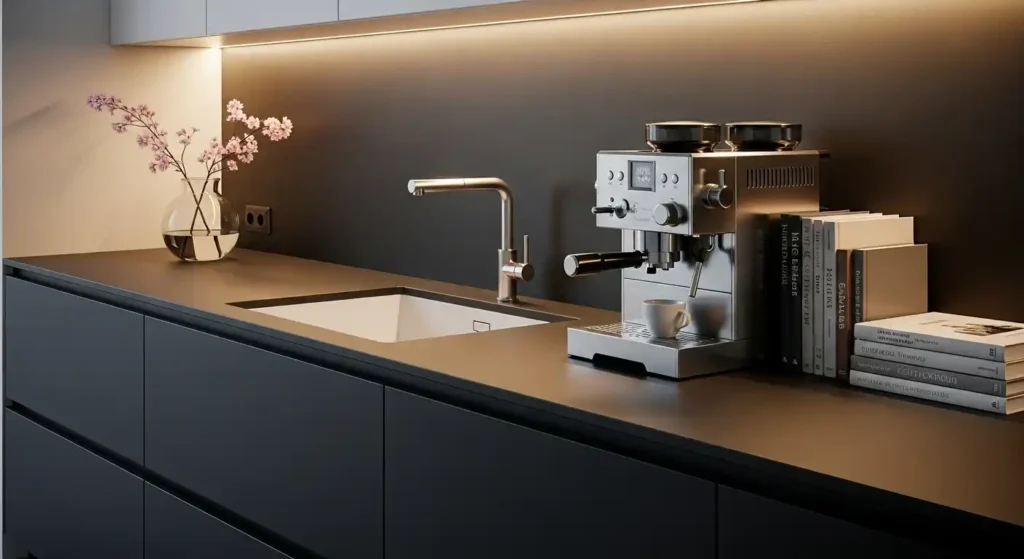
The most significant difference between these two materials lies in porosity—their ability to absorb liquids.
Ceramic tiles, due to their lower firing temperature, remain relatively porous.
While glazed ceramic has a protective surface layer, the body underneath can still absorb moisture and liquids if the glaze is compromised by chips, cracks, or wear.
Porcelain, fired at much higher temperatures, becomes nearly impermeable.
The clay particles fuse so completely during firing that the material absorbs minimal moisture—typically less than 0.5% compared to ceramic’s 3-6% absorption rate.
This fundamental difference affects nearly every performance characteristic of these materials when used as worktops.
Water and Moisture Resistance
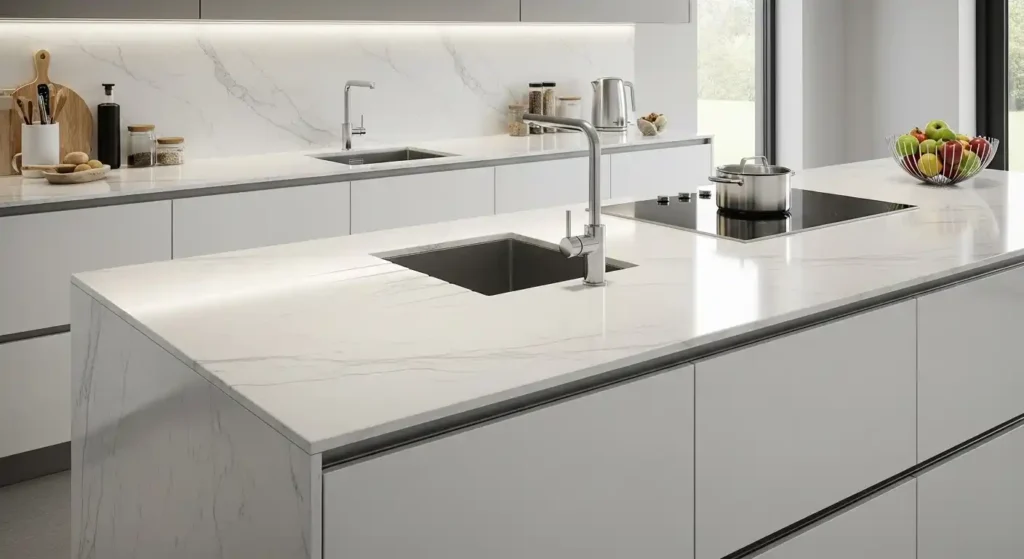
For kitchen and bathroom worktops where moisture exposure is constant, porcelain’s superior water resistance provides significant advantages.
Porcelain worktops can handle prolonged exposure to water, spills, and humidity without absorbing moisture into the material body.
This prevents swelling, warping, and mold or mildew growth within the material itself.
Ceramic worktops, while acceptable in kitchens with proper maintenance, are more vulnerable to moisture-related problems.
If the glaze becomes damaged—which is inevitable with normal wear and tear—water can penetrate the porous body beneath, potentially causing discoloration, staining, or structural issues over time.
In bathrooms or areas with high humidity, ceramic is generally less suitable than porcelain unless you’re exceptionally diligent about maintenance and sealing.
Stain Resistance and Durability
Porcelain’s non-porous nature makes it exceptionally resistant to staining.
Wine, oil, coffee, and other household substances cannot penetrate the surface, making cleanup simple and worry-free.
Stains that do occur typically sit on the surface and wipe away easily.
Ceramic, with its porous body, is more susceptible to permanent staining, particularly around the grout lines where moisture and contaminants can accumulate.
While sealed ceramic can resist staining reasonably well, the protective seal degrades over time, and any compromised areas become vulnerable to discoloration and staining that may be difficult or impossible to remove.
This difference becomes increasingly apparent over years of use.
Porcelain worktops maintain their appearance far longer, while ceramic may develop subtle discoloration or staining patterns in high-use areas.
Scratch and Chip Resistance
Both ceramic and porcelain are hard materials resistant to scratching from knives and utensils.
However, porcelain’s denser structure provides superior resistance to chipping and breaking.
The homogeneous composition throughout the material means chips, when they occur, don’t expose a softer, more vulnerable interior like ceramic can.
Ceramic’s glaze provides protection, but the body underneath is softer and more brittle.
If the glaze is compromised by a chip or crack, the exposed ceramic beneath is more vulnerable to further damage.
Additionally, the contrast between the glazed surface and unglazed edges makes chips more visible on ceramic worktops.
Porcelain’s consistent density throughout means any chips blend more seamlessly with the surrounding surface, and the material continues to perform reliably even if minor damage occurs.
Heat Resistance
Both ceramic and porcelain offer decent heat resistance compared to laminate or wood. However, porcelain’s superior heat tolerance makes it better suited for active kitchens.
Porcelain can handle brief contact with cookware at temperatures exceeding 400°F without risk of thermal shock or damage.
Ceramic, while heat-resistant, has lower tolerance limits.
Extremely hot cookware placed directly on ceramic can potentially cause thermal shock, particularly if temperature differences are dramatic (hot pan on cool ceramic).
For this reason, using trivets and hot pads is more critical with ceramic worktops.
Aesthetic Variety and Design Options
Ceramic offers exceptional variety in colors, patterns, and glazes.
Artisanal ceramic tiles showcase unique finishes, hand-painted designs, and artistic expressions that appeal to homeowners seeking distinctive, creative aesthetics.
The glaze on ceramic can create beautiful, varied visual effects impossible to replicate on porcelain.
Porcelain has expanded dramatically in design options but tends toward more consistent, uniform appearances.
Modern porcelain can convincingly replicate natural stone, wood, and concrete, offering sophisticated, realistic designs.
However, the artistic variety and hand-crafted uniqueness available in ceramic is difficult to match with porcelain.
Cost Considerations
Ceramic worktops are generally more affordable than porcelain, both in material costs and installation expenses.
For budget-conscious homeowners, ceramic offers an attractive entry point into tile worktops without significant financial investment.
Porcelain costs more upfront, reflecting its superior manufacturing process and performance characteristics.
However, the long-term value proposition favors porcelain due to superior durability and longevity.
If you plan to stay in your home long-term, porcelain’s extended lifespan and minimal maintenance requirements may justify the higher initial cost.
Maintenance Requirements
Ceramic worktops require more diligent maintenance than porcelain.
Regular sealing of grout lines and periodic resealing of the ceramic surface itself helps preserve appearance and performance.
Proper maintenance can extend ceramic’s lifespan, but it demands consistent effort.
Porcelain requires minimal maintenance. Regular cleaning with mild soap and water is usually sufficient.
The material doesn’t require sealing, and its non-porous nature means less attention to grout line maintenance, though epoxy or urethane grout still benefits from periodic attention.
Longevity and Lifespan
With proper care, ceramic worktops typically last 10-15 years before showing significant wear, staining, or damage requiring repair or replacement.
The degradation is gradual but inevitable given normal kitchen use.
Porcelain worktops, with their superior durability and resistance to wear, staining, and damage, often last 20-30+ years while maintaining excellent appearance and performance.
This extended lifespan represents superior long-term value despite higher initial costs.
Installation Considerations
Both ceramic and porcelain require similar installation processes using thin-set mortar and appropriate grouting.
However, porcelain’s hardness means installation typically requires specialized tools and experienced installers, which can increase labor costs.
Ceramic installation is often more straightforward, contributing to its lower overall project costs.
Making Your Decision
Choosing between ceramic and porcelain depends on your specific needs, budget, and lifestyle.
Ceramic suits homeowners prioritizing affordability, artistic aesthetics, and low-traffic applications.
It works well in guest bathrooms, accent areas, or kitchens where you’re willing to commit to regular maintenance.
Porcelain is the superior choice for busy kitchens, bathrooms with high moisture exposure, homes with children or pets, and anyone seeking maximum durability and minimal maintenance.
If you plan to stay in your home long-term and use your worktops heavily, porcelain’s superior performance justifies the investment.
Conclusion
Understanding the difference between ceramic and porcelain worktops empowers you to make the right choice for your home.
While ceramic offers affordability and artistic appeal, porcelain provides superior durability, water resistance, and long-term value.
Both are legitimate options, but your decision should align with your lifestyle, maintenance tolerance, budget, and long-term plans.
By carefully considering these factors, you’ll select worktops that deliver satisfaction and functionality for years to come.