
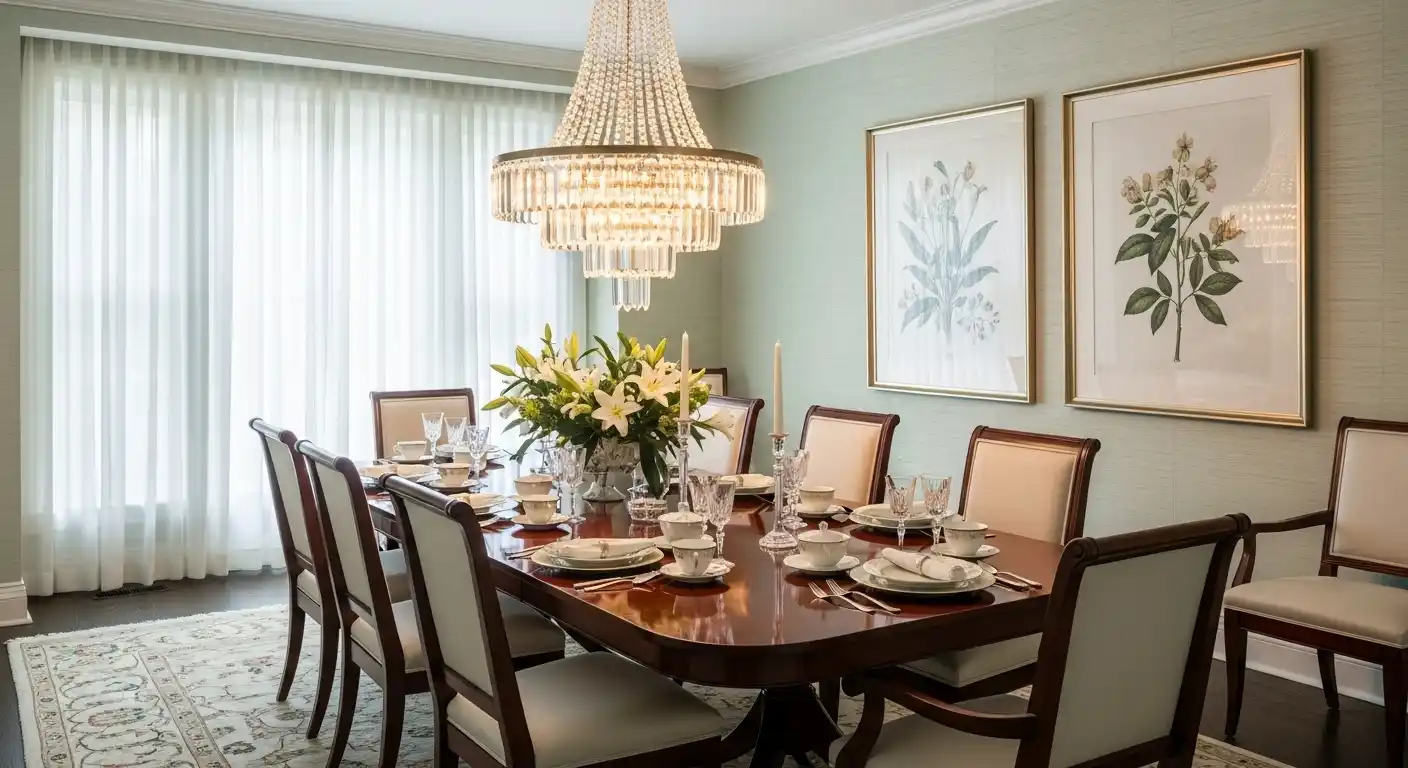
Looking to elevate your dining experience? Discover stunning dining room lighting ideas that blend style, warmth, and functionality effortlessly.
The dining room has evolved significantly over the years, transitioning from a simple space designed exclusively for meals to a versatile area that serves multiple functions.
Today, it is not only where families gather to enjoy dinner but also a hub for entertaining guests, completing work projects, and engaging in social activities.
Recognizing the diverse roles that the dining room plays is essential for homeowners seeking to maximize the utility of their living spaces.
Lighting, therefore, becomes a critical component, influencing not just visibility but also the mood and atmosphere.
The key is selecting fixtures and strategies that accommodate various activities while fostering an inviting ambiance conducive to connection and conversation.
Contents
- Understanding Lighting Layers for Flow
- The Scientific Foundation: Lux, Lumens, and Kelvin
- The Golden Rule of Height & Scale (Ergonomics)
- Choosing the Right Fixtures: Style Meets Function
- Dimmer Switches: The Secret to Flexibility
- Layering with Natural Light: Time of Day Considerations
- Common Mistakes to Avoid in Dining Room Lighting
- Conclusion: Curating Your Ideal Dining Space
Understanding Lighting Layers for Flow
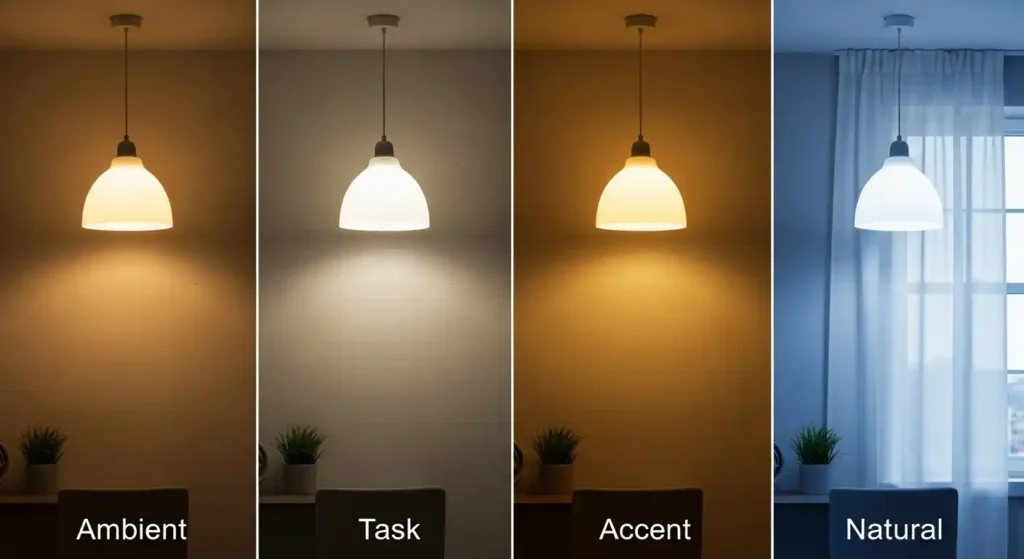
To create a harmonious and functional dining room, it is essential to understand the three primary layers of lighting.
Properly utilizing these layers ensures your space is flexible, well-lit, and showcases your design elements.
Ambient Lighting (The Foundation)
This serves as the foundational layer, providing generalized illumination that comfortably fills the entire room.
Fixtures like recessed lighting, track lighting, or even large, central chandeliers provide this even wash of light, ensuring easy movement and overall visibility.
Task Lighting (The Focus)
As the name implies, task lighting is designed to facilitate specific activities. Over the dining room table, this is provided by your main pendant or chandelier.
It ensures adequate illumination for tasks such as reading menus, eating, or working, providing direct light where it is needed most.
Accent Lighting (The Highlight)
This layer draws attention to particular features within the dining area, such as artwork, architectural details, or built-in cabinetry.
Accent lighting adds depth and visual interest, creating a layered, dynamic effect. Examples include picture lights, spotlights, or narrow-beam recessed lights.
The Scientific Foundation: Lux, Lumens, and Kelvin
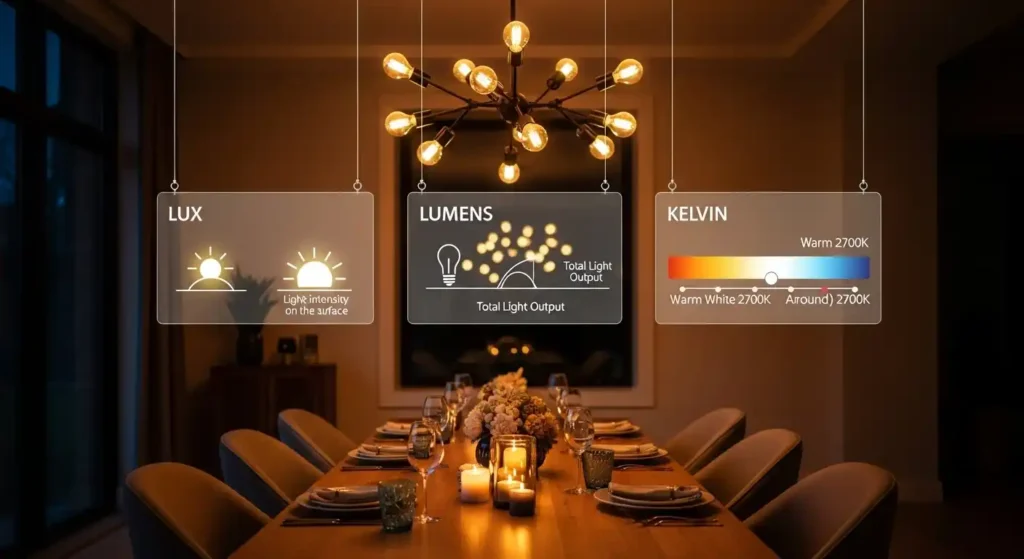
Designing a truly successful dining space requires going beyond aesthetics and understanding the core science of light. Three technical concepts are crucial for setting the perfect atmosphere:
| Concept | Definition | Recommended Dining Spec | Why it Matters |
|---|---|---|---|
| Lumens | The total amount of visible light emitted by a source. | 30–40 Lumens per square foot | Ensures the space is bright enough for tasks without being overwhelming. |
| Kelvin (K) | The measure of color temperature (warm vs. cool light). | 2700K to 3000K | This warm range mimics incandescent light, fostering a cozy, inviting atmosphere ideal for dining and conversation. |
| Lux | The measure of light intensity as perceived on a surface. | Varies greatly. | Directly affects functionality; high lux is needed for detailed tasks, but lower is better for relaxation. |
For optimal warmth and comfort, always aim for the 2700K to 3000K range. Choosing fixtures with a color temperature outside this band (e.g., 4000K and above) will result in a stark, cool environment that undermines a relaxing dining experience.
For more on how to choose the right color temperature for your home, consult a resource like Lighting Science Basics from a Renowned Source.
The Golden Rule of Height & Scale (Ergonomics)
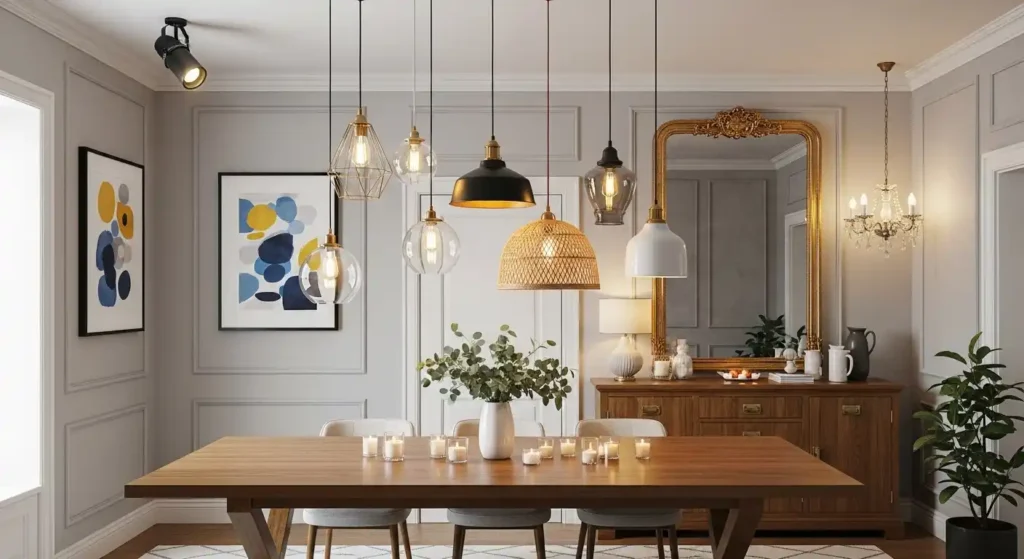
Improper placement of your main fixture is the number one design mistake. Follow these two rules to ensure visual balance and optimal function:
Hanging Height
The most crucial rule is maintaining a clear sightline across the table while providing focused illumination:
- Standard Rule: Chandeliers or pendant lights should hang 30 to 36 inches above the surface of a 30-inch-high dining table.
- Ceiling Exception: For ceilings taller than eight feet, it is generally recommended to add three inches of hanging height for every extra foot of ceiling height (e.g., for a 10-foot ceiling, hang at 36 to 42 inches).
Fixture Scale
To prevent your fixture from looking undersized or overpowering the room, use this simple formula:
- Fixture Diameter Calculation: Measure the length and width of your dining room (in feet). Add those two numbers together. The resulting sum is the ideal diameter of your fixture (in inches). (Example: a 10-foot x 14-foot room requires a 24-inch diameter fixture).
For deeper architectural guidance on ensuring perfect scale and height, see this analysis from Architectural Lighting Rules for Dining.
Choosing the Right Fixtures: Style Meets Function
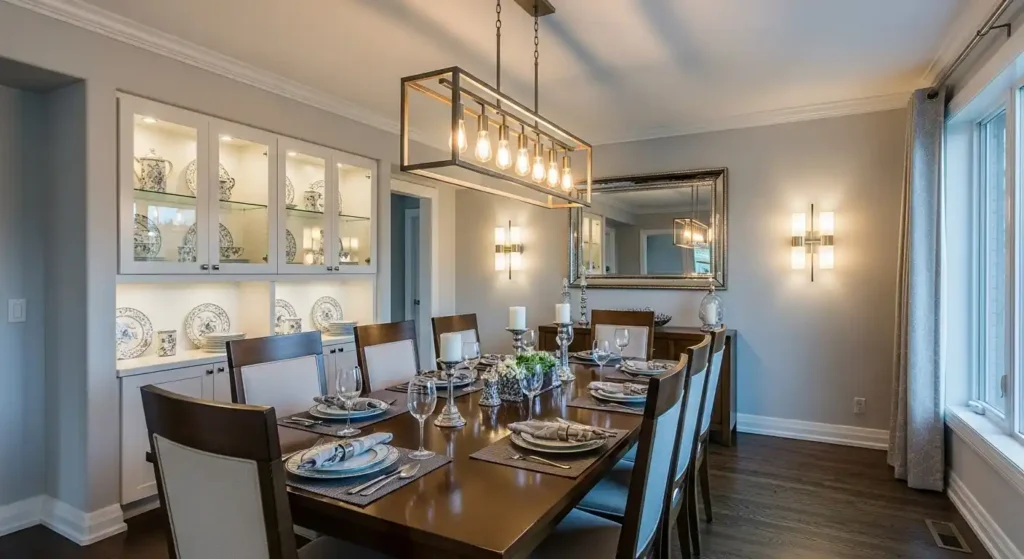
Selecting the correct style ensures that your lighting is an integral part of your curated design:
- Chandeliers: Offer a sense of elegance and serve as a commanding centerpiece. Ensure the diameter matches the scale of the room and table (see scale rule above).
- Linear Pendants: Ideal for long, rectangular, or boat-shaped dining tables. These fixtures provide even light distribution across the entire table length, maintaining a sleek, modern aesthetic.
- Wall Sconces: An excellent choice for accent lighting or supplemental ambient light. When placed symmetrically, they draw attention to wall features, adding warmth and vertical interest.
Dimmer Switches: The Secret to Flexibility
When designing the perfect dining room lighting, one crucial element that provides unmatched versatility is the dimmer switch.
- Adaptability: Dimmers allow you to instantly adjust light intensity, transitioning from bright, focused lighting for homework or cleanup to a soft, romantic glow for an intimate dinner party.
- Energy Efficiency: By allowing lower light levels when full brightness is unnecessary, you reduce electricity consumption and prolong the lifespan of your LED or incandescent bulbs.
- Creating Ambiance: The ability to finely tune the light level is essential for mood setting, promoting conversation and relaxation among guests.
A critical note: Always confirm that your chosen light bulbs and fixtures are explicitly labeled as dimmable to avoid buzzing or flickering issues.
Layering with Natural Light: Time of Day Considerations
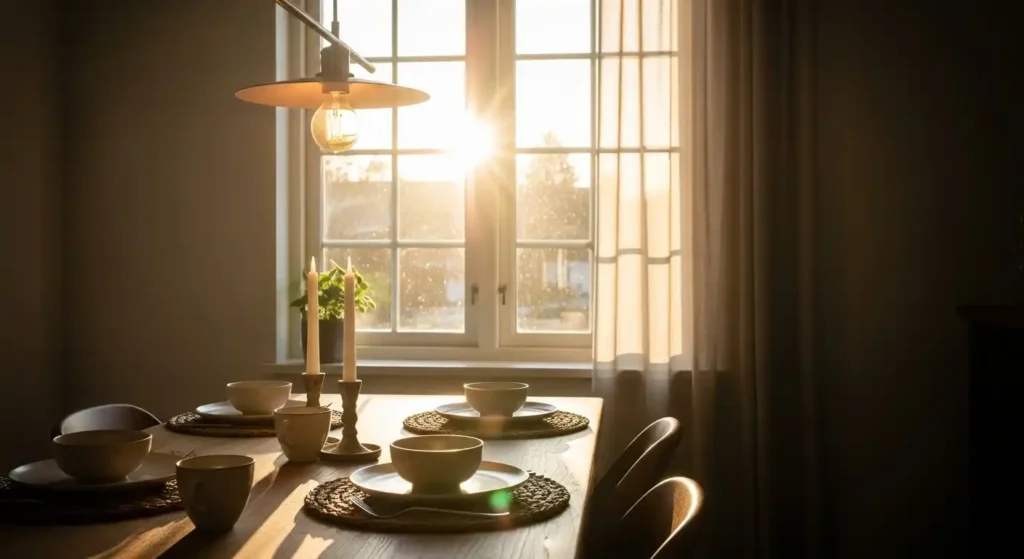
Natural light plays a vital role in the aesthetic and functional aspects of a dining room. We must balance our artificial light with the shifting sun:
- Window Treatments: Opt for sheer curtains or light-filtering blinds that allow soft light to diffuse into the space while maintaining privacy. Avoid heavy, light-blocking drapery during the day.
- Reflective Surfaces: Amplify the available sunlight by choosing light-colored paint, glossy finishes, and reflective elements (like mirrors or polished metals) to bounce light deeper into the room.
- Furniture Placement: Position heavy or tall furniture away from windows to prevent obstructing the natural light path.
- Color Harmony: Use warmer artificial light tones (2700K) in the early morning or evening to counteract the cooling effect of the dying natural light, making the space feel cozier.
Common Mistakes to Avoid in Dining Room Lighting
Ensure your finished design is flawless by steering clear of these common pitfalls:
- Ignoring Table Shape: Round tables need round or central fixtures. Long rectangular tables require linear fixtures or multiple pendants to provide even, balanced light across the surface.
- Over- or Under-Lighting: Avoid a single, harsh overhead light source. Always commit to the three-layer strategy to achieve balanced illumination that is never too harsh or too dim.
- Wrong Bulb Choice: Using bulbs that are too cool (above 3500K) or not compatible with dimmer switches can ruin the ambiance and functionality of the entire room.
- Incorrect Hanging Height: Hanging the fixture too high makes the light feel lost, and hanging it too low obstructs eye contact with guests. Always check the 30-36 inch rule.
Conclusion: Curating Your Ideal Dining Space
We have explored the essential technical and aesthetic elements of dining room lighting. By mastering the principles of Layered Lighting, ergonomic Fixture Placement, and Color Temperature (Kelvin), you are empowered to create a dining area that is not only beautiful but truly enhances your daily life and entertaining experiences.
Remember, lighting is the ultimate design tool for controlling mood. We encourage you to share your own experiences and lighting fixture successes in the comments below! What style of pendant or chandelier perfectly completed your dream dining space?