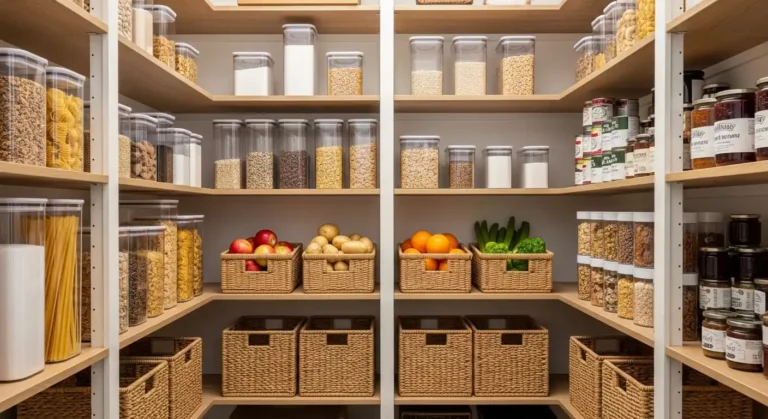

Tired of digging through messy shelves for ingredients? These simple DIY pantry organization tips make finding your essentials faster, easier, and visually appealing.
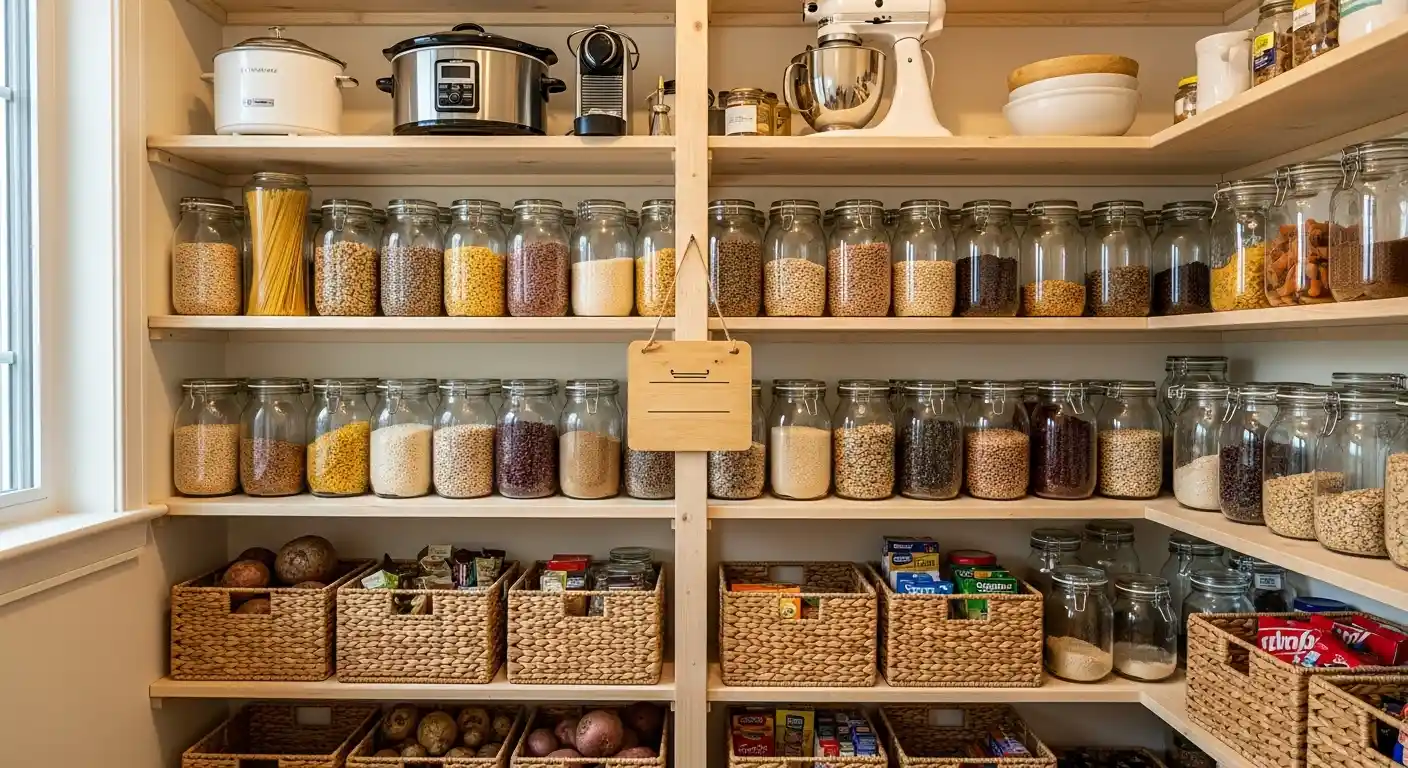
Opening my pantry used to feel like stepping into chaos.
Packets, jars, and cans were crammed together, and I often found expired items lurking in the back.
I decided to take control by diving into DIY pantry organization ideas, starting with labeling, uniform containers, and clever shelf dividers.
Slowly, each shelf became tidy, accessible, and pleasing to the eye.
The difference wasn’t just cosmetic—meal prep became faster, groceries lasted longer, and the kitchen finally felt truly functional.
Contents
- Why DIY Pantry Organization Makes a Difference
- Tools and Materials Needed for DIY Pantry Organization
- 21 DIY Pantry Organization Ideas
- Use Clear Containers for Dry Goods
- Install Adjustable Shelving
- Add Pull-Out Drawers
- Incorporate Lazy Susans
- Use Tiered Shelf Risers
- Group Similar Items Together
- Label Everything Clearly
- Utilize Door Space
- Repurpose Jars and Containers
- Create a Snack Station
- Use Magazine Holders for Packets
- Add Pull-Out Bins for Produce
- Create a Baking Station
- Incorporate Wire Baskets
- Stackable Storage Bins
- Lazy Susan for Easy Access
- Use Tiered Shelving
- Install Slide-Out Drawers
- Group by Category
- Label Everything
- Add a Recipe Corner
- Pantry Organization Tips to Maximize Space
- Pantry Maintenance Ideas
- Final Wrap-Up
Why DIY Pantry Organization Makes a Difference
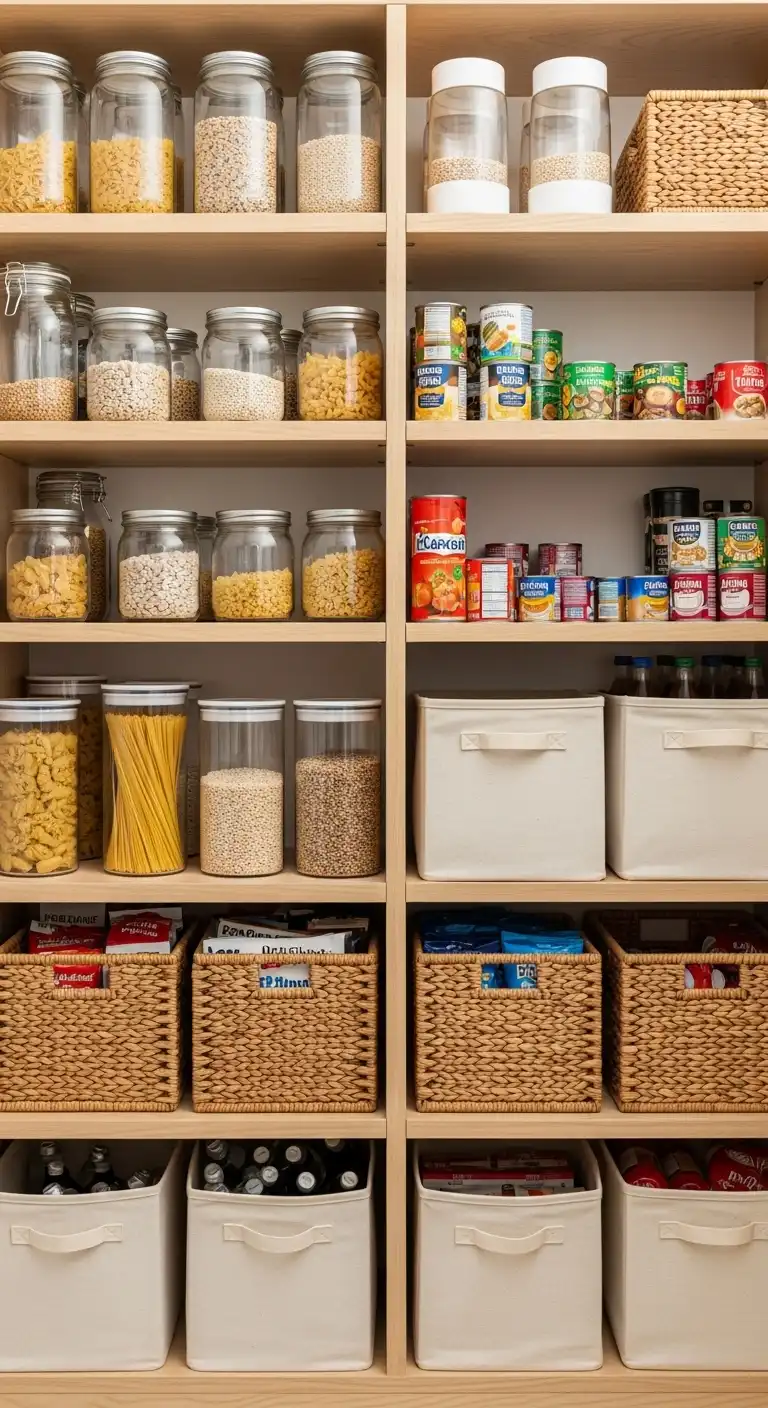
A well-organized pantry saves time when cooking and reduces stress from searching for ingredients in a messy space.
DIY solutions offer flexibility because you can customize them to your pantry’s size, storage needs, and budget.
Stackable bins, modular shelves, and labeled jars improve accessibility while enhancing the overall visual appeal of your kitchen.
When every item has its own place, your pantry becomes a space you enjoy visiting rather than avoiding.
Maintaining organization becomes simpler because a well-designed pantry encourages consistent habits and efficient routines.
Tools and Materials Needed for DIY Pantry Organization
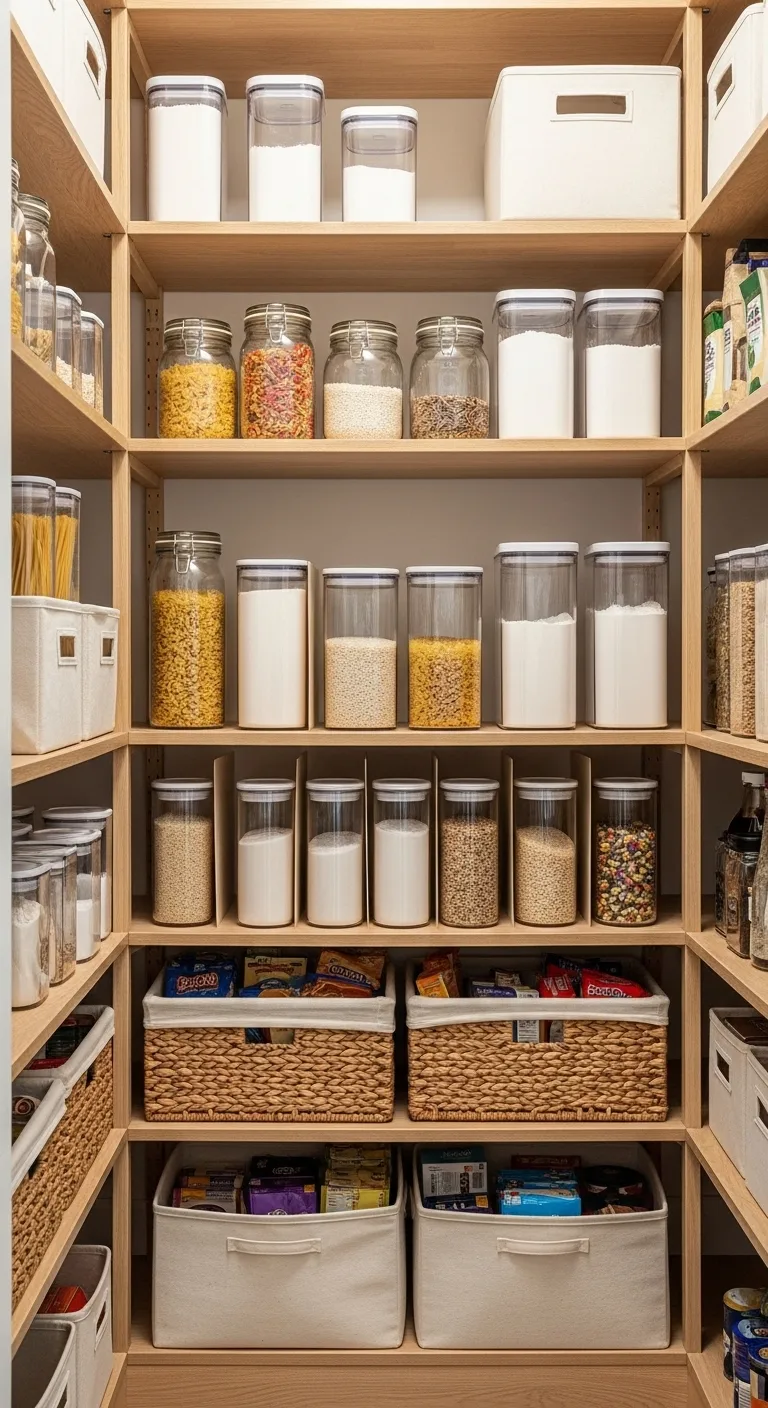
Before starting, gather essential tools like measuring tape, adhesive hooks, shelf risers, and stackable bins to make the process smooth.
Clear containers, baskets, and lazy Susans help maximize both vertical and horizontal storage space effectively.
Investing in adjustable shelving allows your pantry to adapt over time as storage needs change or grow.
Labels, either printed or handwritten, create a uniform look while making it easy to identify items quickly.
These materials are affordable, widely available, and provide a solid foundation for nearly every DIY pantry project.
21 DIY Pantry Organization Ideas
Use Clear Containers for Dry Goods
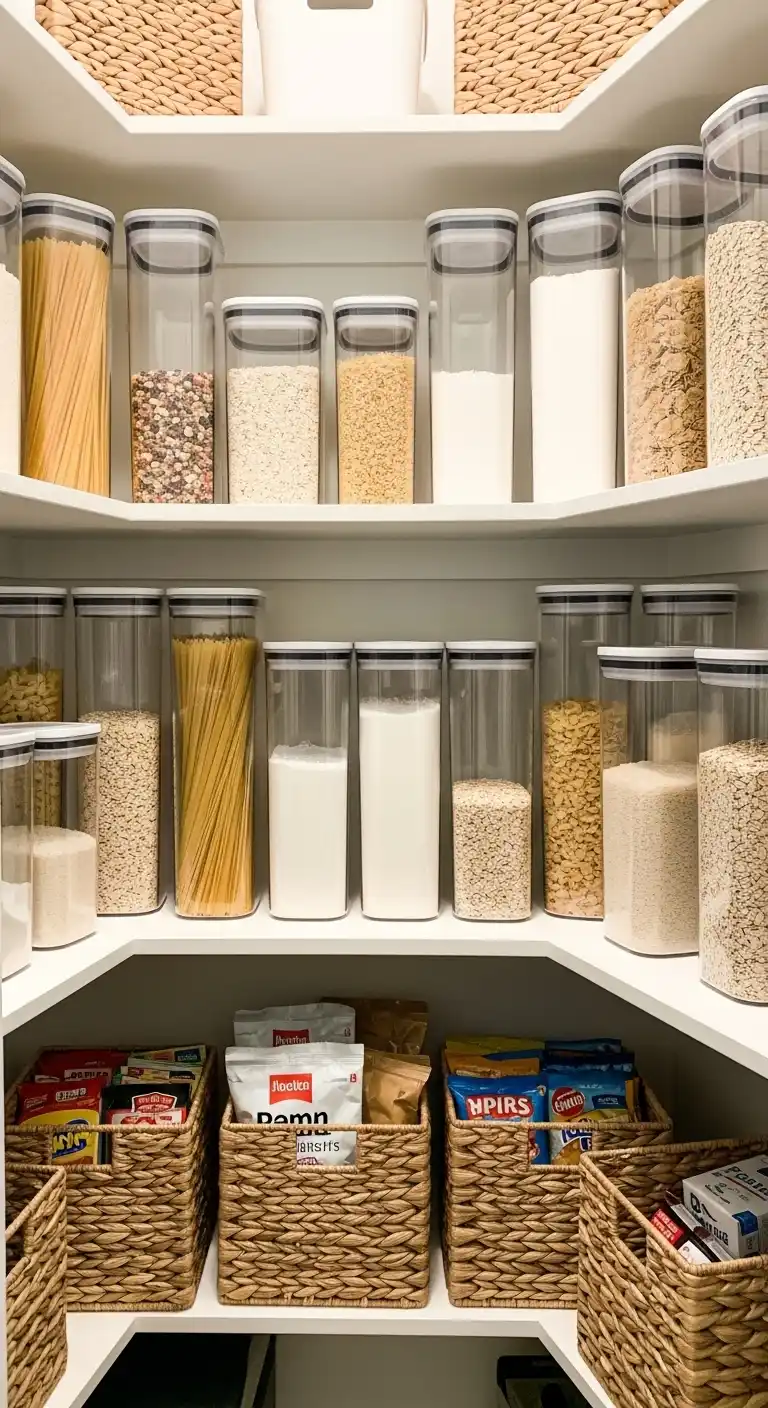
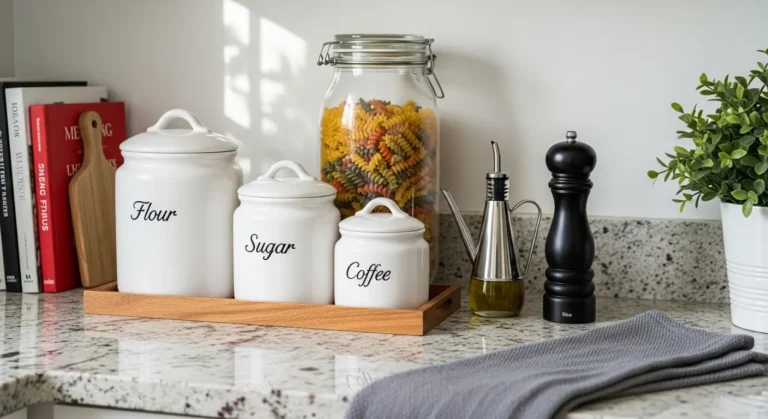
Clear containers make it easy to see how much flour, rice, pasta, or cereal you have without opening packages repeatedly.
Uniform containers create a clean, cohesive look while airtight lids keep ingredients fresh and prevent spills.
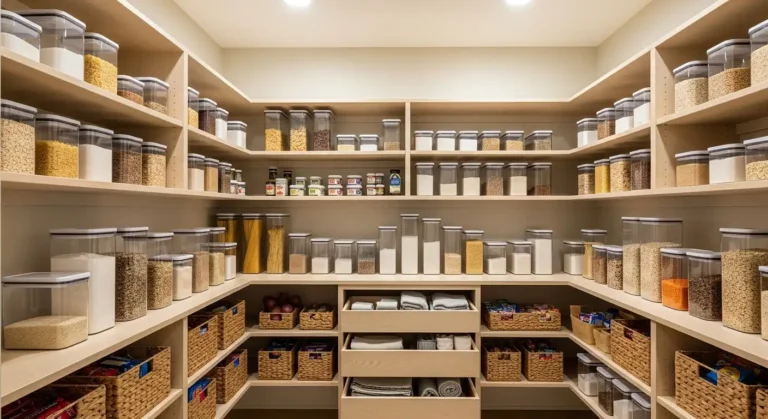
Stackable designs maximize vertical space, giving you more room for other items without overcrowding shelves.
Including small scoops or measuring cups inside containers simplifies portioning and daily cooking tasks, reducing clutter.
Labeling each container eliminates confusion and speeds up meal prep while maintaining a visually appealing pantry layout.
Install Adjustable Shelving

Adjustable shelves allow you to change the spacing between levels to accommodate items of varying heights effortlessly.
You can customize the arrangement for cereal boxes, tall condiment bottles, or oversized containers without wasting any space.
Adding extra shelves turns previously unused vertical space into functional storage, reducing countertop clutter and improving accessibility.
DIY adjustable shelving kits or simple modifications make this a cost-effective solution for most pantry layouts.
With proper planning, adjustable shelves transform a cluttered pantry into a streamlined and highly functional space.
Add Pull-Out Drawers
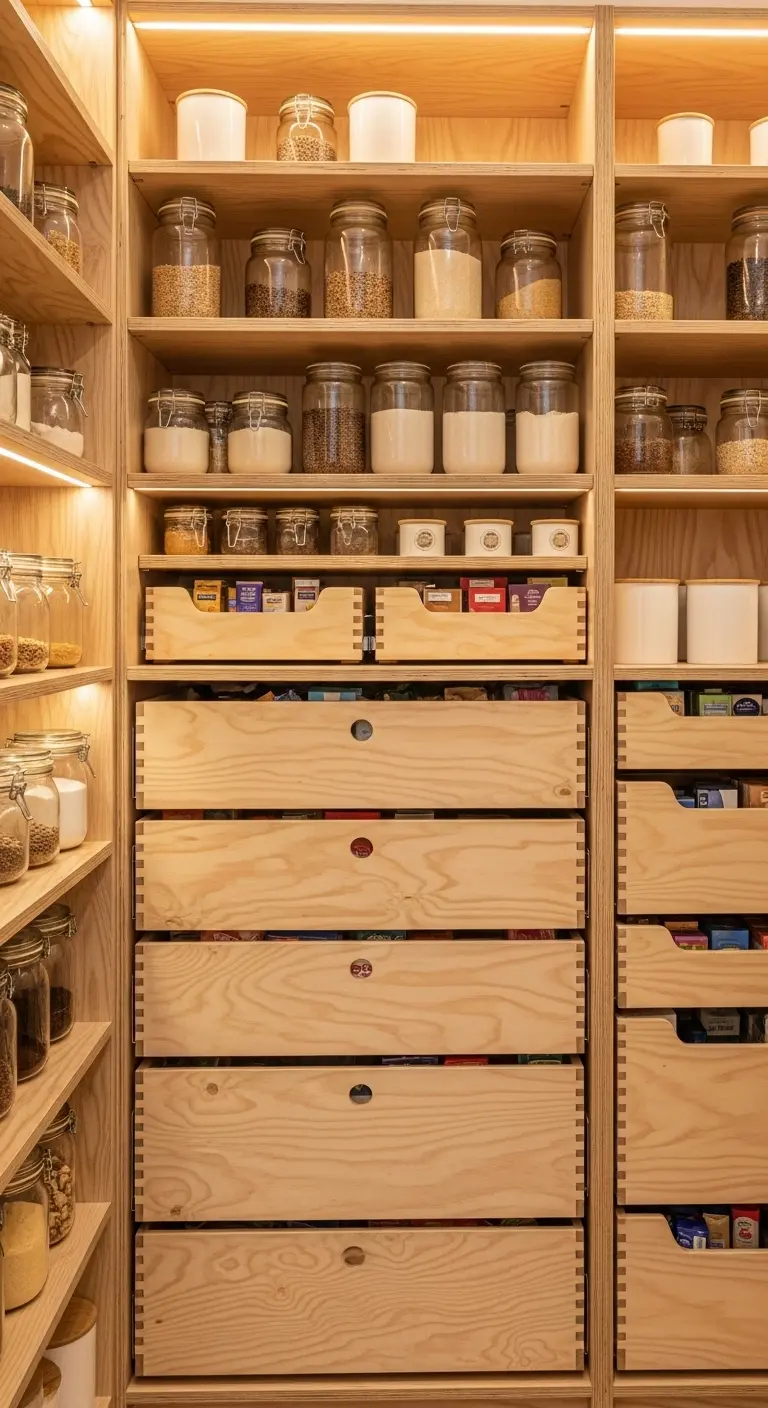
Pull-out drawers bring items from the back of deep shelves to your fingertips, minimizing bending or reaching.
They work well for canned goods, spices, baking ingredients, or any pantry items that get lost behind others.
DIY drawer kits or custom-built solutions can be installed for a polished, professional look while remaining highly practical.
Categorizing items within drawers further speeds up meal preparation and keeps everything easy to find.
Pull-out drawers make even the deepest pantry shelves accessible and organized without sacrificing style or efficiency.
Incorporate Lazy Susans
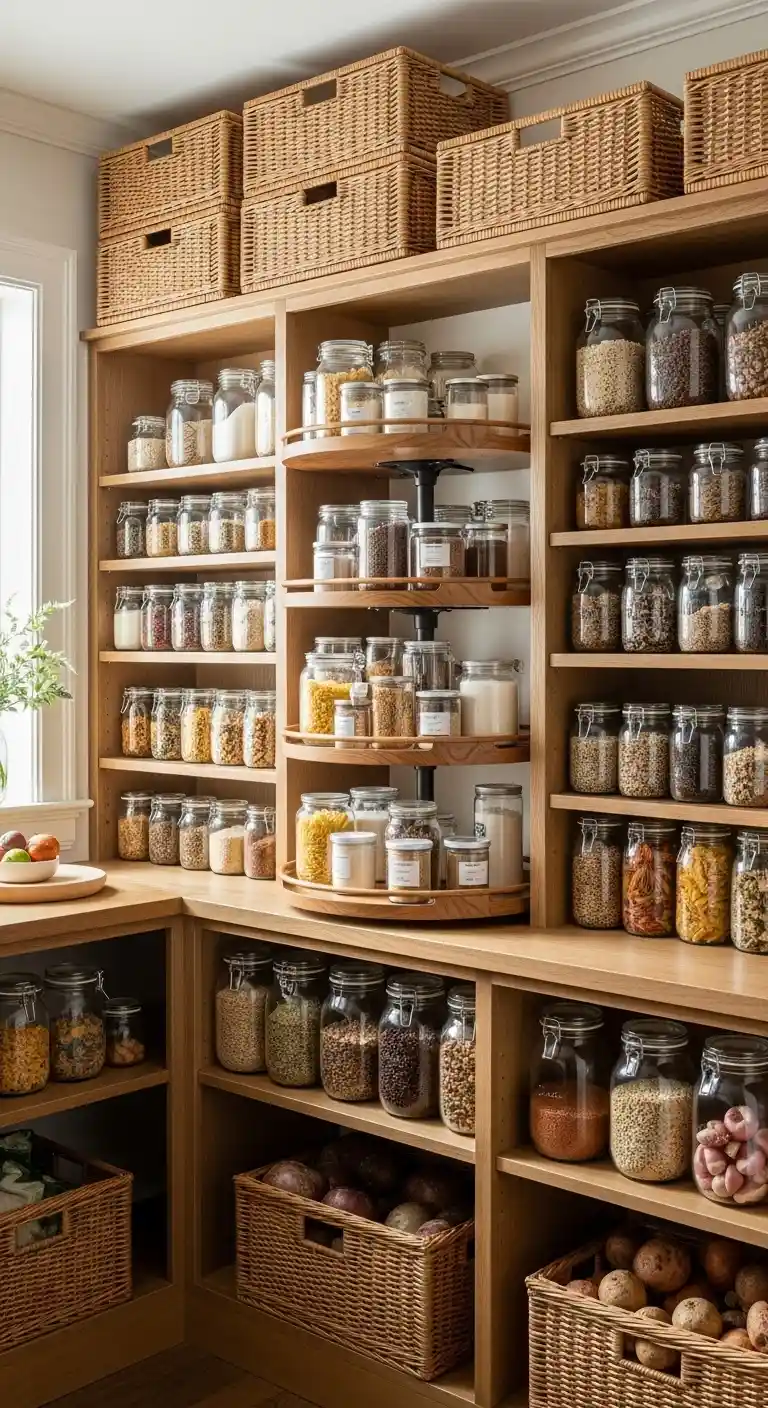
A lazy Susan rotates items smoothly to the front, making deep or corner shelves more functional.
They are perfect for condiments, oils, and small jars, ensuring items never get lost in the back of your pantry.
You can create a DIY version using a turntable or purchase a pre-made rotating shelf to fit your space.
Rotating items reduces clutter, increases accessibility, and adds a playful, functional element to your pantry setup.
Lazy Susans make pantry organization more efficient while keeping everything visible at a glance.
Use Tiered Shelf Risers

Tiered risers create multiple levels on a single shelf, making small items like spice jars or cans easy to see.
They prevent smaller items from being hidden behind taller containers, optimizing both storage and visual organization.
DIY risers can be made from repurposed materials or purchased pre-made to fit your pantry style.
With tiered shelving, frequently used items are always within reach, minimizing the need to shuffle items around.
Risers enhance vertical space while keeping your pantry organized, practical, and visually appealing.
Group Similar Items Together
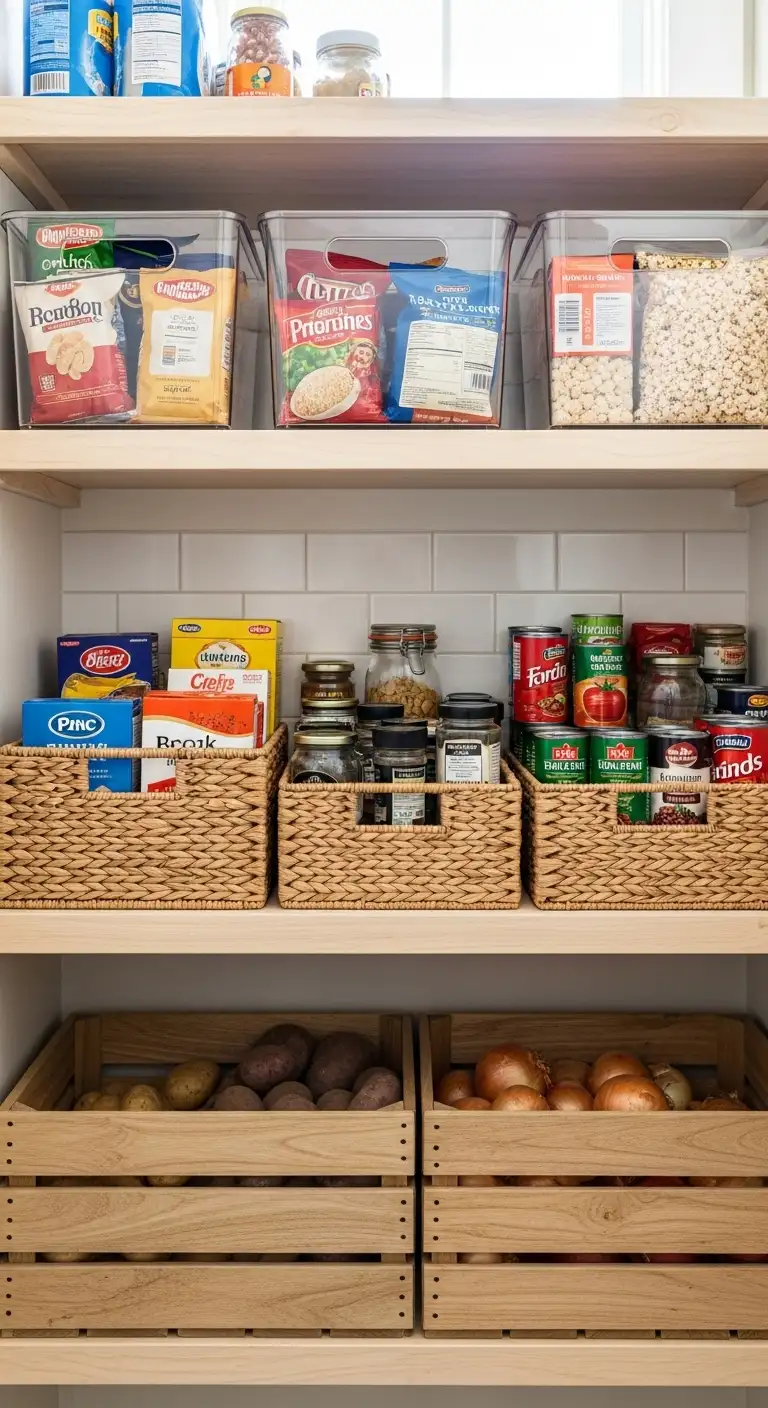
Organizing pantry items by category keeps everything orderly and easy to locate during cooking or meal prep.
Group snacks, breakfast foods, baking supplies, and condiments into separate bins or designated shelves for clarity.
DIY baskets, containers, and labeled jars make grouping effective while maintaining a visually cohesive pantry layout.
Categorizing similar items encourages better habits and makes maintaining long-term organization effortless and consistent.
This method also reduces food waste by making it easier to see what items are available at a glance.
Label Everything Clearly
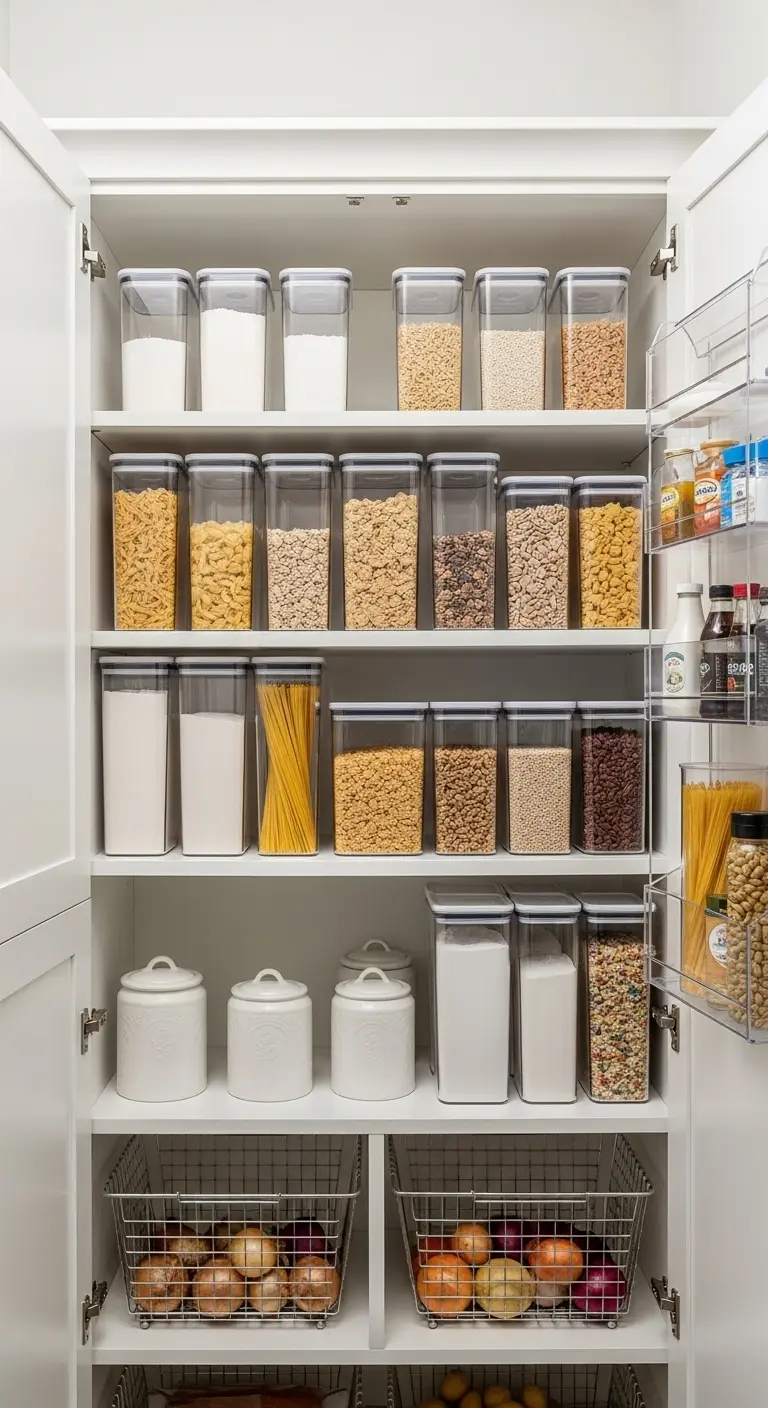
Labeling jars, bins, and shelves creates a polished and intentional look while simplifying item identification.
DIY labels can be printed, handwritten, or chalkboard-style, adding a personal and creative touch to your pantry.
Clear labeling ensures that everyone in the household knows where items belong, reducing clutter and confusion.
It is an inexpensive yet highly effective strategy for maintaining an organized, functional, and visually pleasing pantry.
A labeled pantry not only improves usability but also encourages consistent upkeep and maintenance over time.
Utilize Door Space
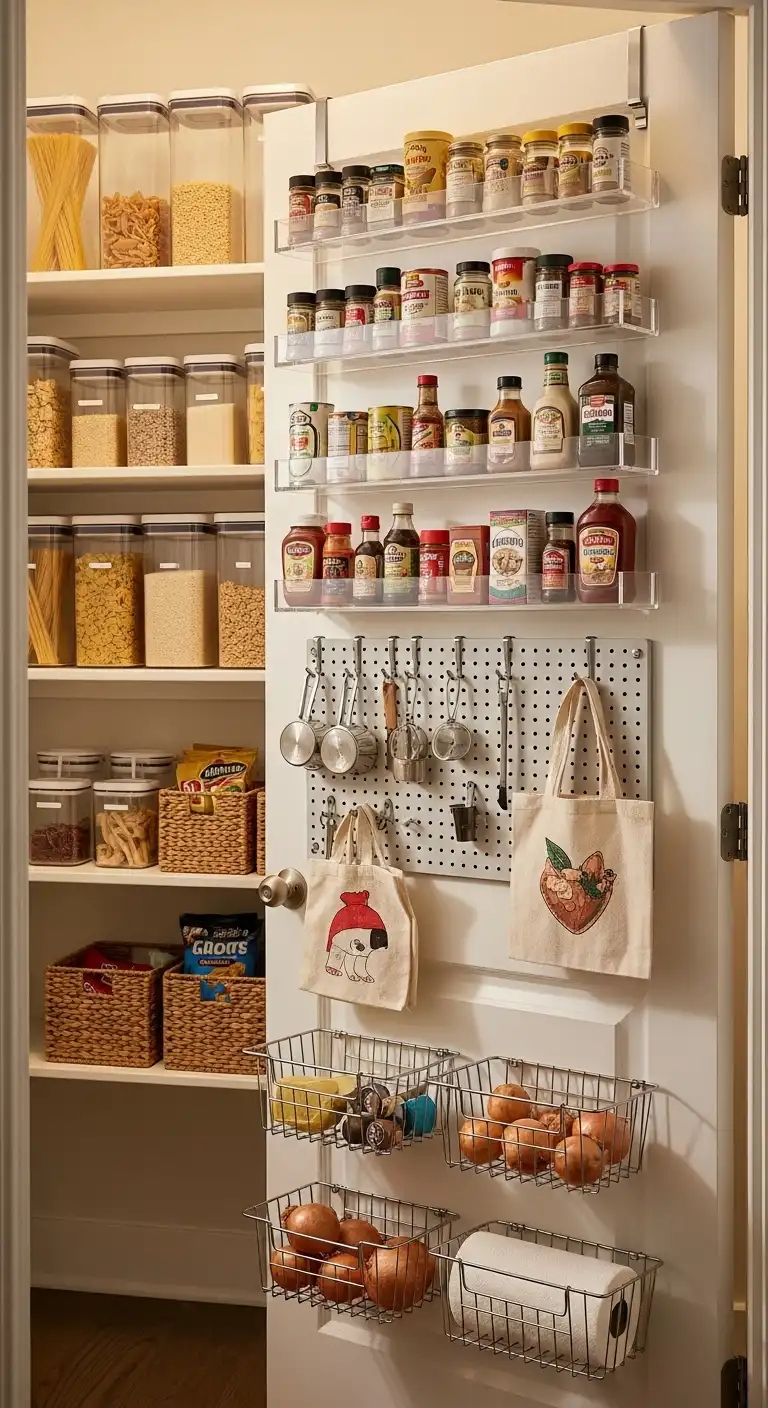
The back of pantry doors is often overlooked but offers valuable storage potential.
Install racks, hooks, or hanging baskets to hold spices, small jars, or frequently used snacks.
DIY solutions like tension rods or over-the-door organizers maximize unused space efficiently while keeping items accessible.
This approach keeps counters and shelves less crowded and ensures everything has a designated spot.
Door-mounted storage transforms hidden areas into functional zones, making your pantry feel larger and more organized.
Repurpose Jars and Containers
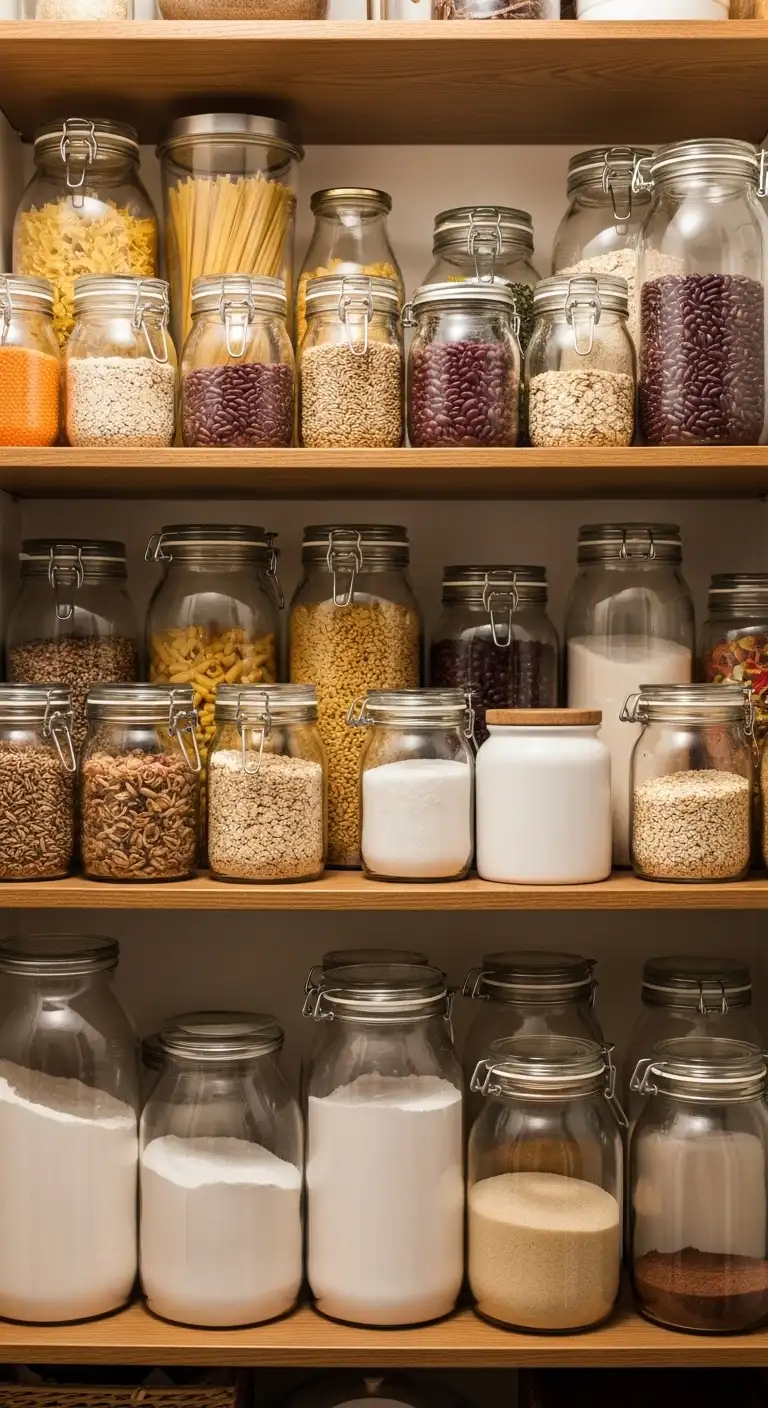
Glass jars, mason jars, or repurposed containers can store dry goods in a stylish and eco-friendly way.
They provide airtight storage while letting you see contents easily, reducing the chances of forgetting items.
Label each jar clearly and group similar items together for a visually appealing and functional setup.
Repurposing containers saves money and gives your pantry a consistent, coordinated look without buying expensive storage bins.
Creative use of jars and containers turns your pantry into an organized, efficient, and beautiful space.
Create a Snack Station
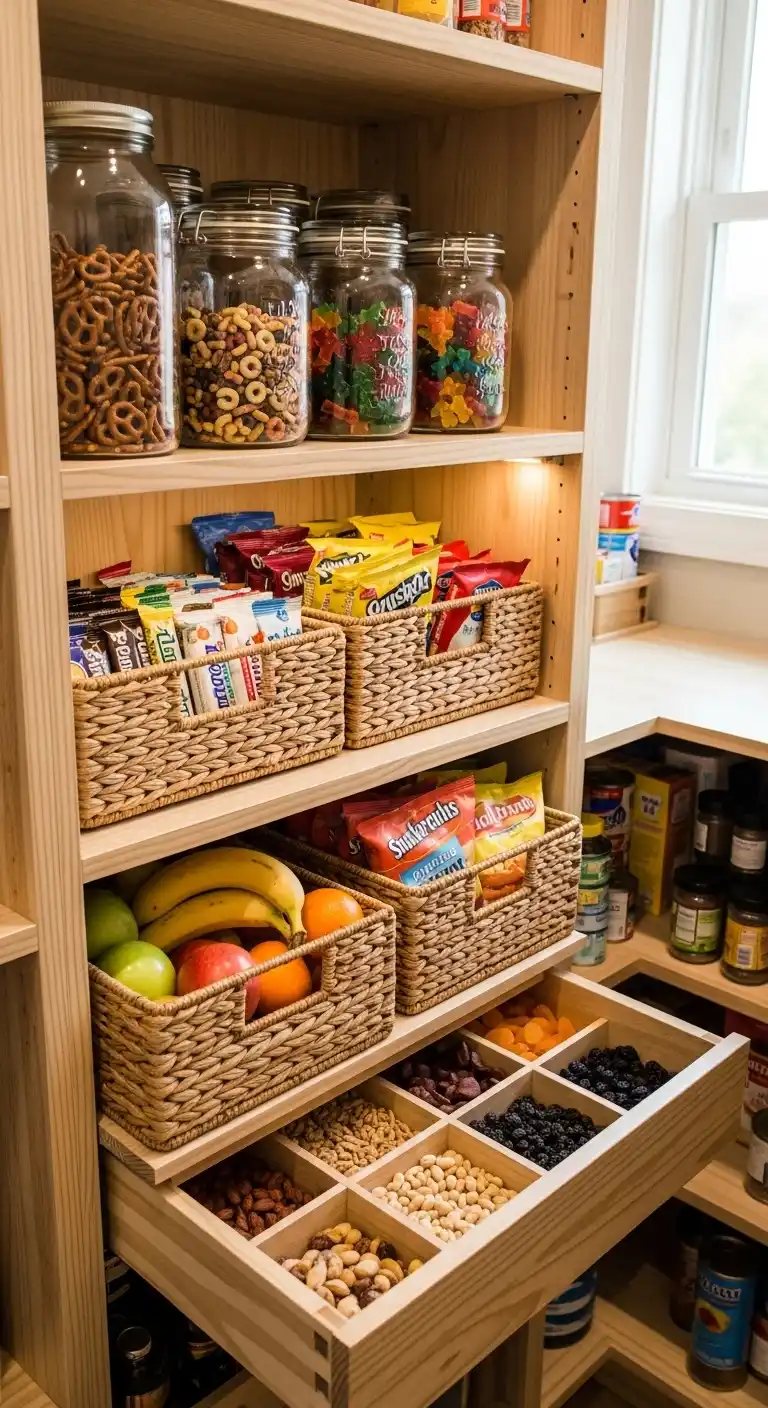
Dedicate a shelf or basket for snacks to keep them organized and accessible for everyone in the household.
Use clear bins, baskets, or containers to categorize chips, nuts, granola bars, and other favorite treats.
A DIY snack station reduces countertop clutter and ensures kids or guests can grab snacks without disrupting pantry order.
Labeling bins helps maintain organization while making the station visually appealing and functional.
This small, simple setup turns snack storage into a convenient, stylish, and practical part of your pantry.
Use Magazine Holders for Packets

Magazine holders are versatile and ideal for storing snack packets, seasoning pouches, or small food bags upright.
This keeps packets neat and visible, preventing them from falling or piling in a drawer or shelf.
DIY options include repurposing office magazine holders or creating wooden dividers for a custom look.
Grouping items this way saves space, keeps packets tidy, and simplifies meal prep and portioning.
Using magazine holders creates a minimalist, functional system that enhances pantry accessibility and appearance.
Add Pull-Out Bins for Produce

Pull-out bins are perfect for storing onions, potatoes, or other vegetables that don’t require refrigeration.
DIY bins or baskets with handles make access easy while keeping produce off countertops and organized.
This system prevents clutter, reduces waste by keeping items visible, and allows air circulation to maintain freshness.
Grouping similar items together in bins makes inventory checks fast and efficient during cooking.
Pull-out produce bins optimize your pantry’s depth while keeping fresh ingredients easily reachable and organized.
Create a Baking Station

Designate a specific shelf or drawer for baking essentials like flour, sugar, and measuring tools.
Use clear containers, labeled jars, and baskets to keep ingredients neat, accessible, and visually coordinated.
Adding small baking tools like scoops, whisks, or measuring spoons nearby streamlines the process.
This DIY approach makes baking simpler and more enjoyable while keeping the pantry tidy and well-organized.
A dedicated baking station saves time, reduces stress, and encourages creative cooking without cluttering other pantry zones.
Incorporate Wire Baskets

Wire baskets provide open storage that allows airflow while keeping items visible and organized.
They are perfect for snacks, small cans, or bulk ingredients that need easy access.
DIY options include stacking baskets or hanging them under shelves to utilize vertical space efficiently.
Wire baskets combine function and style, giving your pantry a clean, organized, and contemporary look.
These baskets make finding and storing items effortless while keeping your pantry visually tidy and functional.
Stackable Storage Bins

Stackable storage bins maximize vertical pantry space and make bulk items easier to organize.
Use uniform bins for grains, cereals, or snack packs to create a cohesive and efficient system.
DIY labeling with chalkboard stickers or printed tags keeps items easy to identify and access.
Stackable bins reduce clutter, prevent items from toppling, and make it easier to maintain an organized pantry over time.
This simple solution combines functionality with a clean, modern aesthetic that elevates your pantry organization.
Lazy Susan for Easy Access

A Lazy Susan helps store small jars, bottles, or condiments while providing effortless access to all items.
DIY versions can be made using rotating trays or repurposed cake turntables for a cost-effective solution.
Place it on a pantry shelf or inside a cabinet to make reaching items at the back hassle-free.
This rotating system saves space, keeps everything visible, and ensures no item gets lost behind others.
Lazy Susans make everyday cooking smoother and your pantry more efficient, organized, and accessible.
Use Tiered Shelving

Tiered shelving is ideal for displaying canned goods, spices, or smaller items at varying heights.
DIY risers can be made from wood or sturdy boxes to create visual organization and easy reach.
This method allows you to see everything at a glance while preventing items from stacking too high.
Tiered shelves reduce the need to move items around when searching for something specific, saving time and frustration.
It turns an ordinary shelf into a visually organized and functional space for daily pantry use.
Install Slide-Out Drawers

Slide-out drawers provide easy access to items stored at the back of deep pantry shelves.
DIY drawers can be built with smooth glides to accommodate containers, snacks, or baking ingredients.
This system keeps pantry contents visible, prevents clutter, and allows you to reach everything without bending or stretching.
Slide-out drawers make organizing and rotating pantry items effortless, improving both efficiency and overall storage capacity.
They are a smart investment for a more practical, tidy, and well-planned pantry layout.
Group by Category

Organizing pantry items by category ensures faster access and a more intuitive system.
Group baking supplies, canned goods, snacks, and breakfast items together in clearly defined zones.
Use baskets, bins, or trays to maintain separation while keeping similar items visually aligned.
This method reduces confusion, prevents duplicates, and helps maintain a functional and orderly pantry.
Grouping by category simplifies meal prep and shopping by making it easier to track inventory.
Label Everything

Clear labeling is a simple but powerful step in maintaining a well-organized pantry.
Use printed tags, chalkboard labels, or even handwritten notes for jars, bins, and baskets.
Labels help family members quickly identify contents and return items to their proper spots.
This ensures that even frequently used items don’t end up scattered or misplaced over time.
Labeling transforms a functional pantry into a visually appealing and stress-free space that everyone can use efficiently.
Add a Recipe Corner

Designate a small section for cookbooks, printed recipes, or meal planning notes.
DIY holders, clips, or mini corkboards can create a compact and functional recipe corner.
This keeps inspiration and instructions in one place, reducing clutter elsewhere in the kitchen.
A recipe corner complements your pantry organization by combining storage with functionality for daily cooking.
It encourages meal planning, streamlines preparation, and adds a personal touch to your pantry space.
Pantry Organization Tips to Maximize Space
Use vertical space efficiently by adding extra shelves, hooks, or hanging baskets wherever possible.
Store items in clear containers to maintain visibility and reduce the chance of forgetting ingredients.
Rotate older items forward and newly purchased goods to the back to prevent expiration and waste.
Regularly declutter and reorganize shelves to keep the pantry functional, stylish, and stress-free.
These simple strategies enhance daily usability while making the pantry feel more spacious and organized.
Pantry Maintenance Ideas
Schedule a monthly check to wipe shelves, clean containers, and discard expired items.
Reorganize categories if needed to accommodate changing grocery habits or seasonal items.
Encourage family members to return items to their designated spots for long-term organization.
Maintaining a tidy pantry ensures smooth meal prep, reduces waste, and keeps your kitchen looking pristine.
Consistent upkeep makes DIY pantry organization a lasting solution rather than a temporary fix.
Final Wrap-Up
DIY pantry organization transforms a cluttered storage area into a functional, stylish, and stress-free space.
From jars, baskets, and door racks to pull-out drawers and tiered shelves, each idea enhances usability.
Implementing small changes creates a system that saves time, reduces frustration, and makes cooking more enjoyable.
Labeling, grouping by category, and maintaining a recipe corner adds structure and keeps your pantry organized long-term.
With these practical tips, your pantry can become a space that inspires efficiency, creativity, and effortless meal preparation.