
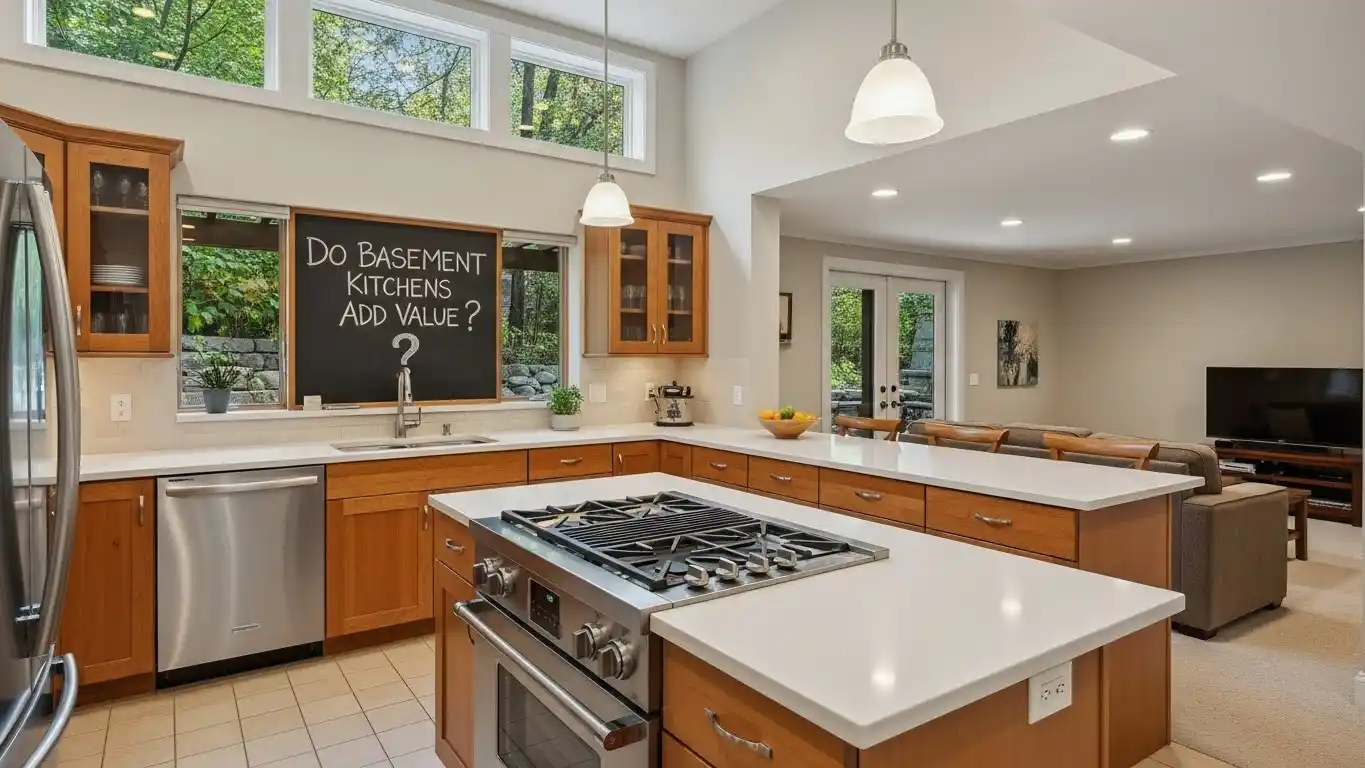
When it comes to home renovations, adding functional living space can significantly enhance both your lifestyle and your property’s value.
One increasingly popular upgrade is the basement kitchen. But many homeowners wonder: do basement kitchens add value to a home?
In this blog post, we’ll explore the benefits of installing a basement kitchen, how it affects your home’s resale value, and key considerations to keep in mind before taking on this project.
Contents
What Is a Basement Kitchen?
A basement kitchen, sometimes called a kitchenette, is a fully or partially equipped cooking area located in the basement of a home.
It usually includes essential appliances like a stove or cooktop, refrigerator, sink, and cabinetry.
Basement kitchens are often part of a larger finished basement space that might include a living area, bedroom, or bathroom, effectively creating a self-contained living unit.
These setups are especially popular in multi-generational homes, rental properties, or houses with in-law suites.
They provide an additional functional space that can serve various purposes—from hosting guests to generating rental income.
Do Basement Kitchens Add Value to a Home?
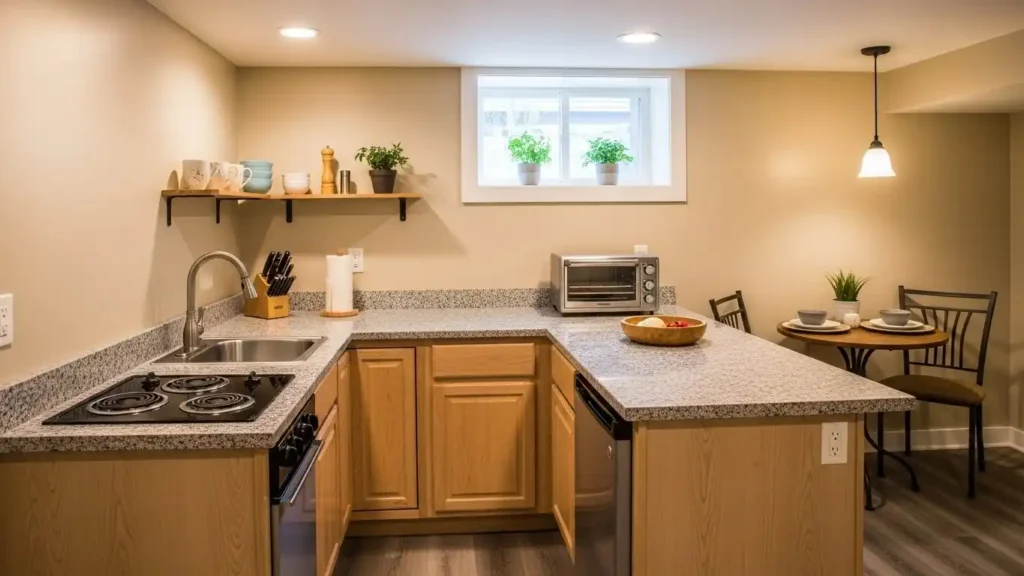
The short answer is yes, basement kitchens can add value to your home — but the extent depends on several factors.
Here’s a detailed look at how and why a basement kitchen can impact your property’s worth.
1. Increased Usable Living Space
A finished basement with a kitchen transforms an otherwise underutilized area into a fully functional living space.
This additional square footage is highly attractive to buyers, especially in markets where space is at a premium.
According to real estate experts, finished basements generally add value because they increase the home’s living area without the need for costly above-ground expansions.
By including a kitchen, the basement becomes more independent and versatile.
It can serve as a rental unit, a guest suite, or a private space for family members, which broadens the appeal of your home.
2. Potential for Rental Income
One of the biggest value drivers of a basement kitchen is the potential to generate rental income.
Many buyers are interested in properties that offer an in-law suite or a separate living area that can be rented out.
This added income stream can justify a higher purchase price, making your home more attractive on the market.
Homes with basement kitchens are often marketed as multi-family or dual-living properties, which can appeal to a wider audience and increase demand.
3. Enhanced Convenience and Lifestyle Appeal
Even if you don’t plan to rent out the basement, a kitchen downstairs adds convenience and flexibility to your living arrangements.
It can serve as a secondary cooking space for busy households, a place for teenagers or elderly family members to have some independence, or a setup for entertaining guests without disturbing the main living areas.
This lifestyle enhancement can translate into increased perceived value for buyers who prioritize functionality and comfort.
How Much Value Does a Basement Kitchen Add?

While it’s difficult to assign an exact dollar amount to the value a basement kitchen adds, industry sources and appraisers suggest that a finished basement with a kitchen can boost home value by approximately 10-20%, depending on location and quality of the renovation.
For example, a well-executed basement renovation that includes a kitchen, bathroom, and living area can cost anywhere from $20,000 to $75,000 or more.
However, this investment often pays off at resale, as buyers are willing to pay a premium for the added space and amenities.
It’s important to note that the value added depends heavily on the quality of the finishes, the functionality of the kitchen, and how well it integrates with the overall basement space.
Key Considerations Before Adding a Basement Kitchen
If you’re thinking about adding a basement kitchen, here are some important factors to consider to maximize value and avoid costly mistakes:
1. Local Building Codes and Permits
Basement kitchens typically require plumbing, electrical, and ventilation work, which means you’ll need to comply with local building codes.
Some municipalities have strict regulations about what constitutes a legal kitchen and whether the basement can be considered a separate dwelling unit.
Make sure to check zoning laws and obtain necessary permits before starting the project.
2. Purpose of the Basement Kitchen
Clarify your goals for the basement kitchen. Are you planning to rent the space out?
Use it as a guest suite? Or simply create a convenient secondary kitchen for family use? Your intended use will influence the design, appliances, and finishes you choose.
3. Quality of Materials and Appliances
To add real value, the basement kitchen should be well-designed with durable, attractive materials and reliable appliances.
Cheap finishes or poorly planned layouts can detract from the home’s appeal and may not yield a good return on investment.
4. Integration with the Rest of the Basement
A basement kitchen works best when it complements a finished basement that includes comfortable living areas and adequate lighting.
Consider adding a bathroom or creating an open floor plan to enhance the overall functionality and attractiveness of the space.
5. Impact on Resale Market
Research your local real estate market to understand how much buyers value basement kitchens.
In some areas, multi-family or rental-capable properties are highly sought after, while in others, buyers may prioritize traditional layouts.
Consult with a local real estate agent or appraiser to gauge market demand.
Benefits Beyond Home Value
While the primary focus of this post is on whether basement kitchens add value, it’s worth highlighting some additional benefits:
- Flexibility: Basement kitchens can adapt to changing family needs, such as accommodating aging parents, adult children, or guests.
- Privacy: They offer a separate living space that can enhance privacy for both homeowners and tenants.
- Entertainment: A basement kitchen paired with a media room or game area creates an ideal space for entertaining.
- Energy Efficiency: Some homeowners use basement kitchens to reduce traffic to the main kitchen, potentially saving energy by cooking smaller meals downstairs.
Potential Drawbacks to Consider
No renovation is without potential downsides. Here are some challenges associated with basement kitchens:
- Cost: Installing a basement kitchen can be expensive, especially if significant plumbing or electrical upgrades are needed.
- Moisture Issues: Basements are prone to dampness and flooding, so waterproofing and proper ventilation are critical.
- Resale Complexity: In some markets, buyers may be wary of homes with basement kitchens if they suspect zoning or legal issues.
- Maintenance: More appliances and plumbing mean more maintenance and potential repairs over time.
Final Thoughts: Do Basement Kitchens Add Value?
In summary, do basement kitchens add value? Yes, they generally do, particularly when part of a well-planned, finished basement that enhances living space and functionality.
A basement kitchen can increase your home’s usable square footage, attract a broader range of buyers, and even generate rental income, all of which contribute to higher resale value.
However, the value added depends on factors like local market demand, quality of construction, and compliance with building codes.
If you’re considering this upgrade, weigh the costs and benefits carefully, and consult with professionals to ensure your investment pays off.
Adding a basement kitchen is more than just a renovation—it’s about creating a versatile space that can improve your lifestyle today and increase your home’s worth tomorrow.