
Your kitchen cabinets are overflowing with gadgets you never use. Finding what you need feels like a treasure hunt most days.
The KonMari method works exceptionally well for decluttering a kitchen because it helps you see exactly what you own. It also makes deciding what to keep much easier.
I’ve discovered that applying Marie Kondo’s “spark joy” principle to kitchen items transforms not just your space, but how you feel about cooking and spending time in your kitchen.
The method focuses on keeping items that bring happiness rather than simply discarding things. That makes the process feel positive instead of overwhelming.
The kitchen presents unique challenges because everything seems practical and necessary. But when I pull everything out of my kitchen cabinets and drawers at once, I can clearly see duplicate items and tools I never actually reach for when cooking.
Key Takeaways
- The KonMari method helps you spot duplicate kitchen items by removing everything from cabinets at once.
- Focusing on joy instead of just function creates a more positive decluttering experience.
- An organized kitchen using KonMari principles makes cooking more enjoyable and efficient.
Contents
- Foundations of the Kitchen KonMari Method
- Step-By-Step Kitchen Decluttering Process
- Tidying by Category in the Kitchen
- Wooden Spoons for Cooking – 10 Pc Utensil Set, Dur…
- Cuisinart 17-Piece Cookware Set, Chef’s Classic St…
- Ninja NeverClog Cold Press Juicer, Powerful Slow J…
- MALACASA 24-Piece Gourmet Porcelain Dinnerware Set…
- Sorting and Selecting Cooking Utensils
- Handling Sentimental Items and Duplicates
- Prioritizing Minimalism vs. Practicality
- Effective Organizing Techniques for an Organized Kitchen
- Strategic Use of Drawer Dividers and Storage Solutions
- SpaceAid Bamboo Drawer Dividers with Inserts and L…
- AntStep 12 Pack Clear Plastic Storage Bins, Pantry…
- ORDORA Pots and Pans Organizer: under Cabinet, 20….
- RCHYFEED 4 Tier Spice Rack Organizer, Spice Organi…
- Organizing Kitchen Gadgets and Tools
- Designating Storage Zones for Workflow
- Maintaining Order Through Meal Planning
- Sustaining a Joyful and Clutter-Free Kitchen
Foundations of the Kitchen KonMari Method
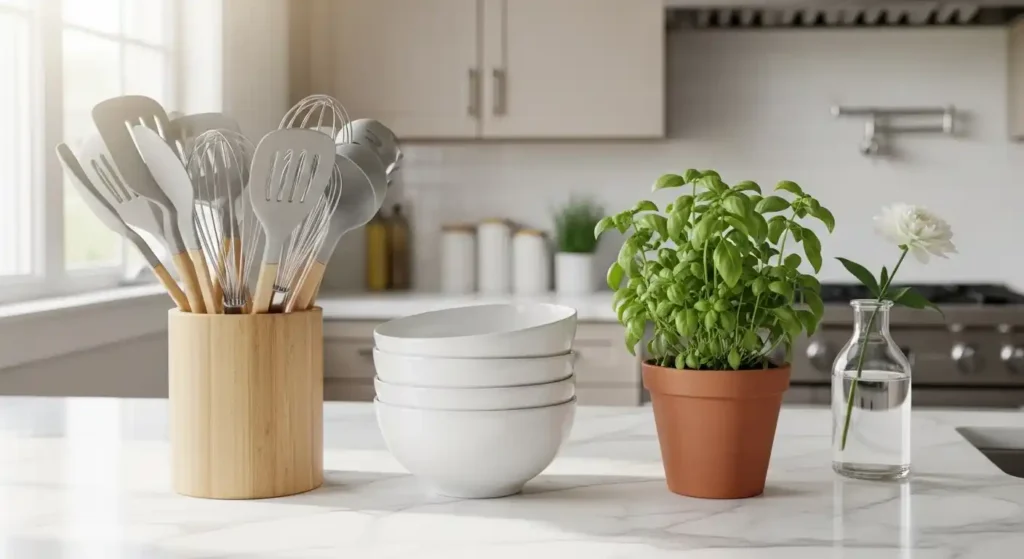
The KonMari method transforms kitchen organization through joy-based decision making and mindful tidying. Understanding the philosophy behind the KonMari method helps create lasting change in your cooking space.
Core Principles of the KonMari Method
The KonMari method centers on keeping items that spark joy rather than focusing on what to discard. I find this approach creates a positive mindset during the decluttering process.
The method follows a specific category order: clothing, books, papers, miscellaneous items, and sentimental pieces. However, the kitchen falls under miscellaneous items, so it’s part of the third phase.
Key principles include:
- Touch each item individually.
- Ask if it sparks joy.
- Thank items before letting them go.
- Assign a home for everything you keep.
Committing to the entire category before moving forward really matters. That keeps you from only half-organizing a single area while the rest stays messy.
Marie Kondo’s Approach to Tidying Up
Marie Kondo developed this system based on respect for belongings and creating your ideal living environment. Her approach stands out because she emphasizes emotional connection to objects.
Tidying up happens all at once, not room by room. I always recommend gathering all kitchen items from every spot before you start sorting.
Marie Kondo teaches that tidying is about curating your environment, not just cleaning. That means being intentional about what stays in your kitchen.
The method starts with visualization of your ideal lifestyle. Picture how you want to feel and function in your kitchen before you touch a single item.
The Role of Joy and Mindset in Kitchen Organization
Joy is the main decision-making tool in the KonMari method. Focusing on what to keep instead of what to toss makes the process feel more empowering.
I’ve noticed joy feels different for everyone. Some people get a physical buzz when holding their favorite kitchen tools. Others just feel a little spark of excitement or nostalgia.
Common joy indicators include:
- Physical warmth or lightness
- Excitement about using the item
- Pleasant memories associated with cooking
- Feeling of gratitude for the object
Shifting your mindset from “getting rid of things” to “choosing what brings happiness” really changes your relationship with your stuff. This positive approach helps you keep things organized long-term.
Kitchenware that sparks joy usually includes well-made tools, meaningful gifts, or items connected to favorite recipes and memories.
Step-By-Step Kitchen Decluttering Process
The KonMari method follows specific categories instead of a room-by-room approach, which makes kitchen organization more systematic. I gather all similar items together, test each piece for joy, and create storage systems that support my daily routines.
Tidying by Category in the Kitchen
I start by gathering items of a particular category from every corner of my kitchen. This means collecting all cooking utensils from drawers, counters, and cabinets into one spot.
Kitchen Categories to Tackle:
- Cooking utensils (spatulas, spoons, whisks)
- Cookware (pots, pans, baking sheets)
- Small appliances (blenders, mixers, coffee makers)
- Dishware (plates, bowls, glasses)
- Food items (pantry goods, spices, condiments)


I hold each item and ask if it sparks joy. That physical connection helps me decide what stays and what goes.
The process always reveals duplicates I forgot about. I often find three can openers or multiple measuring cups hiding in different drawers.
Sorting and Selecting Cooking Utensils
I examine every spatula, whisk, and measuring spoon to figure out which ones I actually use. The joy test feels a little different for practical items like these.
For cooking tools, I think about a few things:
- Functionality: Does it work better than similar tools?
- Frequency of use: Do I reach for it regularly?
- Quality: Is it well-made and durable?
- Space efficiency: Does it serve more than one purpose?
I keep my favorite wooden spoon that fits perfectly in my hand, even if it’s old. The beat-up measuring cup that doesn’t spill stays, while the fancy set that tips over gets the boot.
Sharp, high-quality knives bring me joy because they work so well. Dull or damaged tools that make cooking a pain get donated or tossed.
Handling Sentimental Items and Duplicates
Sentimental kitchen items need extra attention during decluttering. I separate items with emotional value from the ones that are just functional.
My grandmother’s mixing bowl might not be the most practical, but it connects me to family memories. I keep things that truly spark joy, not guilt.
Duplicate Decision Framework:
- Keep the highest quality version.
- Choose the most frequently used one.
- Pick items that fit my cooking style.
- Think about storage space limitations.
I donate extra serving platters to families who’ll actually use them. Three ice cream scoops become one trusty favorite.
If I’m unsure about something, I box it up for three months. If I don’t miss it or need it, it goes.
Prioritizing Minimalism vs. Practicality
I try to balance a minimal kitchen with the reality of what I actually cook. Some tools are essential even if I use them rarely.
My stand mixer hogs counter space, but I use it every week for bread. The oddball tools I only need for holiday cookies get tucked away in less accessible cabinets.
Essential vs. Optional Categories:
| Essential Tools | Optional/Specialty |
|---|---|
| Chef’s knife | Garlic press |
| Cutting board | Specialty baking pans |
| Basic pots/pans | Single-use gadgets |
| Mixing bowls | Duplicate serving pieces |
I keep backup items for things that break or disappear often, like measuring spoons. But I try not to keep “just in case” items that only gather dust.
The trick is building a kitchen that matches how I actually cook, not some fantasy version of myself who bakes every weekend.
Effective Organizing Techniques for an Organized Kitchen
Creating a truly organized kitchen means using smart storage, thoughtful categories, workflow zones, and a little meal planning. These techniques turn cluttered spaces into efficient cooking environments where every item serves a purpose.
Strategic Use of Drawer Dividers and Storage Solutions
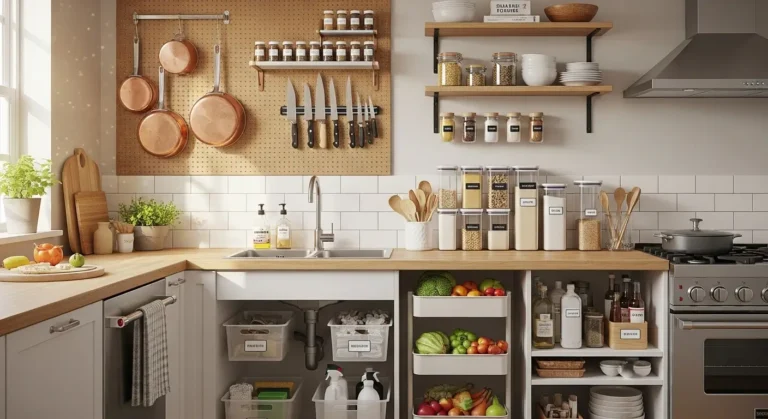
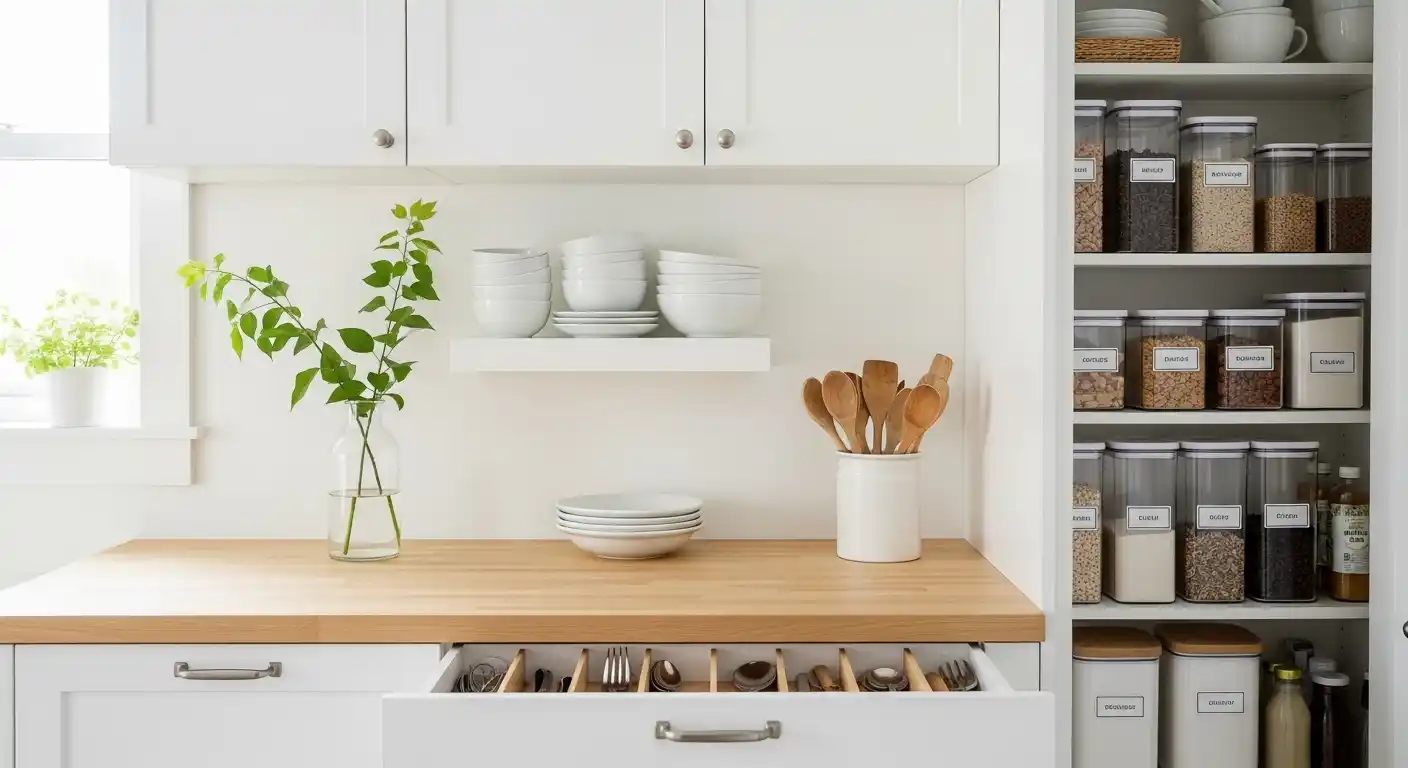
I recommend starting with transparent containers and drawer dividers as your foundation. These give every kitchen item a proper home.
Essential Storage Solutions:
- Adjustable drawer dividers for utensils and small gadgets
- Clear bins for pantry staples and snacks
- Vertical pan organizers for cookware
- Tiered spice racks for easy visibility


I always put dividers in my utensil drawer first. That stops the classic “junk drawer” chaos where everything gets mixed together.
For deeper drawers, I like expandable dividers that fit different sized items. Shallow drawers do best with fixed organizers.
Storage Priority List:
- Daily-use utensils (front compartments)
- Cooking tools (middle sections)
- Specialty gadgets (back areas)
I label each section at first. That way, everyone in the house can keep up the system until it becomes second nature.
Organizing Kitchen Gadgets and Tools
I like to group my kitchen gadgets by what they do, not by size. It just makes cooking smoother when similar tools hang out together.
Here’s how I sort them:
- Prep tools: knives, cutting boards, peelers
- Cooking implements: spatulas, tongs, whisks
- Baking supplies: measuring cups, mixers, rolling pins
- Specialty items: garlic press, can opener, thermometer
The gadgets I reach for the most live in the top drawer closest to my main prep spot. Tools I use less often end up in lower drawers or tucked away in cabinets.
With small appliances, I ask myself if I use it every week. If yes, it earns a spot on the counter. If not, it goes in a cabinet where I can still grab it without fuss.
I toss appliance cords into small bins or wrap them up. Honestly, tangled cords drive me nuts, so I try to keep them under control.
Designating Storage Zones for Workflow
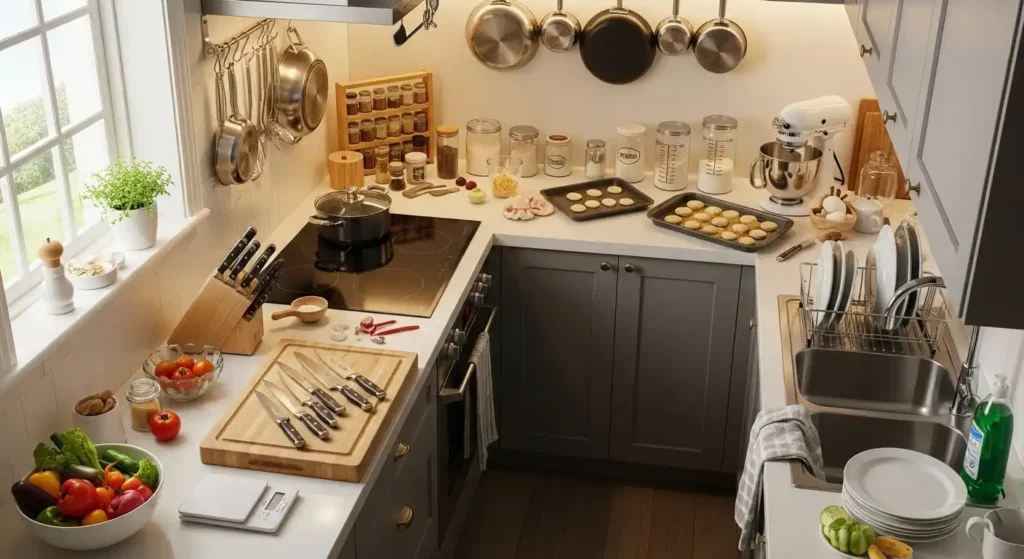
Breaking my kitchen into zones by task makes a huge difference. I don’t want to zigzag around just to find a spatula or a clean bowl.
My Five Kitchen Zones:
| Zone | Items Stored | Location |
|---|---|---|
| Prep | Knives, cutting boards, bowls | Near sink |
| Cooking | Pots, pans, utensils, oils | Near stove |
| Baking | Measuring tools, mixers, flour | Counter space area |
| Cleaning | Dish soap, sponges, towels | Sink area |
| Storage | Food containers, wraps, bags | Pantry/cabinet |
I keep my go-to items right where I need them. Oils sit by the stove, and cutting boards hang out near the sink for a quick rinse.
My coffee station is a lifesaver in the morning—mugs, coffee, filters, and sugar all together in one cabinet. No more hunting when I’m barely awake.
Maintaining Order Through Meal Planning
Meal planning helps me keep my kitchen under control. It cuts down on random grocery runs and those “oops, forgot the onions” moments.
Every Sunday, I map out my meals for the week. This keeps my shopping list focused and my fridge manageable.
My Meal Planning System:
- Weekly menu posted on refrigerator
- Shopping list organized by store sections
- Prep tasks scheduled for specific days
- Leftover plans included
I stash similar foods together in both the pantry and fridge. Pasta has its own spot, and canned goods stay lined up in their section.
Prepping ingredients on Sundays—like washing veggies or measuring out spices—makes weeknight cooking feel so much easier.
Sustaining a Joyful and Clutter-Free Kitchen
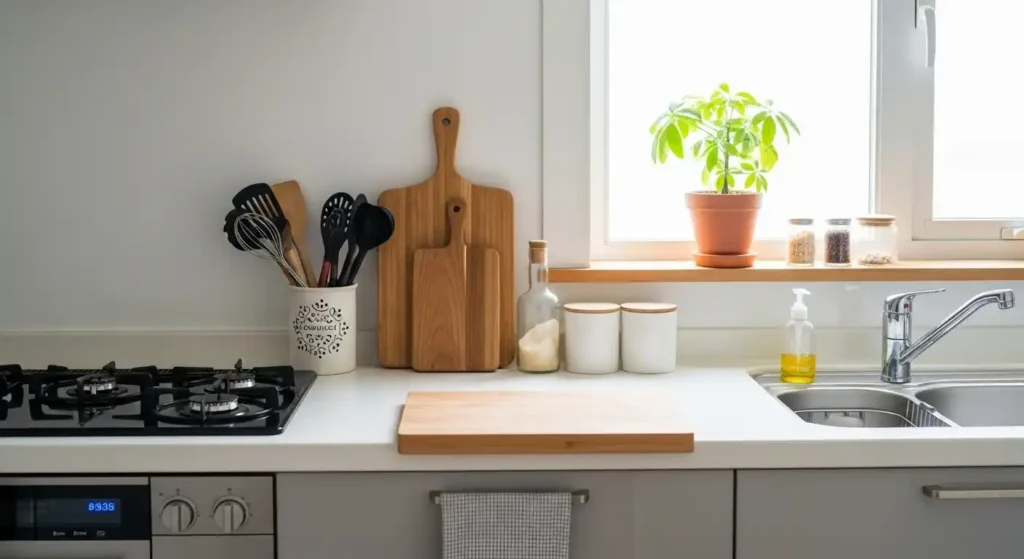
Honestly, keeping my kitchen organized after a big KonMari clean-out comes down to daily habits. Little routines like the “one in, one out” rule and quick check-ins really help keep clutter from creeping back in.
Routine Maintenance and Cleaning Habits
For me, the trick to an organized kitchen is building habits into my day. I always try to put things back right after I use them, even if I’m tired.
Every evening, I give myself five minutes for a quick reset. I wipe the counters, put away anything left out, and make sure everything’s where it should be. That way, messes never get out of hand.
Daily Maintenance Checklist:
- Return all items to their designated spots
- Clean dishes within 30 minutes of use
- Wipe counters after each cooking session
- Put away ingredients immediately after cooking
The KonMari method emphasizes giving everything a home. When things have their own spots, tidying up feels automatic instead of overwhelming.
Once a week, I spend 15 minutes checking high-traffic areas like spice racks and pantry shelves. It’s just enough to keep chaos at bay.
Adapting the KonMari Method for Different Lifestyles
Different cooks and families need different setups. I tweak my system depending on how much I cook or what meals I make most.
If I’m cooking a lot during the week, I keep my essentials handy—spices at eye level, special occasion stuff up high or out of the way.
Lifestyle Adaptations:
| Cooking Style | Storage Priority | Maintenance Focus |
|---|---|---|
| Daily home cooking | Easy access to basics | Quick reset after meals |
| Weekend batch cooking | Large container storage | Weekly deep organization |
| Minimal cooking | Compact essential tools | Monthly check-ins |
| Entertaining frequently | Serving dish accessibility | Pre-event organization |
Families with kids? I put kid-friendly stuff low, sharp or breakable things up high. The method works for decluttering kitchens of all sizes, as long as you make it your own.
I like to get everyone involved by showing them where things go. Labels and logical groupings help keep the system running, even if it’s not always perfect.
Embracing Lasting Joy in Your Cooking Space
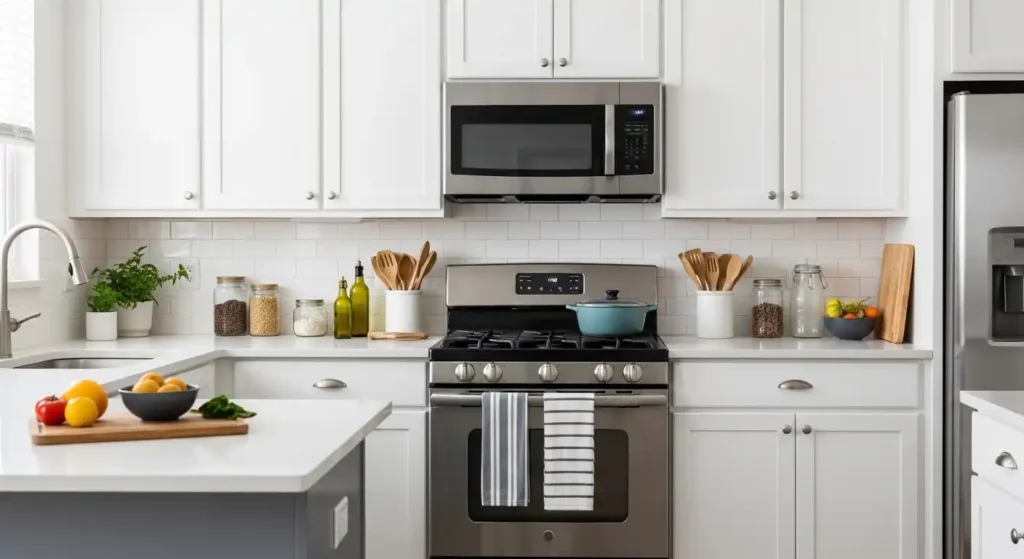
The real magic of the KonMari method shows up when your kitchen still sparks joy months after you organized it. Personally, I notice it in how I feel just walking in.
A joyful kitchen makes cooking feel easy, not stressful. If I can grab ingredients fast and have a clear counter, making meals actually becomes fun.
Signs of Lasting Kitchen Joy:
- Cooking feels relaxing and creative
- Finding items takes seconds, not minutes
- Counter space stays clear for food prep
- The space feels calm and inviting
Every so often, I go through my stuff to see if it still sparks joy. Kitchen needs shift with new recipes, diets, or just life in general. Something that once made me happy might not fit anymore.
When something new comes in, I try to stick to “one in, one out.” That way, things don’t pile up and my kitchen stays full of only what I actually use and like.