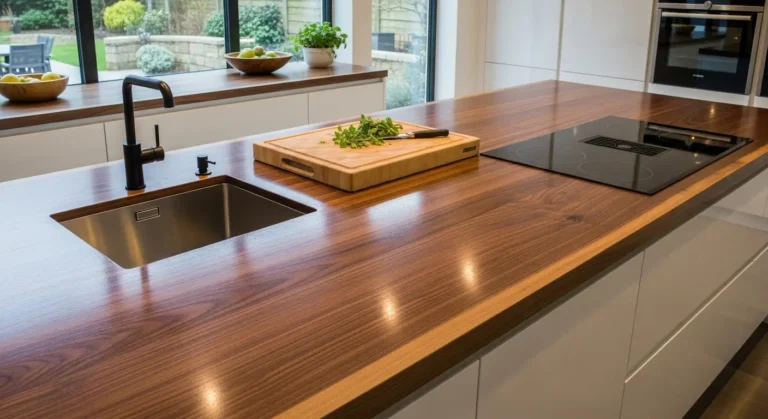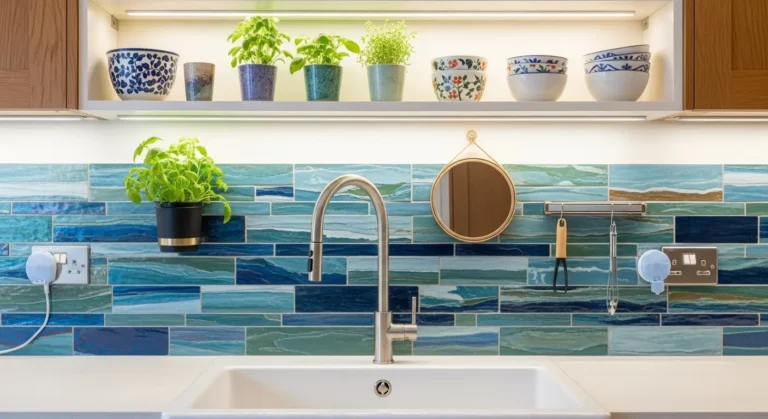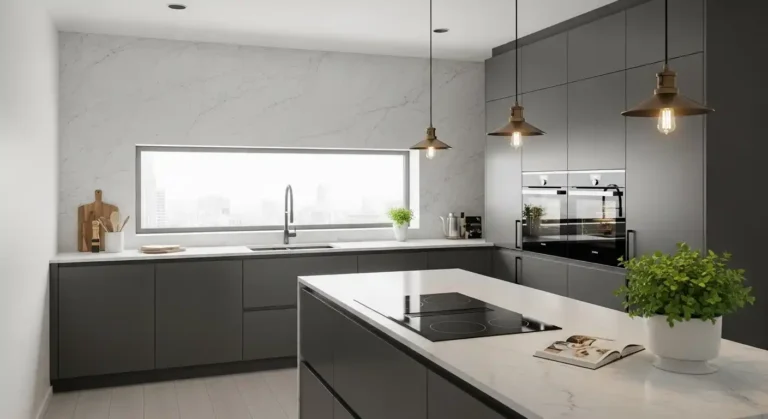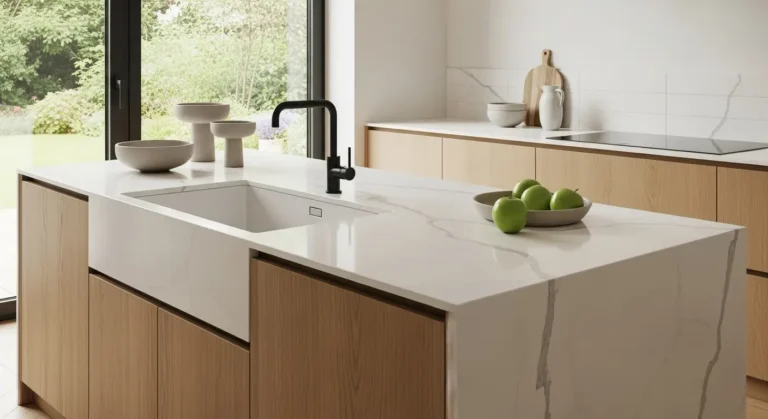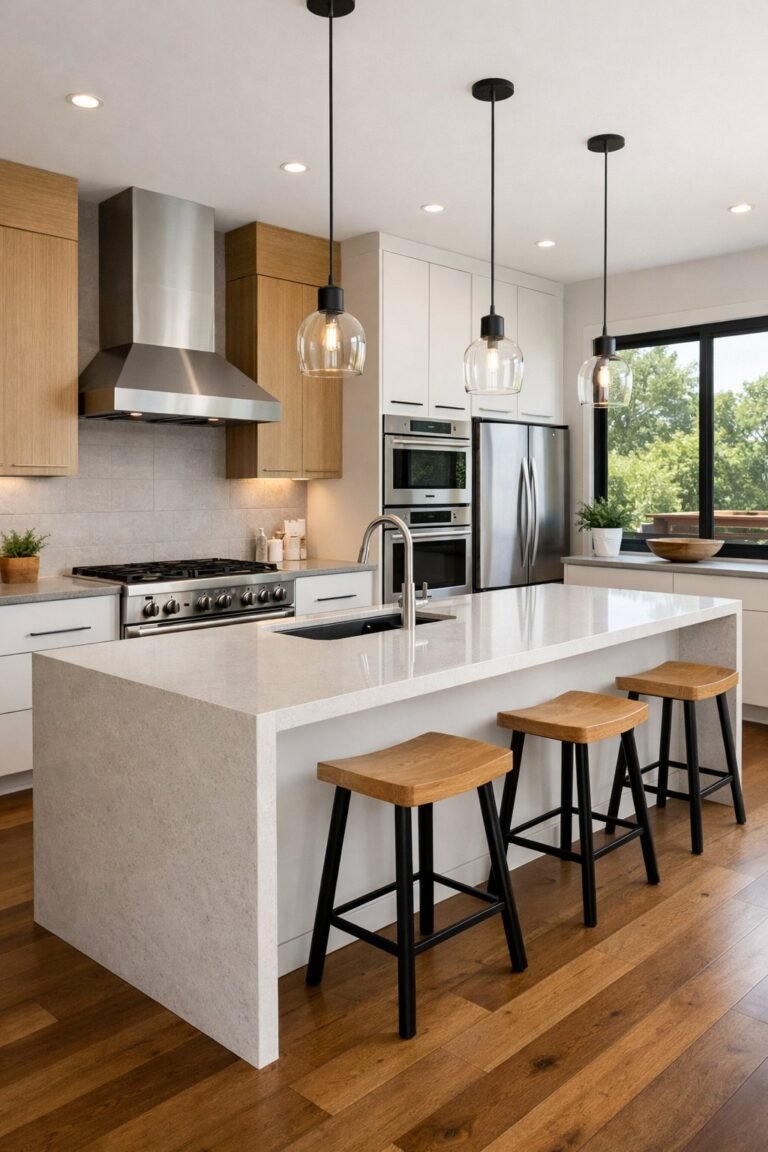

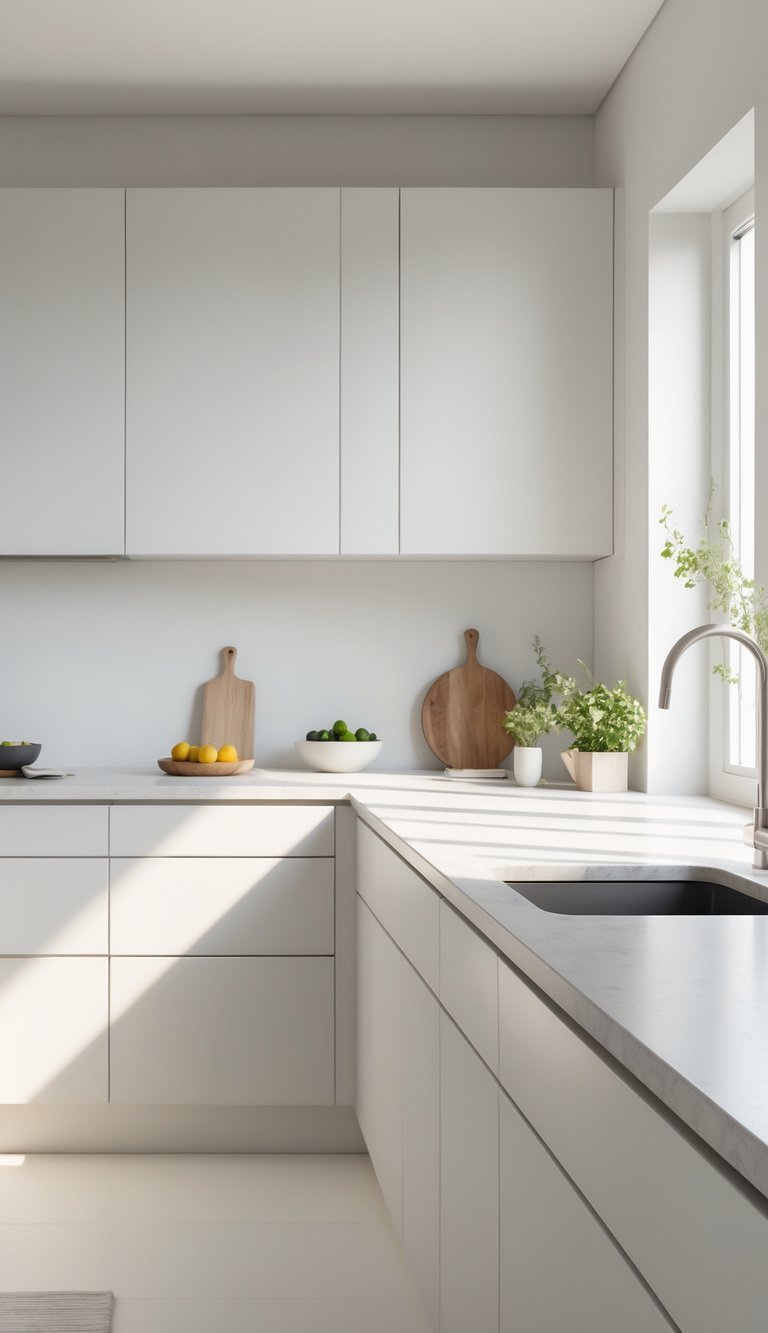
You want a kitchen that feels calm, clean, and built to last. Ceramic worktops help you get there.
They give you a low-maintenance, stylish surface that supports a minimalist look while standing up to daily use.
Here are simple, modern ways to use ceramic tops with matching sinks, soft edges, subtle veining, and smart lighting to keep your space uncluttered and elegant.
You’ll find ideas for smooth surfaces, neutral palettes, and practical design choices to make your kitchen both beautiful and functional.
Contents
- Matte white ceramic worktops for a sleek, modern look
- Seamless integrated sinks crafted from matching ceramic material
- Neutral beige ceramic surfaces combined with light oak cabinets
- Gray ceramic worktops paired with stainless steel minimalist appliances
- High-gloss ceramic countertops for reflecting natural light
- Ceramic worktops with subtle veining mimicking natural stone
- Large-format ceramic slabs to reduce grout lines and create smooth surfaces
- Undermount LED lighting highlighting ceramic surfaces subtly
- Ceramic worktops with rounded edges for a soft minimalist feel
- Monochrome color palettes enhanced with soft ceramic finishes
- Benefits of Ceramic Worktops in Minimalist Kitchens
- Design Considerations for Seamless Minimalism
Matte white ceramic worktops for a sleek, modern look
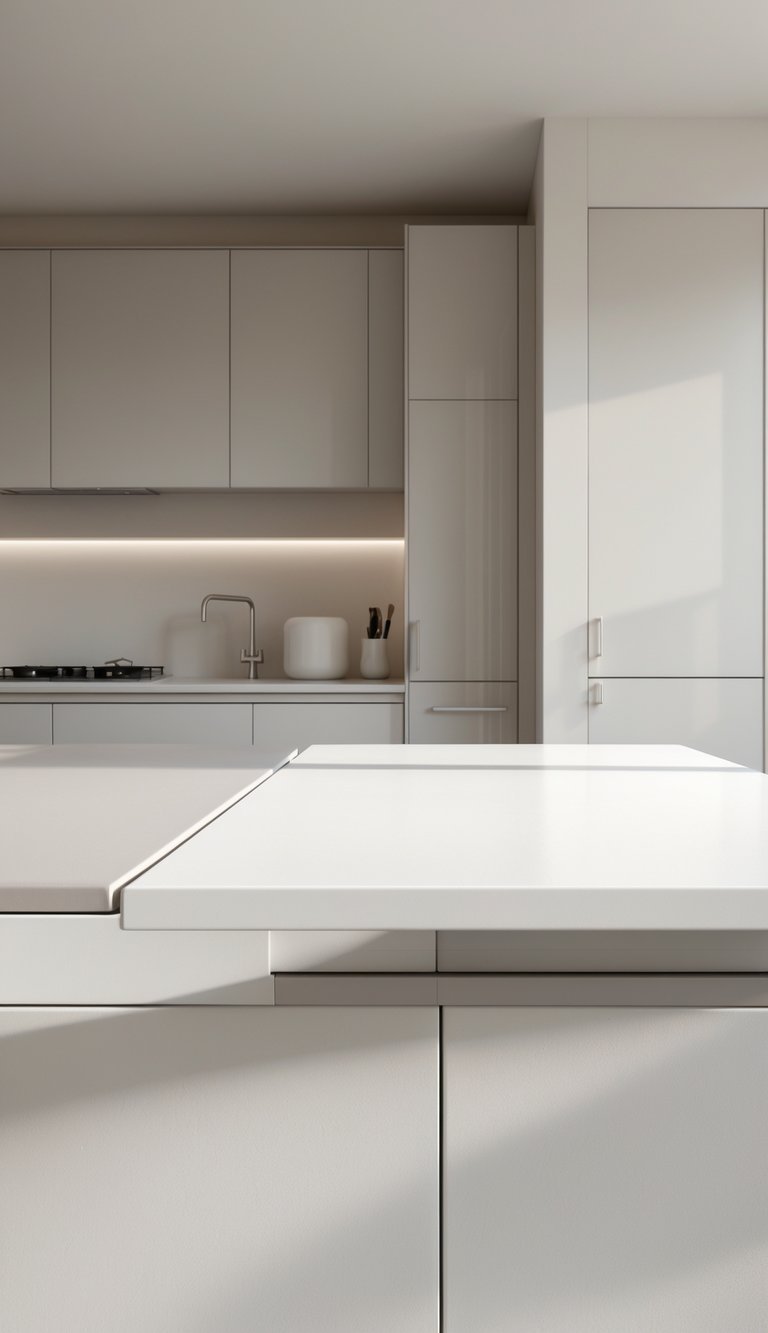
Pick matte white ceramic worktops to keep your kitchen calm and polished. The flat finish hides light scratches and cuts glare, so things feel soft and even.
Pair them with simple cabinetry and slim hardware for that minimalist flow. Add a wood or metal accent to warm up the palette without breaking the clean lines.
Wipe spills quickly with mild detergent and a soft cloth. That keeps the surface looking new and preserves the understated, modern vibe.
Seamless integrated sinks crafted from matching ceramic material

Go for an integrated ceramic sink to keep your countertop and basin visually continuous. Matching material gives a clean, minimalist look and leaves fewer seams for grime to hide.
You’ll find cleaning is easier and there are fewer joints to seal. Ceramic resists stains and looks uniform with matching worktops.
Ask your fabricator about edge details and repair options in case chips happen. Installation makes a big difference for a seamless finish.
Neutral beige ceramic surfaces combined with light oak cabinets

Pair beige ceramic worktops with light oak cabinets to keep your kitchen calm and warm. The beige tones echo oak’s natural color, so the space feels cohesive without heavy contrast.
Pick a fine-matte ceramic for low shine and easy cleaning. Small veins or subtle texture add interest while keeping the look restrained.
Add brass or matte black hardware sparingly to lift the palette. The result is a timeless, minimalist kitchen that feels both modern and inviting.
Gray ceramic worktops paired with stainless steel minimalist appliances
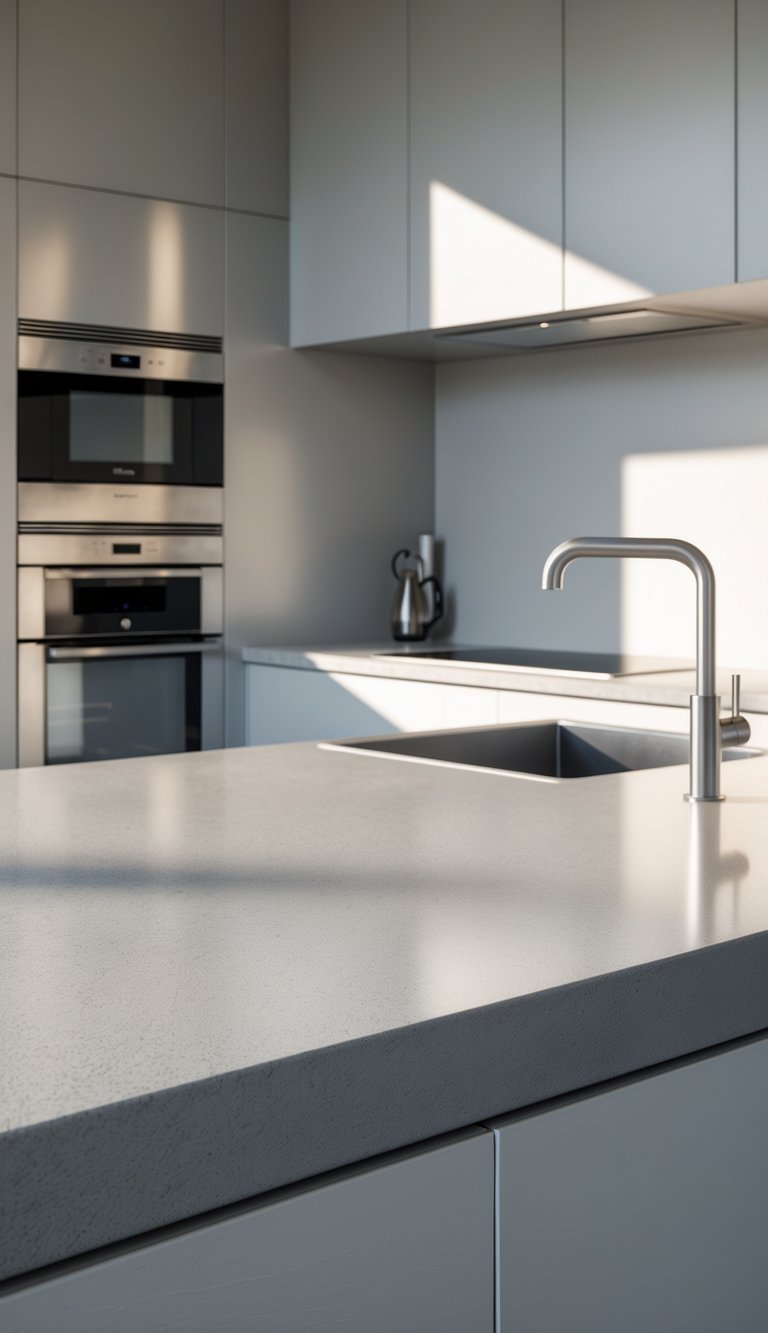
You get a clean, modern look when gray ceramic worktops meet stainless steel appliances. The cool gray tones hide light wear and match brushed metal finishes without looking busy.
Choose simple appliance lines and handleless cabinets to keep sightlines clear. Ceramic resists stains and pairs well with stainless steel for easy cleaning and a calm, cohesive kitchen.
High-gloss ceramic countertops for reflecting natural light
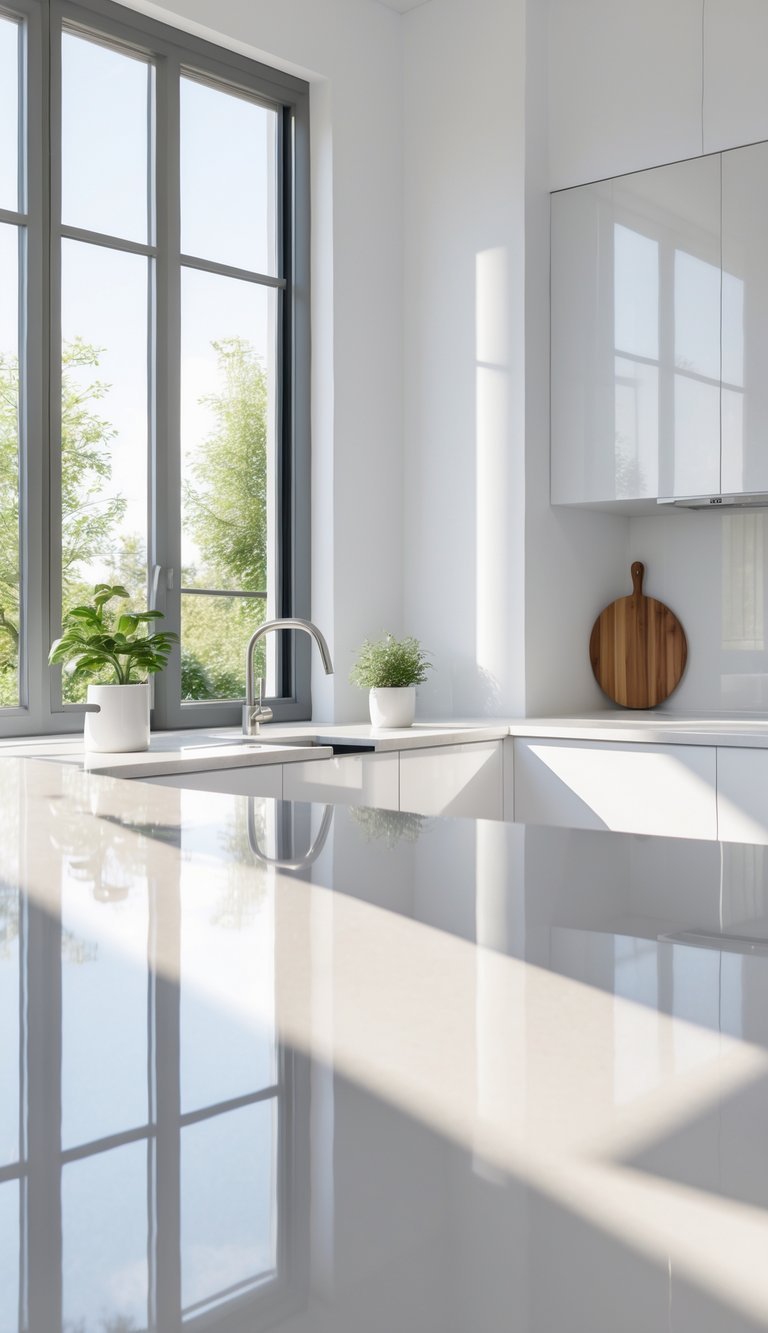
Pick high-gloss ceramic worktops to boost the light in your kitchen. Their shiny surface bounces daylight and makes small spaces feel bigger.
Pair glossy ceramics with matte cabinets for a balanced look. These countertops resist stains and wipe clean easily, so they stay bright with little fuss.
Put them near windows or light wells for the best effect. Match the finish to your color palette to keep things calm and minimalist.
Ceramic worktops with subtle veining mimicking natural stone

Get the look of marble or granite without the fuss by choosing ceramic with soft, linear veins. The pattern adds quiet texture while keeping things clean and minimalist.
Ceramic panels resist stains and heat, so they’re practical for daily use. Match the veining to neutral cabinets for a calm, cohesive kitchen you’ll actually enjoy.
Large-format ceramic slabs to reduce grout lines and create smooth surfaces
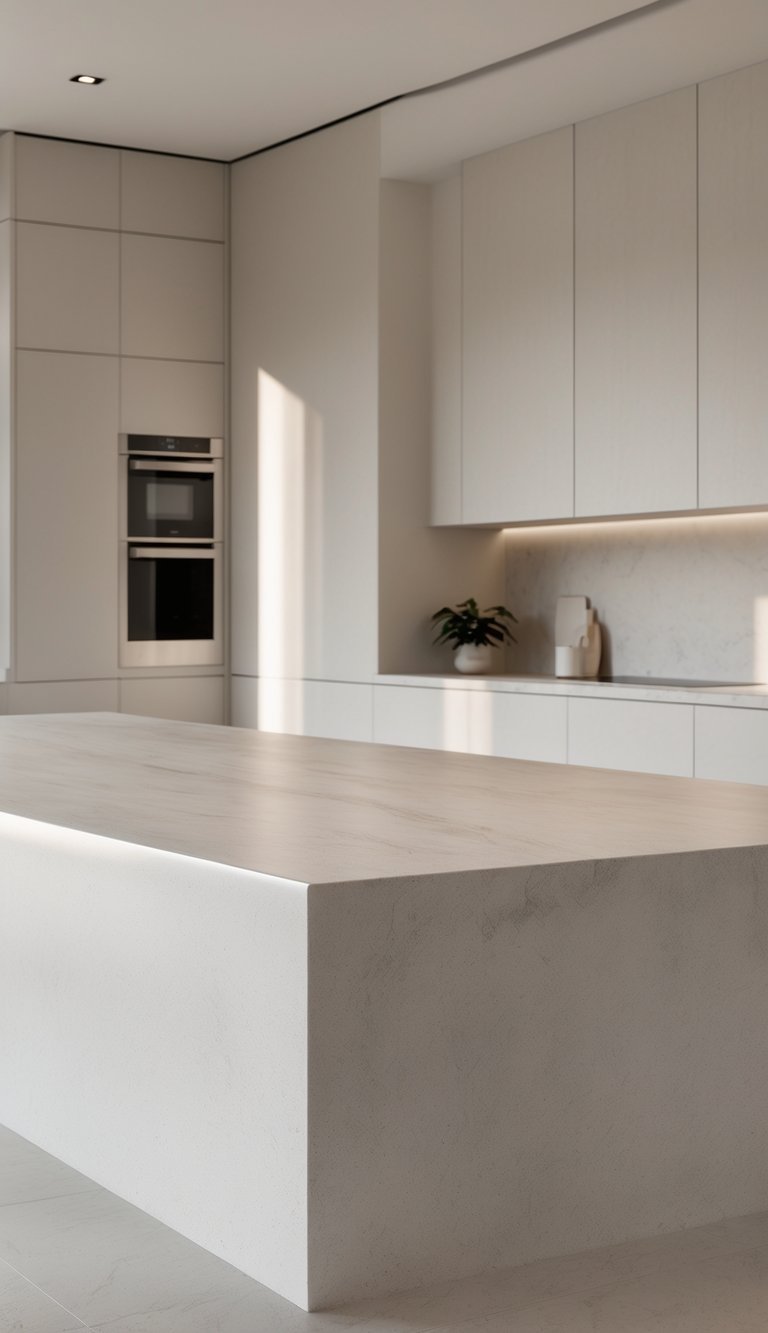
Pick large-format ceramic slabs to cut grout lines and keep your counters looking clean. Bigger slabs cover more area, so you get a seamless, minimalist look with less visual clutter.
These slabs resist stains and wear, making them practical for busy kitchens. For ideas, check out XL porcelain slabs and extra-large formats from Floor & Decor and Daltile.
Undermount LED lighting highlighting ceramic surfaces subtly
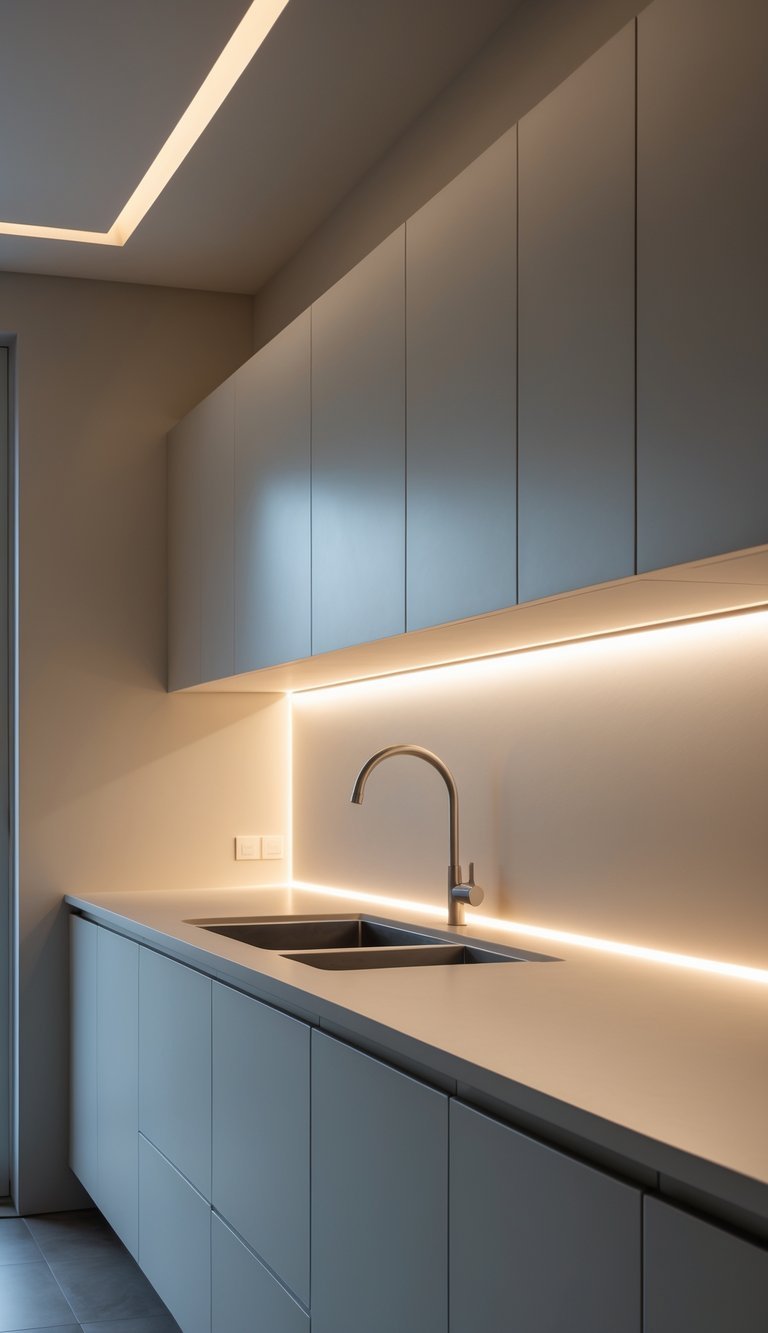
Put undermount LED strips under cabinets to wash light across your ceramic worktops. The even glow reduces shadows and brings out the texture without harsh glare.
Pick warm or neutral color temperatures to keep tones true. Dimmable LEDs let you shift from bright task light to soft ambiance.
Hide fixtures for a seamless look that fits minimalist design. Try low-profile channels or tape lights for clean lines that keep focus on your ceramic surfaces.
Ceramic worktops with rounded edges for a soft minimalist feel
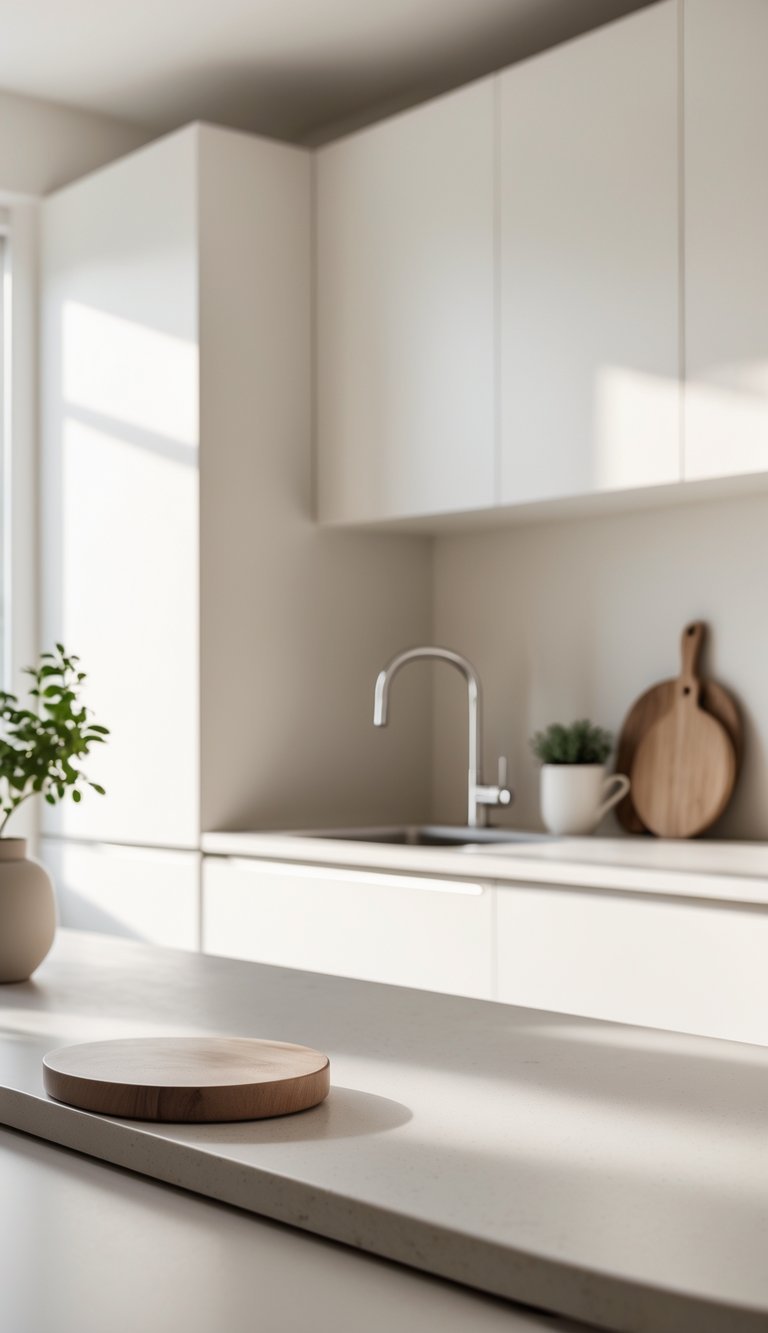
Pick ceramic worktops with rounded edges to soften your kitchen’s look while keeping things simple. The curved profile reduces sharp corners and feels gentler under hand.
Rounded edges work well with pale or muted ceramic finishes for a calm palette. You can mix in darker accents for contrast without losing that peaceful, uncluttered feel.
Monochrome color palettes enhanced with soft ceramic finishes
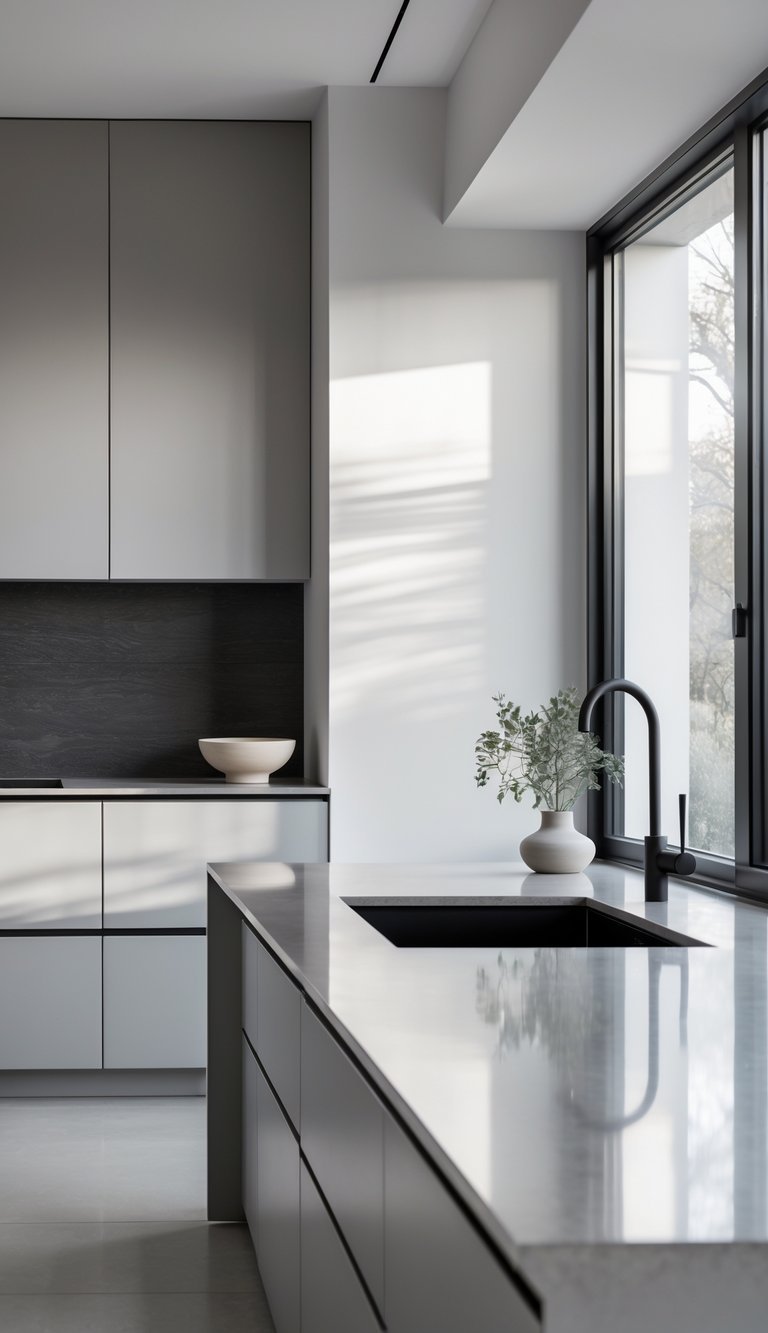
Pick a single hue like warm gray or matte white, then vary its tones across cabinets, walls, and tiles. Soft ceramic worktops add a subtle sheen that keeps things calm and tactile.
Use ceramic with a fine, satin finish to catch light without glare. That finish suits monochrome schemes and hides wear better than high-gloss surfaces.
Pair textured ceramics with flat cabinetry to keep the design balanced. Small contrasts in tone and texture make the space feel deliberate and a bit more interesting.
Benefits of Ceramic Worktops in Minimalist Kitchens

Ceramic worktops give you a hard-wearing surface, easy cleaning, and lots of looks that suit a simple kitchen. They resist heat, stains, and scratches while keeping a clean, pared-back appearance.
Durability and Longevity
Ceramic is made from fired clay and minerals, so it stands up to daily use better than a lot of materials. It resists scratching from knives and utensils, and it won’t stain from wine, oil, or acids the way some porous stones can.
Heat from pans won’t easily mark the surface, so you can place a hot pot down briefly without immediate damage.
Still, avoid dropping heavy objects on the edges and use care with high-impact knocks; ceramic can chip if struck sharply. Proper installation with a solid substrate reduces fracture risk and helps the worktop last for decades.
Low-Maintenance Surfaces
Ceramic’s non-porous surface keeps liquids and bacteria on top, so you just clean with mild detergent and a cloth. No sealing is needed, unlike many natural stones, which lowers long-term upkeep and cost.
For everyday cleaning: wipe spills quickly, use a soft pad for dried food, and avoid harsh abrasive powders that could dull the finish.
If you get a chip or grout line damage, repairs are possible but often visible, so preventive care matters. Regular simple cleaning keeps the surface hygienic and looking new with minimal effort.
Aesthetic Versatility
Ceramic comes in large-format slabs and many printed finishes, so you can match a minimalist look exactly. Choose matte or polished surfaces, plain tones, or realistic marble and concrete effects without the variation of natural stone.
Large slabs mean fewer seams, which enhances the clean lines central to minimalist design. You can pair white, black, or soft neutral ceramics with flat-front cabinets and hidden handles for a streamlined kitchen.
Pick thin-edge profiles and integrated sinks to keep visual clutter down. The wide palette and consistent pattern let you control contrast and texture while keeping the space calm and simple.
Design Considerations for Seamless Minimalism
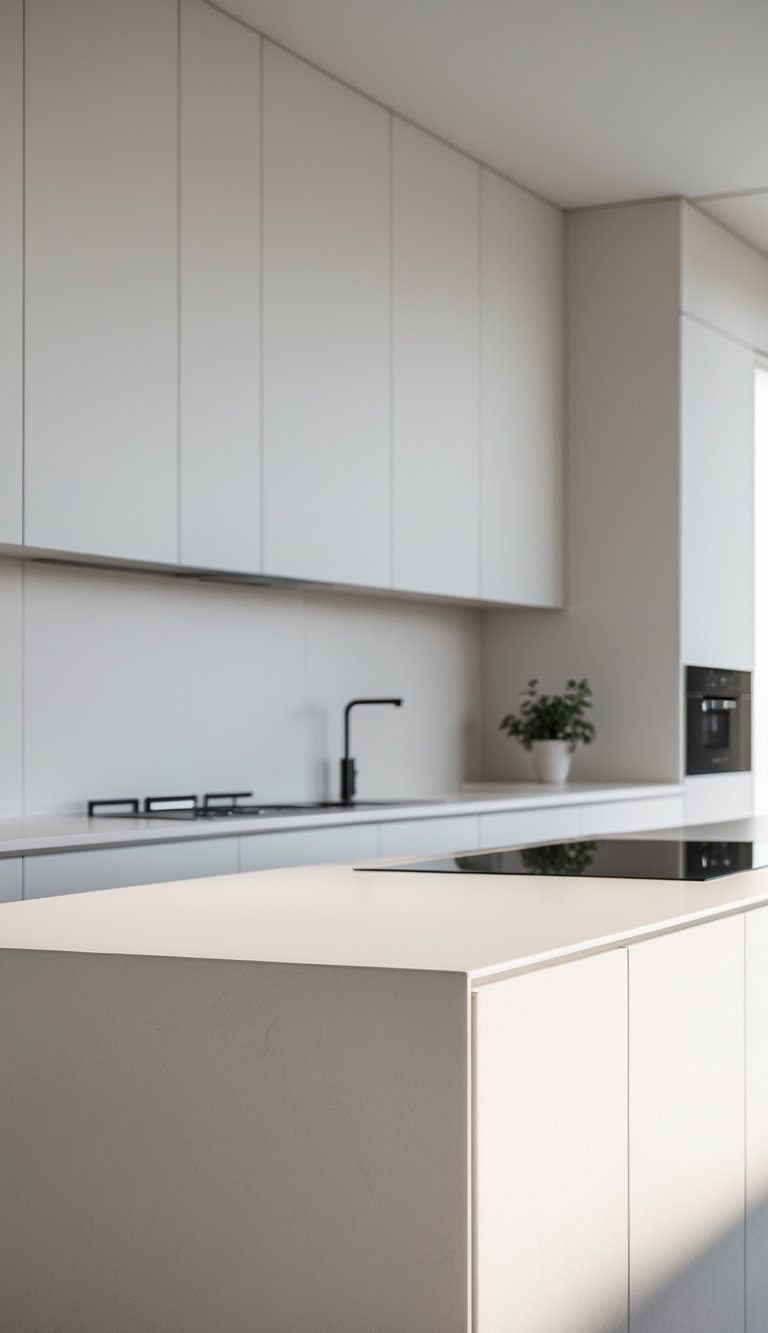
Focus on color balance and edge details. Think about how the worktop hits the cabinet face too.
Small choices—grout color, overhang depth, and handle style—shape whether the look feels intentional or just unfinished. It’s surprisingly easy to miss these little things, but they really matter.
Choosing Neutral Color Palettes
Stick with a narrow neutral range for walls, cabinets, and ceramic worktops. This keeps the space calm and avoids visual clutter.
Pick one dominant tone—maybe a cozy warm off-white—and a contrasting neutral like charcoal for your accents. If seams show, try to match the grout to the worktop so nothing stands out too much.
Undertones make a difference: cool grays pair well with stainless steel, while warm ivories work better with brass or wood. Try out 24″ samples under your own kitchen light before you commit.
Light neutrals bounce light around and can make a small kitchen feel bigger. Darker neutrals hide wear better, but you’ll need stronger task lighting so things don’t get gloomy.
Let color guide your material picks too. If your ceramic slab has subtle veining, grab cabinet paint that complements the vein color, not one that fights it.
Keep decorative items minimal and stick to your palette. That’s the best way to keep the whole vibe cohesive and genuinely minimalist.
Integrating Worktops with Cabinetry
Aim for tight, consistent joints between the ceramic worktop and cabinet faces. A 1–2 mm reveal looks crisp, while bigger gaps just feel unfinished.
If you want a continuous plane, use a routed recess or rebated edge so the worktop sits flush with the cabinet face. That little detail makes a surprising difference.
Decide on overhang and edge profile early. A 10–20 mm overhang looks modern and won’t trap crumbs.
Square or eased edges keep things minimalist. Bullnose or ornate profiles, though, tend to break that clean vibe.
Pick concealed or slim bar handles if you want those horizontal lines to stay sharp. Or just go handleless with push-to-open hardware for a totally uninterrupted surface—super sleek, honestly.
Coordinate heights for islands and counters. Keep the ceramic surface level with nearby prep areas for seamless movement and simple sightlines.
Seal joins with color-matched silicone. Leave expansion gaps behind backsplashes to help prevent cracks and staining—nobody wants surprises down the line.