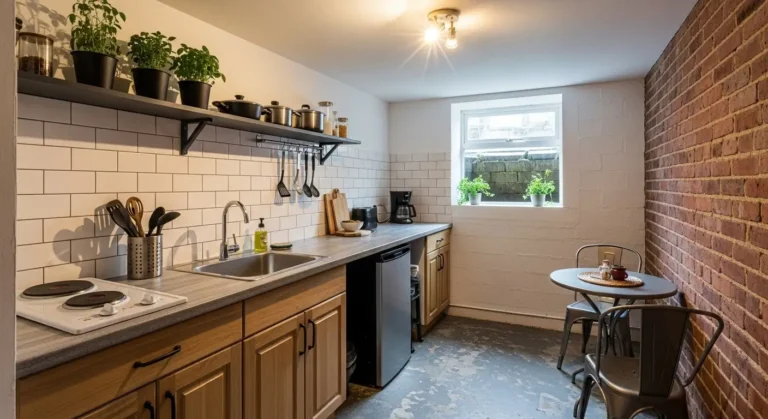

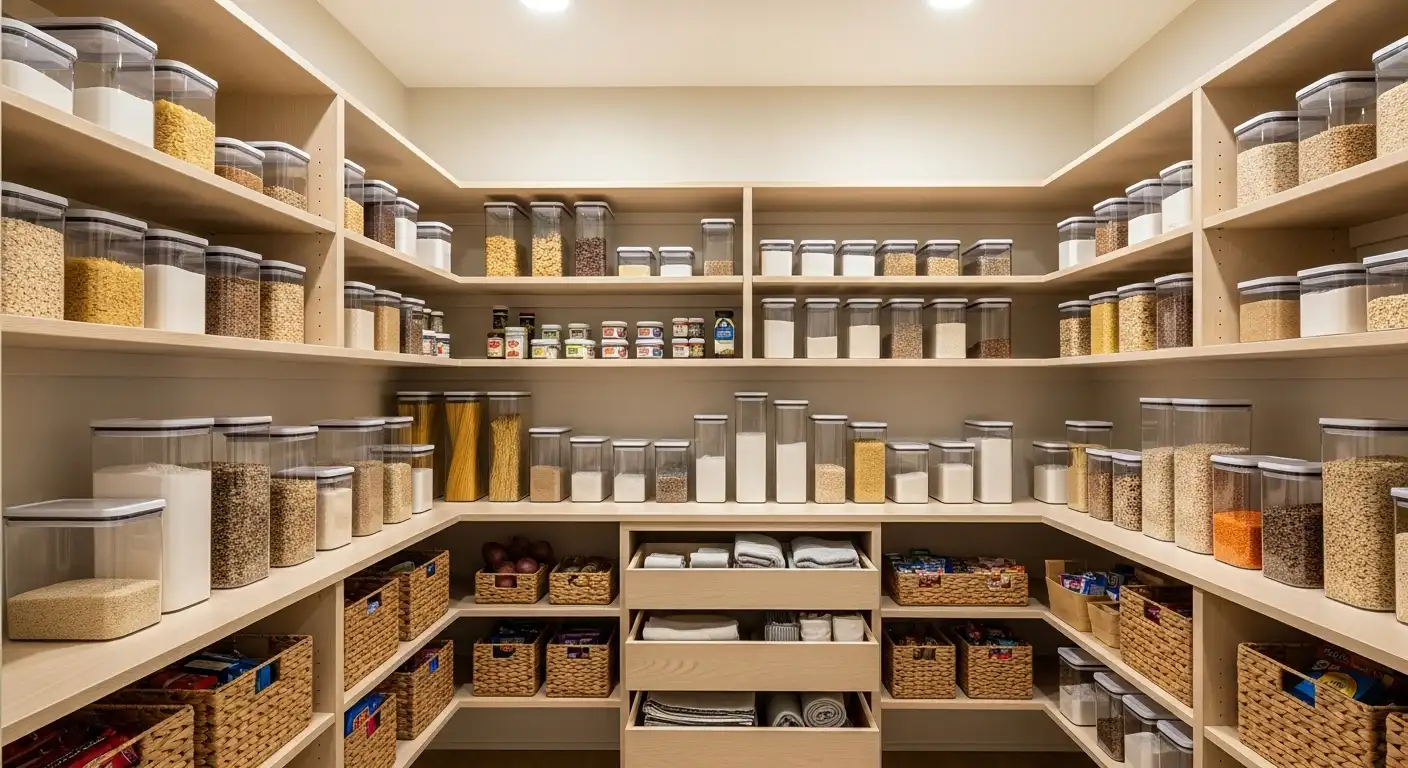
Want a pantry that’s both beautiful and functional? These pantry organization ideas turn small or messy spaces into organized, stylish havens.
When I moved into my first apartment, my pantry was tiny, dark, and completely unorganized.
I struggled to find ingredients, and groceries often got lost or expired before I even noticed them.
That’s when I started experimenting with pantry organization ideas to maximize every inch of space.
Stackable baskets, tiered shelves, and clear containers became lifesavers, helping me create a system that works efficiently.
Now, I not only save time but enjoy using a pantry that looks neat, inviting, and tailored to my cooking habits.
Contents
- How to Maximize Pantry Space Efficiently
- Essential Tools for Pantry Organization
- 25 Pantry Organization Ideas
- Use Clear Stackable Bins for Grains and Pasta
- Tiered Shelf Risers for Small Items
- Basket Organization for Snacks
- Lazy Susans for Oils and Condiments
- Pull-Out Drawers for Cans and Jars
- Label Everything Clearly
- Store Baking Essentials in Matching Jars
- Use Wire Baskets for Fruits and Vegetables
- Use Magazine Holders for Snacks and Bread
- Rotate Items with First In, First Out Method
- Use Clear Jars for Snacks and Cereals
- Categorize Pantry Items by Type
- Stack Bins for Extra Storage
- Install Door-Mounted Storage
- Use Airtight Containers for Dry Goods
- Create a Snack Zone for Kids
- Use Pull-Out Wire Baskets for Produce
- Dedicate a Baking Zone
- Use Magazine Holders for Packets
- Rotate Snacks and Canned Goods
- Label Lids for Quick Identification
- Store Baking Sheets and Cutting Boards Vertically
- Use Baskets for Seasonal Items
- Maintain a Weekly Pantry Check
- Create a Kid-Friendly Zone
- Tips for Maintaining a Clutter-Free Pantry
- Innovative Pantry Hacks
- Final Wrap-Up
How to Maximize Pantry Space Efficiently
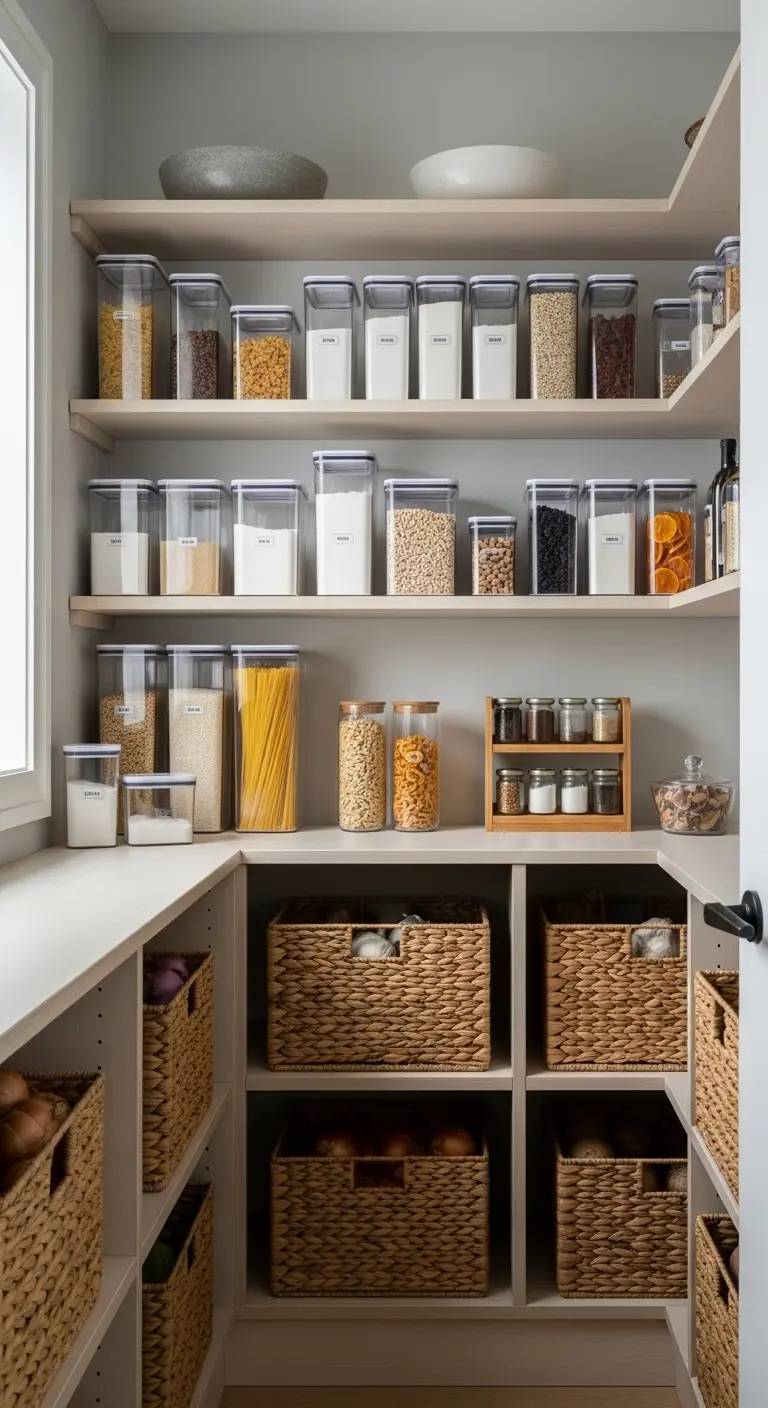
Efficient pantry organization starts with a thorough assessment of your available space, ensuring every inch is functional.
Take everything out of the pantry and categorize items by type, frequency of use, and shelf life before arranging them.
Adjust shelves to match the heights of your containers, baskets, and jars to maximize flexibility and ease of access.
Vertical storage, tiered racks, and pull-out bins can help fully utilize the depth and height of your pantry.
Containers of the same size create uniformity, making it visually pleasing and easier to stack items safely without toppling.
Clear containers allow you to see contents at a glance, reducing duplicate purchases and wasted food.
Essential Tools for Pantry Organization
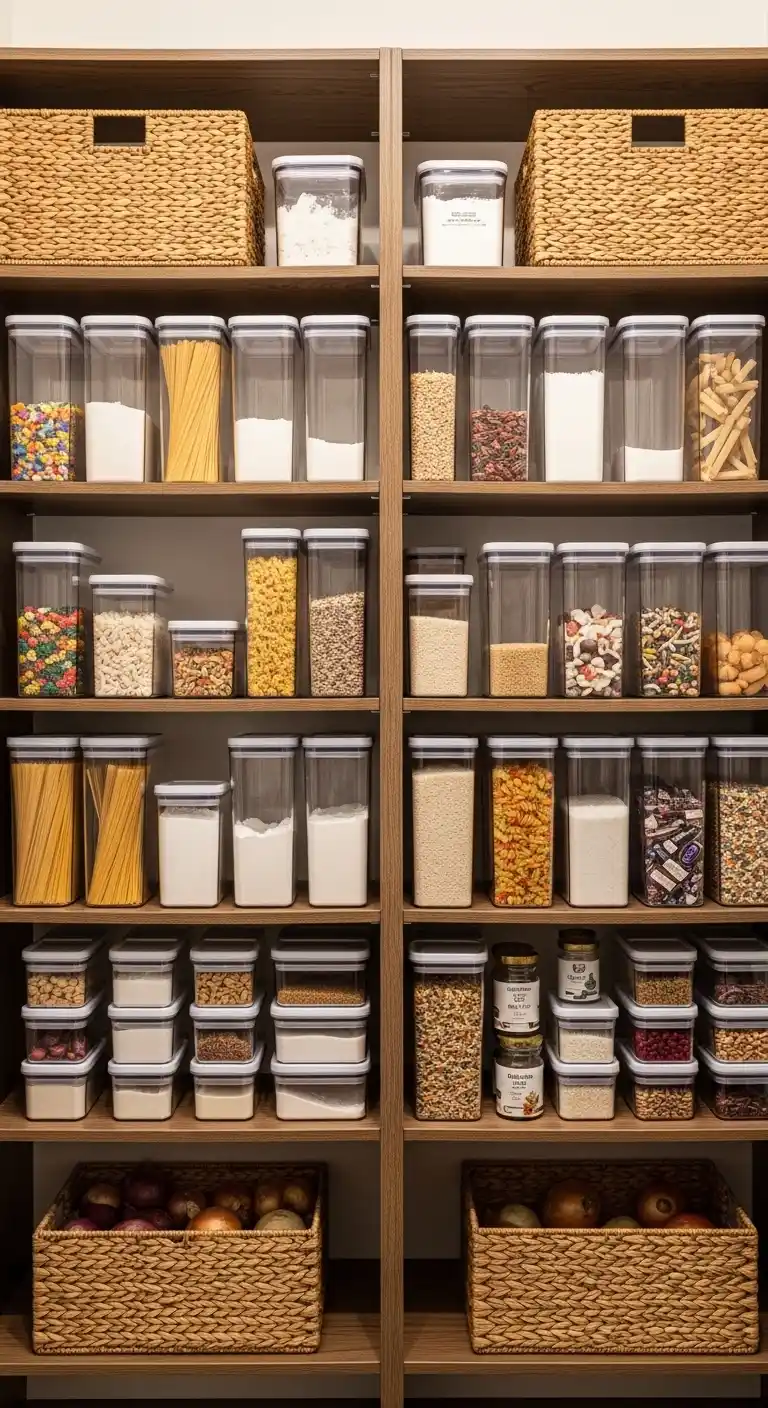
Before setting up your pantry, gather versatile organizing tools to make the process smooth and long-lasting.
Wire baskets, stackable bins, lazy Susans, and drawer dividers are essential for keeping pantry items in place and preventing mess.
Labeling tools, such as chalk markers or printed labels, prevent confusion and help everyone in the household find what they need quickly.
Tiered shelf risers optimize vertical space and keep smaller items visible without crowding other shelves.
Specialized baskets allow airflow, perfect for storing onions, potatoes, and other root vegetables to extend their freshness.
Choosing durable and washable containers ensures your pantry stays functional and easy to maintain over time without frequent replacements.
25 Pantry Organization Ideas
Use Clear Stackable Bins for Grains and Pasta
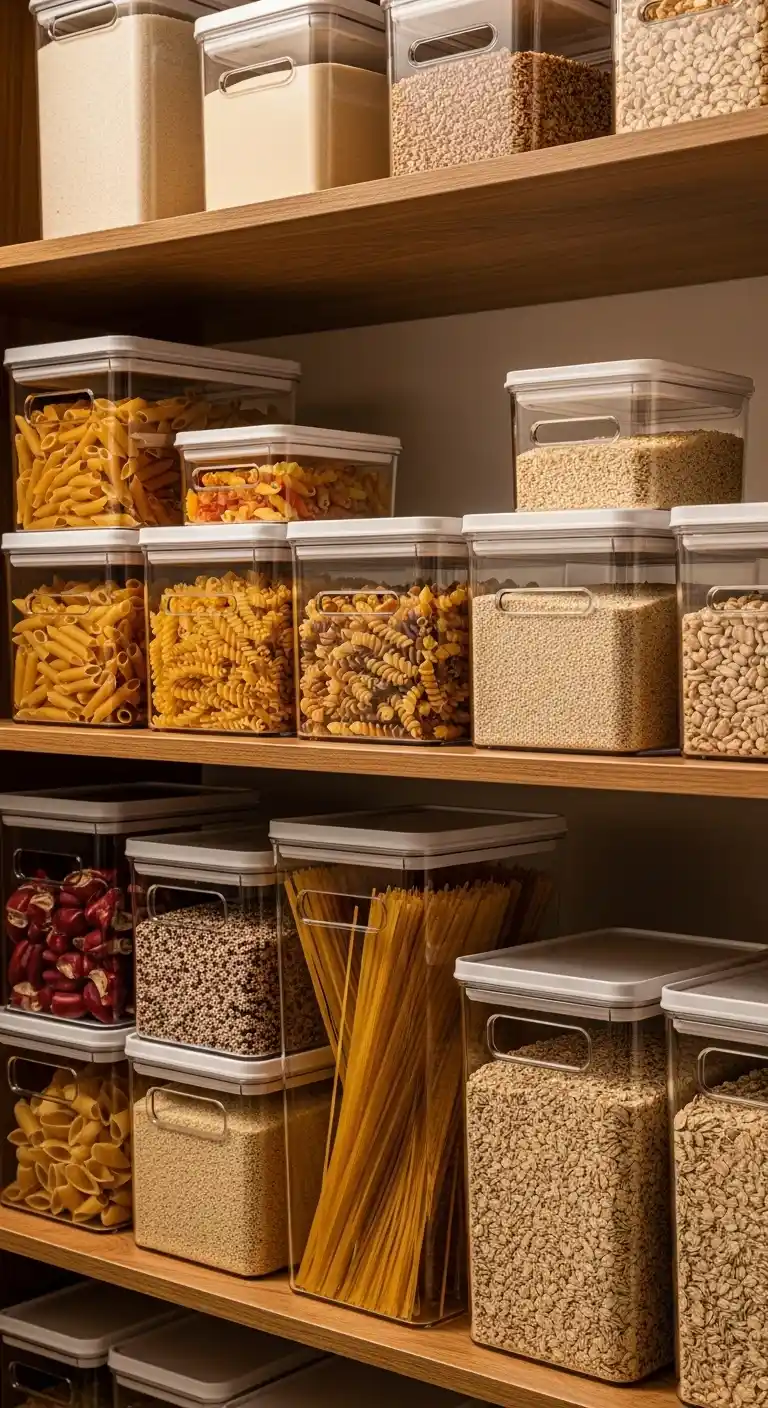
Stackable bins simplify storage by creating a uniform appearance while keeping staples easily accessible.
Clear containers allow you to see contents without opening every jar or bag, which saves time when cooking.
Grouping items like rice, quinoa, and pasta in bins prevents spills and keeps shelves neat and orderly.
Stackable bins maximize vertical space and create extra storage room on crowded pantry shelves.
Label each bin clearly with contents and expiry dates to avoid confusion and food waste.
This method ensures that pantry staples remain visible, organized, and convenient for everyday use.
Tiered Shelf Risers for Small Items
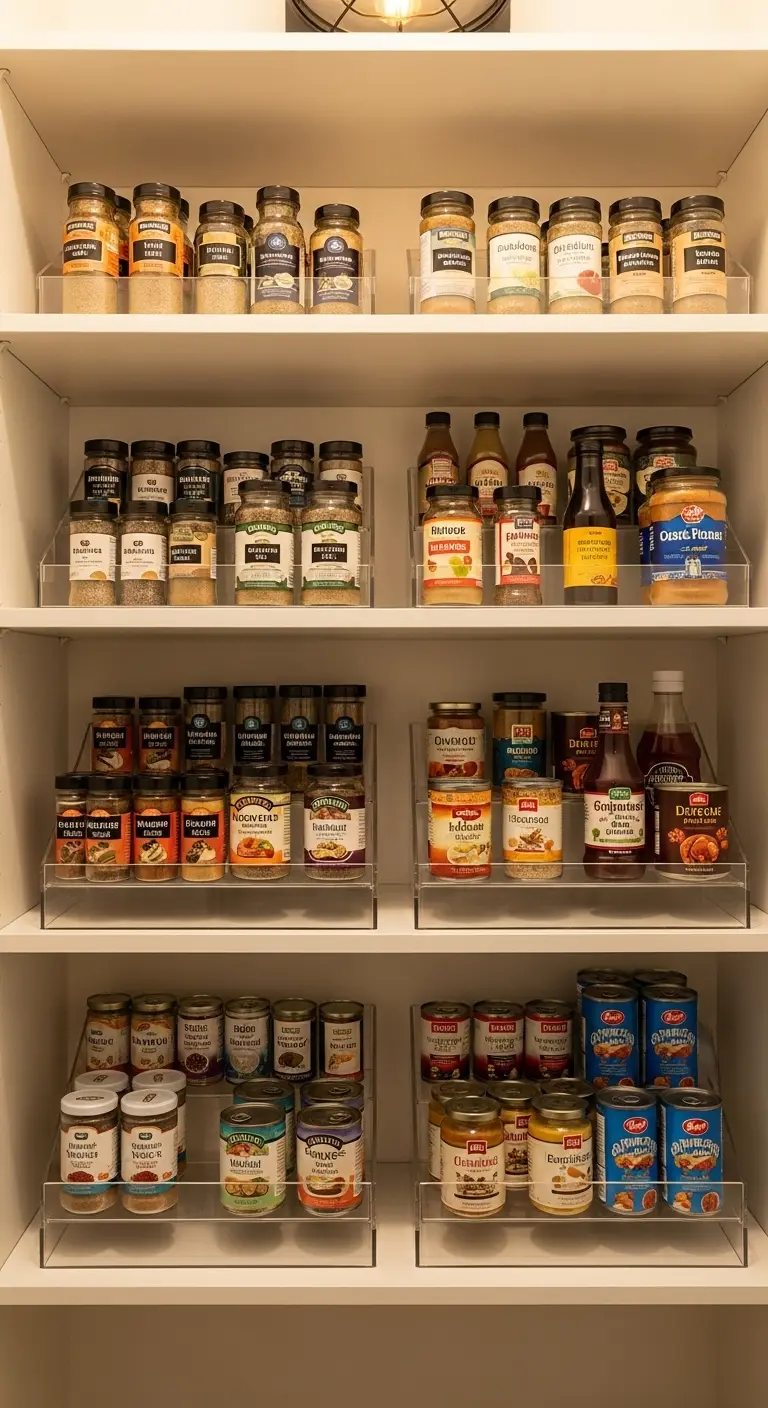
Tiered shelf risers work perfectly for canned goods, spices, and snack packs, keeping everything visible and accessible.
They allow items at the back of the shelf to remain visible without moving those in front, reducing frustration.
Using risers creates a layered and organized look while maximizing every inch of your pantry space efficiently.
Small jars and bottles no longer get lost in crowded shelves, making meal prep faster and more enjoyable.
Adjustable risers provide flexibility for different-sized items, adapting to your evolving pantry needs.
This approach ensures nothing gets forgotten or wasted while maintaining a clean and functional pantry appearance.
Basket Organization for Snacks
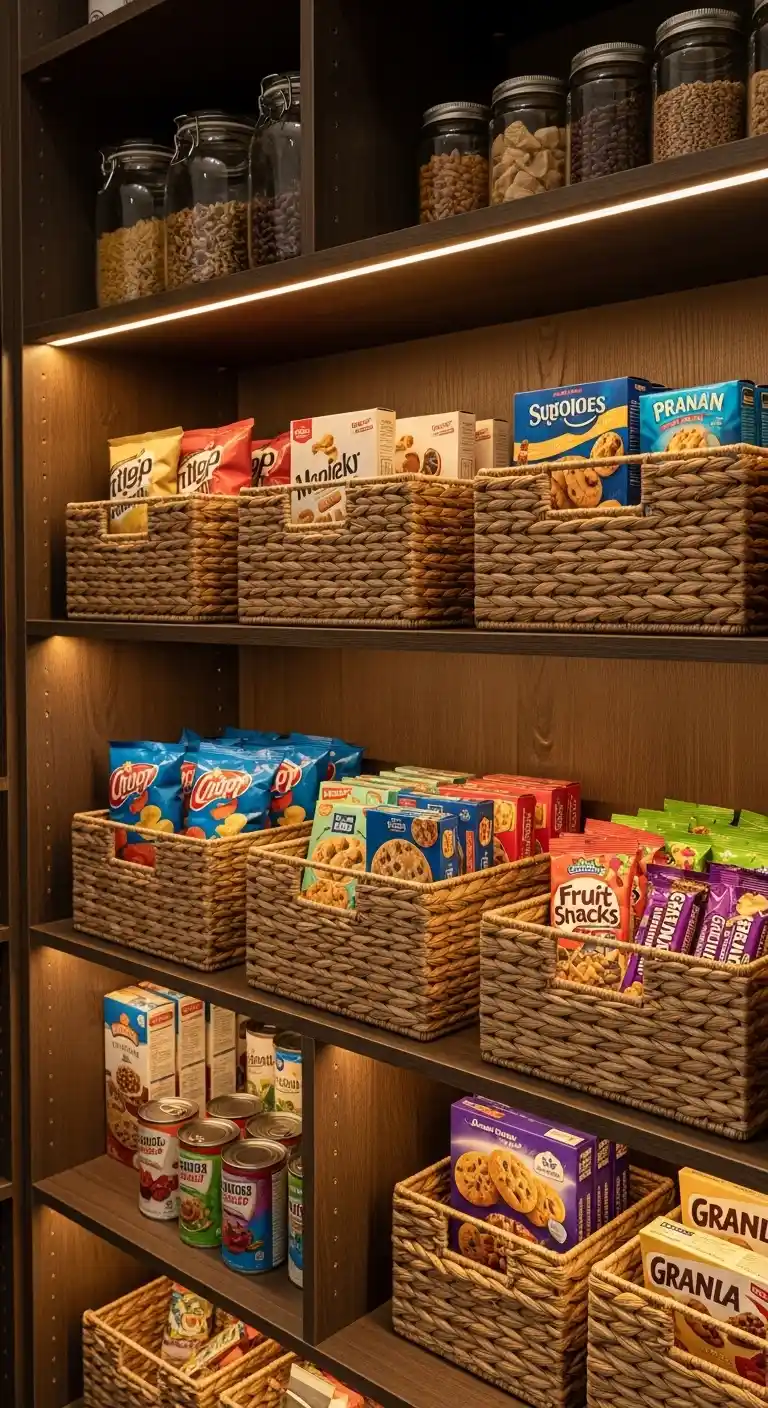
Baskets are ideal for keeping snacks contained, organized, and easy to grab during busy days or after school.
Separate sweet, salty, and healthy snacks in different baskets for clarity and effortless access.
Wire or woven baskets add charm and allow items to remain visible while still keeping them neatly contained.
Label each basket to help family members identify their favorite snacks without searching or creating clutter.
Stacking or nesting baskets saves space in deeper shelves and keeps pantry items accessible.
Pulling out an entire basket when cleaning or restocking simplifies organization and keeps everything orderly.
Lazy Susans for Oils and Condiments
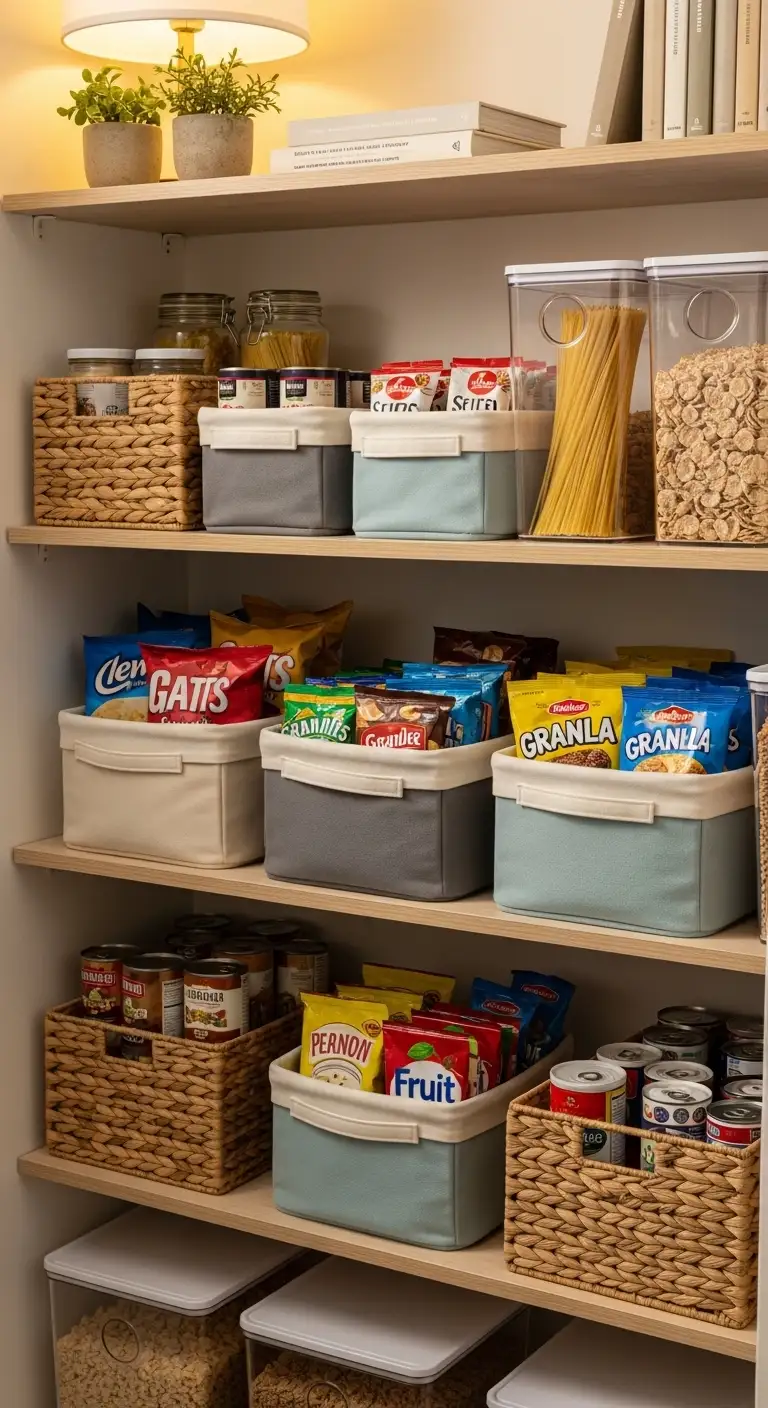
A lazy Susan simplifies access to oils, vinegars, and condiments stored on deep shelves or corner spaces.
Rotating trays prevent bottles from being pushed to the back and forgotten, ensuring all items are used.
Divide condiments by type or frequency of use to reduce clutter and maintain order throughout the pantry.
Plastic or wooden lazy Susans are durable, easy to clean, and add efficiency to your storage system.
This small investment ensures bottles and jars are visible and accessible every day without unnecessary searching.
By organizing items this way, you can reduce time spent hunting for the right ingredient during cooking sessions.
Pull-Out Drawers for Cans and Jars
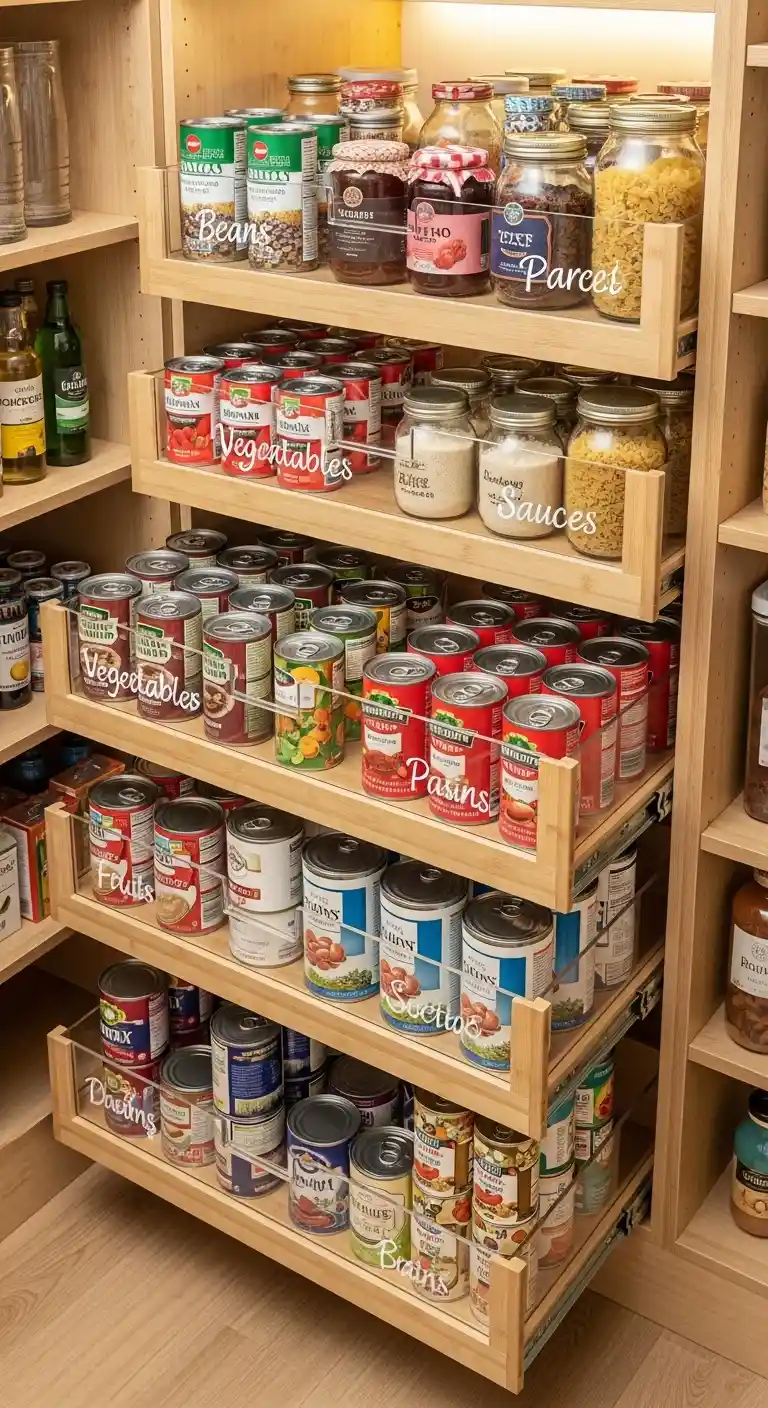
Pull-out drawers transform deep pantry shelves into convenient, easy-to-access storage spaces.
You can slide the drawer forward to reach items at the back without disturbing those in front.
They work well for canned goods, pasta jars, and small boxes, keeping everything orderly and accessible.
Stacking cans inside drawers in rows prevents toppling and keeps your pantry visually appealing.
Add dividers to drawers to separate items and prevent them from shifting when opened or closed.
This setup reduces wasted time searching for ingredients while improving overall pantry functionality and usability.
Label Everything Clearly
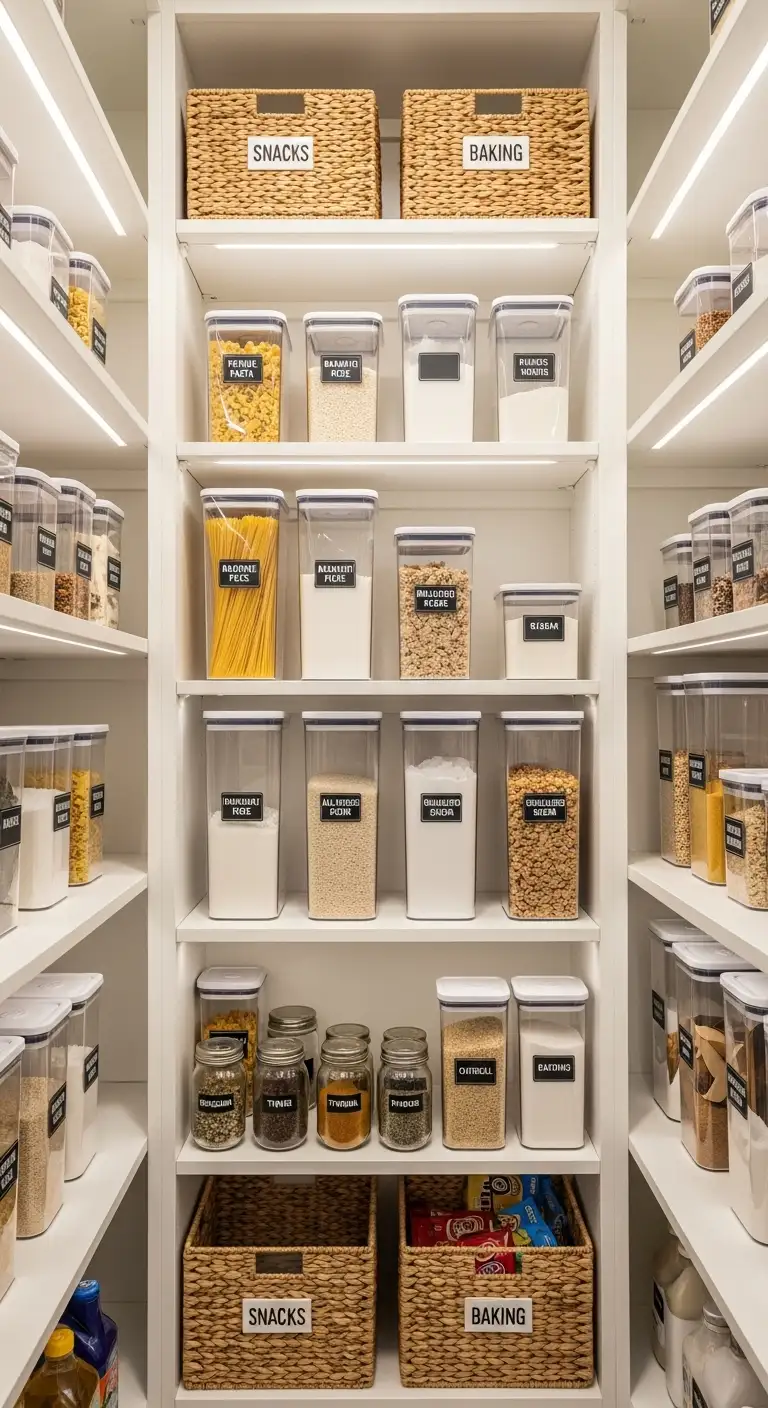
Clear and consistent labels are a simple but highly effective strategy for pantry organization.
Use printed, handwritten, or chalkboard labels to mark containers, jars, and baskets for easy identification.
Labels prevent confusion, especially in multi-person households where multiple people access the pantry daily.
They make rotating items easier and reduce the chances of expired goods being consumed accidentally.
Consistency in labeling style creates a visually appealing and professional appearance on all shelves.
Labels are particularly helpful for small, similar-looking items that often get misplaced in crowded spaces.
Store Baking Essentials in Matching Jars
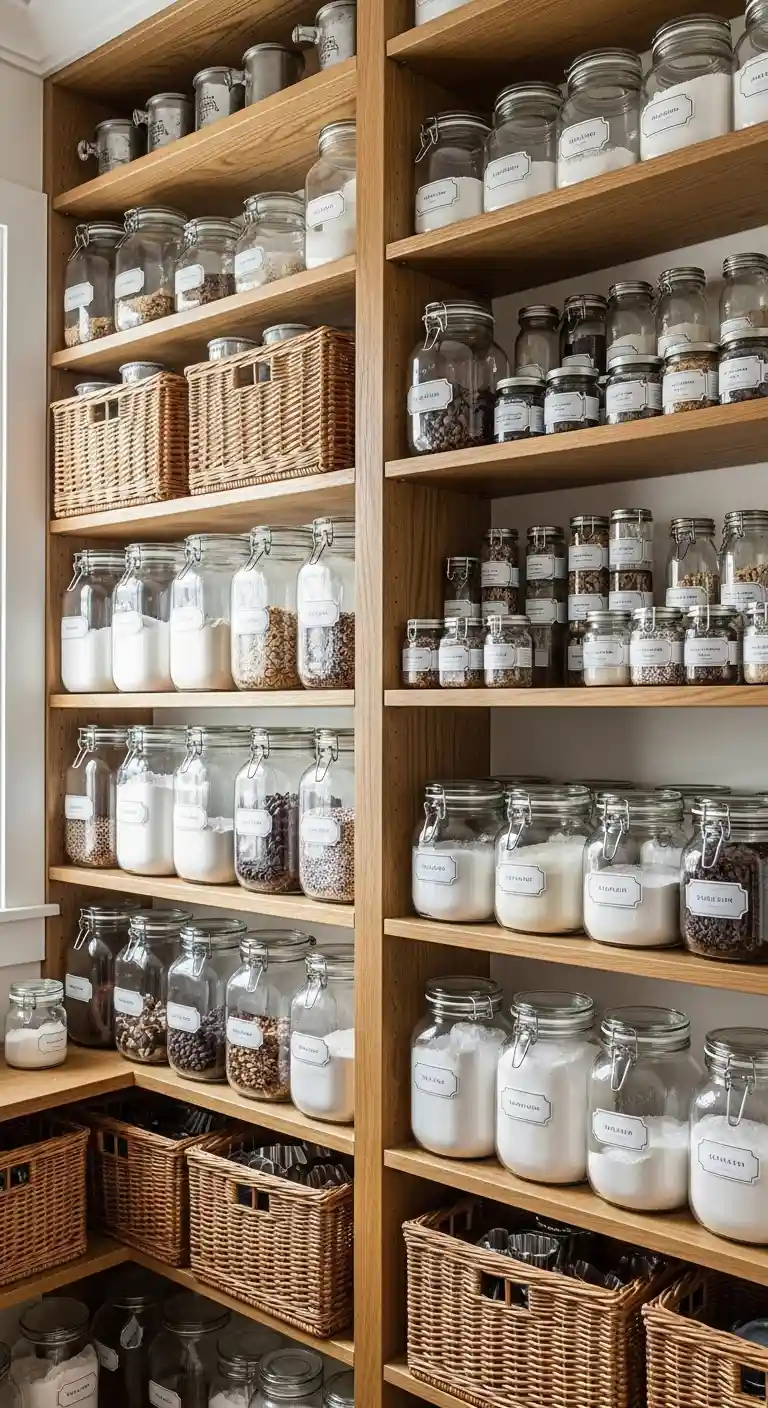
Uniform jars create a cohesive look while keeping flour, sugar, and baking powders fresh and secure.
Glass or acrylic jars allow you to monitor contents at a glance, ensuring you never run out unexpectedly.
Airtight lids maintain freshness, prevent pests, and preserve the quality of pantry staples over time.
Group baking essentials together in a dedicated area to streamline cooking and reduce clutter.
Stackable jars improve shelf utilization while maintaining a neat and polished appearance in your pantry.
This method combines aesthetics with practicality, elevating both style and efficiency in everyday kitchen tasks.
Use Wire Baskets for Fruits and Vegetables
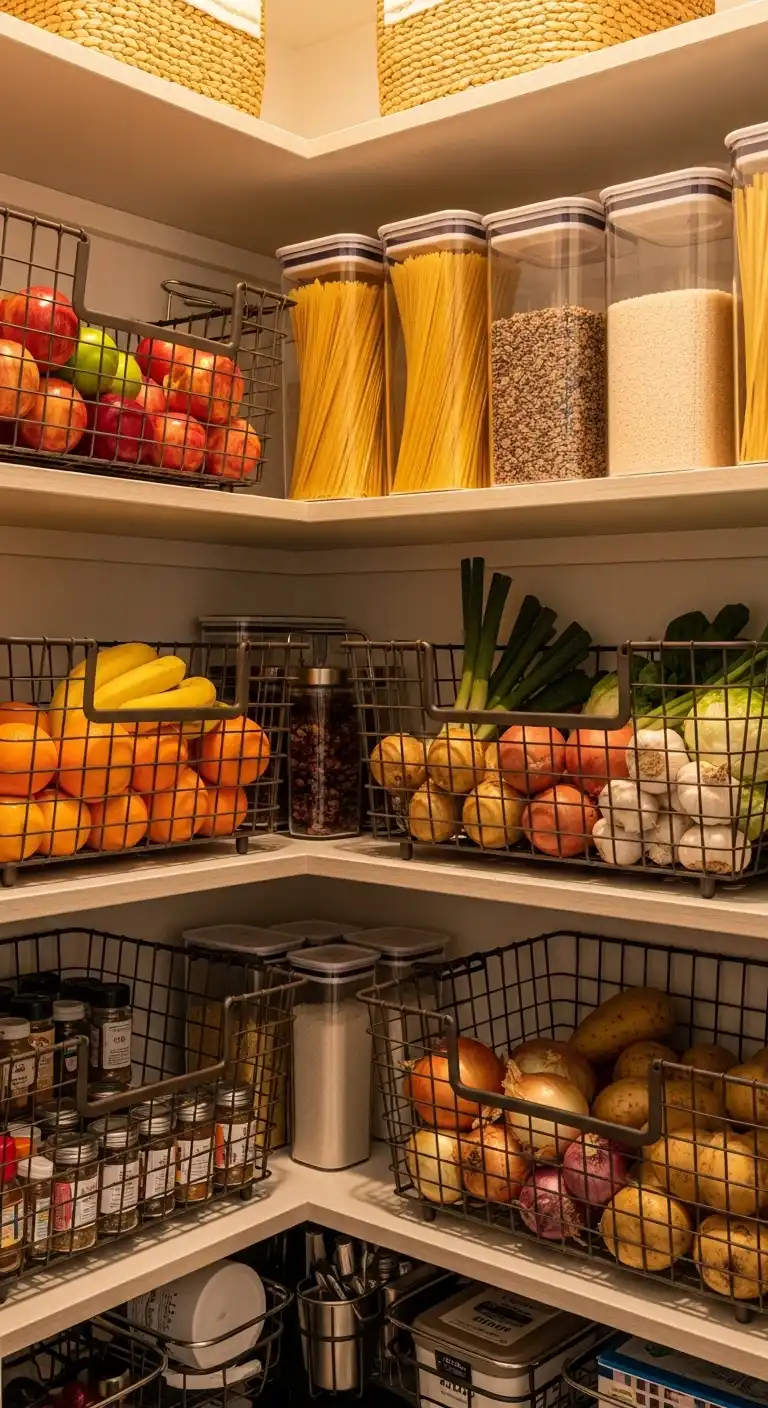
Wire baskets provide ideal storage for fresh produce such as onions, garlic, and potatoes.
The open design promotes airflow, reducing the risk of spoilage while keeping items fresh longer.
Place baskets on lower shelves for easy access and daily rotation to ensure you use older items first.
Grouping produce by type keeps your pantry organized and simplifies meal planning.
Baskets can also be stacked or hung to create additional storage layers efficiently.
This approach is both practical and visually appealing for any size pantry, adding convenience to daily routines.
Use Magazine Holders for Snacks and Bread
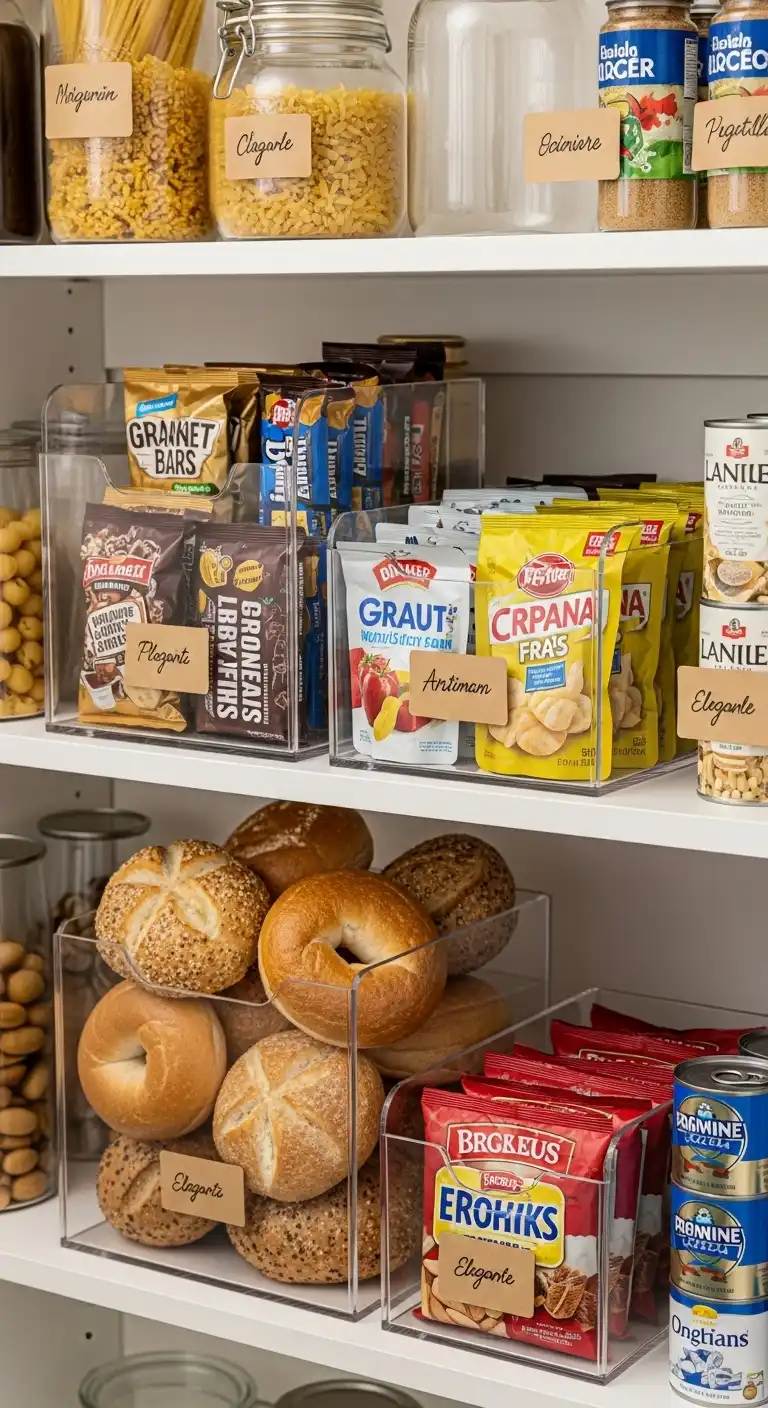
Repurposed magazine holders are perfect for storing bread, wraps, or small snack packets upright.
This method prevents items from being crushed and keeps them easy to grab when needed quickly.
Label each holder for quick identification, making the pantry more functional and organized.
Magazine holders save space while creating a uniform, tidy appearance on crowded shelves.
This inexpensive hack works well for irregularly shaped items and can be customized with labels or stickers.
It’s a creative and practical way to bring order to a small or busy pantry efficiently.
Rotate Items with First In, First Out Method
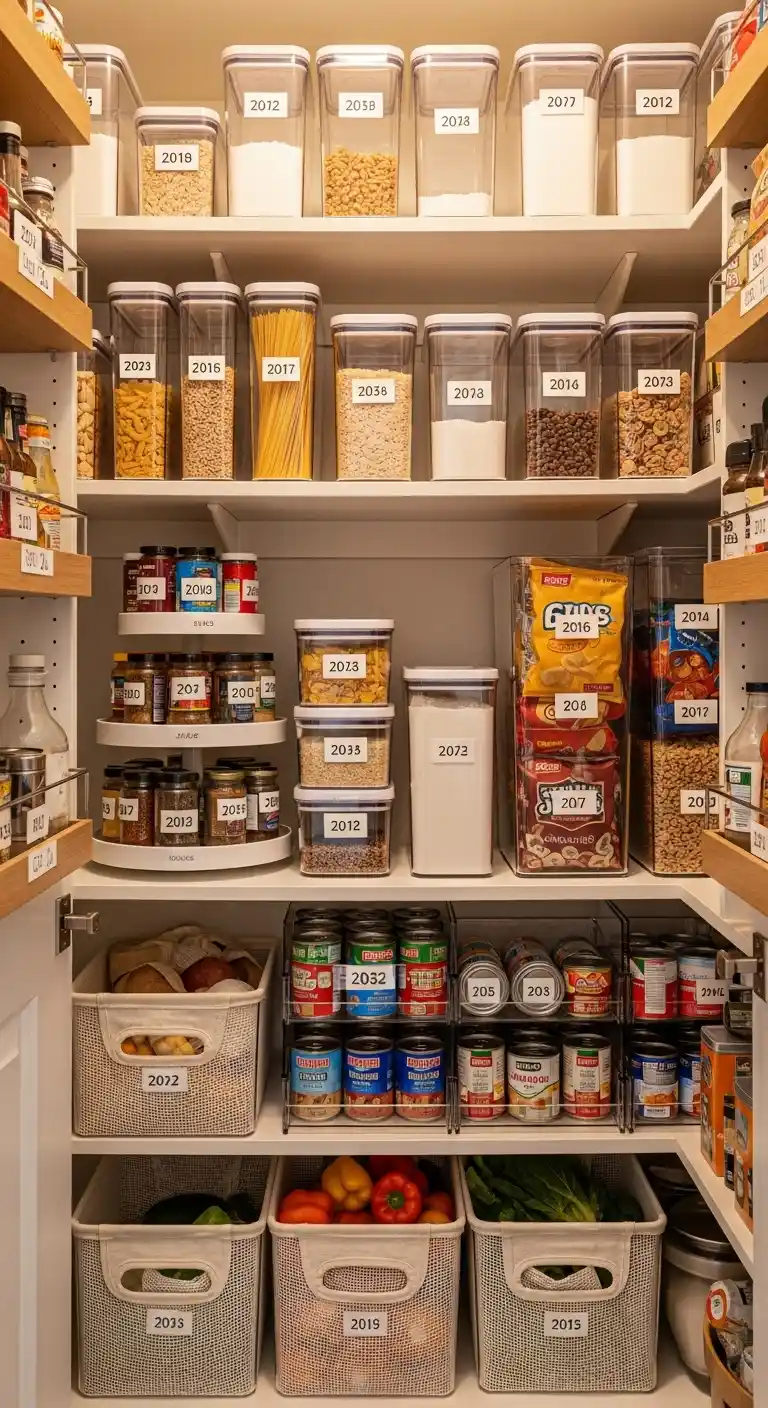
The first in, first out method ensures older items are used before newer purchases, reducing waste significantly.
Place recently purchased goods behind older ones to maintain proper rotation automatically without constant oversight.
This strategy works well for canned goods, dry ingredients, and even snacks to ensure nothing goes bad.
Implementing rotation makes restocking simpler and prevents expired items from accumulating in the pantry.
This practice also keeps your pantry functional and efficient, saving both money and space.
Consistently applying the first in, first out principle maintains a clean, organized, and waste-free pantry.
Use Clear Jars for Snacks and Cereals
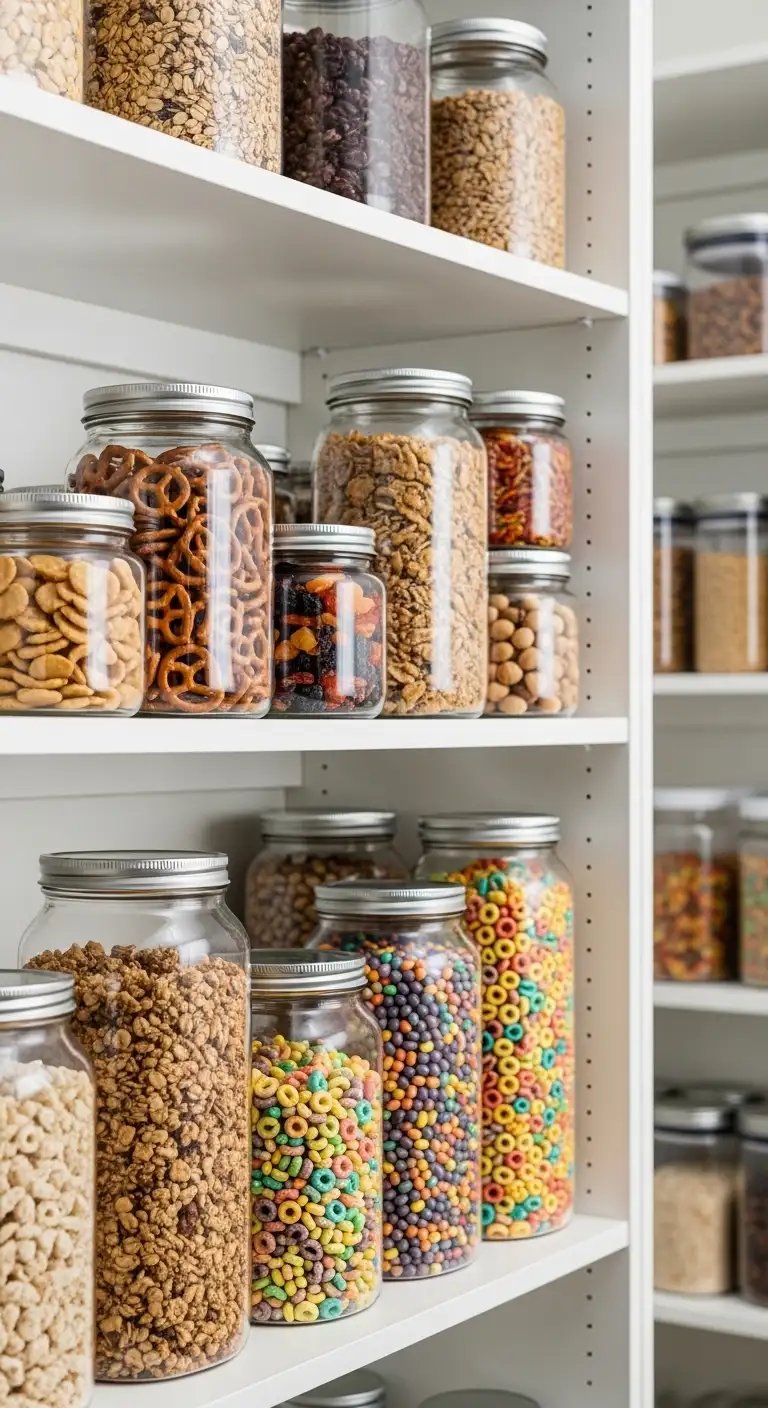
Clear jars make it easy to see what’s inside without opening containers, which saves time during breakfast or snack prep.
Group similar items together, like cereals, granola, or dried fruits, for easy access and visual order.
Airtight jars maintain freshness and prevent pantry pests, ensuring your snacks stay crunchy and flavorful.
Stackable jars save space and create a cohesive, visually appealing look across pantry shelves.
Label each jar with the contents and expiration date to prevent confusion and avoid accidental spoilage.
Using clear jars also encourages portion control and makes your pantry appear more organized and stylish.
Categorize Pantry Items by Type
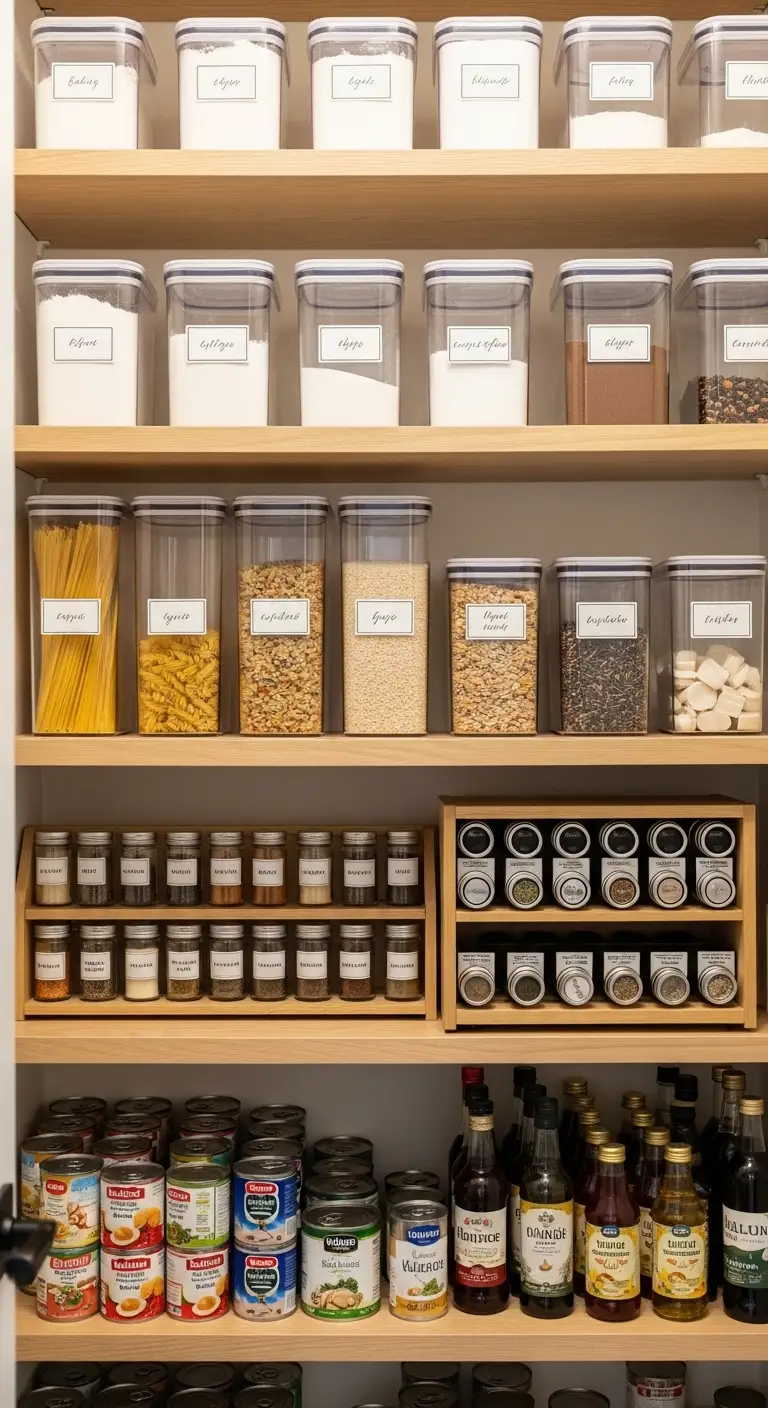
Segregating pantry items by category reduces clutter and improves efficiency when cooking or baking.
Keep snacks, canned goods, baking supplies, and breakfast items in dedicated zones to avoid constant searching.
Grouping by type allows you to quickly see what’s running low and makes restocking simpler.
Use baskets, bins, or trays to contain each category and prevent items from shifting or toppling.
This approach saves time during meal prep and keeps pantry shelves orderly without sacrificing accessibility.
Visual separation also makes your pantry look more polished, functional, and easier to maintain over time.
Stack Bins for Extra Storage
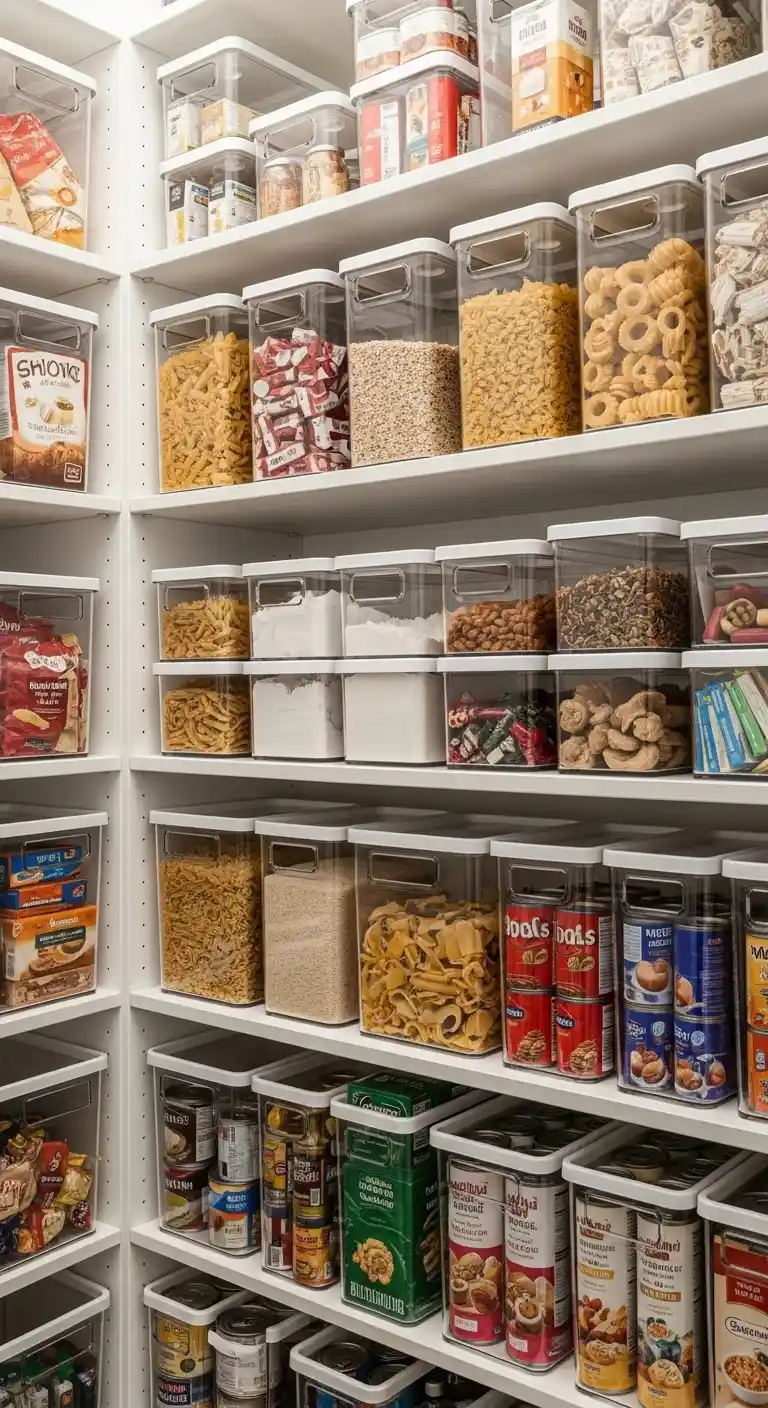
Stackable bins are perfect for small or deep pantries where vertical space is often underutilized.
Use them to store bulk items, snacks, or seasonal ingredients, maximizing available space efficiently.
Clear or labeled bins make it easy to identify contents, reducing the need to dig through layers of food.
Stacking bins also prevents clutter from spreading across shelves, maintaining a clean and organized look.
Adjustable stackable bins allow you to customize height and spacing, adapting to your pantry’s unique layout.
This strategy improves accessibility while keeping your pantry functional and visually appealing.
Install Door-Mounted Storage
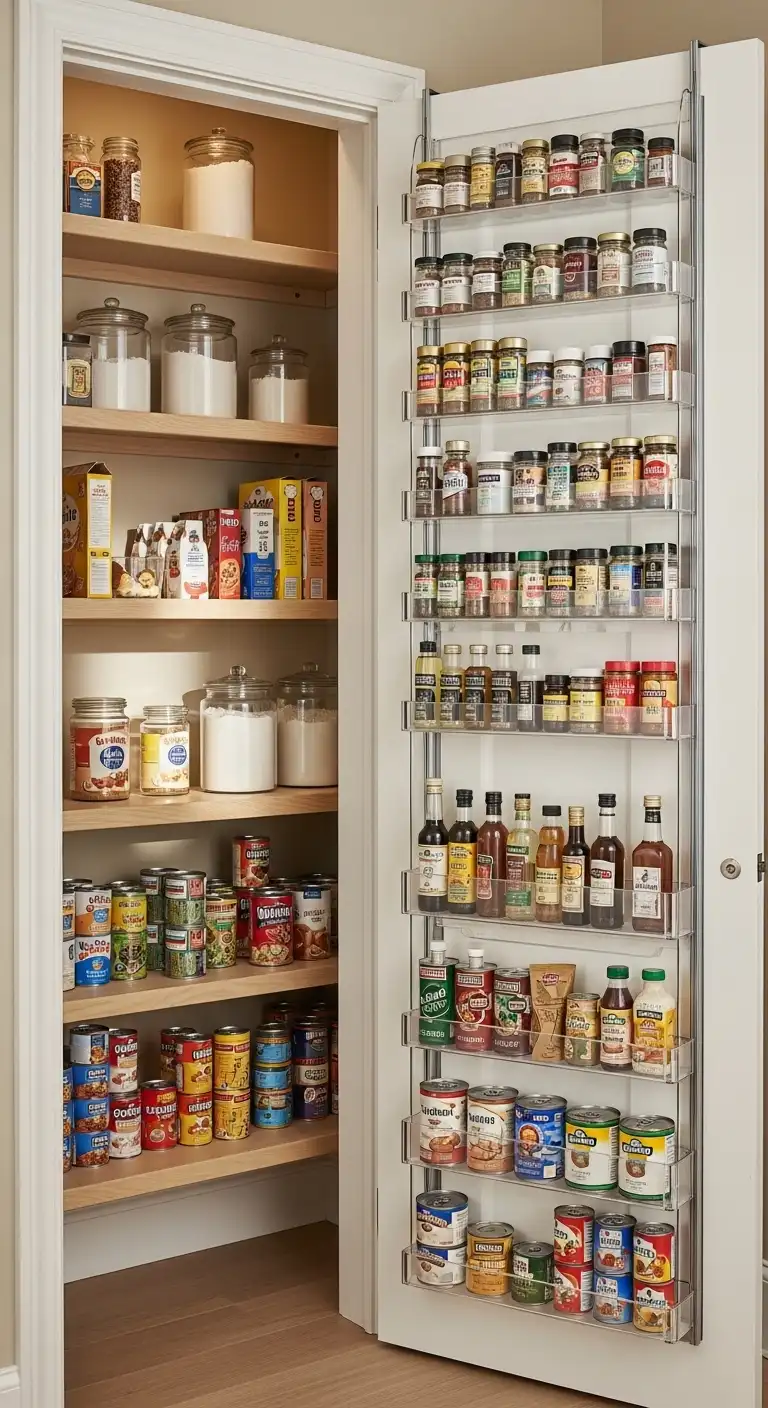
Door-mounted racks or hanging organizers are a clever solution to free up shelf space.
Use them to store spices, small jars, or condiments for easy access without crowding main shelves.
This method makes use of often-overlooked space, turning the pantry door into a functional storage area.
Choose adjustable racks to accommodate varying container sizes and ensure flexibility over time.
Door-mounted storage is ideal for small pantries where every inch counts and clutter needs to be minimized.
This setup keeps frequently used items within reach while maintaining a tidy and organized appearance.
Use Airtight Containers for Dry Goods
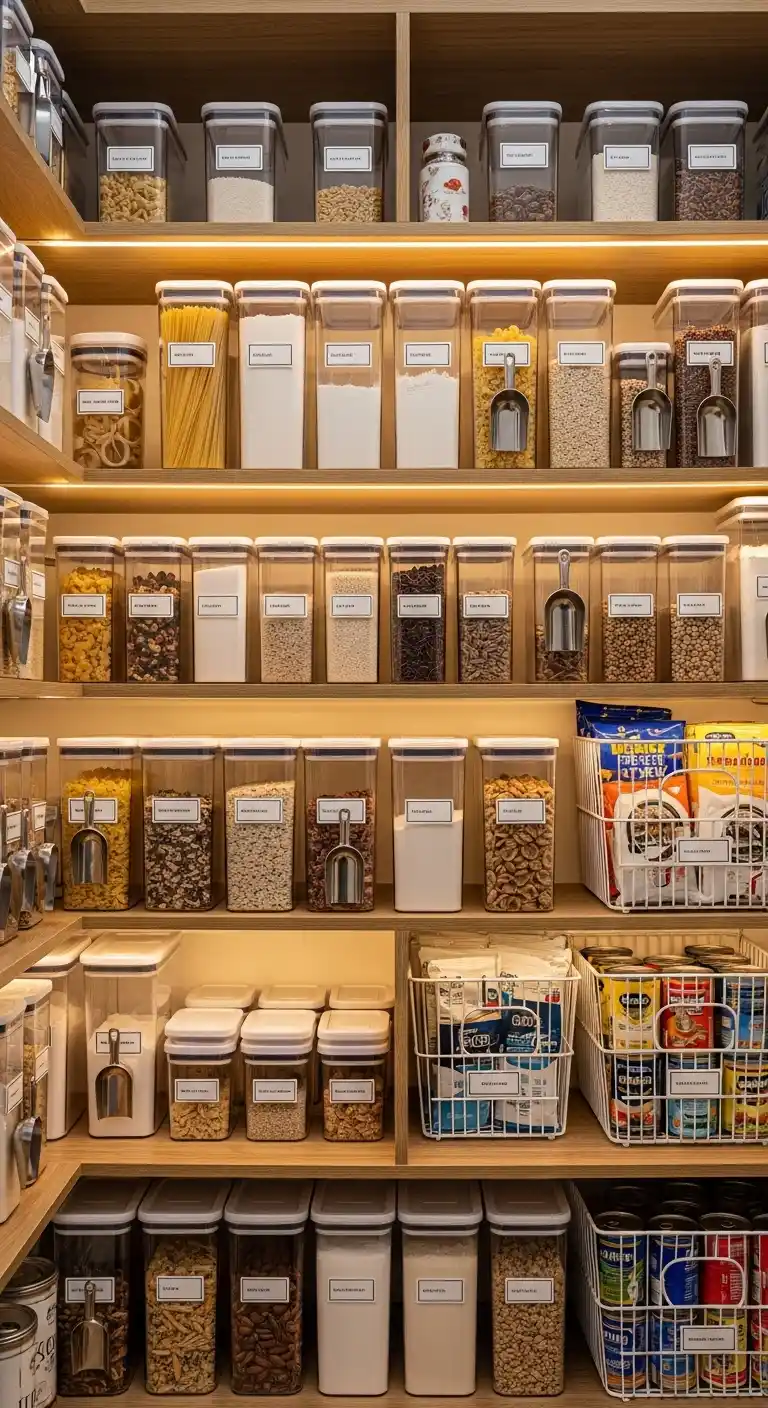
Airtight containers are essential for storing dry goods like flour, sugar, grains, and pasta.
They keep food fresh longer, protect from pests, and prevent accidental spills that can create a mess.
Use uniform containers to maintain a cohesive look and maximize stacking on pantry shelves.
Label each container for easy identification and quick retrieval during cooking or baking sessions.
Airtight containers simplify inventory management and help reduce food waste over time.
This approach ensures both functionality and aesthetics, making your pantry a practical and visually pleasing space.
Create a Snack Zone for Kids
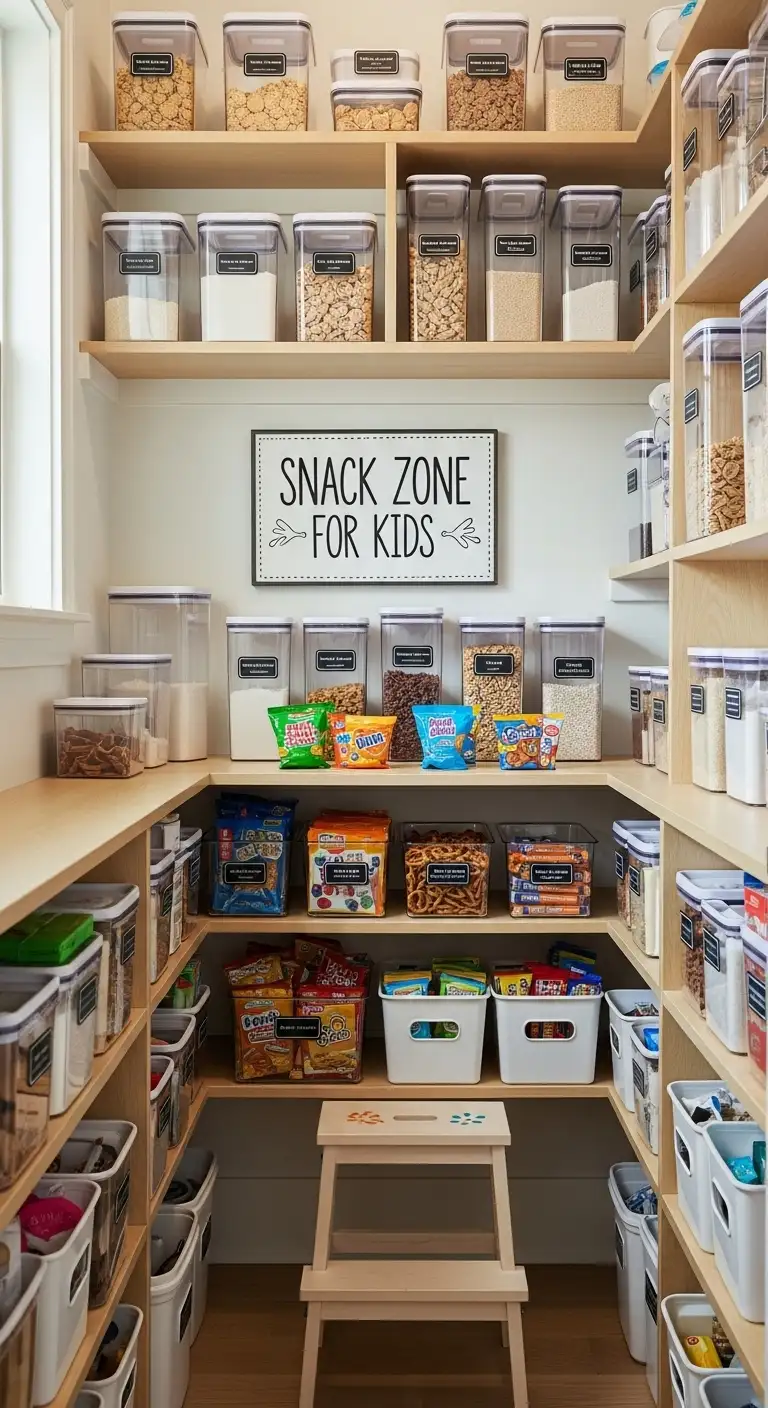
Designate a basket or bin for kid-friendly snacks that are easy to reach and grab independently.
Include granola bars, dried fruits, and individually packaged items for quick access without creating mess.
Use clear containers or labeled baskets to help children identify their snacks while keeping pantry shelves tidy.
Separating this area from other pantry items prevents clutter and makes family routines smoother.
Rotating snacks regularly ensures items stay fresh and prevents older products from being overlooked.
This strategy teaches children responsibility while maintaining a visually appealing and functional pantry space.
Use Pull-Out Wire Baskets for Produce
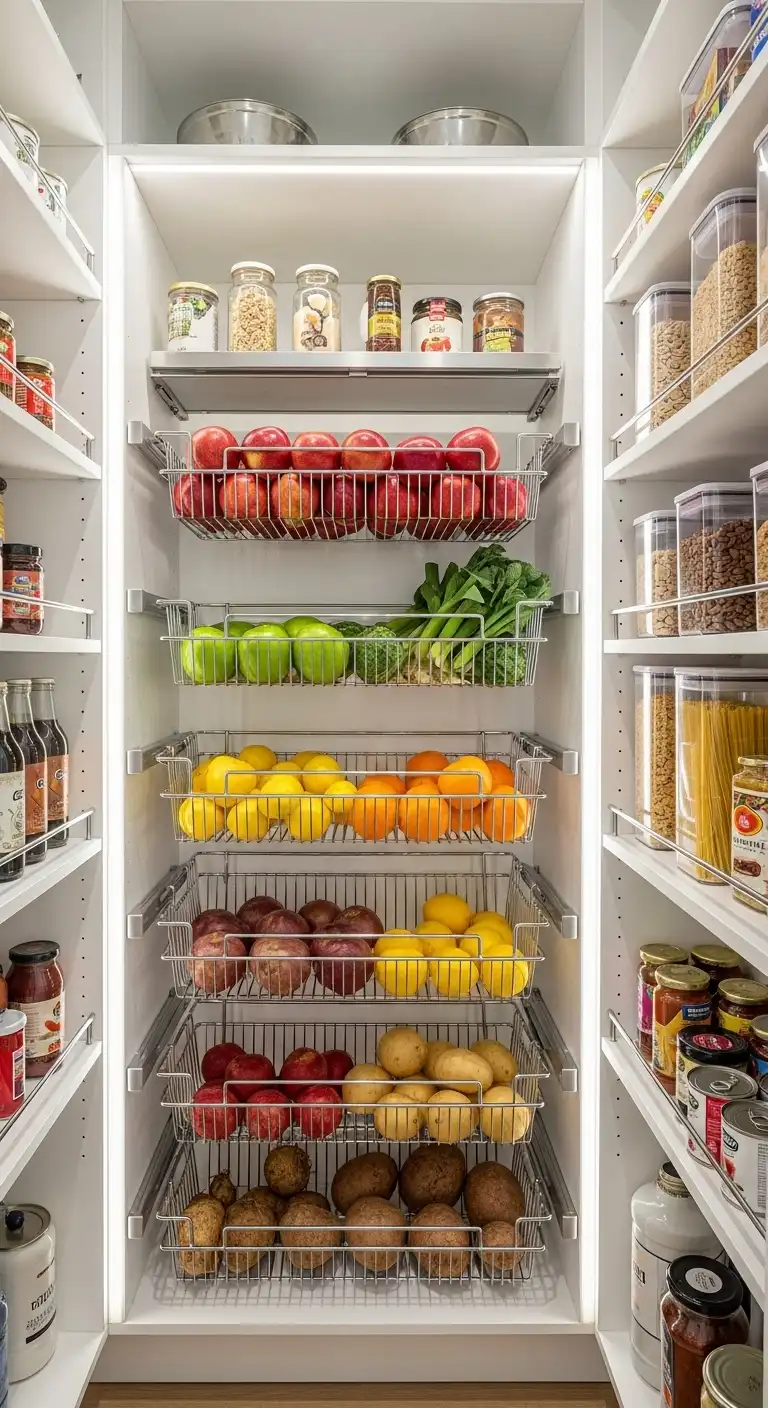
Pull-out wire baskets make storing fresh produce like onions, garlic, or potatoes simple and accessible.
The wire design promotes airflow, extending the life of produce while keeping them organized in a single place.
Pull-out baskets are perfect for deep pantries where items at the back often get forgotten.
Grouping produce by type ensures easy rotation and reduces the risk of spoilage.
This method keeps your pantry functional and attractive while simplifying daily cooking routines.
Dedicate a Baking Zone
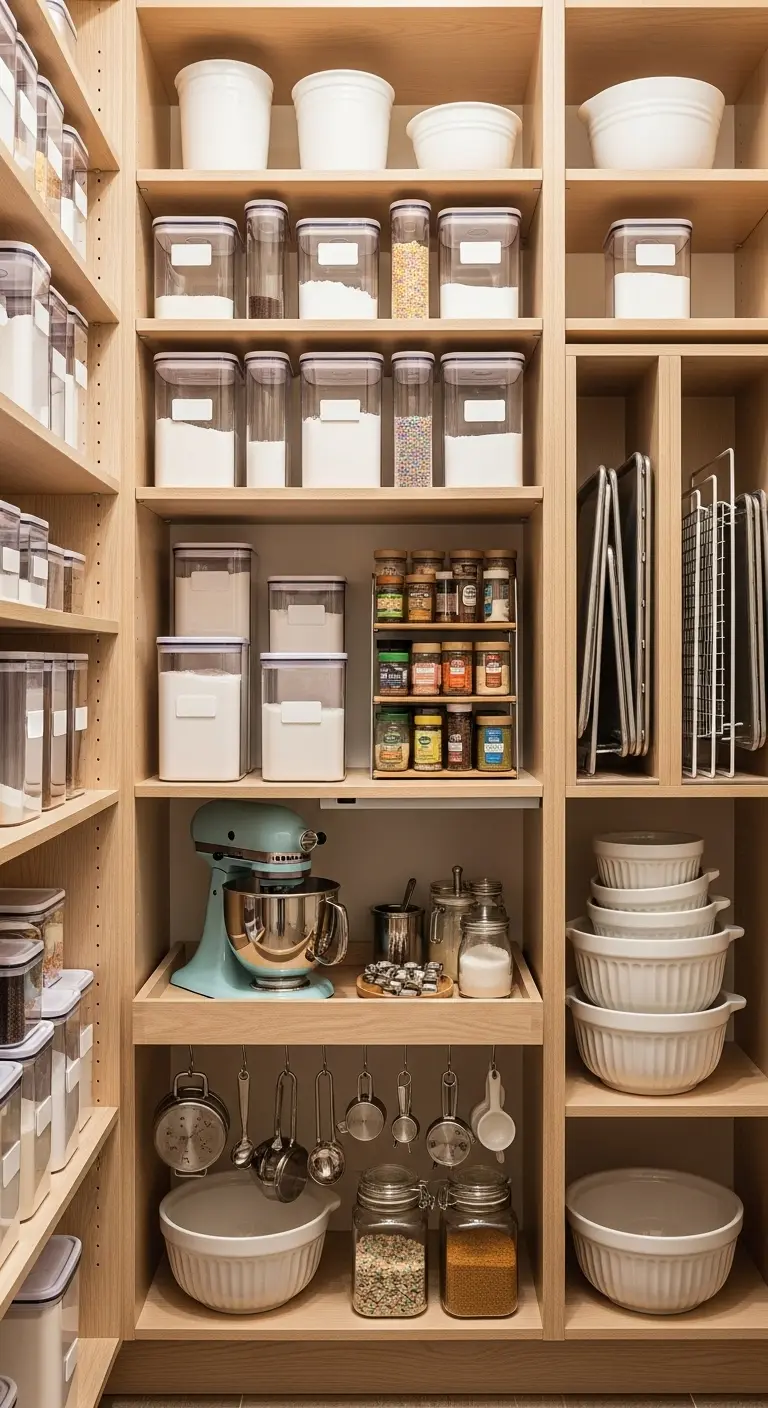
Create a dedicated space for all baking essentials including flour, sugar, chocolate, and spices.
Use matching jars, bins, or baskets to store these items neatly and prevent clutter from spreading.
Stackable containers help maximize shelf space and make it easier to find ingredients quickly.
Label items clearly for convenience and efficiency when baking or meal prepping.
A dedicated baking zone keeps supplies organized, accessible, and visually pleasing, enhancing overall pantry functionality.
Use Magazine Holders for Packets
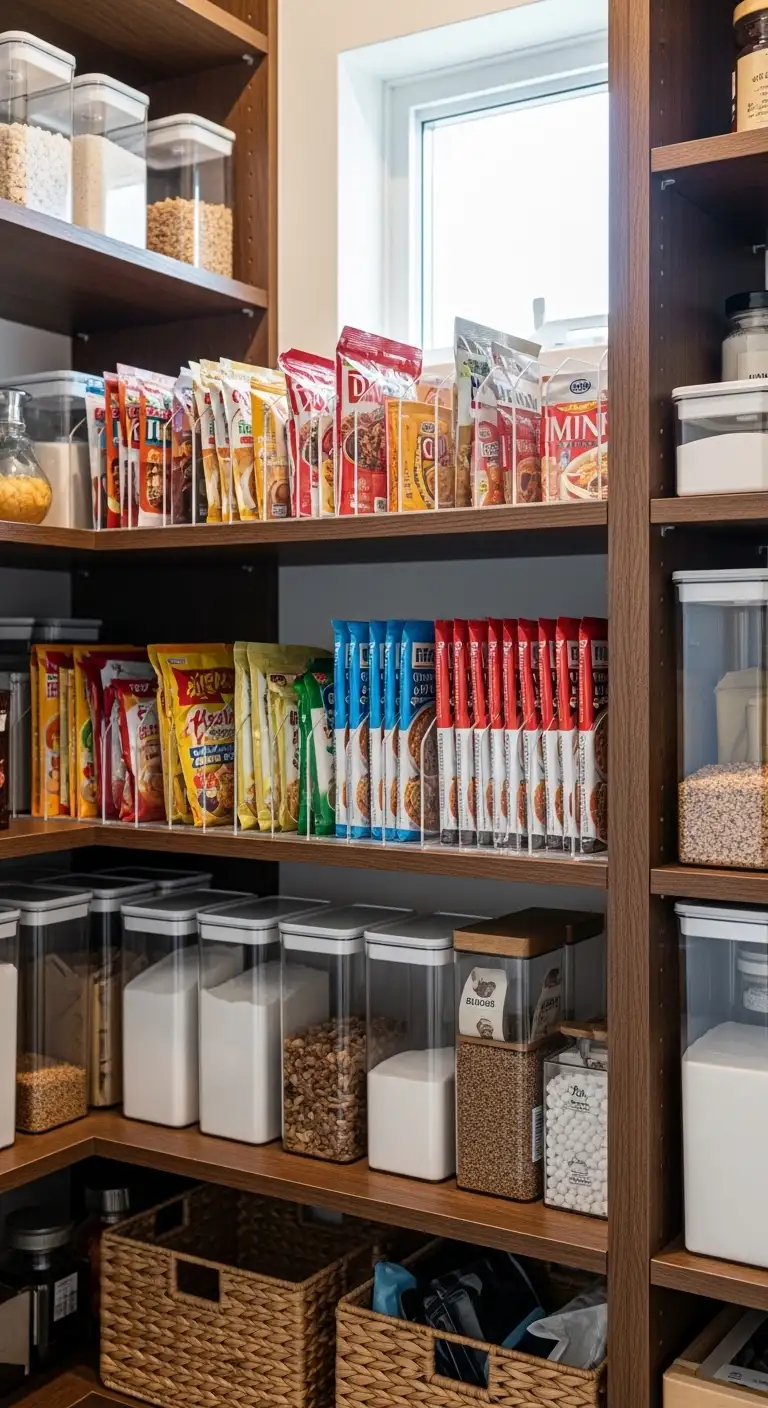
Repurposed magazine holders are perfect for small packets, pouches, or seasoning mixes that otherwise get lost.
Store them upright to prevent crushing or bending and make retrieval simple and quick.
Label each holder to identify its contents, improving accessibility and pantry organization.
This budget-friendly method transforms miscellaneous items into a neat, visually appealing system.
Magazine holders also free up shelf space for larger containers while keeping small items within reach.
Rotate Snacks and Canned Goods
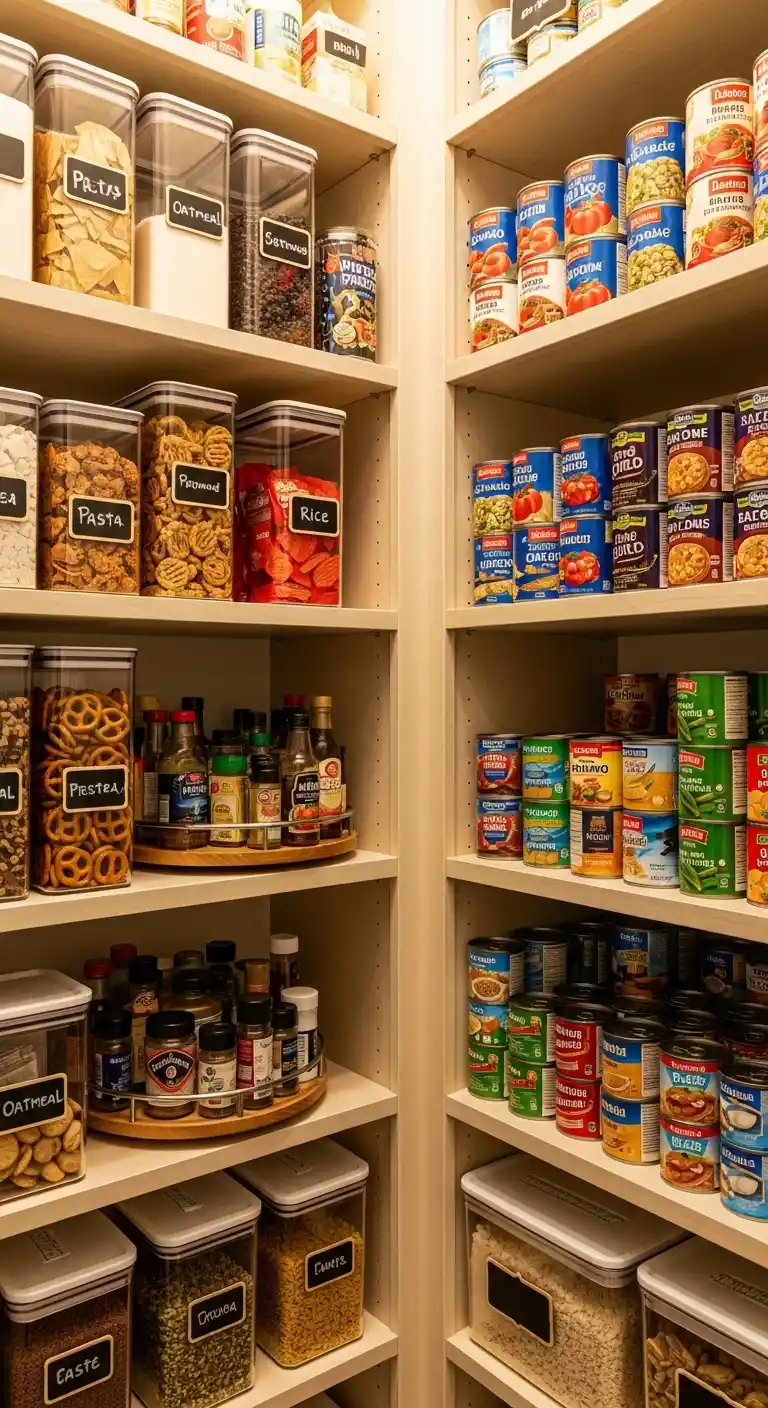
Keep pantry items fresh and prevent waste by applying the first in, first out rotation method.
Place new purchases behind older ones to ensure older items are used first.
This method works for snacks, dry goods, and canned goods alike, reducing the risk of spoilage.
Consistent rotation saves money, simplifies restocking, and keeps your pantry functional and organized.
Rotation encourages mindfulness in consumption while maintaining an efficient and tidy storage system.
Label Lids for Quick Identification
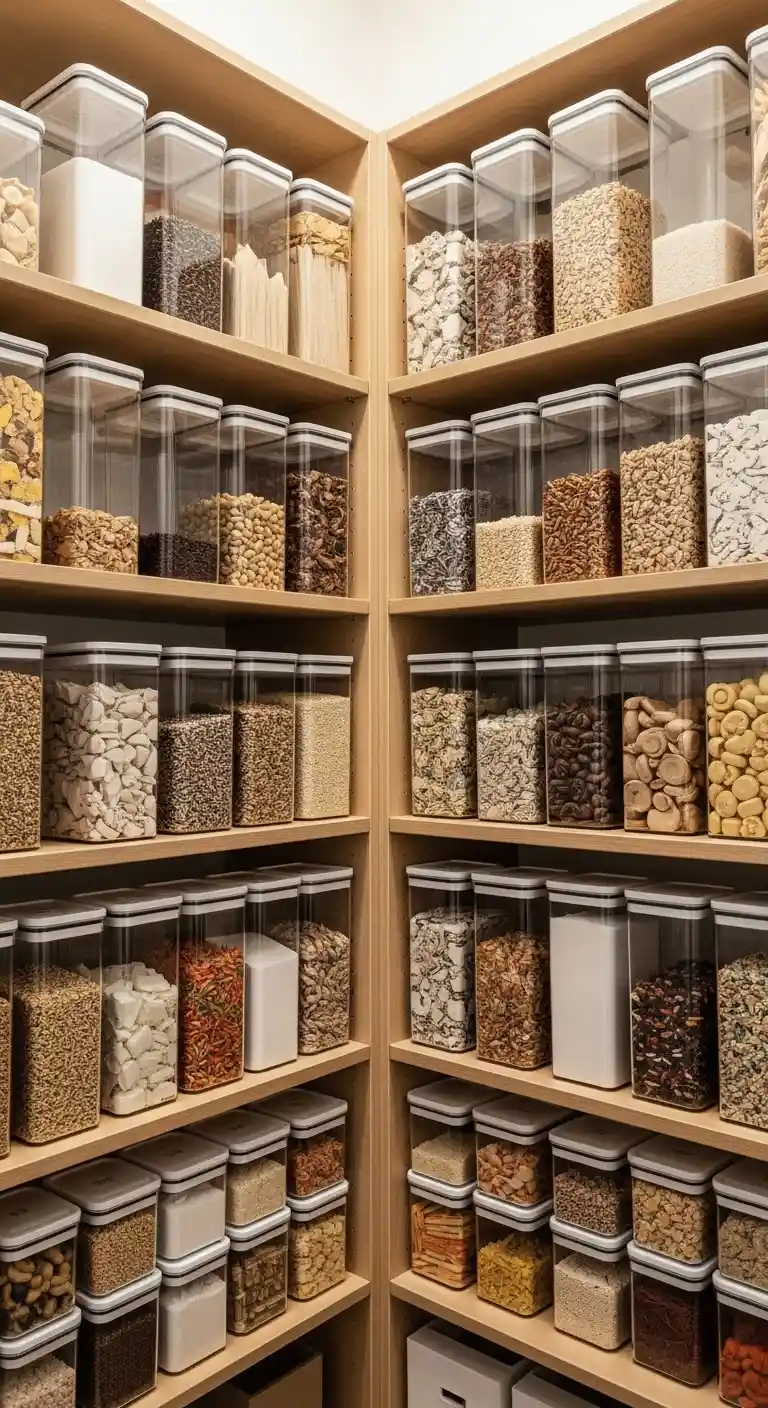
Labeling the tops of jars and containers ensures you can identify contents at a glance from above.
This method works especially well for spice jars, smaller containers, or stacked items on high shelves.
It reduces the need to pull down every container during cooking, saving time and effort.
Clear, legible labels improve pantry aesthetics and maintain organization in busy kitchens.
Combine lid labels with shelf labels for a fully functional and visually cohesive system.
Store Baking Sheets and Cutting Boards Vertically
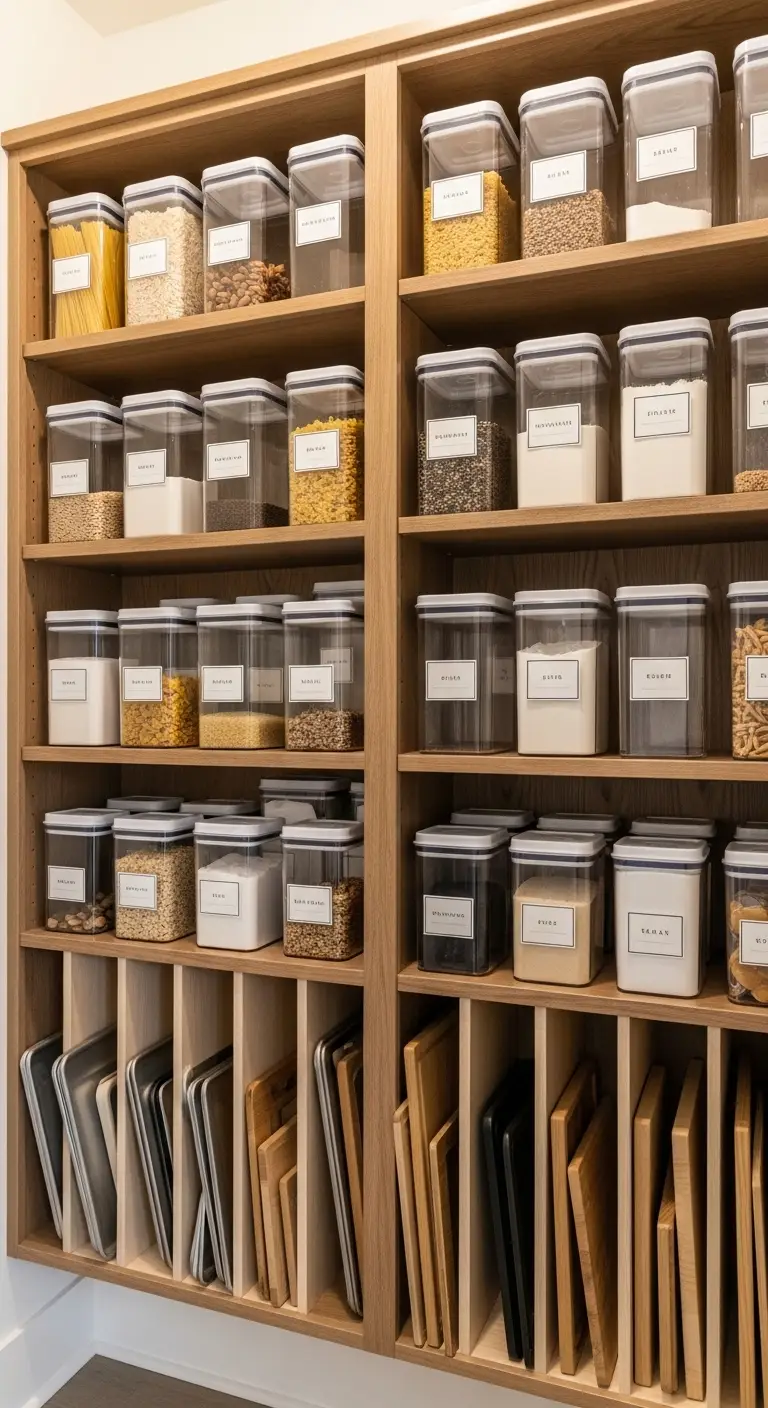
Vertical storage of baking sheets, cutting boards, or trays saves space and prevents clutter.
Use dividers, racks, or magazine holders to keep them upright, organized, and easy to grab.
This method prevents scratching, bending, or damage while maximizing shallow pantry shelf space.
It also improves accessibility, ensuring items are within reach without disturbing other containers.
Vertical organization adds structure and efficiency to your pantry, keeping it both functional and stylish.
Use Baskets for Seasonal Items
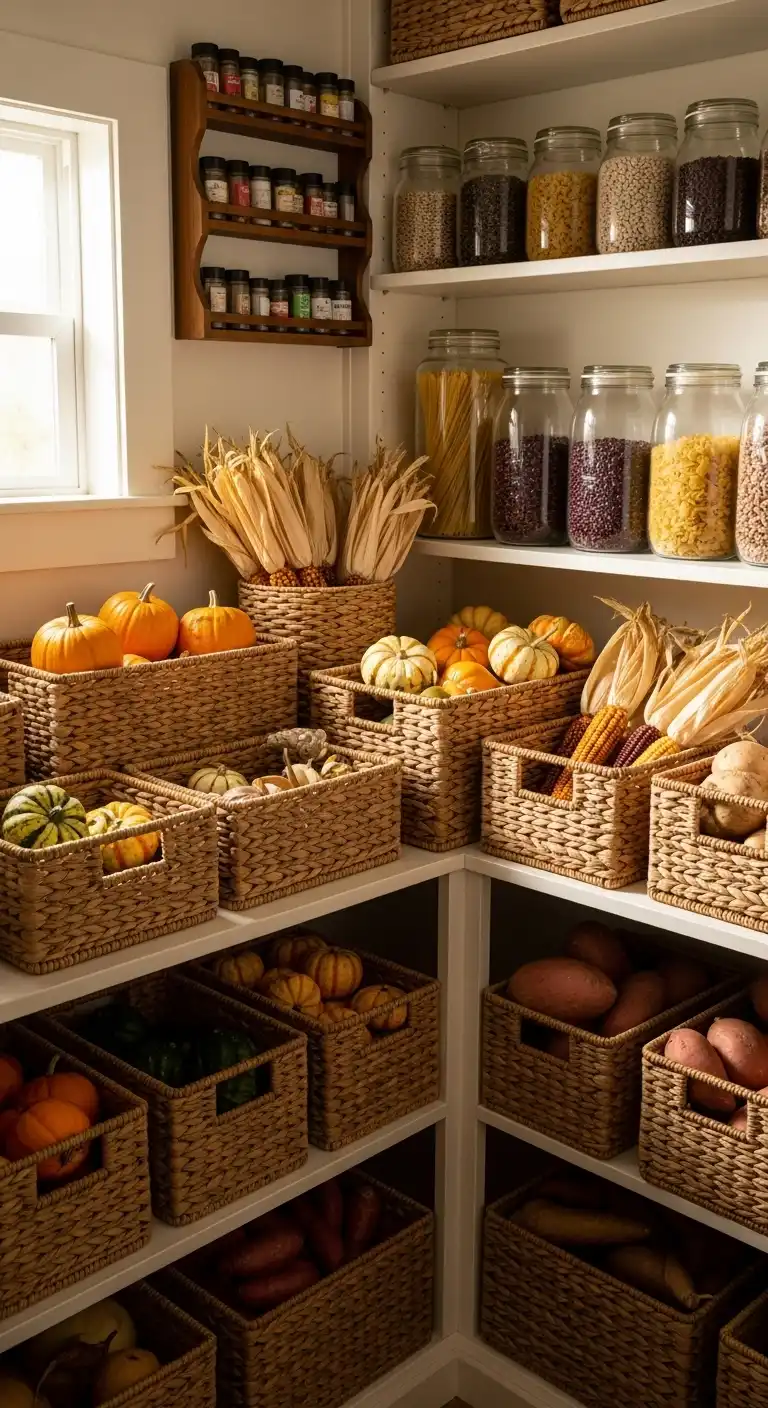
Baskets are perfect for seasonal pantry items that aren’t used daily, like holiday snacks or specialty flours.
Store them at the top of shelves or in less accessible areas, keeping daily essentials easy to reach.
Label each basket clearly to know exactly what’s inside when needed.
This approach maintains order and prevents seasonal items from cluttering frequently used pantry areas.
Baskets allow for easy rotation and quick access during special occasions or baking sessions.
Maintain a Weekly Pantry Check
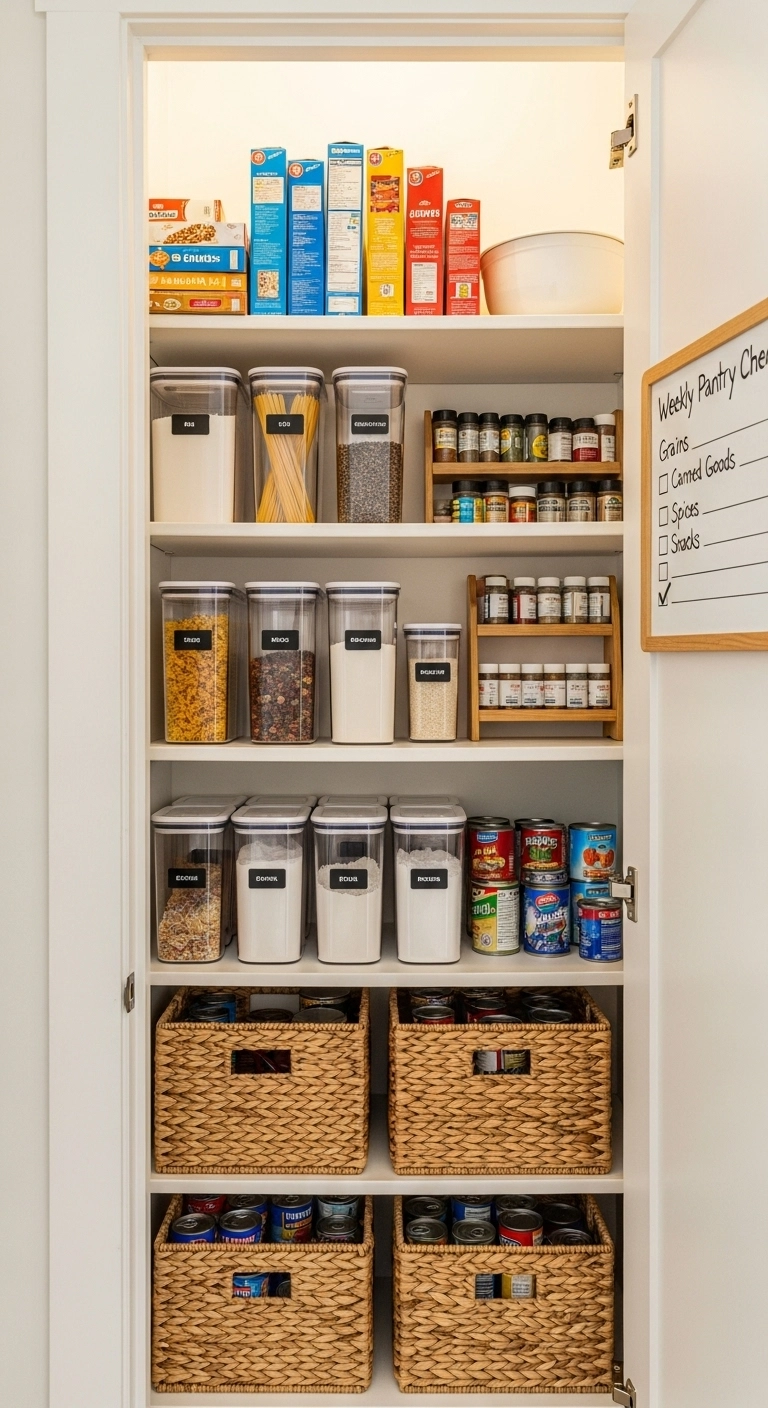
Perform a weekly inventory check to ensure expired items are removed and supplies are replenished.
Check each category and container, reorganizing as necessary to maintain a clean and efficient system.
This habit prevents clutter accumulation and makes grocery planning more efficient and stress-free.
Weekly checks also give you a clear overview of what needs to be restocked, avoiding duplicate purchases.
A regular pantry review is a small task that saves time, money, and energy in the long run.
Create a Kid-Friendly Zone
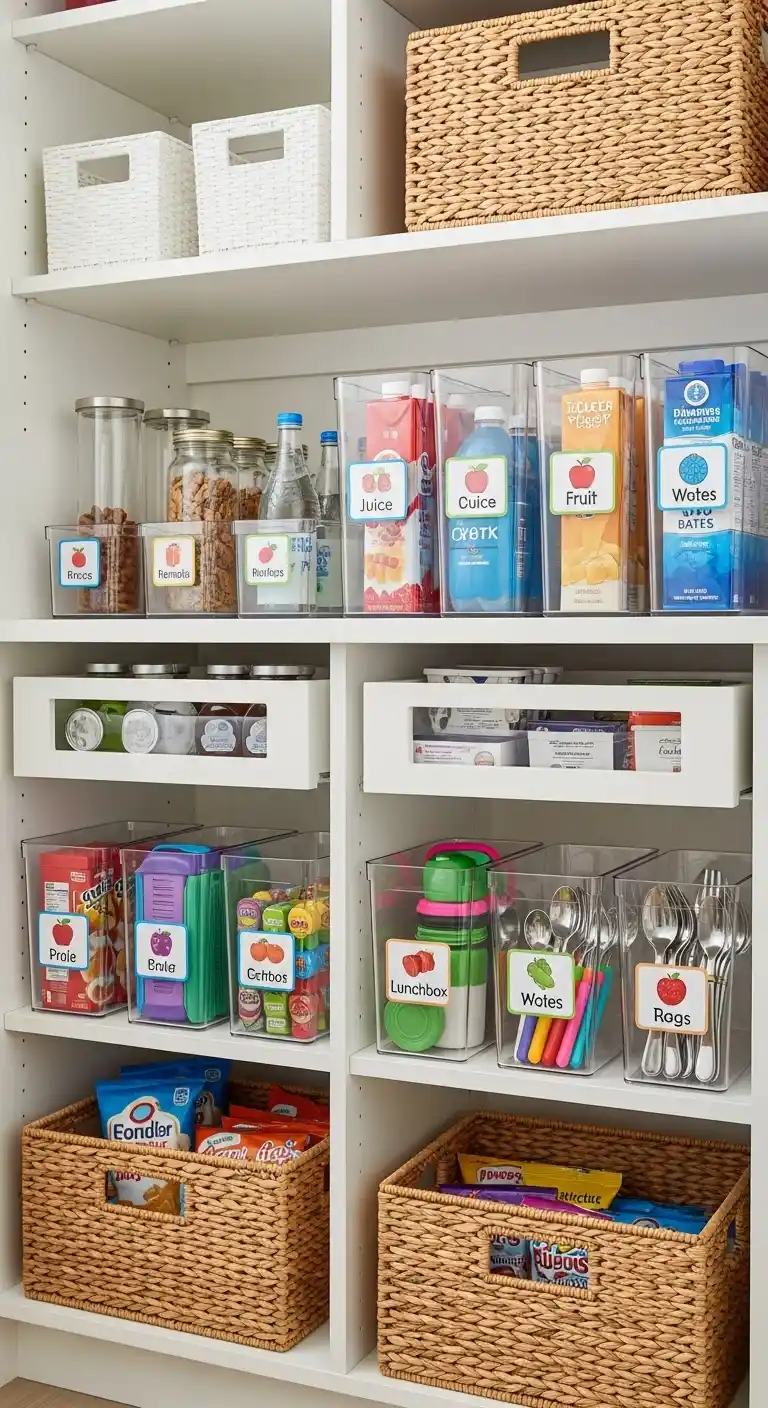
Set aside a lower shelf or basket for children’s snacks and breakfast items that are easy to reach.
Use clear containers, baskets, or bins with labels to encourage independence and responsibility.
Organizing a kid-friendly zone prevents clutter from spreading and keeps the rest of the pantry tidy.
Include healthy snacks and rotate items regularly to maintain freshness and variety.
This thoughtful organization promotes both convenience and accessibility while keeping your pantry visually organized.
Tips for Maintaining a Clutter-Free Pantry
Keeping your pantry organized requires consistency and mindful habits rather than one-time effort.
Regularly clean shelves, check for expired products, and reorganize items to maintain efficiency.
Label everything clearly and invest in containers and baskets that suit your pantry layout.
Store frequently used items at eye level and rotate goods to ensure freshness.
By creating dedicated zones and maintaining a routine, your pantry stays functional, attractive, and stress-free.
Innovative Pantry Hacks
Consider repurposing household items like magazine holders, spice racks, or shoe organizers to maximize pantry space.
Use tiered racks for visibility, pull-out baskets for accessibility, and labels for instant identification.
Think vertically, use door space, and store seasonal or infrequently used items in top bins.
These small hacks save time, reduce clutter, and transform even the tiniest pantry into a functional space.
Personalizing the system ensures it works for your household habits while keeping items organized and easy to find.
Final Wrap-Up
Organizing your pantry doesn’t have to feel overwhelming or time-consuming if approached with planning and creativity.
From baskets and bins to vertical storage and clear containers, small adjustments can make a significant impact.
By implementing these 25 pantry organization ideas, you can achieve a tidy, efficient, and visually appealing space.
Regular maintenance, labeling, and smart rotation habits keep your pantry functional and clutter-free.
With these practical tips, your pantry can become a source of joy, inspiration, and efficiency in your daily kitchen routines.
A well-organized pantry is more than just storage; it’s a reflection of a thoughtful and functional home.