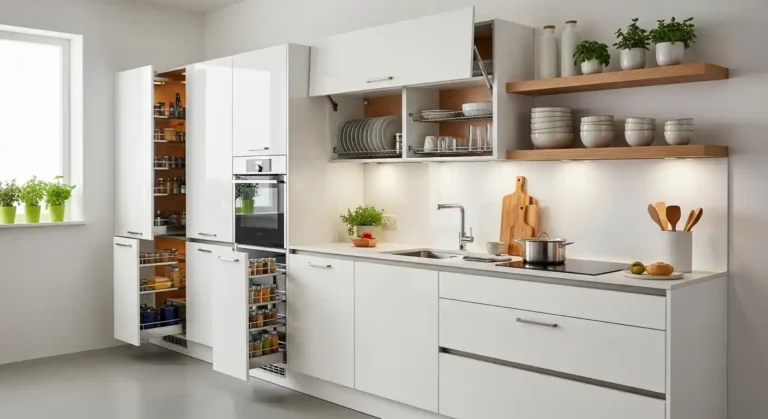


Adding a kitchen to your basement is a sophisticated way to increase the utility of your home.
Whether you are aiming for a full-scale guest apartment or a simple space for entertaining, the backbone of the project is the plumbing.
Unlike a standard kitchen on the main floor, where gravity does most of the heavy lifting for drainage, a basement kitchen requires a more strategic approach.
If you are currently mapping out your basement kitchenette design, you likely already know that the “wet” parts of the renovation—the sink, the dishwasher, and perhaps a bar prep area—are the most complex to install.
In this guide, we will break down the technical requirements, the various drainage options, and the essential steps involved in bringing water to your lower level.
Contents
Why Basement Plumbing is Different
In a traditional kitchen, the plumbing lines are tucked away in the floor joists or wall cavities, and the waste flows downward into the main sewer line.
In a basement, however, you are often working below the level of the municipal sewer main or your home’s septic tank. This means you cannot simply “hook up” a sink and expect it to drain.
Before you get started, it is vital to ask: Do basement kitchens add value? The answer is yes, but only if the plumbing is functional and permitted.
A poorly plumbed kitchen can lead to backups, odors, and significant water damage, which will detract from your home’s value rather than enhance it.
How to Plumb a Basement Kitchen: The Step-by-Step Process
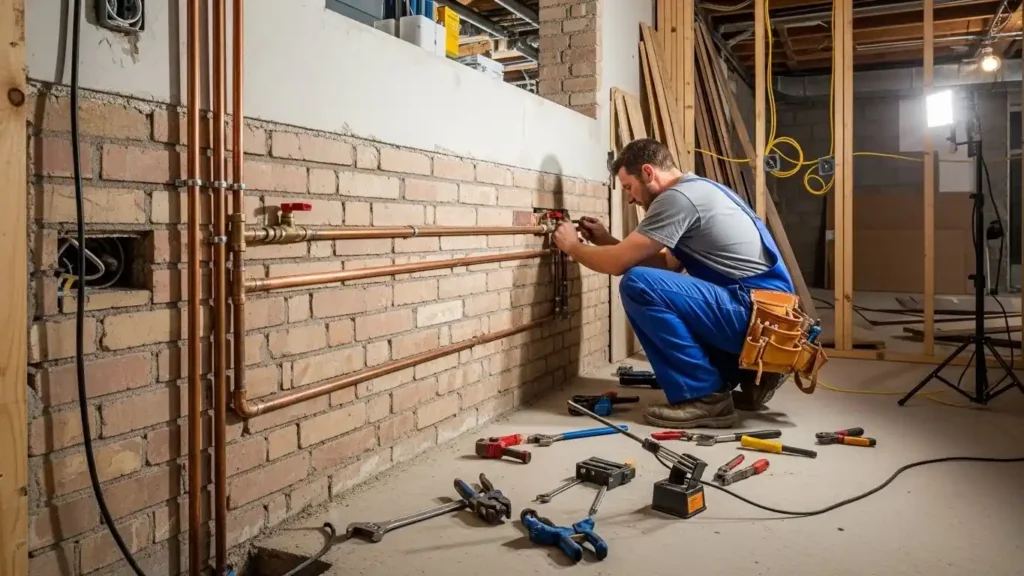
When you begin the process of how to plumb a basement kitchen, you must first decide how you will handle the waste.
There are generally three ways to approach this: gravity drainage, a sewage ejector pump, or a macerating (upflush) system.
1. Assessing the Main Drain Line
The first step is to locate your home’s main sewer cleanout.
If the main drain line exits the house through the basement floor (a “below-slab” exit), you may be able to use gravity drainage if your new kitchen sink is high enough above that line.
However, if the main line exits through the wall several feet above the floor, you will need a pump system to push the waste upward.
2. Choosing Your Drainage System
- Gravity Drainage: This is the most reliable and quietest method. It involves cutting into the concrete slab, digging a trench, and laying a new drain pipe that slopes toward the main sewer line. While labor-intensive, it is a permanent solution.
- Sewage Ejector Pump: If gravity isn’t on your side, you will install a basin in the floor that collects wastewater. Once the water reaches a certain level, a pump kicks on and pushes the water up and out to the main sewer line.
- Macerating/Upflush Systems: These are “above-floor” units. The sink drains into a small box behind the wall or under the cabinet that grinds up waste and pumps it through small-diameter pipes to the main stack. This is often the preferred choice for a basement kitchenette with island where breaking up the concrete floor is not an option.
3. Running Supply Lines
Once the drainage is figured out, you need to bring hot and cold water to the kitchen. Most modern renovations use PEX (cross-linked polyethylene) piping.
PEX is flexible, resistant to scale and chlorine, and much easier to “fish” through existing basement ceilings than traditional copper pipes.
You will tap into the existing hot and cold water lines—usually found in the basement ceiling—and run them down the wall to your new sink location.
4. The Importance of Venting
Every plumbing fixture needs a vent to allow air into the system, which prevents a vacuum from forming and ensures smooth drainage.
In a basement, you can sometimes use an Air Admittance Valve (AAV), also known as a “Studor vent,” which allows air in but keeps sewer gases out.
However, many local codes require a true vent stack that exits through the roof.
Note that plumbing vents are different from air quality vents.
To ensure your kitchen doesn’t become smoky or humid, you should also research how to vent a basement kitchen for proper air circulation.
Budgeting for Basement Plumbing
Plumbing is often one of the largest variables in the basement kitchenette cost.
If you can locate your new kitchen near existing plumbing lines (like a basement bathroom or the main stack), you can save thousands of dollars.
On average, plumbing a basement kitchen can range from $2,000 to $6,000.
When you compare this to the average cost to remodel a kitchen on a main floor, the basement version is often more expensive per square foot because of the need for specialized pumps or concrete work.
Integrating Plumbing into Your Design
A common mistake homeowners make is focusing so much on the “pipes” that they forget about the “look.”
Plumbing fixtures, especially in a basement, can sometimes result in exposed pipes or bulkheads.
To keep the space feeling high-end, consider how to brighten a dark kitchen without painting by using strategic lighting to draw the eye away from utility areas.
Under-cabinet LED lighting can highlight a beautiful backsplash and countertop, making the functional plumbing elements virtually invisible.
If you are installing an island, remember that the plumbing must come up through the floor. This usually requires cutting a channel in the concrete.
If you want to avoid this, you might choose a “dry” island for prep and keep the sink and dishwasher on the perimeter walls where plumbing is easier to access.
Common Pitfalls to Avoid
- Ignoring the Backwater Valve: Basements are the lowest point in the home. If the municipal sewer system backs up, your basement kitchen is the first place it will overflow. Installing a backwater valve is a crucial safety measure.
- Undersized Pumps: If you are including a dishwasher, ensure your ejector pump is rated for the high-temperature water and the volume that a dishwasher discharges.
- Poor Sloping: Even with a pump, the horizontal runs of your pipes must have a slight slope (usually 1/4 inch per foot) to prevent standing water and clogs.
- Skipping Permits: Because basement plumbing involves the main sewer line and potentially structural concrete work, most cities require a permit. Skipping this can make it impossible to sell your home later.
Final Thoughts
Plumbing a basement kitchen is a task that requires precision and a solid understanding of hydraulic principles.
While many homeowners are comfortable installing a faucet or a garbage disposal, the more complex aspects—such as drainage slope, venting, and backflow prevention—are best handled with careful planning or professional guidance.
Taking the time to do it right from the start can save you from costly repairs, water damage, and ongoing maintenance issues down the road.
Whether you tackle part of the project yourself or hire a licensed plumber, a properly plumbed basement kitchen will add long-term value, functionality, and peace of mind to your home.