
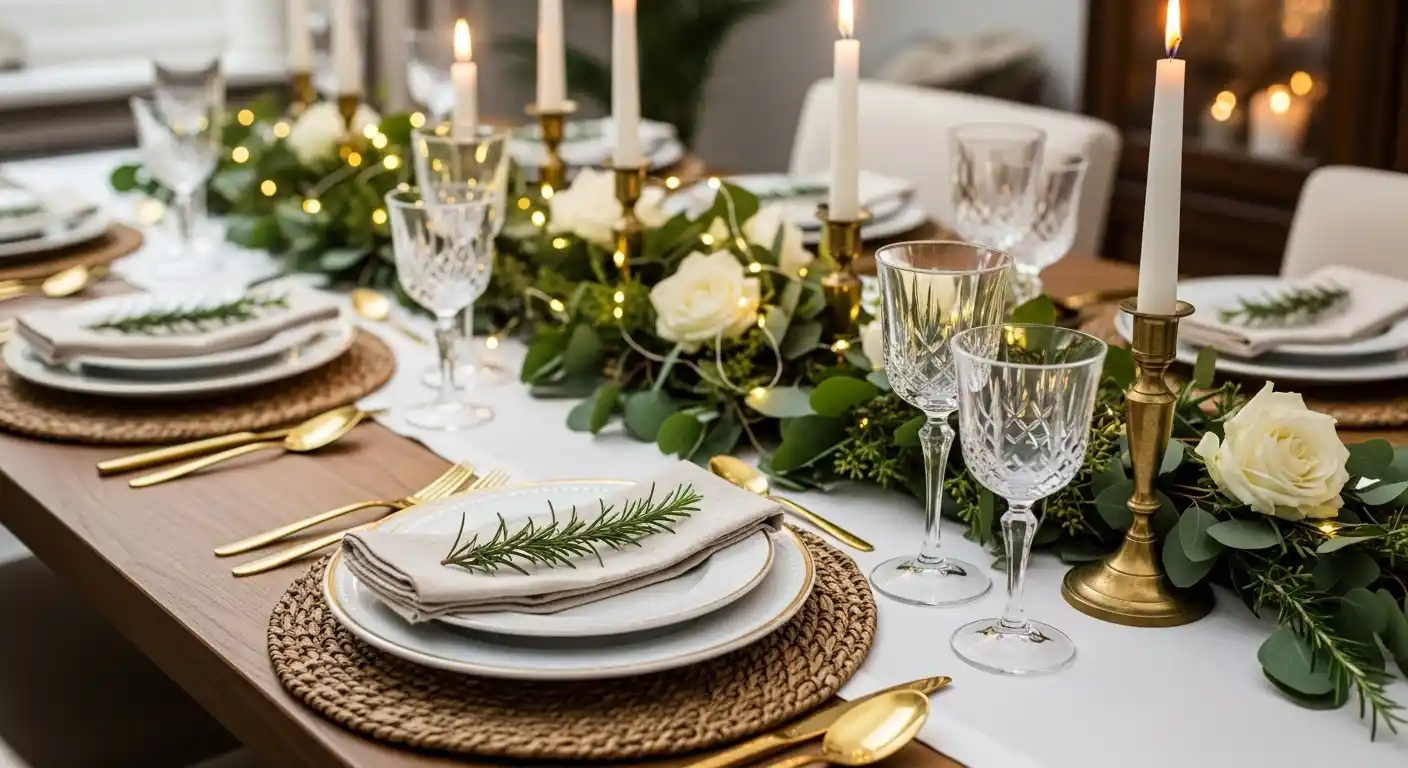
A well-designed tablescape can turn any meal into something memorable, whether it’s a big holiday dinner or just a cozy night in.
Creating a stunning tablescape is all about layering basics like linens and dinnerware with little accents and personal touches that show off your style and the occasion.
I’ve noticed that even the simplest gatherings feel special when you take a few extra minutes to arrange your table with intention.
Lots of people think tablescaping needs fancy stuff or professional skills. That’s not true at all.
You can pull together gorgeous table settings using what you already have, bits from nature, and budget-friendly thrift store finds.
The secret is really just knowing some basic design principles and how to layer textures, colors, and heights so everything feels intentional.
In this guide, I’ll show you how to pick the right tablecloth, add those finishing touches, and wow your guests.
You’ll get practical tips for different occasions, find budget-friendly tablescape ideas that still look great, and see how even tiny details can totally change your dining experience.
Key Takeaways
- Tablescaping blends practical dining essentials with decorative pieces to make meals memorable
- You can create beautiful tablescapes on any budget, using what you have and natural elements
- Layering textures, playing with height, and adding personal details make tablescapes look polished
Contents
- What Is Tablescaping and Why It Matters
- Defining the Art of Tablescaping
- Benefits for Your Dining Experience
- Key Differences From Traditional Table Settings
- Corelle Vitrelle 18-Piece Service for 6 Dinnerware…
- Scanpan Professional 9.5” Fry Pan with Stainless S…
- Home Essentials & Beyond Glassware Set 18 Piece Mi…
- ACCENTHOME Natural Cotton Linen Napkin Set of 12 1…
- Foundational Elements for a Successful Tablescape
- Essential Tableware and Accessories
- Decorative Details That Elevate Your Tablescape
- Personal Touches and Themed Inspiration
What Is Tablescaping and Why It Matters
Tablescaping turns basic meals into real experiences with intentional design choices that go way beyond just setting the table. It creates visual harmony and adds something special to both casual dinners and big celebrations.
Defining the Art of Tablescaping
Tablescaping is really the art of arranging and decorating your table to make a cohesive, eye-catching display. It’s not just about plates and utensils—it’s about picking colors, textures, and little decorative things that all work together.
I like to create layers of visual interest by placing items strategically. That means choosing linens that work together, picking the right centerpiece, and adding details like candles or seasonal touches.
The first step is picking a color palette. I usually stick to two main colors, otherwise things get visually messy. Color choice is the foundation before anything else goes on the table.
Height matters, too. I add tall candles, raised serving pieces, or vertical floral arrangements to give the table some depth and movement. It just feels more dynamic that way.
Benefits for Your Dining Experience
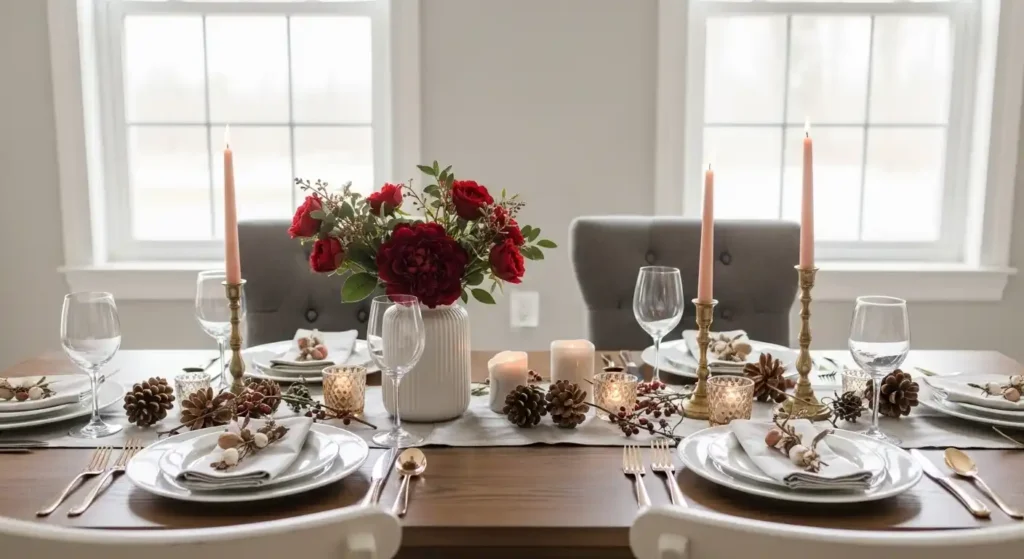
Tablescaping makes even regular meals feel like an occasion. It helps create an inviting atmosphere where people want to linger and connect.
I’ve noticed guests slow down and enjoy themselves more when the table looks thoughtfully arranged. There’s just something about it that changes the mood.
It’s also a chance to show your personality, whether that’s through seasonal themes or just your favorite colors. Tablescaping isn’t only for fancy events; it can make everyday dinners feel more intentional and warm.
Plus, it gives you a reason to use those special dishes or linens that usually stay tucked away. I think that’s a win—why not enjoy the nice things you have?
Key Differences From Traditional Table Settings
Traditional table settings focus on the basics: where plates, glasses, and utensils go, following etiquette. Tablescaping takes it further, adding in decorative elements and a bit of storytelling or theme.
Instead of sticking to the rulebook for fork and glass placement, tablescaping lets you get creative. I like to mix patterns, try unexpected details, or use bold color combos if I’m feeling adventurous.
Traditional Setting Elements:
- Plates and bowls
- Utensils in standard spots
- Basic glassware
- Simple napkins


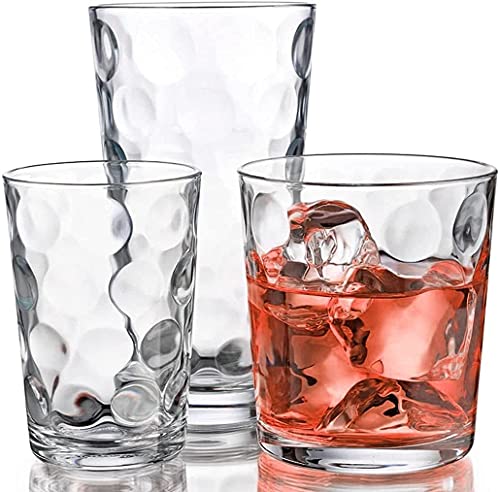

Table scaping Additions:
- Coordinated color schemes
- Centerpieces and height variation
- Decorative accents and lighting
- Themed or seasonal details
The scope really changes. Traditional settings usually stick with plain white plates and standard linens, but tablescaping might bring in unique plates with bold designs or colorful options that fit the whole vibe.
Foundational Elements for a Successful Tablescape
The right color palette sets the mood, while good linens and proper place settings form the backbone of your table design. These basics give you a polished starting point for everything else.
Choosing a Color Palette
I always begin by picking a color palette that feels cohesive. It helps everything flow and prevents clashing.
Monochromatic schemes use different shades of a single color. They look sophisticated and never feel too busy. Sometimes I go with blues, from navy to powder blue, for a calm look.
Complementary palettes use colors opposite each other on the wheel. Deep purple with golden yellow or green with coral pink—these combos really pop.
Neutral palettes are my go-to for formal events. Whites, creams, beiges, and soft grays form the base, and I sprinkle in color with flowers or glassware.
For seasonal tablescapes, I match colors to the time of year. Warm oranges and reds in fall, cool blues and silvers for winter. You get the idea.
I try to keep it to three main colors, max. Any more and things start to look chaotic.
Selecting Tablecloths and Linens
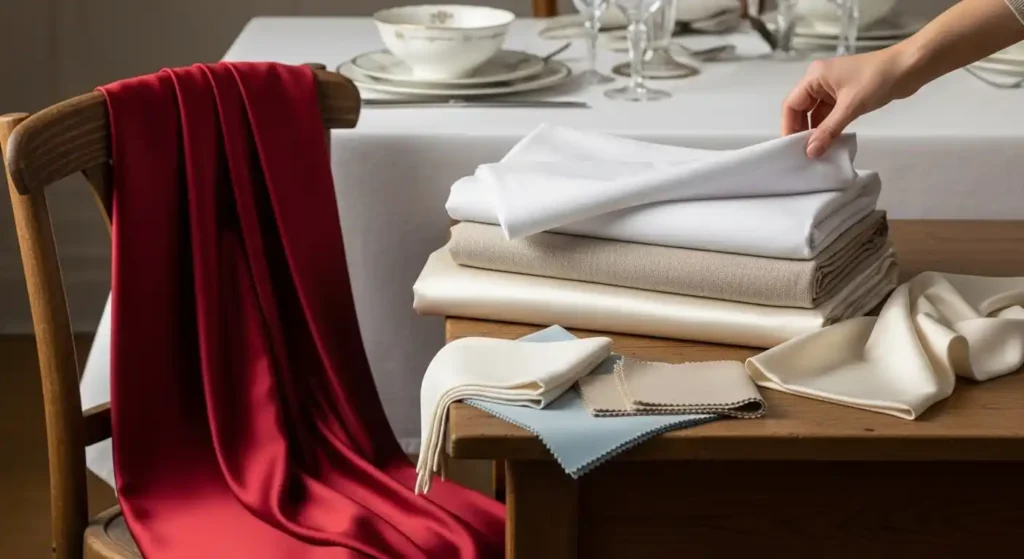
The right tablecloth can instantly elevate your dinner table. I pick linens that set the mood for the whole tablescape.
Fabric matters. Crisp cotton is great for casual meals, linen adds texture, and satin or silk feels fancy and formal.
Size guidelines I use:
- Round tables: Add 20-30 inches to diameter for a nice drop
- Rectangular tables: Add 24 inches to length and width
- 10-15 inches of overhang on all sides looks best
If I want to show off a pretty wood table, I use a runner instead of a full cloth. Runners add color and texture without hiding the table.
Placemats are perfect for casual meals. They protect the table and give each guest a pop of color. I always pick ones that fit my color scheme.
Layering linens makes things more interesting. Maybe a neutral tablecloth with a colorful runner, or textured placemats on top of a solid cloth—there’s no strict rule.
Basics of Place Settings
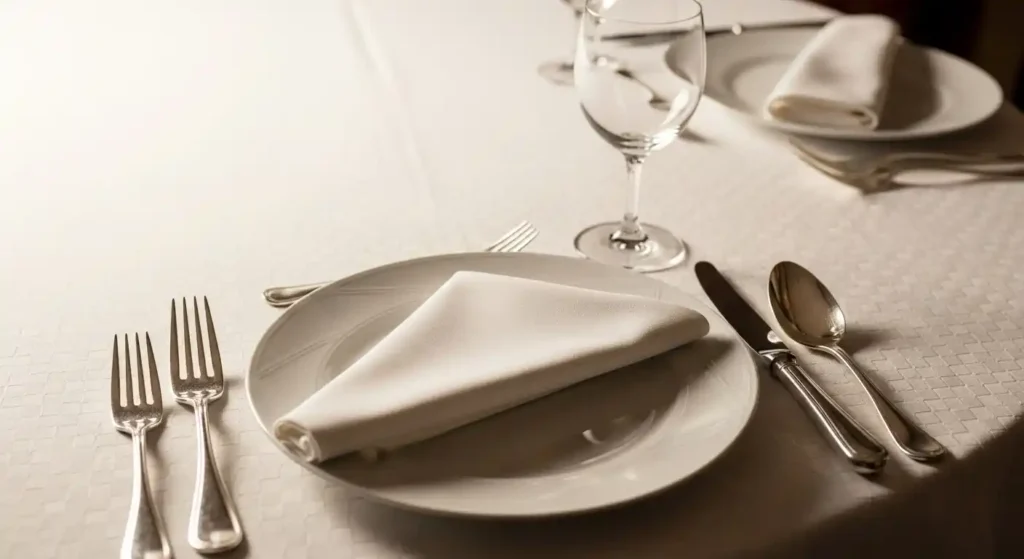
Proper place settings add order and a little elegance. I stick with standard placement so guests feel comfortable and the table looks pulled together.
Basic place setting elements:
- Dinner plate centered about an inch from the table edge
- Napkin to the left of forks or on the plate
- Forks on the left, knives and spoons on the right
- Water glass above the knife
I arrange utensils from the outside in. The outermost fork and knife are for the first course, and you work your way in as the meal goes on.
Napkin placement options:
- Folded rectangle to the left of forks
- Rolled and placed in water glasses
- Folded decoratively on plates
- Secured with napkin rings
For formal dinners, I add charger plates under the dinner plates. They look elegant and protect the tablecloth.
I keep place settings consistent for everyone. Each guest gets the same setup, and I leave at least 24 inches between seats so it doesn’t feel crowded.
Essential Tableware and Accessories
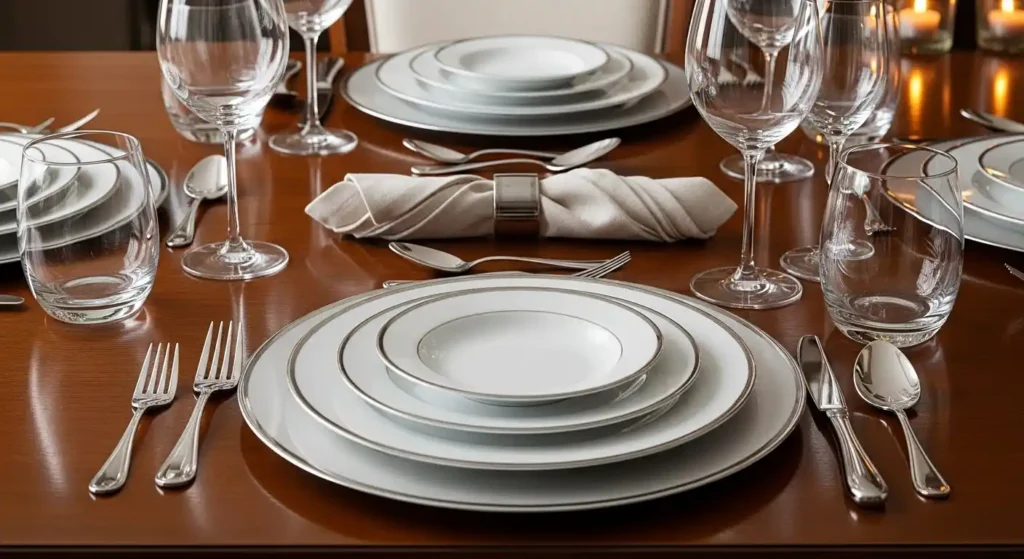
Tableware is the backbone of any tablescape. I focus on three things: layering dinnerware for depth, picking glassware that fits the occasion, and placing flatware so it guides the meal naturally.
Dinnerware and Charger Plates
I always start with charger plates as the base. These big decorative plates sit under your dinner plates and instantly make things feel fancier.
Charger plates are usually 12-13 inches across. They stay on the table the whole meal and don’t actually hold food. I pick materials like glass, metal, or ceramic to match the theme.
Dinner plates go on top—usually 10-11 inches. The contrast with the charger underneath adds some visual interest. I like basic white or neutral dinner plates so the food stands out.
Salad plates sit on top of the dinner plates if I’m serving multiple courses. They’re smaller, about 7-8 inches, and I take them away after the salad course.
Quick sizing guide:
- Charger plates: 12-13 inches
- Dinner plates: 10-11 inches
- Salad plates: 7-8 inches
I pick bowls based on the meal. Soup bowls for starters, pasta bowls for mains that need more space.
Glassware Selection
I put water glasses above the dinner plate, at a slight angle to the right. These should be the tallest glasses, holding 8-12 ounces.
Wine glasses go to the right of the water glass. Red wine glasses are bigger and rounder, white wine glasses are a bit smaller and narrower. I match the glass to the wine if I can.
For formal dinners, I add champagne flutes behind the wine glasses. It makes a nice triangle shape and looks organized.
Glass placement order (left to right):
- Water glass (tallest)
- Red wine glass
- White wine glass
- Champagne flute (behind the others)
I keep glassware styles consistent at each setting. Mixing random glass types just looks messy. Clear glass works for any occasion, but colored glass can be fun for casual meals.
I try not to crowd the table—three glasses per setting is usually plenty.
Flatware Placement
I put forks on the left side of the plate, arranging them in order of use from outside to inside. The salad fork goes farthest left, with the dinner fork closest to the plate.
Knives and spoons belong on the right side. The dinner knife sits directly next to the plate, blade facing in, and spoons go to the right of the knives.
Dessert utensils rest horizontally above the dinner plate. The dessert spoon sits above with its handle pointing right, and the dessert fork goes below it, handle pointing left.
Standard placement rules:
- Forks: Left side, outside to inside by use
- Knives: Right side, blades face the plate
- Spoons: Right of knives
- Dessert utensils: Horizontal above plate
I keep flatware about 1 inch from the table edge and line up the bottoms. This gives everything a clean, professional look—at least in theory.
For basic table settings, I stick to one fork, one knife, and one spoon per person. Formal dinners call for extra pieces for each course, which can feel a bit fancy but also kind of fun.
Decorative Details That Elevate Your Tablescape
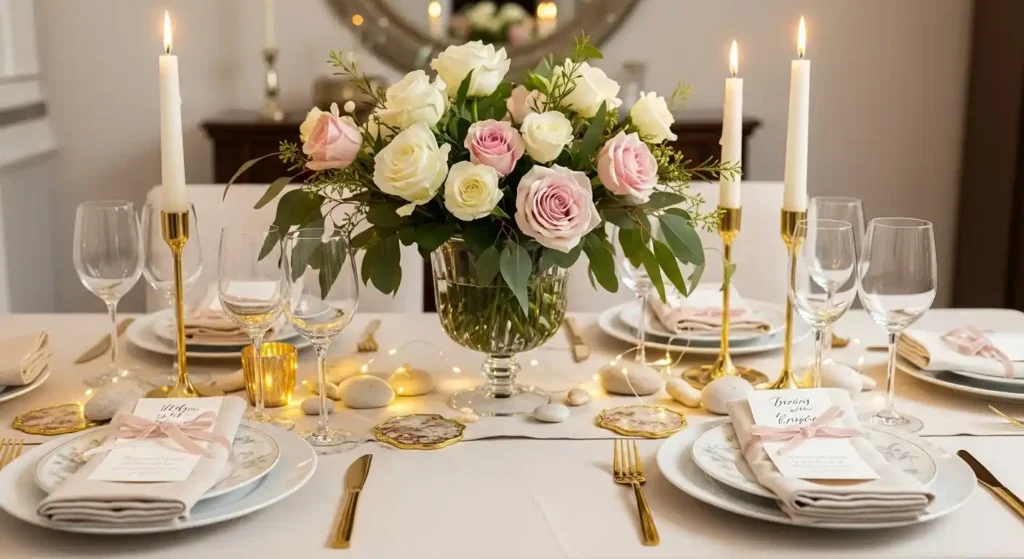
The right decorative touches can turn a plain table into something memorable. Centerpieces, lighting, and little accents all work together to create a vibe—sometimes even more than the food does.
Incorporating Centerpieces and Vases
I usually start with a centerpiece that draws the eye. Fresh flowers and greenery always bring life and color to a table, and honestly, they’re hard to beat.
Height Guidelines:
- Keep centerpieces under 12 inches so people can actually talk
- Try a few low arrangements instead of one big, tall piece
- Mix up vase heights for variety
Vases are a chance to get creative. I like ceramic, glass, or metal vases that fit the table’s vibe. Odd numbers of small vases grouped together look balanced and interesting.
Nature is full of centerpiece inspiration. I mix in branches, pinecones, or even seasonal fruits with flowers. These touches add texture and keep things feeling current.
Not into flowers? No problem. Bowls filled with ornaments, candles on mirrors, or little potted plants can all work as focal points.
Using Candles, Candlesticks, and String Lights
Lighting sets the mood for the whole meal. I lean toward warm, soft lighting because it just feels more inviting.
Candles are a classic. Try mixing different heights and sizes for some depth. Pillar candles in glass hurricanes add a bit of drama and keep the flames safe from drafts.
Candlestick Options:
- Brass or gold: Classic and warm
- Silver or chrome: Modern and sleek
- Wood: Rustic and natural
- Crystal: Formal and sparkly
String lights give tables a little magic. I drape fairy lights around centerpieces or weave them through garlands. Battery-powered ones are my go-to—no cords to trip over.
Tea lights scattered down the table add cozy, flickering light. I drop them in glass holders or float them in shallow bowls with flower petals for a softer effect.
Creative Table Decor Ideas
I really think small details can make a table feel special. It’s the little things that show you care.
Natural Elements to Consider:
- Rose petals scattered around place settings
- Branches or eucalyptus holding place cards
- Pinecones with a bit of metallic spray
- River rocks or shells for a coastal mood
Charger plates under dinner plates instantly dress things up. Metallic gold or silver works for formal nights, while wood chargers feel more relaxed.
Personal touches go a long way. I like to make custom place cards, tuck a tiny gift box at each setting, or write out a simple menu by hand. These don’t have to cost much, but they make an impression.
Seasonal touches keep things fresh. Pumpkins and gourds for fall, pine or evergreen for winter, fresh berries in summer—there’s always something that fits.
Table runners or placemats in fun textures can anchor the look without making it too busy. Burlap, lace, or woven mats each bring their own vibe.
Personal Touches and Themed Inspiration
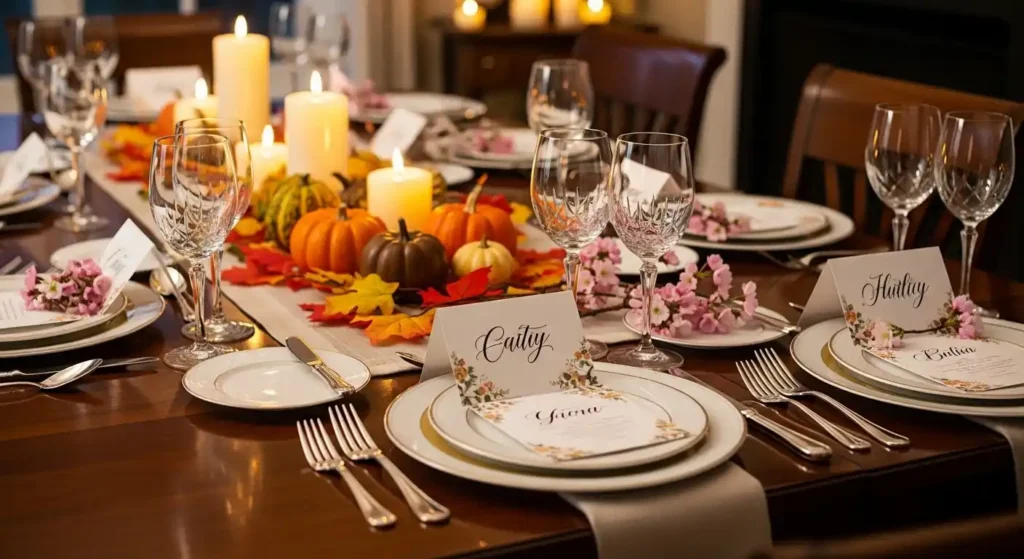
Place cards and seasonal touches turn a simple table into something personal and memorable. These little extras help guests feel connected and make the meal feel like an occasion.
Adding Place Cards and Favors
Place cards are both useful and decorative. I set them just above the dinner plate or lean them against a wine glass so people can find their seats easily.
Simple Place Card Ideas:
- Handwritten names on nice cardstock
- Mini chalkboards with guest names
- Folded menu cards with names outside
- Tiny picture frames with name inserts
I match the style of place cards to the table’s theme. For casual dinners, kraft paper tags tied with twine feel just right. For something fancier, I go for cream cardstock and a little calligraphy.
Favors are a sweet way to thank guests. I keep them simple and useful—no need for anything elaborate.
Meaningful Favor Options:
- Small potted herbs or succulents
- Homemade cookies in clear bags
- Mini jam jars with custom labels
- Seed packets for seasonal flowers
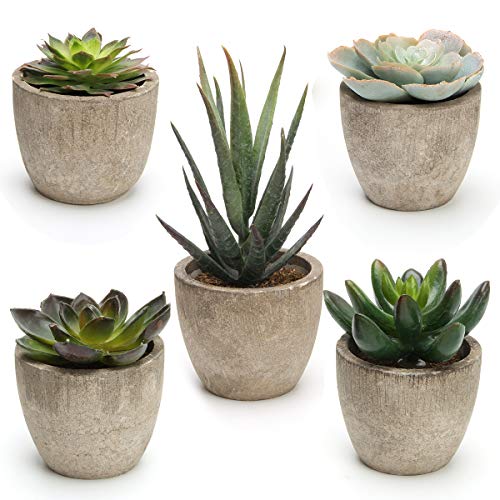
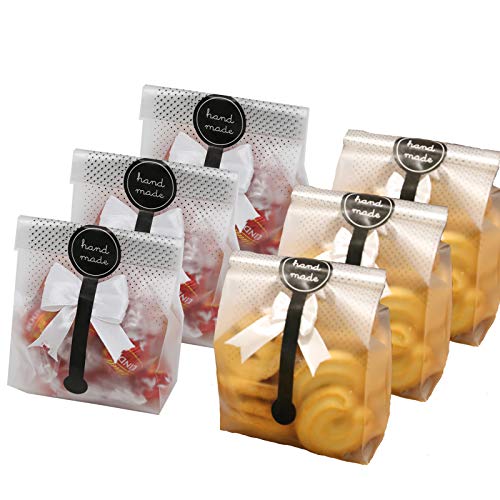


I set favors at each place or make a little display by the door. That way, everyone can grab theirs without crowding the table setting.
Integrating Seasonal Elements
Seasonal decorations connect your tablescape to the natural world. They create a timely, inviting atmosphere that just feels right.
I like to bring in elements that reflect the current season. It’s important not to let them take over the whole space.
Spring Elements:
- Fresh tulips or daffodils in simple vases
- Pastel colored linens and napkins
- Small bird nests or egg decorations
- Light green foliage as table runners
Summer Touches:
- Bright sunflowers or wildflowers
- Fresh fruit as centerpiece elements
- Coral and turquoise color schemes
- Seashells or driftwood accents
Honestly, I gather a lot of these seasonal bits from my own yard or around the neighborhood. Fall leaves, pine cones, and branches don’t cost a thing, but they bring in real, natural beauty.
Winter Decorations:
- Evergreen sprigs and pine cones
- White and silver color palettes
- Battery-operated string lights
- Small ornaments scattered along the table
If you ask me, restraint is the secret to seasonal tablescaping. I usually pick just two or three seasonal touches instead of piling on everything I find. That way, the table looks intentional—never cluttered.