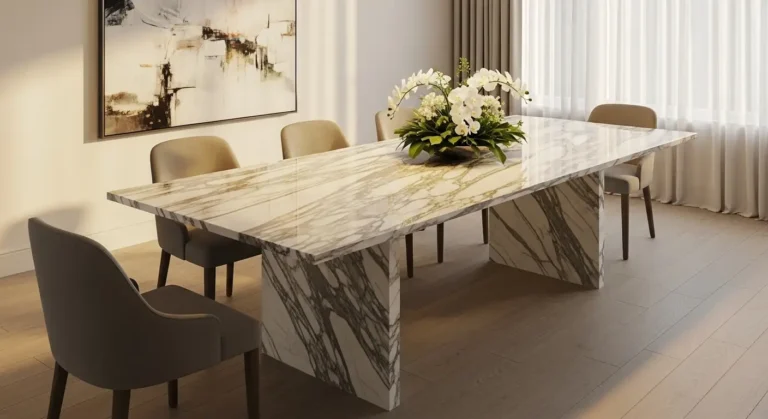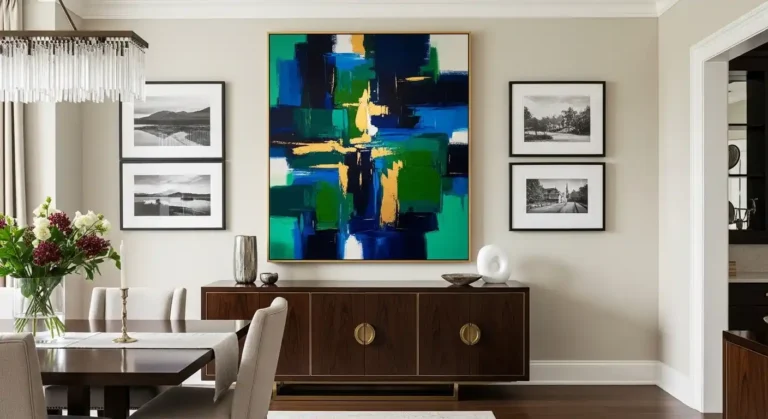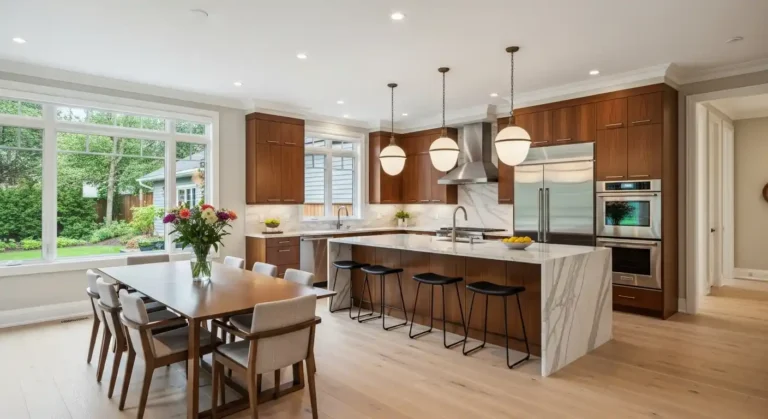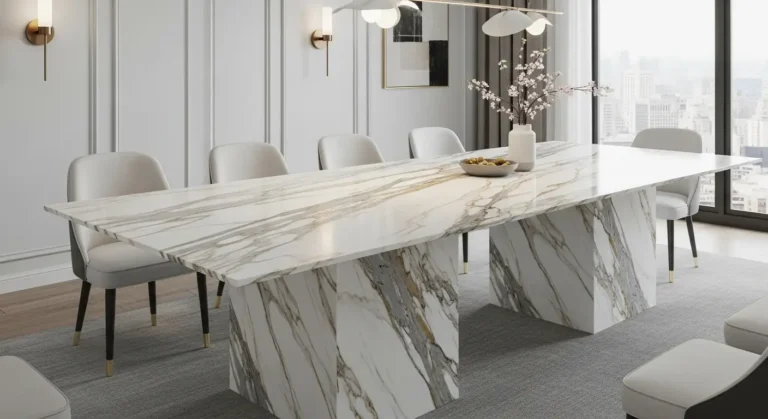

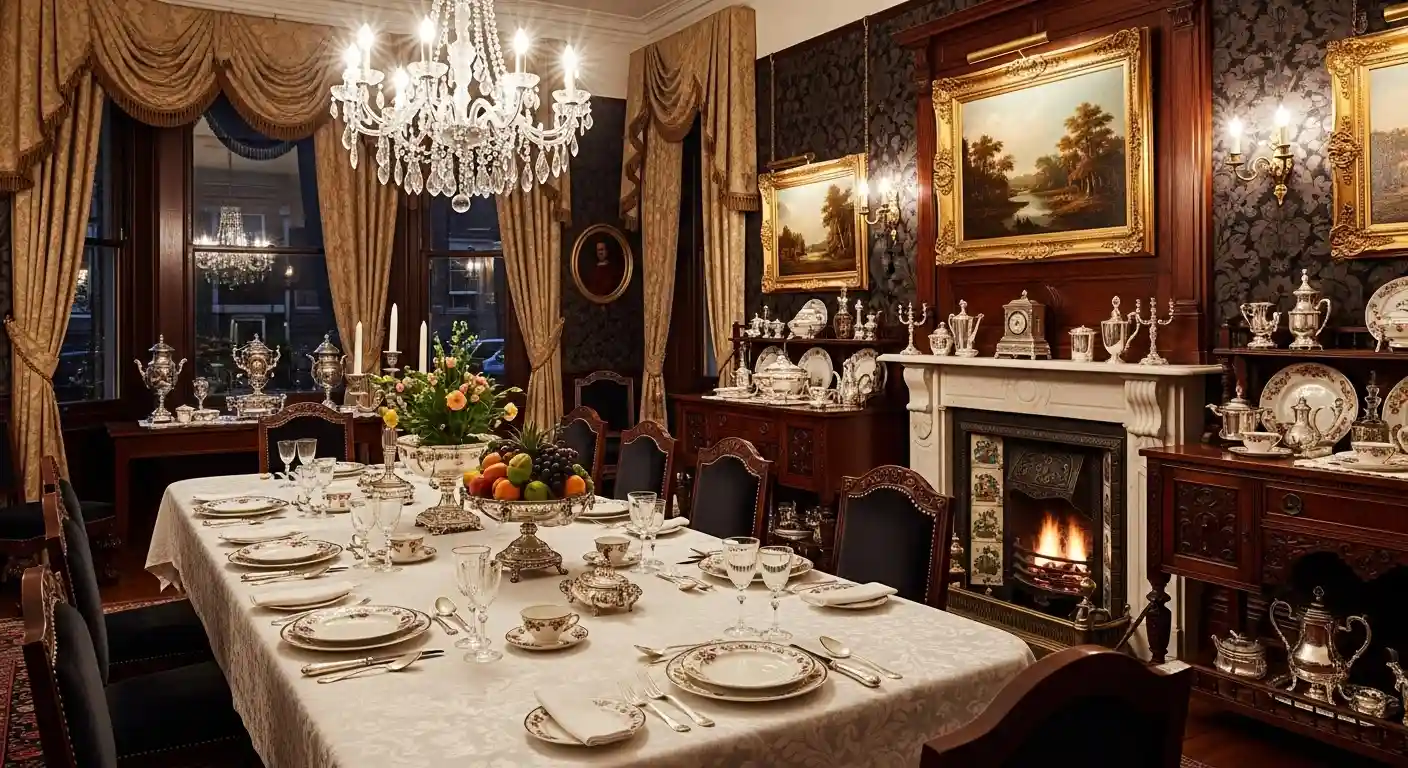
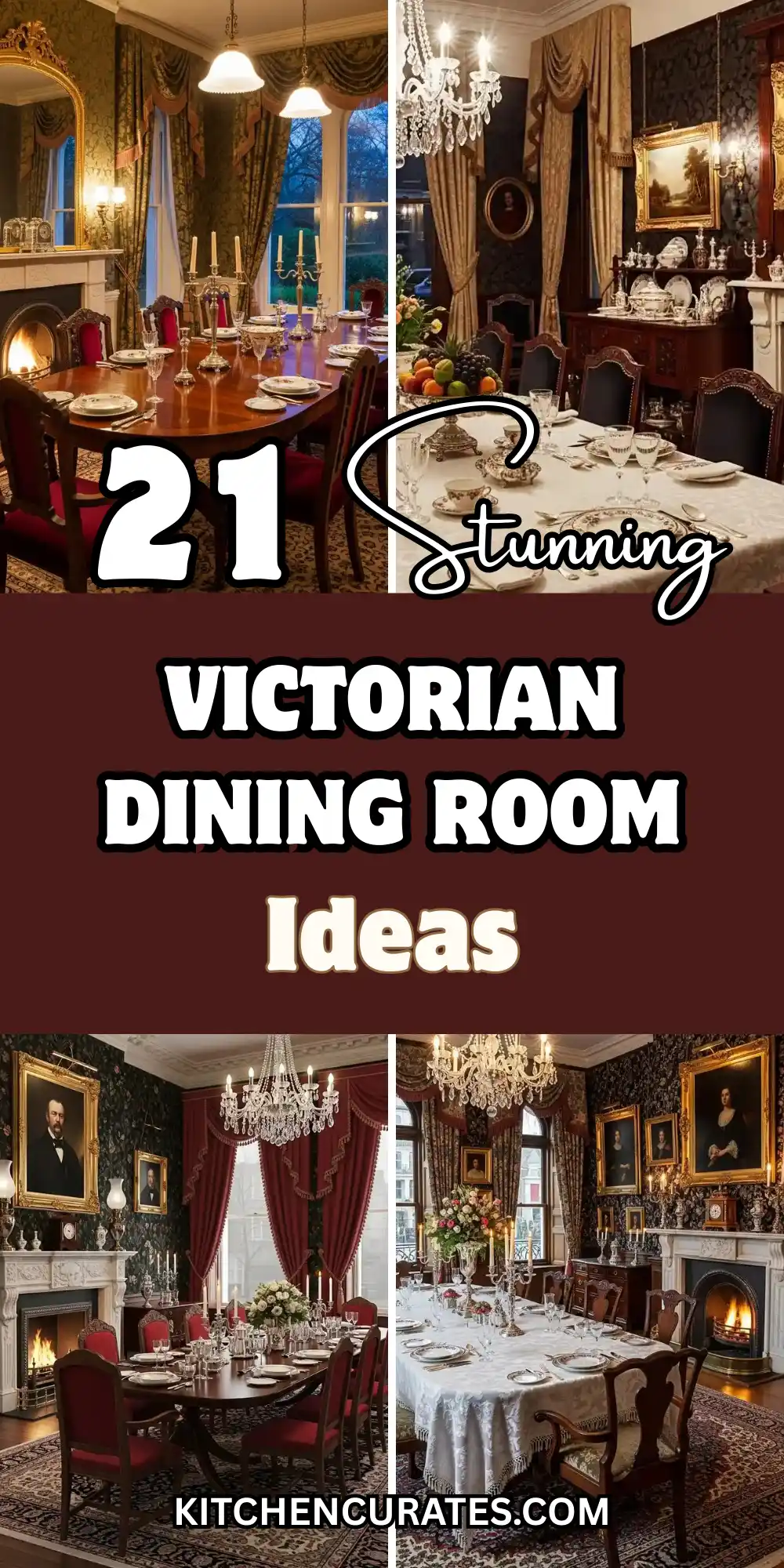
Want to make your dining area feel grand yet cozy? Discover these Victorian dining room inspirations that blend classic design with modern comfort.
When I first walked into my grandmother’s old home, I was mesmerized by the Victorian dining room she had preserved.
The ornate woodwork, patterned wallpaper, and elegant chandelier made every meal feel like a special occasion.
I wanted to capture that same sense of timeless elegance in my own home, blending history with modern functionality.
Even small updates, like a vintage-inspired table runner or antique chairs, can completely elevate the atmosphere.
Creating a Victorian dining room isn’t just about furniture—it’s about crafting a space where memories and style coexist seamlessly.
Contents
- How to Achieve the Perfect Victorian Dining Room Ambiance
- Furniture Essentials for a Victorian Dining Room
- 21 Victorian Dining Room Ideas
- 1. Classic Dark Wood Dining Set
- 2. Velvet Upholstered Chairs for Comfort and Style
- 3. Ornate Chandeliers as Focal Points
- 4. Patterned Wallpaper with Subtle Elegance
- 5. Antique Sideboards for Storage and Style
- 6. Layered Rugs for Warmth and Texture
- 7. Statement Mirrors for Light and Space
- 8. Painted Furniture with Vintage Charm
- 9. Floral Centerpieces for Natural Elegance
- 10. Layered Window Treatments
- 11. Decorative Ceiling Medallions
- 12. Traditional Table Linens
- 13. Decorative Wall Art and Framed Prints
- 14. Antique Clocks for Timeless Charm
- 15. Rich Color Palettes
- 16. Glass-Fronted Cabinets for Display
- 17. Sculptural Candle Holders
- 18. Upholstered Benches for Seating Flexibility
- 19. Decorative Moldings and Trim
- 20. Layered Lighting for Ambiance
- 21. Seasonal Decorative Touches
- Tips for Maintaining a Victorian Dining Room
- Final Wrap-Up
How to Achieve the Perfect Victorian Dining Room Ambiance
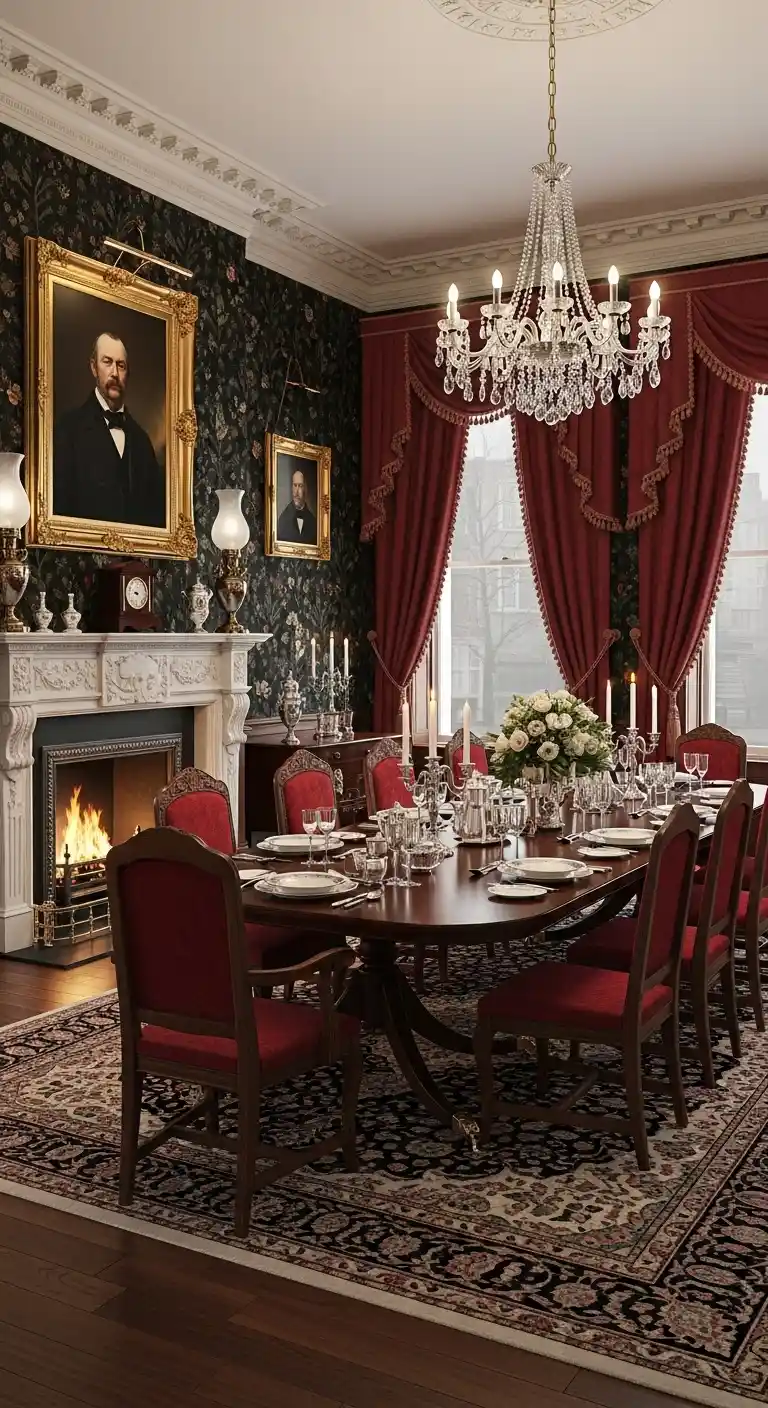
Lighting shapes the mood and enhances the elegance of a Victorian dining room.
Chandeliers with warm bulbs accentuate furniture details and add a soft, inviting glow.
Heavy curtains or drapes with subtle patterns help control light while complementing furniture and décor.
Layered textures in rugs, table runners, and cushions enrich the space and create a warm atmosphere.
Deep, rich color palettes like burgundy, sage, and gold add depth while reflecting Victorian sophistication.
Fresh flowers or potted greenery balance the ornate décor and add a touch of natural charm.
Decorative wall molding or wainscoting enhances historical authenticity and creates a polished, refined feel.
Furniture Essentials for a Victorian Dining Room
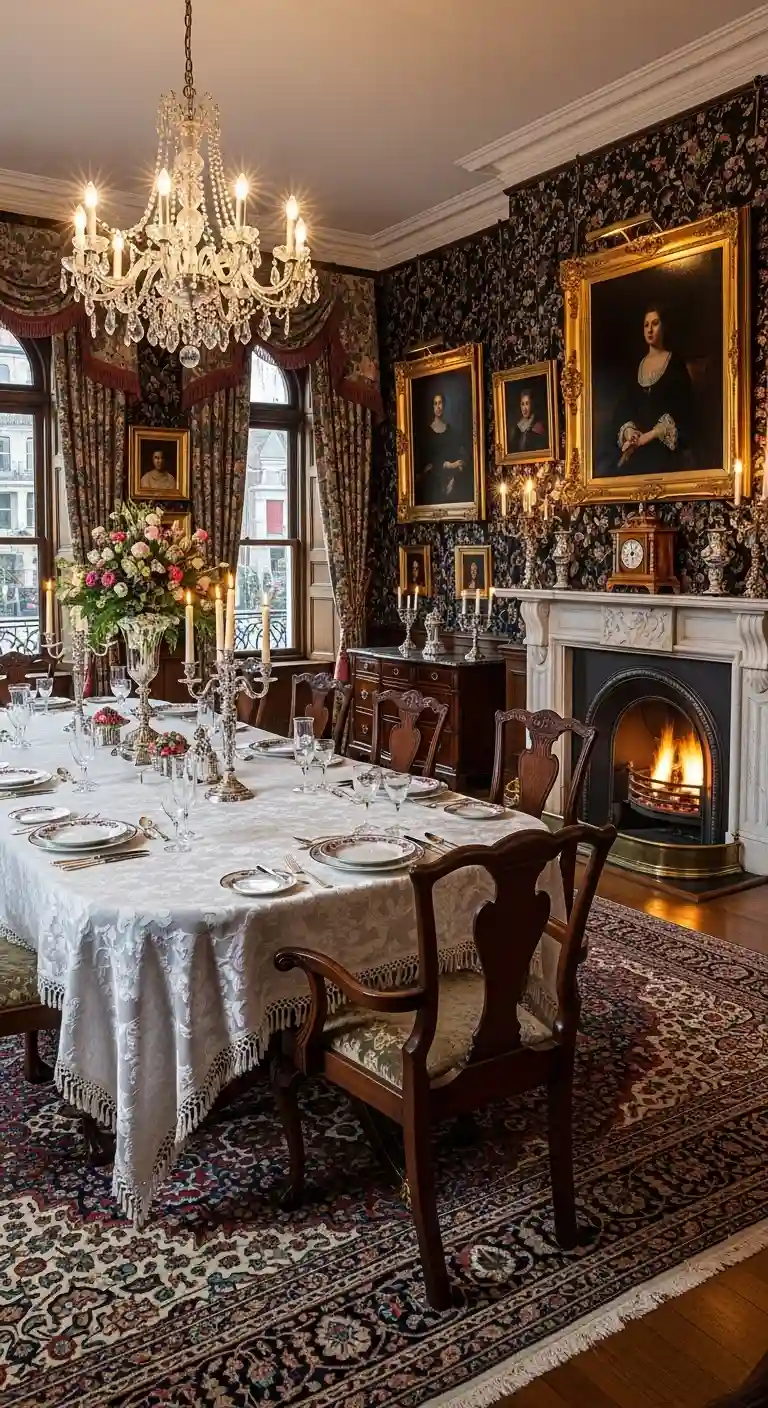
Choosing furniture sets the foundation for a cohesive Victorian dining room design.
A solid wood dining table with carved details serves as the central focal point of the space.
Pair it with high-backed, upholstered chairs for comfort and a regal aesthetic that complements the table.
Buffets, sideboards, and display cabinets provide storage while showcasing china, silverware, or decorative collectibles.
Round or oval tables encourage conversation while maintaining an elegant, formal look.
Adding an armchair at the head of the table enhances the room’s grandeur.
Select furniture that combines durability with design sophistication to ensure it remains functional and stylish.
21 Victorian Dining Room Ideas
1. Classic Dark Wood Dining Set
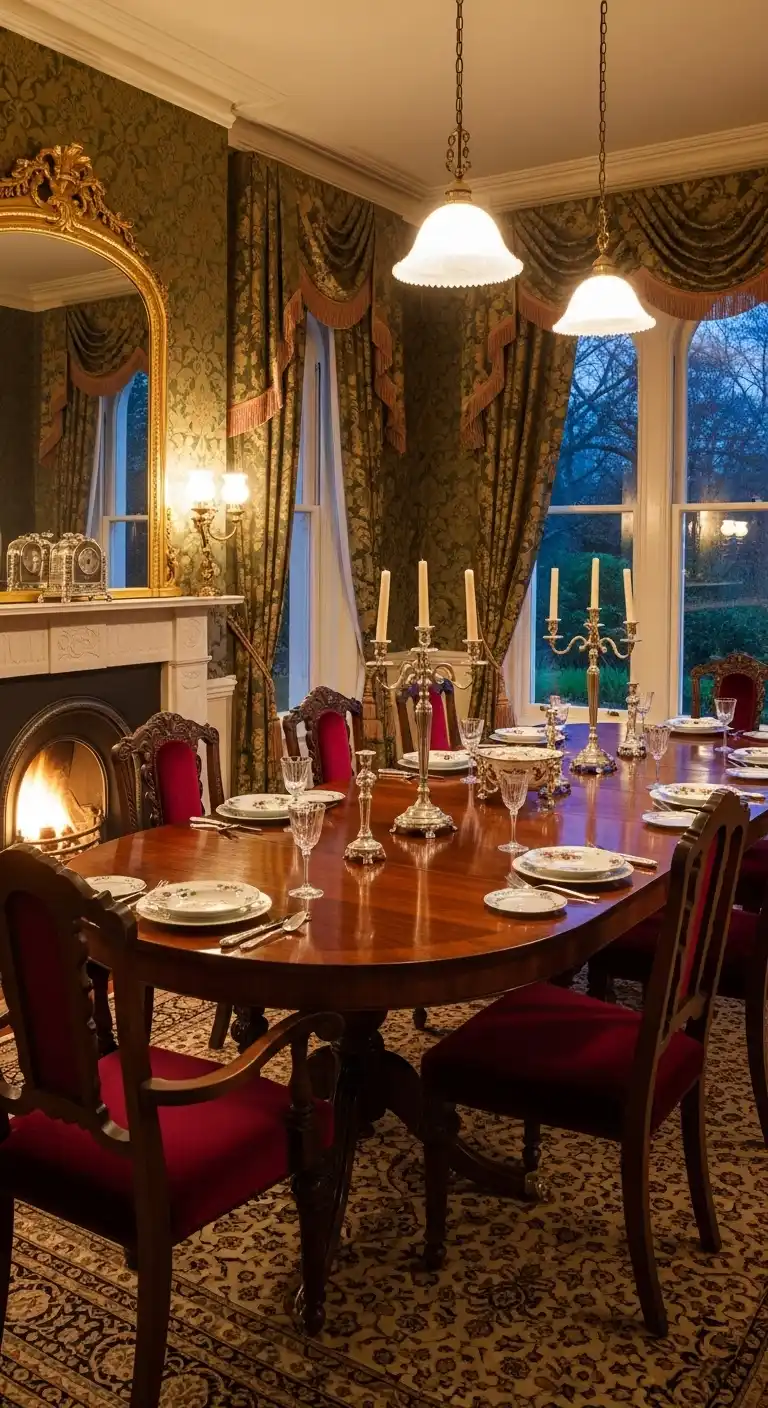
A dark mahogany dining set instantly brings richness and sophistication to a Victorian dining room.
The natural grain highlights carved details, giving the furniture a luxurious and authentic feel.
Pair matching sideboards and display cabinets for cohesion while adding functional storage space.
Use seat cushions in warm, deep tones to emphasize elegance and tie together the design palette.
Layering a Persian rug beneath the table adds warmth, softness, and visual interest to the room.
Framed artwork and decorative mirrors complement the wood tones while reflecting light throughout the space.
Brass or gold-toned accents enhance the historical authenticity and elevate the Victorian atmosphere.
2. Velvet Upholstered Chairs for Comfort and Style
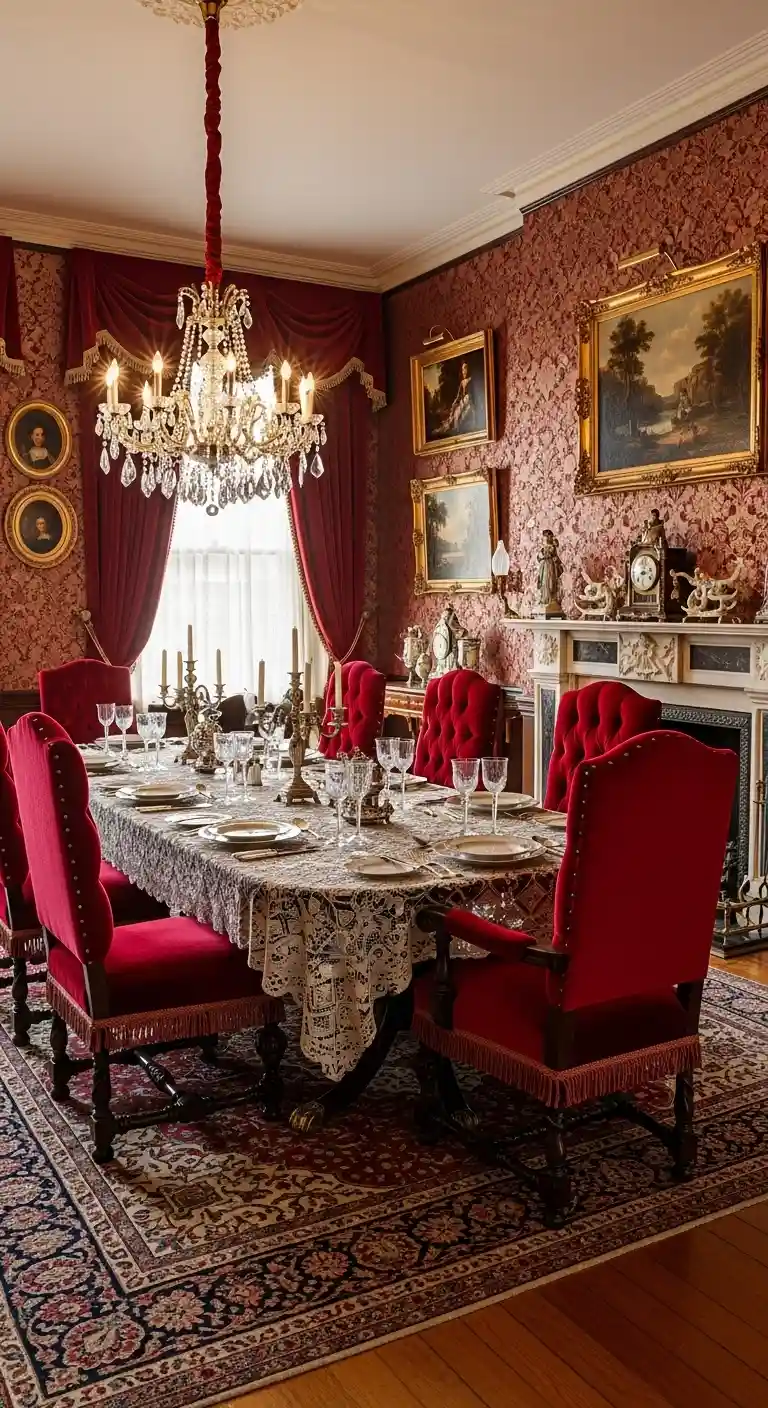
Velvet chairs introduce texture, richness, and comfort, enhancing the overall Victorian aesthetic.
Deep jewel tones like emerald, sapphire, or ruby create a regal and inviting dining experience.
High-backed designs with tufted details mirror historical elegance while providing practical support.
Pair velvet chairs with dark wood or painted tables to balance sophistication with visual warmth.
Velvet upholstery adds comfort for long dinners while maintaining the room’s timeless beauty.
Coordinate subtle metallic accents to amplify the luxurious feel without overwhelming the space.
Carefully arranged cushions or throws complete the elegant look while adding softness and character.
3. Ornate Chandeliers as Focal Points
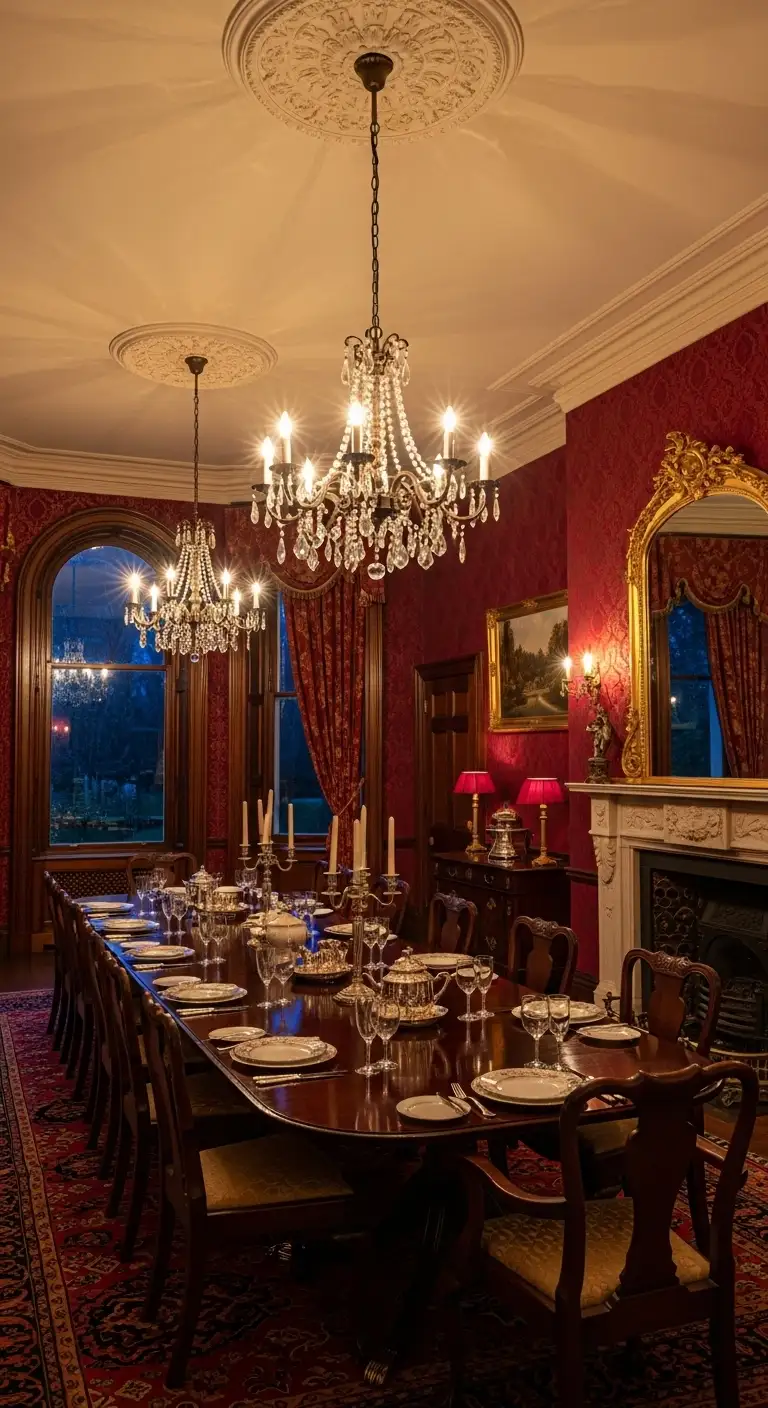
Chandeliers serve as both lighting and a central decorative element in Victorian dining rooms.
Crystal or brass designs reflect light, drawing attention to the dining table below.
Install dimmer switches to adjust ambiance for dinners, gatherings, or quiet evenings.
Pair with wall sconces for layered lighting that highlights furniture and architectural details elegantly.
Chandeliers can coordinate with metallic finishes on furniture or décor, enhancing cohesion.
Ensure proper positioning to illuminate the table evenly without creating harsh shadows.
Consider smaller accent lights above sideboards for complementary illumination and charm.
4. Patterned Wallpaper with Subtle Elegance
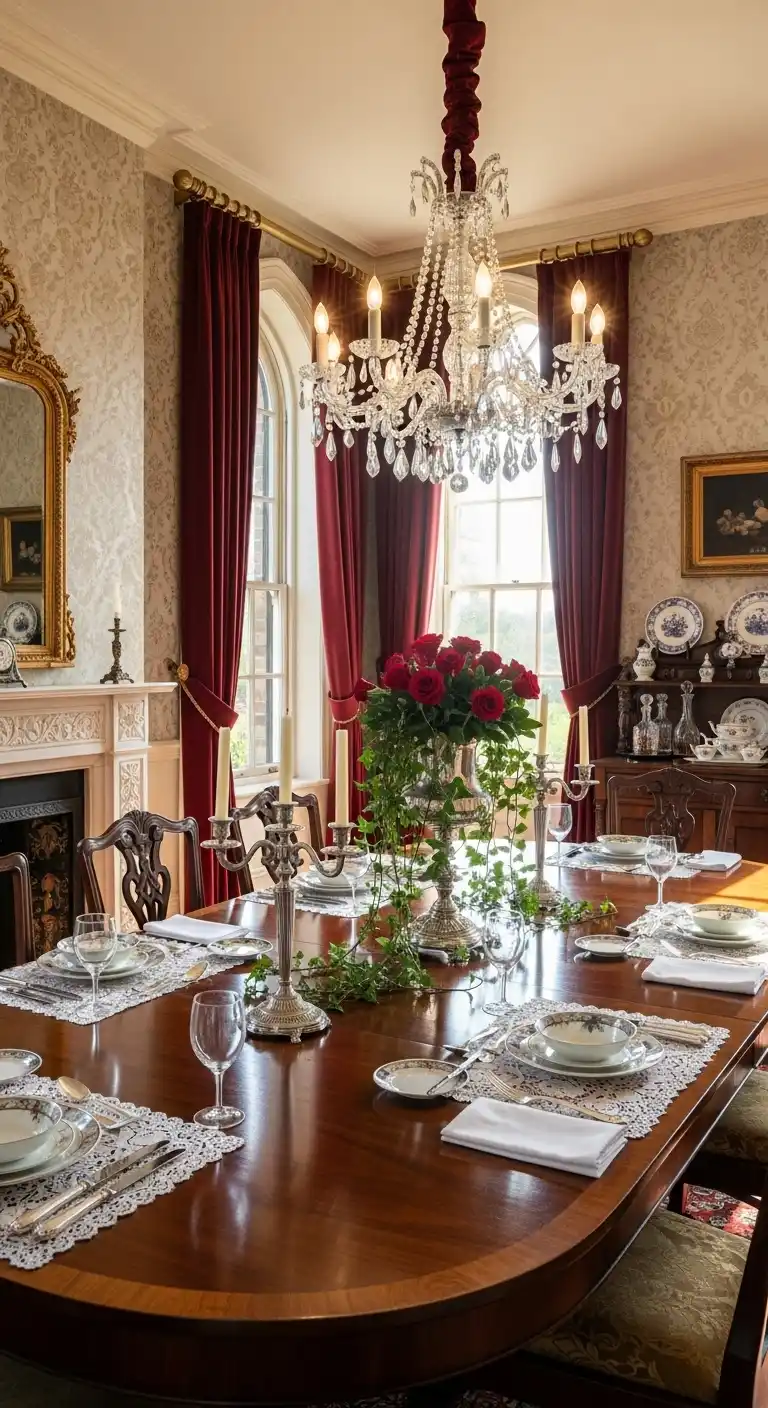
Intricate wallpaper adds texture and character without overpowering a Victorian dining room.
Floral or damask patterns work beautifully, offering historical charm while remaining tasteful.
Combine wallpaper with wainscoting or molding to create a polished, refined backdrop.
Wallpaper serves as a canvas for framed artwork, mirrors, or decorative plates.
Muted tones like cream, sage, or dusty rose add warmth while highlighting furniture details.
Proper lighting ensures patterns stand out without making the room feel heavy or dark.
Textiles and layered fabrics harmonize with wallpaper, creating a rich, cohesive atmosphere.
5. Antique Sideboards for Storage and Style
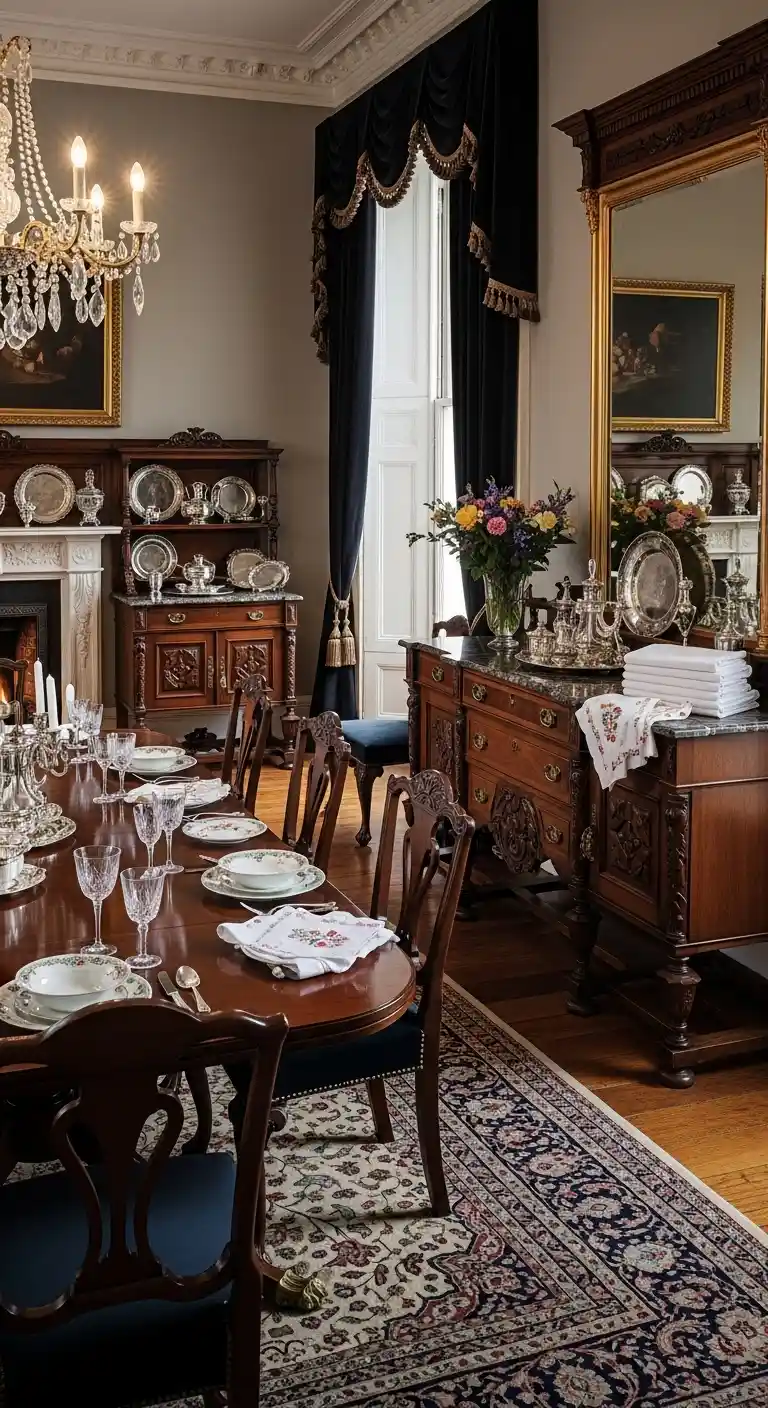
Sideboards provide storage and serve as display surfaces for fine china and decorative accents.
Select antique pieces with carved details, brass handles, or vintage finishes to maintain authenticity.
Decorate tops with flowers, candles, or framed photos to personalize the space tastefully.
Place sideboards to balance the room’s visual weight and complement the dining table.
Regular maintenance preserves wood quality and keeps finishes polished and elegant.
Sideboards blend functionality with historical charm, ensuring practicality does not compromise style.
They create symmetry and harmony, anchoring the overall Victorian aesthetic beautifully.
6. Layered Rugs for Warmth and Texture
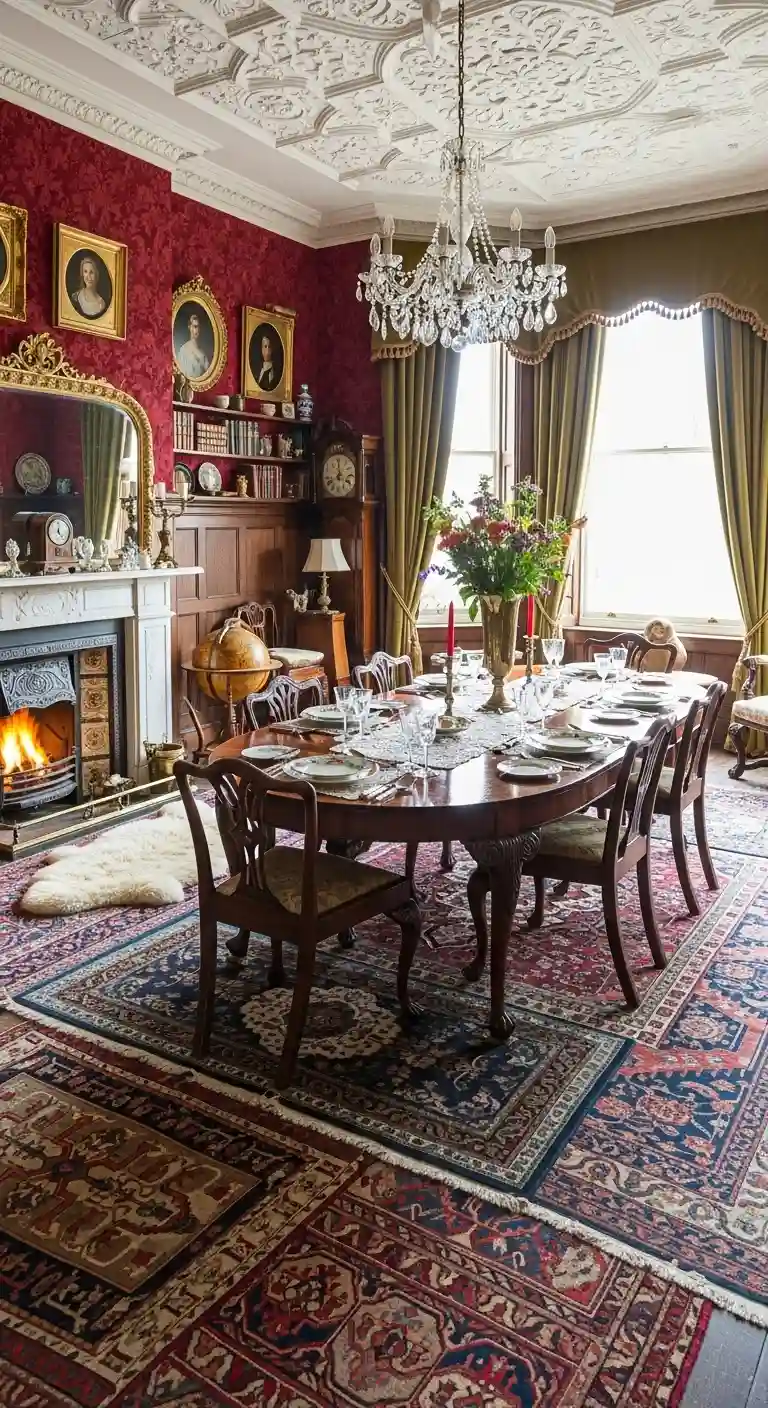
Layered rugs define the dining area while softening hard floors, adding comfort underfoot.
Choose traditional patterns like Persian or Oriental designs to complement the historical style.
Layer a neutral base rug beneath a patterned accent rug for visual depth.
Rugs absorb sound and make dining spaces feel intimate and cozy.
Ensure rugs extend beyond chair footprints for practical movement and ease of use.
Coordinate rug colors with curtains, upholstery, and table linens to maintain cohesive design.
Layering textures prevents monotony while enhancing Victorian charm and inviting warmth.
7. Statement Mirrors for Light and Space
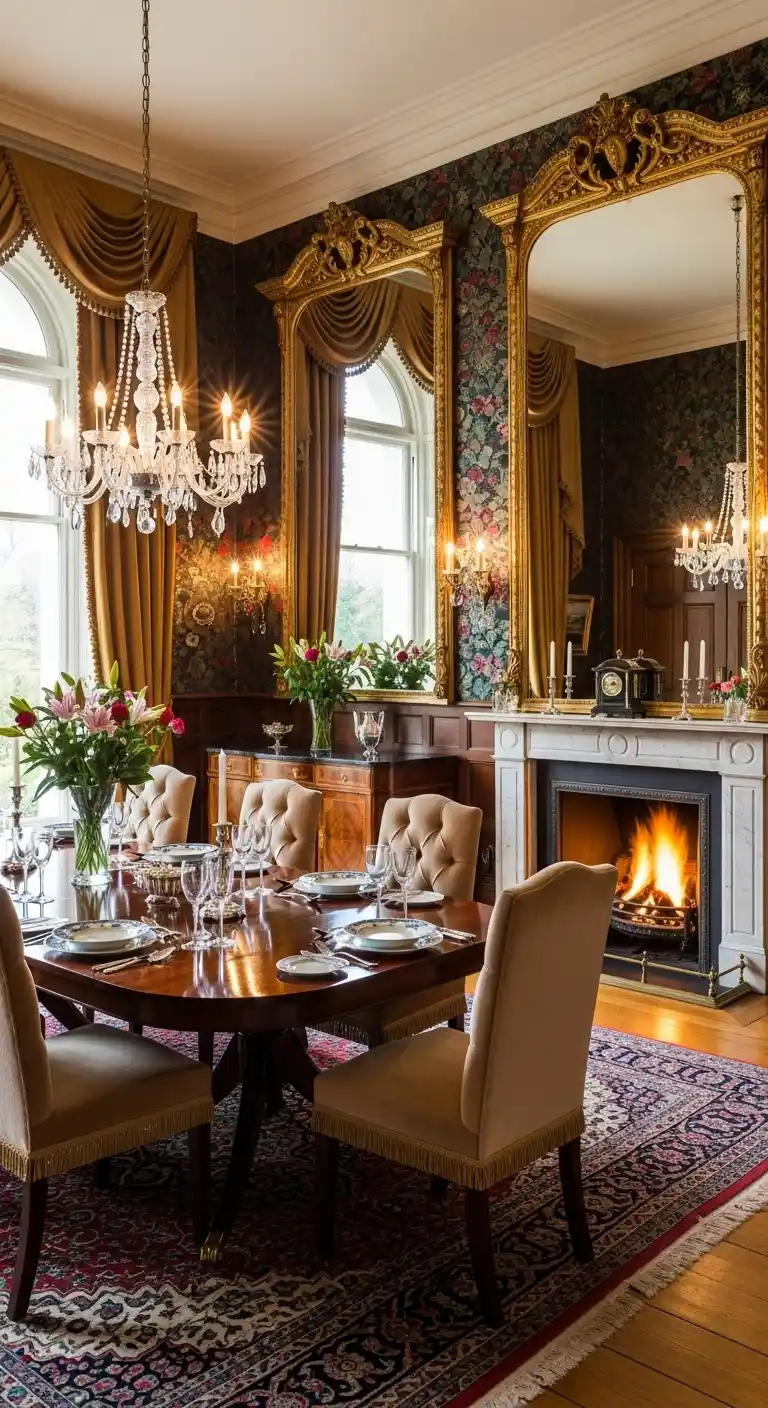
Mirrors visually expand the space and reflect light in Victorian dining rooms.
Choose ornate frames in gold or silver to complement furniture and décor.
Position mirrors opposite windows to maximize natural light and create a bright, airy feel.
Mirrors double as art, adding sophistication and depth to walls.
Pair with metallic or wood accents to maintain balance and cohesion.
Avoid overly modern designs that clash with historical style and timeless elegance.
8. Painted Furniture with Vintage Charm
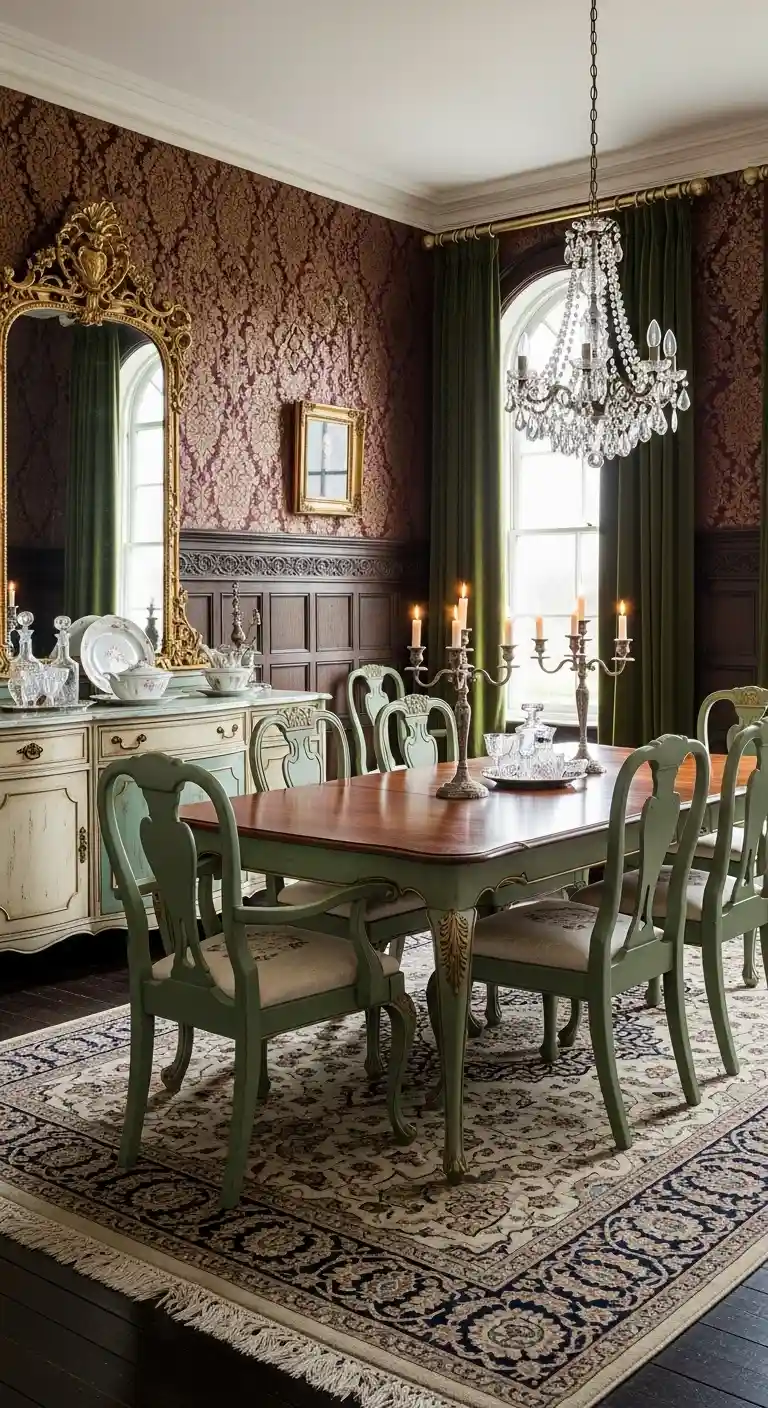
Painted furniture softens a room while maintaining a Victorian feel.
Soft pastels like sage, cream, or powder blue contrast beautifully with darker woods.
Distressed finishes evoke historical charm while remaining stylish and fresh.
Mix painted pieces with upholstered seating for a balanced, layered look.
Antique-style hardware on painted furniture ensures cohesion with the Victorian theme.
Painted furniture allows seasonal changes or updates without sacrificing authenticity or style.
9. Floral Centerpieces for Natural Elegance
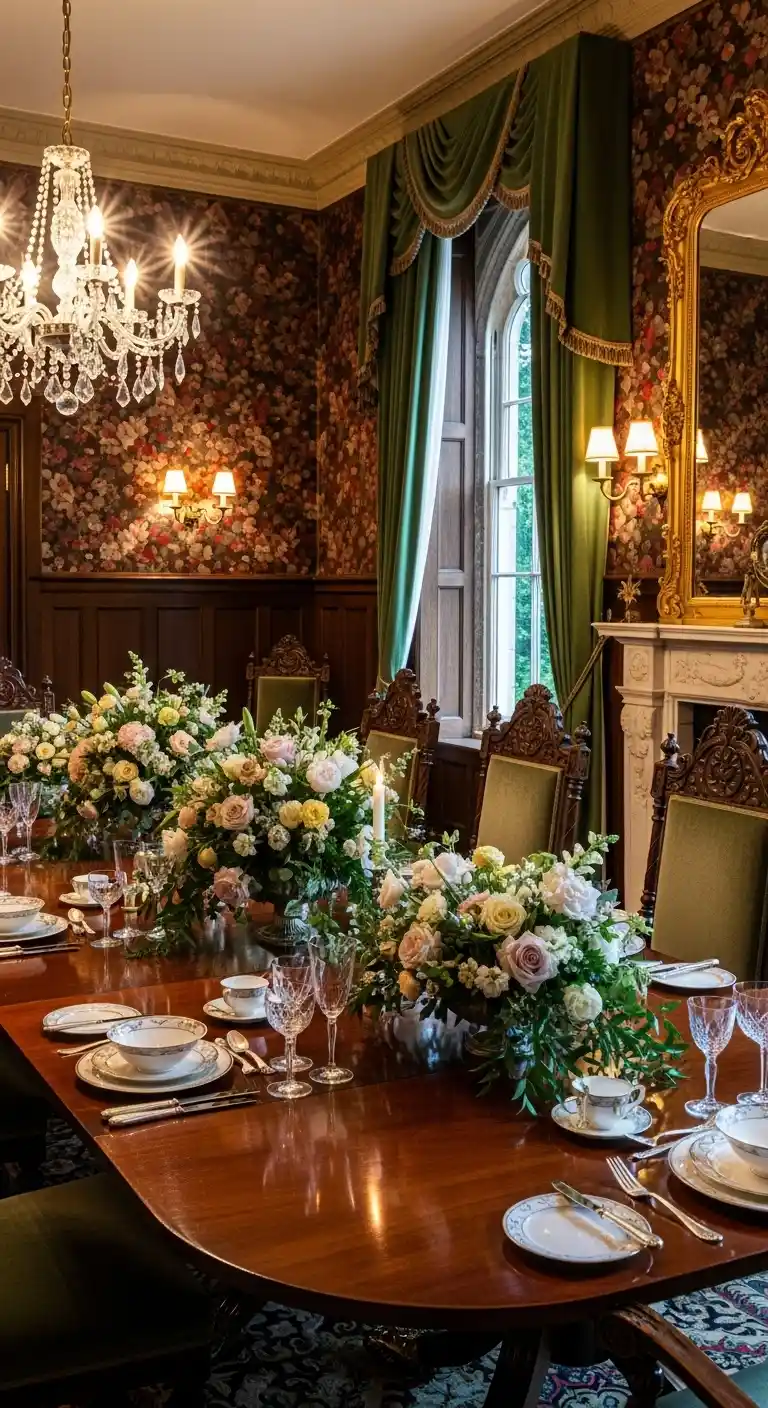
Fresh flowers bring vibrancy and life into a Victorian dining room.
Choose classic blooms like roses, peonies, or hydrangeas for elegance.
Display in crystal vases or ornate bowls to emphasize sophistication.
Seasonal arrangements keep the space dynamic and visually engaging year-round.
Coordinate with table runners, candles, or decorative accents for a polished effect.
Floral elements harmonize with wallpaper patterns and textiles, reinforcing overall design.
10. Layered Window Treatments
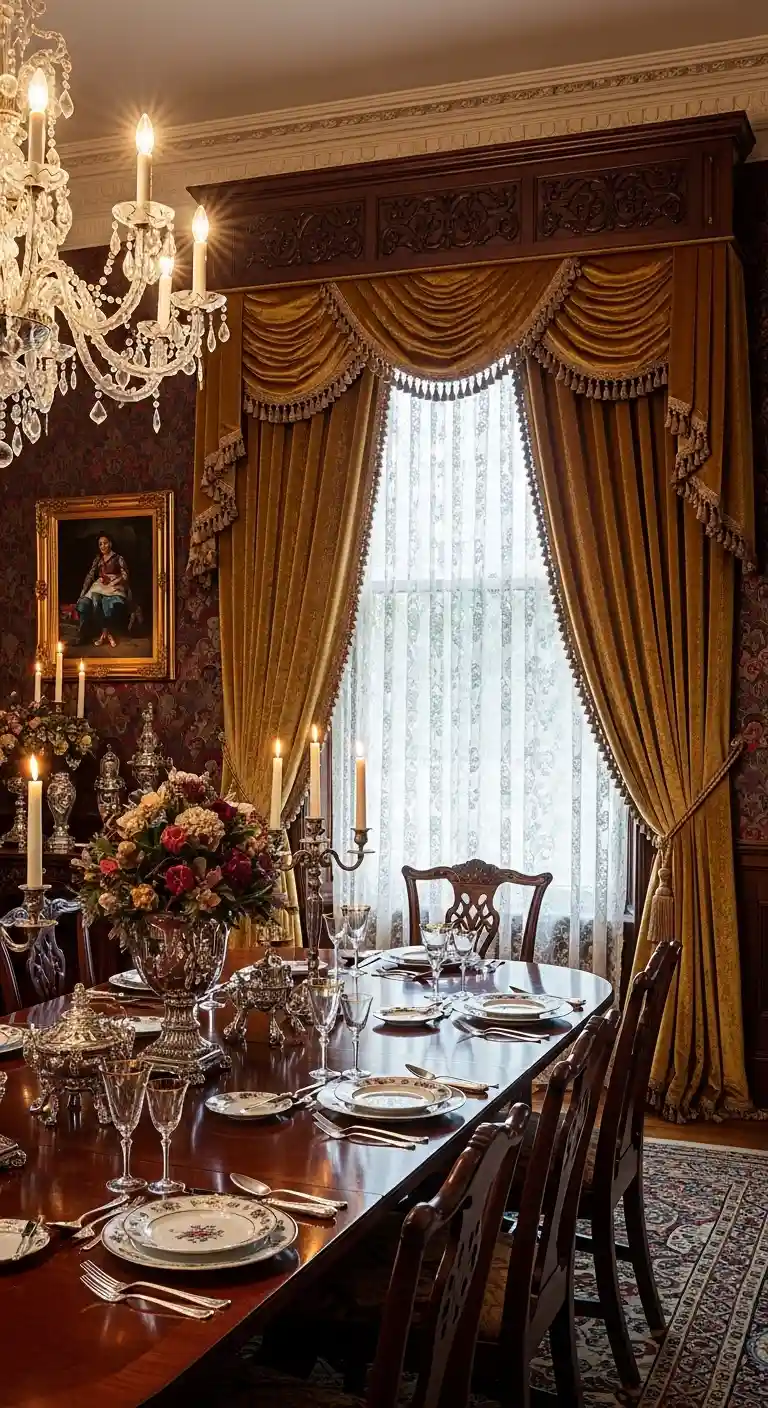
Layer curtains and sheer panels to control light while enhancing Victorian sophistication.
Rich fabrics like velvet or silk complement ornate furniture beautifully.
Tassels, fringes, and tiebacks create a historical touch without overwhelming the space.
Patterns and colors should coordinate with upholstery, rugs, and wall décor for cohesion.
Properly sized drapes frame windows, emphasizing elegance and room symmetry.
Layering adds dimension, depth, and a welcoming atmosphere to your dining area.
11. Decorative Ceiling Medallions
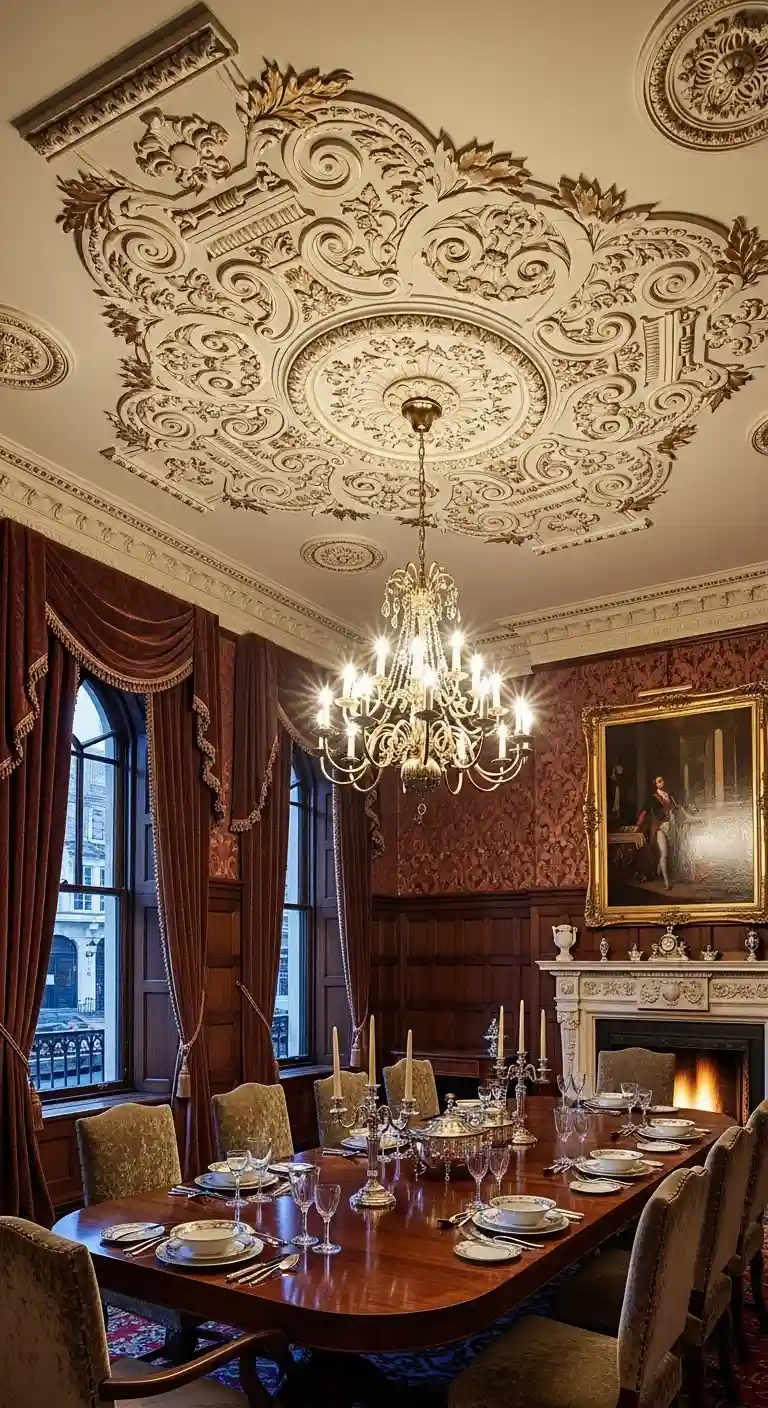
Ceiling medallions instantly elevate a Victorian dining room by adding architectural interest above lighting fixtures.
They pair beautifully with chandeliers, emphasizing grandeur while drawing the eye upward.
Choose medallions with intricate patterns or floral motifs that match other decorative details in the room.
Paint in a contrasting or metallic tone to highlight their presence without overwhelming the ceiling.
Medallions work best on high ceilings but can also create an illusion of height in smaller rooms.
They connect the chandelier visually with the rest of the décor, creating a cohesive and elegant design.
Proper installation ensures durability while maintaining the room’s historical charm and refined style.
12. Traditional Table Linens
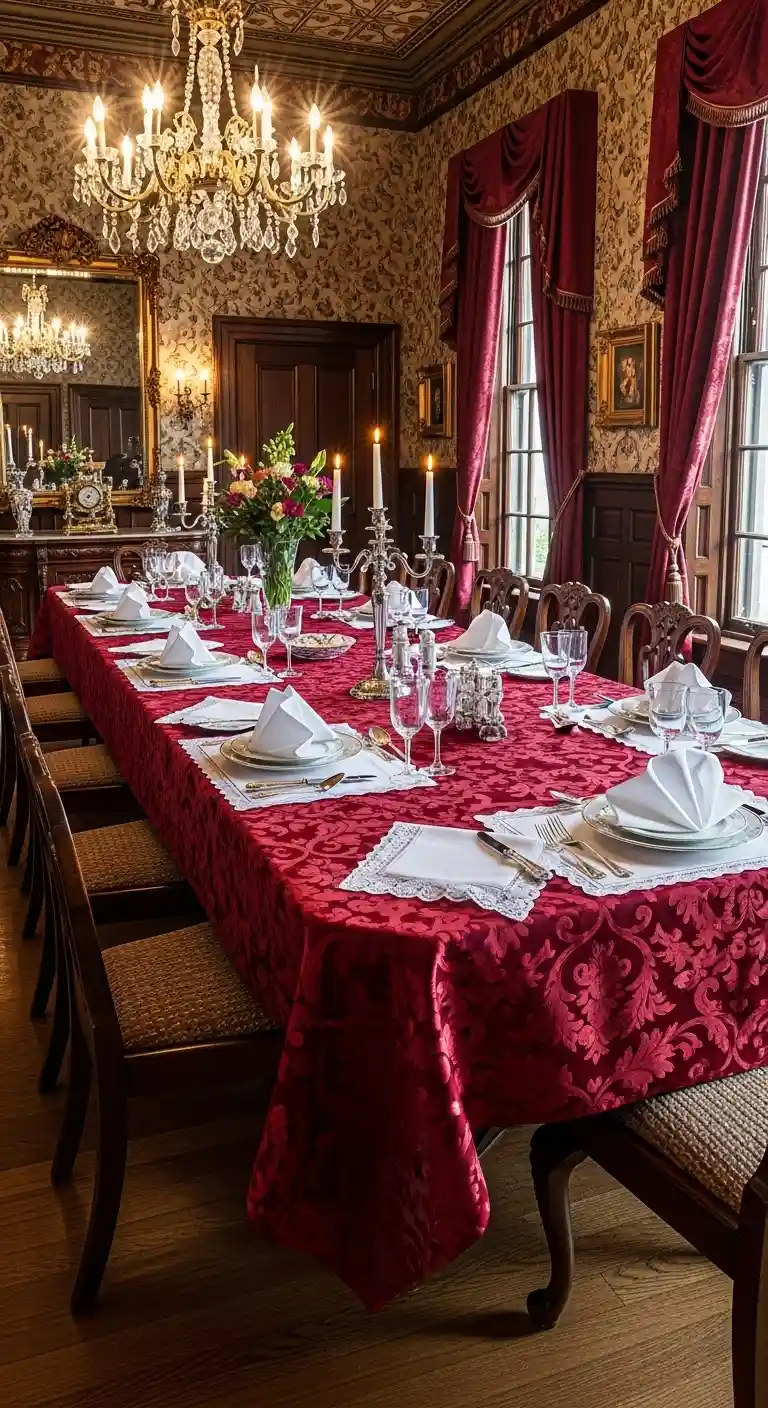
High-quality table linens add both comfort and sophistication to a Victorian dining room.
Linen or damask tablecloths in muted tones enhance furniture details and overall ambiance.
Use placemats, runners, or napkins to introduce complementary colors and textures subtly.
Embroidery, lace, or subtle patterns add historical authenticity and decorative interest.
Layering different textiles creates depth and elevates the dining experience visually and tactilely.
Table linens protect furniture while highlighting the Victorian commitment to elegance and refinement.
Mix and match seasonal or themed linens to keep the dining room feeling fresh and inviting.
13. Decorative Wall Art and Framed Prints
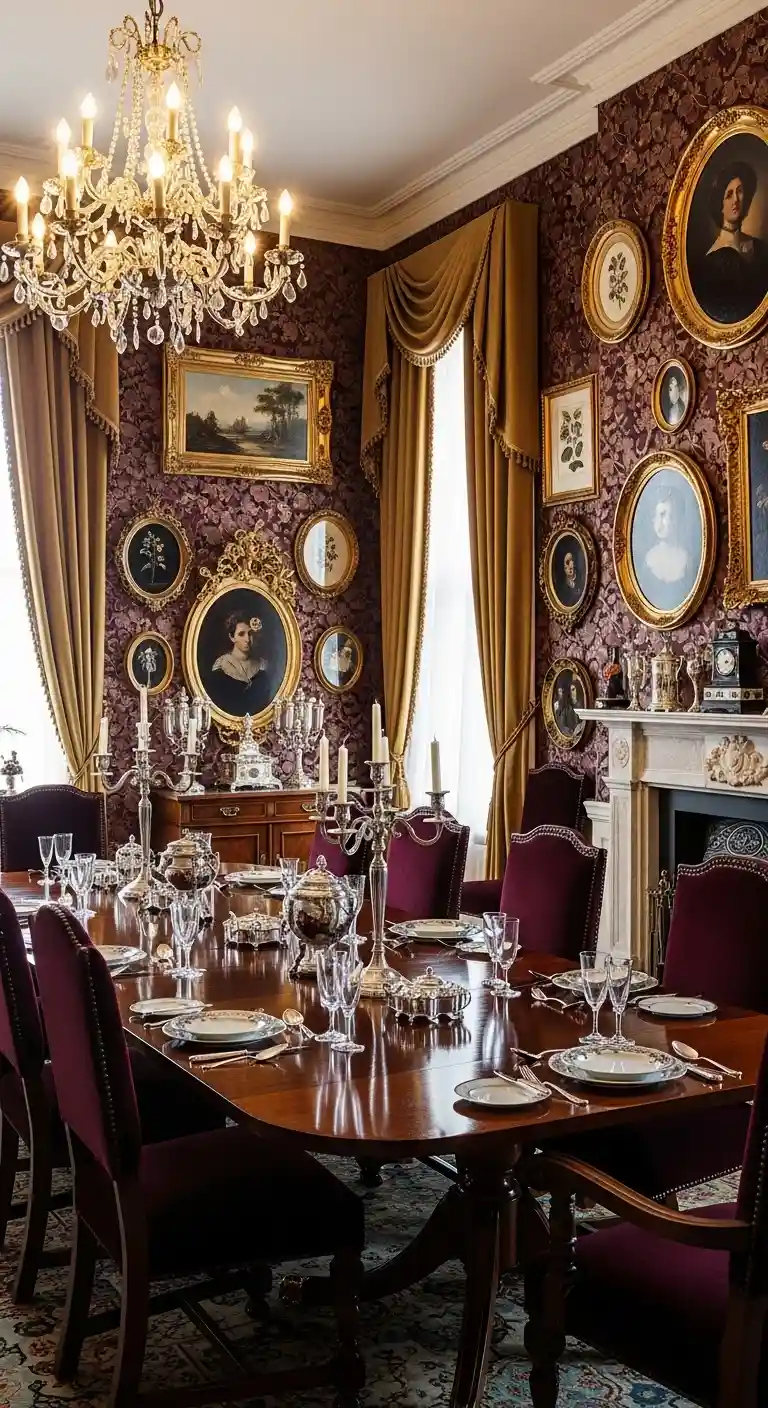
Wall art reflects personality and reinforces the Victorian aesthetic through elegance and history.
Framed botanical prints, landscapes, or classical portraits create visual interest while staying authentic.
Arrange artwork symmetrically for formal balance or asymmetrically for a curated, layered look.
Use gilded frames, carved wood, or ornate molding to complement furniture and architectural details.
Artwork placement should consider sightlines from the table, adding engagement during meals.
Mix smaller frames with one or two larger statement pieces for depth and dimension.
Well-chosen art ties together color schemes, textures, and the overall mood of the room.
14. Antique Clocks for Timeless Charm
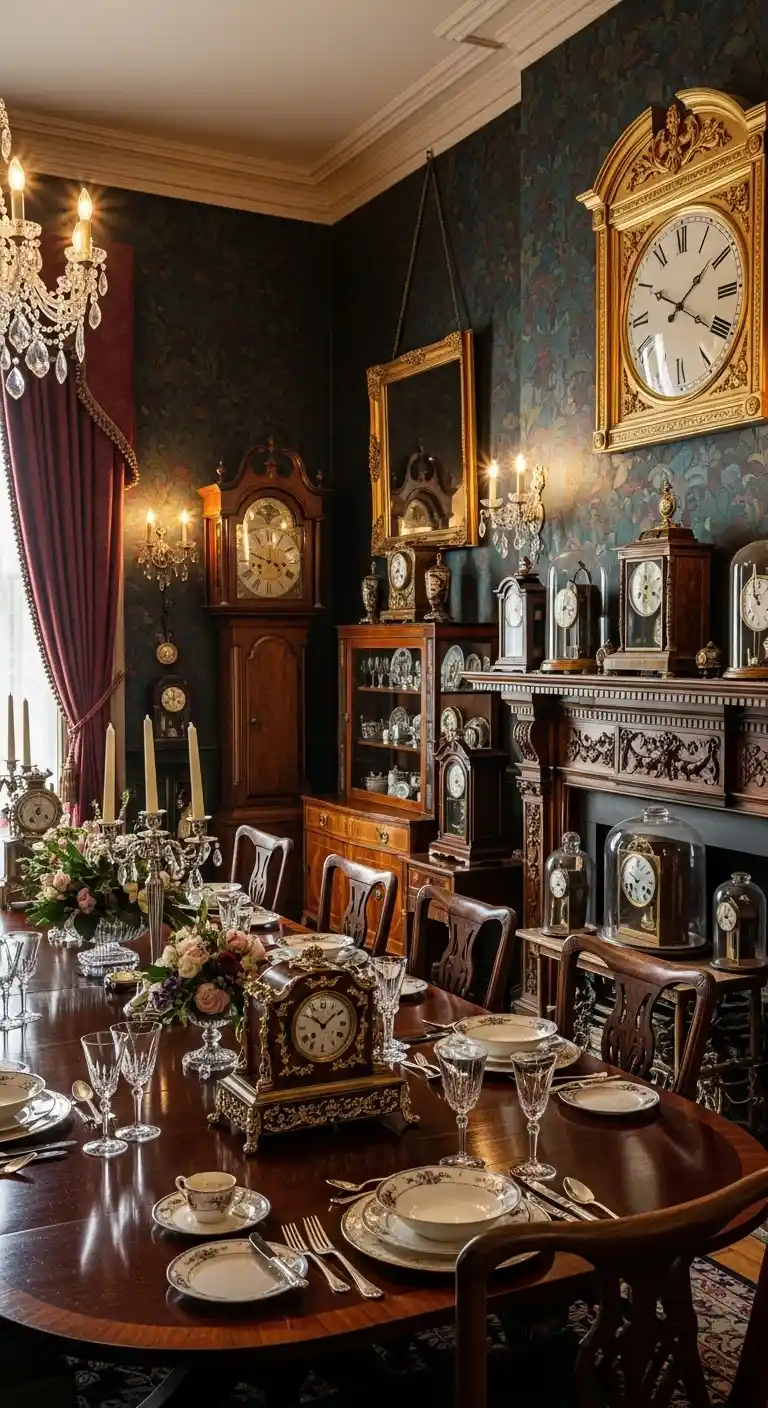
An antique wall clock becomes both a functional and decorative statement in Victorian dining rooms.
Choose ornate designs with carved wood, brass accents, or Roman numerals for historical authenticity.
Position clocks where they’re visible yet harmonize with other focal points like mirrors or cabinets.
Clocks enhance symmetry, drawing attention to the room’s vertical and horizontal balance.
Antique timepieces complement furniture, chandeliers, and wall décor while maintaining elegance.
Even non-working clocks serve as décor, creating a sense of timeless charm in the space.
They provide subtle personality without disrupting the room’s cohesive Victorian design.
15. Rich Color Palettes
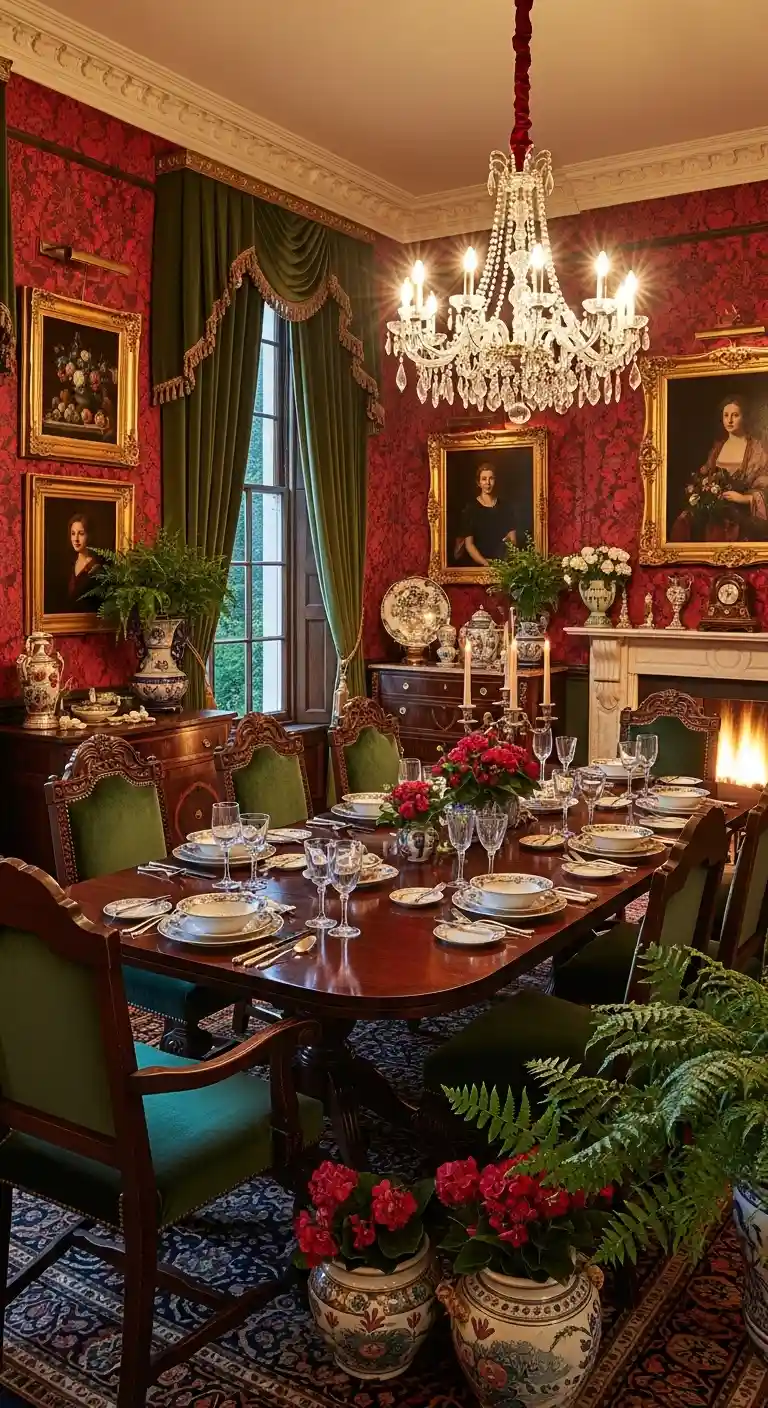
Victorian dining rooms thrive with deep, luxurious color schemes that add warmth and elegance.
Consider hues like burgundy, forest green, navy, or mustard to create a dramatic yet inviting space.
Use color on walls, upholstered chairs, or accent pieces to reinforce the theme cohesively.
Pair rich tones with neutral trims, moldings, or ceilings to maintain balance and prevent heaviness.
Metallic accents like brass or gold enhance the opulent feel without overpowering other elements.
Layered textures and patterns in rugs, curtains, and cushions further enrich the space visually.
Thoughtful color choices ensure the room feels sophisticated, timeless, and welcoming for gatherings.
16. Glass-Fronted Cabinets for Display
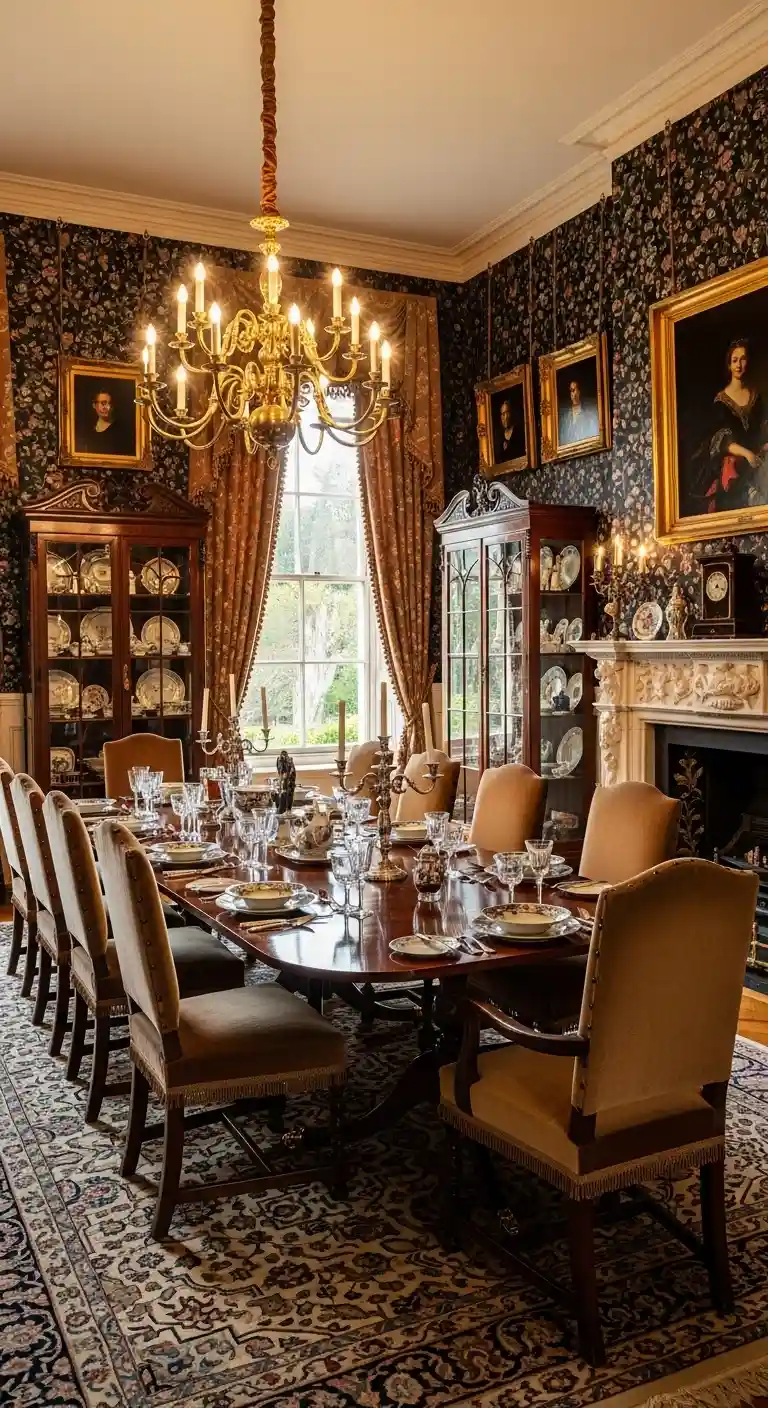
Glass-fronted cabinets highlight china, crystal, and collectible items while keeping them protected.
Their transparency adds depth and visual interest without closing off the space.
Choose wooden frames or painted finishes to harmonize with other furniture pieces.
Lighting inside cabinets accentuates displays, creating focal points that attract attention.
Decorate shelves sparingly to avoid a cluttered or overwhelming look, maintaining elegance.
Glass cabinets combine practicality with decorative charm, enhancing the historical authenticity of the room.
They create a balance between storage and showcasing prized Victorian décor pieces beautifully.
17. Sculptural Candle Holders
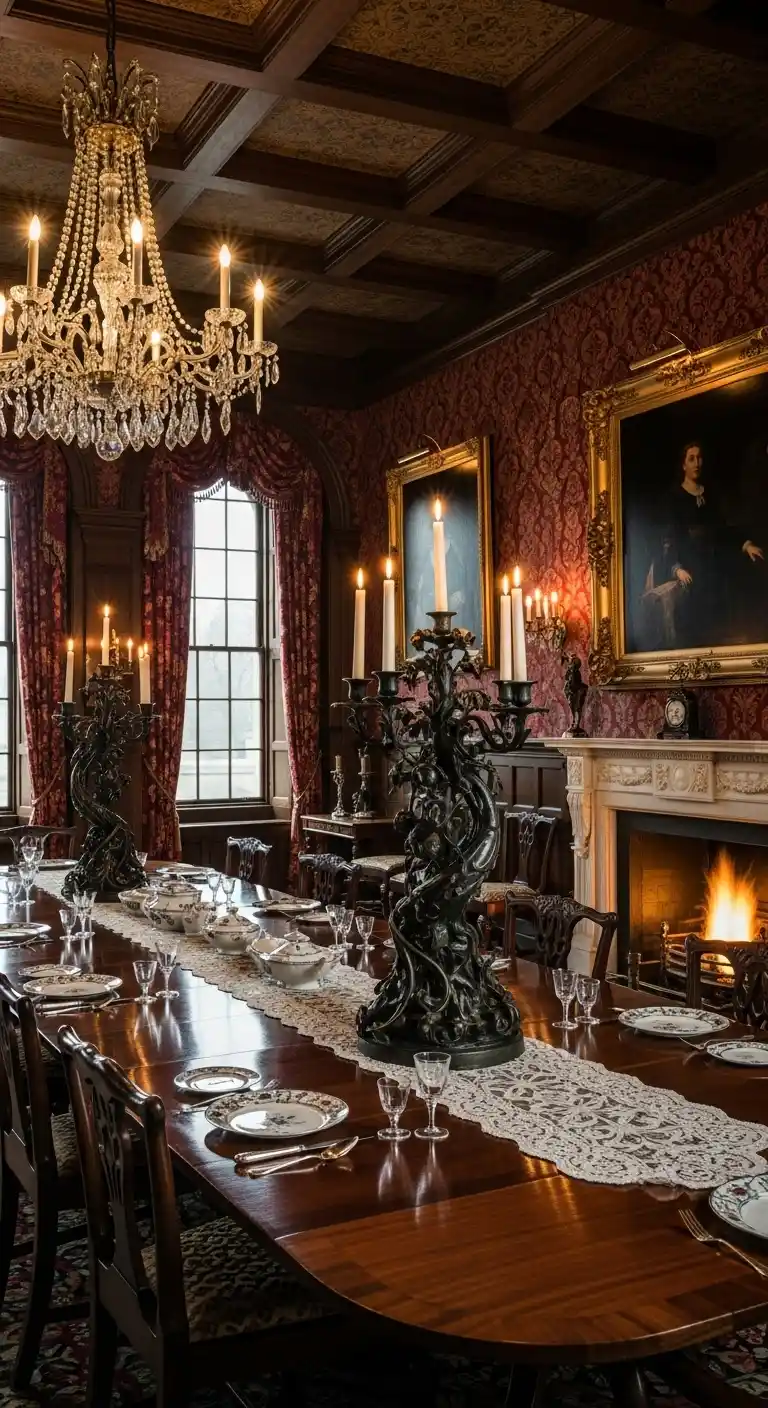
Candle holders add historical ambiance and cozy illumination to Victorian dining rooms.
Choose ornate designs in brass, silver, or wrought iron to complement other decorative elements.
Place tall candlesticks or clusters at the table center or sideboards for visual drama.
Use LED candles if safety is a concern while maintaining the romantic glow of traditional lighting.
Candles enhance texture, reflection, and warmth, reinforcing the Victorian commitment to layered elegance.
Mix varying heights and styles to create a dynamic, sophisticated tabletop display.
Decorative candles harmonize with floral arrangements and table linens for a polished, inviting look.
18. Upholstered Benches for Seating Flexibility
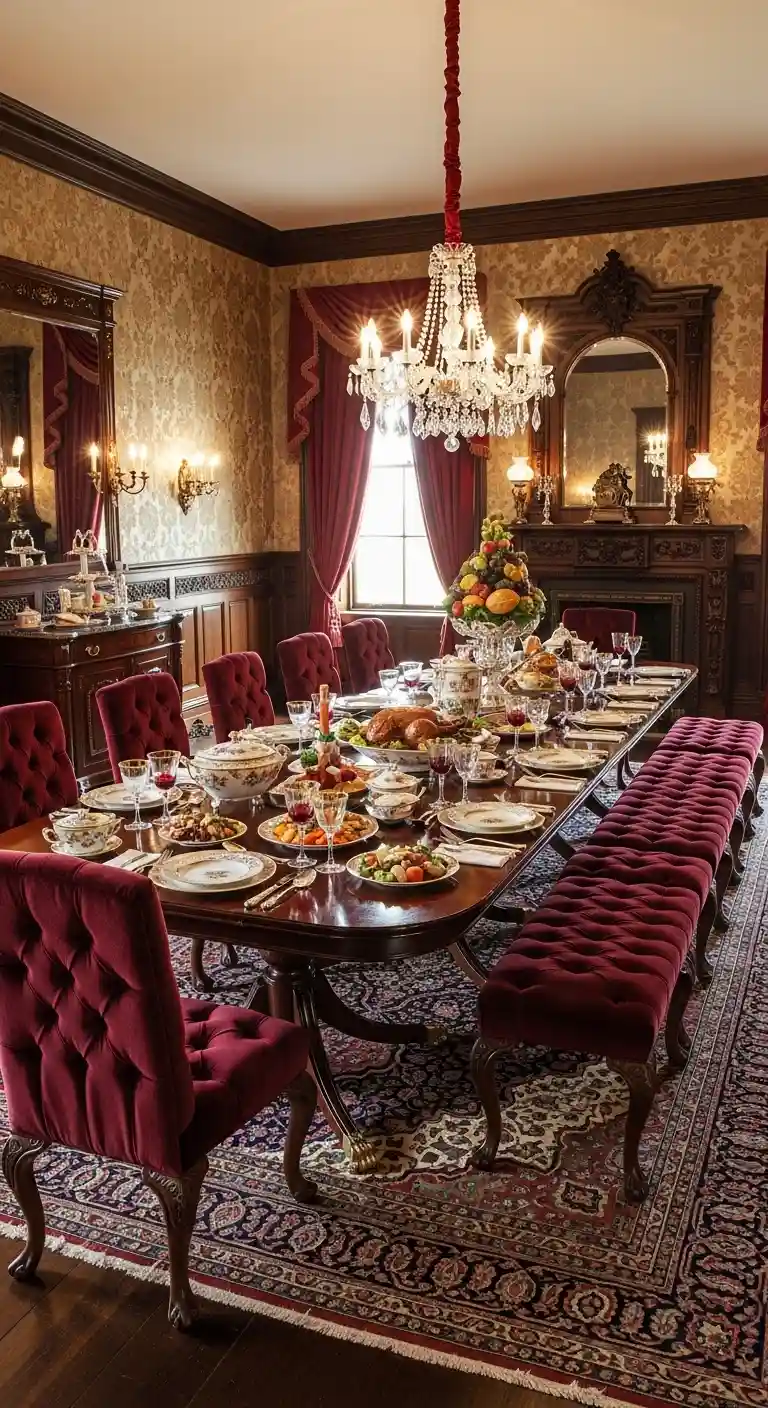
Upholstered benches provide versatile seating while introducing additional texture and comfort.
Place a bench along a wall or at one end of the table for casual elegance.
Choose rich fabrics or patterns that echo chair upholstery or drapery colors.
Benches allow more guests to gather around the table without overcrowding traditional chairs.
Accent cushions enhance comfort and coordinate with table linens or curtains to maintain cohesion.
Benches balance functionality with Victorian charm, offering a flexible seating solution.
They provide a cozy, inviting feel that encourages lingering over meals and conversation.
19. Decorative Moldings and Trim
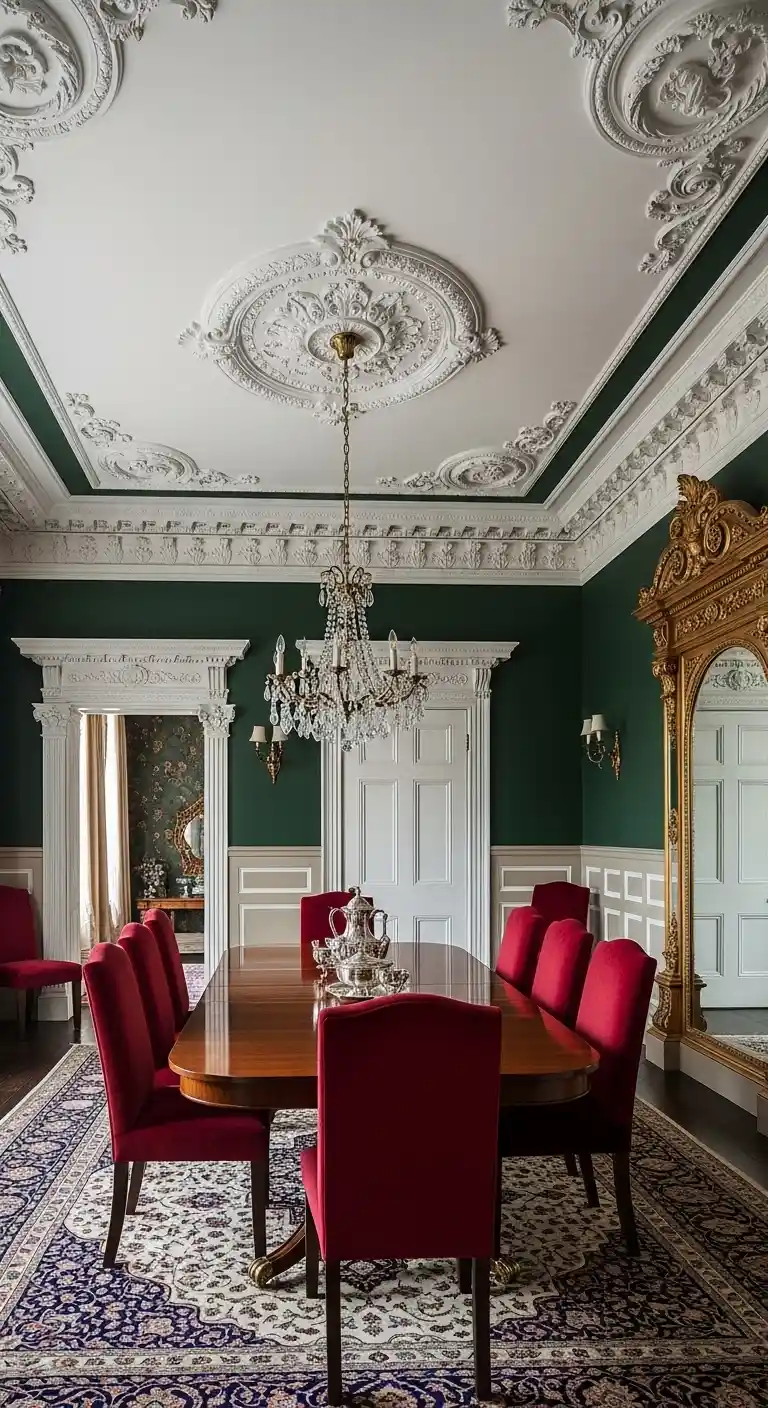
Moldings, cornices, and ceiling trim add refinement and architectural depth to Victorian dining rooms.
They highlight walls, ceilings, and furniture while reinforcing the room’s historical style.
Crown molding can create a sense of height and sophistication, making the room feel more expansive.
Baseboards and wainscoting protect walls while adding visual interest and structural harmony.
Paint or stain moldings in complementary colors to accentuate detail without creating visual clutter.
Layering trim with other decorative elements enhances elegance and emphasizes design craftsmanship.
Attention to molding detail elevates the room from simple décor to an authentic Victorian space.
20. Layered Lighting for Ambiance
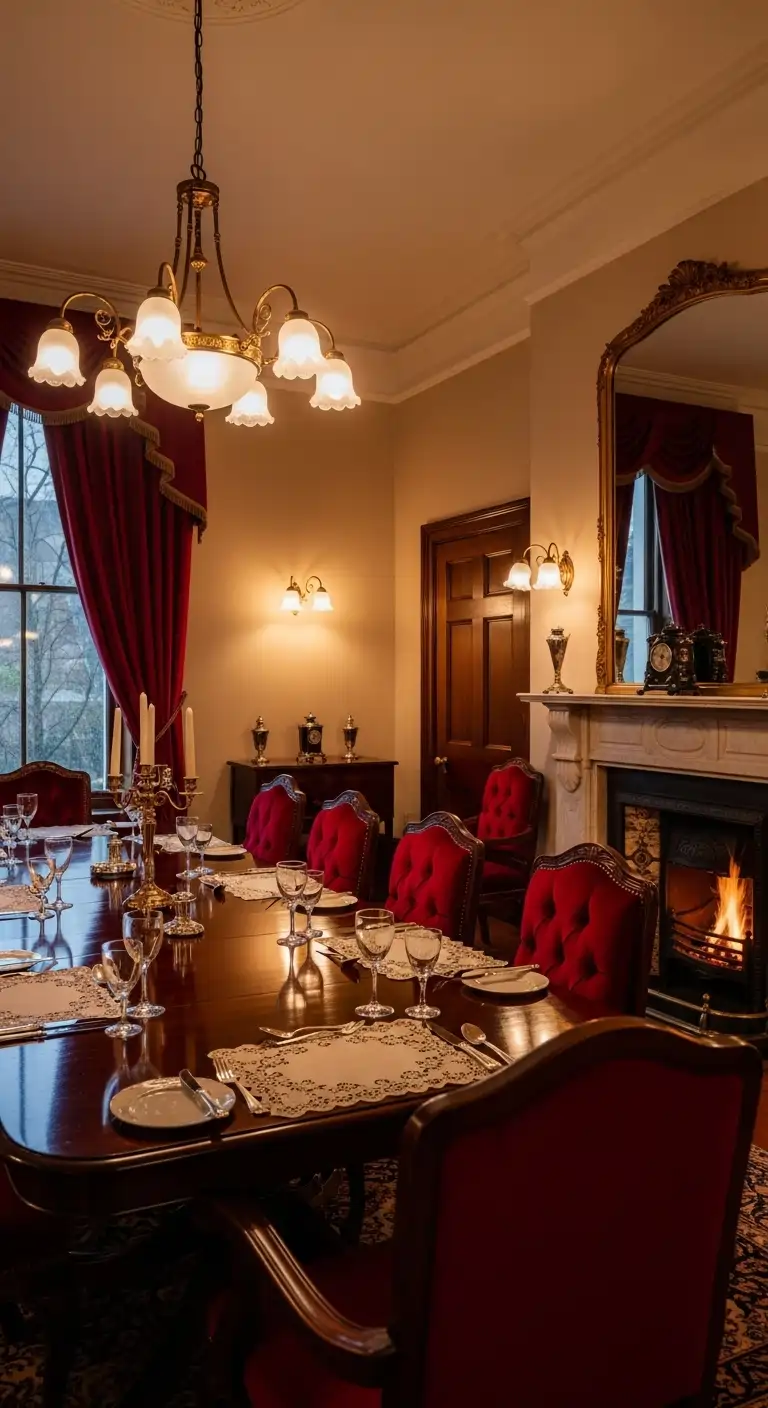
Layering multiple light sources creates warmth, depth, and functionality in Victorian dining rooms.
Combine chandeliers, wall sconces, and table lamps to achieve balanced illumination.
Dimmers allow precise control over ambiance, adapting to casual meals or formal gatherings.
Consider accent lights for artwork, cabinets, or architectural details to enhance focal points.
Warm lighting tones complement deep color palettes, ensuring the room feels inviting and sophisticated.
Layered lighting highlights textures, patterns, and metallic accents, creating a polished and cozy atmosphere.
A well-planned lighting scheme ties together furniture, décor, and architectural elements seamlessly.
21. Seasonal Decorative Touches
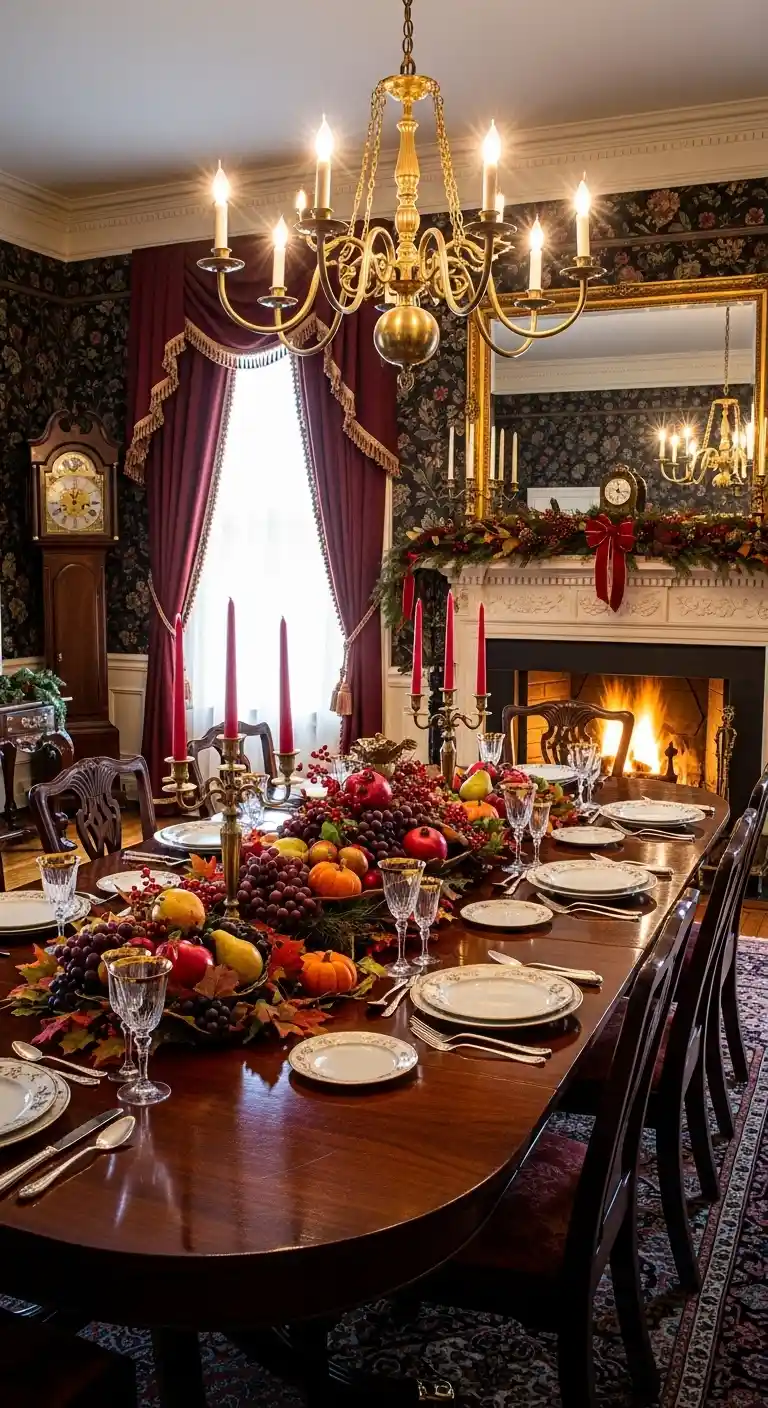
Incorporating seasonal décor keeps a Victorian dining room feeling dynamic and refreshed throughout the year.
Consider floral arrangements, table runners, or centerpieces that reflect seasonal colors and textures.
Subtle updates like decorative bowls, candles, or cushions provide variety without overwhelming the space.
Rotate accents to maintain visual interest while preserving the room’s cohesive style and elegance.
Seasonal touches highlight historical design elements and add a modern, personalized approach to decoration.
Maintaining flexibility ensures the dining room remains inviting and relevant throughout every season.
Thoughtful seasonal styling complements furniture, textiles, and lighting for a polished, timeless result.
Tips for Maintaining a Victorian Dining Room
Regular maintenance ensures furniture, fabrics, and finishes remain in pristine condition.
Dust chandeliers, polish wood, and vacuum rugs to preserve elegance and longevity.
Rotate textiles and seasonal accents to prevent fading and wear while keeping the space fresh.
Avoid harsh cleaning chemicals on delicate finishes or antique surfaces to maintain authenticity.
Update lighting bulbs or fixtures as needed to maintain proper ambiance and visual warmth.
Caring for your Victorian dining room ensures its charm, sophistication, and functionality remain timeless.
Final Wrap-Up
A Victorian dining room is more than just a place to eat—it’s an immersive experience in elegance and history.
Thoughtful furniture choices, layered textures, rich colors, and decorative accents all work together to create a cohesive, inviting space.
From chandeliers to floral arrangements, each detail reinforces sophistication while maintaining comfort and usability.
Maintaining balance between historical authenticity and modern practicality ensures the room remains timelessly beautiful.
With these 21 Victorian dining room ideas, you can transform your dining area into a space that feels luxurious, warm, and unforgettable.
Careful planning, attention to detail, and personal touches will make every meal a memorable experience.