
When it comes to kitchen and bathroom renovations, the choice of countertop material is perhaps the most significant decision a homeowner can make.
For decades, granite and quartz have dominated the market, but a new contender has been rapidly gaining popularity: porcelain.
While you might associate porcelain with delicate teacups or bathroom tiles, modern engineering has transformed this material into one of the most durable and versatile slab surfaces available today.
However, like any material, it comes with its own set of advantages and challenges.
In this guide, we will dive deep into the porcelain countertops pros and cons to help you decide if this high-tech surface is the right fit for your home.
What Exactly Are Porcelain Countertops?
Before we weigh the porcelain countertops pros and cons, it is important to understand what the material actually is.
Porcelain is a type of ceramic made from kaolin clay, which is rich in a mineral called kaolinite.
This clay, along with silica, feldspar, and other mineral oxides, is fired in a kiln at extremely high temperatures—often exceeding 2,500 degrees Fahrenheit.
This process, known as vitrification, results in an incredibly dense, non-porous material that is nearly impervious to water, heat, and staining.
For countertops, porcelain is manufactured in large-format slabs that can be much thinner than traditional 3cm granite or quartz, or mitered to look as thick as you desire.
The Pros of Porcelain Countertops
Porcelain has become a darling of the design world for several reasons. Here are the primary benefits that make it a top choice for modern kitchens.
1. Extreme Heat Resistance
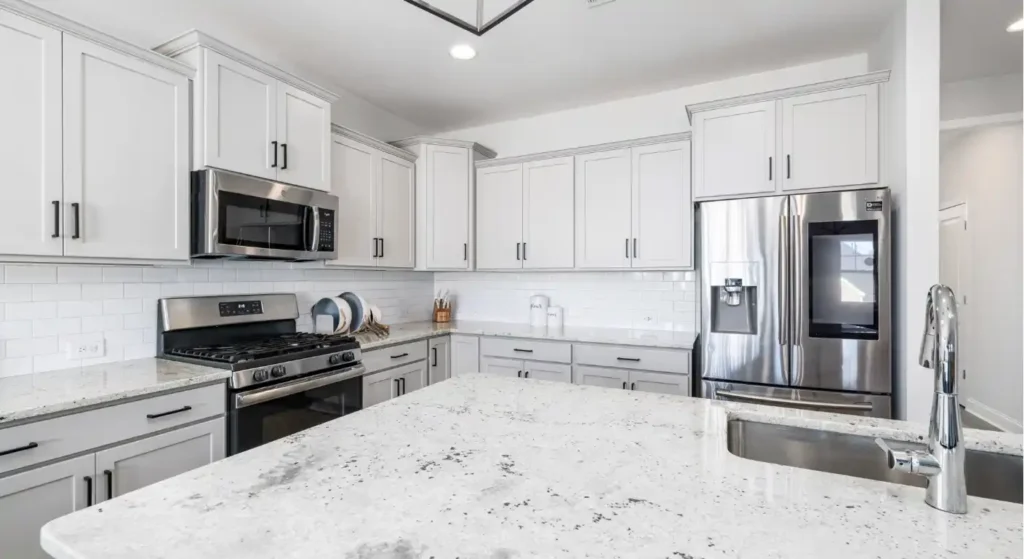
Unlike quartz, which is bound by resins that can melt or discolor when exposed to high temperatures, porcelain is essentially “fireproof.”
Because it is born in a kiln at thousands of degrees, you can take a boiling pot directly from the stove and place it on a porcelain countertop without fear of cracking or burning the surface.
2. Superior Durability and Hardness
Porcelain is roughly 30% stronger than granite. Its high density makes it incredibly resistant to scratches.
While you should still use a cutting board to protect your knives (as the porcelain can actually dull the blades), the surface itself is remarkably resilient against everyday wear and tear.
3. Non-Porous and Hygienic
One of the biggest selling points in the porcelain countertops pros and cons debate is maintenance. Porcelain is non-porous, meaning it does not absorb liquids.
This makes it naturally resistant to bacteria, mold, and staining.
Unlike granite or marble, porcelain never requires sealing, saving you time and money over the lifespan of the counter.
4. UV Resistance for Outdoor Use
Many countertop materials fade or turn yellow when exposed to direct sunlight.
Porcelain is UV-resistant, which means the colors and patterns will not fade over time.
This makes it the premier choice for outdoor kitchens, BBQ islands, and even exterior wall cladding.
5. Aesthetic Versatility
Thanks to advanced inkjet printing technology, porcelain can mimic the look of almost any natural stone, wood, or even metal.
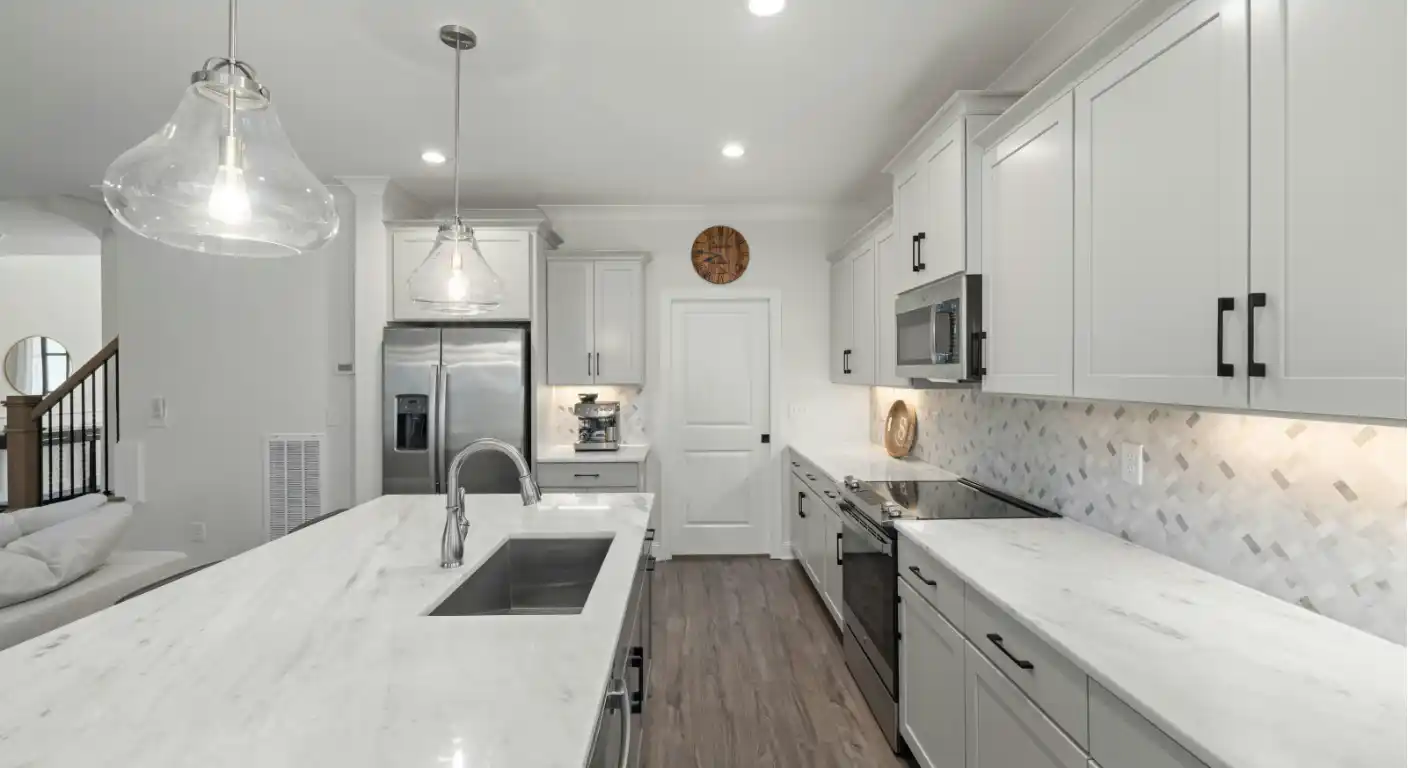
You can have the look of rare Calacatta marble—complete with dramatic veining—without the high maintenance and fragility of real marble.
Furthermore, porcelain slabs are available in massive sizes, allowing for seamless islands and continuous backsplashes.
The Cons of Porcelain Countertops
No material is perfect. To provide a balanced view of porcelain countertops pros and cons, we must look at the drawbacks that can sometimes catch homeowners off guard.
1. Brittleness and Chipping
While porcelain is very hard, that hardness comes with a degree of brittleness.
If a heavy cast-iron skillet is dropped on the edge of a porcelain counter, it is more likely to chip or crack compared to a more flexible material like quartz.
While chips can be repaired with epoxy, the repair is often visible.
2. Difficult Installation
Porcelain is notoriously difficult to fabricate and install.
Because the slabs are so dense and thin, they are prone to cracking during the cutting process if the fabricator does not have specialized tools and extensive experience.
This leads to a smaller pool of qualified installers and can drive up the cost of labor.
3. Pattern Depth (The “Printed” Issue)
In most porcelain slabs, the beautiful marble or stone pattern is only printed on the surface.
Unlike granite or quartz, where the pattern goes all the way through the slab, the interior of a porcelain slab is usually a solid color.
This means that if you choose a standard eased edge, the pattern will disappear at the corner.
To solve this, fabricators use “mitered edges” to wrap the pattern around the side, but this adds to the complexity and cost.
4. Limited Edge Profiles
Because of the thickness of the slabs and the surface-printed patterns, you are generally limited to square or mitered edges.
You cannot easily do ornate, rounded, or ogee edges that are common with thicker natural stone slabs.
Porcelain Countertops Pros and Cons: A Comparison Table
To help visualize the trade-offs, here is a quick breakdown:
| Feature | Porcelain | Quartz | Granite |
| Heat Resistance | Excellent | Moderate (Resin can burn) | High |
| Stain Resistance | Excellent | Excellent | Moderate (Needs sealing) |
| Scratch Resistance | Excellent | High | High |
| Outdoor Use | Yes (UV Resistant) | No (Resins yellow) | Yes |
| Maintenance | Low (No sealing) | Low (No sealing) | Moderate (Periodic sealing) |
| Installation Cost | High (Specialized labor) | Moderate | Moderate |
Cost Considerations
When evaluating porcelain countertops pros and cons, cost is often the deciding factor.
The price of the raw porcelain slab is often comparable to or even cheaper than high-end quartz or granite. However, the total installed cost is frequently higher.
The reason lies in the fabrication. Cutting porcelain requires water-cooled diamond blades and a very steady hand.
Because the risk of breakage during fabrication is higher, many installers charge a premium to cover the potential for wasted material.
On average, you can expect to pay anywhere from $60 to $120 per square foot installed, depending on the complexity of the edges and the brand of porcelain.
Maintenance and Care Tips
One of the “pros” in the porcelain countertops pros and cons list is the ease of care. To keep your porcelain looking new:
- Daily Cleaning: Use a soft cloth and warm, soapy water.
- Tough Stains: Even though it’s stain-resistant, dried-on messes can be cleaned with a non-abrasive cream cleanser or even a mild solvent like isopropyl alcohol.
- Avoid Impact: Be careful when moving heavy pots and pans near the edges of the counter to prevent chipping.
- No Sealing Required: Enjoy the fact that you never have to spend a Saturday afternoon applying chemical sealants to your kitchen.
Is Porcelain Right for Your Kitchen?
Choosing a countertop material depends on your lifestyle and aesthetic preferences.
You should choose porcelain if:
- You want a high-end, modern look with large, seamless slabs.
- You are an avid cook who wants to place hot pans directly on the counter.
- You are designing an outdoor kitchen.
- You want the look of marble without the constant worry about etching from lemon juice or wine.
You might want to reconsider porcelain if:
- You have a tight budget for installation labor.
- You have a busy household where heavy objects are frequently dropped (increasing chip risk).
- You prefer a traditional, rounded edge profile that requires a thicker, solid-body stone.
Conclusion
Understanding the porcelain countertops pros and cons is essential for any homeowner looking to make a long-term investment in their property.
Porcelain offers an unmatched combination of heat resistance, durability, and stunning aesthetics that can mimic the world’s most beautiful natural stones.
While the installation can be tricky and the edges can be prone to chipping if handled roughly, the benefits of a low-maintenance, “forever” surface often outweigh the drawbacks.
As technology continues to improve, we are seeing more “through-body” porcelain slabs where the pattern exists throughout the material, potentially solving one of the major “cons” of this surface.
For now, if you hire a skilled fabricator and treat the edges with care, porcelain stands as one of the most sophisticated and high-performing choices for the modern home.