
When planning a kitchen renovation, the worktop is often the centerpiece of the design. It is the surface that endures the most stress—from hot pans and sharp knives to spilled wine and heavy groceries.
For years, granite and quartz have been the “gold standard” for high-end kitchens. However, a new contender has been making waves across the design world: the ceramic slab worktop.
Often referred to as “sintered stone” or large-format porcelain, modern ceramic worktops are a far cry from the small, grouted tiles of the past.
They offer a sleek, industrial, and highly durable alternative to natural stone. But like any material, they come with a specific set of trade-offs.
In this article, we will explore the ceramic kitchen worktops pros and cons to help you decide if this high-tech material is the right investment for your culinary space.
Ceramic Master Hub
Ceramic is highly suitable. It handles weekly cooking effortlessly and is completely heatproof, so hot pans won’t damage it.
| Feature | Ceramic | Quartz |
|---|---|---|
| Heat Resistance | Extreme (Can put hot pans directly on it) | Moderate (Resin can scorch/melt) |
| Stain Resistance | Excellent (Non-porous) | Excellent (Non-porous) |
| Impact/Chipping | Prone to edge chipping | Very durable, less likely to chip |
| UV Resistance | Will not fade in sunlight | Can fade over time if in direct sun |
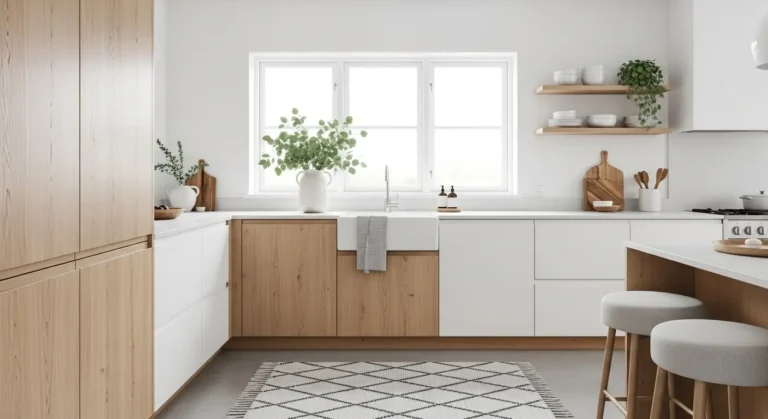
Style Pick: Matte Solid Color. Perfect for a modern, sleek aesthetic. Note: Ceramic requires specialist fabricators, making installation costs higher than standard stone.
What are Ceramic Kitchen Worktops?
To understand the performance of ceramic, we have to look at how it is made.
Ceramic worktops are engineered from natural raw materials, including wet clays, powdered minerals like feldspar, and silica.
These materials are pressed together under immense pressure (often using a process called sintering) and then fired in a kiln at temperatures exceeding 1,200°C (2,200°F).
This extreme heat causes the particles to fuse together at a molecular level, creating a surface that is incredibly dense, non-porous, and harder than most natural stones.
Because they are man-made, they can be produced in massive, thin slabs that provide a seamless look for islands and long runs of cabinetry.
The Pros of Ceramic Kitchen Worktops
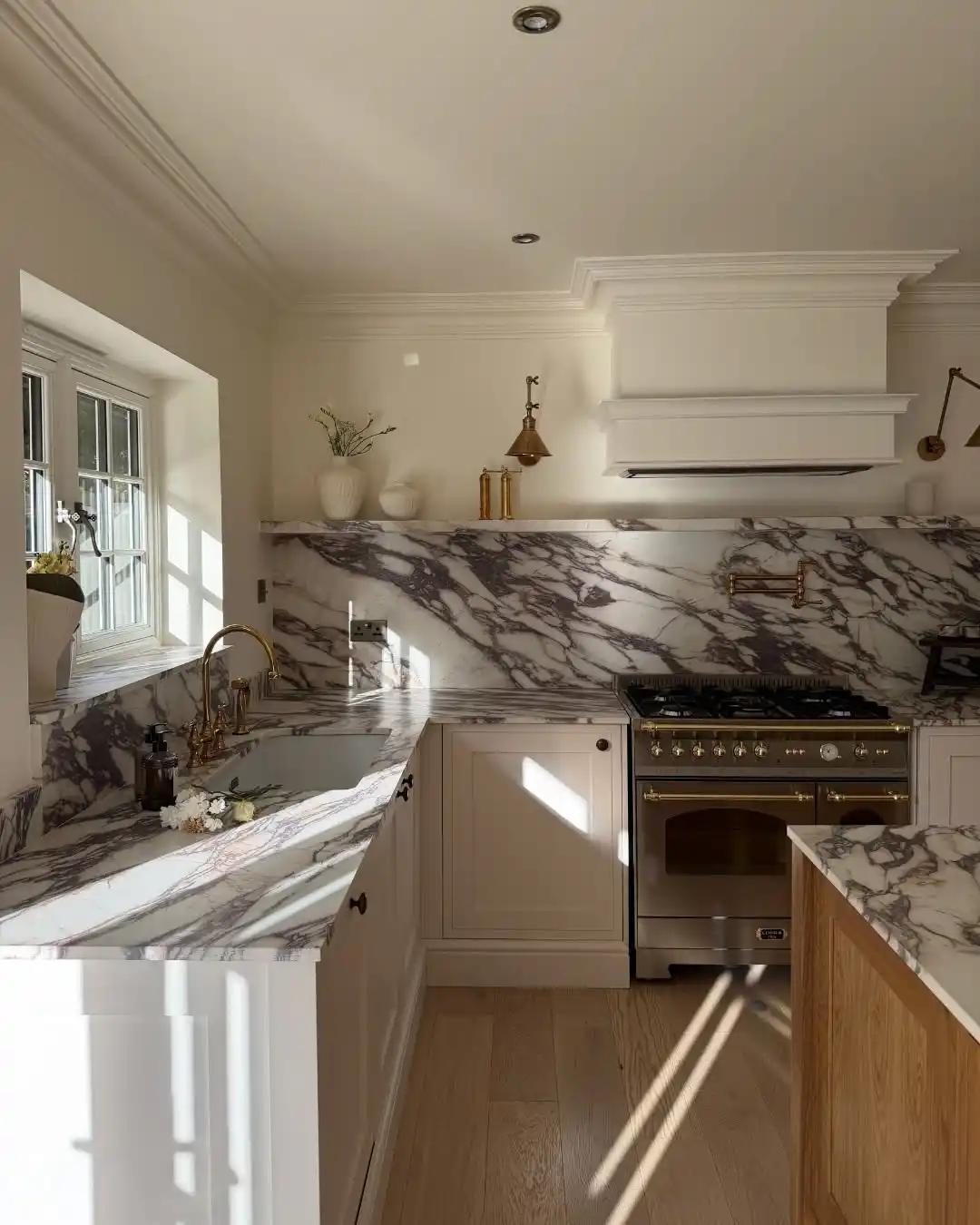
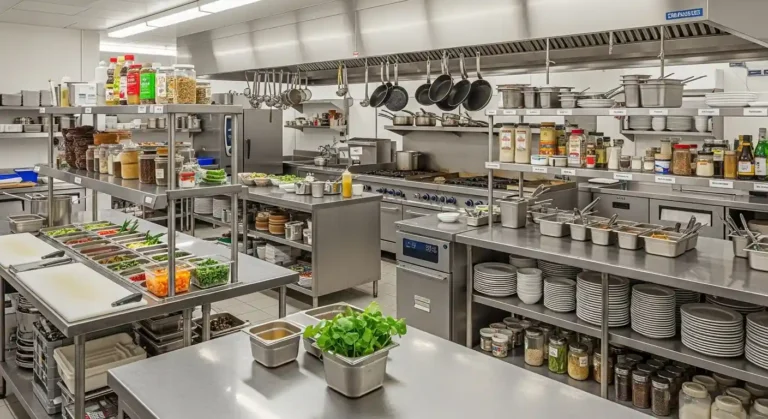
There is a reason why professional chefs and high-end designers are increasingly turning to ceramic.
Its physical properties offer several advantages that traditional materials simply cannot match.
1. Unrivaled Heat Resistance
The standout feature of ceramic is its ability to handle heat. Unlike quartz, which contains resins that can melt or scorch at temperatures as low as 150°C, ceramic is essentially fireproof.
You can take a roasting tray directly from a 250°C oven and place it onto a ceramic worktop without a second thought. There is no risk of thermal shock, cracking, or discoloration from heat.
2. Superior Scratch Resistance
Ceramic is one of the hardest materials available for home use.
It ranks very high on the Mohs scale of mineral hardness, making it significantly more scratch-resistant than granite or marble.
While we always recommend using a chopping board to protect your expensive knives (ceramic can actually dull steel blades because it is so hard), the worktop itself can withstand a great deal of friction and scraping without showing a mark.
3. Maximum Hygiene and Stain Resistance
Because the firing process makes ceramic completely non-porous, it does not absorb liquids. This is a massive “pro” for kitchen environments.
Red wine, lemon juice, coffee, and oil—which would permanently stain marble or etch granite—simply sit on the surface of ceramic until they are wiped away.
This lack of porosity also means the surface is naturally antibacterial, as there are no microscopic pores for germs to hide in.
4. UV Stability
Many kitchen worktops, especially those made of quartz or wood, will fade or turn yellow if they are placed in direct sunlight near a large window or bifold doors.
Ceramic is completely UV-resistant. The pigments are baked into the material at high temperatures, meaning the color will remain as vibrant on day 1,000 as it was on day one.
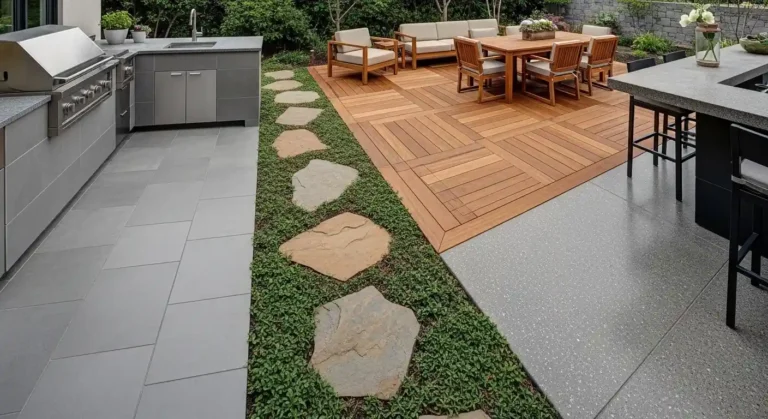
This also makes it the perfect choice for outdoor BBQ areas.
5. Aesthetic Versatility
Modern printing technology allows manufacturers to recreate the look of almost any material.
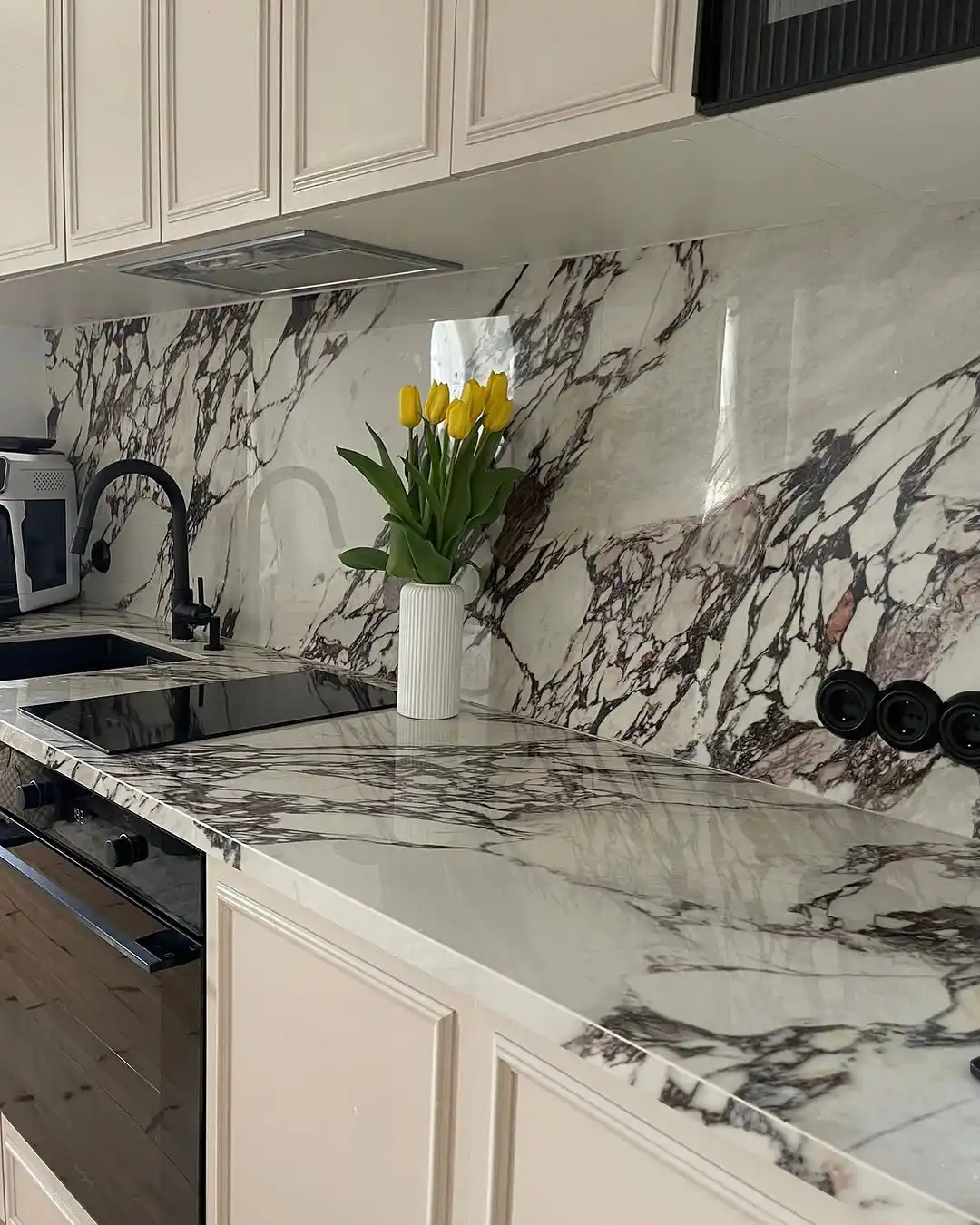
You can have a ceramic worktop that looks like rare Calacatta marble, rusted steel, weathered wood, or industrial concrete.
Furthermore, ceramic slabs are available in very thin profiles (as thin as 6mm or 12mm), which is perfect for the “ultra-slim” minimalist kitchen trend that is currently dominating European design.
The Cons of Ceramic Kitchen Worktops
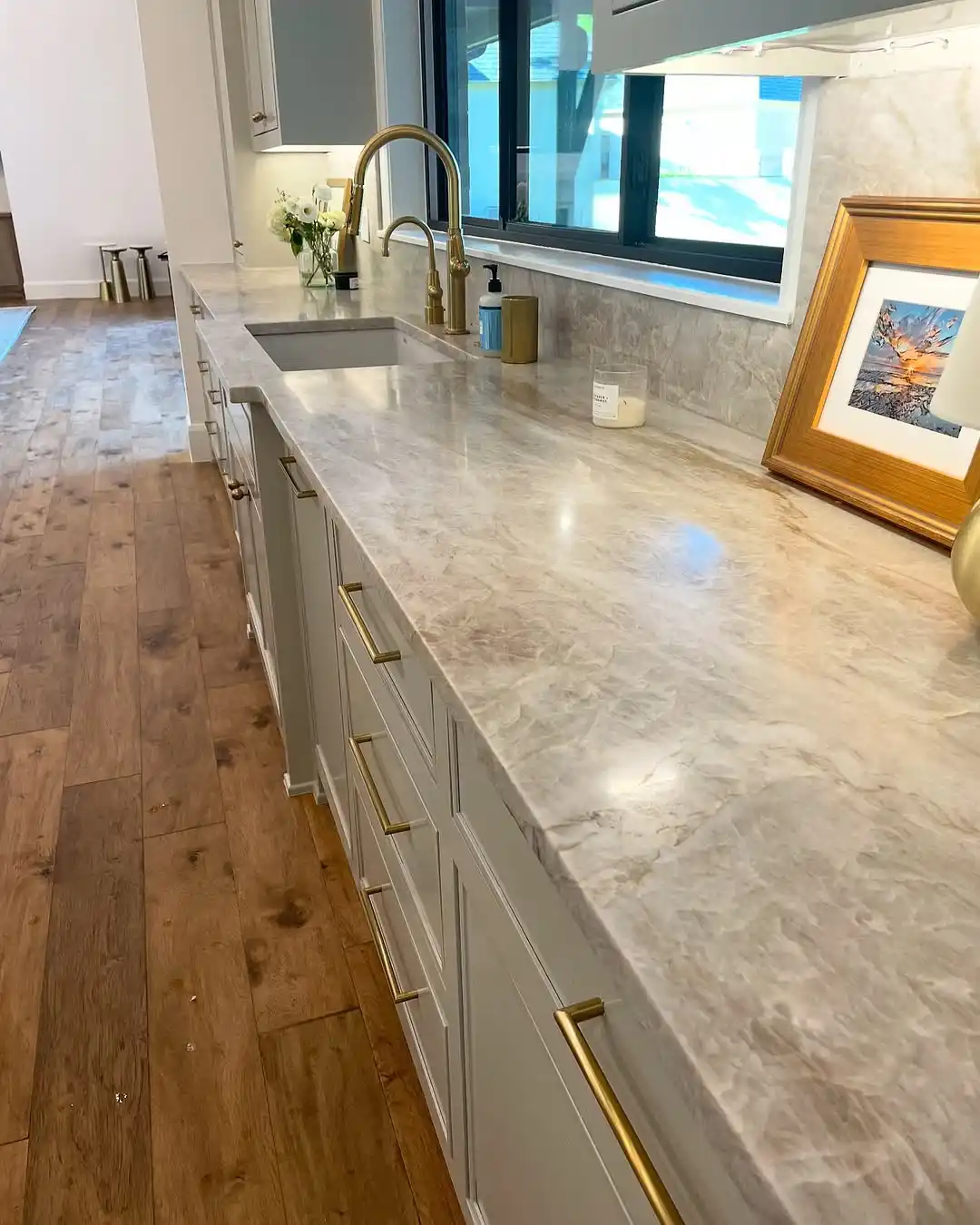
No material is perfect, and ceramic has a few characteristics that might make it unsuitable for certain households.
When evaluating ceramic kitchen worktops pros and cons, it is essential to consider these potential drawbacks.
1. Brittleness and Impact Sensitivity
While ceramic is incredibly hard, it is also brittle. It lacks the “flex” found in materials with resin binders (like quartz).
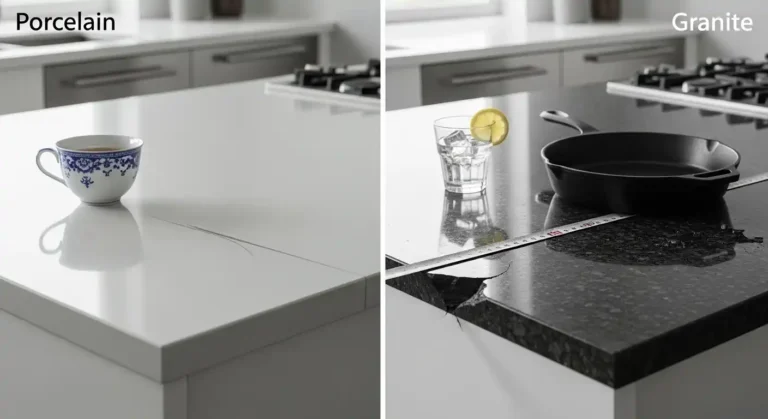
If you drop a heavy object—like a cast-iron le creuset pot—onto the edge of a ceramic worktop, it is more likely to chip or crack than granite or quartz.
While the flat surface is very strong, the edges are the “Achilles’ heel” of ceramic.
2. High Installation and Fabrication Costs
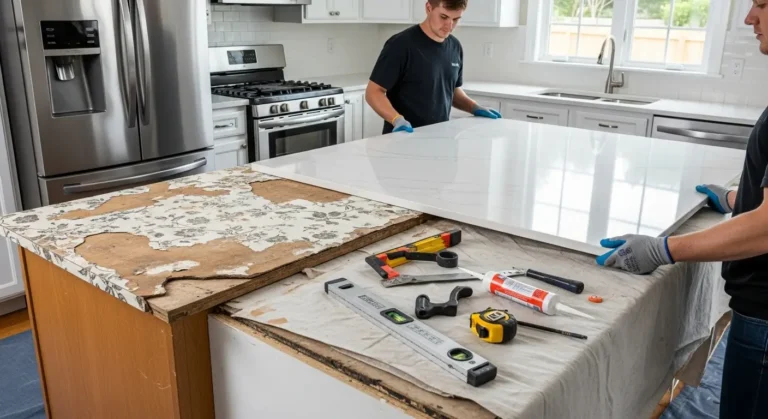
Ceramic is notoriously difficult to work with.
Because it is so hard and under high internal tension, it requires specialized diamond-tipped tools and water-cooled saws to cut.
Fabricators must be highly trained to prevent the slab from shattering during the cutting process.
This complexity means that labor costs for ceramic are often 20% to 50% higher than for quartz or granite.
3. Pattern Depth (The “Printed” Surface)
In most ceramic slabs, the beautiful marble veining or stone texture is only printed on the surface.
Unlike a natural stone slab where the pattern goes all the way through, the “inside” of a ceramic slab is usually a solid color.
If you have an “eased” edge, you will see a solid line where the pattern stops.
To fix this, fabricators must use mitered edges to wrap the pattern around the side, which adds to the cost and creates a sharp corner that can be more prone to chipping.
4. Limited Edge Profiles
Because ceramic slabs are typically thin and the patterns are surface-printed, you are generally limited to square or mitered edges.
You cannot easily achieve the rounded “bullnose” or ornate “ogee” edges that are common with thicker natural stone.
Ceramic Kitchen Worktops Pros and Cons: A Summary Table
| Feature | Ceramic Slabs | Quartz | Granite |
|---|---|---|---|
| Heat Resistance | Best-in-class | Moderate (Resin burns) | High |
| Stain Resistance | Excellent (Non-porous) | Excellent | Moderate (Needs sealing) |
| Scratch Resistance | Excellent | High | High |
| Impact Resistance | Low (Brittle) | High | High |
| Outdoor Use | Yes (UV Stable) | No | Yes |
| Installation Cost | Very High | Moderate | Moderate |
Cost Considerations: Is it Worth the Investment?
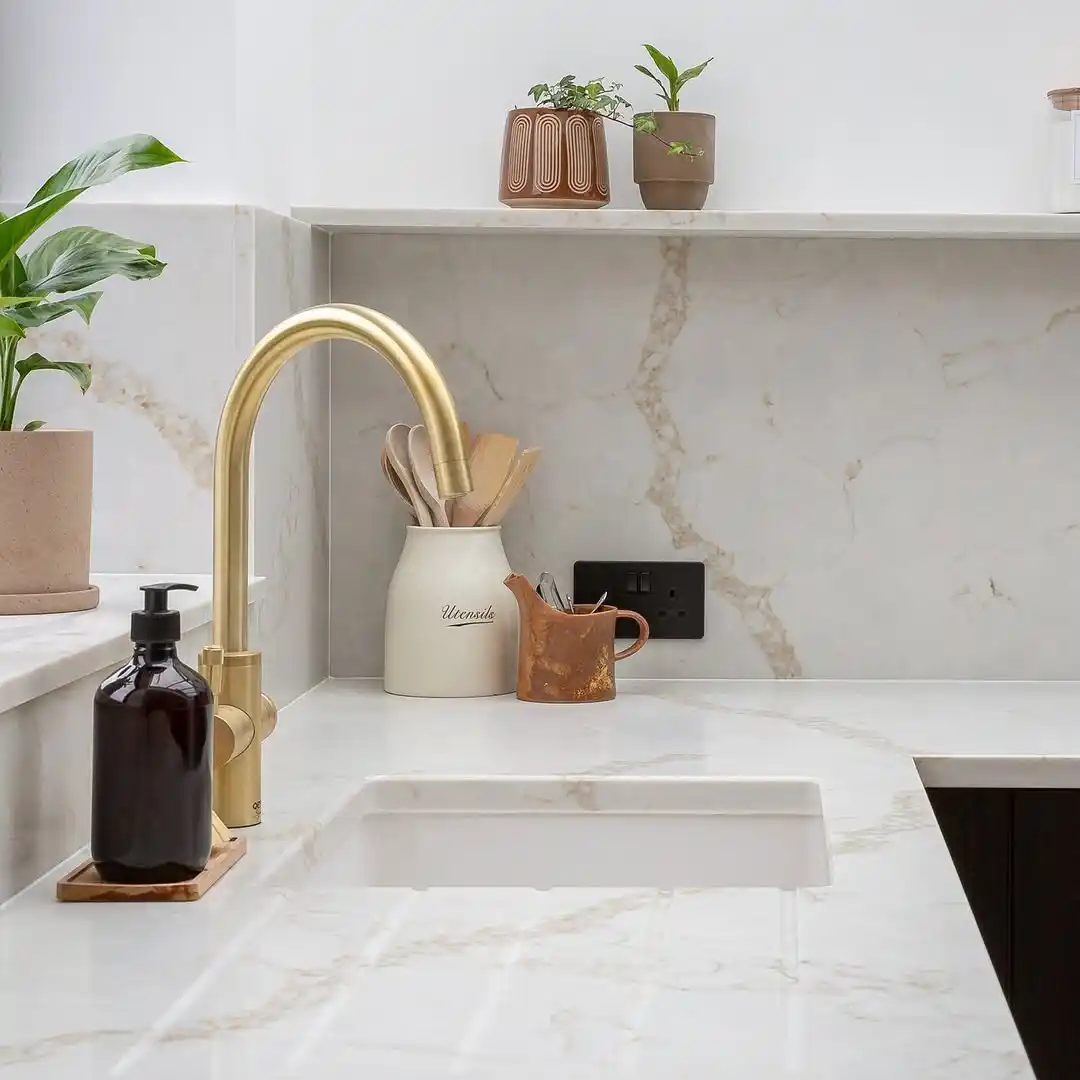
When people ask about the price of ceramic, they are often surprised. While the raw material can be found at various price points, the total installed cost is almost always at the premium end of the market.
You can expect to pay anywhere from £400 to £900 per linear meter, depending on the brand (such as Dekton, Neolith, or Laminam) and the complexity of the installation.
However, many homeowners find the investment worth it because of the longevity.
Since ceramic doesn’t require sealing, doesn’t stain, and won’t burn, it often looks “brand new” for decades, whereas other materials may show their age through scratches, dull spots, or heat marks.
Maintenance and Care Tips
One of the greatest “pros” is the low maintenance. To keep your ceramic kitchen worktops in top condition:
- Daily Cleaning: Use a simple microfiber cloth with warm water and a mild detergent.
- Preventing Chips: Be mindful when handling heavy cookware near the edges. If you have a dishwasher under the worktop, ensure the edges are protected from being hit by heavy plates or pots.
- No Sealing: Unlike granite, you never need to apply chemical sealants.
- Tough Messes: For dried-on food, you can use a plastic scraper or a non-abrasive cream cleaner. Ceramic is very chemically resistant, so even stronger cleaners won’t damage the finish.
The Verdict: Is Ceramic Right for Your Kitchen?
In the final analysis of ceramic kitchen worktops pros and cons, the choice comes down to your priorities.
Ceramic is the perfect choice if:
- You want a modern, slimline aesthetic.
- You are a serious cook who wants to place hot pans anywhere.
- You want a “set and forget” material that never needs sealing.
- You are designing an outdoor kitchen or have a very sunny indoor kitchen.
You might want to reconsider ceramic if:
- You have a very high-traffic kitchen with young children who might drop heavy objects on the counter edges.
- You are working with a tight budget for fabrication and installation.
- You prefer a traditional, chunky look with rounded edge profiles.
Conclusion
Ceramic kitchen worktops represent the pinnacle of engineered surface technology. They offer a level of heat and stain resistance that is simply unmatched by natural stone or quartz.
While the brittleness and the cost of installation are valid concerns, for many, the trade-off is well worth it for a surface that is virtually indestructible by heat and chemicals.
By understanding the unique characteristics of this material, you can ensure that your kitchen worktop remains a beautiful and functional part of your home for many years to come.