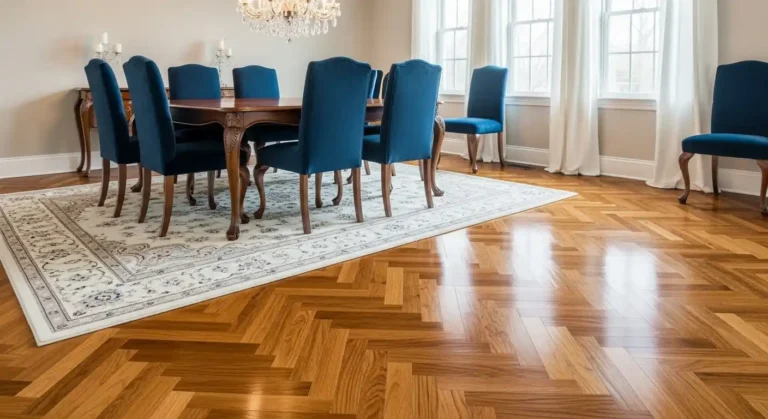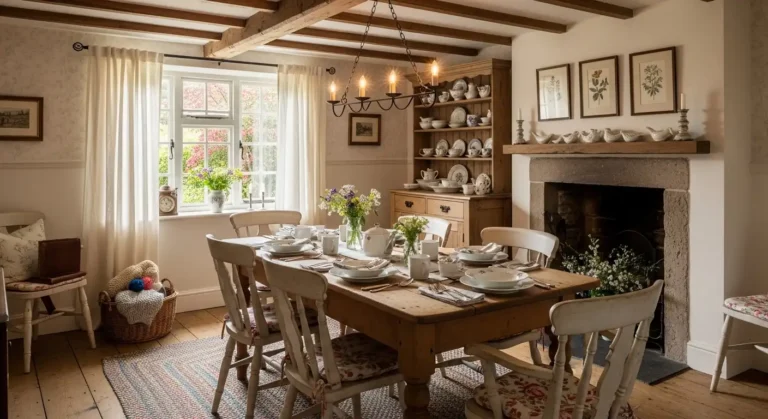

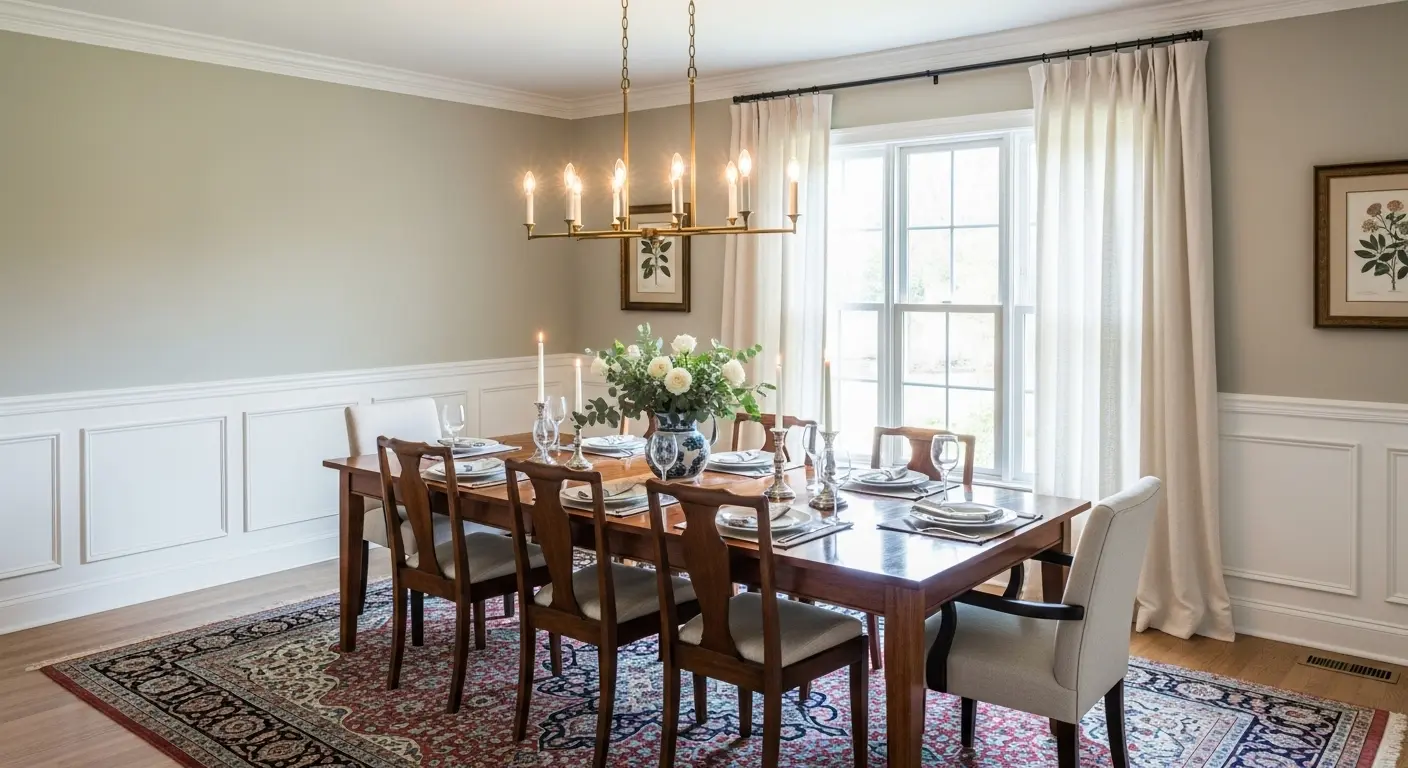
If your dining area feels a little bland or outdated, wainscoting can transform it. These curated ideas make your walls visually appealing and effortlessly stylish.
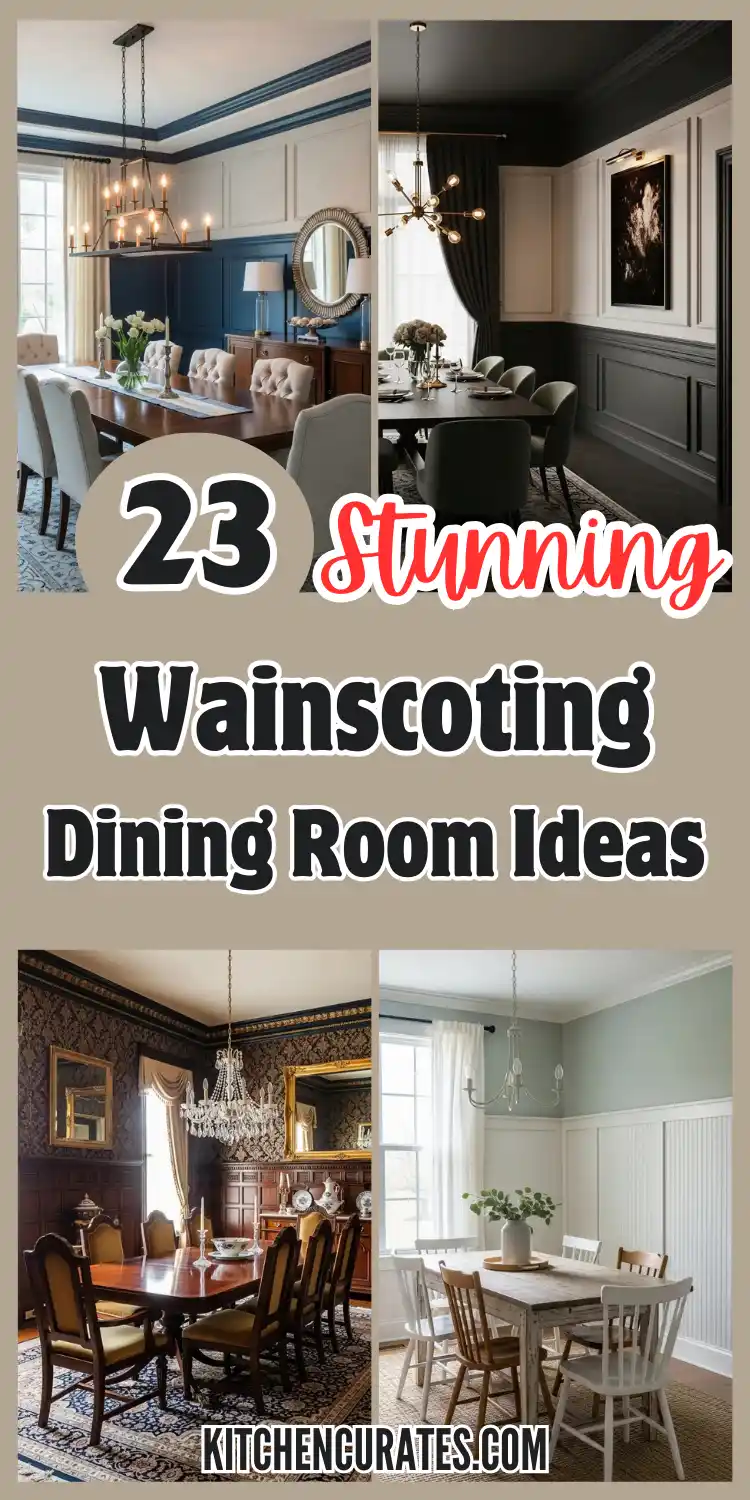
When my cousin asked me to help redesign her dining room, she was frustrated with its dated, bare walls.
She wanted something stylish that didn’t require a complete renovation, which is when we explored wainscoting dining room ideas.
Wainscoting adds depth and texture while subtly dividing the wall, creating a polished yet welcoming environment.
By mixing classic panel designs with modern colors, the room felt simultaneously timeless and fresh, proving small design elements can make a huge impact.
Now her dining space feels elegant, functional, and layered with personality, making every meal feel like a special occasion.
Why Choose Wainscoting for Your Dining Room
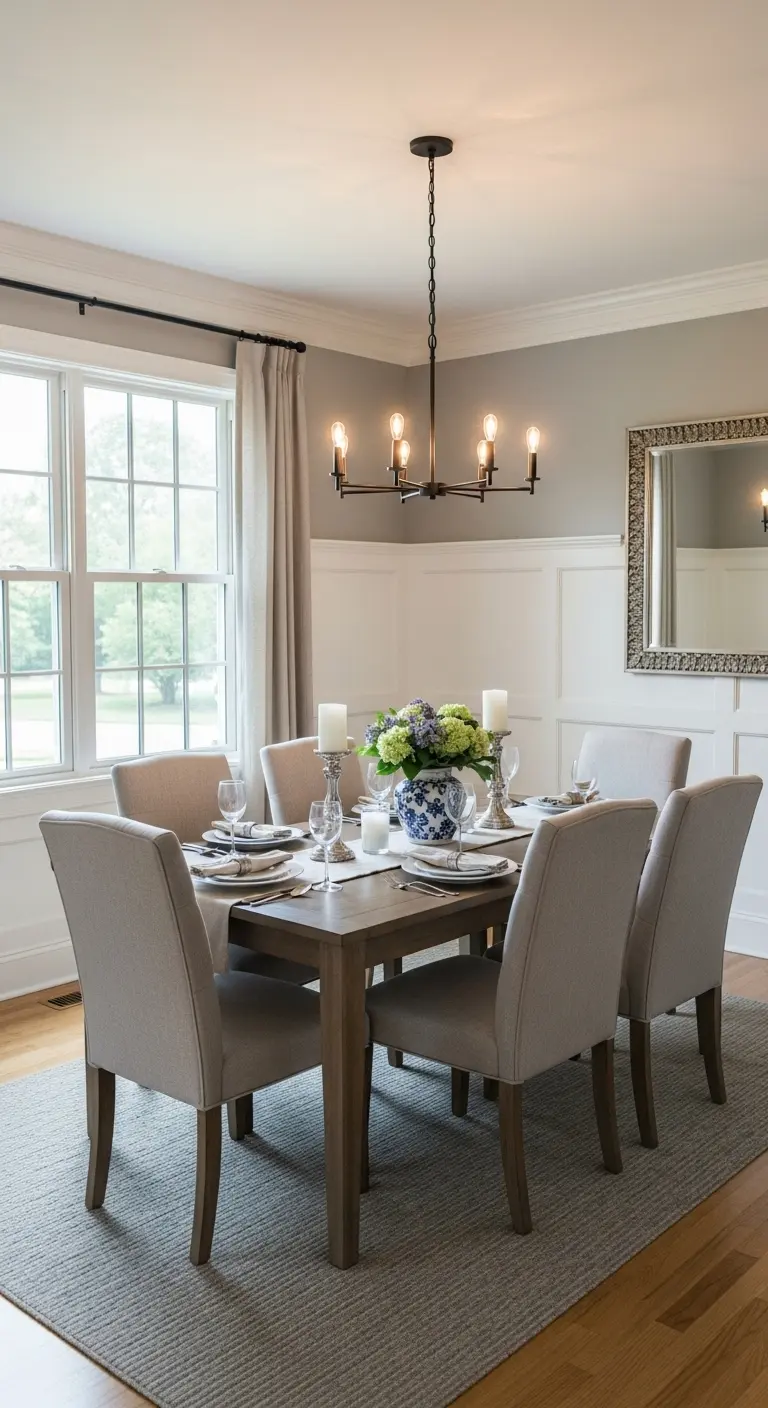
Wainscoting instantly adds elegance and architectural interest that paint alone cannot achieve.
It visually divides the space, making the room feel intentional, organized, and welcoming.
The right panel height, finish, and style can completely transform the ambiance and make the dining area appear taller and more spacious.
It also allows homeowners to experiment with color and texture without overwhelming the room’s design.
From ornate Victorian panels to sleek, modern designs, wainscoting can match nearly any aesthetic or furniture style.
Proper placement near dining tables or buffet areas highlights key features and creates a focal point that draws attention naturally.
Materials and Styles to Consider
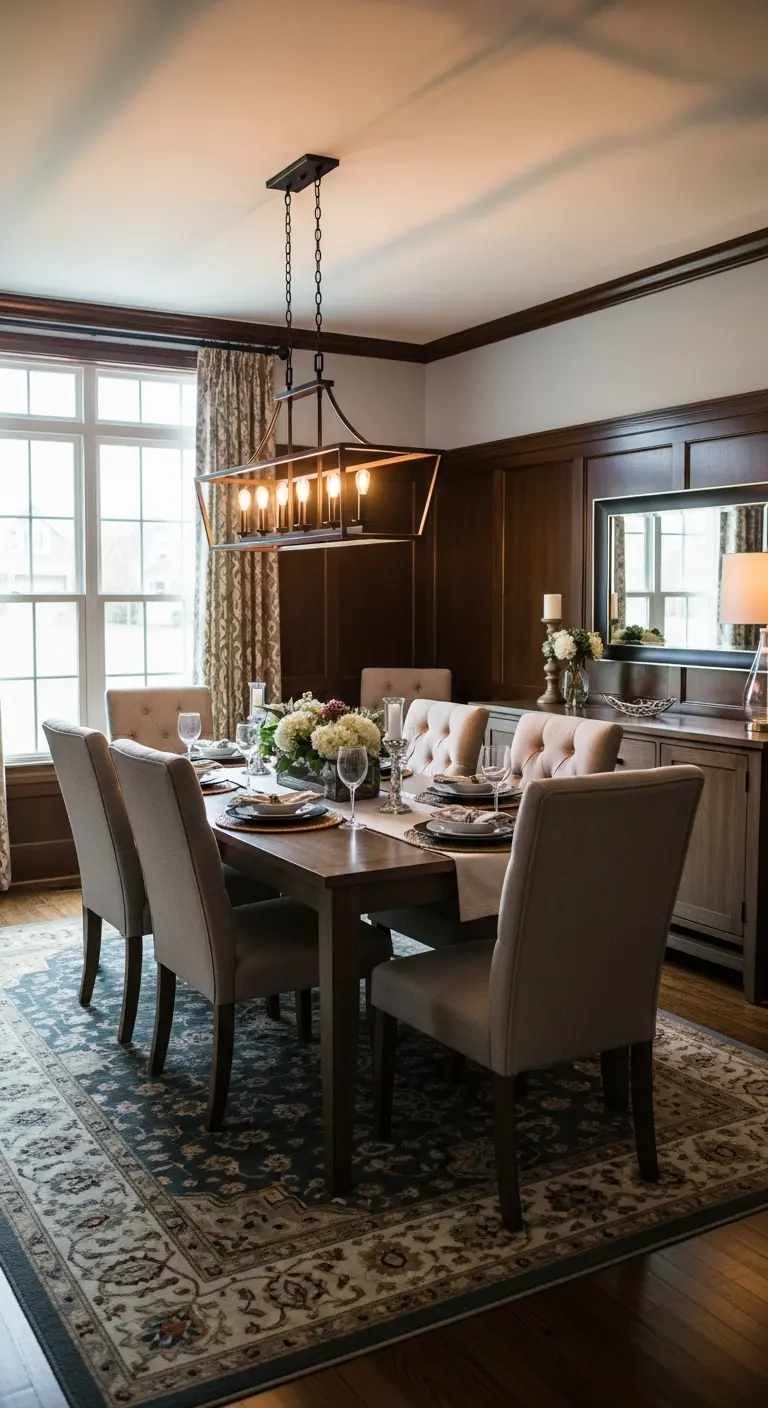
Wood is a timeless choice for wainscoting, offering warmth, durability, and a wide range of finishes.
MDF panels provide a smooth, budget-friendly option that is easy to paint and maintain.
Beadboard panels are a classic choice, perfect for cottage, farmhouse, or casual dining rooms.
Mixing materials, such as wood with fabric or wallpaper inserts, allows homeowners to customize the space.
Panel types—raised, recessed, or flat—let you tailor the look to match your room’s architecture and personal taste.
Understanding materials and styles ensures your wainscoting complements your dining room while maintaining long-lasting elegance.
23 Wainscoting Dining Room Ideas
Classic White Wainscoting Dining Room
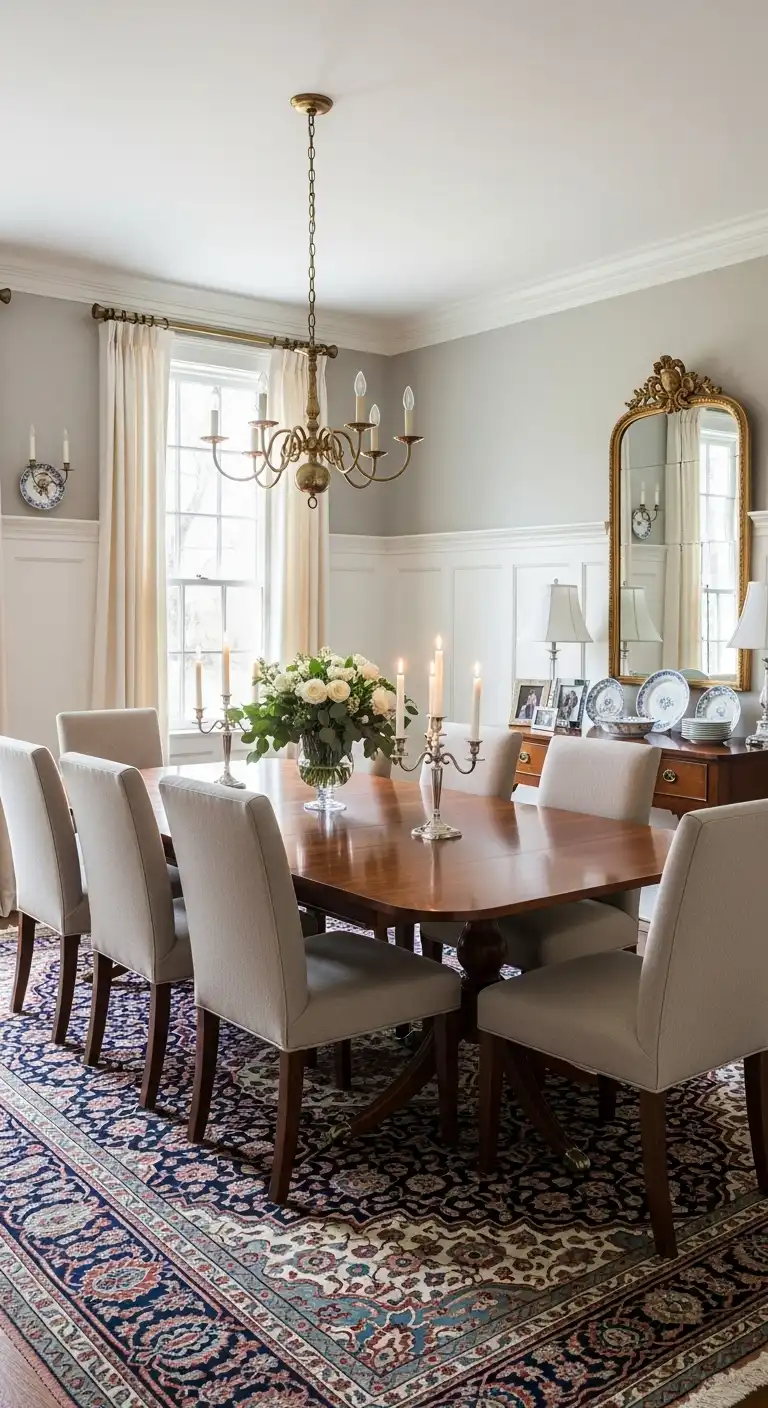
White wainscoting creates a crisp, timeless look that works beautifully in both traditional and modern dining spaces.
Pair it with neutral wall colors to enhance natural light and make the room feel larger.
Gold or brass hardware on furniture and lighting adds subtle sophistication and reflects elegance effortlessly.
A wooden dining table with upholstered chairs balances the crispness of the panels while adding warmth and texture.
White wainscoting also works well with hardwood floors, offering a refined contrast that elevates the entire dining experience.
This classic look remains stylish for decades and pairs well with changing décor trends and seasonal updates.
Dark Painted Wainscoting for Drama
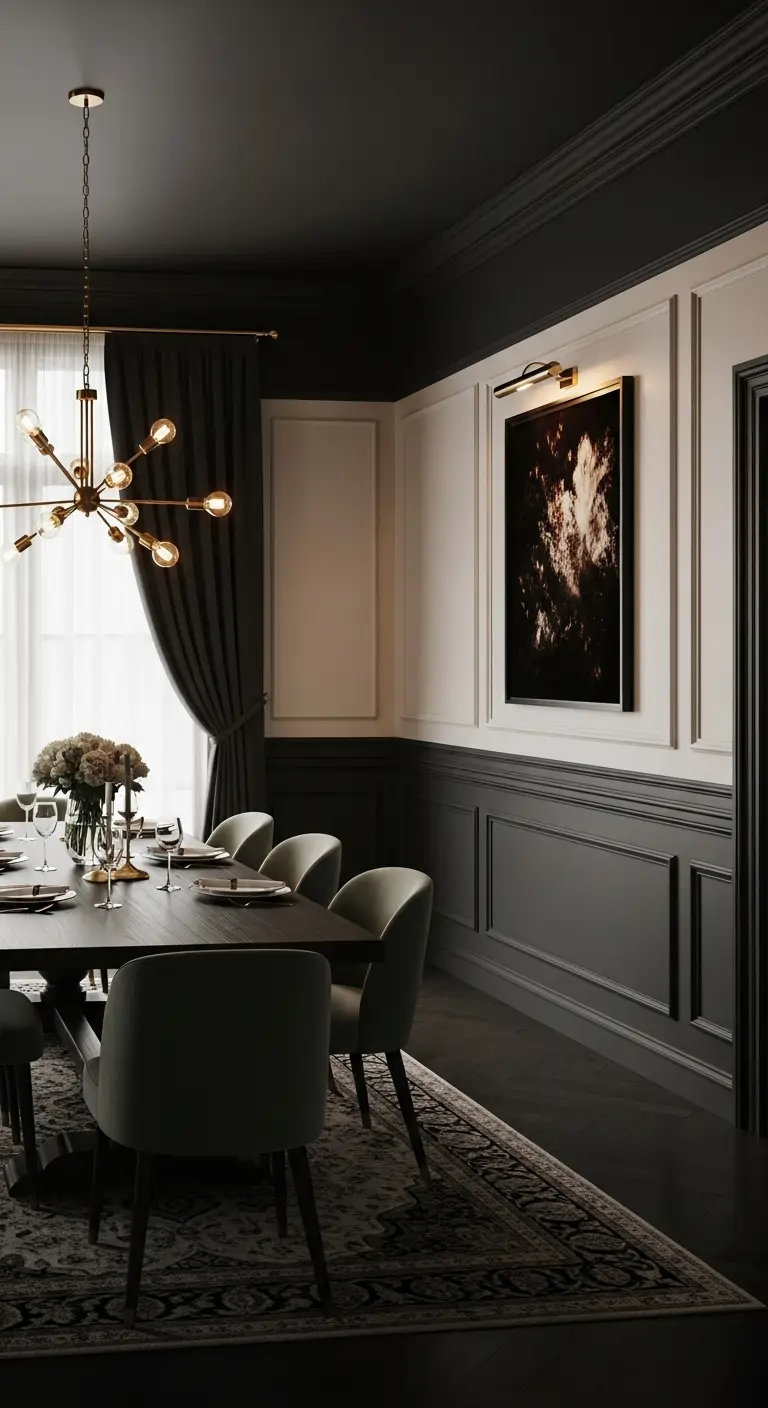
Dark wainscoting creates depth and a dramatic focal point that instantly elevates the dining room.
Colors like navy blue, charcoal gray, or deep forest green add sophistication and make the room feel luxurious.
Keep upper walls light to prevent the space from feeling closed in while still maintaining a bold statement.
Reflective lighting, metallic accents, and mirrors help balance the darkness and keep the room vibrant and welcoming.
Pairing dark panels with mid-century or traditional furniture enhances the richness and ensures a cohesive aesthetic.
This approach works best for formal dining rooms that aim to impress and create an unforgettable atmosphere.
Two-Tone Wainscoting Dining Room
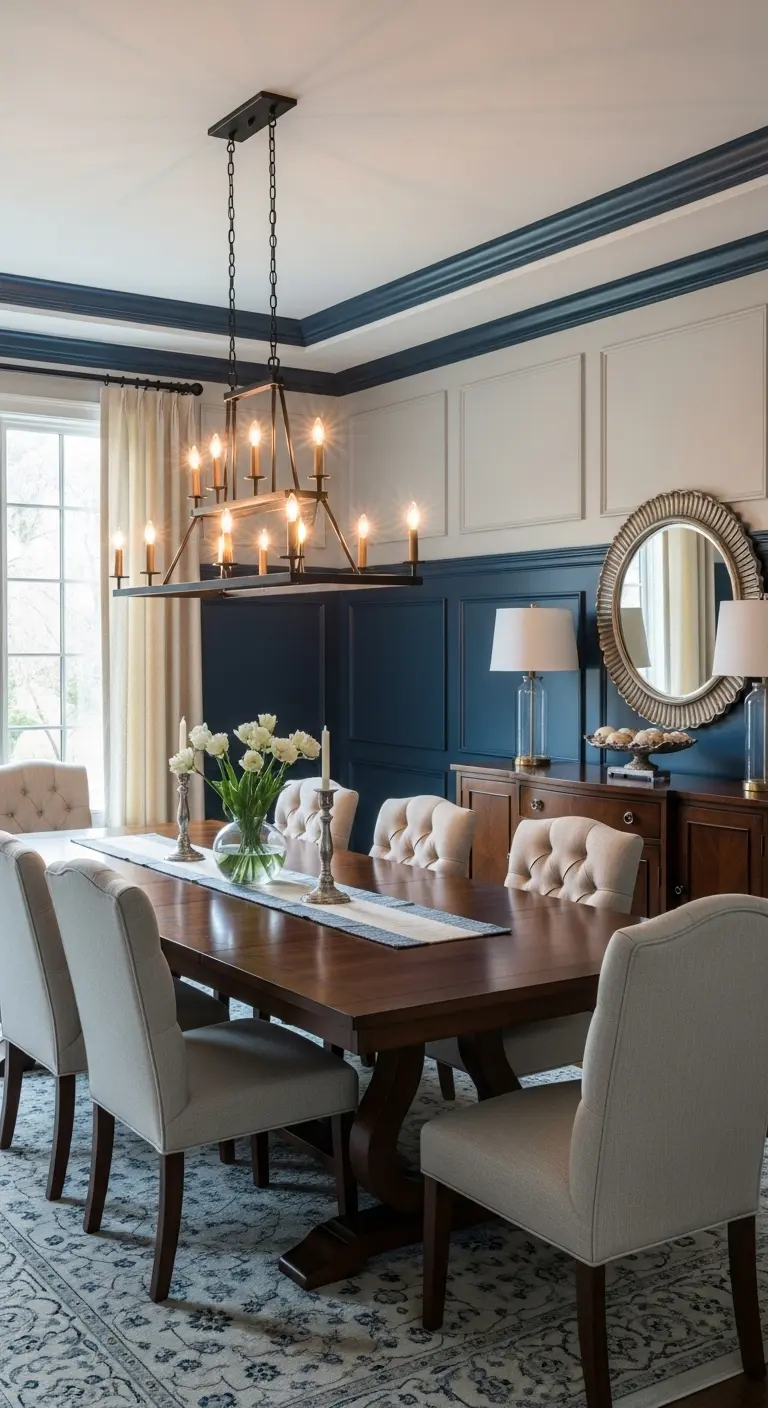
Two-tone wainscoting introduces a playful yet sophisticated look with complementary or contrasting colors.
Soft gray panels with pastel upper walls create a subtle, elegant combination for modern or transitional spaces.
Adding coordinating textiles, such as table runners or upholstered chairs, helps unify the color palette.
This technique adds depth and character without overwhelming the room, making it visually engaging.
Two-tone wainscoting allows homeowners to experiment with seasonal trends or personal style without committing to a full wall repaint.
It’s a flexible option for dining rooms that require both subtlety and personality.
Beadboard Wainscoting for a Cottage Feel
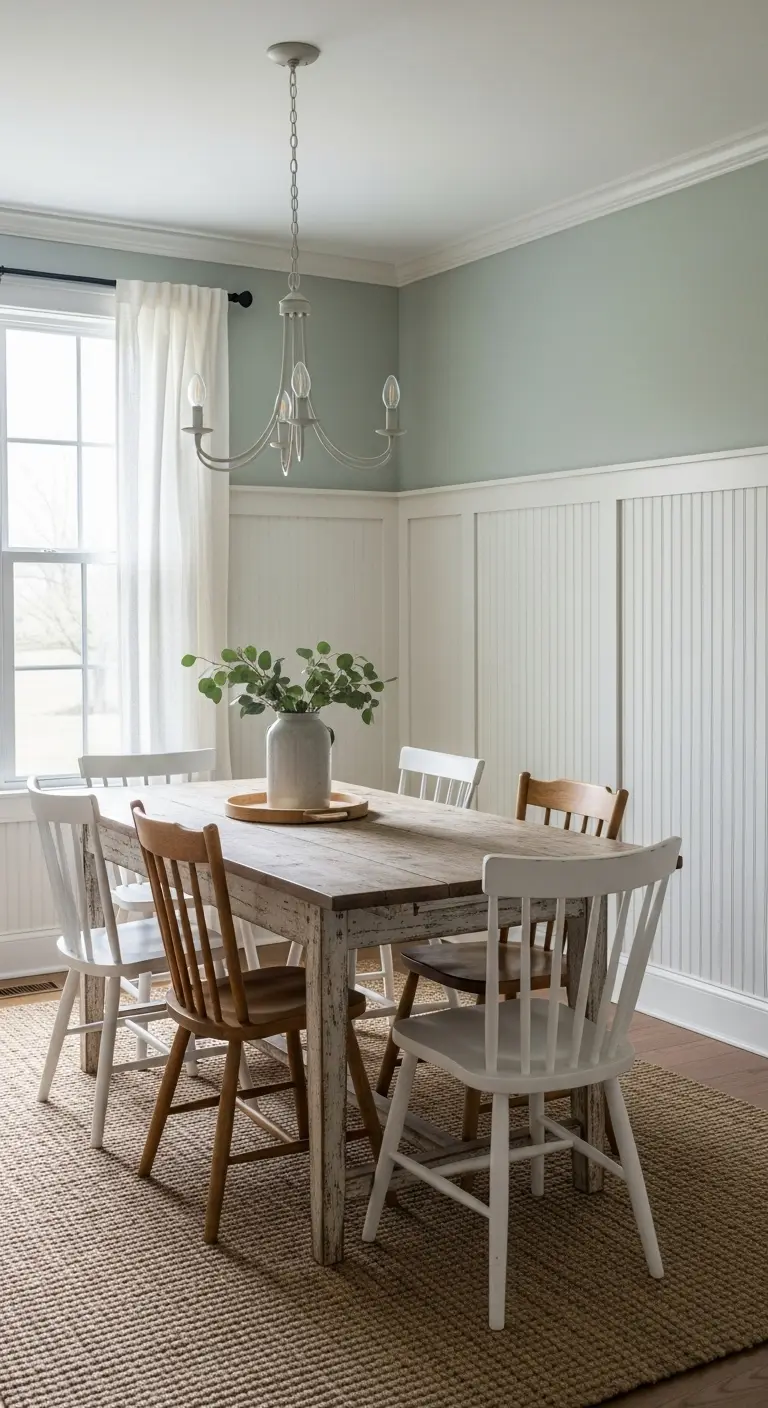
Beadboard panels create a cozy, cottage-inspired charm that feels inviting and homey.
The vertical lines elongate walls, making smaller dining rooms appear taller and more spacious.
Pairing beadboard with vintage wooden furniture or wicker chairs enhances the relaxed, rustic aesthetic.
Neutral or pastel paints maintain the airy, soft vibe that complements traditional and modern design styles alike.
Adding botanical prints or floral artwork above the panels creates a warm, lived-in feel.
Beadboard wainscoting is ideal for casual dining rooms or farmhouse-inspired interiors that embrace comfort and personality.
Victorian-Style Wainscoting Dining Room
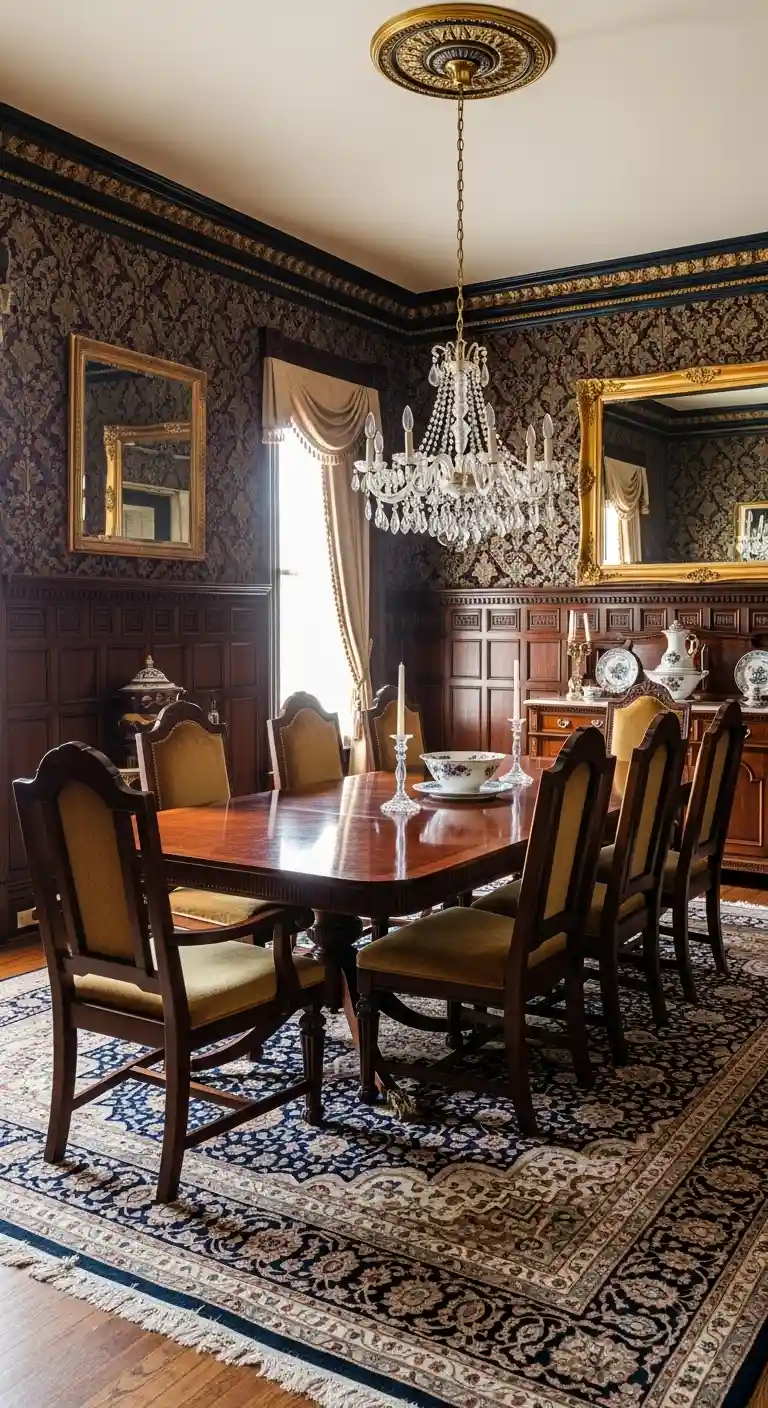
Victorian wainscoting brings ornate details and intricate moldings that add opulence to the dining space.
Rich wood tones, such as cherry or mahogany, create warmth and timeless sophistication.
Pairing with antique dining furniture and gilded accents enhances the luxurious Victorian aesthetic.
Layered textures, from upholstery to curtains, make the room feel grand without being overly stiff.
This style is perfect for formal dining rooms where elegance and historical charm are desired.
Victorian wainscoting exudes classic beauty, making the space feel intentionally curated and memorable.
Modern Minimalist Wainscoting
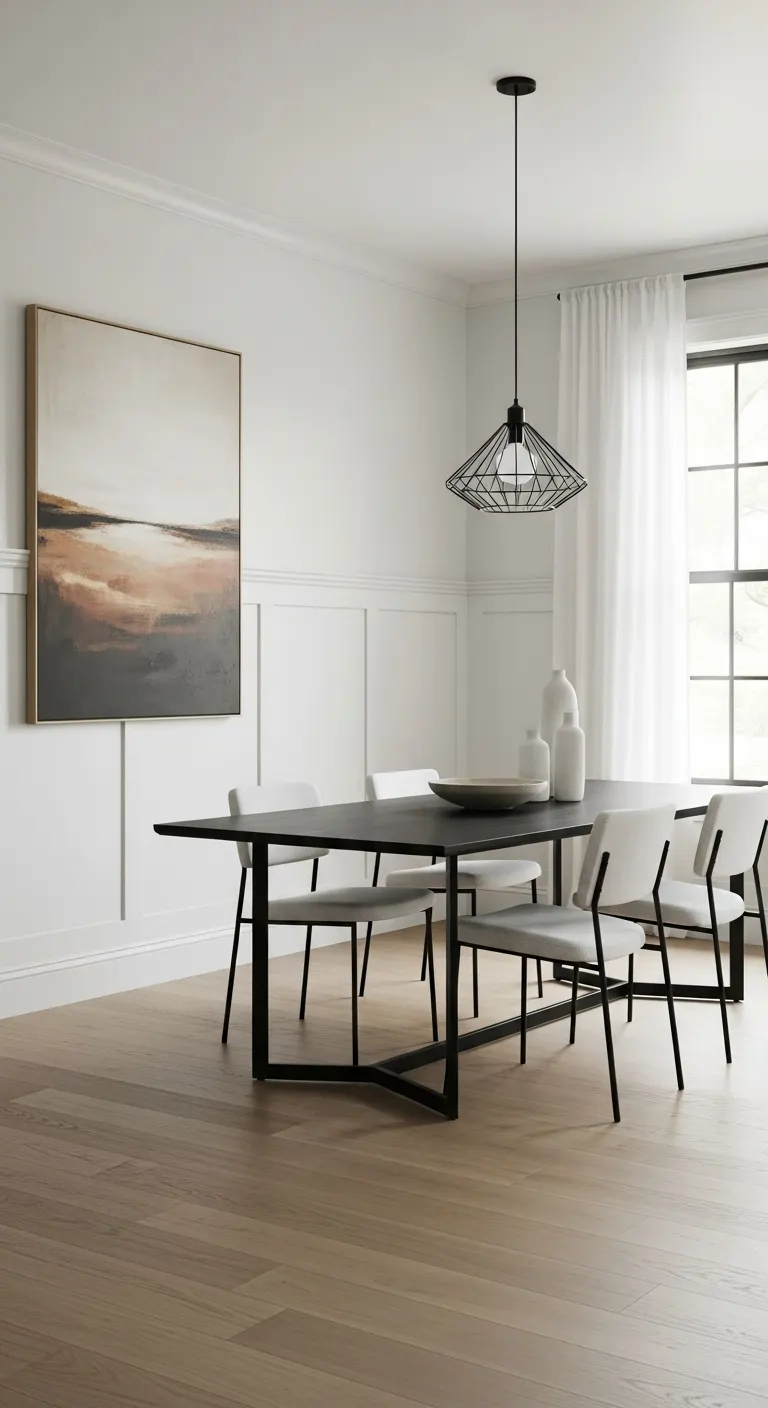
Minimalist wainscoting emphasizes clean lines, simple panels, and understated finishes for a contemporary look.
It complements modern dining rooms by adding structure without overwhelming the space.
Pair it with monochromatic furniture and subtle accessories to create a serene and cohesive atmosphere.
Metallic or glass décor adds a hint of shine and sophistication without cluttering the room.
Minimalist panels enhance architectural proportions while keeping the space airy, balanced, and effortlessly elegant.
This style works well for both open-concept layouts and compact dining areas.
Wainscoting with Wallpaper Inserts
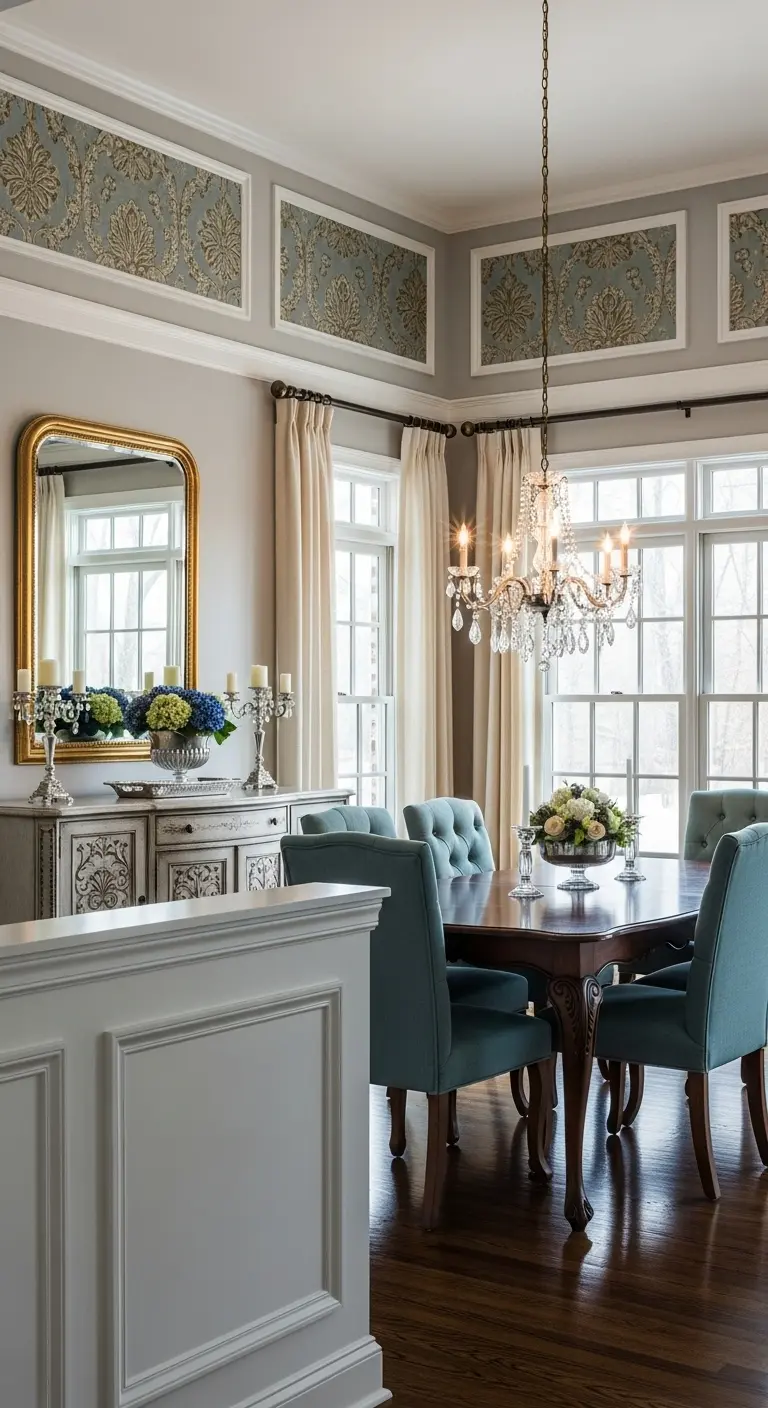
Wallpaper inserts above or within panels add personality and a unique focal point to the dining room.
Choose patterns that harmonize with your furniture and existing color palette to avoid visual clutter.
Floral, geometric, or metallic designs can make bold or subtle statements depending on your style preference.
This technique allows experimentation without permanent changes, making it easy to refresh the space over time.
Wallpaper inserts paired with simple wainscoting create an elevated, eye-catching feature wall in any dining area.
It’s ideal for homeowners who want both charm and individuality in their interior design.
Rustic Wood Wainscoting Dining Room
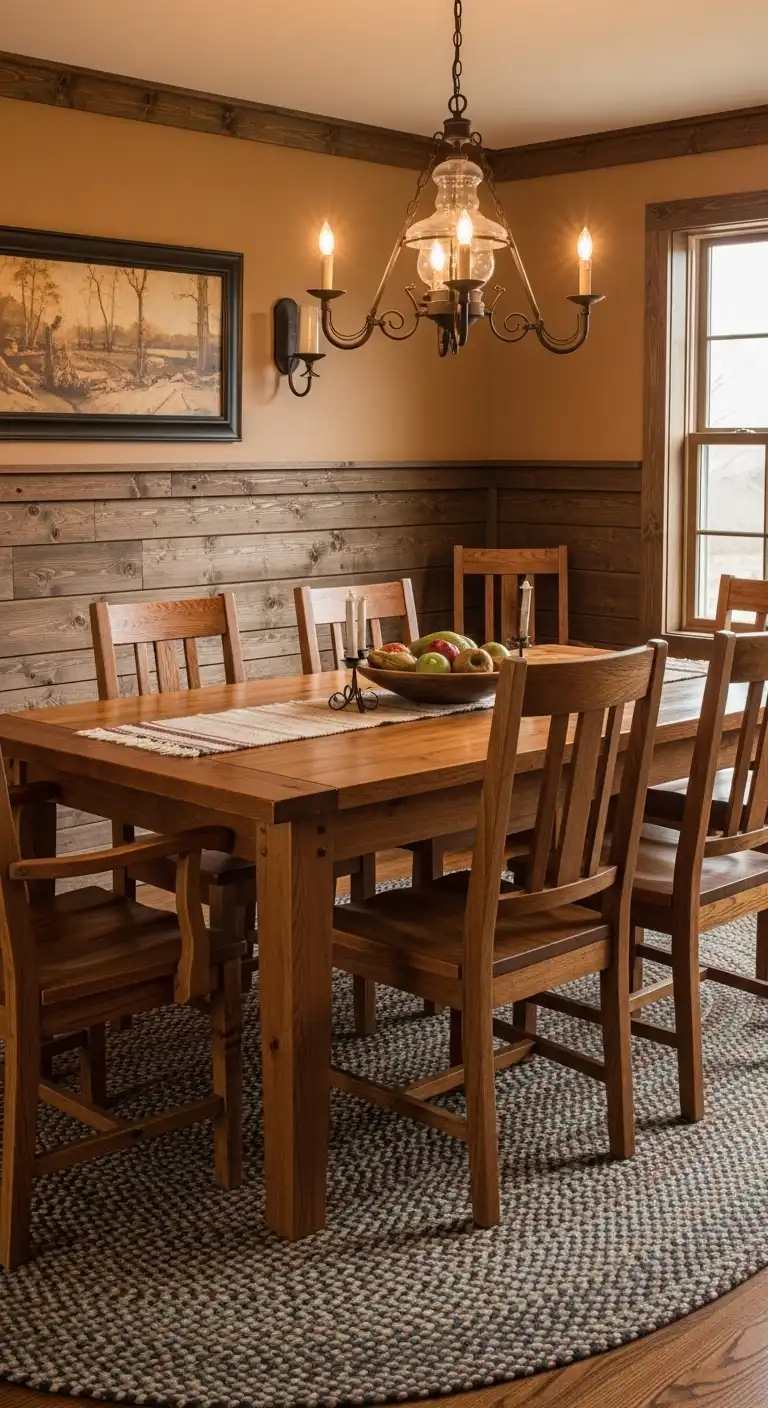
Raw or reclaimed wood panels bring warmth and natural texture to a dining room.
Pair rustic wainscoting with farmhouse tables or textured accessories to create a welcoming atmosphere.
Earth-toned rugs, woven baskets, and soft textiles enhance the relaxed, approachable vibe.
Wood panels add tactile appeal and character, inviting guests to linger comfortably in the space.
Rustic wainscoting works in both casual and open-plan dining rooms, grounding the area with timeless charm.
This style merges simplicity with elegance, achieving a balanced, lived-in look.
Wainscoting with Bold Wall Colors
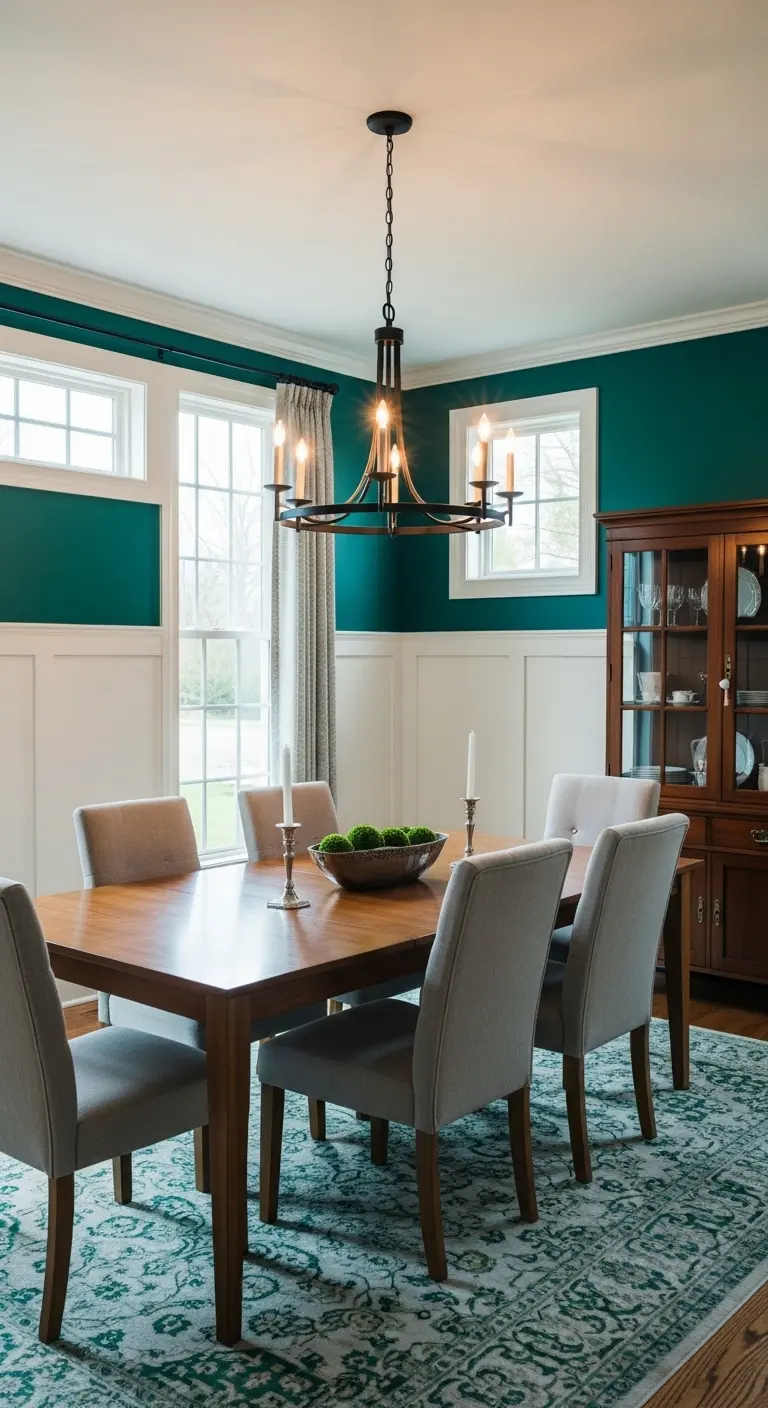
Pairing classic panels with vibrant wall colors adds energy and focus to your dining space.
Deep teal, burnt orange, or mustard hues make the room feel exciting yet refined.
Neutral furniture balances bold walls, preventing the space from feeling chaotic or heavy.
Complementary lighting or metallic accents bring cohesion and elegance to the design.
This approach works for both traditional and modern interiors, highlighting wainscoting while adding personality.
Bold wall colors emphasize architectural features, creating a dynamic and engaging dining environment.
Picture Frame Wainscoting
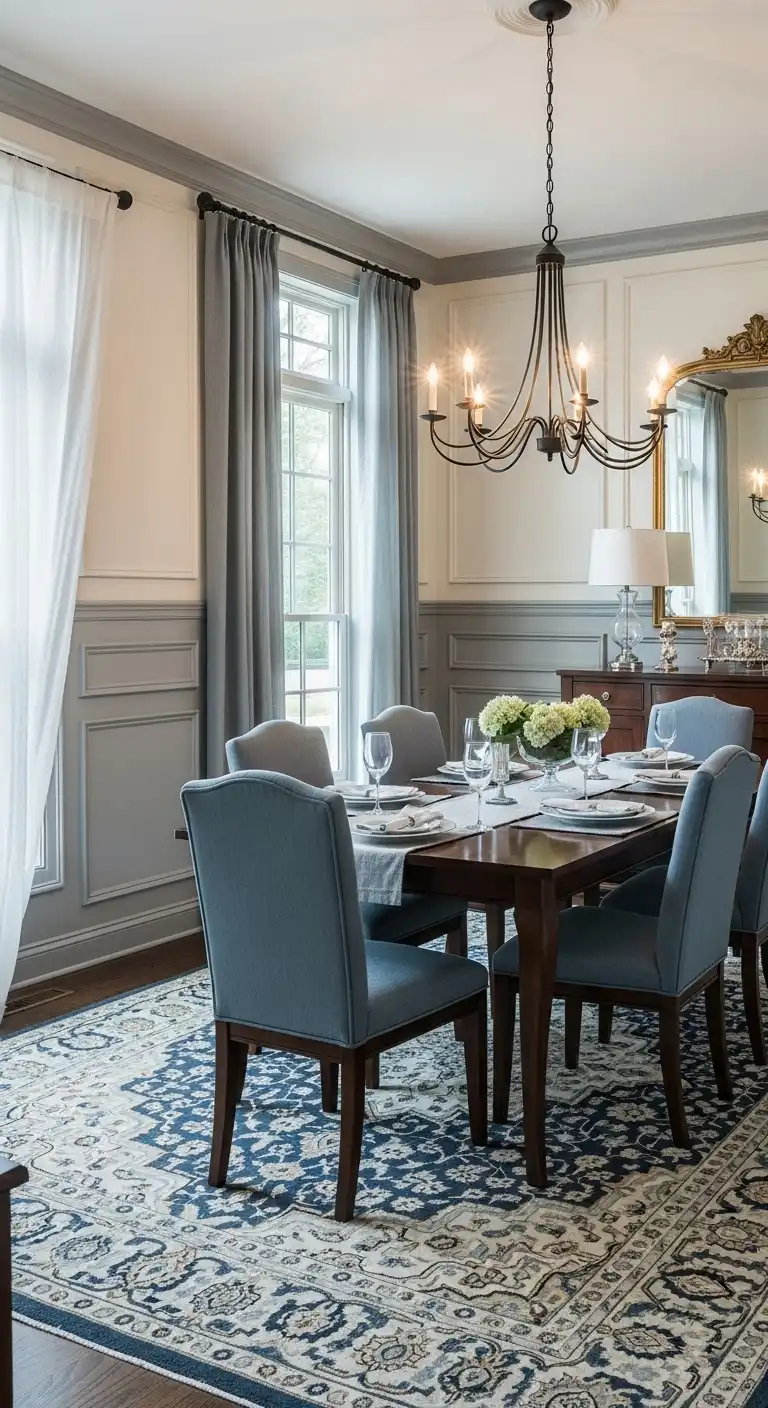
Picture frame wainscoting uses rectangular panels to create a structured, gallery-like effect.
It adds dimension while allowing creative displays of artwork, mirrors, or framed photographs.
This style works well in rooms with high ceilings, making the space feel intentional and elevated.
Painting panels in bold or neutral shades allows customization to match furniture and décor.
Picture frame wainscoting elevates the room’s aesthetic, transforming simple walls into a sophisticated focal point.
It offers versatility for both modern and traditional dining areas.
Shiplap Wainscoting Dining Room
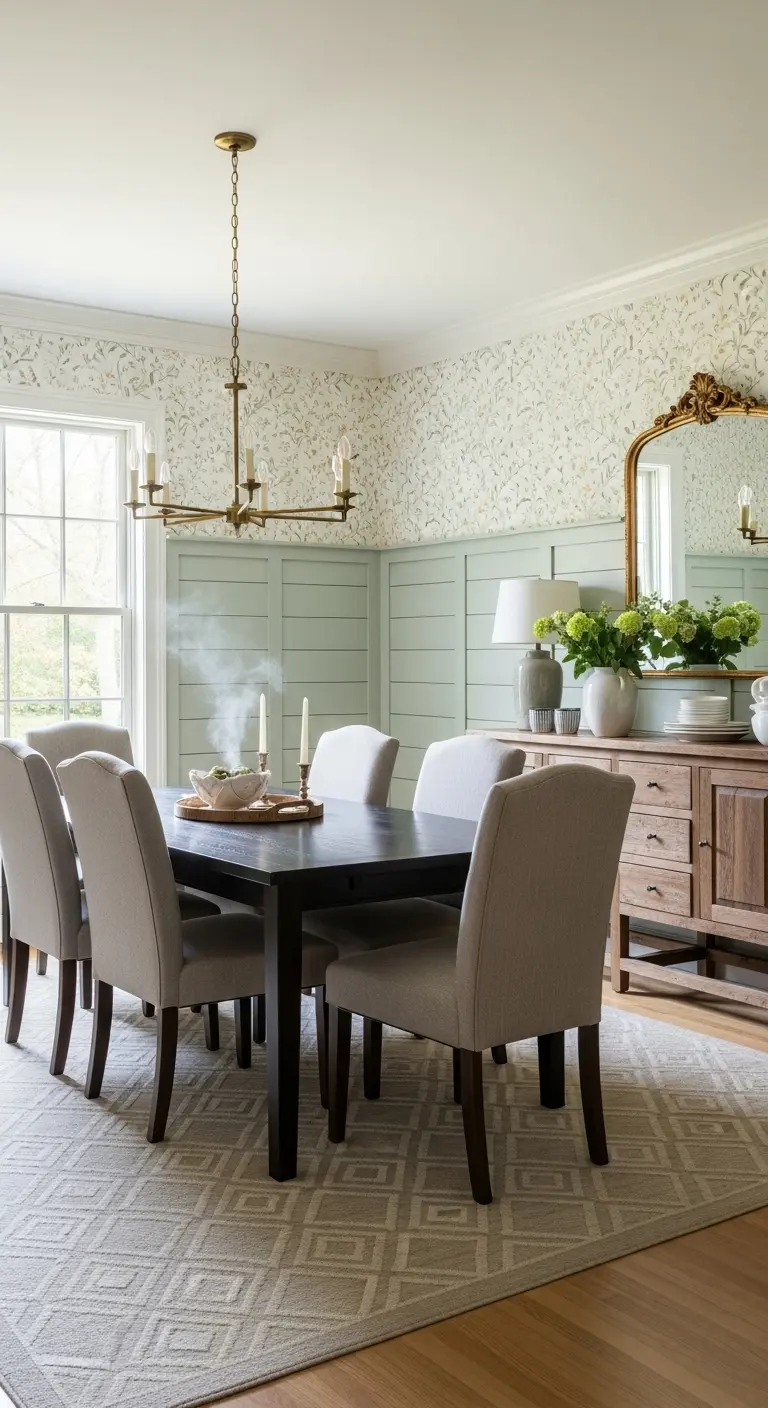
Shiplap panels bring a relaxed, coastal-inspired charm to the dining room without feeling overly casual.
The horizontal lines create visual interest and make the space feel wider and more expansive.
Pair shiplap with light, airy colors such as soft whites, creams, or pale blues for a beachy, inviting atmosphere.
Rustic wooden tables and linen textiles enhance the tactile appeal and cozy vibe of the room.
Shiplap wainscoting works perfectly in open-plan homes or traditional dining areas that aim to combine warmth with elegance.
It’s an ideal choice for homeowners who want subtle texture without sacrificing sophistication or structural design.
Glossy Painted Wainscoting
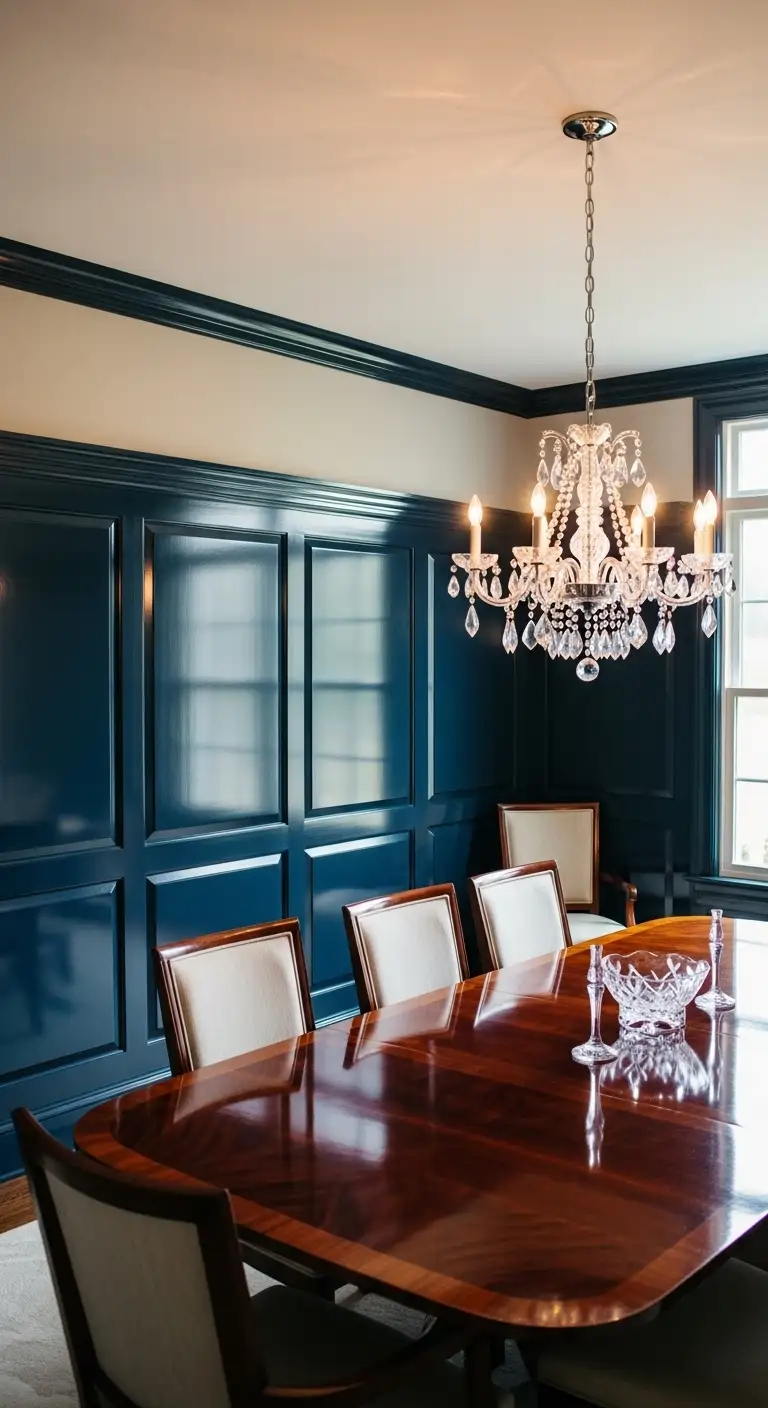
Glossy finishes on wainscoting add a touch of glamour and create a reflective surface that brightens the dining room.
Colors like deep navy, emerald green, or classic black bring boldness while still feeling refined.
Pair glossy panels with matte furniture or soft textiles to maintain balance and prevent visual overload.
This finish also makes cleaning easy, protecting the wall from food splashes and everyday wear.
Glossy painted wainscoting works well in both contemporary and traditional spaces, giving walls a polished, high-end feel.
The reflective quality enhances natural light and makes the room appear larger and more inviting.
Two-Height Wainscoting Dining Room
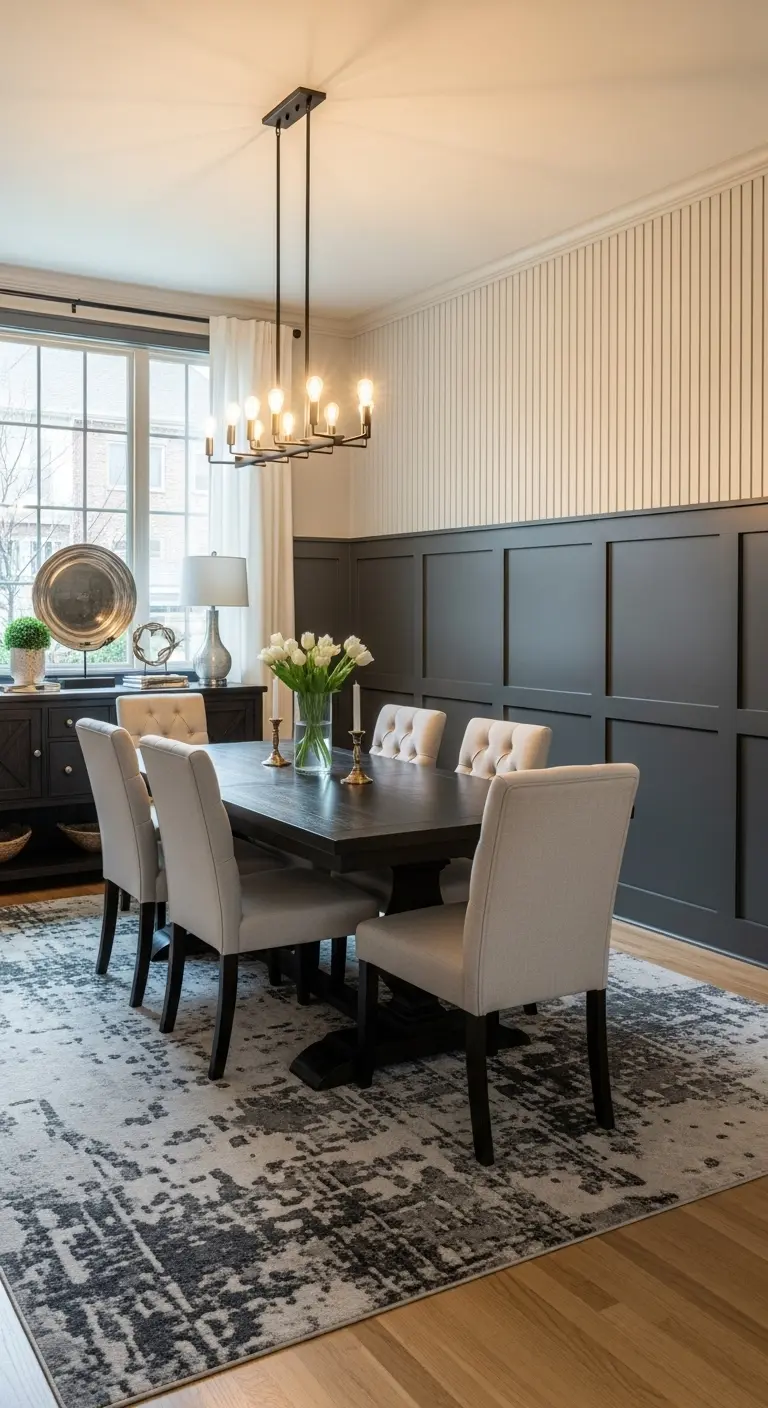
Two-height panels introduce a layered, structured aesthetic that adds sophistication to the dining area.
Lower panels can be simple and functional while upper panels incorporate decorative moldings for elegance.
This technique allows creativity with paint colors, finishes, and textures while maintaining cohesion in the room.
Pairing furniture and lighting with two-height wainscoting creates balance and emphasizes architectural details naturally.
It works particularly well in large dining rooms, helping divide the wall visually without cluttering the space.
Two-height wainscoting is a versatile way to merge classic elegance with modern design sensibilities.
Contrasting Chair Rail Panels
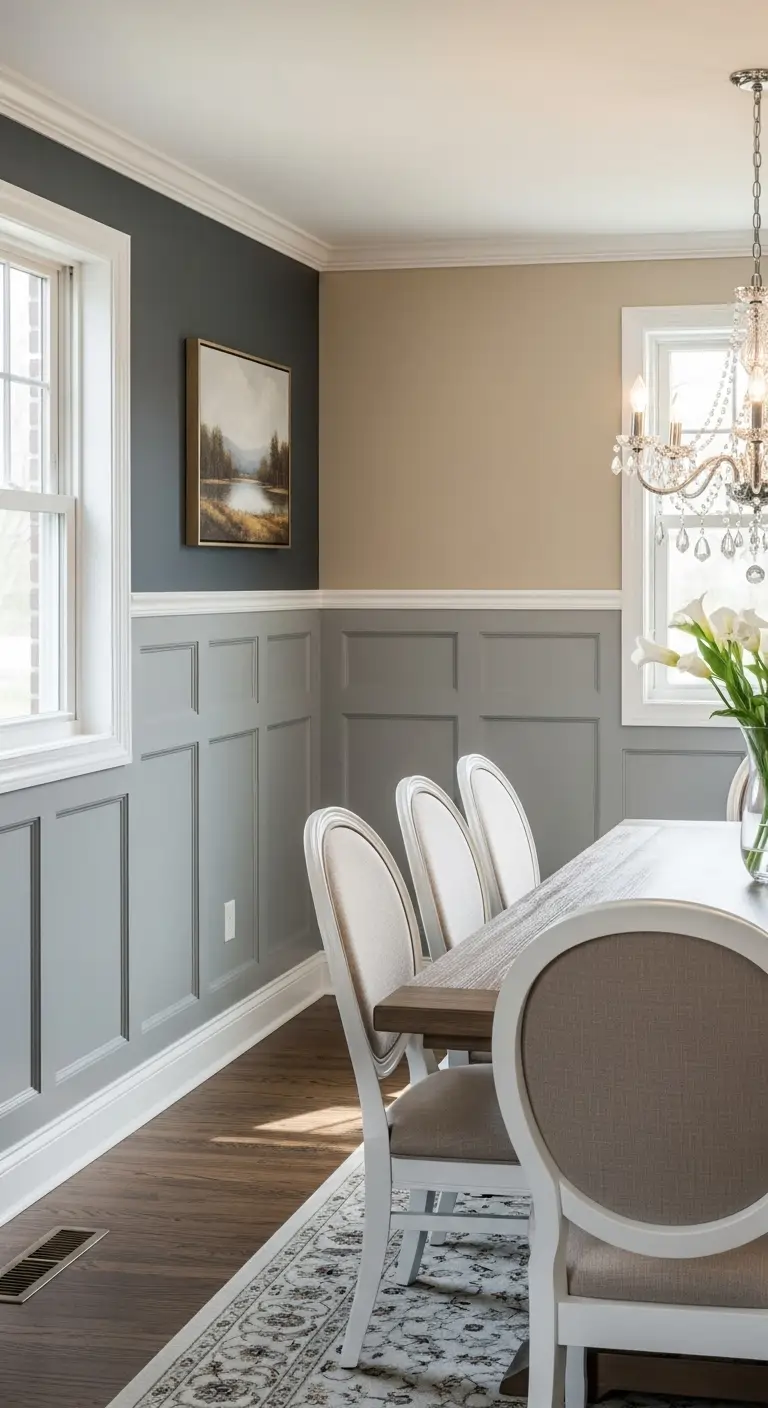
Chair rail panels highlight the elegance of traditional wainscoting while adding practical protection against scratches and scuffs.
Contrast the panel color with the upper wall shade for a visually appealing effect that draws the eye naturally.
Use deep or bold panel colors to create focus while keeping the upper wall neutral or soft.
This design approach adds personality while maintaining balance, suitable for both formal and casual dining rooms.
Decorative molding above the rail enhances the aesthetic appeal and creates continuity with furniture and accessories.
It’s a simple yet effective method to make walls feel dynamic, structured, and intentionally designed.
Floor-to-Ceiling Wainscoting
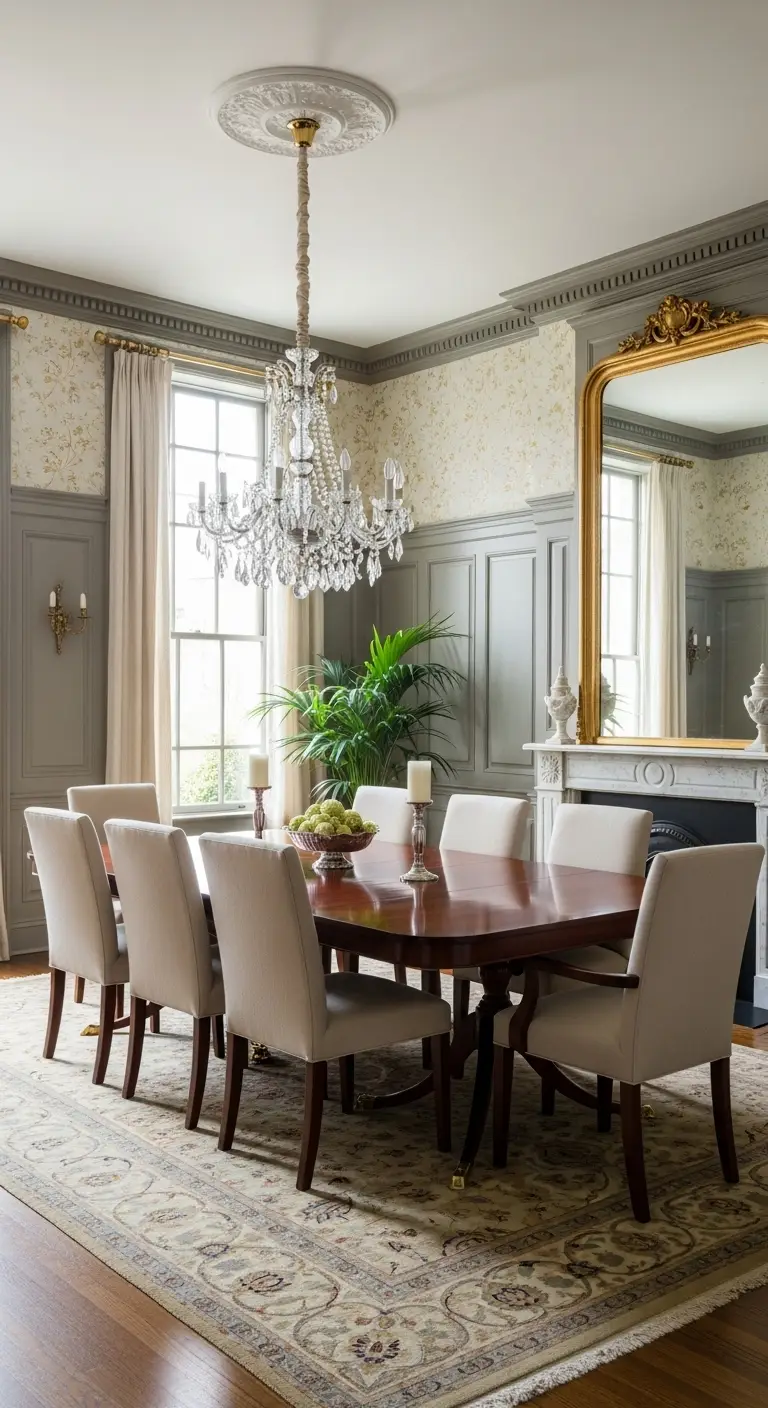
Extending wainscoting from floor to ceiling creates an impressive, dramatic look that feels luxurious and refined.
It’s ideal for formal dining rooms where grandeur and architectural detail are priorities.
Floor-to-ceiling panels can be painted in subtle neutral shades or bold colors depending on desired ambiance.
Pairing with high-quality furniture, statement lighting, and metallic accents completes the sophisticated, curated feel.
This style emphasizes height and structure, making the space feel intentionally designed and visually striking.
It’s a bold choice that works well in high-ceiling rooms or spaces that need a strong focal element.
Textured Wainscoting Panels
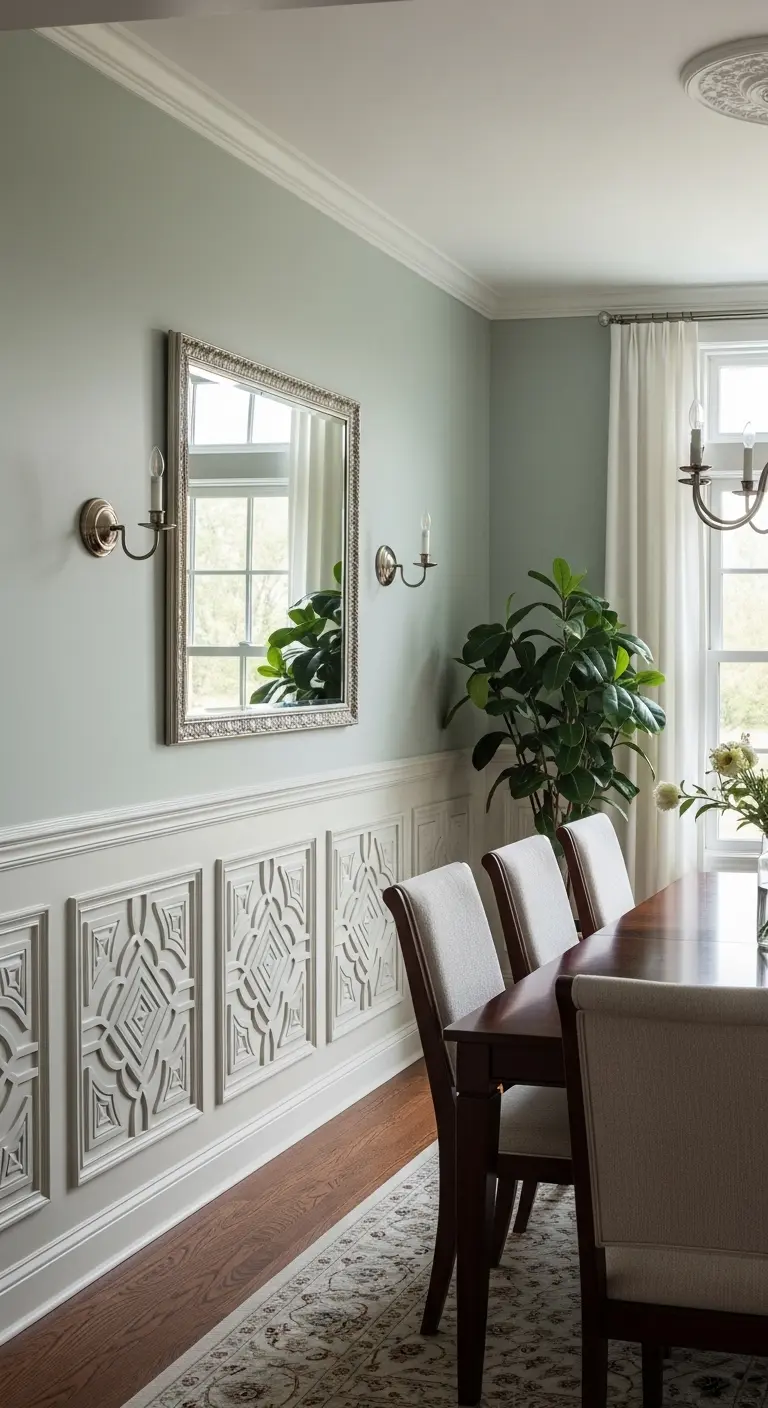
Adding texture to panels elevates the visual interest and makes the dining room feel more layered and dimensional.
Materials like carved wood, beadwork, or embossed finishes create tactile appeal and architectural richness.
Pair textured panels with smooth furniture surfaces and minimal accessories to avoid overwhelming the space.
Neutral tones or muted colors allow the textures to stand out without clashing with other décor elements.
Textured wainscoting adds subtle elegance, transforming plain walls into engaging visual statements.
It works in both modern and traditional dining rooms that aim to balance warmth, sophistication, and interest.
Wainscoting with Built-In Shelving
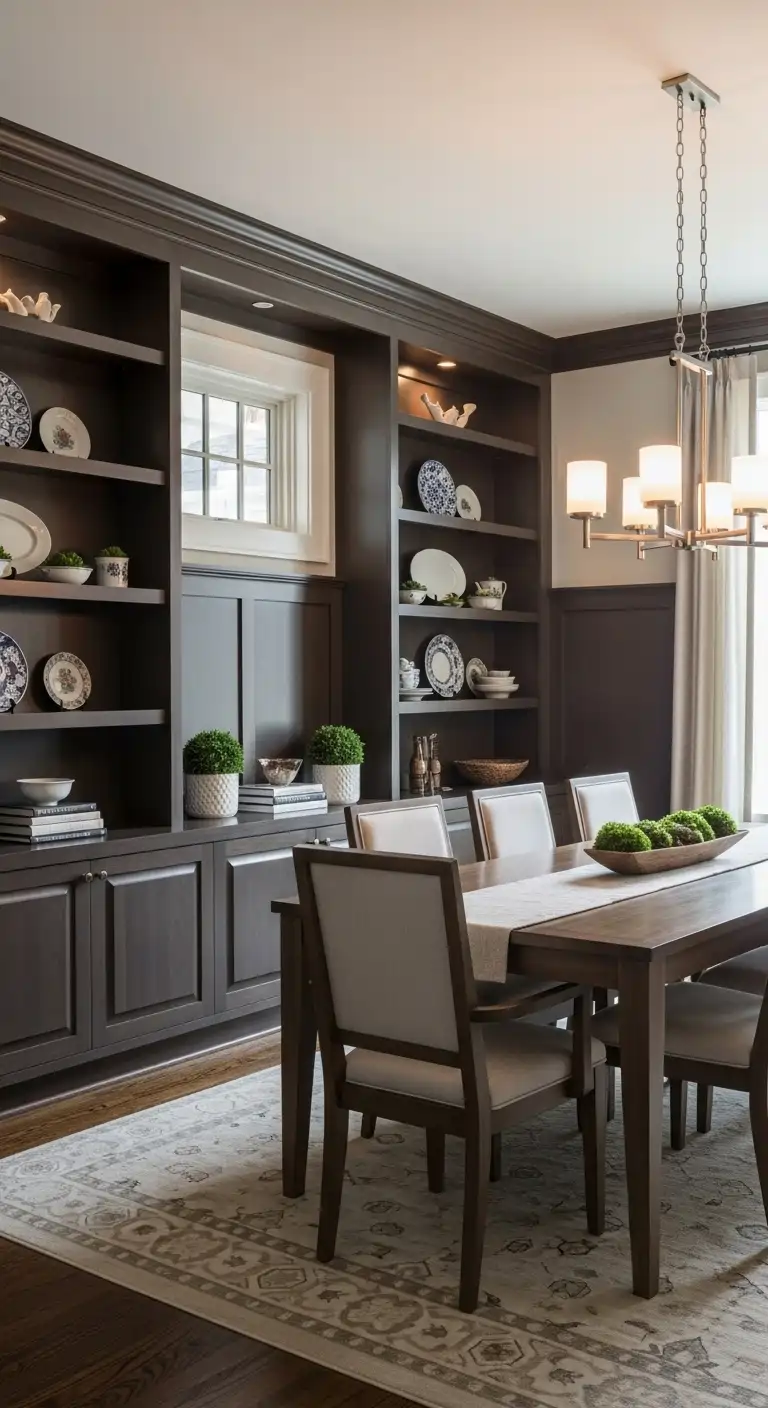
Integrating built-in shelves above or within wainscoting creates a functional and stylish dining area feature.
Display artwork, ceramics, or seasonal décor for a personalized touch that enhances the room’s personality.
Choose complementary panel colors and finishes to ensure cohesion between the shelving and wainscoting design.
This combination maximizes both storage and visual appeal without sacrificing wall space.
Built-in shelves also allow for easy rotation of decorative elements, keeping the dining room fresh and inviting.
It’s perfect for homeowners seeking a functional yet elegant solution that combines style and practicality.
Minimalist Monochrome Wainscoting
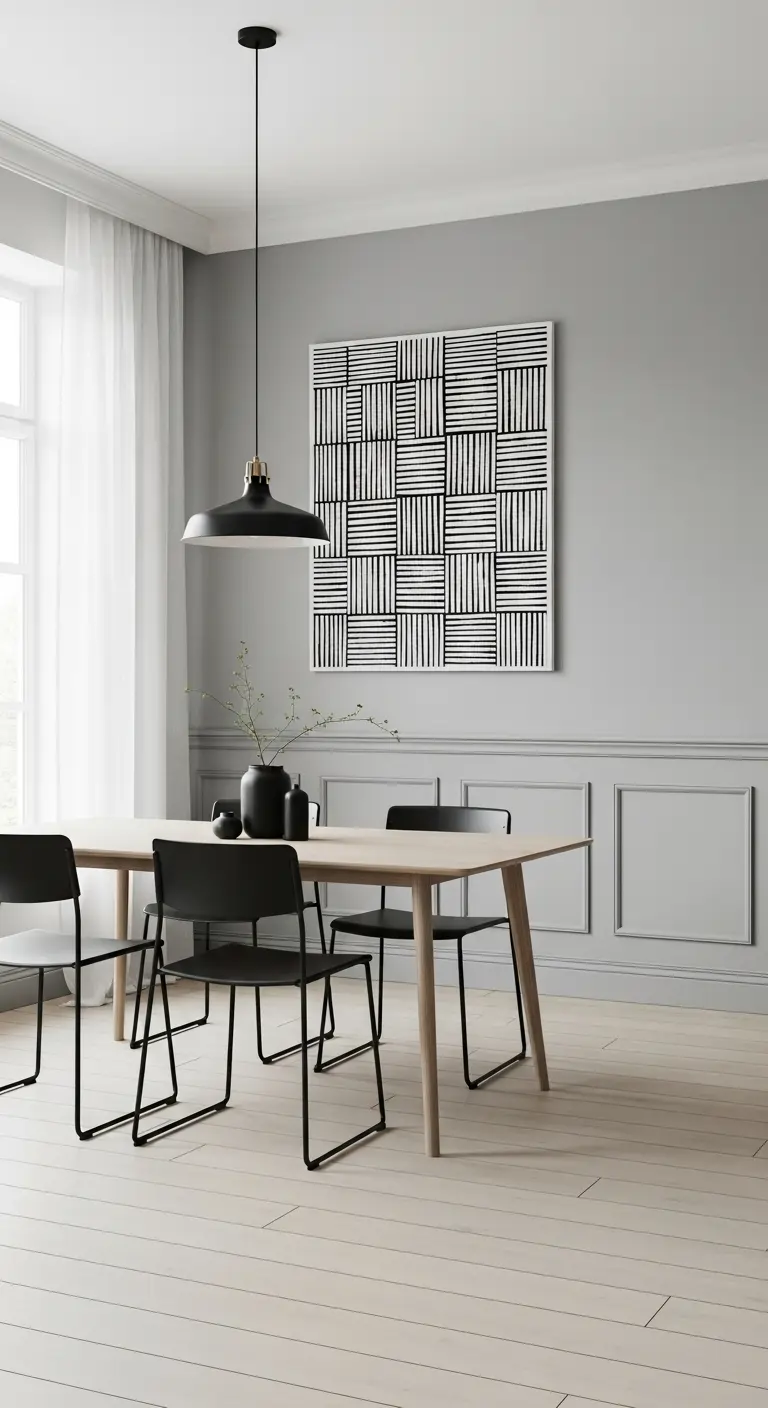
Monochrome wainscoting emphasizes simplicity, creating a serene, cohesive dining space.
Pair the panels with matching walls or slightly lighter tones for subtle dimension without distraction.
This approach complements minimalist furniture and neutral décor, enhancing the room’s calm, inviting atmosphere.
Metallic accents, simple lighting, and understated artwork add personality without overwhelming the space.
Monochrome wainscoting works in modern or transitional dining rooms, creating a sophisticated, cohesive backdrop.
It’s ideal for homeowners who appreciate clean lines and timeless elegance in their interiors.
Patterned or Geometric Wainscoting
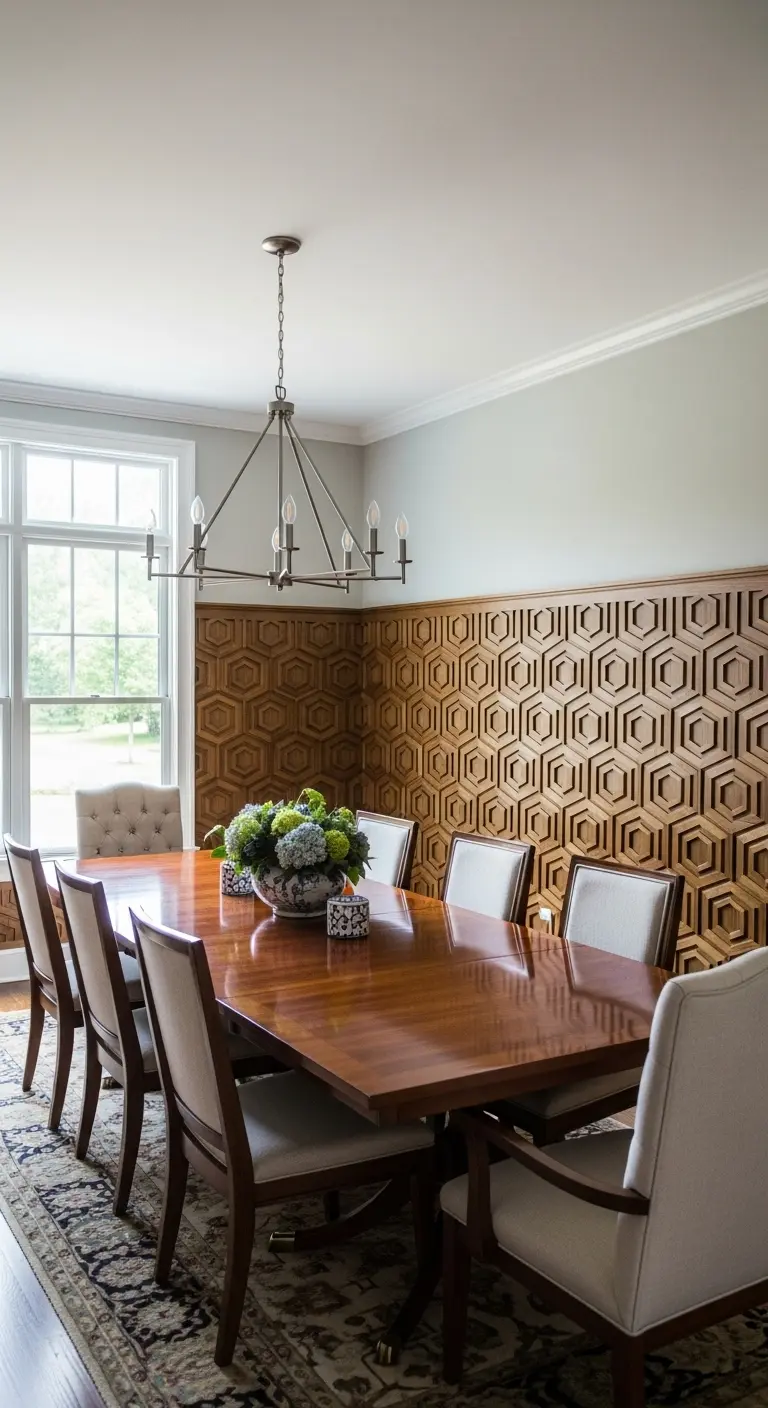
Geometric or patterned panels inject modern flair into a classic feature, making the dining room feel artistic.
Patterns like chevrons, diamonds, or squares add visual rhythm while maintaining structure and balance.
Pair with subtle wall colors or monochrome furniture to ensure the panels remain the room’s focal point.
This approach is perfect for transitional or contemporary dining rooms seeking a bold yet elegant touch.
Patterned wainscoting adds personality and creates a sense of movement and depth along the walls.
It’s an innovative way to blend traditional architecture with modern creativity.
Painted Paneling with Art Display
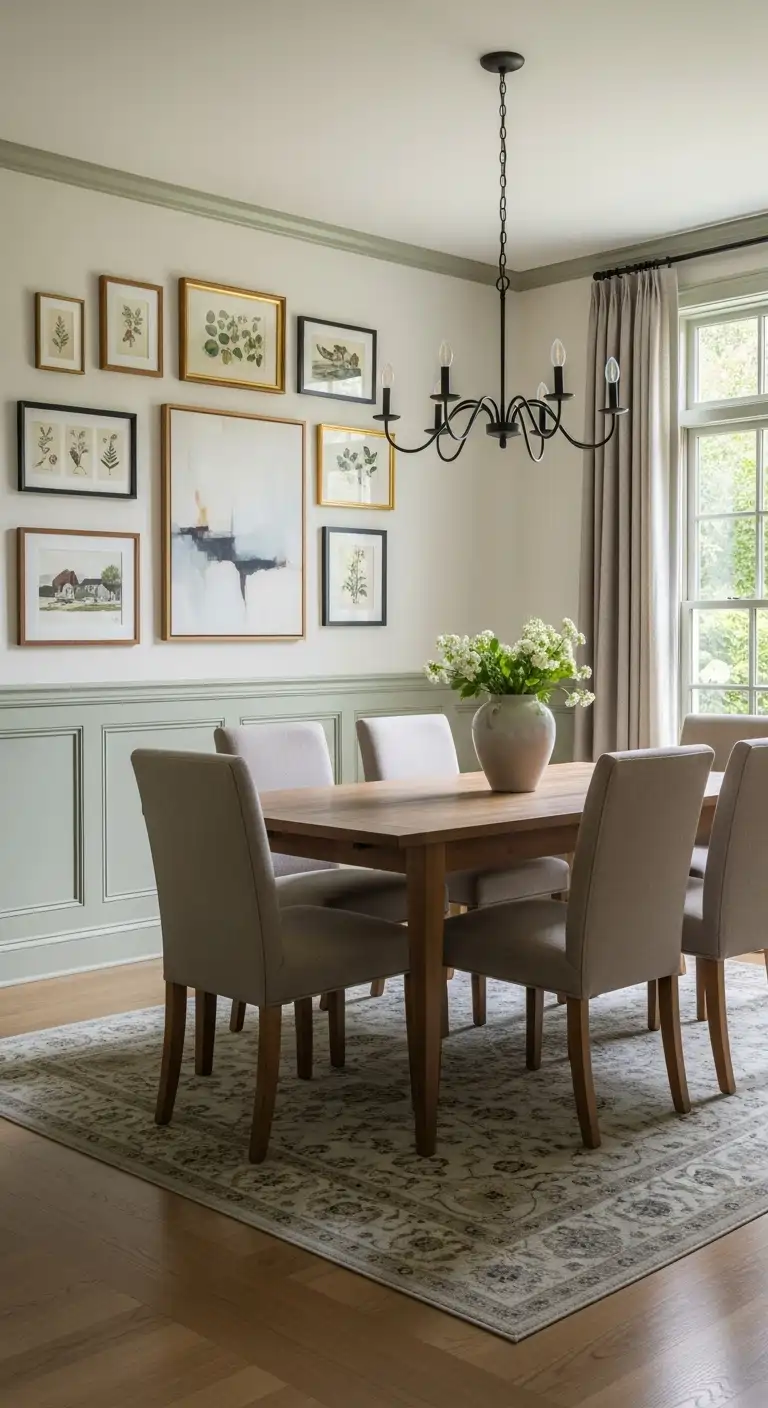
Use wainscoting panels as a backdrop for displaying framed artwork or family photos.
Choosing complementary colors ensures the art stands out without clashing with the room’s décor.
Panels also provide a structured, elevated space to mount art, making the display feel curated and intentional.
This combination of functionality and style enhances the visual impact of the dining room.
Painted panels in muted or bold tones create contrast and focus, emphasizing the artwork naturally.
It’s ideal for homeowners who want to merge personal expression with classic architectural elements.
Rustic Whitewashed Wainscoting
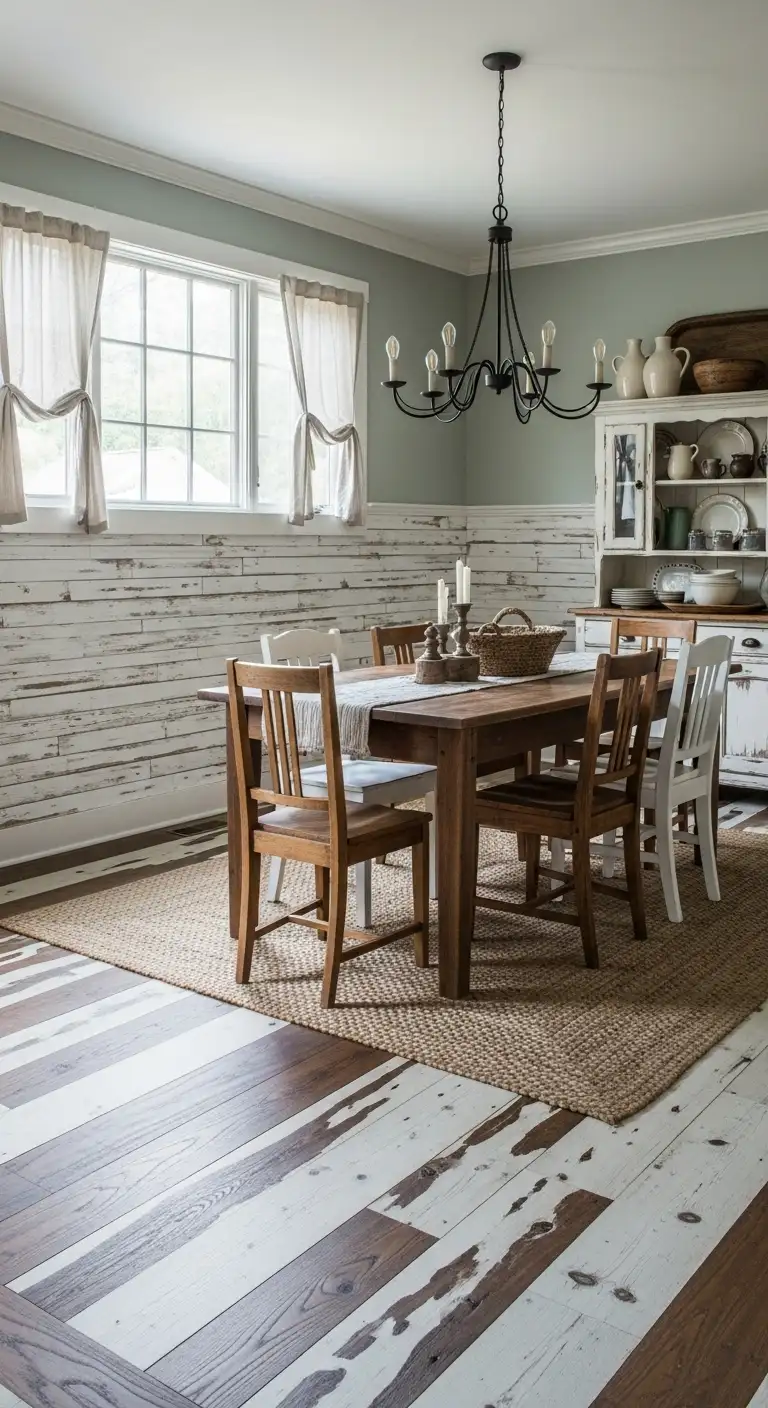
Whitewashed wood panels bring a soft, rustic charm to the dining room, making it feel inviting and relaxed.
The finish highlights natural textures while maintaining a light, airy atmosphere that complements neutral décor.
Pair with wooden furniture, woven textures, and soft textiles for a cohesive, approachable aesthetic.
Whitewashed panels reflect natural light and make the room appear brighter, larger, and more welcoming.
This style works well in farmhouse, coastal, or casual dining spaces, adding warmth and character effortlessly.
Layered Molding Wainscoting
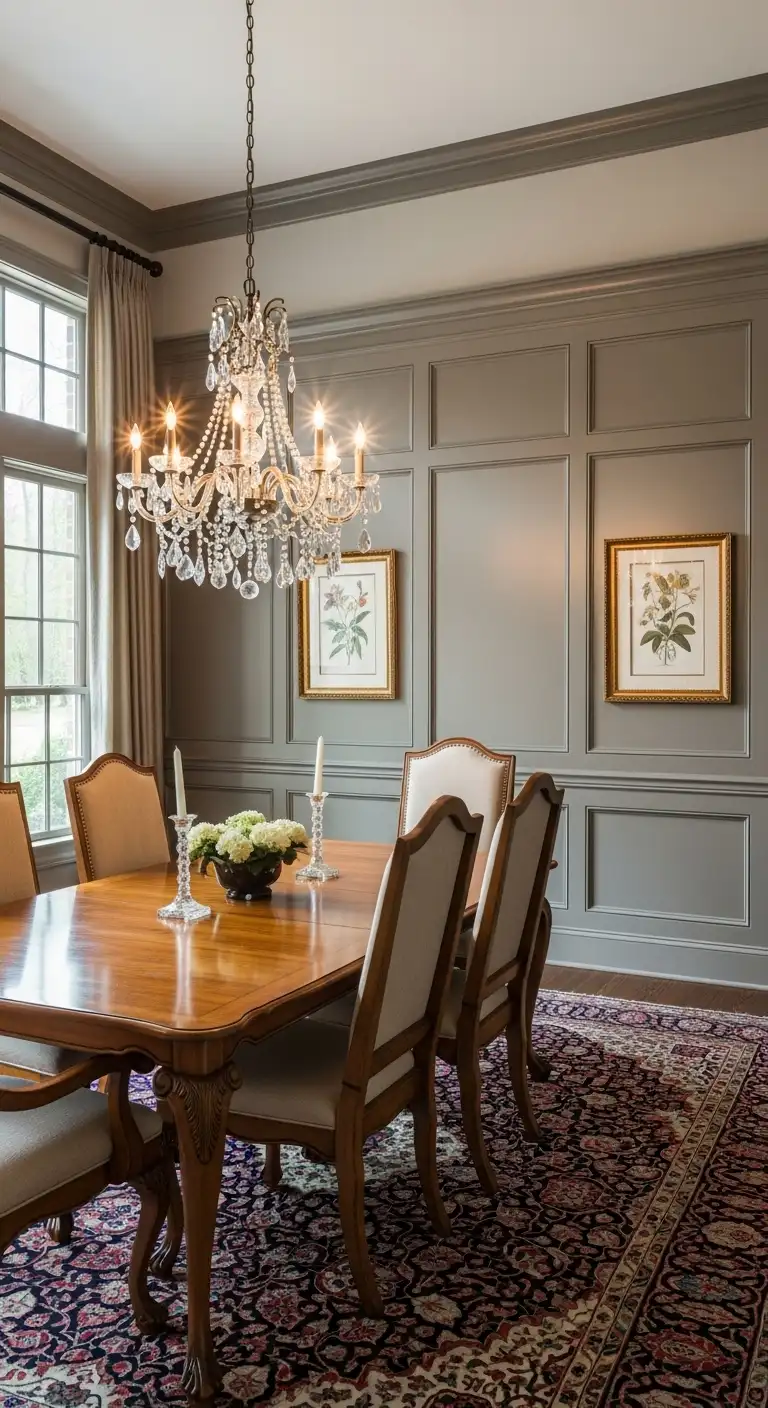
Layered moldings on panels create an intricate, high-end architectural look that elevates the dining room instantly.
Combining multiple molding layers adds dimension and luxury while maintaining structural elegance.
Pair with statement furniture and sophisticated lighting to enhance the room’s visual depth.
This approach works in formal or traditional dining rooms seeking a curated, grand appearance.
Layered molding wainscoting showcases craftsmanship, making walls feel intentionally designed and richly detailed.
It’s a timeless solution that enhances both style and perceived value of the space.
Transitional Wainscoting Dining Room
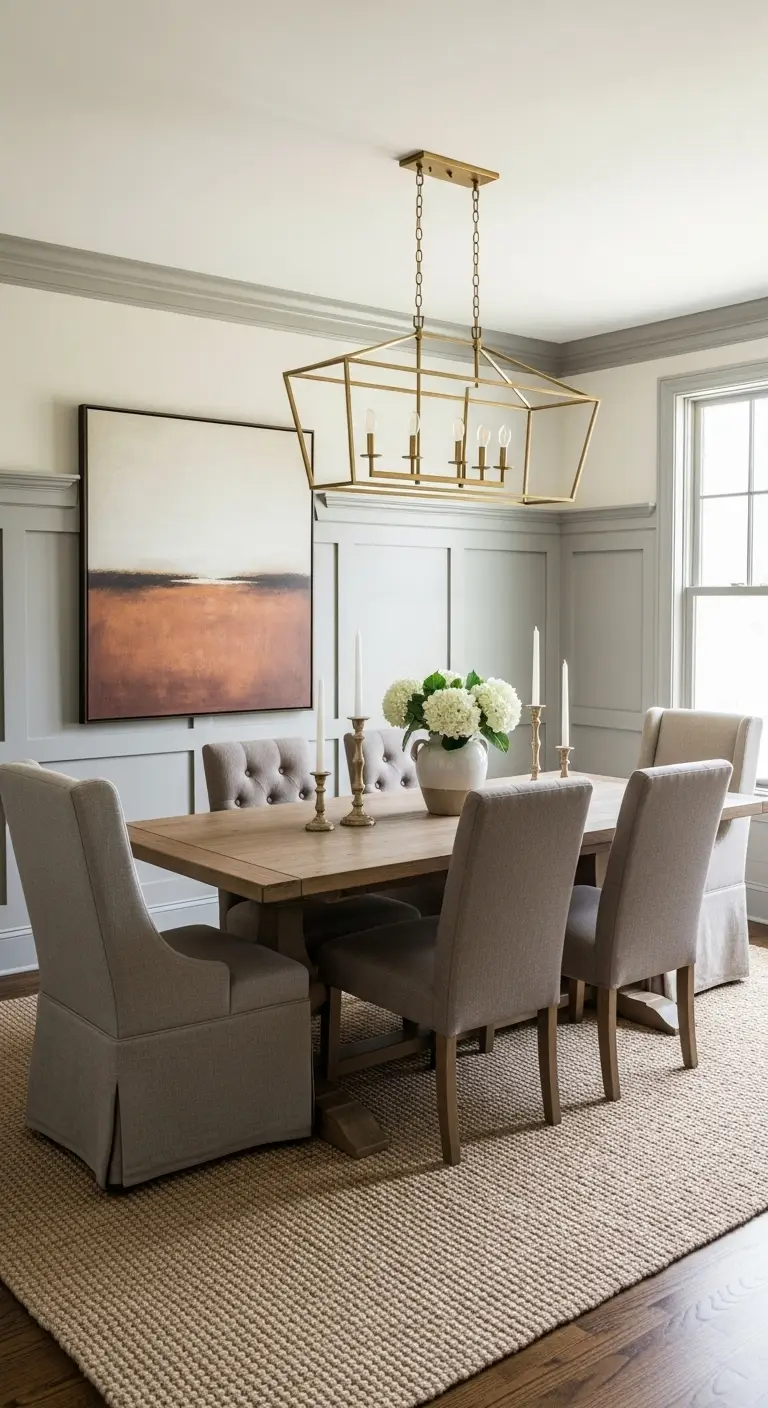
Transitional wainscoting blends traditional panel styles with modern finishes, creating a balanced, versatile dining area.
Soft neutral panels, sleek furniture, and modern lighting combine heritage with contemporary elegance.
This approach allows for flexibility, making the dining room adaptable to changing décor trends over time.
It’s ideal for homeowners who appreciate classic details but prefer a clean, updated aesthetic.
Transitional wainscoting creates a harmonious backdrop that accommodates furniture, art, and accessories seamlessly.
The result is a welcoming, functional, and stylish space suitable for everyday dining or entertaining guests.
Tips for Pairing Wainscoting with Dining Room Furniture
Choose furniture finishes that complement the panel color to create harmony between walls and décor.
Upholstered chairs, wooden tables, or antique pieces highlight the elegance of wainscoting naturally.
Layer textures with rugs, curtains, and table linens to create warmth and depth in the dining area.
Add statement lighting to enhance panels, making the architectural details stand out beautifully.
Balance colors and materials to ensure the room feels cohesive, inviting, and visually dynamic.
How to Maintain Wainscoting for Long-Lasting Beauty
Regular cleaning and dusting prevent buildup and maintain the polished look of the panels.
Use mild cleaners for painted surfaces and polish wood panels to preserve their natural luster.
Repair scuffs, dents, or chips immediately to keep the dining room looking fresh and well-maintained.
Repainting or refinishing panels every few years ensures longevity and adapts to evolving décor trends.
Proper care guarantees your wainscoting remains a timeless, functional, and beautiful design feature for decades.
Final Wrap-Up
Wainscoting dining rooms combine elegance, structure, and functionality in a single design choice.
From classic white panels to bold, patterned, or textured options, there’s a style for every taste and room size.
Pairing panels with furniture, lighting, and décor thoughtfully ensures a cohesive, inviting, and visually stunning space.
Maintenance, color choice, and material selection make all the difference in long-term satisfaction and beauty.
Whether traditional, modern, or transitional, wainscoting elevates any dining room into a space that’s timeless, practical, and unforgettable.